 Free shipping on orders over £29,85
  Shipping Tracking!


 Google
 Facebook
How to build a wooden and resin table?
Step-by-step guide for creating durable wood and resin tables
Building your own wooden and resin table blends natural wood beauty with the crystal-clear or vividly coloured finish of epoxy resin. This comprehensive guide will walk you through each step, from preparation to final polishing, helping you create a striking centrepiece that is both sturdy and stunning. Perfect for DIY enthusiasts and makers interested in producing bespoke furniture and river tables.
What You’ll Need
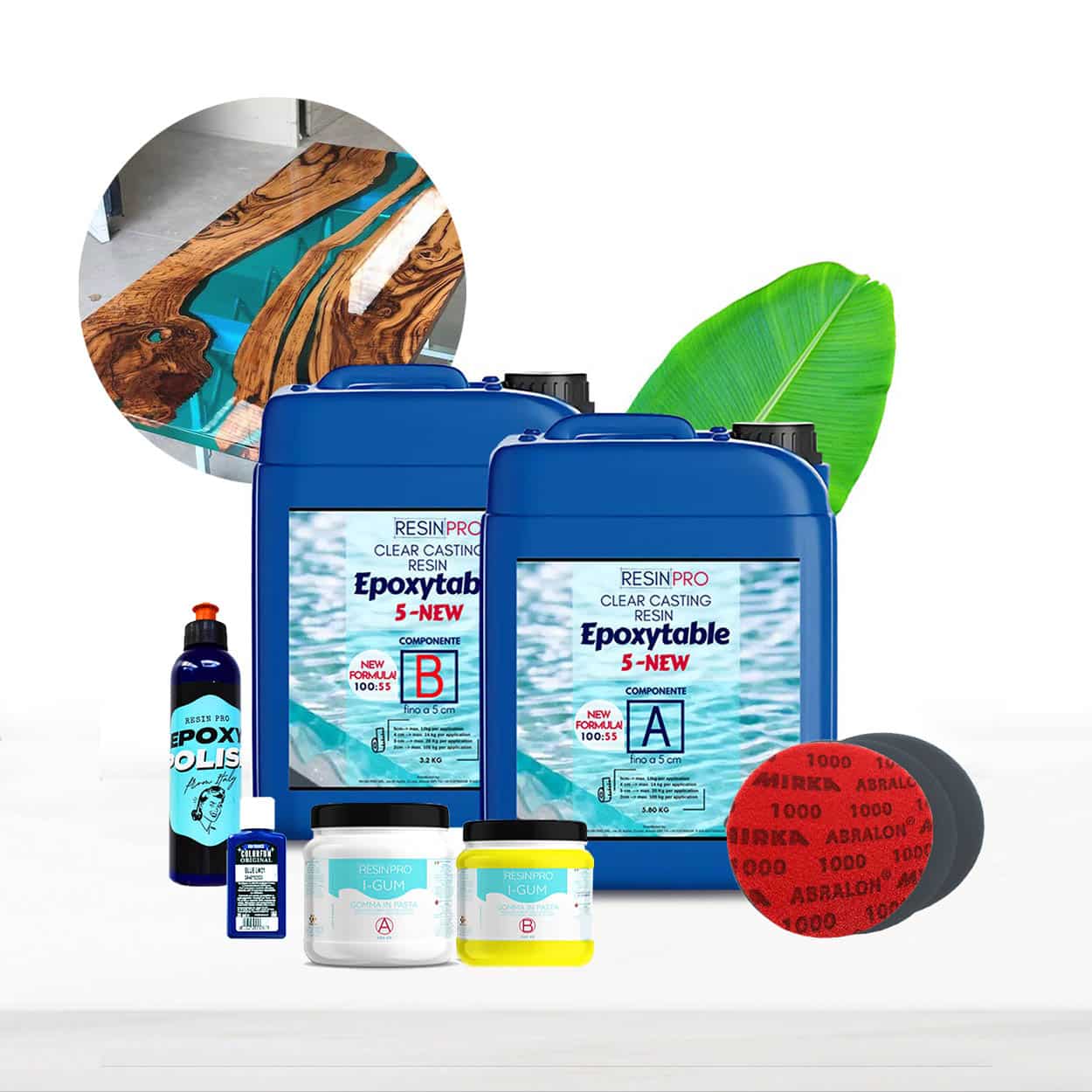
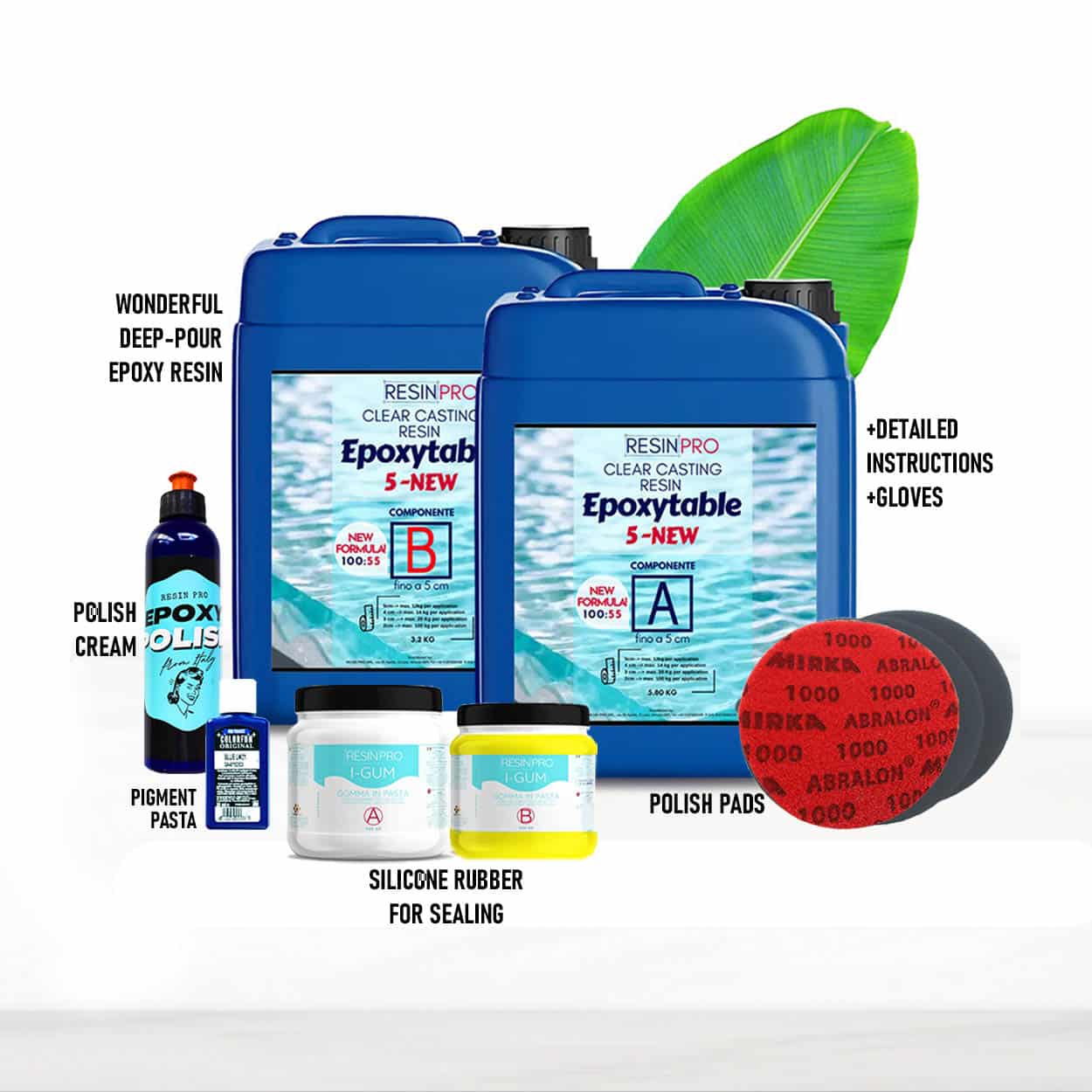
- “River-Table” – Complete Kit for Creating Your First Epoxy Resin Table: A convenient all-in-one kit ideal for beginners, containing all necessary resins, pigments, sealants, and step-by-step instructions.
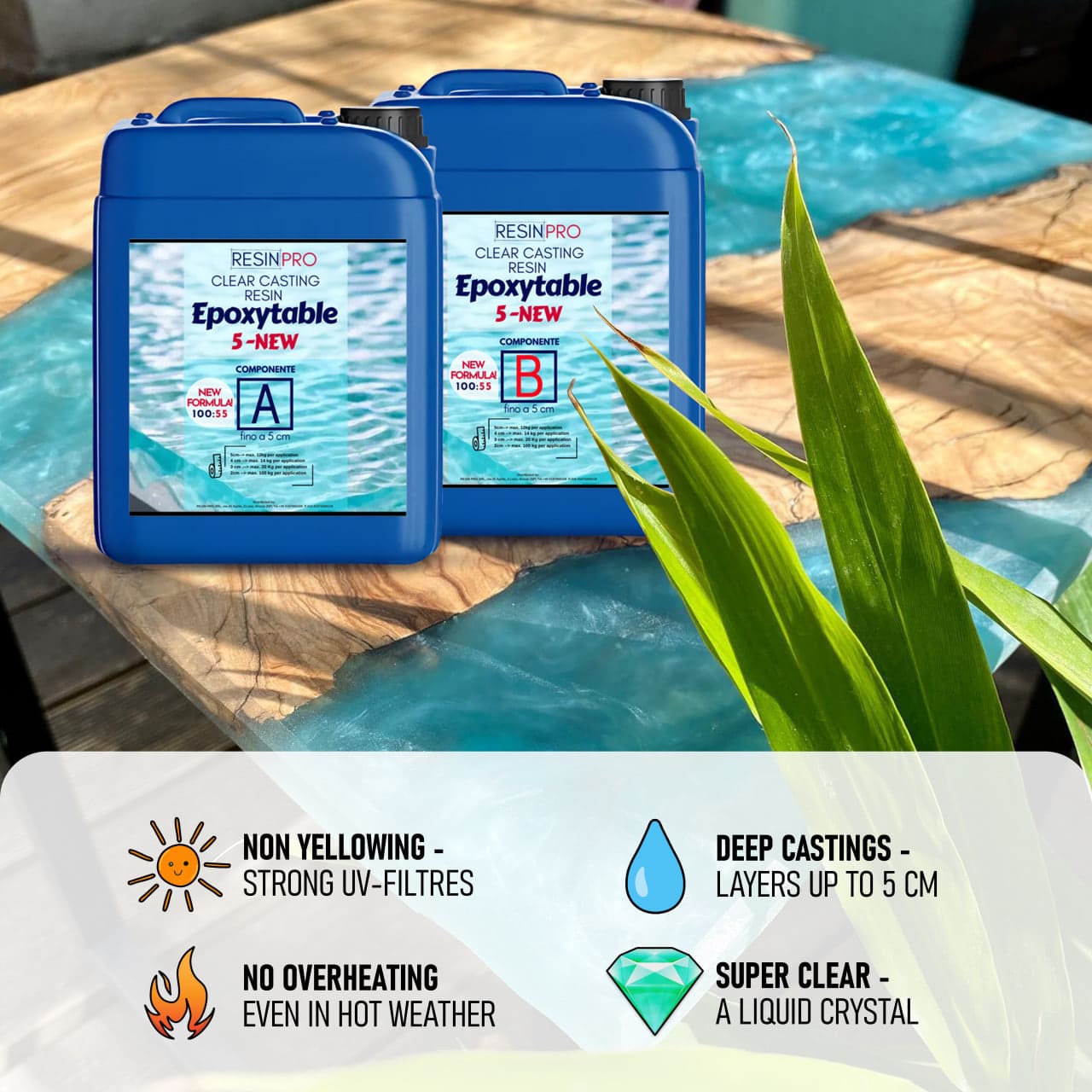
- “EpoxyTable 5-Five” – Deep Pour Epoxy Resin for Tables and Large Projects – Up to 5cm: Perfect for deep pours up to 5 cm for thicker resin features and larger tables.
- “Epoxytable 10-Ten” – Deep Pour Epoxy Resin for Tables, Up to 10cm Casting: Choose this for extra-deep river or artistic resin table projects.
- “Geode O” – Large Wooden Board Table Base for Epoxy Resin Projects – 90x60cm or 120x80cm: A sturdy, ready-made wooden base suitable for resin and wood table designs.
- Standard PPE: Gloves, mask, protective eyewear
- Sanding pads (various grits from coarse to fine)
- Polishing cream and pads
- Measuring containers, mixing sticks, plastic sheeting, and masking tape

Essential Tools and Workspace Setup for Resin Tablemaking
Organise your tools and protective equipment before starting your resin table project. Ensure your workspace is well-ventilated, free from dust, and covered with plastic or disposable sheets to contain spills. Gather gloves, a mask, and mixing containers to make the process smoother and safer. Taking time at this stage will lead to fewer issues during pouring and curing.
Step 1: Prepare the Wooden Base
Start with a quality wooden base that is flat, dry, and well-suited to holding resin. Cut or select your preferred shape and size, ensuring it fits your plan. Sand the edges and top surface to remove any debris or splinters and wipe everything down with a damp cloth to eliminate dust. It’s best to work with hardwood or well-dried timber to minimise warping or unwanted movements during curing.
If you prefer a ready-made option, the “Geode O” – Large Wooden Board Table Base for Epoxy Resin Projects is designed specifically for resin work, available in suitable sizes, and offers durability for stunning custom tables.
Step 2: Set Up Your Workspace & Formwork
Prepare your workspace and safety equipment before mixing and pouring resin. Work in a dust-free area with steady temperatures and lay down protective sheeting. Build a leakproof mould or formwork to contain the resin pour around your wood, sealing all edges and joints with appropriate silicone or tape to prevent leaks.
Always wear gloves, a mask, and protective eyewear when working with resins to ensure safety throughout the process.
Step 3: Seal and Prime the Wood
Seal the wood surface thoroughly to prevent air bubbles from escaping into the resin. Brush on a thin initial layer of clear resin to soak into the wood grains and let it cure as per product instructions. This will create a strong bond between the resin and timber and also lock in any loose particles.
If using the “River-Table” – Complete Kit for Creating Your First Epoxy Resin Table, you’ll find included instructions and sealing materials perfectly suited for this step.

Step 4: Mixing and Pouring Epoxy Resin
Pour and cure the resin in stages for best results. Carefully measure and mix the required amounts of epoxy resin and hardener, following manufacturer ratios precisely. For deep river tables or large volumes, choose an appropriate product such as “EpoxyTable 5-Five” for pours up to 5 cm, or “Epoxytable 10-Ten” for up to 10 cm in a single application. Pour slowly to minimise bubbles, and use a heat gun or torch to remove any that rise to the surface.
Work in layers if greater thickness is required, allowing each pour to set before proceeding. Always adhere to the recommended curing time between pours to achieve a clear and strong result.

Step 5: Sanding and Polishing the Finished Table
Sand and polish for a flawless finish after the resin is fully cured (usually 24–72 hours depending on the product). Start with coarse grit sandpaper, progressing through finer grits to smooth all surfaces and edges. For a high-gloss finish, use polishing cream and pads designed for plastics and resin. Clean off all dust between each grading to avoid scratches.
The beginner-friendly “River-Table” – Complete Kit includes a dedicated polishing kit for achieving a professional-grade shine on your completed table.
Tips, Mistakes and Troubleshooting for Resin Table Building
Work patiently to avoid rushing the mixing or pouring process, as haste can lead to bubbles, uneven surfaces, or cure inhibition. Always measure resin and hardener ratios accurately to prevent soft or sticky finishes. Ensure your wooden base is fully sealed, and never pour deep casts in a single stage beyond the recommended depth. If you encounter bubbles, address them promptly with controlled heat, and if sanding leaves haze, polish incrementally with finer pads for best clarity.
Presentation and Maintenance of Your Resin and Wood Table
Display your finished table in a stable indoor environment to preserve its glossy finish and structural integrity. Regularly dust with a soft cloth and avoid abrasive chemicals for cleaning. Applying a fine furniture polish every few months can help maintain shine and enhance the natural wood grain beneath the resin surface.

- "River-Table" – Complete Kit for Creating Your First Epoxy Resin TablePrice range: £188.85 through £444.85"River-Table" kit provides materials and guidance for creating wood and resin tables matching the theme How to build a wooden and resin table?
- "EpoxyTable 5-Five" – Deep Pour Epoxy Resin for Tables and Large Projects – Up to 5cmPrice range: £16.85 through £1,099.85"EpoxyTable 5-Five" deep pour epoxy resin suitable for tables and large wooden and resin projects, supporting creative applications in the theme.
 “Epoxytable 10-Ten” – Deep Pour Epoxy Resin for Tables, Up to 10cm CastingPrice range: £33.85 through £334.85“Epoxytable 10-Ten” is designed for deep pour applications such as tables, suitable for casting up to 10 cm thickness.
 "Geode O" – Large Wooden Board Table Base for Epoxy Resin Projects – 90x60cm or 120x80cmA sturdy premium wooden table base suitable for epoxy resin projects in different sizes.
Frequently Asked Questions
Which resin thickness should I choose for my river table?
Use a 5 cm pour resin for most tables; select a 10 cm pour resin for extra-deep or dramatic river features.
How do I prevent resin leaks in my table mould?
Seal your formwork thoroughly with silicone sealant or tape before pouring to prevent leaks during curing.
How can I avoid bubbles in my resin table pour?
Mix resin slowly, pour gradually, and use a heat gun over the surface to release bubbles after pouring.
How long should I wait between epoxy layers on my table?
Wait until the previous layer is firm to the touch, typically 6–24 hours depending on resin type, before pouring the next.
Should I seal wood before applying epoxy resin?
Yes, always seal wood with a thin resin layer first to prevent bubbles and improve adhesion.
Is it suitable for beginners to build a resin and wood table?
Yes, following a step-by-step guide and using a complete kit allows beginners to achieve excellent results.
How do I maintain my resin and wooden table?
Clean with a soft damp cloth; avoid harsh cleaners and re-polish as needed for ongoing shine.