 Free shipping on orders over £29,85
  Shipping Tracking!


 Google
 Facebook
How do you put amber resin on a wooden table?
Step-by-step method for flawless resin wood finishes at home

Transforming a plain wooden table with amber resin creates a truly unique centrepiece, blending natural wood and crystal-clear shine. This guide will walk you through the entire process from preparing the surface to pouring and curing, ensuring a seamless and visually stunning result.
What You’ll Need
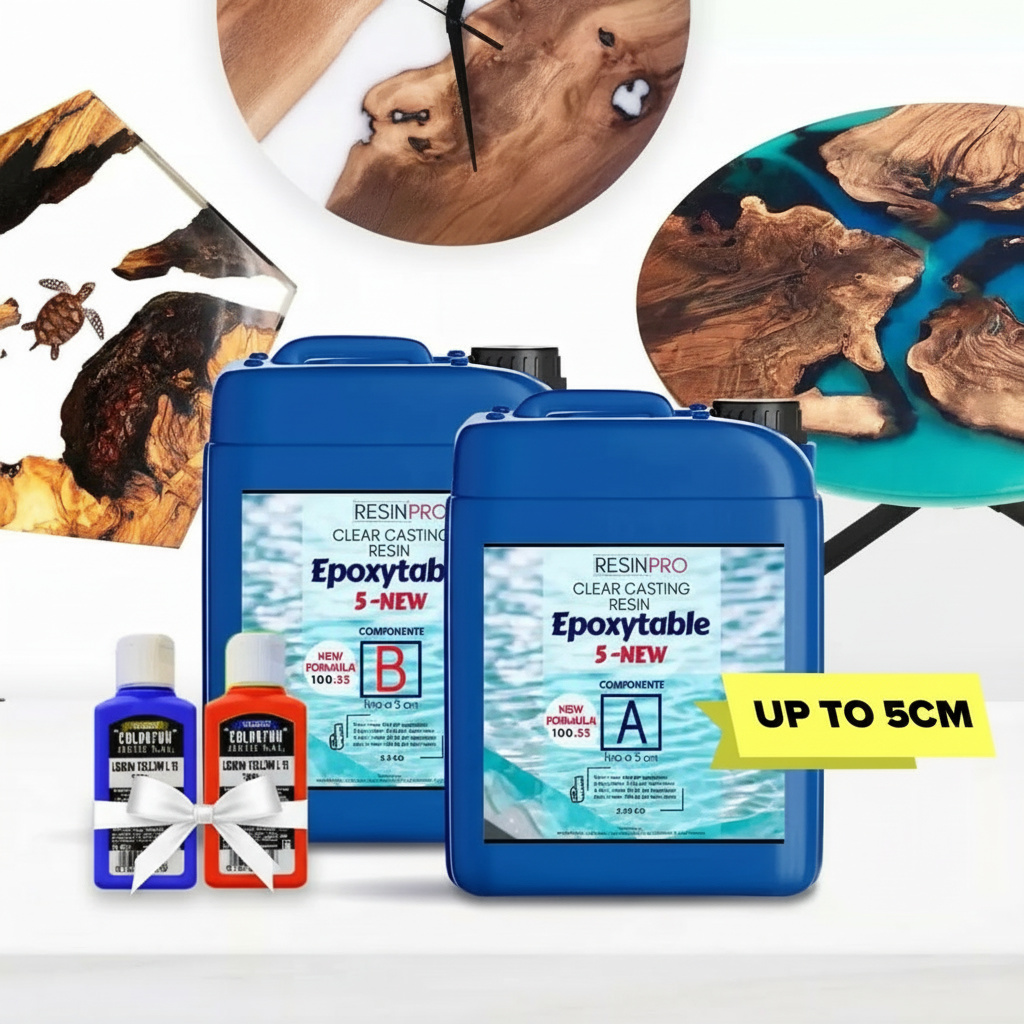
- “EpoxyTable 5-Five” – Deep Pour Epoxy Resin for Tables and Large Projects – Up to 5cm – suitable for deep pours on wooden surfaces
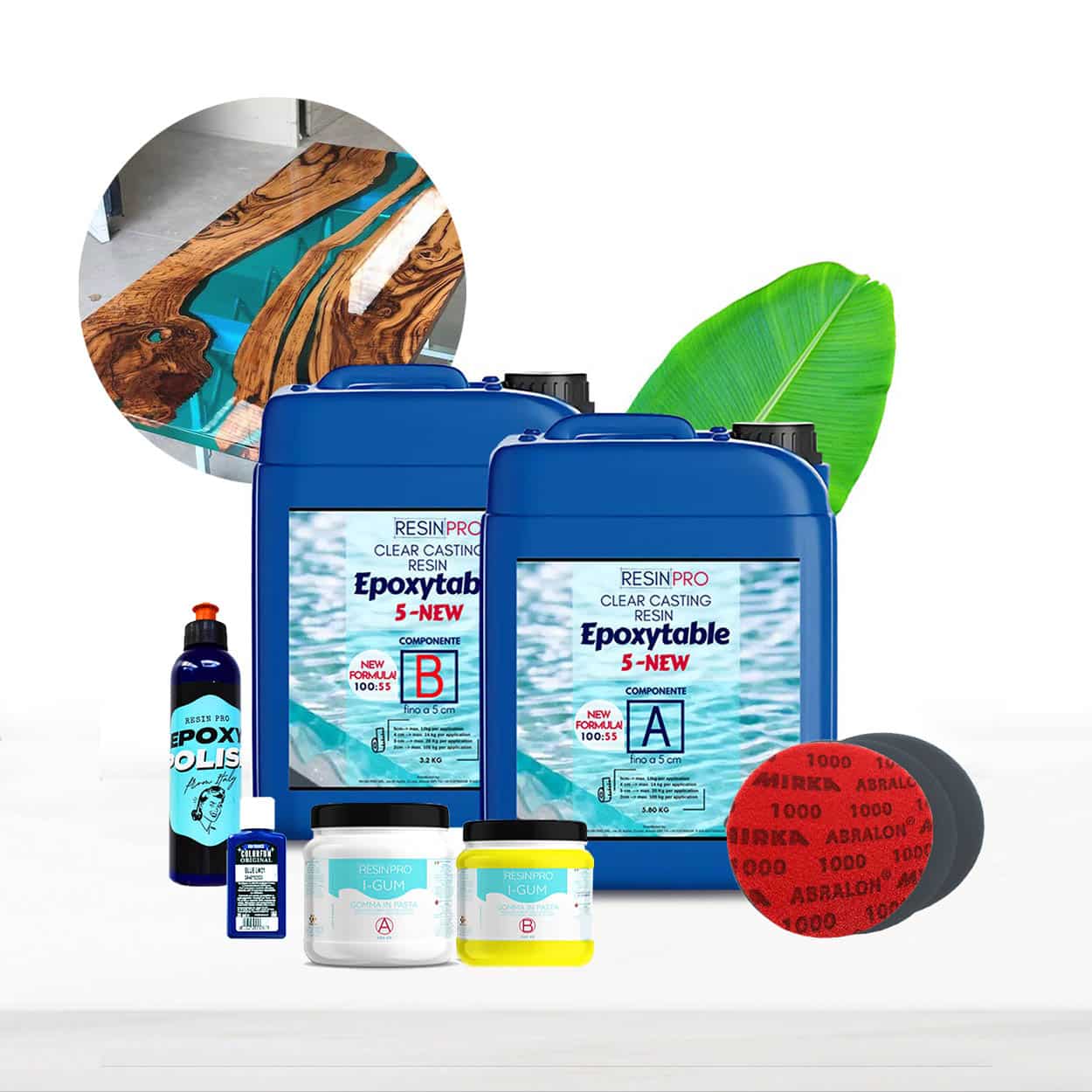
- “River-Table” – Complete Kit for Creating Your First Epoxy Resin Table – ideal for first-timers, includes resin, pigments, silicone sealant, and polishing kit
- Measuring scales and mixing containers
- Stirring sticks or spatulas
- Protective gloves and a respirator mask
- Sanding tools (various grits)
- Painter’s tape
- Level work surface and dust cover
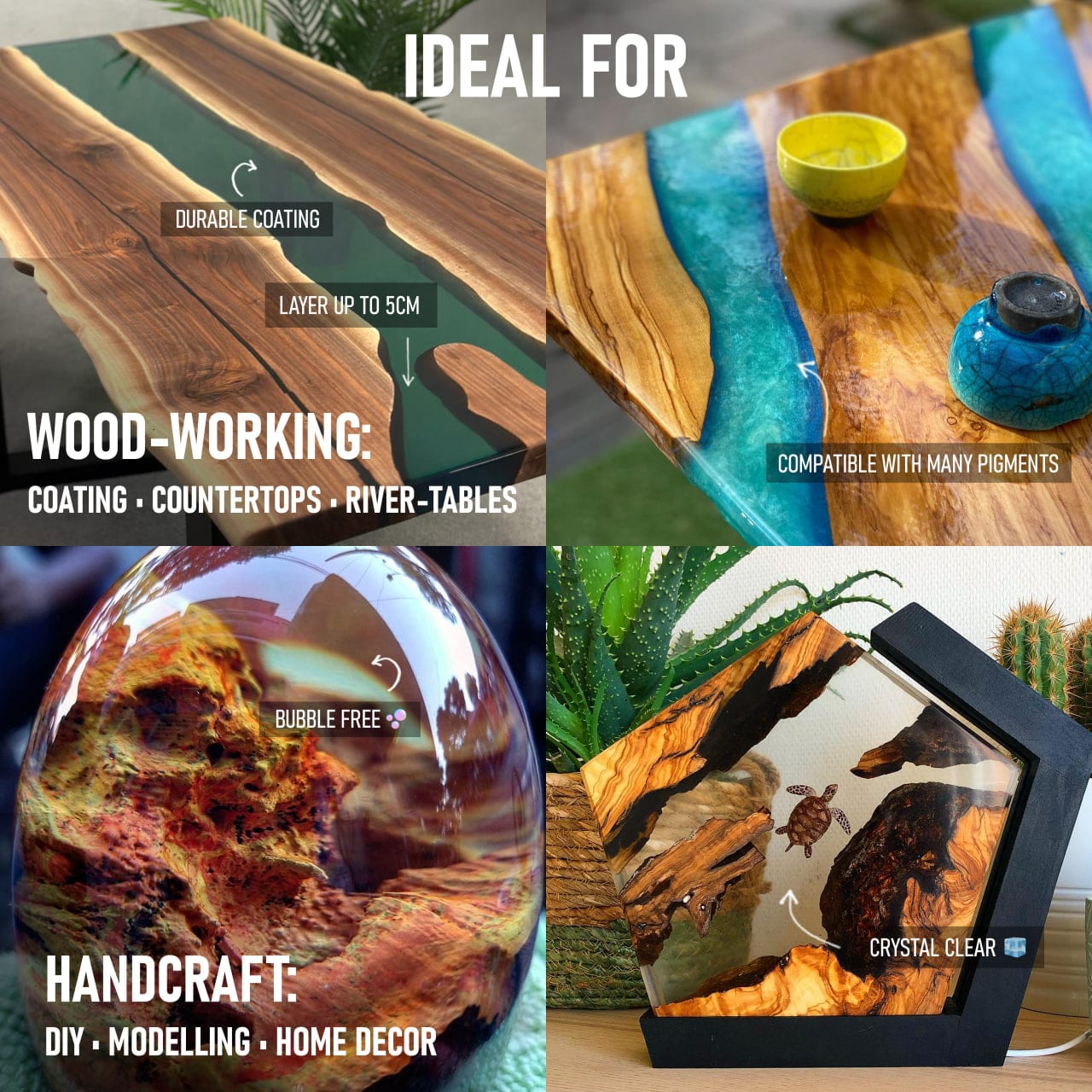
Amber Resin Table Inspiration & Materials
See a variety of amber resin finishes on different wood species to spark your creativity. Get up close with tools, pigments, and techniques for achieving the perfect blend of wood grain and resin clarity.
Step 1: Prepare the Wooden Surface
Start by thoroughly cleaning the wooden table, removing any dust, grease, or old finishes. Sand the surface with progressively finer grit paper until it is smooth. Fill any cracks or holes with wood filler and sand again to create a flat, blemish-free base. Wipe away all sanding dust with a damp, lint-free cloth before proceeding.
If your wooden table design includes any areas to be left uncoated, use painter’s tape to mask these off. For a perfect resin edge, carefully seal the edges and base of the table with silicone or tape to prevent resin leaking.
Careful surface preparation prevents resin problems: Any dirt or oils left behind can affect adhesion and cause blemishes in the finished resin.
Step 2: Create the Amber Resin Mixture
Read the instructions for your resin product and measure both resin and hardener accurately by weight. Pour them into a clean mixing container. Stir slowly but thoroughly for at least 3–5 minutes, ensuring you scrape the sides and bottom of your mixing vessel. For an amber effect, now is the time to blend in a transparent amber pigment or select a resin kit that includes pigment, such as the “River-Table” – Complete Kit for Creating Your First Epoxy Resin Table.
Take your time when mixing and pouring to avoid air bubbles: Slow, thorough mixing minimises trapped air, and prevents cloudiness in your cured resin.
Step 3: Pour the Resin onto the Table
With your table on a level surface and surrounded by a dust-free environment, begin pouring the prepared amber resin onto the wood. For deep resin effects, pour in thin layers if necessary (generally under 5cm per pour unless your chosen product supports more). Spread evenly with a spatula, ensuring the resin reaches all desired areas and naturally self-levels. Remove surface bubbles with a heat gun or torch, passing quickly over the resin without burning.
If your project requires a significant thickness, consider using “EpoxyTable 5-Five” – Deep Pour Epoxy Resin for Tables and Large Projects – Up to 5cm, which is suitable for deeper pours without excessive heat or bubbles. For even deeper effects, layered pours are advised.

Step 4: Cure and Finish the Surface
Allow the resin to cure as specified by the manufacturer, protecting it from dust, moisture, and curious hands during this period. Avoid moving the table until the resin is fully hard. Once cured, inspect for any sharp edges, drips, or imperfections. Sand lightly with fine grit if needed, then buff with a polishing kit (included in the “River-Table” – Complete Kit for Creating Your First Epoxy Resin Table) for a flawless glossy finish.
Allow the resin full curing time before heavy use: Rushing this step may result in dents or fingerprints marring your beautiful finish.
Tips and Common Mistakes to Avoid
- Ensure your workspace is level and at a stable temperature to help the resin self-level and cure evenly.
- Always wear gloves and, if possible, a mask to protect against fumes and skin irritation.
- Plan your pours: exceeding the recommended depth per pour for your resin may cause overheating or distortion.
- Keep pets, dust, and insects away from the curing table to avoid unwanted inclusions.
- Protect the cured surface to ensure long-lasting clarity: Consider using coasters and gentle cleaning products for maintenance.
Troubleshooting Resin Projects
Spot common resin mistakes before they happen with side-by-side comparisons of successful and problematic pours. See how simple adjustments in preparation and curing can dramatically improve your results.
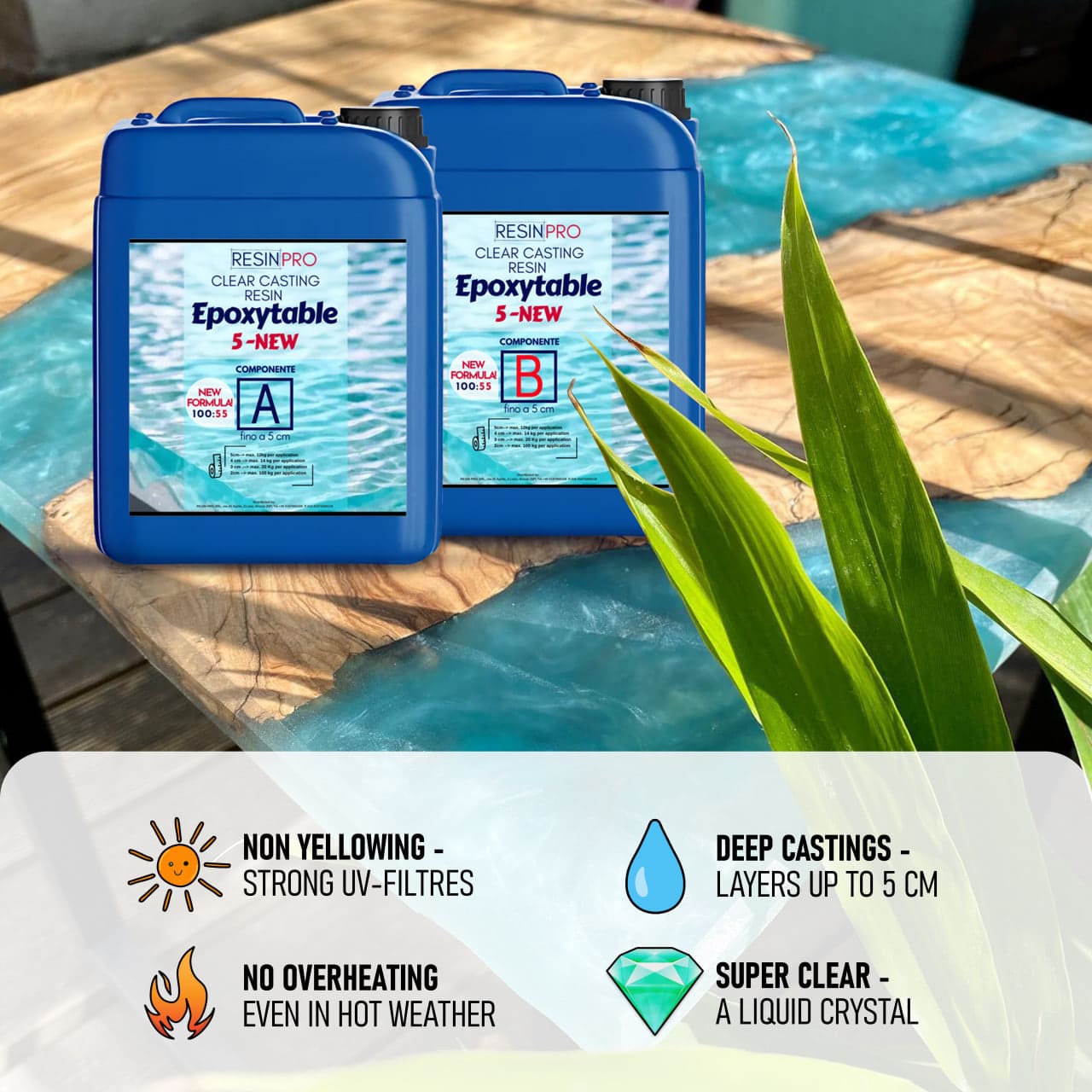
- "EpoxyTable 5-Five" – Deep Pour Epoxy Resin for Tables and Large Projects – Up to 5cmPrice range: £16.85 through £1,099.85"EpoxyTable 5-Five" is a clear epoxy resin suitable for deep pour projects including wooden tables, designed with a long working time and UV…
- "River-Table" – Complete Kit for Creating Your First Epoxy Resin TablePrice range: £188.85 through £444.85"River-Table" kit includes materials and instructions to create a wooden and resin table suitable for beginners and DIY projects.
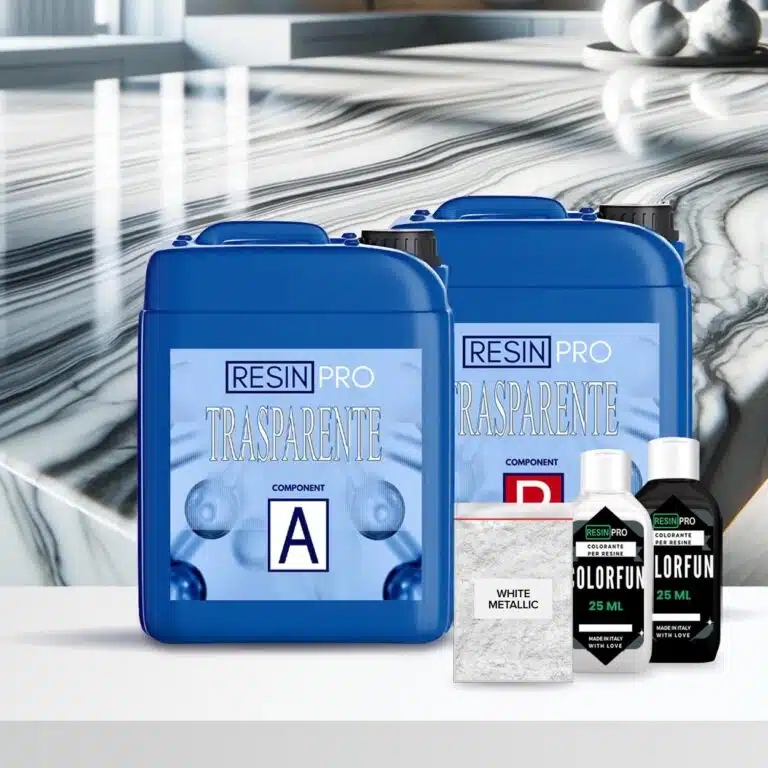 "Stone Effect Collection" – Marble Epoxy Resin Countertop KitPrice range: £54.85 through £394.85"Stone Effect Collection" offers an epoxy resin kit designed for durable, scratch-resistant marble and stone effect surfaces suited to kitchen and…
 “Epoxytable 10-Ten” – Deep Pour Epoxy Resin for Tables, Up to 10cm CastingPrice range: £33.85 through £334.85“Epoxytable 10-Ten” is an epoxy resin designed for creating tables with deep pour castings up to 10cm, suitable for large-scale projects.
Frequently Asked Questions
What resin is best for creating an amber finish on a wooden table?
Opt for a deep pour epoxy resin designed for wood, such as EpoxyTable 5-Five or a complete River-Table kit with guided instructions.
How must a wooden table surface be prepared before applying resin?
The surface should be clean, dry, and thoroughly sanded for optimal adhesion and a flawless finish.
How long should I wait for the resin to cure before using the table?
Cure times depend on the product but usually range from 24 to 72 hours for handling and up to 7 days for full hardness.
How can I minimise bubbles in my amber table resin pour?
Mix the resin slowly, pour in thin layers, and use a heat gun or torch to remove surface bubbles immediately after pouring.
Is it safe to sand and polish a cured resin table surface?
Yes, once resin is fully cured you can sand with fine grits and polish for a glassy shine, wearing protective gear to avoid dust.
Is this amber resin technique suitable for beginners?
Yes, with a complete kit including step-by-step instructions, beginners can achieve stunning amber effects on wood tables.