 Free shipping on orders over £29,85
  Shipping Tracking!


 Google
 Facebook
How to cover a coffee table with resin?
Step-by-step guide for a flawless, glossy resin finish on your table
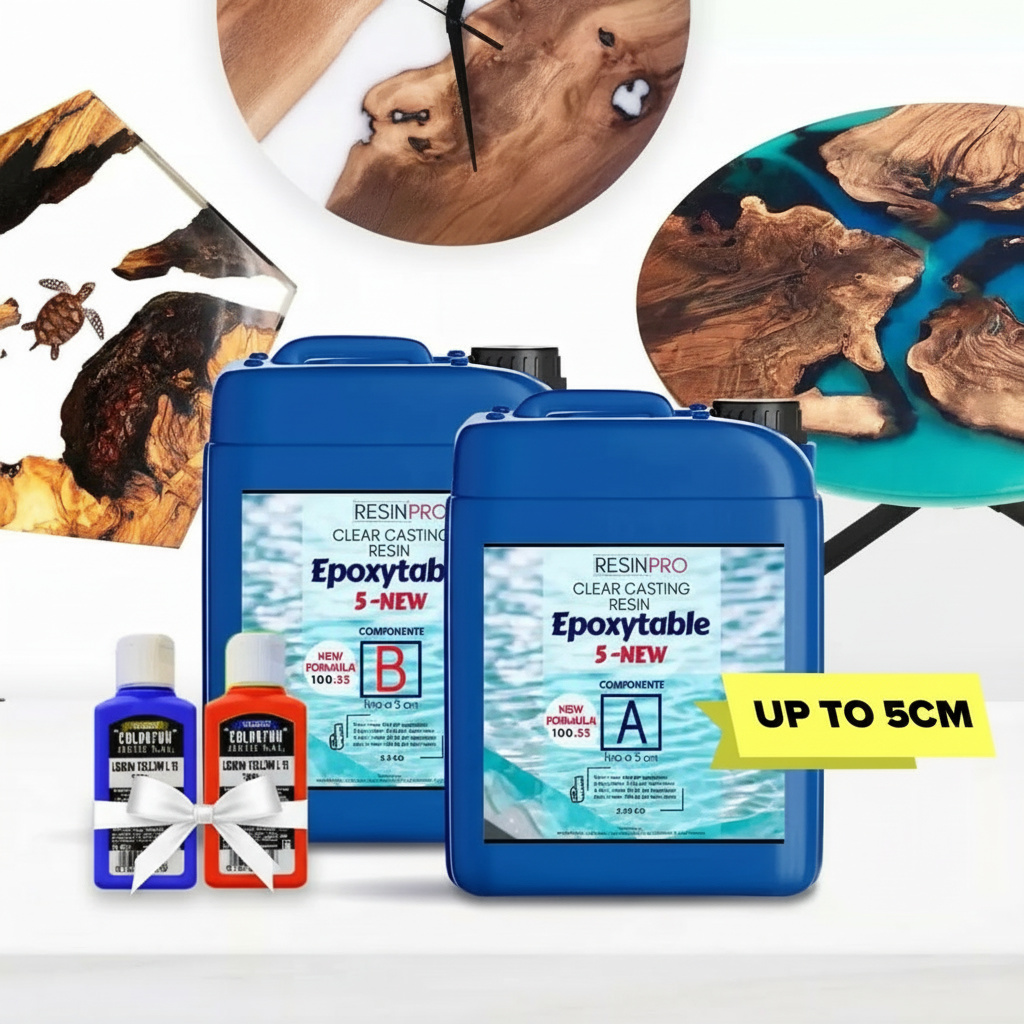

Applying a layer of resin to your coffee table can transform its appearance and protect the surface for years to come. This comprehensive guide will walk you through the preparation, application, and finishing stages required to achieve a professional-quality, glass-like resin cover on your table. Whether restoring an old piece or creating new art, clear instructions will help you avoid common mistakes for outstanding results.
What You’ll Need
- “Trasparente” – Multipurpose Clear Epoxy Resin for Casting – Up to 2cm: Ultra-clear, self-levelling for thin to medium coatings
- “EpoxyTable 5-Five” – Deep Pour Epoxy Resin for Tables and Large Projects – Up to 5cm: For thicker coatings or wood-resin combinations
- Mixing containers and stirring sticks
- Protective gloves and safety goggles
- Masking tape or painter’s tape
- Drop cloths or plastic sheeting for protecting the work area
- Sandpaper (various grits) or sanding sponges
- Spirit level (for checking table alignment)
- Optional: Bubble eliminator torch or heat gun (for surface bubbles)

Essential tools and workspace setup
Setting up your workspace in advance not only saves time but also prevents costly mistakes. Choose a well-ventilated, dust-free area with a flat, level surface for your project. Assemble all tools and materials before starting, ensuring you have adequate lighting to check resin clarity and coverage throughout the process. Preparation is key for professional quality results.

Step 1: Prepare the Surface
A pristine, well-prepared surface is essential for a flawless resin finish. Start by thoroughly cleaning the table to remove dust, grease, or previous finishes. Any imperfections, debris, or oils left on the surface can show through after resin application.
Lightly sand the table to create a slightly roughened texture, which improves resin adhesion. If the tabletop has dents or holes, fill them with a suitable wood filler and allow to dry fully before sanding smooth. Wipe away all dust with a tack cloth. Finally, ensure your work area is clean, dry, and free from dust particles.
Step 2: Tape and Protect the Surroundings
Resin is a self-levelling liquid that can drip over the table edges or bond to unwanted surfaces. Use masking tape or painter’s tape to protect the table edges and any areas you don’t wish to coat. Place drop cloths or plastic sheeting on the floor and over nearby furniture. Elevate the table slightly using wooden blocks so excess resin can drip off without pooling underneath.
Step 3: Mix the Resin
Carefully read the instructions for your chosen resin. For most table coatings, a two-part epoxy is used, requiring precise mixing. Pour the required amounts of resin and hardener into your mixing container according to the product’s specific ratio, such as found on the “Trasparente” epoxy or “EpoxyTable 5-Five” resin. Mix slowly, scraping the sides and bottom of the container, until the mixture is clear and streak-free. Mix only the amount you can use within the working time stated on the product’s datasheet.

Step 4: Pour and Spread the Resin
Before pouring, double-check that the table is level using a spirit level. Pour the mixed resin onto the centre of the table, allowing it to naturally flow outwards. Use a spreader or a gloved hand to guide the resin, pushing it evenly to the edges for uniform coverage. Be mindful of the maximum recommended layer thickness: for coatings up to 2cm, choose “Trasparente”; for up to 5cm, use “EpoxyTable 5-Five”.
If a thicker layer is required, pour in separate stages, allowing each to cure as recommended before adding the next. This prevents overheating, which can cause yellowing and imperfections.
Step 5: Finishing and Curing
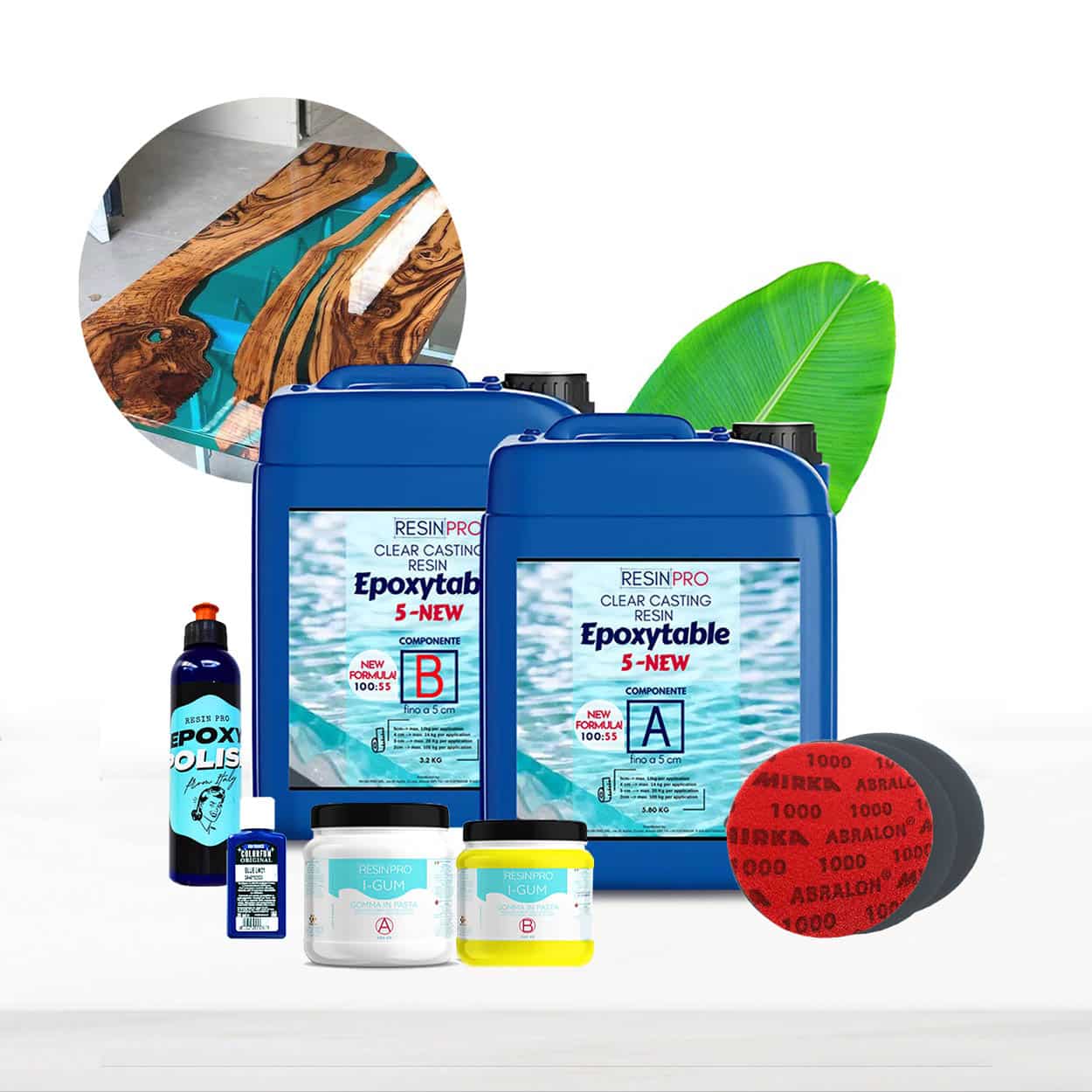
After pouring, surface bubbles may rise—eliminate these with a heat gun or bubble torch waved lightly over the surface. Avoid over-heating, as this can mark or distort the resin. Cover the table with a temporary dust barrier (such as a large cardboard box) and leave undisturbed to cure fully, following the resin manufacturer’s recommendations for time and room temperature.
Once cured, remove all masking tape and lightly sand any rough edges if necessary. For a mirror shine, you may opt to polish the cured resin using a polishing kit. The table is then ready for use—wait until the resin has reached its full mechanical strength as specified by the product, often several days after initial cure.
Tips and Common Mistakes
- Prepare the table surface thoroughly before pouring resin to ensure optimal adhesion and a smooth finish.
- Use a high-quality resin suitable for your desired thickness; never exceed the manufacturer’s recommended pour depth to avoid exothermic reactions and yellowing.
- Work in a dust-free, level environment for best results, as airborne dust can settle into curing resin.
- Pour the resin in layers if exceeding maximum recommended thickness—allowing proper curing time in between—to maintain clarity and structural integrity.
- Avoid touching the curing resin or placing objects on the surface until completely hardened, as premature contact can leave marks.
Creative variations and maintenance
Incorporate pigments or natural materials into your resin pour for a unique decorative effect. Personalise your table with colour additives, embedded wood, or metallic flakes to match your interior style. For lasting durability, regularly clean the finished surface with a soft, damp cloth and avoid abrasive products. Use coasters or mats to protect the glossy finish from excessive heat or scratching.
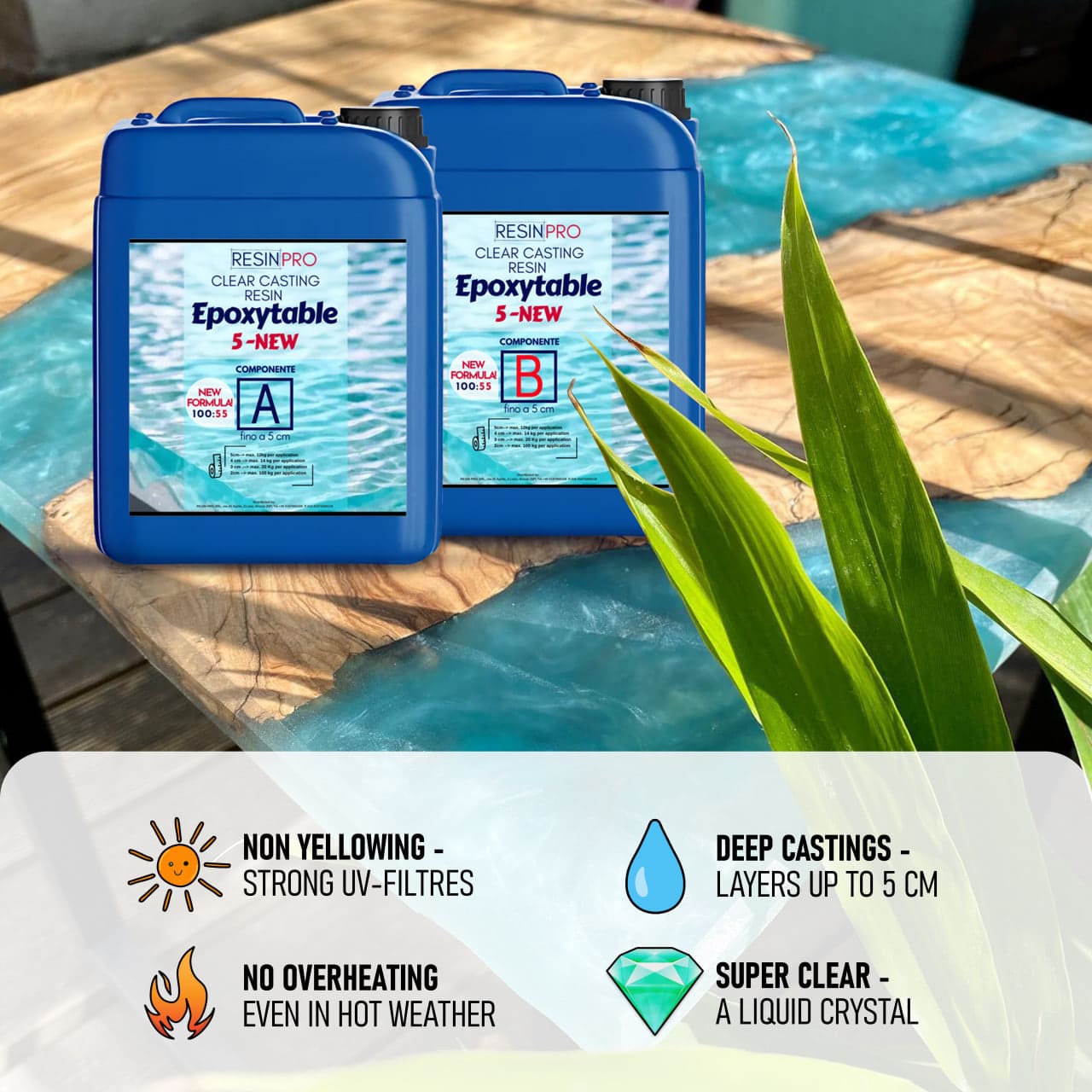
- "EpoxyTable 5-Five" – Deep Pour Epoxy Resin for Tables and Large Projects – Up to 5cmPrice range: £16.85 through £1,099.85"EpoxyTable 5-Five" is designed for deep pour projects like tables, offering non-yellowing and scratch-resistant surfaces.
- "River-Table" – Complete Kit for Creating Your First Epoxy Resin TablePrice range: £188.85 through £444.85"River-Table" kit offers materials and instructions to create resin and wood tables, supporting the theme of how to cover a coffee table with resin.
 “Epoxytable 10-Ten” – Deep Pour Epoxy Resin for Tables, Up to 10cm CastingPrice range: £33.85 through £334.85“Epoxytable 10-Ten” epoxy resin is suitable for deep pouring applications such as tables, designed for up to 10cm thickness.
 "Trasparente" – Multipurpose Clear Epoxy Resin for Casting – Up to 2cmPrice range: £8.45 through £948.85"Trasparente" clear epoxy resin offers a self-levelling, ultra-clear finish up to 2cm thickness, suitable for detailed castings and table surfaces.
Frequently Asked Questions
Can you put resin on any table surface?
Resin can be used on most stable, clean, and oil-free surfaces. For best results, prepare the surface by sanding and cleaning thoroughly before application.
How thick should the resin layer be?
Most resins specify a maximum pour thickness—2cm for standard surfaces, up to 5cm with deep pour products. Exceeding this can cause defects.
How do I avoid bubbles when coating a table with resin?
Mix resin slowly to reduce air entrapment and use a heat gun to eliminate surface bubbles after pouring. Pour onto a warm, not cold, surface for best results.
How long does an epoxy resin tabletop take to cure?
Initial cure typically takes 24-48 hours, but maximum hardness and heat resistance may require up to 7 days. Always follow the resin manufacturer's instructions.
Can you sand and polish a resin tabletop?
Yes, you can sand the resin after full cure with increasingly fine grit and finish with a polishing compound for a glass-like shine.
Which epoxy resin should I use for thick or large tables?
For deep layers up to 5cm, use a deep pour resin. For extra thick pours up to 10cm, choose epoxy specifically formulated for large or river tables.