 Free shipping on orders over £29,85
  Shipping Tracking!


 Google
 Facebook
How to mix resin and calcium carbonate?
Detailed steps for successful resin and filler blending


Mixing resin with calcium carbonate is a popular technique for enhancing texture, achieving specific opacity, and reducing overall cost in various creative and functional projects. Whether you are aiming for crisp artistic effects, solid surface finishes, or durable flooring, this comprehensive guide will help you master the process with confidence and clarity.
What You’ll Need
- “Art Pro Deluxe” – Ultra-High Viscosity Epoxy Resin for Artists: For controlled, artistic applications and detailed work.
- “Trasparente” – Epoxy Binder for Coloured Pebbles and Grits: Best for mixing with mineral fillers in pebble flooring and flooring screeds.
- “One-2-One” – Epoxy Resin for Handcraft, 1:1 Mixing Ratio: An easy-mixing resin suited to handcraft, jewellery, and casting tasks.
- “Epoxytable 10-Ten” – Deep Pour Epoxy Resin for Tables, Up to 10cm Casting: For deep pours, river tables, and large volume casting with fillers.
- Calcium carbonate powder (commonly sold as marble dust or whiting)
- Mixing containers (disposable or dedicated)
- Stirring sticks or spatulas
- Protective gloves and safety glasses
- Dust mask (recommended when handling fine powders)

See the Materials and Mixing Process in Practice
Watch or browse our visual gallery to understand how resin and calcium carbonate blend together for stunning artistic or durable results. Examples show texture changes and finished effects in a range of project types.

Step 1: Prepare Your Workspace and Materials
Work in a well-ventilated area and use protective gloves to avoid skin contact. Lay out all tools, your chosen resin system, and pre-measure the desired amount of calcium carbonate powder. Ensuring that your work surface is clean and dust-free will minimise contamination in your mix.
Take particular care when handling calcium carbonate powder, as it is a fine particulate. A dust mask will reduce inhalation risk and keep your process safe and comfortable.
Step 2: Accurately Measure and Mix the Resin
Measure resin and hardener accurately according to your selected product’s instructions. For example, the “One-2-One” – Epoxy Resin for Handcraft, 1:1 Mixing Ratio is easy to prepare with a simple 1:1 ratio by volume, while others may require mixing by weight.
Combine resin and hardener thoroughly, scraping the sides and bottom of your mixing vessel to ensure even curing. Mix slowly to avoid introducing excess air bubbles, which can interfere with the final result.
Consistency at this stage sets the foundation for an optimal blend once fillers are added.
Step 3: Incorporate Calcium Carbonate
Once your resin is fully blended, gradually add calcium carbonate to the mixed resin. Start with a small quantity, sprinkling it over the surface and folding it in with your stirrer. This prevents clumping and helps the powder disperse smoothly.
Mix until the filler is uniformly dispersed but avoid excessive vigorous stirring, which can trap air. Continue adding small amounts until you reach the desired opacity, texture, or viscosity suitable for your project.
Art Pro Deluxe – Ultra-High Viscosity Epoxy Resin for Artists is ideal for projects requiring precise placement of calcium carbonate, as its high viscosity keeps fillers suspended longer for consistent results.

Step 4: Troubleshooting and Adjustments
Avoid adding too much filler at once, as this can cause the mixture to become unworkable or set too quickly. If the blend becomes too thick, you may need to increase the resin proportion slightly or remix a new batch.
Address clumps promptly if they form by pressing them against the side of the container or sieving the powder before use. Bubbles introduced during mixing can be popped by gently agitating the blend or using a heat gun once poured.
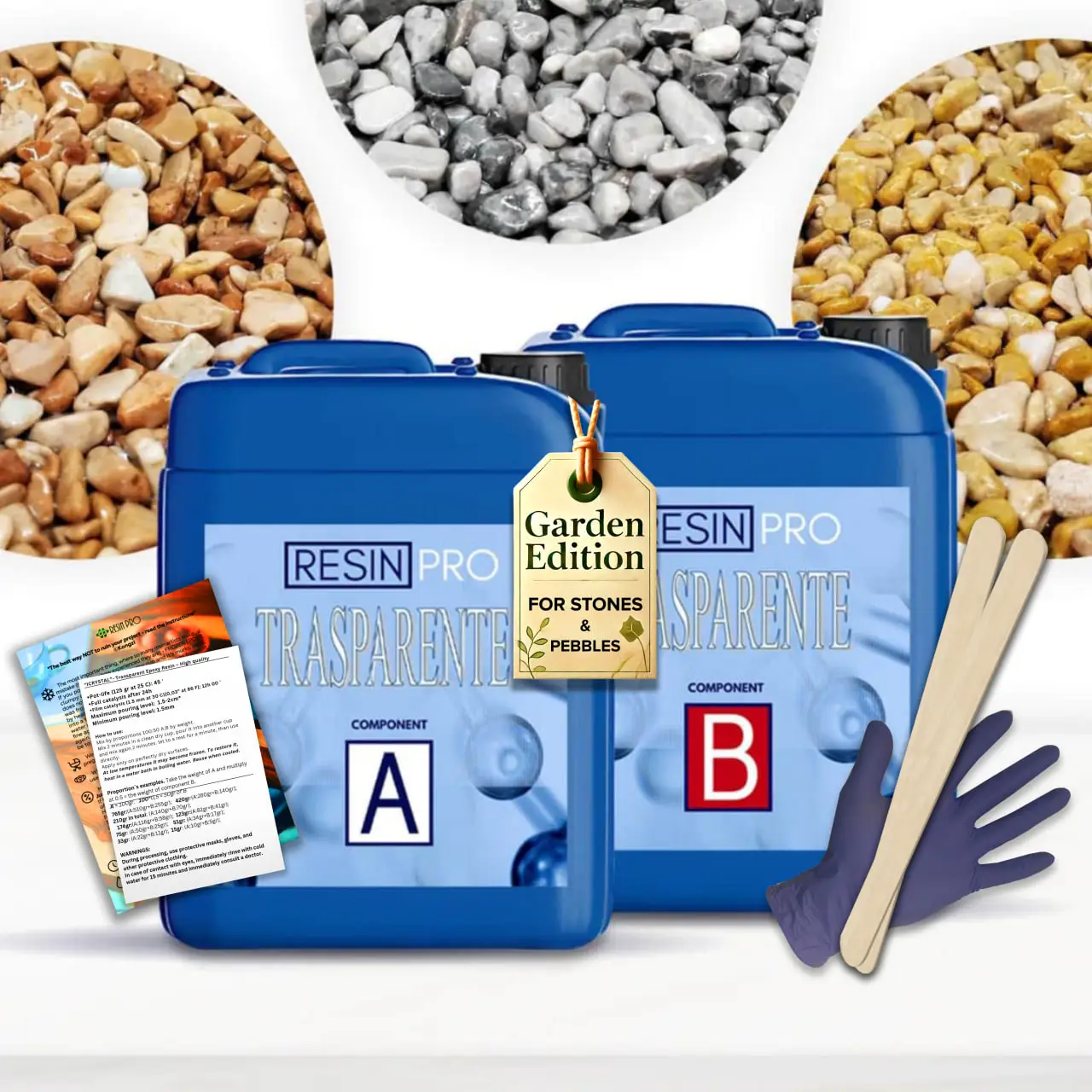
Choosing a low-viscosity binder like Trasparente is helpful when you need the mixture to penetrate aggregates, such as in flooring applications.
Tips and Common Mistakes
Prevent bubbles and uneven distribution by mixing slowly and thoroughly. Stick to recommended filler amounts—overloading resin with calcium carbonate may compromise strength or cause cloudiness.
Always read your chosen resin’s datasheet for specific mixing ratios and suggested maximum filler loads, as performance varies by product and pour depth.
If working on deep pour projects, Epoxytable 10-Ten provides an extended open time and is formulated to minimise problems such as overheating or excessive bubbling with heavy filler use.
Explore Filled Resin Surfaces and Artistic Creations
Find inspiration in our showcase of flooring, art, and crafts realised by combining epoxy resin and calcium carbonate. Notice the textural and aesthetic differences achieved with variations in blend, technique, and resin choice.

- "Art Pro Deluxe" – Ultra-High Viscosity Epoxy Resin for ArtistsPrice range: £33.85 through £287.85Art Pro Deluxe is an ultra-high viscosity epoxy resin for artists, designed for precise control and crystal-clear finish in resin art projects.
- "Trasparente" – Epoxy Binder for Coloured Pebbles and GritsPrice range: £31.85 through £948.85"Trasparente" epoxy binder is designed to produce clear, bubble-free pebble floors suitable for outdoor paths and driveways in mix with coloured…
 "One-2-One" – Epoxy Resin for Handcraft, 1:1 Mixing RatioPrice range: £14.85 through £56.85"One-2-One" is a medium viscosity epoxy resin with an easy 1:1 mixing ratio, suitable for decorative handcraft projects within the theme.
 “Epoxytable 10-Ten” – Deep Pour Epoxy Resin for Tables, Up to 10cm CastingPrice range: £33.85 through £334.85Epoxy resin for tables and deep pour castings up to 10cm, designed for clear, non-yellowing results suited for artistic and large projects.
Frequently Asked Questions
What type of resin is best for mixing with calcium carbonate?
Choose a resin with appropriate viscosity for your project. High-viscosity resins suspend fillers well for art, while low-viscosity resins penetrate flooring aggregates and powders easily.
How do I avoid clumps when adding calcium carbonate?
Add filler gradually and mix thoroughly. Sieving the powder before blending and pressing clumps against the container side helps achieve a smooth mixture.
How much calcium carbonate can I safely add to resin?
The safe amount depends on the resin type and application. Always check the datasheet—typically up to 50% by weight, but less for clear or detailed work.
Does calcium carbonate affect curing times?
Adding fillers can slightly slow or accelerate curing depending on proportion and resin. Mix as directed for best results and test small batches if uncertain.
Will calcium carbonate change the resin’s colour?
Yes, calcium carbonate makes resin more opaque and can lighten or cloud the finish, so consider your desired final colour and add pigments if needed.
How do I clean tools after mixing resin and calcium carbonate?
Wipe off excess resin before it cures using a paper towel and suitable solvent. Always work quickly and dispose of waste safely.