 Free shipping on orders over £29,85
  Shipping Tracking!


 Google
 Facebook
How to Repair the Old Terrace Resin?
Step-by-step outdoor resin terrace renewal guide for lasting results
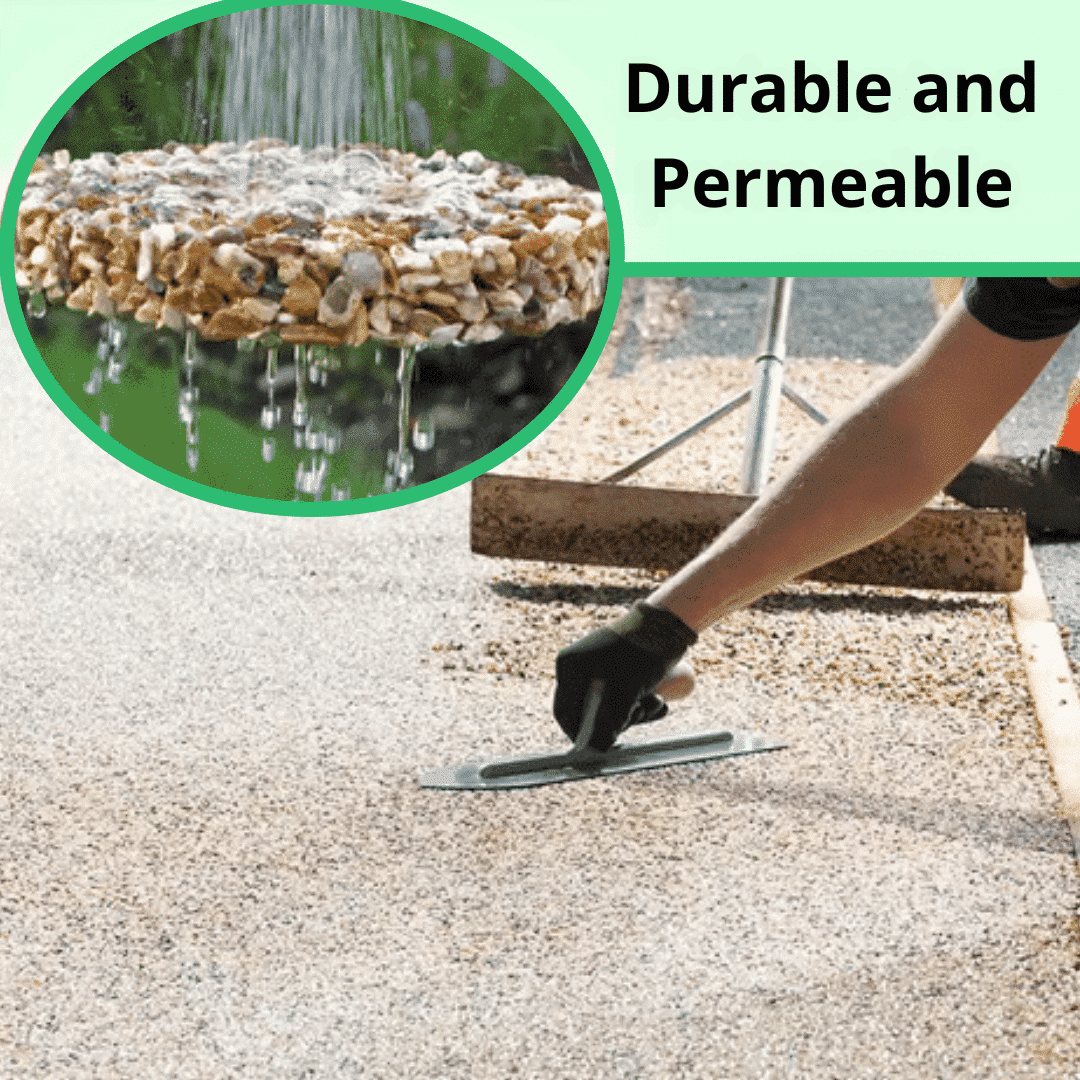
Restoring a weathered or damaged resin terrace can dramatically improve both the safety and the visual appeal of your outdoor space. Whether your surface is pebbled, gritted, or a combination, knowing how to correctly repair and renovate resin ensures longevity, slip resistance, and maintains that clean, decorative look. This guide will walk you through the essential steps for bringing new life to an old terrace, from initial assessment through to flawless finishing.
What You’ll Need
- “Flowstone” – Complete Permeable Floor Kit with Pebbles and Resin – ideal for comprehensive terrace renewal and drainage improvement
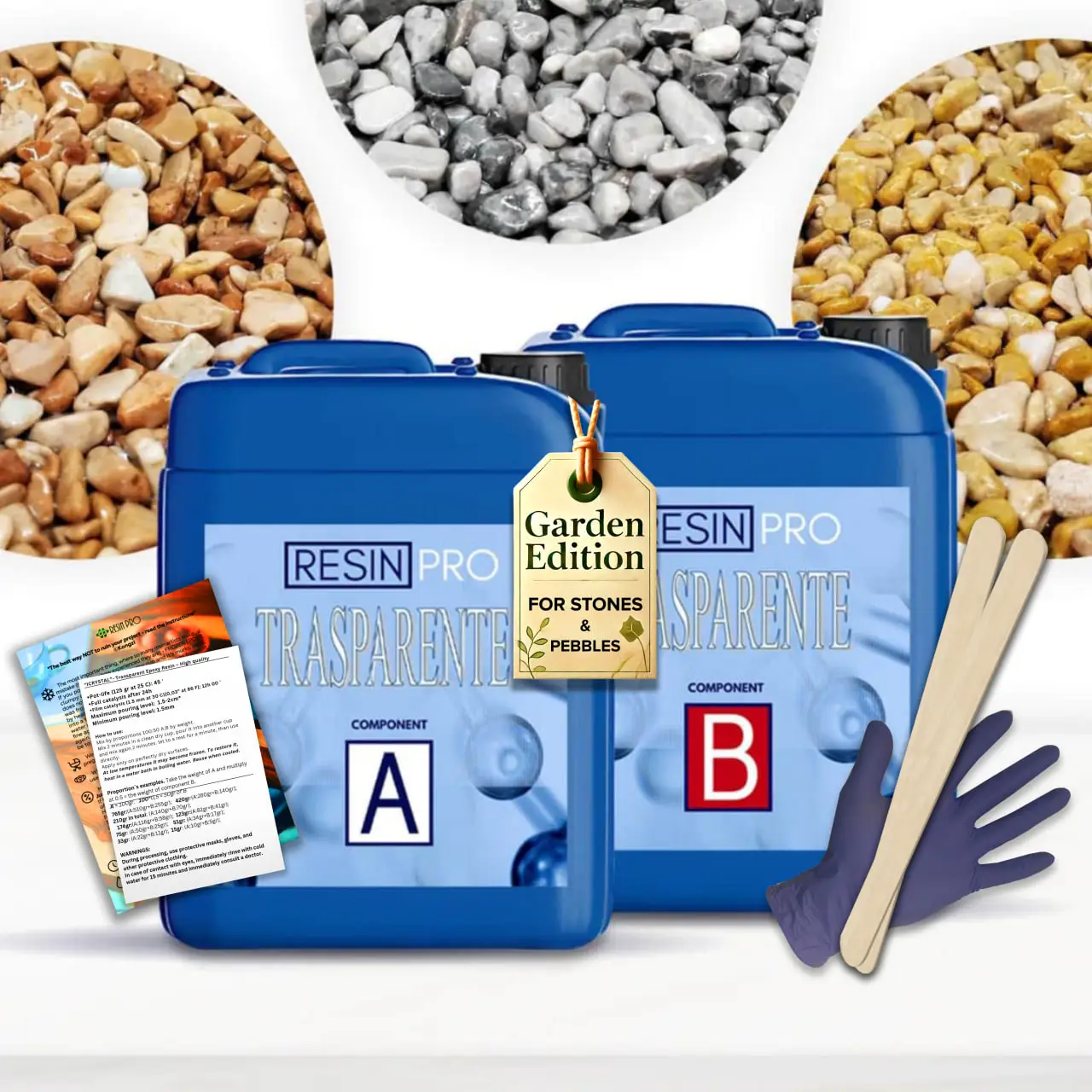
- “Trasparente” – Epoxy Binder for Coloured Pebbles and Grits – for clear, UV-stable repairs involving coloured aggregates
- “Magelstick” – Epoxy Mastic for Stone, Metal, and Cement Bonding and Grouting – essential for targeted crack repairs or bonding between materials
- “Polirock” – Polyurethane Binder for White Stones, 2kg Two-Component Kit – suited for repairs involving white or natural stones needing non-yellowing protection
- Protective gloves and goggles
- Stiff brush or jet washer
- Screeding trowel and mixing buckets
- Suitable personal protective equipment
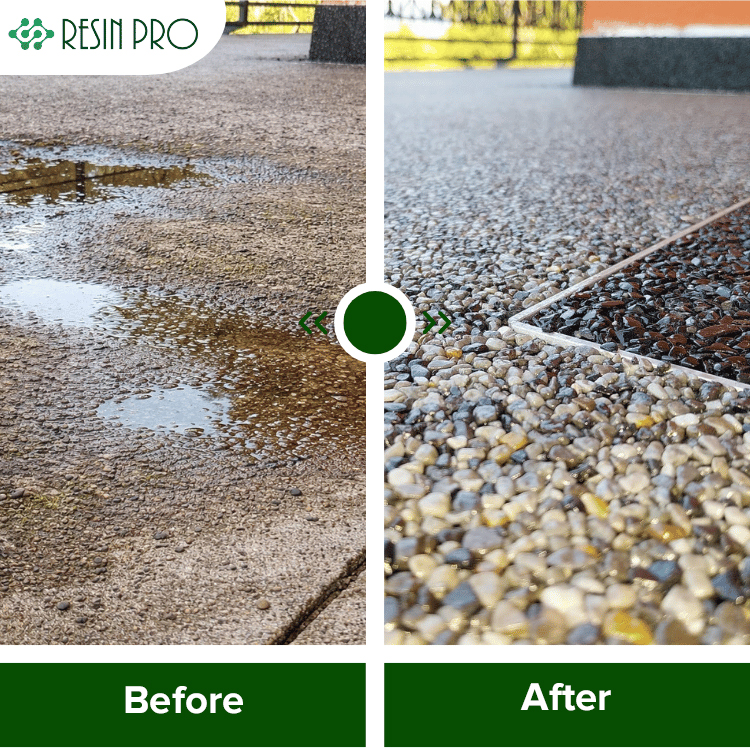
Visual Guide to Resin Terrace Repair
See the transformation process up close: check stages from surface cleaning through pebble application using the recommended resin systems. Real project images help you match visual results to each step mentioned in this guide.
Step 1: Assess and Clean the Existing Surface
Begin by examining your terrace to identify loose, crumbling, or detached resin as well as areas affected by moss, oil, or algae. Thorough cleaning is critical before any repair – use a jet washer and a stiff brush to remove all dirt and debris. Allow the area to dry completely, as excess moisture can impede bond strength of any overlaid resin or repair system.
Pay close attention to joints, edges, and high-traffic zones where build-up or delamination often occurs. Only proceed once the surface feels completely dry and all contaminants are eliminated.
Step 2: Repair Cracks and Fill Gaps
Targeted repairs of cracks, chips, or deeper holes come next. For this stage, a reliable epoxy mastic provides long-lasting strength and gap-filling. Apply “Magelstick” – Epoxy Mastic for Stone, Metal, and Cement Bonding and Grouting directly into defects using a trowel or spatula, pressing firmly to eradicate trapped air and ensure a solid bond.
Allow the mastic to cure fully in accordance with the product instructions. The unique thixotropic formula prevents sagging, enabling application even on vertical edges or risers with no shrinking. Once hardened, sand off any excess if a level surface is required.
Step 3: Apply the New Resin-Bound Layer
For restoring or fully resurfacing the terrace, mix an appropriate resin binder with clean, dry aggregates according to your intended finish. Match your resin system to your aggregate type; for coloured grits or pebbles, a clear epoxy such as “Trasparente” – Epoxy Binder for Coloured Pebbles and Grits provides a durable, UV-stable result. For white or light stones, use a polyurethane binder like “Polirock” – Polyurethane Binder for White Stones to ensure clarity and prevent yellowing.
Blend your chosen binder and aggregate thoroughly in a large bucket or mixer. Trowel the mixture evenly over the cleaned terrace, aiming for a consistent texture and thickness. Never apply new resin over damp or contaminated areas; this is a leading cause of premature failure.

Step 4: Finishing and Initial Curing
Work systematically across the terrace, finishing in manageable sections. Work in manageable sections for uniform results and to avoid visible trowel marks. Smooth the surface as you go to maintain evenness, and ensure aggregates are tightly bonded.
Allow the area to cure undisturbed according to the resin manufacturer’s instructions—protect it from rain, dust, and foot traffic during this period. Once cured, conduct a final inspection and, if necessary, lightly sweep away any loose aggregate before reopening the terrace for use.
Tips and Troubleshooting for Resin Terrace Repair
Work only in suitable weather; avoid days with temperature extremes or high humidity that can hinder resin curing. Always follow mixing ratios—using too much or too little hardener can affect durability. If you notice air bubbles or cloudy patches, these may stem from moisture; ensure all aggregates are thoroughly dry before mixing.
If unsure about aggregate-resin compatibility, perform a small-scale patch test in a discreet corner before full application. Proper surface preparation is the single best way to guarantee a lasting, attractive resin terrace.
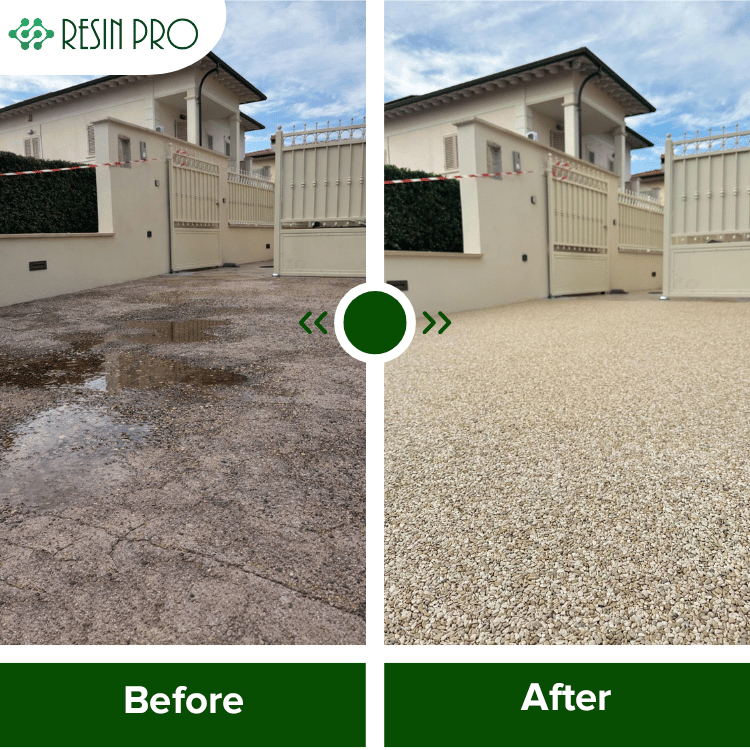
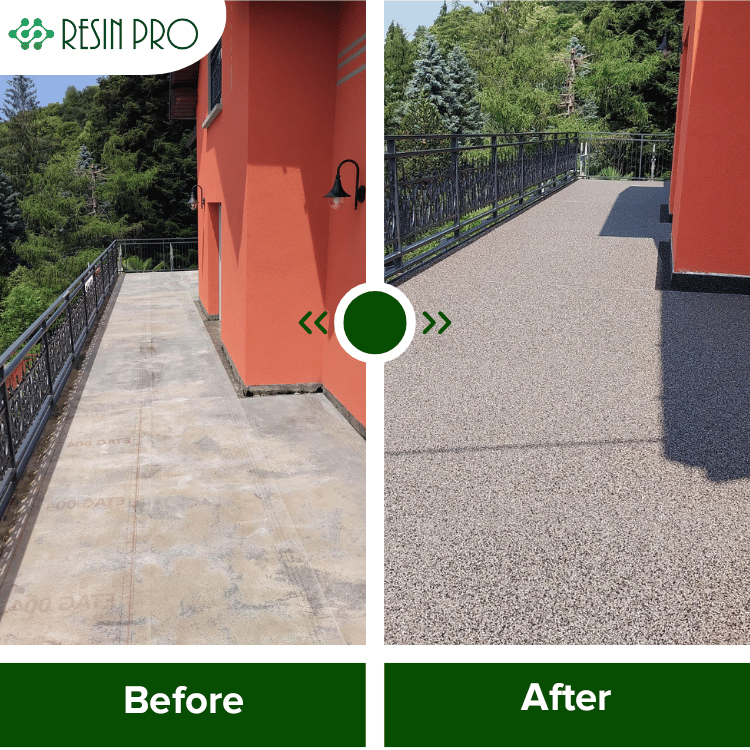
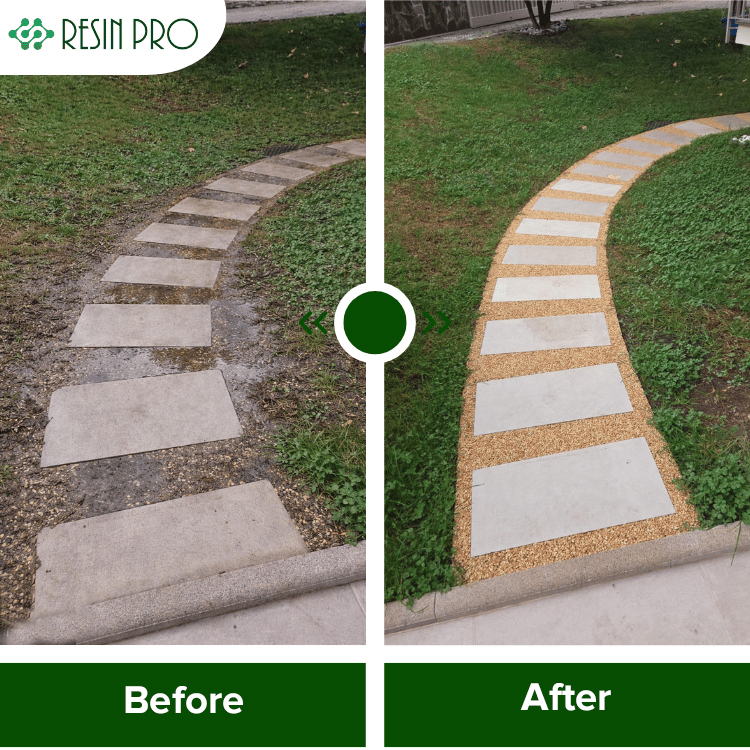
Before and After – Common Terrace Resin Issues
Spot the difference between worn and repaired resin surfaces. Typical issues—like dullness or cracking—can be reversed by following each repair phase. Pebble Floors solutions help you achieve a clean, safe and rejuvenated terrace.
- "Flowstone" – Complete Permeable Floor Kit with Pebbles and ResinPrice range: £49.95 through £3,915.45"Flowstone" kit offers a durable, permeable pebble and resin floor system for UK driveways, footpaths and patios with simple application guidance.
- "Trasparente" – Epoxy Binder for Coloured Pebbles and GritsPrice range: £33.45 through £397.95A transparent epoxy binder designed for coloured pebbles and grits, offering a clear, bubble-free finish with UV resistance for flooring projects.
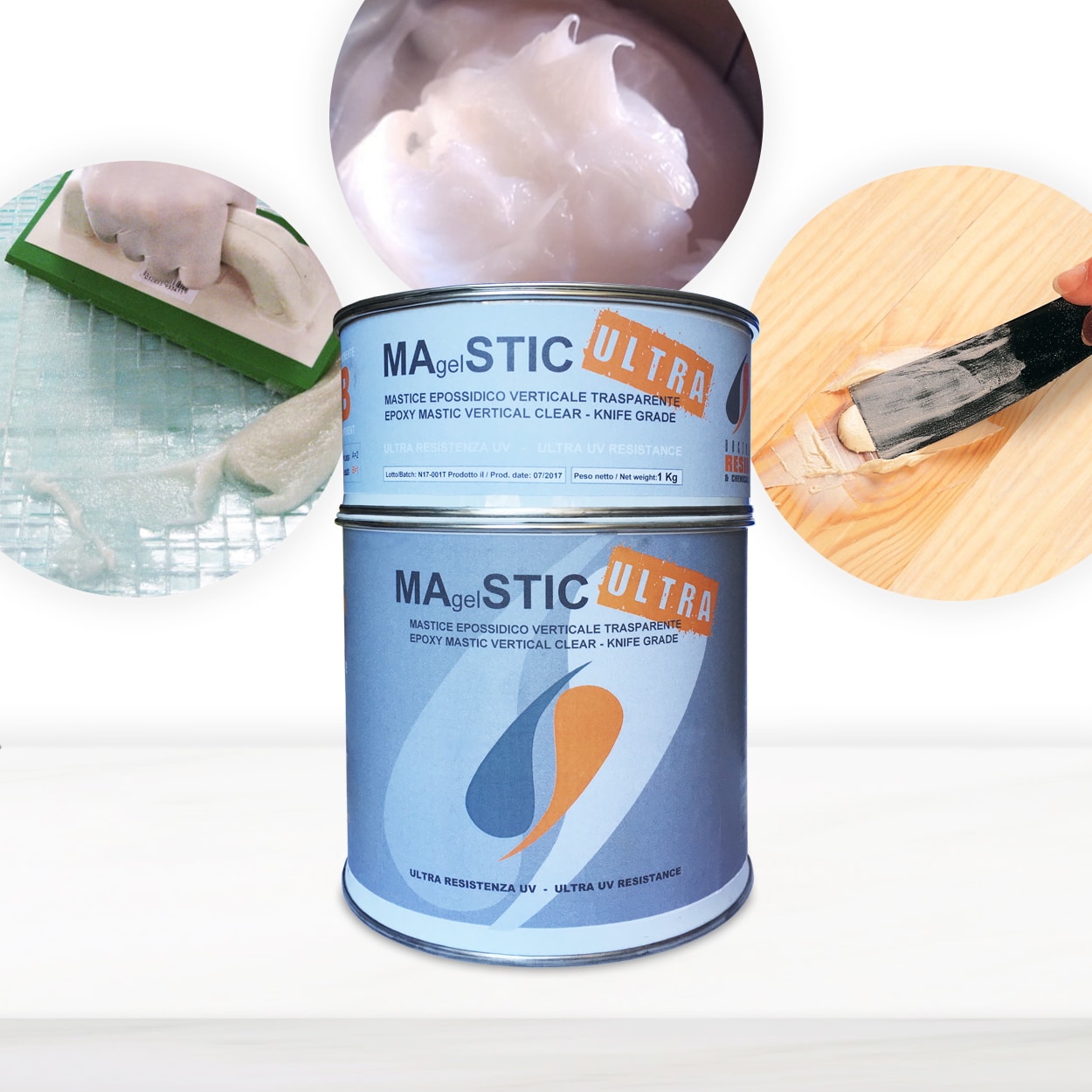 "Magelstick" – Epoxy Mastic for Stone, Metal, and Cement Bonding and Grouting"Magelstick" Epoxy Mastic is designed for bonding and grouting stone, metal, and cement, suitable for repair works on vertical surfaces.
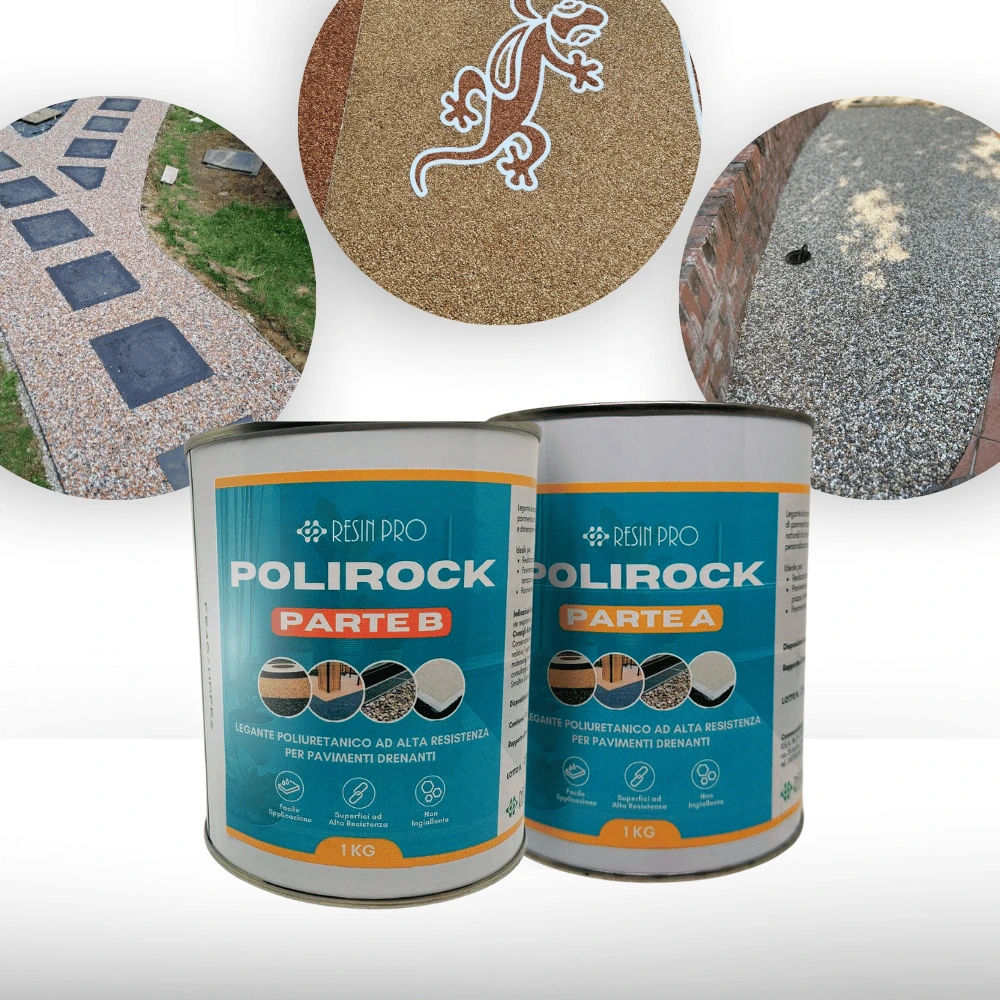 "Polirock" – Polyurethane Binder for White Stones, 2kg Two-Component Kit£61.95Polirock is a two-component polyurethane binder for white stones, designed for decorative and permeable outdoor surfaces.
Frequently Asked Questions
What weather is best for repairing a resin terrace?
Repairs should be carried out in dry conditions with moderate temperatures. Avoid rain or high humidity for best curing results.
Does the old resin terrace need to be cleaned before repairs?
Yes, the terrace surface must be thoroughly cleaned and completely dry before applying any repair materials.
Which resin should I use for repairing a pebble terrace?
Use polyurethane binder for white stones and clear epoxy binder for coloured aggregates to maintain appearance and performance.
How can I repair cracks or holes in my resin terrace?
Fill cracks and deeper holes with a suitable epoxy mastic, ensuring the defect is clean and dry before application.
How long should I wait before using the terrace after repair?
Let the new resin layer cure undisturbed as per the instructions—typically 24–48 hours—before allowing foot traffic.
How can I prevent my repaired resin terrace from yellowing?
Opt for UV-resistant or non-yellowing binders, especially for white stones, and keep the terrace free from contaminants.