 Free shipping on orders over £29,85
  Shipping Tracking!


 Google
 Facebook
How to work with wood and resin boards
Step-by-step guide to combining wood and epoxy resin safely and effectively


Combining wood and resin opens up a world of artistic, durable, and functional possibilities, from river tables to decorative boards. This comprehensive guide will walk you through preparing, pouring, and finishing wood and epoxy resin boards, whether you’re a beginner or an enthusiast aiming to refine your technique. Learn how to achieve crystal-clear finishes, avoid common errors, and create lasting pieces you’ll be proud of.
What You’ll Need
- “EpoxyTable 5-Five” – Deep Pour Epoxy Resin for Tables and Large Projects – Up to 5cm – Deep pour casting resin suitable for projects up to 5cm thick
- “Epoxytable 10-Ten” – Deep Pour Epoxy Resin for Tables, Up to 10cm Casting – Deep pour resin for large or extra-thick projects
- “River-Table” – Complete Kit for Creating Your First Epoxy Resin Table – All-in-one starter kit for beginners
- “EpoxyWood” – Wood Restoration Epoxy Resin for Deep Penetration and Waterproofing – Sealing or pre-treating wood prone to moisture
- Clean, sanded wood (hardwood or specially prepared softwood)
- Mixing cups and stir sticks
- Protective gloves, dust mask and safety glasses
- Release tape or silicone sealant (for mould preparation)
- Spirit level and clamps
- 120–4000 grit sandpaper, polishing pads, and polishing compound
- Coverings to protect your workspace

Essential Tools and Workspace Setup
Prepare a clean, dust-free workspace with good ventilation before you begin. Gather all materials and lay out tools within reach to streamline each stage of your project. Always use gloves and a protective covering on surfaces to guard against resin spills and drips.

Step 1: Prepare the Wood Surface
Begin by selecting kiln-dried or well-aged wood to prevent future warping and moisture issues. Inspect for cracks or rot; any soft or damaged wood should be treated or stabilised. Sand all surfaces with medium-grit sandpaper (120–180 grit), removing all dust thoroughly. Ensure your wood is properly dry and sealed to avoid bubbles or clouding later.
If you’re working with oak or other porous woods, or if the piece will be exposed to moisture, use a penetrating resin such as “EpoxyWood” – Wood Restoration Epoxy Resin for Deep Penetration and Waterproofing to seal the grain and achieve long-lasting waterproof results.
Step 2: Build and Seal Your Mould
Set up a sturdy, completely flat mould or formwork using melamine board, MDF, or HDPE. Line the surfaces with release tape or non-stick sheeting to allow for easy demoulding. Use silicone sealant on all joins to prevent leakage. Check for any gaps, and ensure everything is level using a spirit level.
A complete kit, like the “River-Table” – Complete Kit for Creating Your First Epoxy Resin Table, often includes sealants and release film for this stage, simplifying the setup for beginners.
Step 3: Measure and Mix the Resin
Accurately weigh or measure your resin and hardener, following the manufacturer’s instructions for your chosen formula. Always measure and mix resin and hardener accurately to ensure proper curing. Combine thoroughly, scraping the sides and base of your mixing container, until the mixture is uniform and clear.
For deep pours up to 5cm, EpoxyTable 5-Five is ideal. For even thicker casting up to 10cm, use Epoxytable 10-Ten. Always mix only as much as you can pour within the open time to avoid premature setting.

Step 4: Pouring and Layering
Carefully pour the mixed resin into your mould, starting at one end and moving steadily to avoid air entrapment. Work in successive layers for thick pours; if your project exceeds the maximum recommended thickness (5cm for EpoxyTable 5-Five, 10cm for Epoxytable 10-Ten), pour in increments, allowing partial curing between layers.
Remove bubbles by gently passing a heat gun or torch over the surface, taking care not to scorch the resin. Allow the resin to self-level; avoid disturbing the project while it cures.

Step 5: Sanding and Polishing for a Professional Finish
After the resin has cured completely (usually 72 hours for handling, up to 7 days for full set), demould your board. Sand thoroughly between layers for bonding if you need to add more resin later. Use progressively finer sandpaper (from 180 up to 4000 grit) to smooth the surface. Finish with a polishing pad and compound for a high-gloss shine.
Protect the freshly polished board from dust and moisture for at least 24 hours. If you used a kit with a polishing set, follow the instructions closely for the best clarity and sheen.
Tips and Common Mistakes
Protect your work from dust during curing—cover the surface loosely with a clean box or plastic sheet. Avoid rushing the process: incomplete curing or disturbing the resin before it sets may lead to ripples or clouding. Be mindful of ambient temperature—room temperatures of 18–24°C are best for working and curing resin.
Common mistakes include underestimating required resin, failing to seal the form, or mixing incorrect ratios. Always allow full curing between layers, and do not remove the piece from the mould prematurely.
Finishing Touches: Achieving a Flawless Surface
Final surface quality depends on careful sanding, thorough polishing, and dust protection while curing. For a high-gloss, scratch-resistant finish, take your time with each abrasive step and use a purpose-made polish for resins. Cover your project after finishing to keep airborne dust away until fully cured.
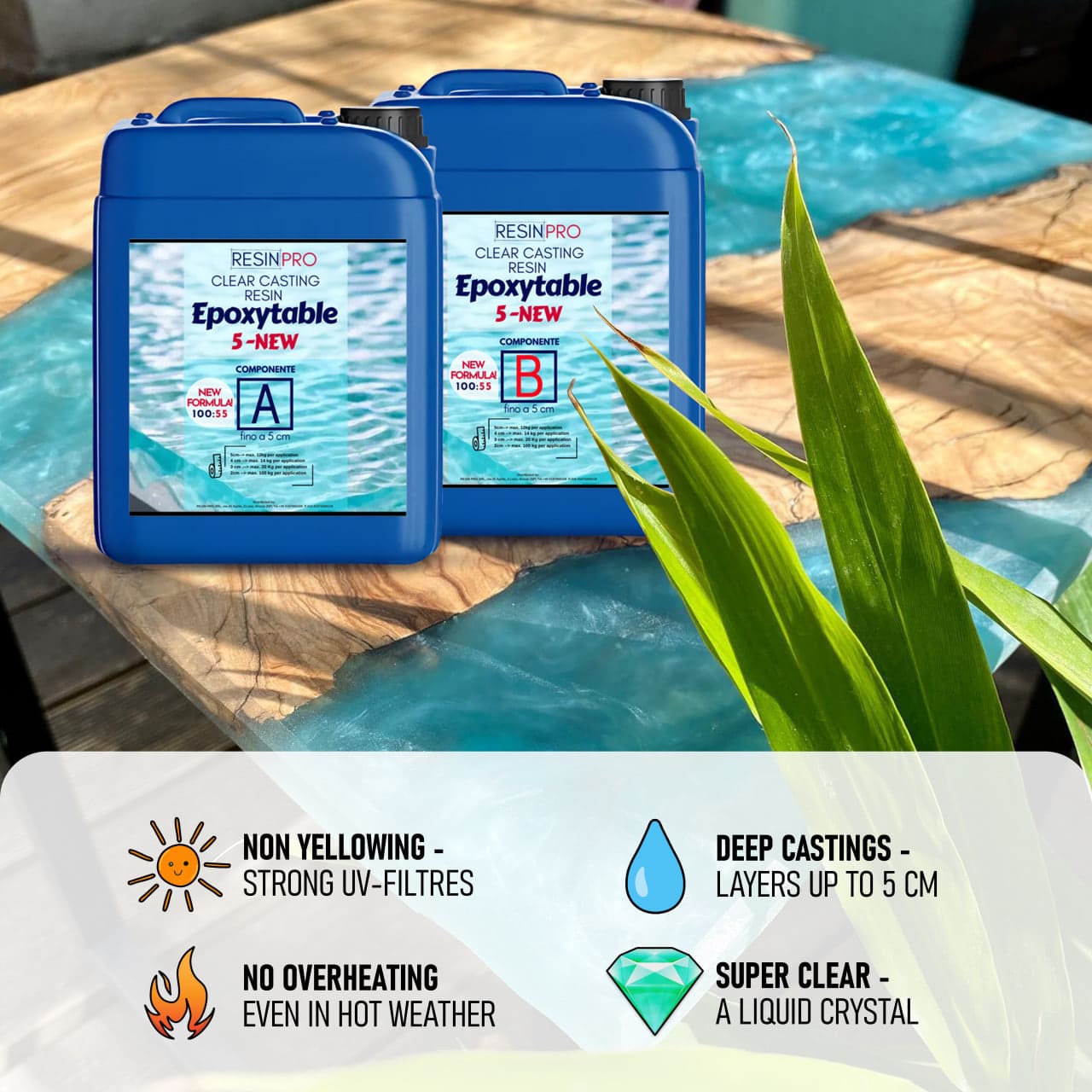
- "EpoxyTable 5-Five" – Deep Pour Epoxy Resin for Tables and Large Projects – Up to 5cmPrice range: £16.85 through £1,099.85EpoxyTable 5-Five is designed for deep pour casting up to 5cm, suitable for wood and resin boards, with strong UV filters and scratch resistance.
- “Epoxytable 10-Ten” – Deep Pour Epoxy Resin for Tables, Up to 10cm CastingPrice range: £33.85 through £334.85“Epoxytable 10-Ten” is designed for deep pour casting up to 10cm, suitable for making tables and artistic wood-resin projects.
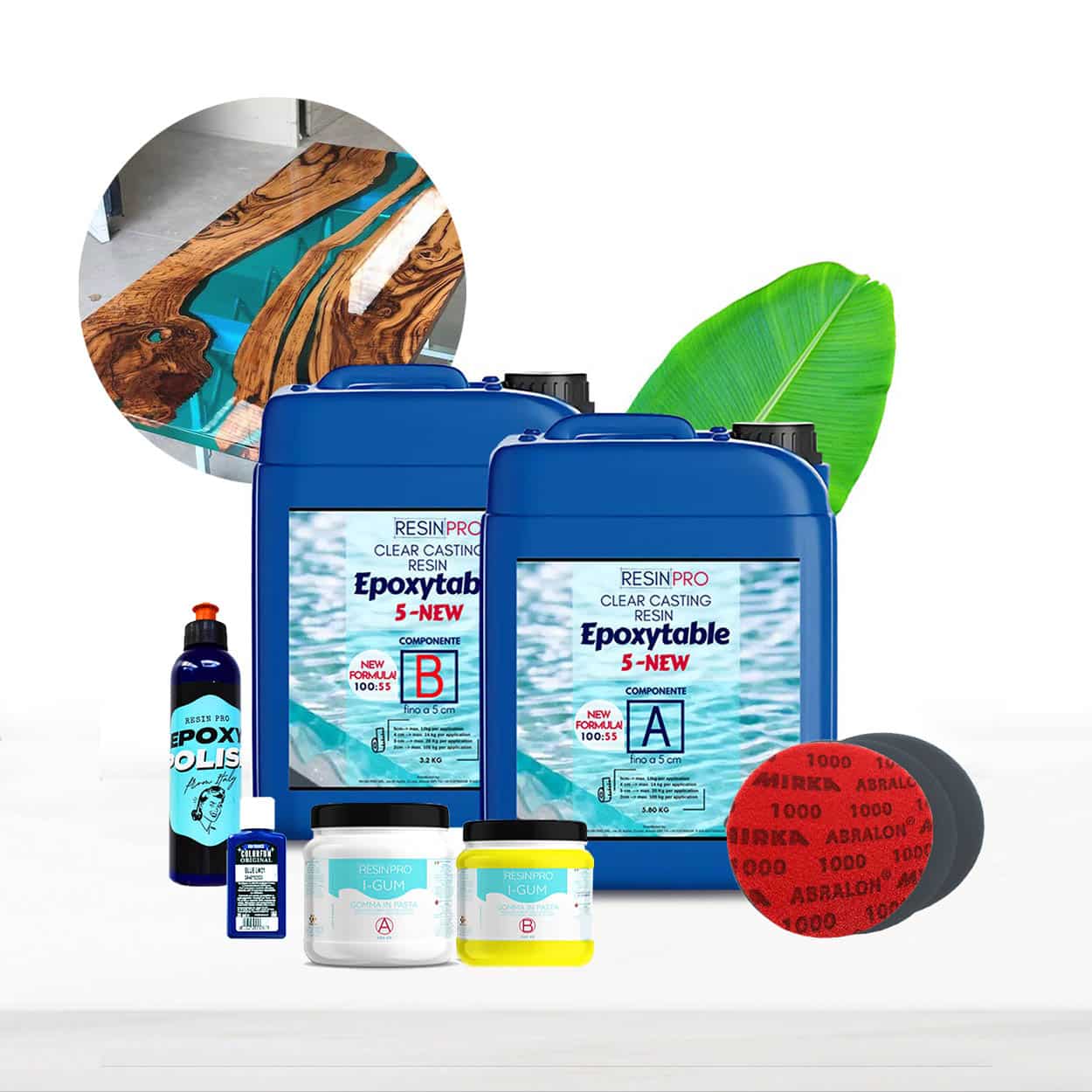 "River-Table" – Complete Kit for Creating Your First Epoxy Resin TablePrice range: £188.85 through £444.85Kit suitable for creating wood and resin tables with clear epoxy and detailed instructions for beginners.
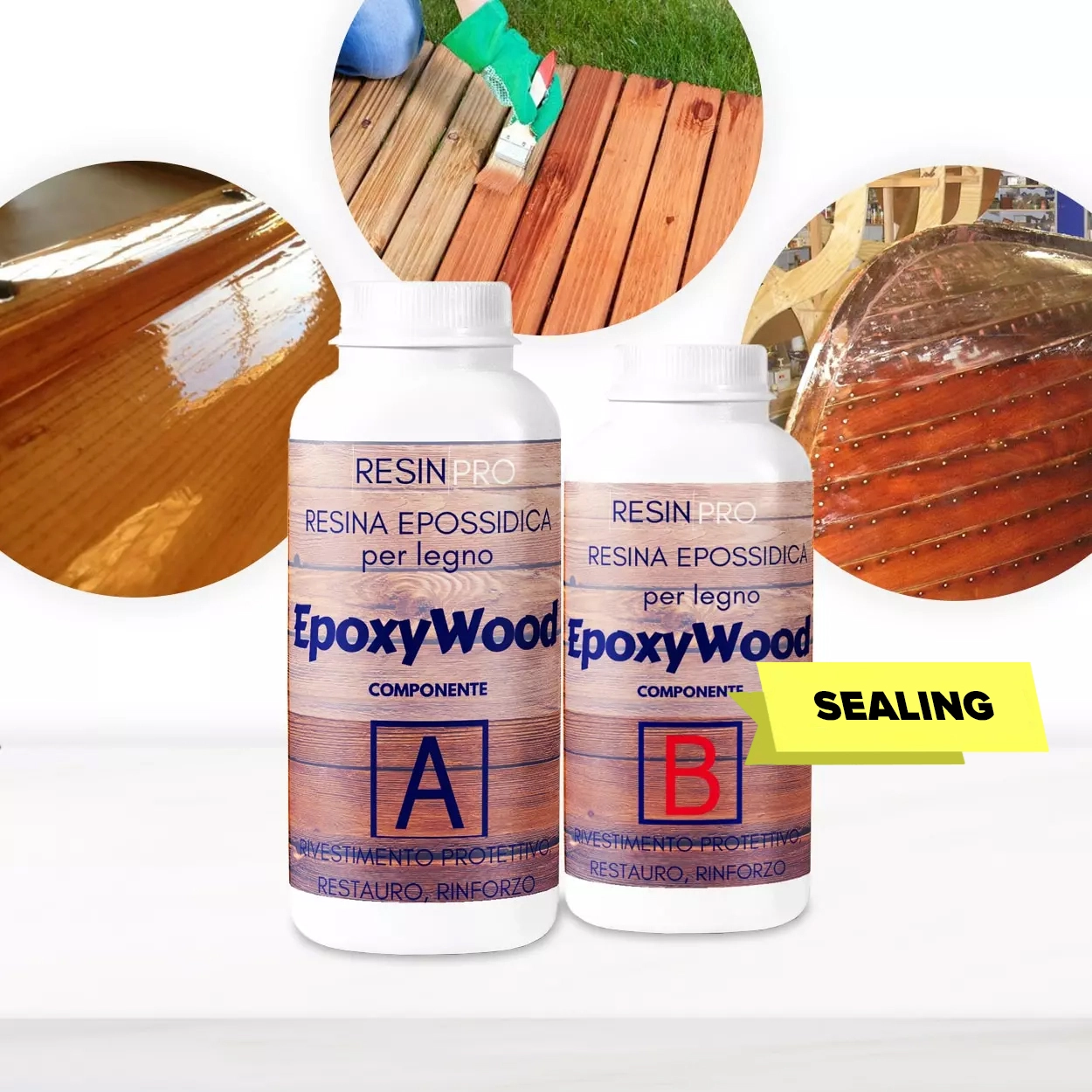 "EpoxyWood" – Wood Restoration Epoxy Resin for Deep Penetration and WaterproofingOriginal price was: £64.00.£39.85Current price is: £39.85."EpoxyWood" is designed for repairing and waterproofing wooden surfaces with a natural finish. Suitable for woodworking and restoration projects.
Frequently Asked Questions
What resin should I use for wood and resin boards?
Choose a deep pour epoxy formulated for wood, such as EpoxyTable 5-Five for pours up to 5cm or Epoxytable 10-Ten for up to 10cm.
How do I prevent bubbles in my resin pour?
Always mix slowly, pour steadily, and remove bubbles with a heat gun or torch after pouring.
Should wood be sealed before pouring resin?
Yes, sealing with a penetrating epoxy reduces air bubbles and prevents clouding in the finished piece.
How long should I cure epoxy resin boards?
Allow 72 hours until handling and up to 7 days for a fully cured, hard surface before heavy use.
Can I pour resin in layers for thick projects?
Yes; always allow partial cure and sand between layers to ensure proper adhesion and clarity.
How do I achieve a glossy finish on resin boards?
Sand progressively up to 4000 grit, then polish with a special resin compound for the best shine.