 Free shipping on orders over £29,85
  Shipping Tracking!


 Google
 Facebook
← Back to Is resin bound paving good for pool areas?
When installing resin bound paving near a swimming pool, UV stability is a key feature to consider. The right resin binder ensures vibrant, long-lasting results even in sun-exposed areas, making pool surrounds both attractive and durable.
What Does UV Stability Mean for Resin Bound Surfaces?
UV stability refers to a resin’s ability to resist discolouration and degradation from sunlight exposure. Poorly stabilised resins can yellow or lose clarity over time, especially in poolside installations where direct sunlight is intense. For pool areas, both the colour integrity of the aggregate and the binder are at risk if UV resistance is inadequate.
Selecting the Right UV-Stable Binder
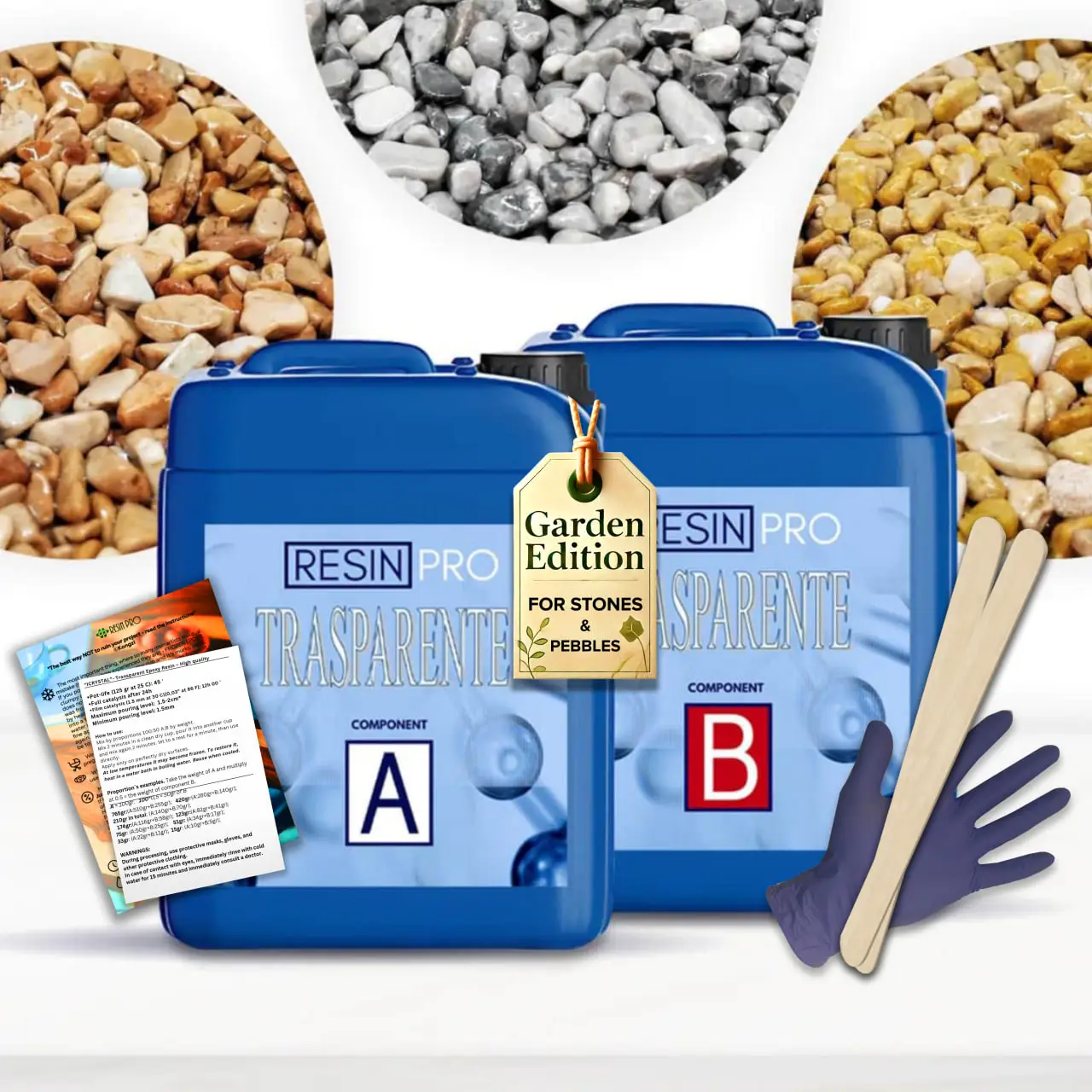
When using white or very light stones, a non-yellowing polyurethane binder like Polirock is recommended as it remains clear under UV exposure. For coloured or dark aggregates, choose a clear epoxy binder with high UV resistance, such as Trasparente. These choices help maintain the original look of your pool area over time.
- White stones: Use a polyurethane binder designed to avoid yellowing.
- Coloured/dark pebbles: Select an epoxy binder formulated for long-term UV stability.
When UV Stability Matters Most
Poolside paving is subject to high levels of sunlight, reflected UV from water, and frequent wetting—all of which can accelerate binder degradation. UV-stable resins are especially important for these areas, as they keep surfaces looking clean, bright, and safe for longer. Regular poolside maintenance is easier when the resin doesn’t discolour or weaken over time.
Related products
Related guides
Choosing a UV-stable resin system is vital for attractive, lasting poolside paving. To learn more about best practices for resin bound surfaces around pools, visit the hub page on resin bound paving for pool areas.