💥No. 1 Value Epoxy Resin in the UK💥
Free shipping on orders over £29.85

HOW TO MAKE A RESIN AND WOOD RIVER TABLE AND COUNTERTOP (LIVE EDGE)

HOW TO MAKE A RESIN AND WOOD RIVER TABLE AND COUNTERTOP (LIVE EDGE)

Are you looking for the materials and the instructions to create your wood and resin table?
In this article, you will discover the step-by-step procedure and tips to avoid mistakes and get wonderful result!

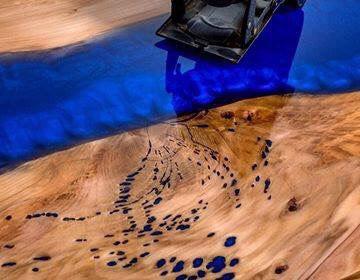
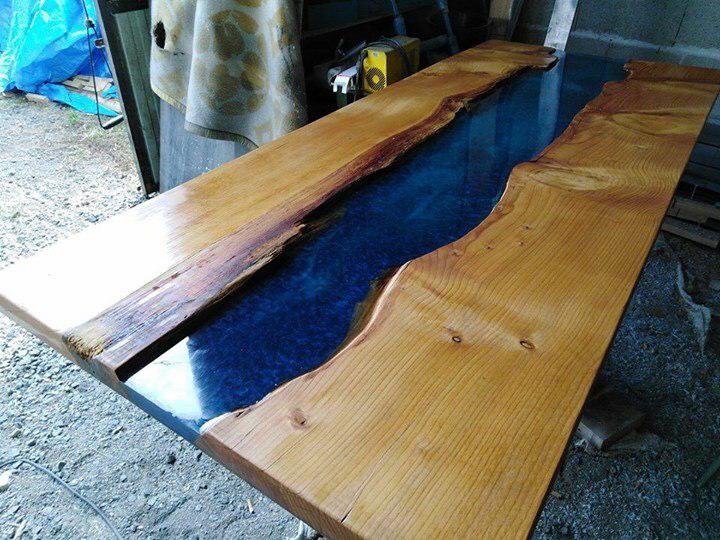
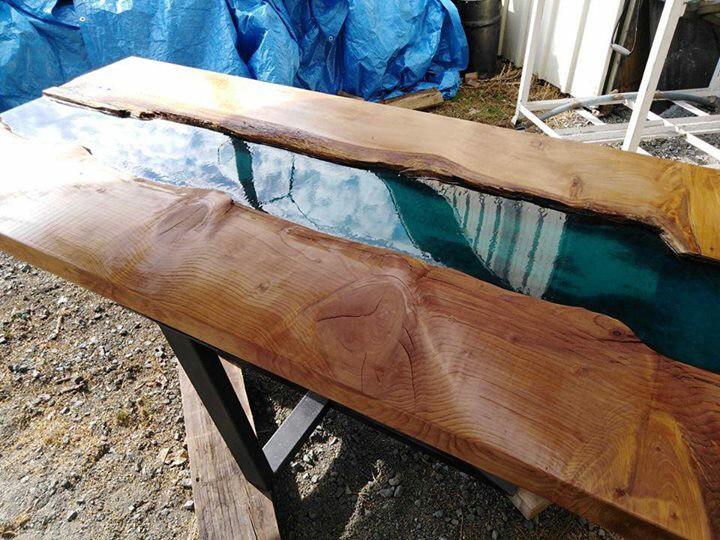
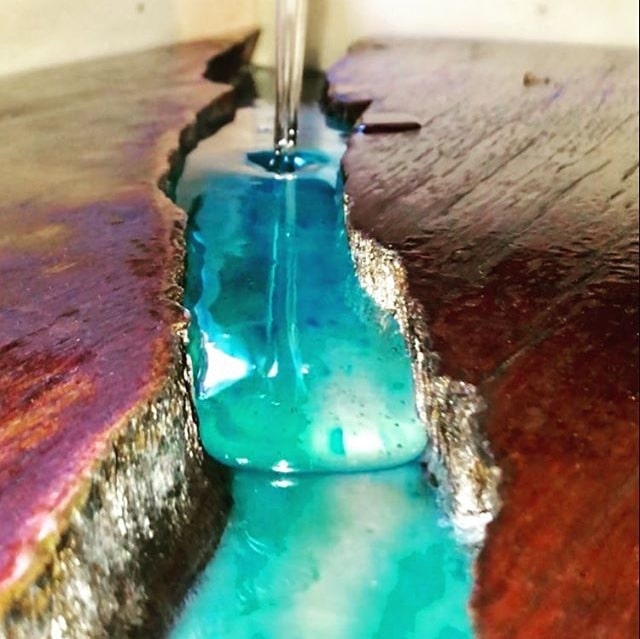
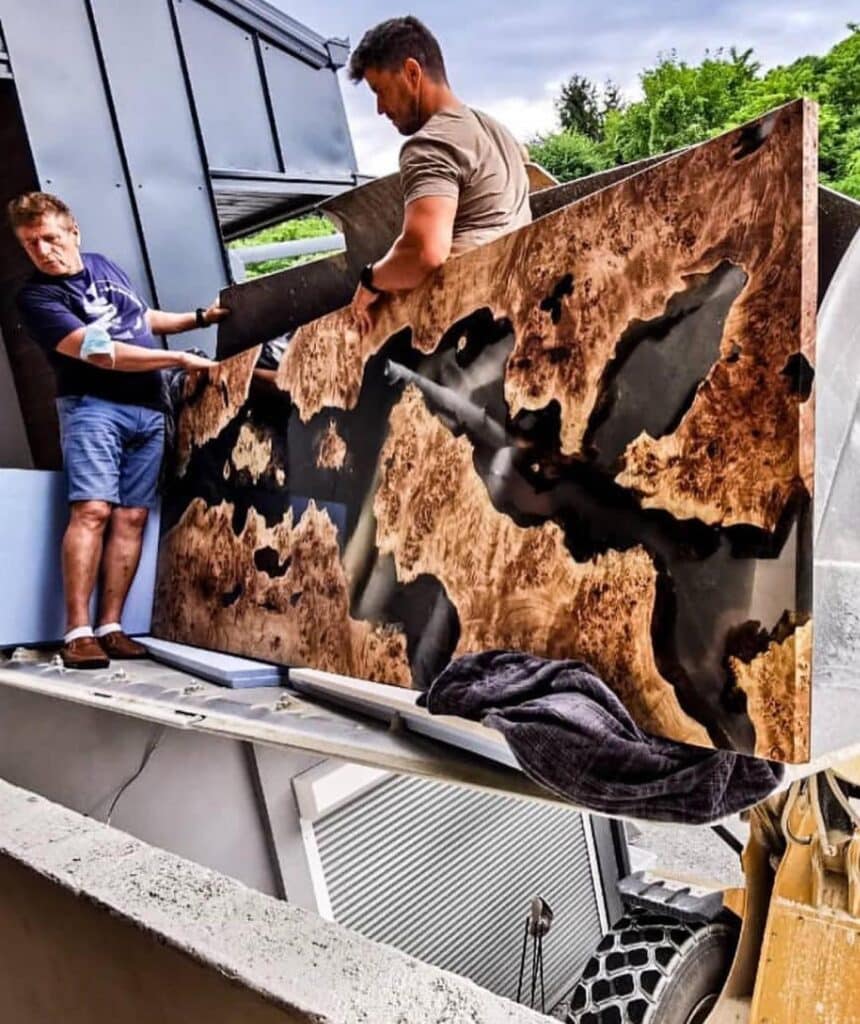
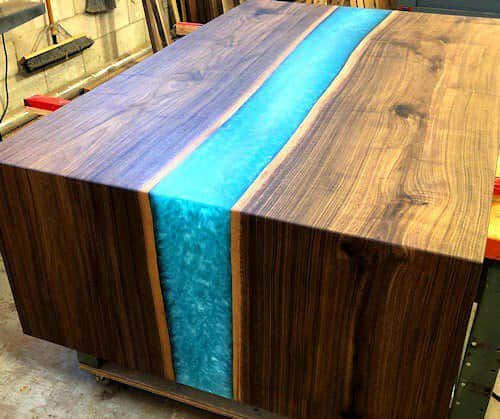
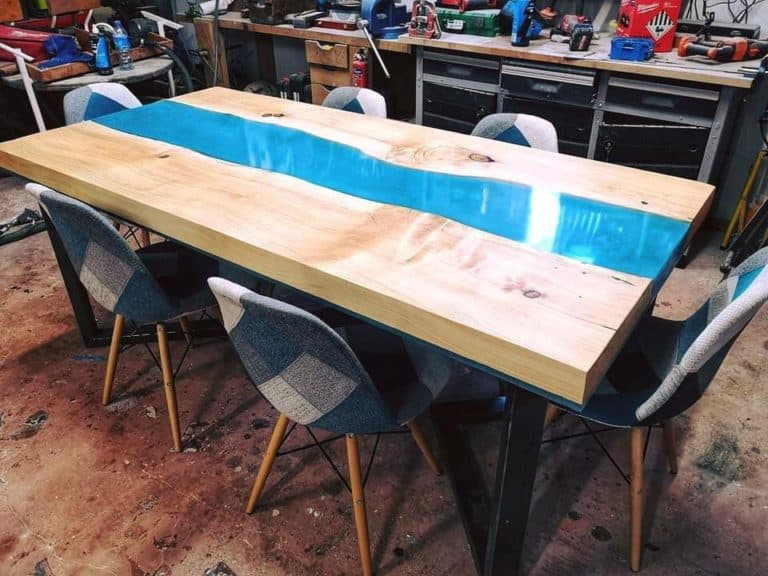
Let’s start from the beginning: what exactly is a resin and wood “river ” table?  River tables are wooden tables with a strip of coloured or crystal clear epoxy resin in the centre.
The edges instead are made of rough wooden planks and are therefore irregular. This is what renders them beautiful!
These resin and wood tables are often very expensive in store, but luckily you can easily create them yourself with our products!

What do you need to create a Wood and Resin Table or Countertop?

  • A rough wooden plank (i.e. a “slab” of tree, planed and at least 2-3 cm [0,78”-1,18”] thick);
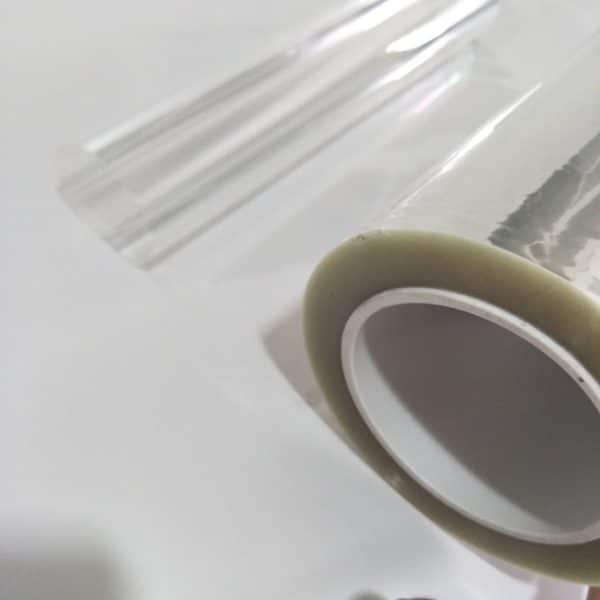
  • Shiny Shield” release film;
  • RESINPRO Crystal clear epoxy resin;
  • Coloured pigments (optional);
  • Two buckets for mixing;
  • A disposable brush;
  • Sandpaper;
  • Polishing kit and a polishing cloth;
  • Heat gun

Epoxy resin and wood table: here are the steps.
Step 1: Choose the right wood!

This step is the easiest, but it takes time…

You have endless choices when picking the type of wood to create a “river” table. From solid and regular to sinuous with many knots to a very narrow piece of wood.
Any defects or irregularities will be filled with Transparent Crystal Clear Epoxy resin! You can find these “slabs” of tree from any carpenter or wood dealer!

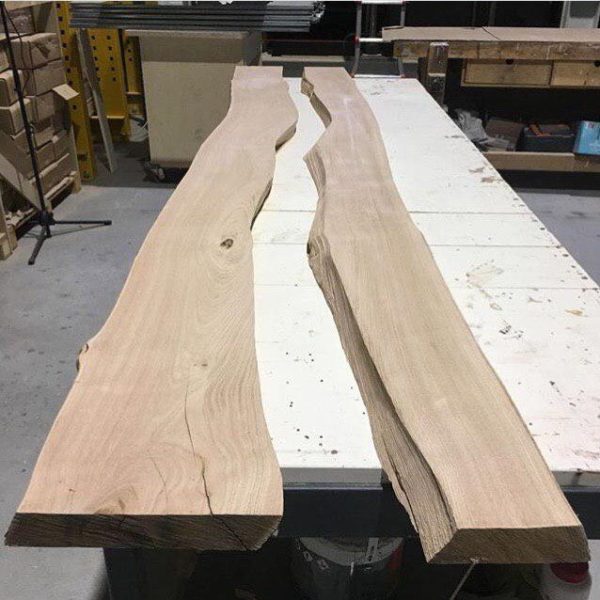
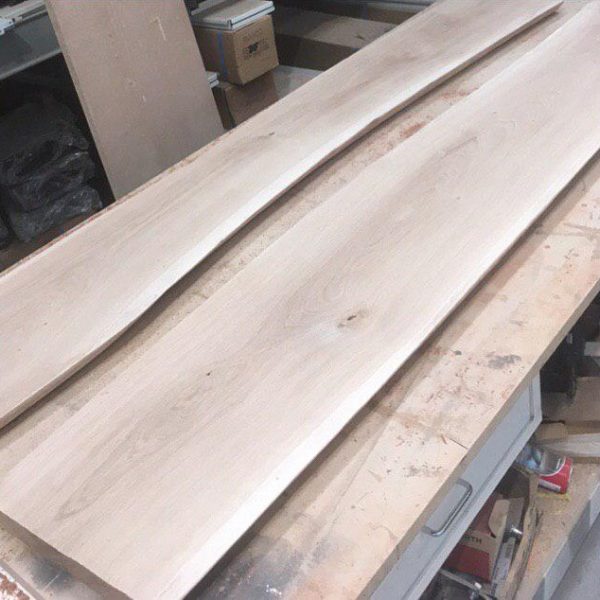
If you have chosen the wood for your river table, it is time to prepare the piece. As a general rule, a slab of the trunk is then cut in half and the two pieces are separated creating a hole in the middle which will be filled with epoxy resin. This creates the “river”. Often the edges of the wood have to be cut correctly to achieve the right dimensions.
If you want, you can remove irregularities with a sander. You can remove (or keep) the bark as well: depends on the style! Take your time to do it for a perfect final result. Of course, the wood has to be totally dried.

Step 2: Create a mould for Epoxy Resin

Now it is time to create a mould, where the pieces of wood will be positioned and crystal clear epoxy resin will be poured.
The simplest thing to do is to build a laminated chipboard container. It is easy to saw it and is available in larger sizes. If you don’t have the tools, ask a carpenter!

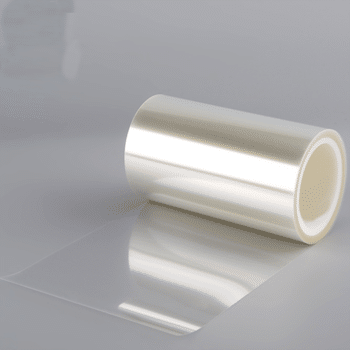
Afterwards, coat the inner surface with the easy-to-apply SHINY SHILED release film, which leaves the surface smooth and polished and does not let the resin stick.
(Here is the link to learn more:  http://resin-pro.co.uk/product/release-film-glossy-shiny-shield-32cm-to-create-the-table/)

Next, seal the joints with silicone rubber or sealant, then remove the excesses.
HOW TO MAKE A RIVEL LIKE TABLE WITH RESIN AND WOOD (LIVE EDGE or River Table)HOW TO MAKE A RIVEL LIKE TABLE WITH RESIN AND WOOD (LIVE EDGE or River Table)

Step 3: Wood preparation

Before carrying out the casting on the river table, it is important to previously apply a generous epoxy coat with a brush or a roller on the pieces of wood (at least the part in contact with the resin). This guarantees that no air bubble escapes during the catalysis stage of the resin. Let the epoxy resin harden, sand lightly with a 120-grit sandpaper, then apply another coat of epoxy resin. These layers prevent air escaping from the wood and remaining trapped in the casting. It is suggested to apply a lot of epoxy resin during this step.
HOW TO MAKE A RIVEL LIKE TABLE WITH RESIN AND WOOD (LIVE EDGE or River Table)HOW TO MAKE A RIVEL LIKE TABLE WITH RESIN AND WOOD (LIVE EDGE or River Table)

Step 4: Epoxy Resin Casting

If the wood is well coated and hardened, it can be fixed in the mould. Glue it to the bottom by pouring 1-2 mm [0,03”-0,07”] of transparent epoxy resin, otherwise there’s the risk it may float up to the surface!

Use RESINPRO transparent epoxy resin, then pour layers up to 2-3 cm [0,78”-1,18”] thickness. If you want to pour thicker layers, you can use EPOXYTABLE Epoxy Resin

You can also colour the resin with Fluo pigments, Colour Fun colouring pastes or SAHARA Metal Pigments first.

Pay your attention to the proportions! THE PROPORTIONS ARE USUALLY PRINTED ON THE TANKS, PLEASE CHECK IT BEFORE USING.
Being a two-component resin, you have 2 bottles at your disposal, one containing resin “A” and the other containing hardener “B”. You will need some electronic scales to weigh grams and a mixing container where you can combine the liquids.
How to calculate, how much hardener do you need? Take your proportions –JUST AN EXAMPLE – 100:60. Then take the weigh of component A and multiply on B, (if 100:60 – A*0.60; if 100:70 – A*0.70; if 100:87 – A*0.87).
So! If you have component A 5kg, and proportions 100:60, your calculation –
5*0.6=3kg of component B.
Please, use some electronic scales and weigh in grams to get the best results.


Mix resin and hardener thoroughly (especially by sides, because epoxy and hardener have a different density) and add the pigments you prefer (no more 5% from the mix).

Stir gently for at least 5 minutes.

Pour the resin into the central line and after 5-10 minutes move a heat gun over the surface to remove the air bubbles.

After polymerization, the table is ready for further processing. Once hardened, the epoxy resin can be cut, sanded and milled like normal wood.

Step 5: Apply the table legs

It’s time to prepare the legs of your wood and epoxy resin table. You can use either metal or wood. A small amount of epoxy resin in the hole guarantees that screws or bolts won’t come off.
HOW TO MAKE A RIVEL LIKE TABLE WITH RESIN AND WOOD (LIVE EDGE or River Table)HOW TO MAKE A RIVEL LIKE TABLE WITH RESIN AND WOOD (LIVE EDGE or River Table)

HOW TO MAKE A RIVEL LIKE TABLE WITH RESIN AND WOOD (LIVE EDGE or River Table)HOW TO MAKE A RIVEL LIKE TABLE WITH RESIN AND WOOD (LIVE EDGE or River Table)

HOW TO MAKE A RIVEL LIKE TABLE WITH RESIN AND WOOD (LIVE EDGE or River Table)

Step 6: Polishing

If you have carefully followed all the steps to build a wood and epoxy resin “river” table, now you just need to polish the parts that got scratched in sanding or cutting procedures.

To polish epoxy resin, use sandpaper up to 3000 grit first and then use a specific polishing paste for resins. You can find a full resin-polishing kit on the website – http://resin-pro.co.uk/product/resin-polishing-kit-2/.

Now you have your own resin and wood river table! Super cool, it will always make a good topic for conversation with your guests! Want to know more or need further tips? Contact us!

The photos in this article represent objects created by our customers with the use of RESINPRO products.
+ use this discount code at 5% – “cheers” for your first purchase!

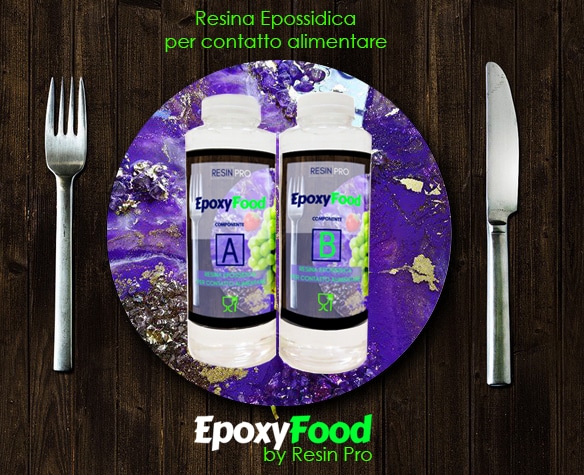
WITH EPOXYFOOD, WE SERVE YOU CREATIVITY FOR FOOD CONTACT ON “A SILVER PLATE”. ACTUALLY, ON A RESIN PLATE!

How many times you wanted to express your creativity and imagination on surfaces and countertops usually in contact with food.
Now you can let go of this frustration thanks to a Food Safe and non-toxic product, created by ResinPro with the specific purpose of coating plates, glassware and cutting boards in daily contact with food and liquids.

A real revolution for who loves to use resin for passion or work, but also a valid encouragement for those who would like to approach this world and test their manual skills on small and handy objects.
The non-toxicity of EpoxyFood is determined by the two-component, high-modulus, unfilled, medium-fluidized EpoxyFood system, which uses only raw materials included in the positive list of substances allowed for food contact (EU Regulation No. 10/2011 January 14, 2011).

Therefore, modelling features a new transparent resin with which you can cover surfaces such as platters, cutting boards, plates, glassware, cutlery, knives and table tops, but not only that!
As usual, with resin creativity has no limits, and it is possible to use EpoxyFood to create a protective layer on printed images, such as photographs, canvases and paintings, or to build furniture and decorative design elements through mounting techniques.

What makes this product suitable for these situations?

  • The ability to achieve an accurate surface finish;
  • Good resistance to yellowing;
  • Good outdoor stability;
  • Excellent mechanical resistance and resistance to basic and acid chemical substances.

The method of application of EpoxyFood is by casting, due to its medium-high viscosity which allows to work on non-toxic thick surfaces.
Charged with mineral aggregates of appropriate grain size, it is also used to create self-levelling epoxy and screed surfaces suitable for contact with food.


The high transparency of this resin will allow you to create, for example, a beautiful platter with fabric embedded:

  • To cut the fabric precisely, we suggest to create a paper cutout of the platter surface and then attach it with needles directly on the cloth;
  • After drawing the outline with a chalk, cut and verify that the dimensions match the platter;
  • Apply the transparent adhesive only on a few areas of the fabric, glue it on the bottom and let it dry;
  • Cast the EpoxyFood resin and move the platter to distribute it equally on the surface, including the edges. Let it dry.

“EPOXYFOOD” – Food Contact Transparent Resin For Coating

The bewilderment is guaranteed!

EPOXY RESIN: PROBLEMS AND SOLUTIONS – THE 12 MOST COMMON PROBLEMS

1. RESIN HAS NOT HARDENED AFTER THE INDICATED TIME

If resin has not hardened after the indicated time has elapsed, there may be several causes. Here are
the most common ones:

  • Double-check the usage ratio indicated in the instructions. An incorrect or approximate combination may affect the catalysation of the product. It is very important that you never add a greater amount of hardener than the specified one.
  • Never cast the second layer without ascertaining first that the previous one has completely hardened. Pouring another layer over a surface that has not catalysed may cause overheating and compromise your work.
  • If you work in an environment where the temperature is relatively low, the curing time of the resin will increase significantly. For example, if you go from 25° [77 F] to 15° [59 F], the curing time will double. Use an external heat source (stove, radiator, etc.) to increase the ambient temperature or apply a hardener suitable for working at low temperatures.
  • Most of the problems concerning the failure to harden of the resins can be traced back to
    incorrect mixing. Make sure to carefully mix your product for at least two minutes,
    meticulously scraping the bottom and the walls of the container used. Never be inattentive in this very important stage.
  • Add the additives (pigments, dyes, etc.) only after mixing resin and catalyst.
  • Use the catalyst you find packed together with the resin you are going to work with. The use of “unrelated” catalysts may vary the final result.


2. RESIN DOES NOT STICK WELL

  • If you want to use resin as a bonding agent or to create River Tables, you may run into some problems related to the stickiness of the product.
  • If you are working on a very porous surface, this will absorb the product very easily, making a second layer of resin necessary particularly on the edges of the material you are going to glue.
  • If you work on wood, make sure to clean and smooth the surface. A rough cleaning may nullify the adherence of the resin.
  • Another problem might relate to the width of your worktop. A large surface of resin alone
    may in fact not guarantee a perfect seal. To deal with this problem, all you need to do is add material to reduce the workload of the resin.
  • Make sure that the resin is evenly distributed over the entire surface.


3. RESIN LOST ITS SHINE

If your resin has taken on an opaque and unpolished colour, the causes are most likely due to climatic conditions of your working environment.
Many times the opacification may be caused even just by a normal change of season.
Use an external heat source to remove moisture and to foster polymerization.


EPOXY RESIN: PROBLEMS AND SOLUTIONS. THE 12 MOST COMMON PROBLEMS.


4. A STICKY FILM HAS FORMED ON THE SURFACE

Once the resin has hardened, a sticky film may form on the surface. This problem can be easily reduced by wiping a sponge soaked in hot water on your surface.
However, if you want to avoid film formation, employ the following precautions:

  • Always try to work in an indoor environment, preventing sudden changes in the room temperature.
  • Avoid working with too small quantities, since the smaller the mix dosages, the more you risk to enhance the formation of impurities in the compound.
  • Remember that film formation does not depend only on moisture but also on the
    presence of CO2, thus limit the use of thermal guns during the catalysis process.
  • Remember that using a container limits the interaction of the resin with the air molecules.
    Try to keep your product as isolated as possible.

EPOXY RESIN: PROBLEMS AND SOLUTIONS. THE 12 MOST COMMON PROBLEMS.


5. AFTER YEARS OF STORAGE, THE HARDENER HAS TAKEN ON A REDDISH COLOR

It is quite normal that, after a few years, the hardener takes on a reddish colour and loses its transparency.
This colour variation does not in any way affect the quality of the resin, which can still be safely used unless a completely colourless product is required.


6. THE RESIN SURFACE HAS AN “ORANGE PEEL” EFFECT

If the resin surface features bulges or an “orange peel” effect after hardening, this is probably due to the temperature of your working environment as well.
There are a few solutions that you can try to reduce this problem:

EPOXY RESIN: PROBLEMS AND SOLUTIONS. THE 12 MOST COMMON PROBLEMS.

  • If the product has not yet completely hardened, use a roller to “smooth” the surface, this procedure will remove the several bulges on the resin surface.
  • If the resin has not yet completely catalysed, you can try a repair casting of maximum 2 mm [0,07”].

EPOXY RESIN: PROBLEMS AND SOLUTIONS. THE 12 MOST COMMON PROBLEMS.

  • If the resin has completely catalysed, sand it with a sheet of 100 grit abrasive paper and finish it with a layer of glossy polyurethane spray paint.


7. THE APPLIED VARNISH DOES NOT STICK TO THE RESIN

If the varnish you have chosen to finish the resin does not stick well to the product, you may have made some mistakes in the preparatory stage:

  • The resin may not yet be fully cured. Let the product dry for another 24 hours before applying the varnish
  • Make sure that the varnish you are using is compatible with the resin. Do not use varnishes that are not compatible with your products.
  • Verify that no sticky film has formed on your resin surface. If so, remove it as described in step 4.

EPOXY RESIN: PROBLEMS AND SOLUTIONS. THE 12 MOST COMMON PROBLEMS.


8. RESIN CURES TOO QUICKLY

Besides the hardening problems, you may also experience issues related to a too fast polymerization of your product.
Again, the reasons are linked to the temperature of your working environment: if it is too high, the product may catalyse too quickly and compromise your work.
It is therefore advisable to keep the temperature at around 20°-25° [68-77 F] and not to mix excessive doses of product.


9. AIR BUBBLES HAVE APPEARED ON THE SURFACE OF THE RESIN

The appearance of air bubbles is one of the most common problems when working with resin.
To avoid this process, make sure to mix the product carefully and slowly, in order to prevent air admission into the compound.
If, during the curing process, the resin features small bubbles on the surface, these can be easily removed with the use of a heat gun that you will have to move quickly over the surface at 10-minute intervals.
Remember that once the product has hardened, bubbles can no longer be removed unless you decide to make a further casting by using colouring agents.


10. RESIN, COMBINED WITH FIBREGLASS, FEATURES MICRO-HOLES

It may happen that, by using resin and fibreglass, some micro-holes can appear. In this case, the solution is very simple: fill these holes with resin using a spatula, let it dry and put down a second coat of resin.


11. RESIN IS NOT COMPLETELY CLEAN

If resin is not completely clean, the reasons may be certainly related to the cleanliness of the environment.
You must be very careful when cleaning the work tools, the container you are going to use (remove any oil or grease from the inside of the wall) and the room you are going to work in.
An extreme cleaning will minimize the risk of contamination of the resin by external agents.


12. WHAT IS AN EPOXY RESIN?

An epoxy resin is a particular type of resin that catalyses thanks to a specific hardener and without requiring any particular climatic condition.
This kind of product has excellent adhesive and mechanical properties, it is completely non-toxic and it can be used to create a wide range of artifacts.

Copyright © Resin Pro Srl.

Home
Account
0
£0.00
Favorites
Assistance