 Free shipping on orders over £29,85
  Shipping Tracking!


 Google
 Facebook
What moisture content should the wood have before encapsulating it in resin?
Achieve flawless resin and wood results with correct preparation
When preparing to encapsulate wood in epoxy resin, ensuring the correct moisture content is absolutely crucial to the quality and stability of your finished piece. Moisture trapped in wood can result in unsightly bubbles, poor adhesion, and long-term degradation inside your resin casting. Whether you’re crafting a beautiful river table, restoring furniture, or creating stunning epoxy décor, understanding and controlling wood moisture content will set your project up for success.
This guide explores the importance of wood moisture before encapsulation, best practices to achieve the right dryness, and how to choose the ideal resin system from ResinPro for your requirements. You will also discover products specifically engineered to deliver exceptional results, from deep pour tables to detailed wood restoration.
Why Wood Moisture Level Matters
Wood is a naturally porous, hygroscopic material. It absorbs and releases moisture in response to its surroundings. When wood with excess moisture is encapsulated in resin, trapped water may vaporise during curing, creating bubbles, fogginess, or even cracking. Inadequate drying can also cause resin failures over time, such as delamination or loss of clarity.
Best practice: For most woodworking and resin casting projects, wood should be kiln-dried or air-dried to a moisture content between 8% and 12% before encapsulating. Always use a moisture meter to verify, paying close attention to the central core as well as surfaces. Allow wood acclimatisation in your workspace to minimise further movement or warping.
Resin Selection: Comparing Popular Products for Wood Encapsulation
Choosing the right resin is key to achieving a flawless finish, especially when encapsulating wood at various thicknesses or restoring damaged wooden structures. Let’s review the top options available at ResinPro:
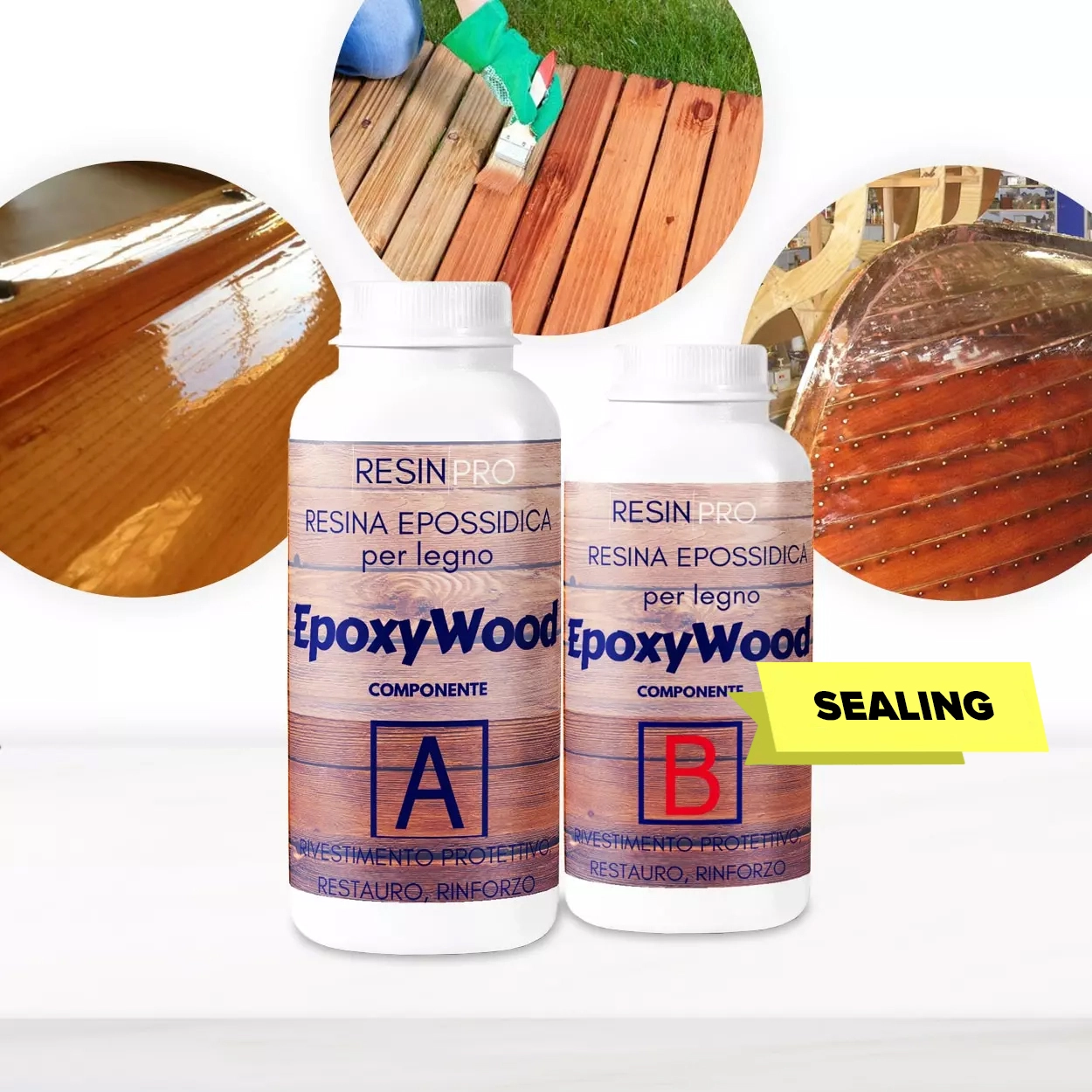
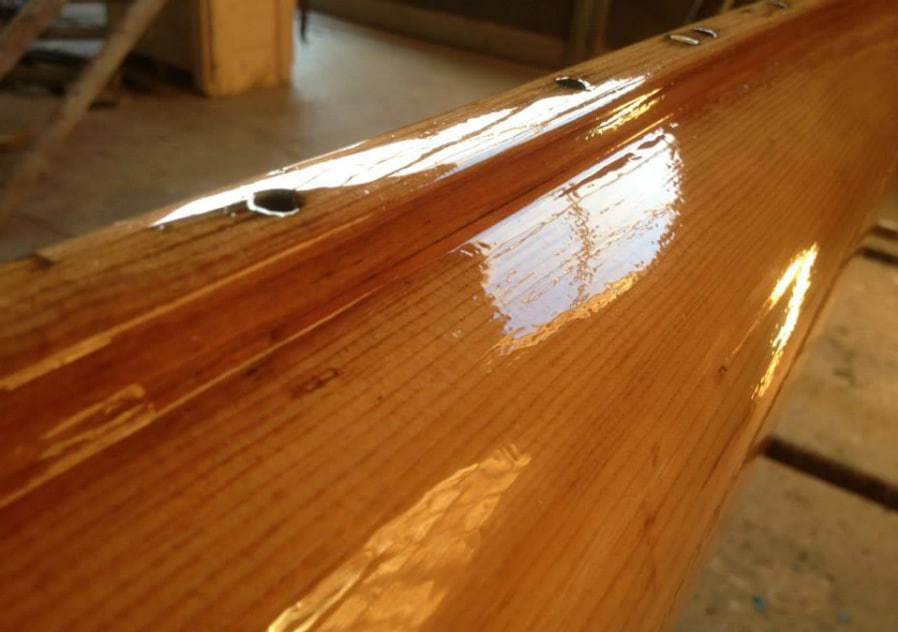
- “EpoxyWood” – Wood Restoration Epoxy Resin for Deep Penetration and Waterproofing: This ultra-low viscosity product deeply penetrates dried wood, reinforcing its fibres and creating a long-lasting, waterproof barrier. It delivers a straw-yellow aesthetic finish that enhances natural grain—perfect for restoration of furniture and exterior wood that must be perfectly dry before application.
- “Trasparente” – Multipurpose Clear Epoxy Resin for Casting – Up to 2cm: Designed for casting layers up to 2 cm, “Trasparente” produces a crystal-clear surface ideal for fine woodworking, jewellery, and art applications. Its UV filter guards against yellowing, and its non-toxic formula is suitable for both hobbyists and professionals working with dry, moisture-controlled timber.
- “EpoxyTable 5-Five” – Deep Pour Epoxy Resin for Tables and Large Projects – Up to 5cm: Formulated for deep pour projects, this resin allows encapsulation of large wood sections up to 5 cm thick in a single pour, provided the wood is dried and stable. It features a scratch-resistant finish, low exothermic heat, and UV protection for luxurious, lasting tables or countertops.
- “Epoxytable 10-Ten” – Deep Pour Epoxy Resin for Tables, Up to 10cm Casting: For artisans aiming for extra-thick castings (up to 10cm), Epoxytable 10-Ten is engineered to avoid overheating and maintains clarity, provided your encapsulated wood is thoroughly moisture-tested and conditioned.
For a full overview, explore our multipurpose epoxy resins category, curated to meet demands for artistic, DIY, and industrial wood-resin projects.

Step-by-step: Readying Your Wood for Resin Encapsulation
Begin by carefully measuring the moisture content of your selected wood using a professional moisture meter. Sand all faces and edges to allow for thorough drying and optimal resin adhesion. For restoration, apply EpoxyWood to reinforce the wood from within and establish a waterproof base. Double-check all readings before moving to your preferred resin pour—whether that’s the detail of Trasparente for smaller projects, or EpoxyTable 5-Five or Epoxytable 10-Ten for impressive large castings.
Preparing Wood for Successful Resin Encapsulation
Before you encapsulate, correct wood prep is essential. Use a reliable moisture meter to verify that internal and surface readings are within optimal limits. Sand and thoroughly clean the wood to remove dust, oils, or contaminants—these affect resin adhesion and finish. If in doubt, dry the wood further indoors or use a dehumidifier for large planks.
For restoration or waterproofing needs, EpoxyWood – Wood Restoration Epoxy Resin is an excellent pre-encapsulation step, as it penetrates and seals dry wood, reinforcing the structure from within and preventing unwanted moisture migration after encapsulation. This is especially valuable for boats, outdoor furniture, or heritage projects, where environmental exposure is a concern.
Which Resin For Which Wood Project?
The depth and scale of your resin pour will determine the most suitable resin system. Consider these recommendations, always starting with moisture-matched, acclimatised wood:
- For intricate details or encapsulation up to 2cm: “Trasparente” – Multipurpose Clear Epoxy Resin for Casting – Up to 2cm
- For deep river tables or large slabs, 2–5cm thick: “EpoxyTable 5-Five” – Deep Pour Epoxy Resin for Tables and Large Projects – Up to 5cm
- For ultra-thick castings up to 10cm: “Epoxytable 10-Ten” – Deep Pour Epoxy Resin for Tables, Up to 10cm Casting
- When restoring damaged or outdoor wood for encapsulation: Use EpoxyWood – Wood Restoration Epoxy Resin prior to your main encapsulation pour.
If you’re unsure which system suits your vision, reach out to the ResinPro team for project-specific advice.
Expert Tip: Layering for Large-Scale Resin/Table Projects
When working on large projects or pouring thick layers, avoid overheating by dividing your resin pour into multiple stages. Use EpoxyTable 5-Five for 2–5cm layers and Epoxytable 10-Ten for up to 10cm, allowing each layer to partially set before proceeding. This approach lets any lingering moisture escape and provides a clear, stable finish for heirloom quality river tables or countertops.

Common Issues: Preventing Moisture-Related Problems
Encapsulating damp wood is one of the leading causes of resin failures, including bubbling, incomplete curing, and discolouration. For best results:
Always wait until wood moisture is within the 8–12% range. For large projects with thick pours, acclimatise both wood and resin to room temperature, as sudden swings can force out latent water. When using deep pour resins such as EpoxyTable 5-Five or Epoxytable 10-Ten, layer your pours if your surface area or volume is high, to allow any residual moisture or gasses to escape. Avoid forcing drying with heat just before casting, as this can drive moisture into the wood core, leading to issues down the line.
Proper drying and careful resin selection are the cornerstones of a stunning, long-lasting wood-encapsulated piece. With the right approach, your project will boast strength and clarity for years to come.
- "EpoxyWood" – Wood Restoration Epoxy Resin for Deep Penetration and WaterproofingOriginal price was: £64.00.£39.85Current price is: £39.85."EpoxyWood" is designed for wood restoration with deep penetration and waterproofing, suitable for users working with wood surfaces.
- "Trasparente" – Multipurpose Clear Epoxy Resin for Casting – Up to 2cmPrice range: £8.45 through £948.85"Trasparente" epoxy resin offers a clear, scratch-resistant finish up to 2cm thickness suitable for woodworking and art projects.
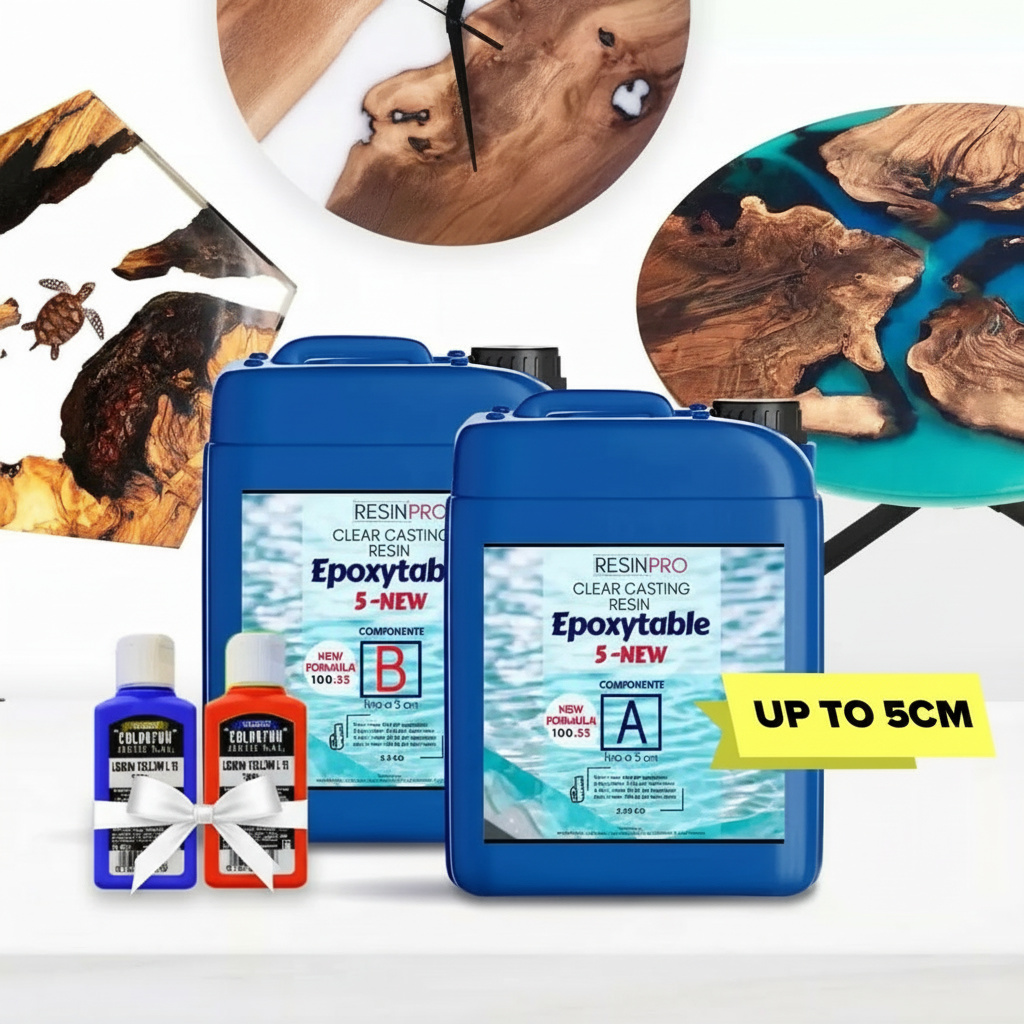 "EpoxyTable 5-Five" – Deep Pour Epoxy Resin for Tables and Large Projects – Up to 5cmPrice range: £16.85 through £1,099.85"EpoxyTable 5-Five" is a deep pour epoxy resin designed for tables and large projects, suitable for layers up to 5cm thickness.
 “Epoxytable 10-Ten” – Deep Pour Epoxy Resin for Tables, Up to 10cm CastingPrice range: £33.85 through £334.85“Epoxytable 10-Ten” is designed for deep pours up to 10cm, suitable for tables and large artistic projects.
Frequently Asked Questions
What moisture content is recommended before pouring resin on wood?
For nearly all resin applications, wood should be between 8% and 12% moisture content before encapsulation. Check with a moisture meter, and allow sufficient time for the wood to acclimatise to your workspace. This ensures optimal adhesion and prevents issues such as bubbling or discolouration during curing.
Can "EpoxyWood" be used on damp or wet timber?
No. EpoxyWood – Wood Restoration Epoxy Resin for Deep Penetration and Waterproofing is formulated for perfectly dry wood only. Using it on damp material will limit penetration and performance, risking failure of the waterproof barrier.
How do I prevent bubbles when encapsulating dried wood in "Trasparente" resin?
Ensure the wood is properly dried, sanded, and clean before use. Bubbles typically result from moisture content above 12% or air trapped within the grain. Apply resin in suitable layers (up to 2 cm for "Trasparente") and work in a dust-free environment.
Which resin should I use for super-deep encapsulation of large wood slabs?
If your project involves pours up to 5 cm, EpoxyTable 5-Five is recommended. For thicknesses up to 10 cm, Epoxytable 10-Ten is suitable. In both cases, ensure the wood's moisture is stable and use layered pours where needed.
What are common signs that wood is unsuitable for resin casting?
Visible moisture, a musty smell, mould growth, or high readings on a moisture meter all indicate insufficient drying. Discoloured or soft patches often show ongoing biological activity and should be avoided or treated with a product like EpoxyWood first.
Is it safe to encapsulate external or reclaimed wood in resin?
Yes, provided you dry and stabilise the wood thoroughly prior to resin application. Treating reclaimed wood with EpoxyWood can strengthen fibres and reduce risk of future decay or separation.
Can I use household ovens or heat guns to quickly dry wood before resin casting?
Rapid drying methods risk uneven moisture removal, surface cracks, and internal stresses. Ideally, allow wood to dry slowly in a controlled environment before final preparation, using professional tools if available.