 Free shipping on orders over £29,85
  Shipping Tracking!


 Google
 Facebook
What is meant by silicone rubber?
Understanding silicone rubber for mould making and crafts
If you’ve ever wondered what silicone rubber is and how it fits into creative or industrial projects, you’re not alone. This page explains the properties and practical uses of silicone rubber, with a special focus on mould making. Whether you’re a professional artisan, a passionate crafter or simply looking to understand this versatile material, you’ll find the essential information you need here. We’ll compare key types of silicone rubbers, highlight their differences, and help you decide which is most suitable for your intended application.
Understanding Silicone Rubber: Key Properties and Comparison
Silicone rubber is a highly flexible, durable, and temperature-resistant material widely used in mould making, casting, prototyping, and crafts. It stands out from other rubbers due to its unique composition, offering excellent resistance to chemicals, stability at various temperatures, and the ability to faithfully replicate intricate details. When selecting a silicone rubber, it’s vital to consider attributes such as flexibility, ease of mixing, curing time, and intended use – for example, liquid silicone rubber for intricate moulds versus putty for quick, hand-formed shapes. Below you’ll find the main differences between the most popular silicone rubbers for mould making:
- Liquid silicones are ideal for capturing fine details and for pouring into complex forms.
- Silicone putty is perfect for fast, on-the-spot moulds with a simple mix-and-press method.
- Some silicones are translucent to allow visual check during setting, whilst others might be opaque.
- Mixing ratio, working time, and shore hardness vary, so matching these to your project needs is essential.
See Silicone Rubber in Action
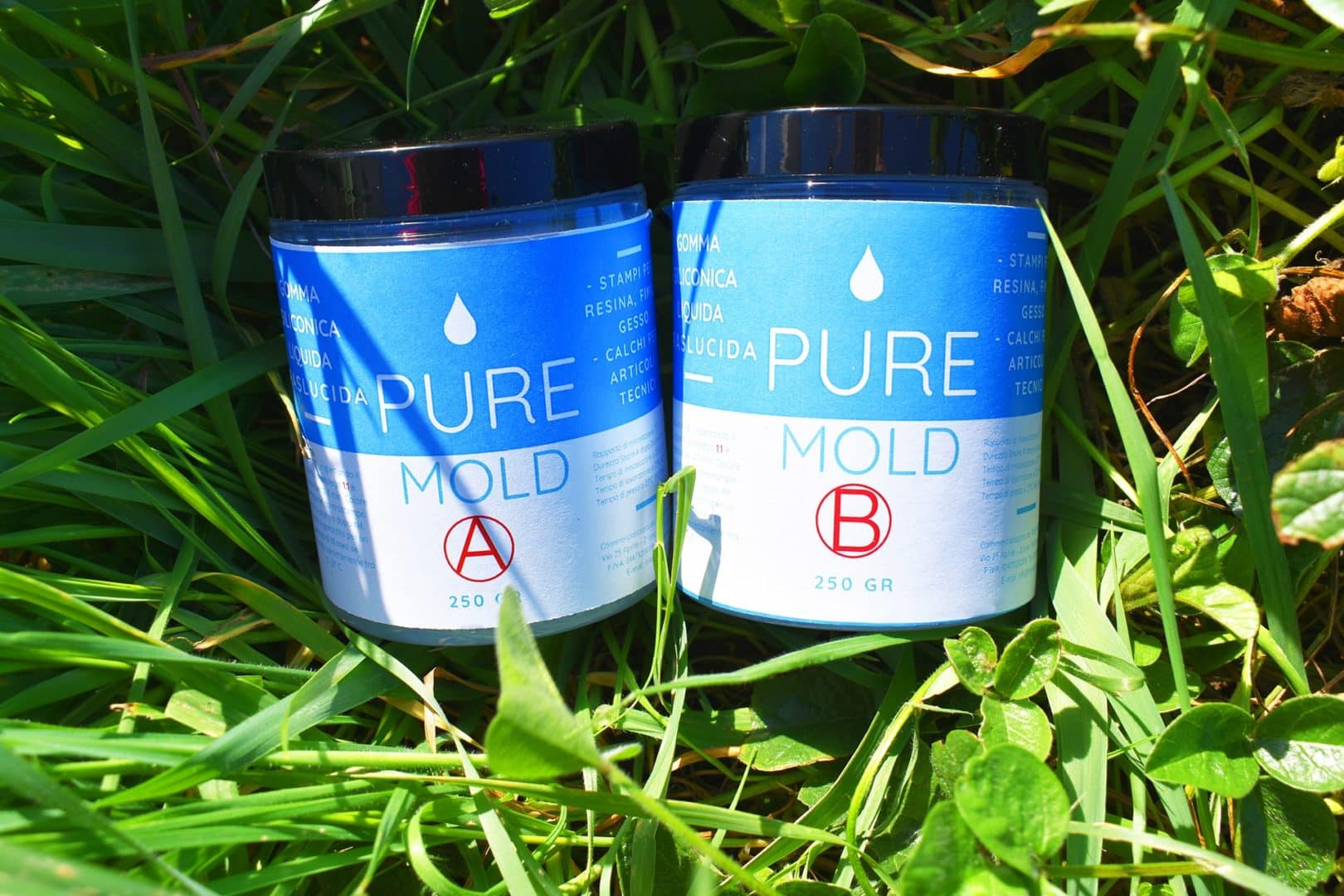
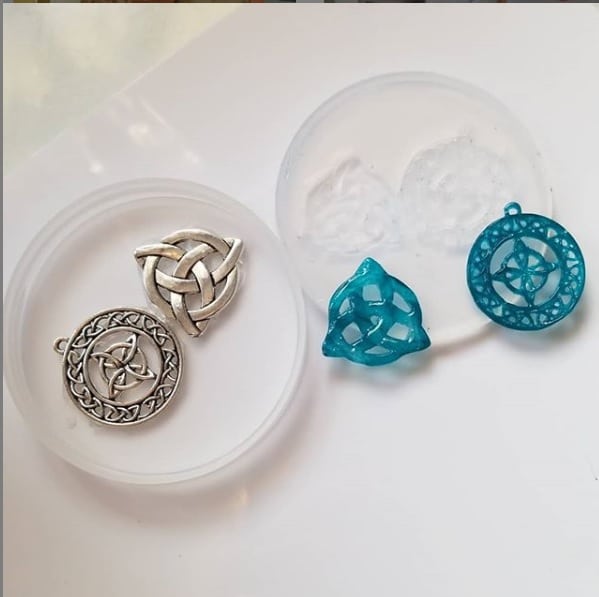
View examples of detailed moulds, flexible putty applications and complex casting projects achieved using resin-compatible silicone rubbers. Notice the clarity, flexibility and precision these materials provide.
“Pure Mould” – Translucent Liquid Silicone Rubber for Mould Making
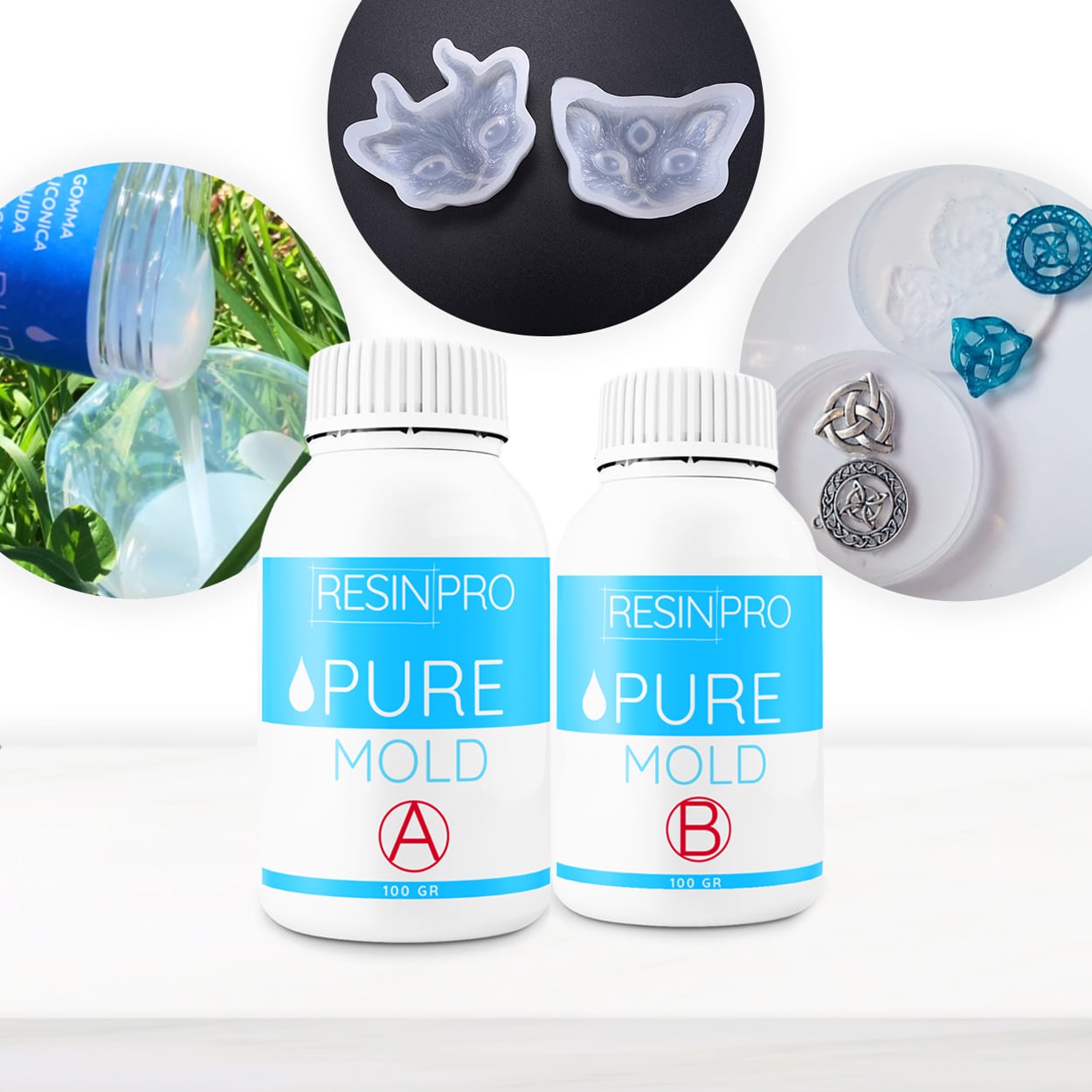
“Pure Mould” – Translucent Liquid Silicone Rubber for Mould Making represents a platinum-based silicone that sets the standard for quality and versatility in mould making. Its easy 1:1 mix ratio, rapid catalysis (3-8 hours), and transparent appearance make it exceptionally user-friendly. ‘Pure Mould’ is ideal for professionals and hobbyists creating detailed and reusable moulds compatible with a wide variety of materials, including epoxy resins, polyesters, polyurethanes, acrylics, cements, plasters and hot waxes (commonly used in candle making). Its high mechanical strength ensures long-lasting performance and less mould shrinkage over time, with a formula that is both cruelty free and vegan friendly.
“Liquid Mould” – Casting Liquid Silicone Rubber, 5-40 Shores, Bi-Component A+B
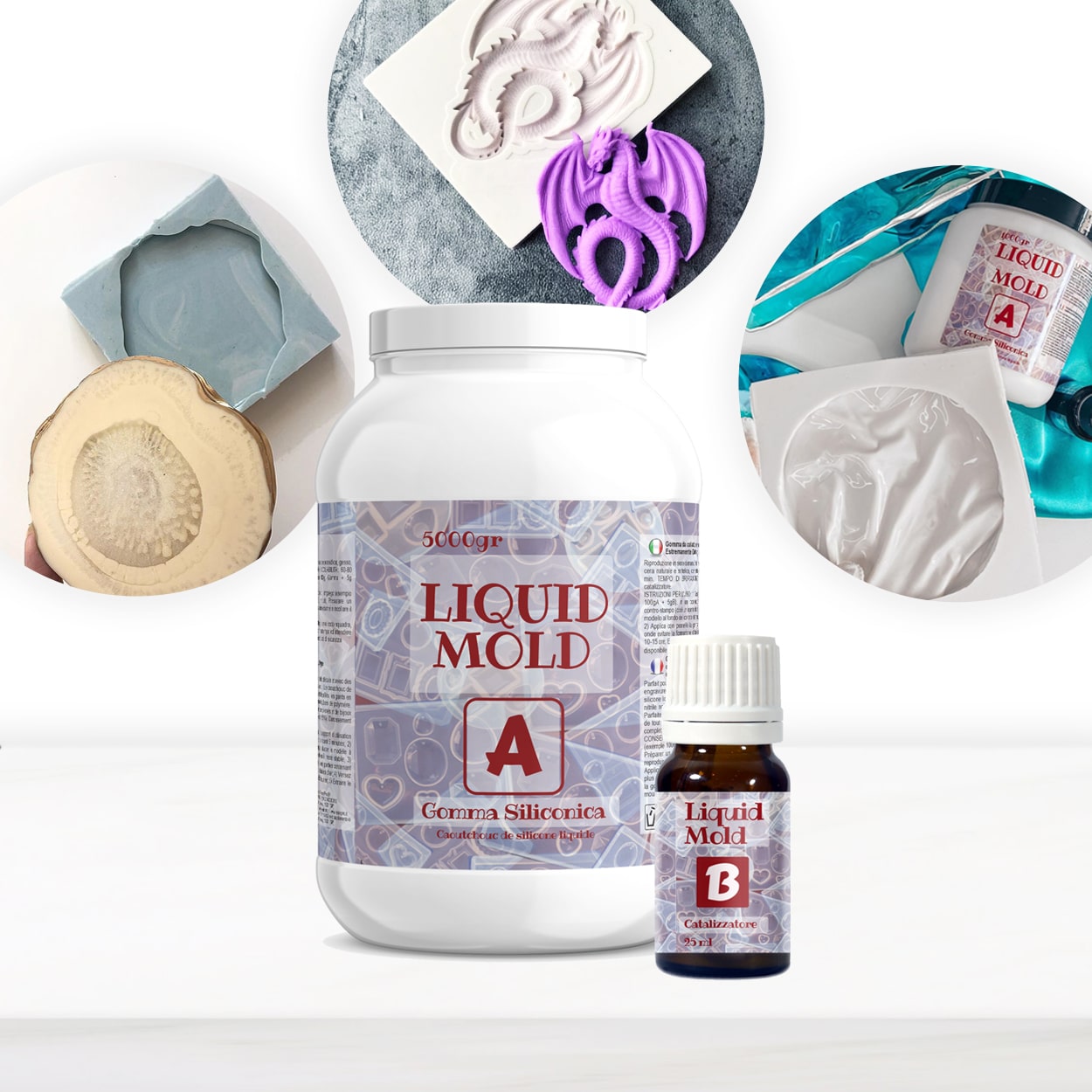
For projects demanding extremely fine detail, “Liquid Mould” – Casting Liquid Silicone Rubber, 5-40 Shores, Bi-Component A+B is the professional’s choice. Its low-viscosity, bi-component formulation is perfect for intricate objects, artistic foundries, and complex jewellery. ‘Liquid Mould’ excels at reproducing small shapes with pronounced undercuts, and is suitable for resin, soap, polymer pastes, as well as for technical and artistic applications. The required catalyst addition ensures a thorough cure, which typically takes 10 to 12 hours. Its flexibility is complemented by strong mechanical properties, making it fit for repeated use on demanding projects.
“I–Gum” – Non-Toxic Silicone Putty for Mould Making
If you prefer an easy-to-handle, mess-free approach, “I–Gum” – Non-Toxic Silicone Putty for Mould Making is a standout choice. As a two-component, non-toxic putty, ‘I-Gum’ is mixed 1:1 and can be safely handled without gloves or odours. Its extended working time of 20 minutes allows for corrections while forming the mould. This makes it especially convenient for making quick-impression moulds for coasters, trays, frames, and decorative objects with resin, polyurethanes, wax, or cement. Like other ResinPro silicones, ‘I-Gum’ is cruelty free, vegan friendly, and manufactured to high European standards.
Choosing the Right Silicone Rubber for Your Project
Selecting the correct silicone rubber depends on factors like project scale, the level of detail needed, and handling preferences. Liquid silicone rubber (such as “Pure Mould” or “Liquid Mould”) is best when you require superior detail and durability for multiple uses, particularly in casting resins, plasters, or wax. If your goal is speed and ease of use, especially for smaller or flatter objects, “I–Gum” putty is an accessible alternative that eliminates the fuss of liquids and is safe when working in less ventilated spaces. For more categories and further guidance, visit our Silicone Rubbers Category.
Project Tips & Professional Advice
Consider your project requirements carefully. For maximum detail and repeated casting, liquid silicones excel. For speed and small items, silicon putty is ideal. Always follow the mixing and safety guidelines provided for each product.
- "Pure Mould" – Translucent Liquid Silicone Rubber for Mould MakingPrice range: £22.85 through £158.85"Pure Mould" is a translucent liquid silicone rubber suitable for mould making compatible with various materials, supporting both professional and…
- "Liquid Mould" – Casting Liquid Silicone Rubber, 5-40 Shores, Bi-Component A+BPrice range: £13.45 through £368.85"Liquid Mould" Casting liquid silicone rubber suitable for highly detailed moulds and diverse materials, matching the theme on silicone rubber.
 "I–Gum" – Non-Toxic Silicone Putty for Mould MakingPrice range: £22.85 through £99.85"I–Gum" offers a non-toxic silicone putty designed for mould making with a 1:1 mix ratio suitable in this context.
Frequently Asked Questions
What are examples of liquid versus putty silicone rubber uses?
Liquid silicone rubber is mostly used for detailed moulds and complex forms, while putty is typically chosen for quick, hands-on pieces such as coasters or small reliefs.
How do I choose the right silicone rubber for my project?
The best choice depends on the level of detail, object size, and whether you prefer a liquid pour or a hand-applied putty. Consider cure time and material compatibility.
What is the difference between liquid silicone and silicone putty?
Liquid silicon captures fine details for precise moulds, whereas silicone putty allows for fast, easy, and glove-free mould making of simpler shapes.
Is silicone rubber safe for mould making?
Yes, non-toxic formulations are available such as I–Gum, which can be handled without gloves and are designed for safe, odourless use.
How do I clean and store silicone rubber moulds?
Wash gently with mild soap and water and store in a cool, dry place away from direct sunlight to extend their usable life.
How does shore hardness affect detail capture?
Lower shore hardness produces softer, more flexible moulds ideal for intricate details, while higher hardness offers more rigidity but less flexibility.
What materials can I cast in silicone rubber moulds?
Silicone rubber moulds are compatible with epoxy, polyurethanes, resins, plasters, waxes, and certain cements.