 Free shipping on orders over £29,85
  Shipping Tracking!


 Google
 Facebook
How is resin applied to floors?
Step-by-step guide to creating tough, decorative resin floors
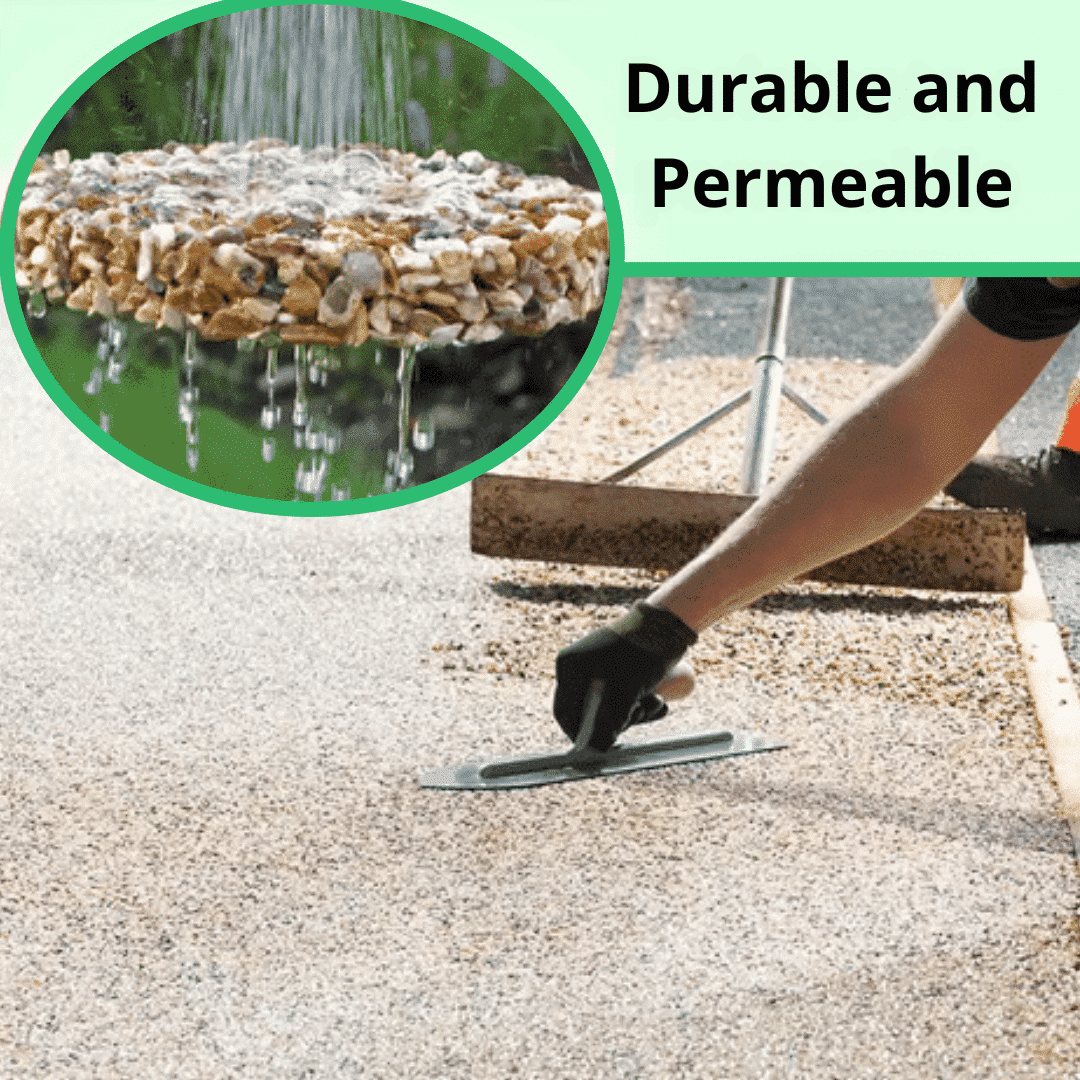
Transforming your floor with resin can deliver a durable, decorative, and low-maintenance surface. Whether you are coating concrete in a garage or creating a permeable outdoor path, applying resin requires careful planning, the right materials, and precise technique. This guide breaks down the resin floor application process, so you can achieve professional-grade results at home or in commercial settings.
What You’ll Need
- “Epoxyprimer” – Universal Water-Based Two-Component Epoxy Floor Primer: A water-based primer securing strong adhesion to concrete, tile, screed, or timber substrates.
- “Flowstone” – Complete Permeable Floor Kit with Pebbles and Resin: Designed for outdoor areas needing both decoration and drainage, this all-in-one system covers preparation and application.
- “Trasparente” – Epoxy Binder for Coloured Pebbles and Grits: Ideal for creating vibrant finishes with coloured or dark aggregate flooring.
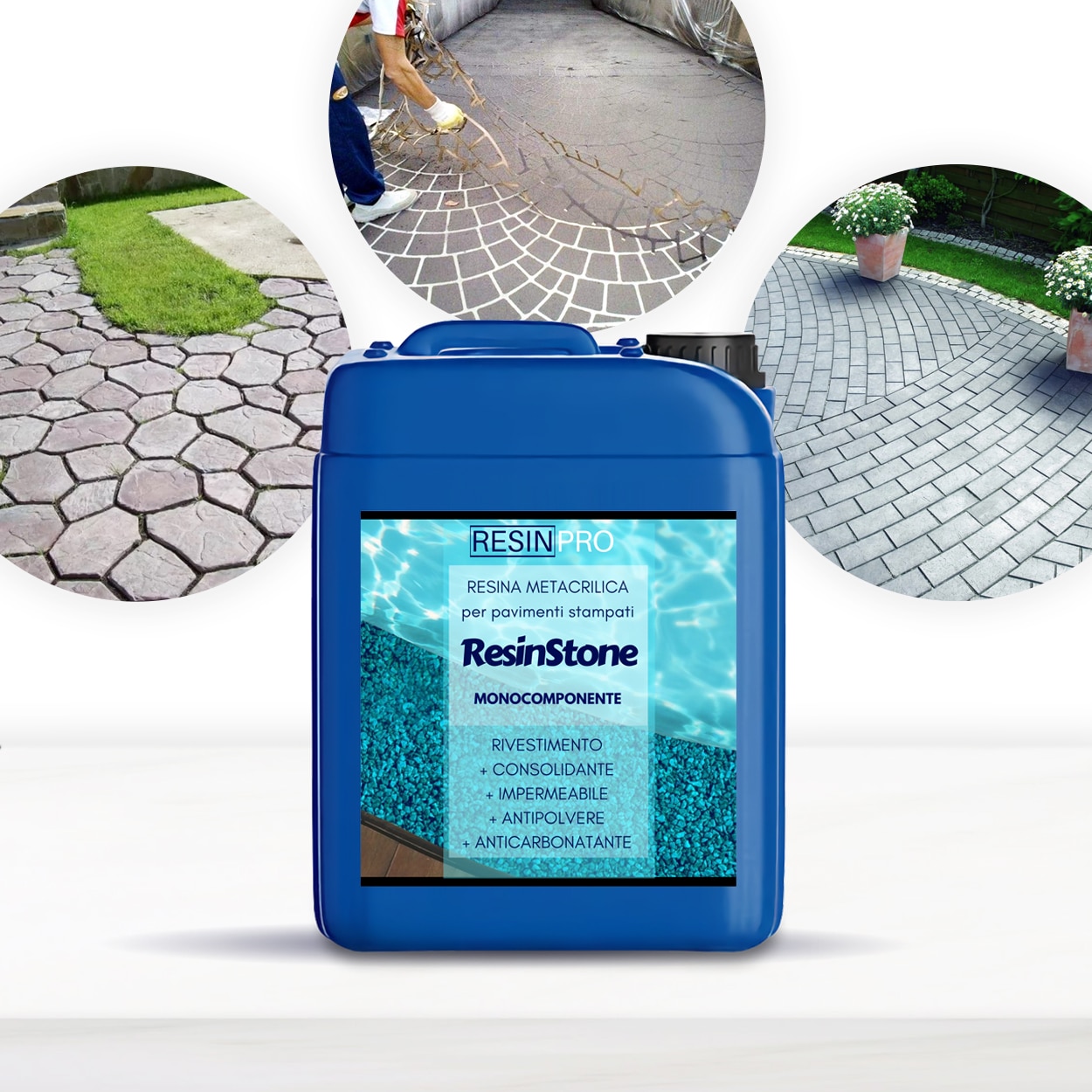
- “Resinstone” – One-Component Methacrylic Resin for Concrete Floors and Driveways: For sealing or protecting hard surfaces like stamped concrete, driveways, and patios.
Other essentials include: mixing bucket, roller or brush, clean trowel, gloves, dust mask, protective clothing, and a spirit level.
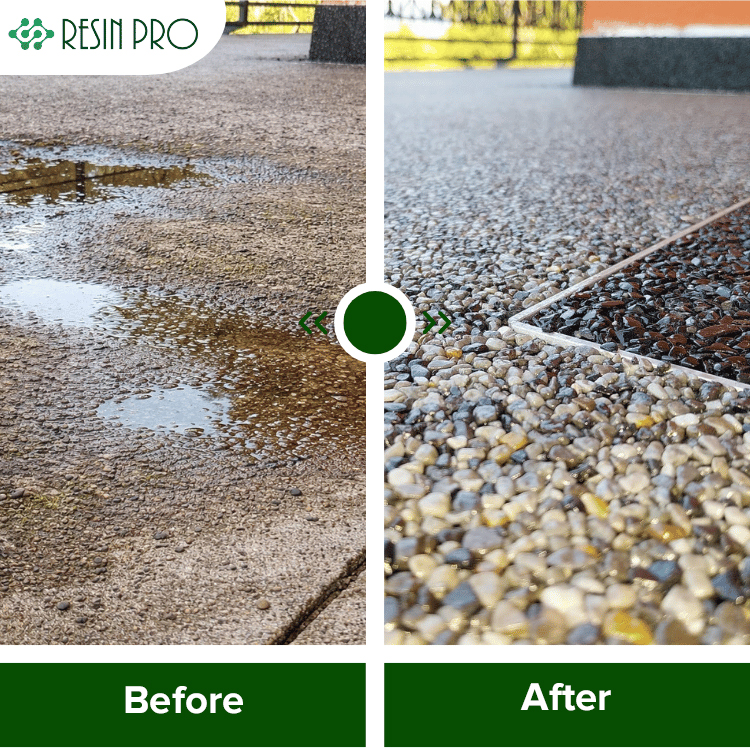
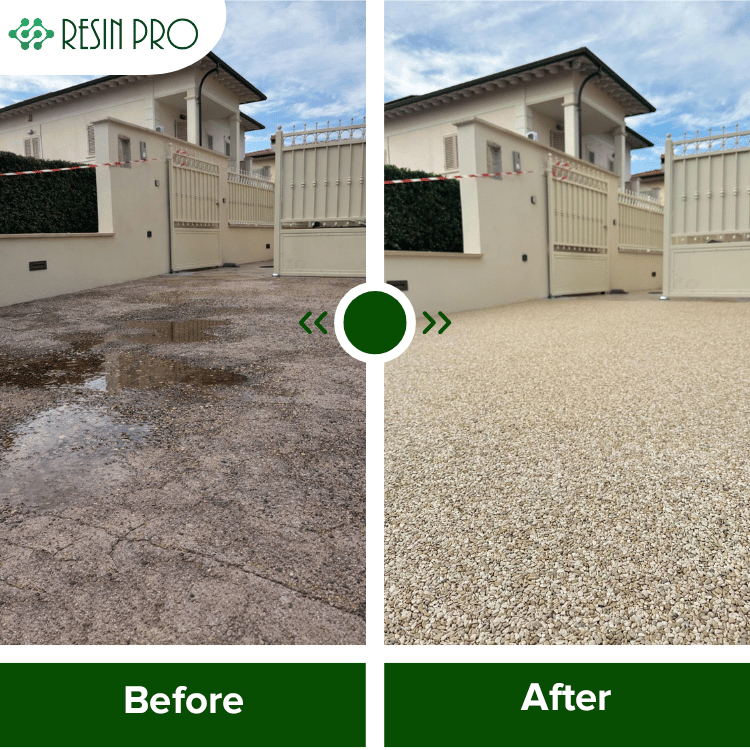
See Real Resin Floor Transformations
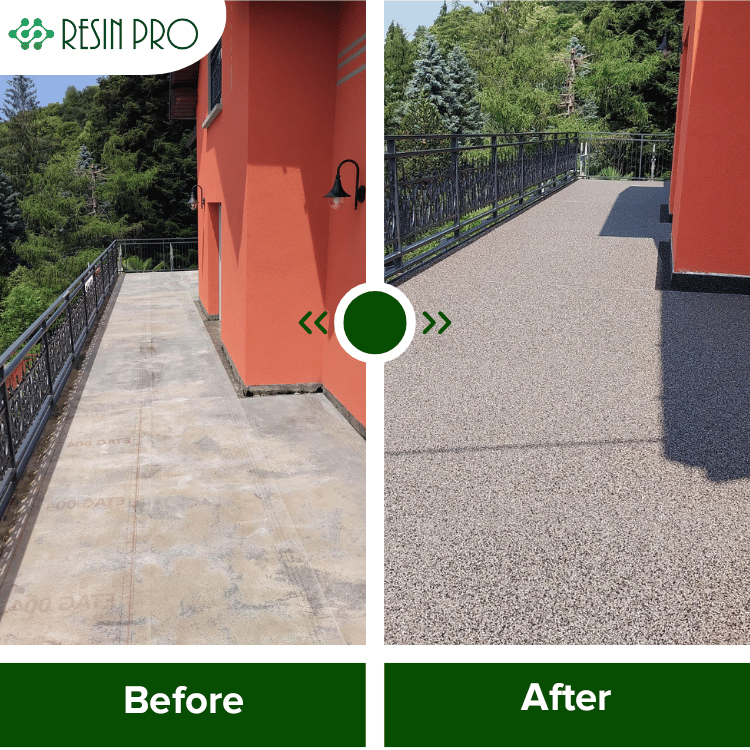
Experience the impact of fresh resin floors in homes, gardens, and commercial settings. View completed projects showcasing decorative pebble finishes, high-gloss concrete coatings, and functional outdoor paths all using ResinPro systems. Notice the clean joins, uniform colour, and the adaptability for both vibrant and subtle designs.
Step 1: Prepare the Surface
Thorough surface preparation is key for long-lasting resin floors. Start by cleaning the area thoroughly, removing dust, loose particles, oils, and residues. If the base is concrete, repair any surface cracks or holes with a suitable filler and allow it to dry completely. Tiles or timber floors should be checked for loose sections and replaced if required.
Ensure surfaces are dry and stable before starting, as excessive moisture or instability can lead to adhesion failures, bubbling, or uneven curing. Vacuum or sweep to remove fine dust, and tape off any areas you wish to protect from resin drips or spillage.
Step 2: Apply Primer (if needed)
On porous floors such as concrete, a primer layer is crucial for ensuring robust adhesion and an even resin finish. Choose a water-based epoxy primer for most applications and apply it with a roller, brush, or spatula, covering all areas uniformly.
“Epoxyprimer” – Universal Water-Based Two-Component Epoxy Floor Primer is especially effective, offering compatibility with concrete, tiles, screed, or timber. Allow the primer to cure for the recommended 24–48 hours before proceeding.
Apply primer for improved adhesion on porous floors and never rush curing times to avoid later peeling or defects.
Step 3: Mix the Resin Thoroughly
Accurate measuring and thorough mixing are vital. Two-component resins (like epoxy) require precise ratios. Pour the base and hardener into a clean bucket and mix slowly but steadily until the solution is fully uniform, with no streaks or unmixed portions. If your application involves binding aggregates, such as pebbles or coloured grits, add them to the mixed resin and fold together until all stones are evenly coated.
“Trasparente” – Epoxy Binder for Coloured Pebbles and Grits delivers a clear, bubble-free result ideal for decorative pebble floors. For outdoor permeable paths and patios, the “Flowstone” – Complete Permeable Floor Kit provides both resin and pre-selected aggregates for no-fuss mixing.
Mix resin thoroughly to avoid streaks and defects, and always follow the product’s specific mixing instructions.

Step 4: Apply and Finish the Resin Layer
Pour or spread the resin mixture directly onto the prepared (and primed) floor. Use a roller, trowel, or squeegee to work the resin across the surface evenly, ensuring all areas are coated. For aggregate mixes, spread and level the material to your desired thickness, using a spirit level or screeding bar for even application.
When sealing or protecting bare concrete, as with “Resinstone” – One-Component Methacrylic Resin, apply the product by brush, roller, or airless spray for thin, consistent layers. Adhere strictly to recommended drying times—most resin flooring needs curing time before bearing weight.
Evenly distribute the resin mix to achieve a level surface, taking care to minimise air bubbles and avoid excessive pooling.
Tips, Common Mistakes, and Troubleshooting
Work in manageable sections to keep edges fresh and prevent visible joins. Be mindful of temperature and humidity; extreme conditions can interfere with setting and cause clouding or surface defects. Always check product instructions for working and curing times.
If you spot trapped bubbles or defects, lightly drum a spiked roller across the surface while the resin is still workable. Avoid foot traffic until surfaces are fully cured, typically 10–48 hours depending on the chosen system.
Expert Insights for Lasting Results
Avoid common pitfalls in resin flooring by following surface preparation best practices and respecting product-specific curing times. Explore resin flooring solutions for tips and ideas tailored to your floor type or aggregate choice. Our team is available for support at every stage, whether DIY or professional.
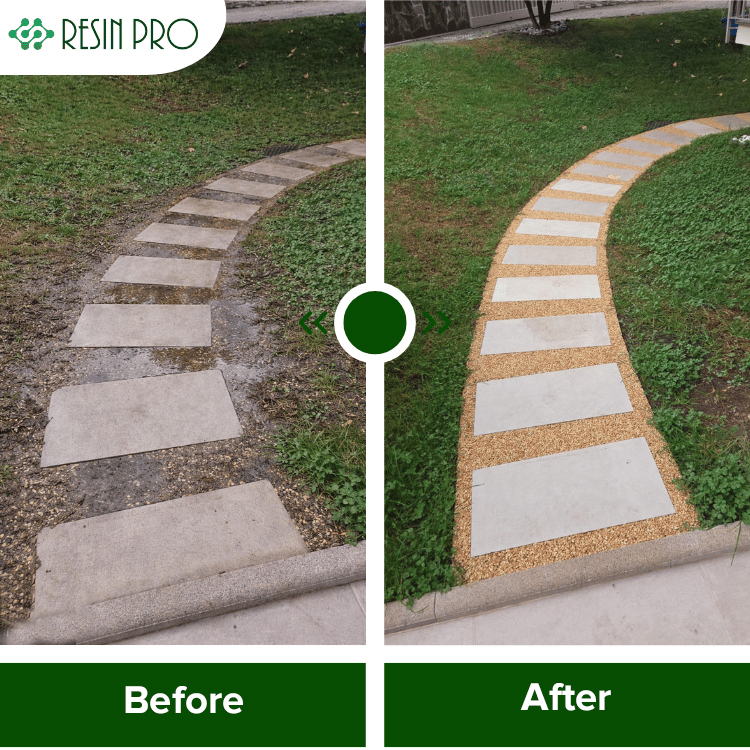
- "Flowstone" – Complete Permeable Floor Kit with Pebbles and ResinPrice range: £49.95 through £3,915.45The Flowstone kit is a permeable pebble and resin floor system designed for outdoor use with clear guidance for suitable resin types and simple…
- "Resinstone" – One-Component Methacrylic Resin for Concrete Floors and DrivewaysPrice range: £36.71 through £336.48"Resinstone" is a one-component methacrylic resin suitable for sealing and protecting concrete floors with waterproof and durable qualities.
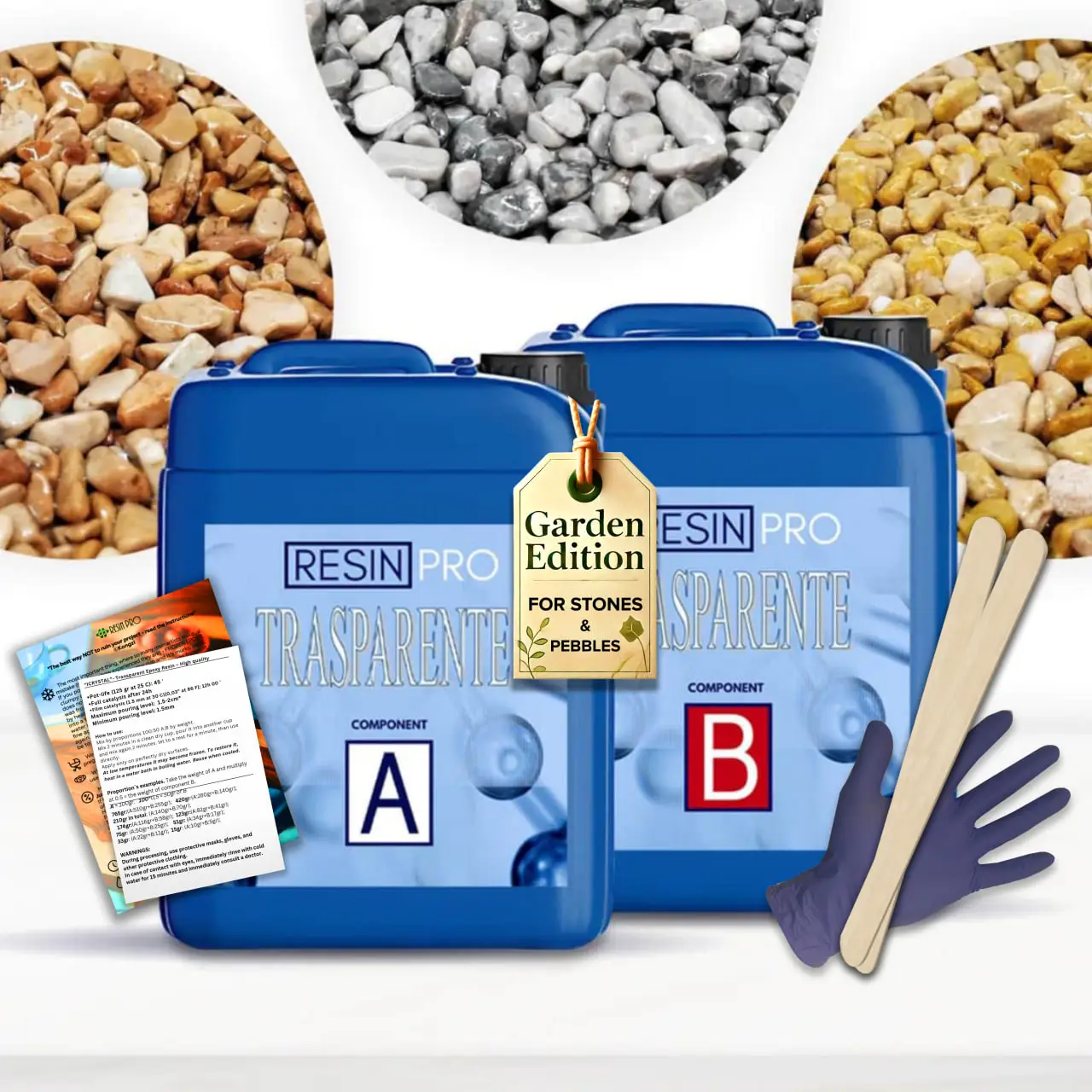 "Trasparente" – Epoxy Binder for Coloured Pebbles and GritsPrice range: £33.45 through £397.95"Trasparente" is a clear epoxy binder suited for coloured pebbles and grits, offering UV resistance and a bubble-free finish for flooring.
 "Epoxyprimer" – Universal Water-Based Two-Component Epoxy Floor PrimerPrice range: £156.45 through £286.45"Epoxyprimer" is a water-based two-component epoxy primer designed for consistent application and durable adhesion on floors.
Frequently Asked Questions
What kind of resin is used for floors?
Epoxy, polyurethane, and methacrylic resins are commonly used for floors, each providing unique benefits depending on the surface and setting.
Do I need to prime before applying resin?
Yes, priming is recommended for porous substrates like concrete or timber to ensure strong adhesion and an even resin finish.
How long does resin flooring take to cure?
Curing usually takes from 10 to 48 hours, depending on the resin system and ambient conditions. Full strength is achieved after complete curing.
Can resin be used outdoors on pathways?
Yes, resin is excellent for exterior paths and driveways, especially when formulated for UV and weather resistance with permeable systems.
How do I prevent bubbles in resin floors?
Mix slowly and thoroughly to minimise air entrainment and use a spiked roller while the resin is still workable to release trapped air.
What surfaces can I resin coat over?
Properly prepared concrete, screed, tiles, and timber are all suitable. Always check for moisture, stability, and compatibility beforehand.
Is DIY resin flooring possible?
Yes, with good planning and high-quality products, many resin floor systems are suitable for DIY installation, especially in domestic settings.