 Free shipping on orders over £29,85
  Shipping Tracking!


 Google
 Facebook
How to make wooden tables with resin?
A step-by-step guide to crafting unique wood and resin tables at home.
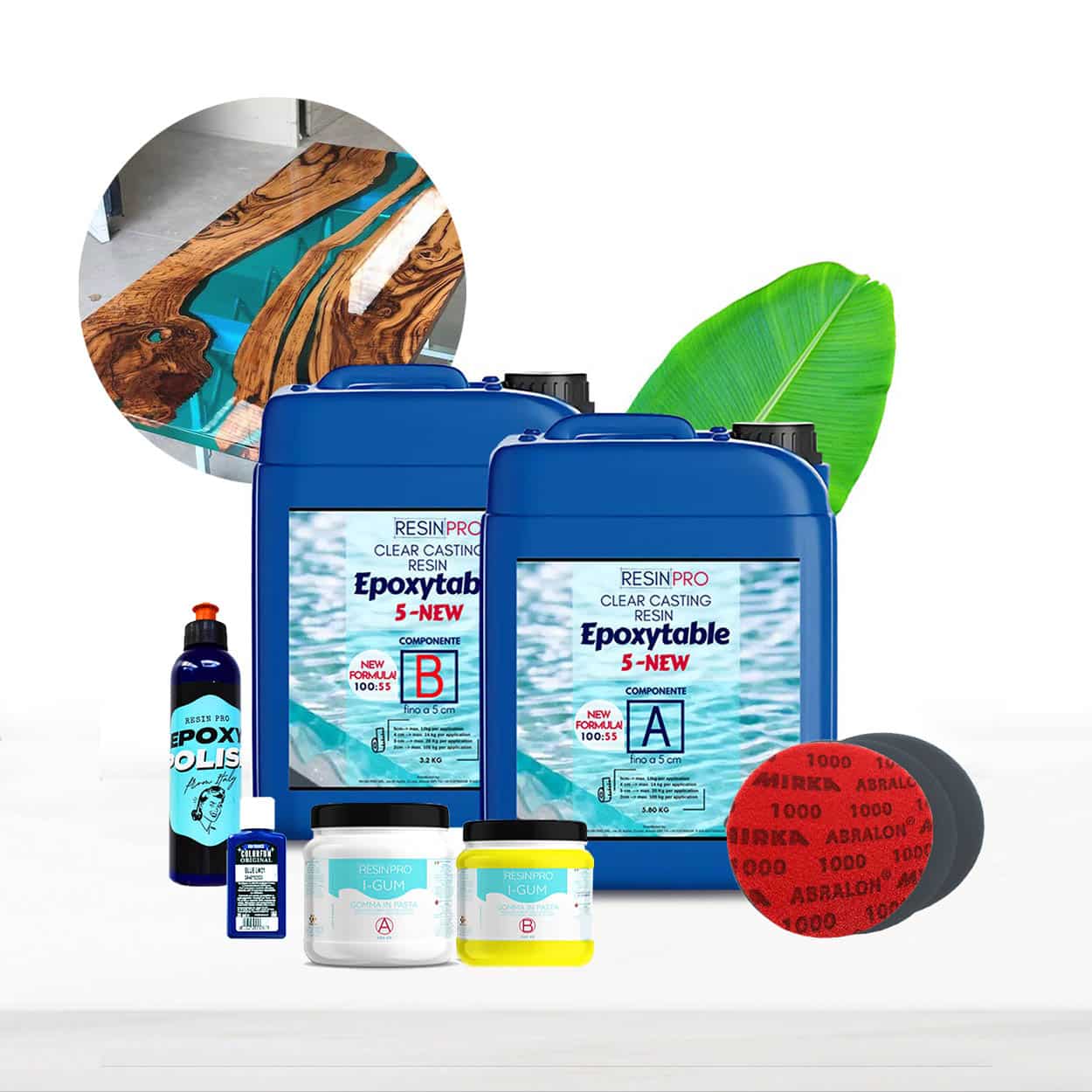
Creating a wooden table with resin allows you to combine the natural beauty of timber with striking, glass-like finishes. This guide equips you with the knowledge and techniques to craft a unique wood and resin table at home, whether you are a beginner or an experienced maker. We’ll walk you through surface preparation, pouring processes, and the most important steps for sturdy, clear, and vibrant results.
What You’ll Need
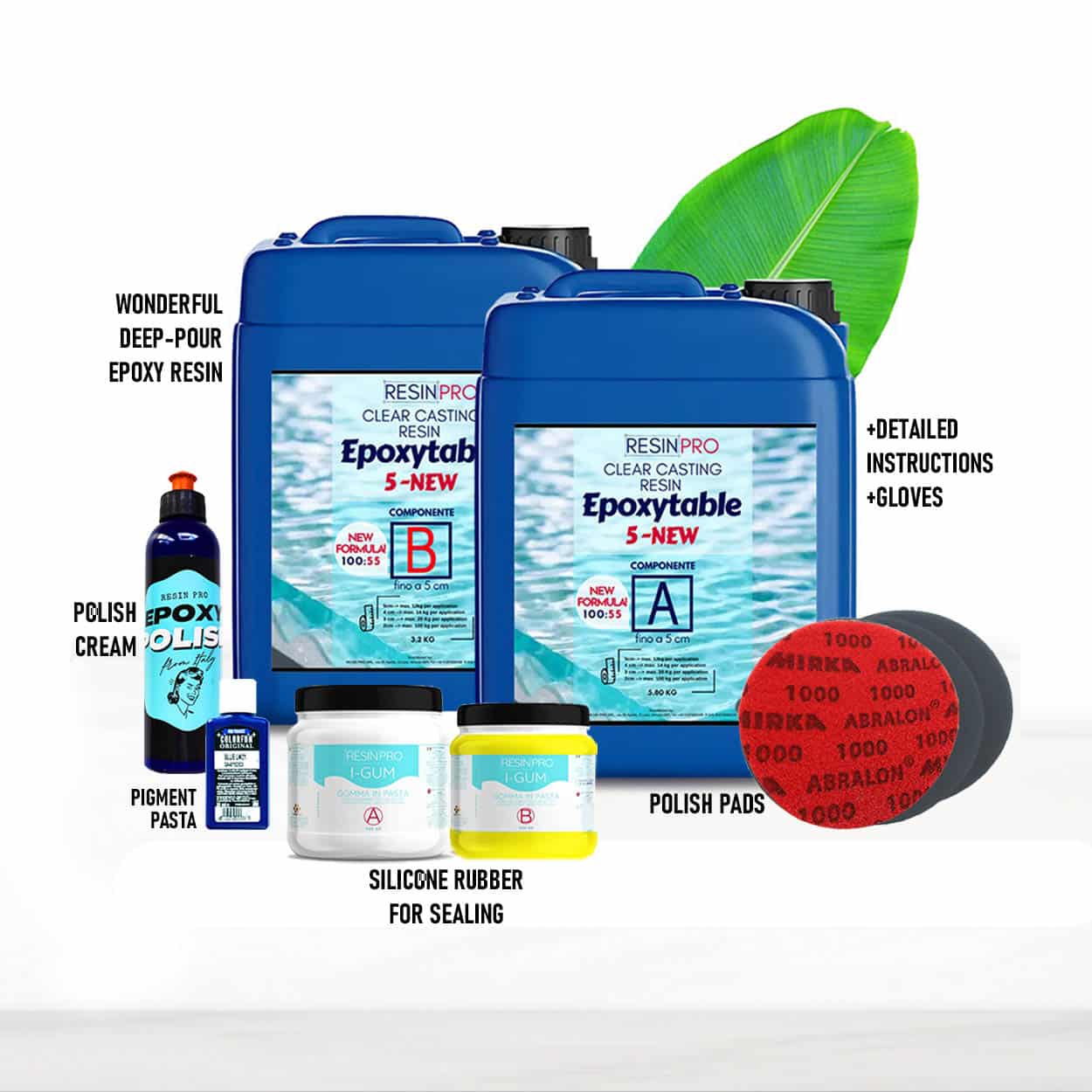
- “River-Table” – Complete Kit for Creating Your First Epoxy Resin Table – includes resin, pigment, release film, and finishing products for beginners.
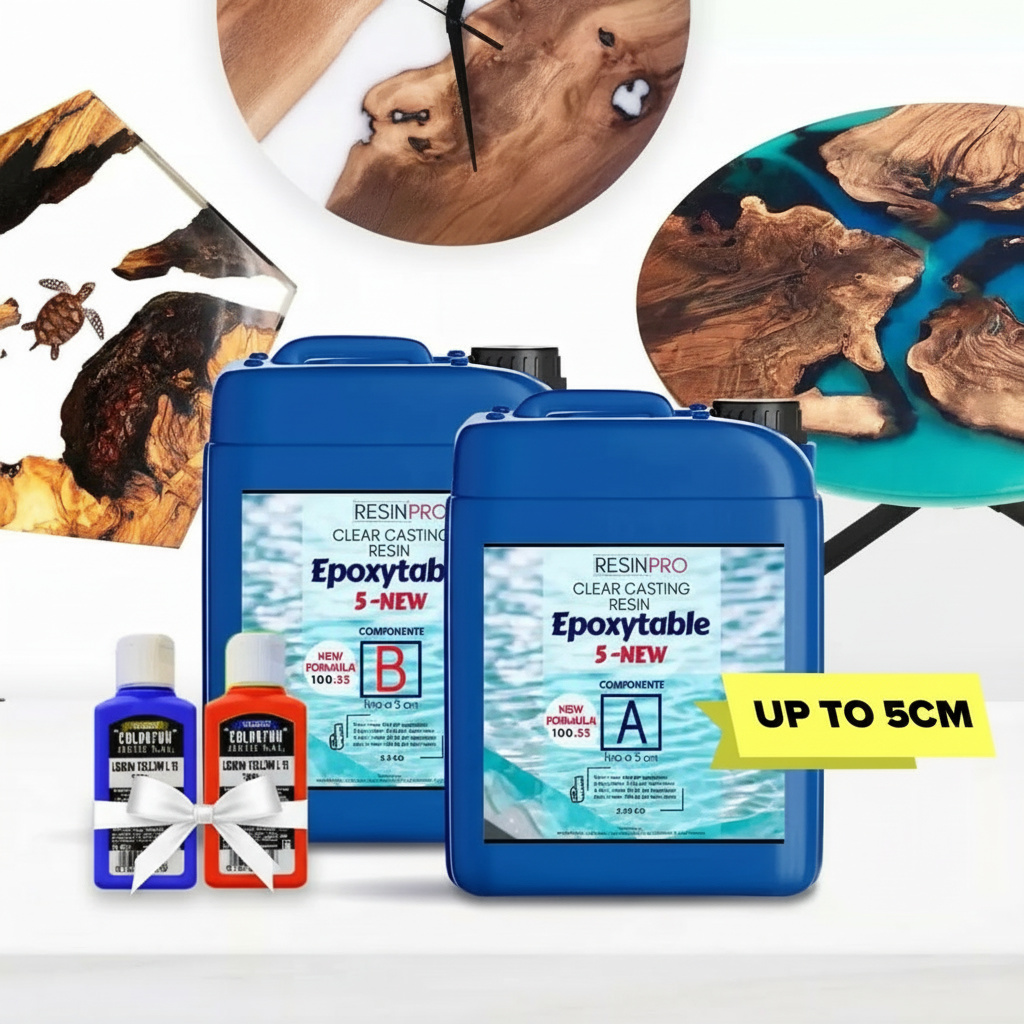
- “EpoxyTable 5-Five” – Deep Pour Epoxy Resin for Tables and Large Projects – Up to 5cm – ideal for thick, clear resin pours.
- “Epoxytable 10-Ten” – Deep Pour Epoxy Resin for Tables, Up to 10cm Casting – for very deep pours, e.g., large river tables.
- “Geode O” – Large Wooden Board Table Base for Epoxy Resin Projects – 90x60cm or 120x80cm – strong base for your table.
- Protective gloves, eye protection, mixing containers, stir sticks, masking tape, level, and sander.

Essential Setup for Resin Table Projects
Setting up your workspace and gathering quality materials are the foundation of successful resin table projects. Take extra care to ensure cleanliness and proper surface protection to avoid dust or debris compromising your final result. Organising your tools before beginning helps save time and reduces mistakes, so you can focus on creativity and precision while working with resin.
Step 1: Carefully prepare your workspace and materials
Set up your workspace in a dust-free, well-ventilated room with a flat, stable surface. Cover the area with plastic sheeting or disposable drop cloths to protect from spills. Ensure you have all tools and materials organised before starting, including your chosen resin, pigment, mould or formwork, and mixing accessories. Read all product instructions carefully to avoid common mistakes during the process. Wearing protective gloves and safety goggles is recommended when handling resin and hardener; this minimises the risk of skin or eye irritation.
Accurate measuring of the resin and hardener is crucial for success—always follow the recommended ratios and mixing guidelines for your selected resin product to guarantee optimal curing and clarity.
Step 2: Select and set up your wooden base
Choose your timber slab or wooden panel for the tabletop. Clean and sand the wood, removing all dust, oils, and loose fibres. It’s important to dry the wood completely to prevent moisture problems under the resin layer. For beginners or those wanting to guarantee flatness and stability, the “Geode O” – Large Wooden Board Table Base for Epoxy Resin Projects – 90x60cm or 120x80cm offers a durable surface designed specifically for this type of project.
Once your wooden base is ready, use silicone or masking tape to seal all joints between the wood and the formwork, preventing leaks during resin pours. Double-check the structure is level—this is vital for a uniform resin layer across your table’s surface.
Step 3: Mix and pour resin for the table surface
Accurately measure out your resin and hardener using digital scales or marked mixing cups. Slowly combine the two components in a clean container, stirring gently for several minutes to ensure a thorough and bubble-free mix. Add pigments or colour effects at this stage as desired.
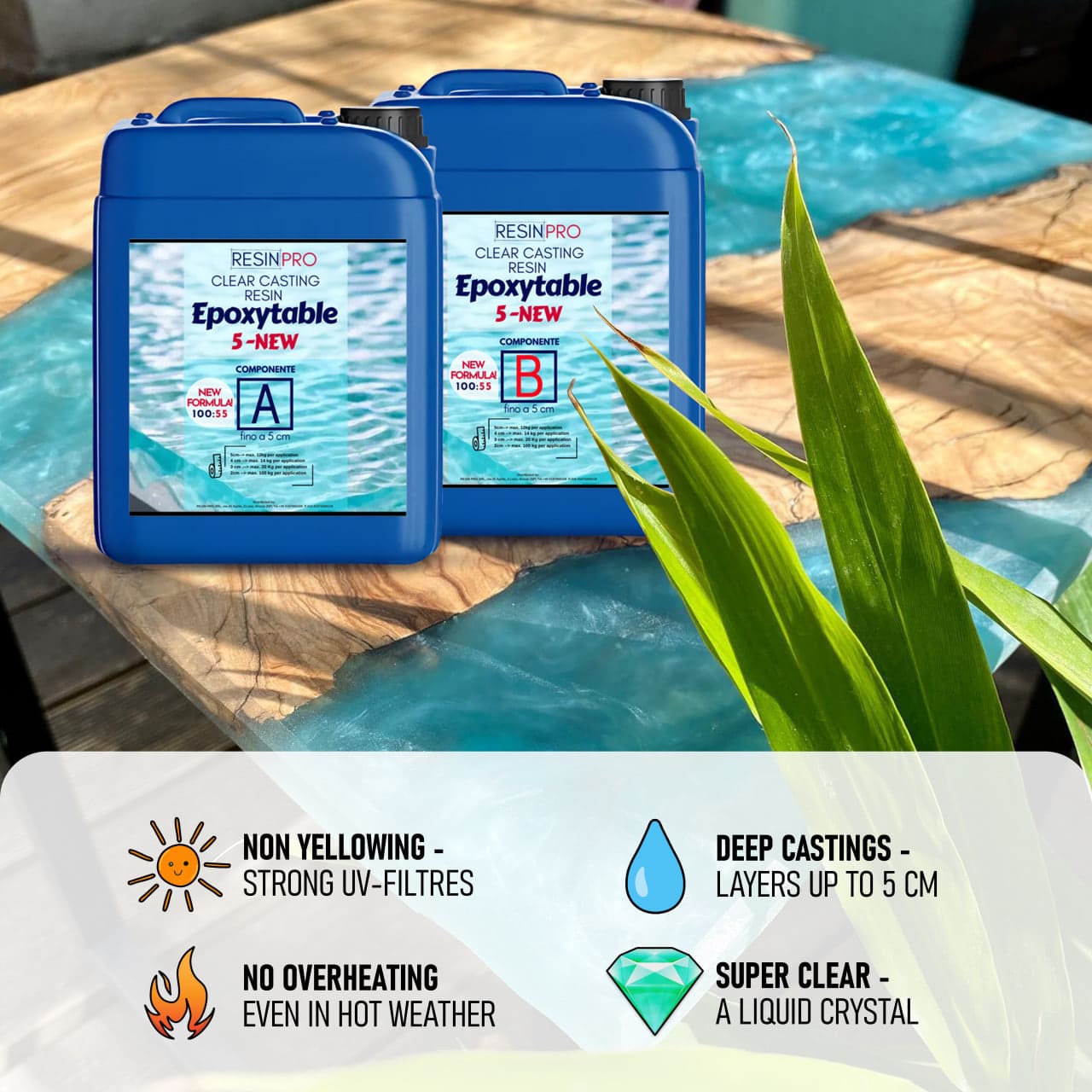
For pours up to 5cm thick, “EpoxyTable 5-Five” – Deep Pour Epoxy Resin for Tables and Large Projects – Up to 5cm is designed for clarity and strength, while for extra-deep river tables or thick sections, “Epoxytable 10-Ten” – Deep Pour Epoxy Resin for Tables, Up to 10cm Casting is suitable. Pour the resin slowly into the form, using a spatula to guide it into complex areas and corners. Avoid over-filling and watch for leaks underneath.
Use a heat gun or blowtorch gently over the surface to release trapped bubbles after pouring. Let the resin cure as directed by the product instructions—usually from 24 to 72 hours, depending on depth and product.

Step 4: Demould and finish the table
Once the resin has fully cured, carefully remove the formwork and check the table’s surface for any sharp or uneven edges. Sand the resin and wood with gradually finer grits to achieve a smooth, even finish—take your time and clean away dust between each sanding stage.
For the final finishing, products like those included in the “River-Table” – Complete Kit for Creating Your First Epoxy Resin Table provide polishing creams and pads designed for epoxy projects, allowing you to bring out a glossy, durable sheen. Ensure all surfaces are thoroughly cleaned before use.
Tips and Common Mistakes to Avoid
Work in appropriate temperature conditions (ideally between 20–25°C) to prevent curing problems. Always check your pouring depth limits for the chosen resin, and if your piece requires thicker casting than the resin allows, use multiple layers with adequate curing time between pours. Avoid mixing too vigorously to minimise bubble formation, and never skip protective gear when working with resin, as it can cause skin irritation if handled improperly. Care in surface preparation, sealing, and finishing ensures a professional-looking table that will last for years.
Troubleshooting and Finishing Success
Patience and attention to surface details set apart an amateur table from a professional piece. Allowing sufficient curing time at each stage, using gentle sanding techniques, and applying purpose-made polishing kits contribute to achieving a flawless, high-gloss finish that enhances both the wood and resin elements of your table.

- "River-Table" – Complete Kit for Creating Your First Epoxy Resin TablePrice range: £198.45 through £467.45"River-Table" kit includes epoxy resin, sealing silicone, polishing kit and pigment for making wood and resin tables.
- "EpoxyTable 5-Five" – Deep Pour Epoxy Resin for Tables and Large Projects – Up to 5cmPrice range: £17.95 through £1,154.95"EpoxyTable 5-Five" is a deep pour epoxy resin designed for tables and large projects, suited for creating thick, scratch-resistant surfaces.
 “Epoxytable 10-Ten” – Deep Pour Epoxy Resin for Tables, Up to 10cm CastingPrice range: £35.95 through £351.95“Epoxytable 10-Ten” is suitable for deep pour applications up to 10cm, designed for wooden tables with a clear finish.
 "Geode O" – Large Wooden Board Table Base for Epoxy Resin Projects – 90x60cm or 120x80cm"Geode O" is a wooden table base designed for epoxy resin projects, supporting creative work in this theme.
Frequently Asked Questions
What is the correct mixing ratio for epoxy resin when making a wooden table?
Always follow the manufacturer's instructions; for most deep pour resins, ratios are by weight, such as 100:55 resin to hardener.
How thick can I pour epoxy resin for a table in a single layer?
This depends on the specific resin; some allow up to 5cm, others up to 10cm per pour. Refer to your product label.
How should I prepare my wood before pouring resin for a table?
Ensure the wood is fully dry, sanded, and free of dust or oils to avoid adhesion and curing issues.
How do I remove bubbles from my resin table surface?
Use a heat gun or torch gently over the surface just after pouring to help bubbles rise and pop.
How long should I let my table cure before use?
Most tabletops require at least 24 to 72 hours for proper curing, depending on resin thickness and type.
Can I use pigments or dyes in my resin table project?
Yes, compatible pigments can be mixed into the resin during blending. Always use pigments intended for epoxy.
What is the recommended way to polish my finished resin table?
Use progressively finer sandpaper followed by an epoxy polishing kit for a durable glass-like shine.