 Free shipping on orders over £29,85
  Shipping Tracking!


 Google
 Facebook
What are synthetic resins derived from?
Discover resin origins, types, and the best applications.

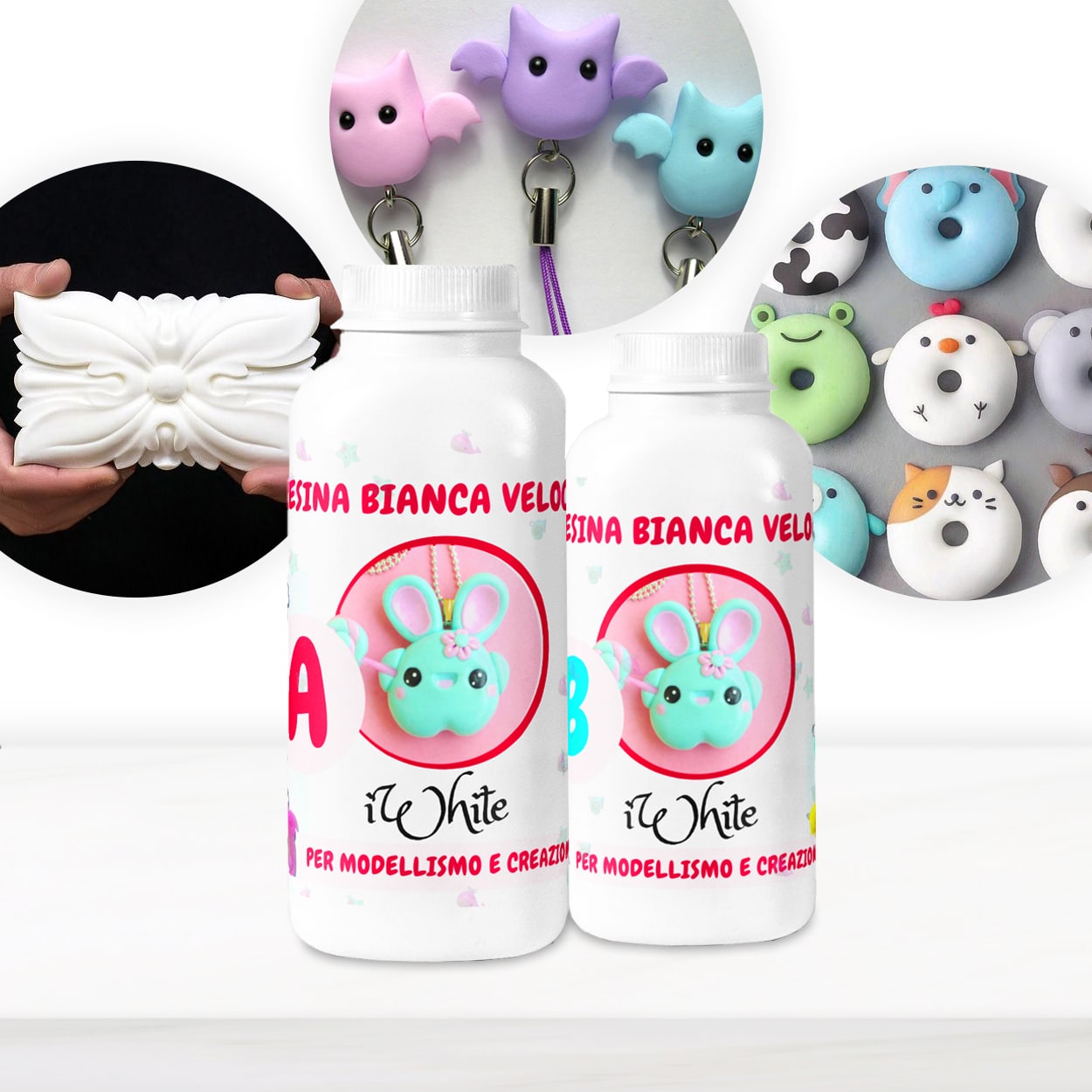
Understanding the origins and chemistry of synthetic resins is crucial for anyone working with modern materials, whether in crafting, construction, or industrial design. This guide unpacks what synthetic resins are made from and compares leading resin types, helping you select the best fit for your project, be it decorative pebble flooring, intricate moulds, or eco-friendly crafts.
Comparing Synthetic Resin Types: Origins and Key Differences
Synthetic resins are man-made polymers designed for performance, ease of use, and durability. While they share some structural similarities, each resin is derived from different chemical processes and raw materials, leading to distinct characteristics:
- Epoxy resins like those found in “Trasparente” – Epoxy Binder for Coloured Pebbles and Grits are produced by reacting epichlorohydrin with bisphenol-A, resulting in a two-component thermosetting system.
- Polyurethane resins such as “IWhite” – Polyurethane Casting Resin and Polyform – Polyurethane Casting Resin – Beige are made by polymerising isocyanates with polyols. They cure rapidly and capture fine detail.
- Mineral-based synthetic resins like “NatuResin” – Mineral Resin & Water System for Creative Casting and Crafts combine inorganic mineral compounds and water to form a non-toxic, ceramic-like casting medium.
Choosing the right synthetic resin begins with understanding its origin chemistry, performance profile, and suitability for your intended use.
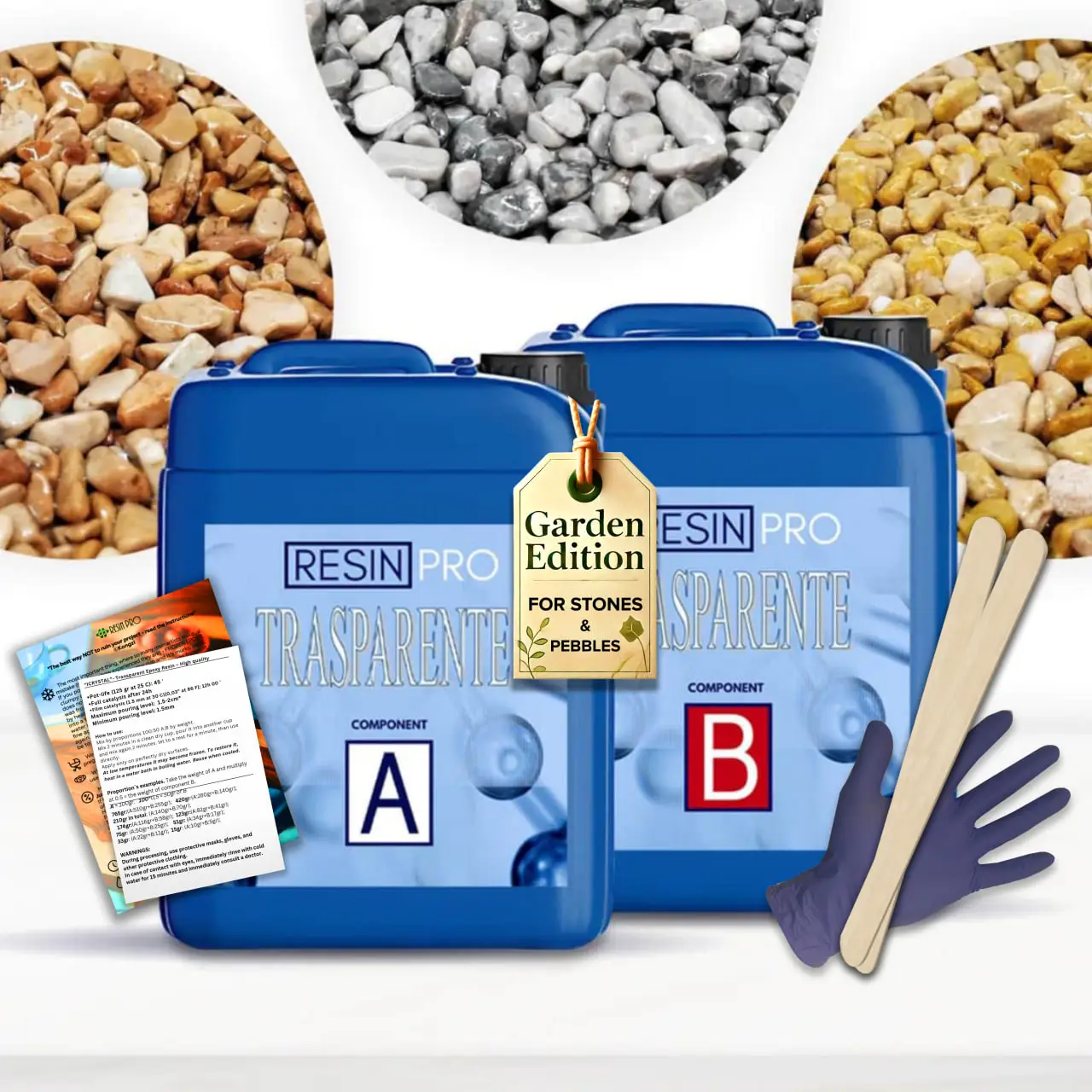
See the Differences: Synthetic Resins in Use
Notice how each resin system performs in different creative and practical settings. Epoxy binders offer a glossy, clear result for aggregate-bound surfaces, while polyurethane and mineral resins excel in precise moulding and eco-friendly crafts. Explore finished examples to understand which resin best aligns with your project vision.
Epoxy Resins: The All-Rounder for Binding and Clear Casts
“Trasparente” – Epoxy Binder for Coloured Pebbles and Grits demonstrates the power of thermosetting, two-part epoxy systems. Derived from epichlorohydrin and bisphenol-A, these resins form durable, crystal-clear bonds, perfect for decorative pebble floors and aggregate-bound surfaces. Key benefits include crystal-clear epoxy resin quality, UV-resistant and non-yellowing properties, and low viscosity that quickly infuses pebbles or grits for a seamless, bubble-free finish. Once cured, the binder is certified non-toxic and ready for direct skin contact—ideal for both DIY and pro applications.
Polyurethane Resins: Rapid Curing and Detailed Moulding
Polyurethane resins, including “IWhite” – Polyurethane Casting Resin (white, fast-curing) and Polyform – Polyurethane Casting Resin – Beige, are derived from a reaction between isocyanate and polyol components. These resins deliver fast-setting results, with “IWhite” offering demoulding in about 30 minutes and Polyform curing in as little as 5 minutes. Their colourable and paintable nature (for “IWhite”) and high fluidity make them exceptional for highly detailed castings, hobby projects, and rapid prototyping. After full cure, they form a durable finish capable of enduring frequent handling and daily use.
Mineral Resin: Eco-Friendly Water-Activated Innovation
The “NatuResin” – Mineral Resin & Water System for Creative Casting and Crafts showcases a different derivation—an inorganic mineral base mixed with water to initiate hardening. Unlike classic epoxies and polyurethanes, NatuResin is eco-friendly & VOC-free, solvent-free, and remarkably safe for handling without gloves. After setting, the finish is ceramic-like hardness and can be customisable with pigments & paints for creative projects ranging from coasters to flowerpots. It’s the natural choice for artists and those prioritising sustainable, easy-to-use materials.
How to Choose: Key Considerations for Selecting Synthetic Resins
Selecting the best synthetic resin involves matching your application’s needs with the resin’s chemistry and performance characteristics. For outdoor binding, UV-stable epoxies like “Trasparente” – Epoxy Binder for Coloured Pebbles and Grits stand out. If speed and fine detail matter for casting or modelling, opt for polyurethane systems such as “IWhite” or Polyform – Polyurethane Casting Resin – Beige. For non-toxic, creative applications with minimal environmental impact, “NatuResin” – Mineral Resin & Water System for Creative Casting and Crafts provides a practical, safe solution. Always check manufacturer guidelines regarding compatibility and intended use for your projects.
Resin Selection Tips for Your Project
Consider surface type, desired finish, working time, and environmental safety when choosing a resin. Epoxy binders are ideal for structural applications, while mineral resins offer a greener, more versatile approach for non-technical crafts and decor.

- "Trasparente" – Epoxy Binder for Coloured Pebbles and GritsPrice range: £33.45 through £397.95"Trasparente" is a transparent epoxy binder suitable for coloured pebble floors, offering UV resistance and a clear, bubble-free finish.
- “IWhite” – Polyurethane Casting Resin – White, Fast-Curing Two-Part SystemPrice range: £24.00 through £36.95IWHITE White Polyurethane Casting Resin is a two-part fast-curing system suitable for precise moulding and rapid prototyping in detailed creations.
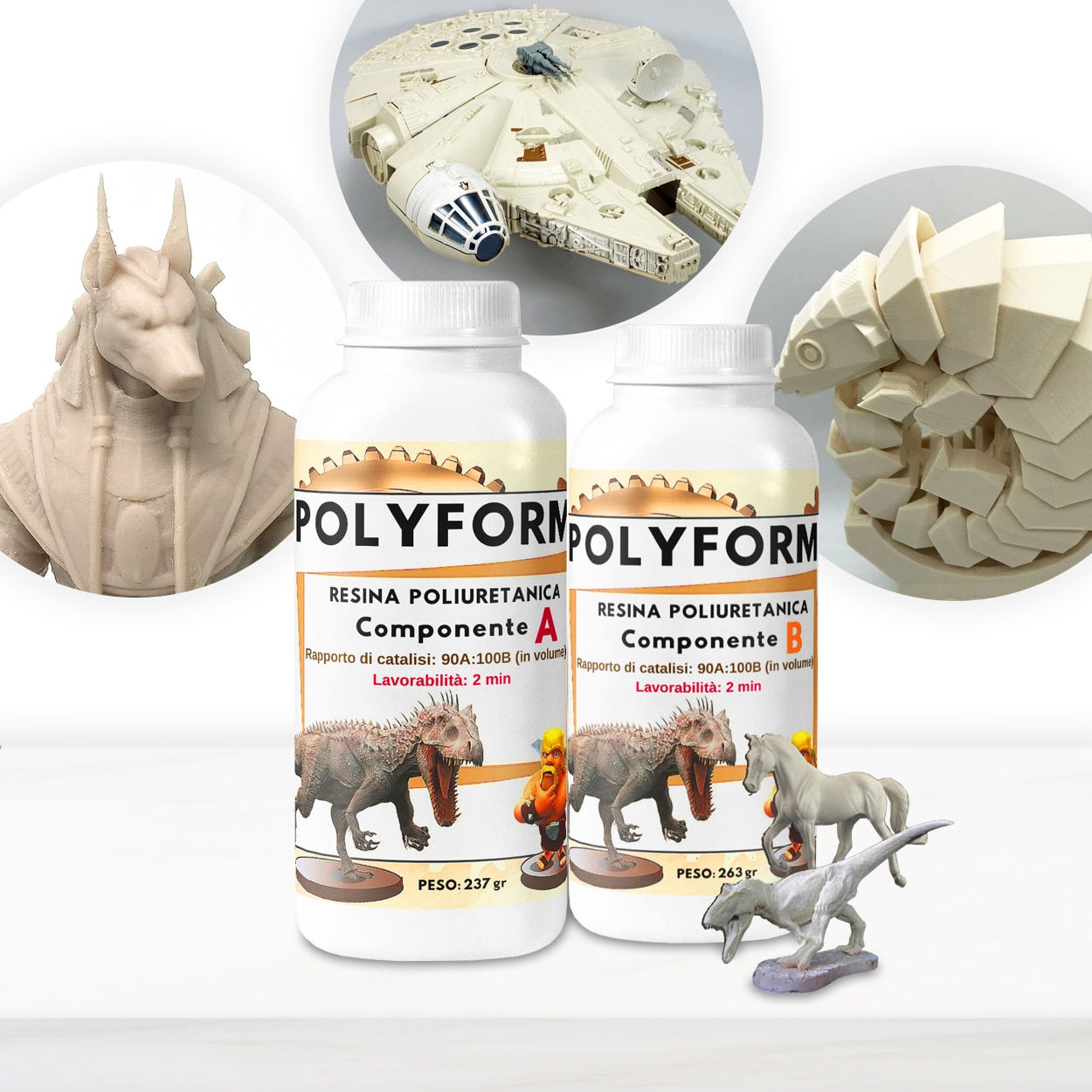 “Polyform” – Polyurethane Casting Resin, Beige, Fast-Setting for PrototypingPrice range: £15.95 through £141.95Polyform polyurethane casting resin is suitable for rapid prototyping and detailed casting projects, offering fast setting and robust finished parts.
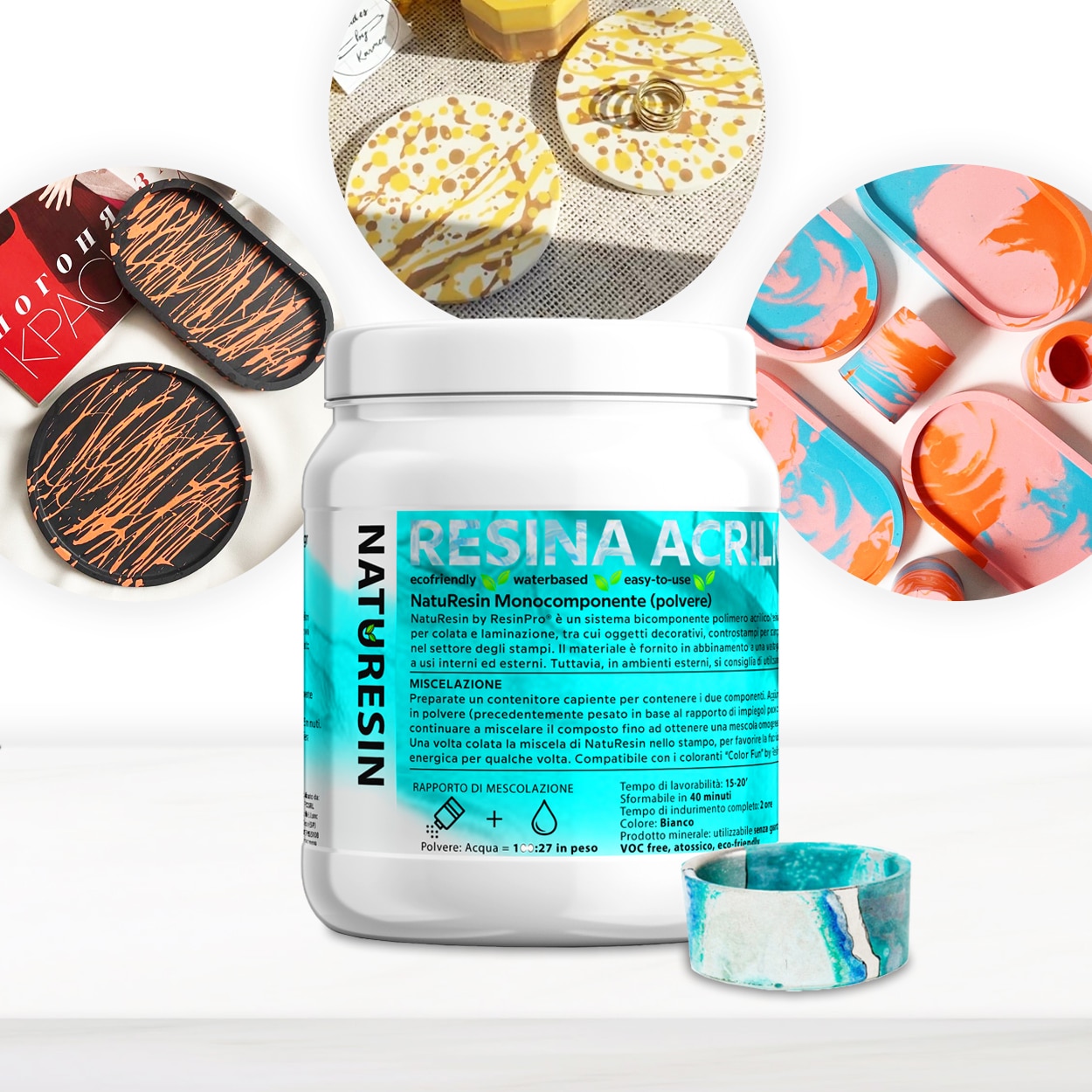 “NatuResin” – Mineral Resin & Water System for Creative Casting and CraftsPrice range: £18.95 through £104.95NatuResin is a single-component mineral resin mixed with water, designed for creative casting with an eco-friendly and solvent-free formula.
Frequently Asked Questions
What is the difference between epoxy and polyurethane resin?
Epoxy resins cure slowly for strength and clarity, while polyurethane resins cure quickly and are better for detailed moulds and rapid prototyping.
Are any synthetic resins eco-friendly?
Yes, water-based mineral resins like NatuResin are solvent-free, VOC-free, and safe to handle, making them eco-friendly options.
Can I use polyurethane resin for making jewellery?
Yes, polyurethane casting resins capture fine details quickly and are suitable for small decorative items and jewellery pieces.
Is mineral resin suitable for outdoor use?
Mineral resin systems provide ceramic-like hardness suitable for outdoor decorative items, but always check for temperature and weather exposure limitations.
How UV stable are epoxy resins for exteriors?
Specially formulated epoxy resins offer enhanced UV resistance and non-yellowing performance, ideal for driveways and outdoor pebble floors.
Can I colour or paint casting resins?
Some polyurethane and mineral resins can be coloured or painted. Always review the specific product details for compatibility.