 Free shipping on orders over £29,85
  Shipping Tracking!


 Google
 Facebook
What is floor resin made of?
Understanding resin ingredients for lasting, durable flooring

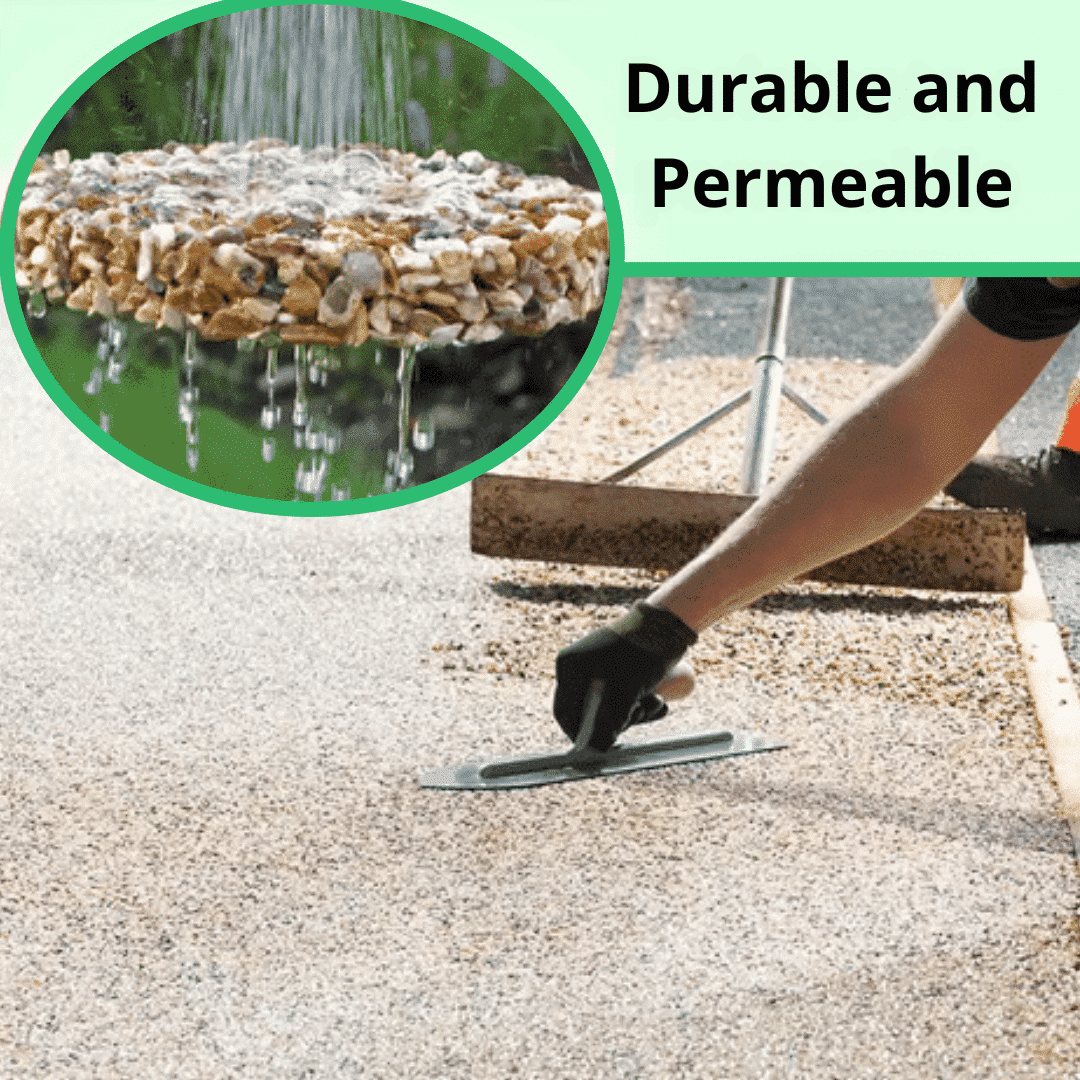
Whether you are a professional contractor, architect or enthusiastic DIYer, understanding what floor resin is made of is crucial for making informed flooring decisions. This guide breaks down the essential ingredients and types of floor resins used in both domestic and commercial spaces, comparing their formulations and helping you match the right product to your specific requirements.
Key Components of Floor Resin: Types and Differences
Floor resins are specialised polymers engineered for durability, water-resistance, and strong adhesion. The most common types are epoxy resin, polyurethane resin, and methacrylic resin. Each composition offers unique advantages depending on the surface, traffic, and desired final appearance:
- Epoxy resin: A thermosetting polymer, typically supplied as a two-component system (resin and hardener). Epoxy is valued for its exceptional chemical resistance, mechanical strength, and suitability for decorative floors with pebbles or coloured aggregates.
- Polyurethane resin: Offers remarkable flexibility and superior UV resistance, particularly well-suited for outdoor whites or where colour-stability is crucial.
- Methacrylic resin: Usually supplied as a one-component liquid, methacrylic resins penetrate and seal concrete, creating a breathable yet waterproof barrier, ideal for driveways and stamped floors.
- Water-based epoxy primers: These provide a stable, eco-friendly base layer, maximising adhesion of subsequent resin coatings across surfaces like wood, screed, tiles, or concrete.
Choosing the right resin means understanding the interactions between these components and the intended aggregate or substrate. Some products, such as complete floor kits, combine the binder and decorative stones for easy, durable results.
Inside Floor Resin: What Makes It Perform
Epoxy and polyurethane resins form the backbone of high-performance flooring systems. Through careful selection of hardeners, UV-filters, and fillers, each resin type is tuned for durability, permeability, or colour stability. Choose wisely to match your project’s demands.
Epoxy Binders for Coloured Pebble Floors
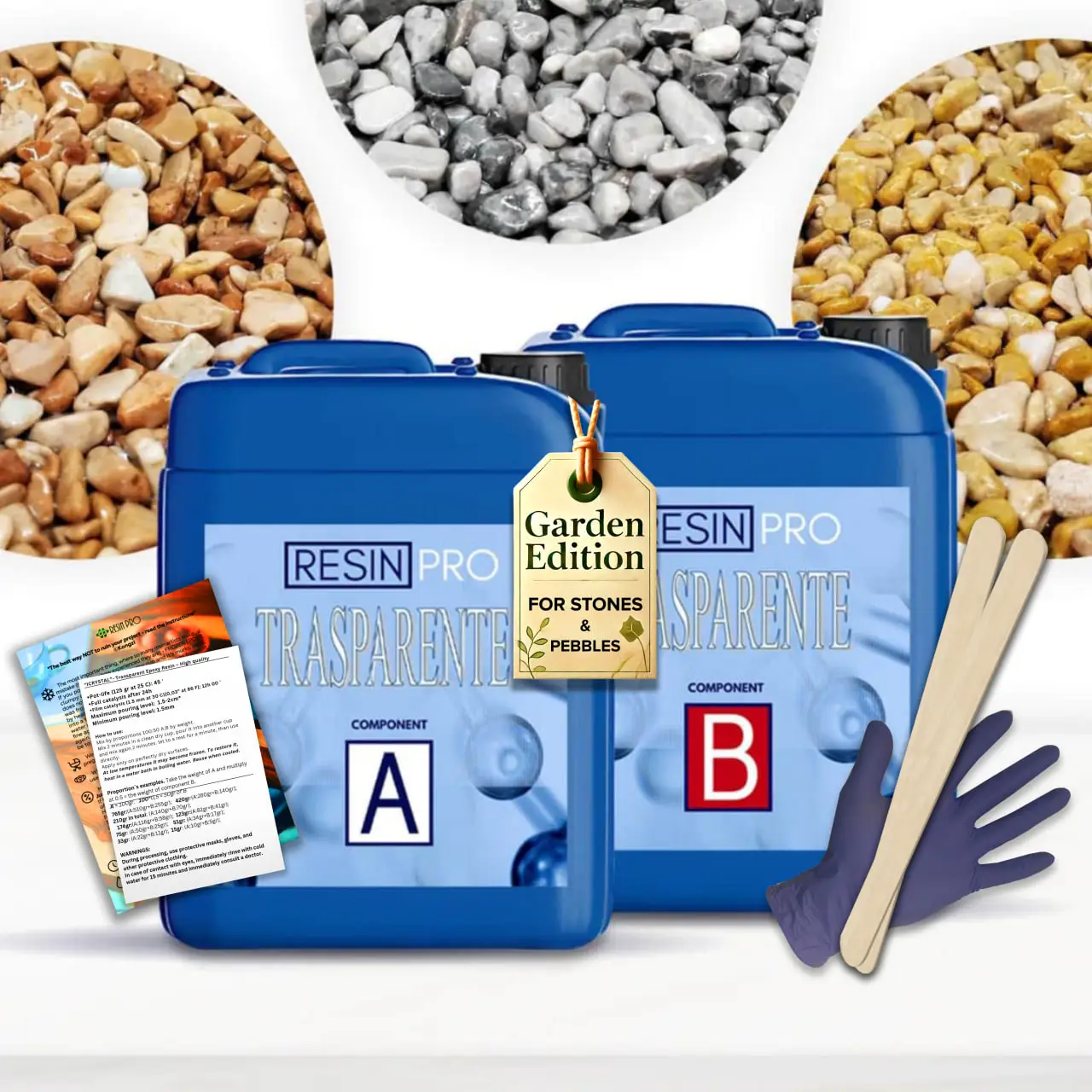
“Trasparente” – Epoxy Binder for Coloured Pebbles and Grits showcases the classic two-part epoxy system used for pebble and aggregate flooring. The main ingredients include a cycloaliphatic amine-based epoxy and carefully balanced UV filters, resulting in a crystal-clear epoxy resin that resists yellowing even on dark or vibrant aggregates.
Its low viscosity ensures quick, complete impregnation of pebbles or grits, producing a bubble-free, durable finish. This resin is also certified non-toxic after curing and safe for frequent skin contact, making it an excellent choice for both decorative residential pathways and public spaces. By combining high-performance resin with aggregates, this product forms resilient, visually striking floors that maintain their appearance in demanding environments.
Permeable Floor Kits: The Complete Resin and Aggregate Solution
The “Flowstone” – Complete Permeable Floor Kit with Pebbles and Resin illustrates how floor resin can be part of an integrated system. This kit includes either non-yellowing polyurethane resin (for white aggregates) or special epoxy binder (for coloured stones), plus the appropriate decorative pebbles or gravel. The key ingredient pairing of binder and aggregate creates a permeable solution, allowing water to drain efficiently and preventing tricky puddles.
The system is designed for the UK climate and outdoor settings such as driveways, terraces, and public spaces. The customisable finish ensures a wide choice of colours and pebble sizes, while loads are spread evenly for joint-free, long-lasting surfaces. Detailed application instructions included enable all skill levels to achieve excellent results.
One-Component Methacrylic Resin for Concrete Floors
“Resinstone” – One-Component Methacrylic Resin for Concrete Floors and Driveways represents a different facet of resin technology. Unlike two-part epoxies, this methacrylic resin is ready-to-use and designed for deep penetration into porous surfaces such as concrete and stamped floors.
Methacrylic resin acts by sealing and waterproofing while remaining breathable, protecting surfaces from moisture, chemicals, UV rays, and daily wear. It dries quickly and is ideal where easy, rapid rejuvenation is needed—such as driveways or outdoor paths. Its superior durable protection makes it a go-to option for many contractors and DIYers seeking low-maintenance floor solutions.
Universal Epoxy Floor Primer for Reliable Adhesion
Perfect surface preparation is critical for every floor resin project. The “Epoxyprimer” – Universal Water-Based Two-Component Epoxy Floor Primer provides the foundation for stable flooring, regardless of the top resin type. This eco-friendly, superior adhesion formula is supplied as a two-component, water-based system and is suitable for surfaces ranging from concrete to tiles and timber.
Its odourless, eco-friendly properties make it ideal for indoor use. Applying this primer improves longevity, prevents delamination, and helps create even, durable coatings for any subsequent resin floor installation.
Choosing the Right Resin for Your Flooring Project
Selecting the appropriate floor resin involves assessing your substrate material, intended footfall, exposure to UV or moisture, and aesthetics. For example, use a transparent epoxy binder for coloured aggregates in decorative paths, a complete floor kit for large outdoor areas with integrated drainage, or a methacrylic resin for sealing bare concrete surfaces. Always begin with a suitable primer—such as “Epoxyprimer”—to optimise adhesion.
Match the resin’s properties with your needs: permeability, robustness, UV resistance, or rapid installation. For more guidance, explore our collection for pebble floors or multipurpose epoxy resins and find the best fit for your next project.
Expert Tips for Floor Resin Projects
Always prime surfaces thoroughly to ensure optimal adhesion of your chosen floor resin. Assess environmental conditions, such as humidity and temperature, and select a resin binder compatible with both your aggregate and use case. Thorough planning leads to a beautiful, long-lasting result.

- "Trasparente" – Epoxy Binder for Coloured Pebbles and GritsPrice range: £33.45 through £397.95"Trasparente" epoxy binder offers a clear, UV-resistant finish for coloured pebbles, suitable for decorative floors and paths.
- "Flowstone" – Complete Permeable Floor Kit with Pebbles and ResinPrice range: £49.95 through £3,915.45Flowstone kit enables a durable, permeable pebble and resin floor suitable for UK outdoor driveways and paths with simple application guidance.
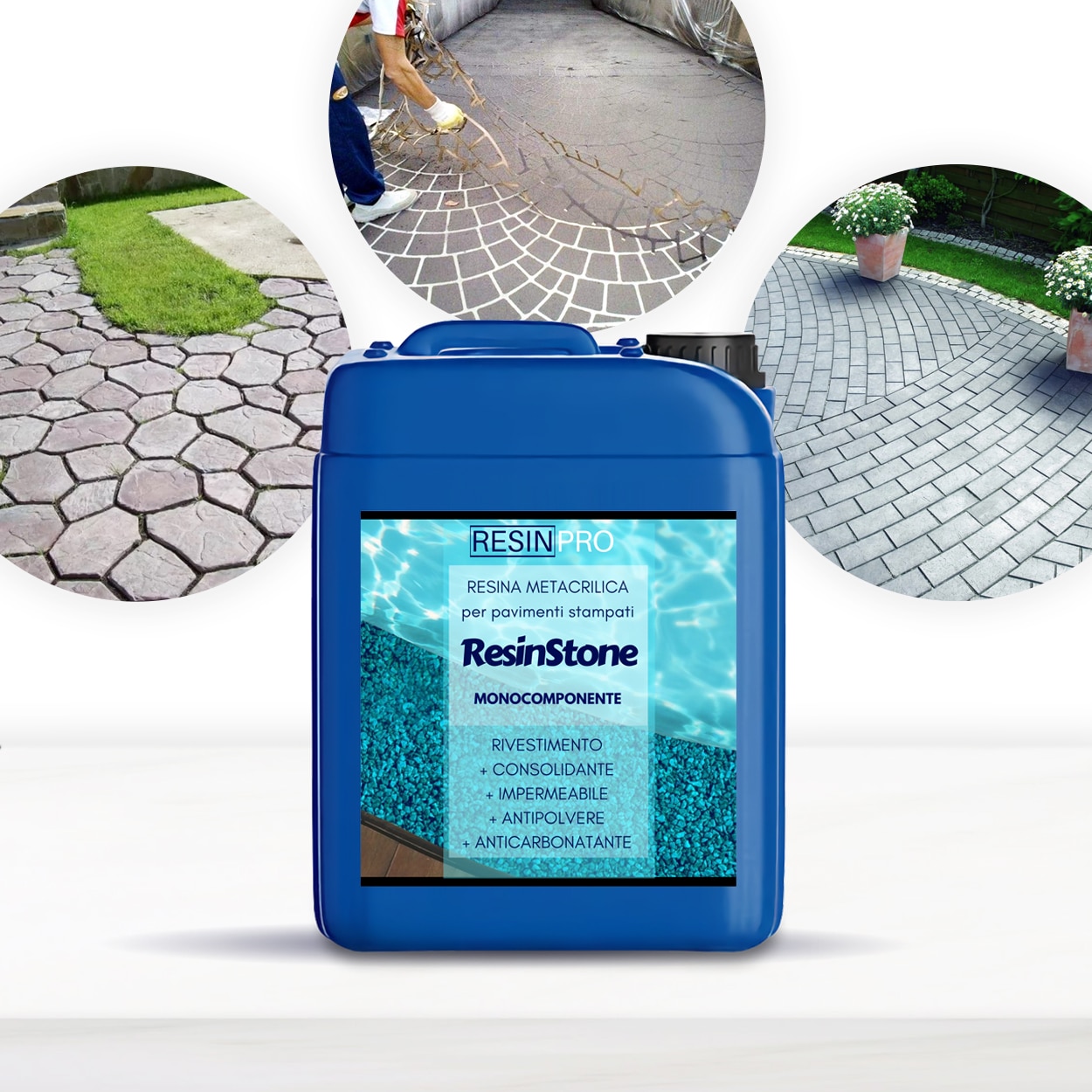 "Resinstone" – One-Component Methacrylic Resin for Concrete Floors and DrivewaysPrice range: £36.71 through £336.48One-component methacrylic resin designed for sealing and protecting concrete floors and driveways with durable, breathable protection.
 "Epoxyprimer" – Universal Water-Based Two-Component Epoxy Floor PrimerPrice range: £156.45 through £286.45Epoxyprimer is a water-based two-component epoxy floor primer designed for reliable adhesion on concrete, wood, tiles and screeds.
Frequently Asked Questions
What are the main differences between epoxy, methacrylic, and polyurethane resins for floors?
Epoxy is best for robustness and aesthetics, polyurethane excels in UV resistance for outdoor use, and methacrylic offers fast-drying, breathable protection for concrete.
Are floor resins safe to use in homes and public areas?
Yes, once fully cured, modern floor resins are non-toxic, odourless, and safe for daily foot traffic in living spaces and public settings.
Why is an epoxy primer necessary before applying floor resin?
A dedicated primer ensures deep penetration and optimal bonding, reducing the risk of delamination and improving the lifespan of your resin floor.
Can floor resin be applied to wood, tiles, or outdoor surfaces?
Yes, provided you use a compatible primer and appropriate resin, floor systems can be installed over a wide range of substrates—concrete, tiles, timber, and more.
Do temperature and weather matter during application?
Yes. Avoid extreme cold, heat, or high humidity. Follow manufacturer guidelines for ideal conditions to achieve proper adhesion and curing.
What's the difference between permeable and standard resin floors?
Permeable floors use resin with loose aggregates to allow water drainage, while standard systems form a solid, waterproof barrier.
Can I install a resin floor myself without professional help?
Many modern kits are designed for DIY installation. For large or complex areas, professional installation is advised for best results.