 Free shipping on orders over £29,85
  Shipping Tracking!


 Google
 Facebook
How much hardener should be added to one litre of liquid resin?
Accurate mixing ratios for flawless epoxy projects
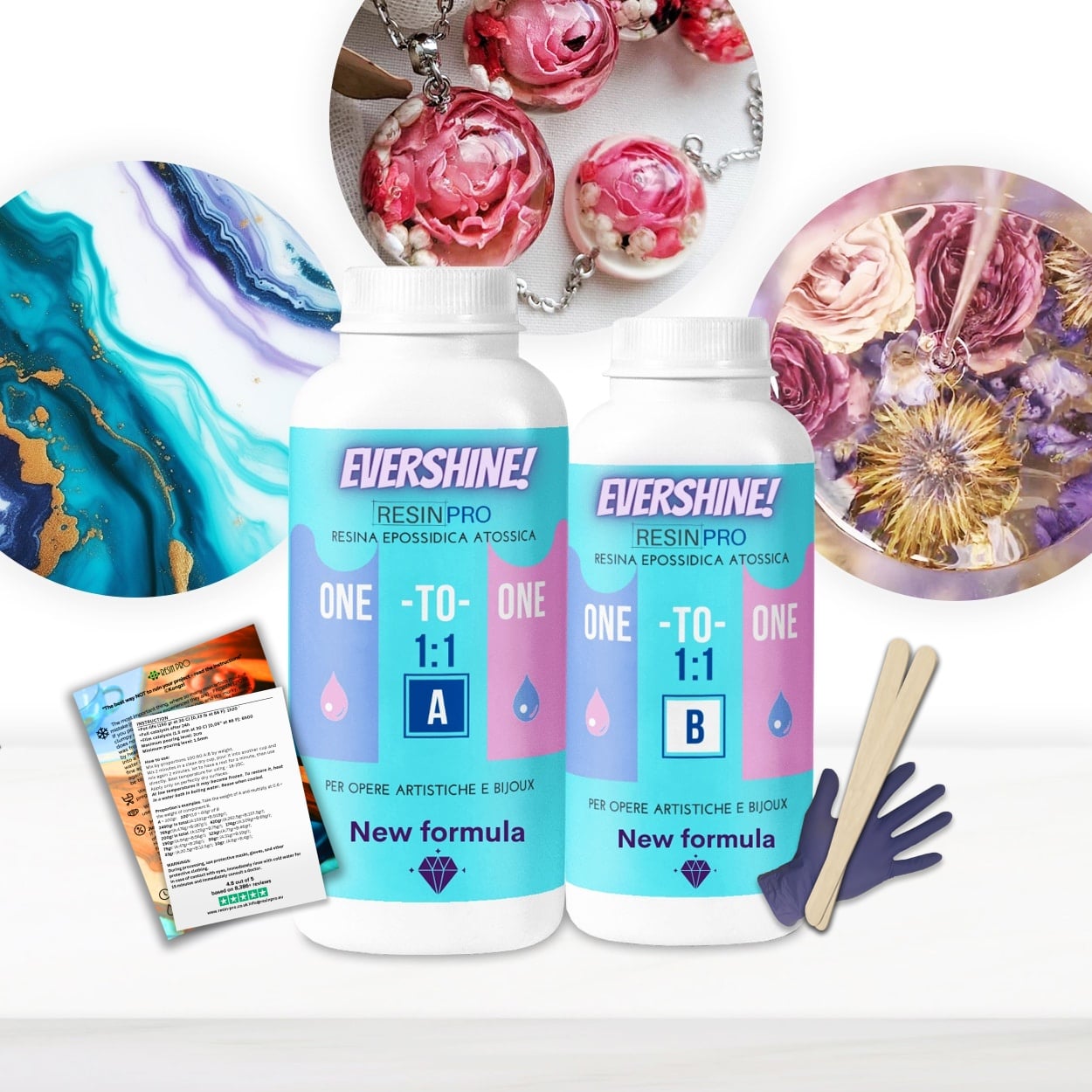

Understanding how much hardener to add to one litre of liquid resin is critical for anyone working with epoxy—whether you are crafting jewellery, making artwork, or building deep-pour river tables. This page is designed to help you determine precise mixing ratios across popular resin types, ensuring your final results are strong, clear, and free from curing issues.
Overview: Epoxy Resin and Hardener Ratios Explained
The correct ratio of resin to hardener is essential for a successful cure. Different types of epoxy have different mixing instructions: some require a straightforward 1:1 volume ratio, while others specify mixing by weight, such as 100:60 or 100:55. Always use the ratio for your specific resin and follow whether it is measured by volume or by weight—never interchange these methods. This overview guides you through the key differences so you can select and prepare the right resin for your needs.
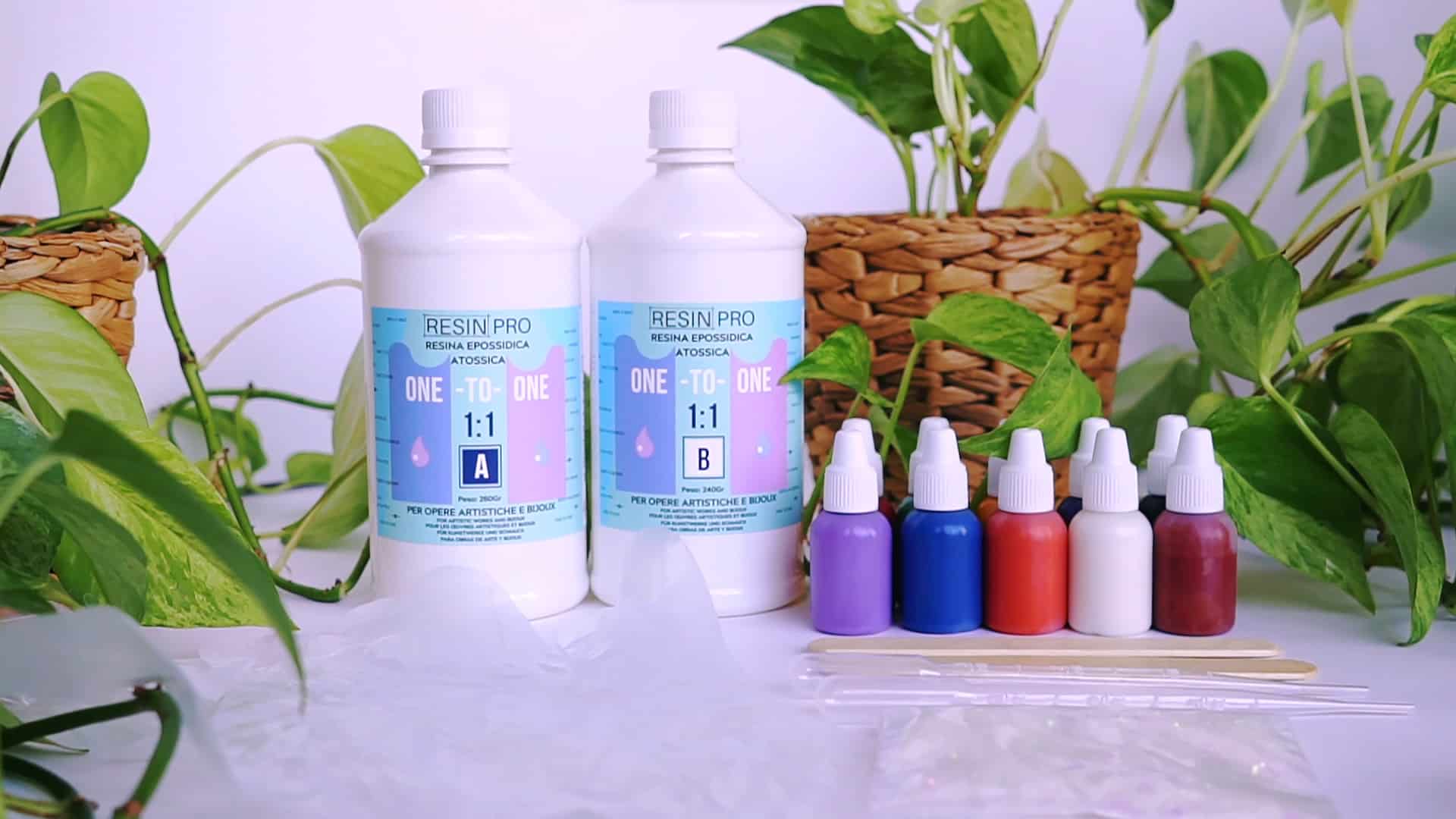
Visual Guide: Resin-to-Hardener Mixing Techniques
Proper mixing is crucial for a successful epoxy cure. Use separate, clearly marked containers for resin and hardener. Measure using the specified method—by volume or weight—depending on your chosen resin system. Mix thoroughly, scraping the sides and bottom to ensure full integration for best clarity and strength.
“One-2-One” – Simple 1:1 Mixing for Jewellery and Handcrafting
If you are seeking a stress-free mixing process, “One-2-One” – Epoxy Resin for Handcraft, 1:1 Mixing Ratio is ideal. You simply combine resin and hardener in equal amounts by volume—so, for one litre of resin, add one litre of hardener. This makes it perfect for both beginners and experienced crafters creating jewellery, cabochons, or decorative coatings. The non-toxic formulation and crystal-clear finish ensure your items come out beautiful and durable every time.
“EpoxyTable 5-Five” – For Deep Pour Projects up to 5cm
For larger or deeper projects, such as tabletops or thicker castings, “EpoxyTable 5-Five” – Deep Pour Epoxy Resin for Tables and Large Projects – Up to 5cm is tailored for the job. The recommended mixing ratio is 100 parts resin to 55 parts hardener by weight. This means for every 1,000g of resin, you should add 550g of hardener for a balanced cure. Precision is crucial here—ensure you use accurate scales and mix thoroughly to achieve a high-strength, bubble-free surface that stands up to regular use and maintains clarity over time.
“Epoxytable 10-Ten” – Deep Pour Resin up to 10cm Thickness
“Epoxytable 10-Ten” – Deep Pour Epoxy Resin for Tables, Up to 10cm Casting is specifically designed for super-deep pours. This resin system uses a 4:1 resin-to-hardener ratio by weight. So, for one litre (approx. 1,000g) of resin, you mix in 250g of hardener. The key advantage is its low exothermic reaction, which prevents overheating during thick casting—ideal for artistic tables and large sculptural projects.
“Trasparente” – Casting Resin for Details and Small Projects
When working on delicate castings, small river tables, or craft projects up to 2cm in thickness, “Trasparente” – Multipurpose Clear Epoxy Resin for Casting – Up to 2cm is a reliable choice. This product features a mix ratio: 100:60 (resin to hardener) by weight, meaning each 1,000g of resin should be mixed with 600g of hardener. The result is a crystal-clear, UV-resistant finish with outstanding mechanical resistance, suitable for woodworking, art, and hobby projects.
How to Select the Right Epoxy Mixing Ratio for Your Project
When deciding which resin to choose, consider the depth and scale of your project first. Thicker pours (for example, large river tables) need resins with lower exothermic reactions and dedicated deep-casting ratios, such as Epoxytable 10-Ten or EpoxyTable 5-Five. For crafts and jewellery, opt for One-2-One or “Trasparente” with their straightforward volumetric or simple weight ratios. Always check your resin’s technical data for exact instructions, and use accurate measuring tools to ensure the best result.
Real Project Examples and Layering Advice
For deep-pour projects and tabletops, layering is often essential. Pour in stages if working with large volumes or significant thickness, allowing each layer to partially set before pouring the next to avoid overheating and bubbles. These real examples demonstrate how following the correct ratios leads to professional, durable results.
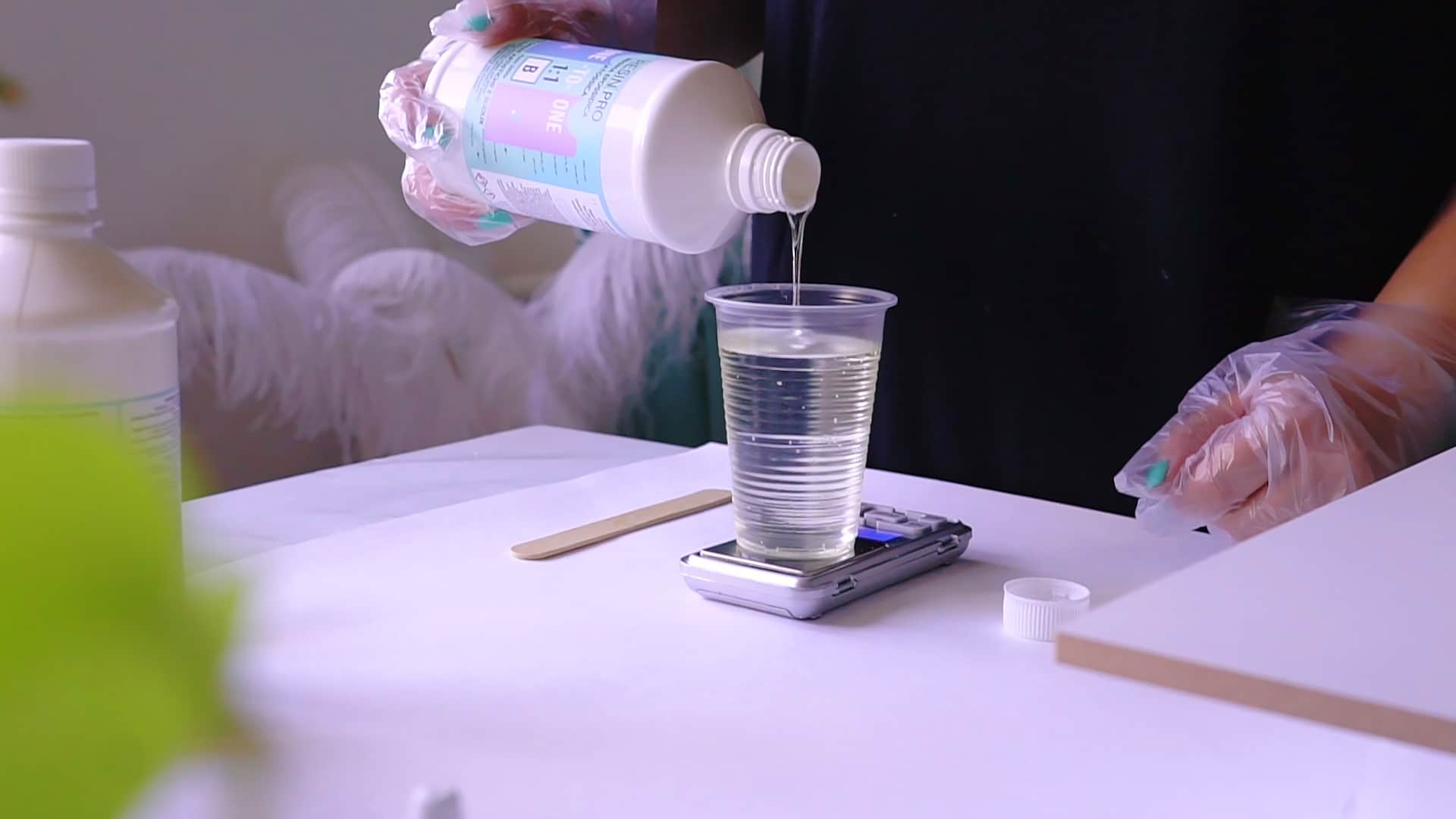
- "One-2-One" – Epoxy Resin for Handcraft, 1:1 Mixing RatioPrice range: £15.95 through £59.95"One-2-One" epoxy resin has an easy 1:1 volumetric mixing ratio, designed for beginners and experienced crafters working on handcraft projects.
- “Epoxytable 10-Ten” – Deep Pour Epoxy Resin for Tables, Up to 10cm CastingPrice range: £35.95 through £351.95“Epoxytable 10-Ten” is an epoxy resin for creating tables and artistic projects with casting thickness up to 10cm, suitable for deep pour…
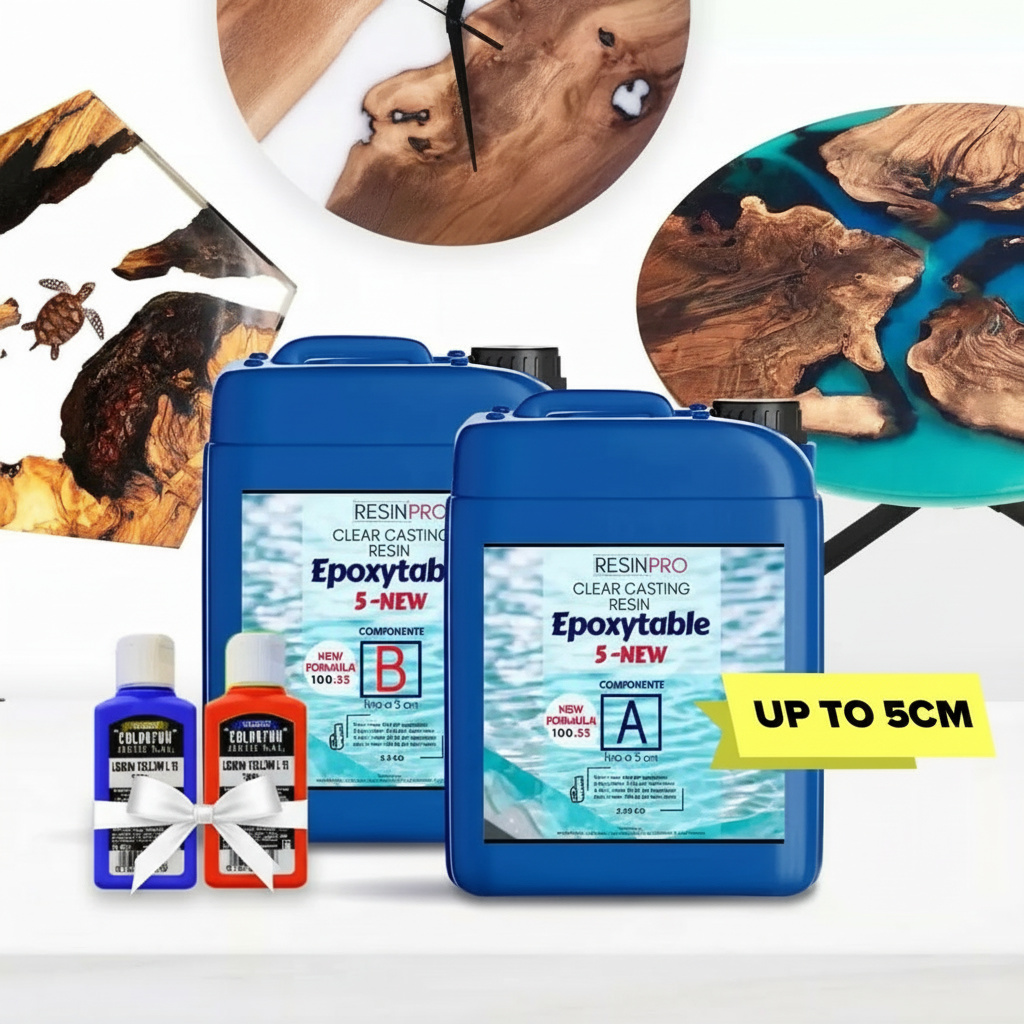 "EpoxyTable 5-Five" – Deep Pour Epoxy Resin for Tables and Large Projects – Up to 5cmPrice range: £17.95 through £1,154.95"EpoxyTable 5-Five" is designed for deep pour projects like tables with features for long working time and mechanical resistance.
 "Trasparente" – Multipurpose Clear Epoxy Resin for Casting – Up to 2cmPrice range: £8.95 through £397.95"Trasparente" is a clear epoxy resin designed for casting layers up to 2cm with a self-levelling, glossy finish suitable for various DIY projects.
Frequently Asked Questions
Do I mix resin and hardener by weight or by volume?
It depends on the product—always follow the manufacturer's instructions. Some resins are mixed by volume, others by weight.
What happens if I use the wrong mixing ratio?
Incorrect ratios can lead to incomplete curing, tacky surfaces, or compromised strength and clarity in the finished piece.
Must I mix the entire resin and hardener kit at once?
No, you can mix partial quantities, but always maintain the exact recommended ratio for optimal results.
How long should I mix epoxy resin and hardener?
Mix for at least 3–5 minutes, scraping sides and bottom, until the blend is uniform and streak-free.
Why is my resin still sticky after curing?
This is most commonly due to an incorrect resin-to-hardener ratio or insufficient mixing.
Can I speed up the curing time of epoxy resin?
Attempting to heat the resin may cause defects. Use the resin at room temperature as specified for consistent results.
Which resin is easiest for beginners regarding mixing?
Resins with a 1:1 by volume mixing ratio, such as One-2-One, are the simplest and most forgiving for newcomers.
What is the most common mistake when mixing epoxy?
Failing to follow the specified ratio or type of measurement is the most frequent error, leading to curing issues.