 Free shipping on orders over £29,85
  Shipping Tracking!


 Google
 Facebook
How to build a table with epoxy resin?
Step-by-step guidance for creating stunning resin tables
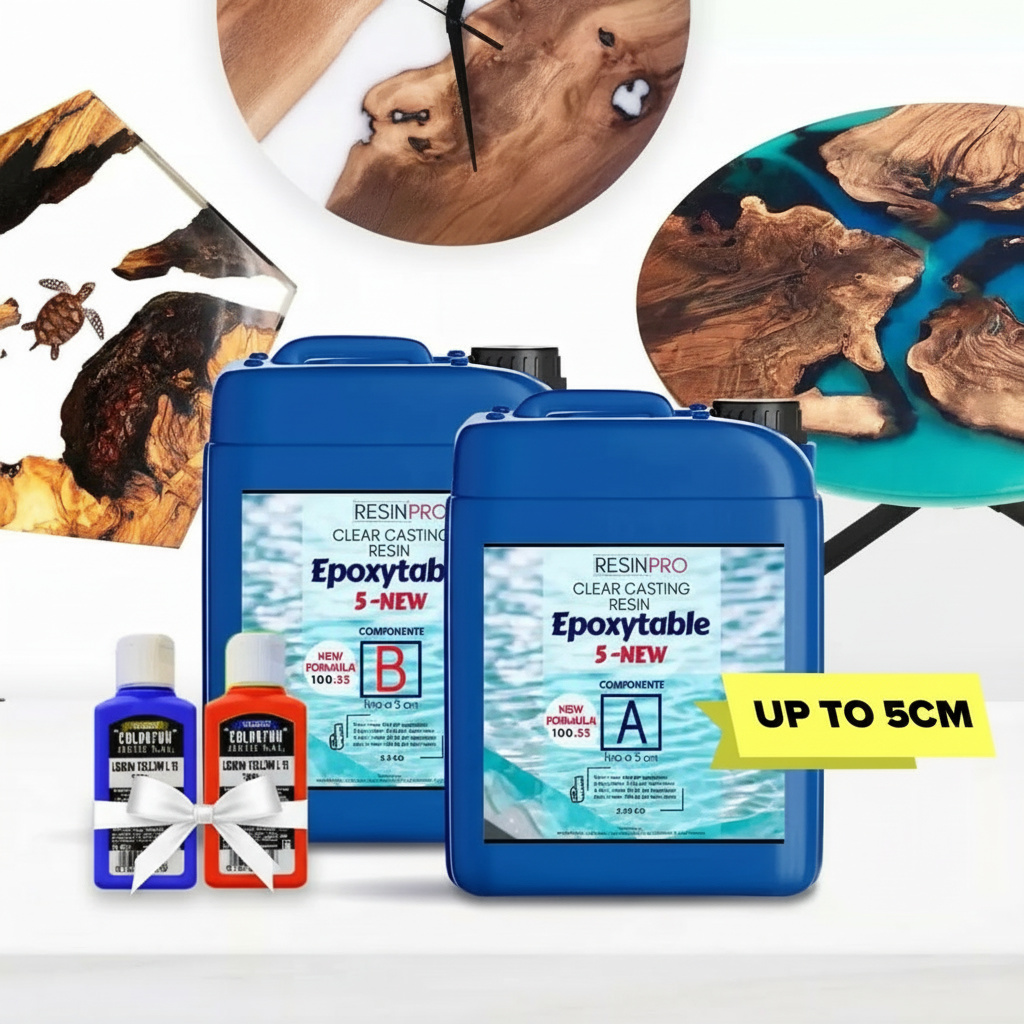

Building a table with epoxy resin can transform ordinary wood into a stunning centrepiece for your home or workspace. This guide will take you through the essential steps, from project planning and surface preparation to pouring, finishing and troubleshooting, ensuring you can craft a unique, durable resin table no matter your experience level.
What You’ll Need
- “EpoxyTable 5-Five” – Deep Pour Epoxy Resin for Tables and Large Projects – Up to 5cm – for deep pours up to 5cm.
- “Epoxytable 10-Ten” – Deep Pour Epoxy Resin for Tables, Up to 10cm Casting – for super-deep resin features.
- “River-Table” – Complete Kit for Creating Your First Epoxy Resin Table – includes resin, pigments, silicone, sealant and polishing tools for beginners.
- “Geode O” – Large Wooden Board Table Base for Epoxy Resin Projects – 90x60cm or 120x80cm – as a stable base for your project.
- Protective gloves, mask and safety glasses
- Level workbench & measuring tools
- Mixing containers and stirrers
- Clamps, tape and release agent (for formwork)
- Sandpaper and polishing kit

Essential Workspace Preparation
Set up your workspace in a well-ventilated, dust-free area. Gather all your tools and materials before starting. Cover the floor and surrounding surfaces to protect from resin drips. Pre-plan your steps, as resin working time can be limited depending on product and temperature.

Step 1: Design and Set Up Your Table Base
Start by choosing a strong, flat table base that fits your desired table size. Many makers prefer using quality hardwood slabs for a natural look, or a purpose-built base such as the “Geode O” – Large Wooden Board Table Base for Epoxy Resin Projects – 90x60cm or 120x80cm. Ensure the base is free from warping and dust, as an even surface is vital for a smooth epoxy pour. If you plan on creating a river table or split design, arrange the timber slabs with a gap between them for the resin channel.
Secure the base to your work table, and use a spirit level to check stability. A non-levelled project may cause resin pooling and uneven thickness, affecting the final appearance and strength.
Step 2: Build and Seal the Formwork
Create a leak-proof form (mould) around your table components using materials such as melamine board or sealed plywood. The walls should fit snugly around the base, allowing space for the planned resin features. Apply a release agent or tape to the inside surfaces so the epoxy does not bond to the formwork.
Seal the formwork properly with silicone or hot glue, focusing on all internal seams and corners. Any leaks can cause significant resin loss. Double-check corners and underside edges for gaps by adding additional sealant if necessary. Let all sealing compounds cure according to manufacturer guidelines before proceeding.
Remember to elevate your project slightly to make demoulding easier after casting.
Step 3: Prepare the Resin and Pour in Layers
Once the formwork is ready, precisely measure and mix your epoxy resin. Accurate measurement is crucial to achieve a proper set and prevent cloudiness or tackiness. Follow the product directions for ratio by weight, mixing the resin and hardener slowly to minimise bubble formation.
For deeper pours, such as river tables, select an appropriate product. For up to 5cm, “EpoxyTable 5-Five” – Deep Pour Epoxy Resin for Tables and Large Projects – Up to 5cm is ideal; for depths up to 10cm, “Epoxytable 10-Ten” offers superior clarity and bubble resistance.
Pour in layers for deep projects; for pours over 5cm, cast in multiple stages with recommended cure intervals. Use a heat gun or torch gently along the surface to help remove bubbles as they rise.

Step 4: Curing and Demoulding
After the final pour, cover the surface to keep dust away and maintain a steady temperature (ideally 20-22°C). Most table resins require a full 48–72 hours to reach demoulding strength. Allow for proper curing time; rushing this stage could result in surface defects or warping.
Once set, carefully remove clamps and formwork. If you used tape or a release agent, the project should separate cleanly. Inspect all edges for sharp spots and assess clarity and hardness before moving on to finishing.

Step 5: Sanding and Polishing Your Epoxy Table
Gradually sand the surface starting with coarse grit and progressing to fine paper (up to 4000 grit for a mirror finish). Wipe away all dust between grits. For a high-gloss effect, use an appropriate polishing kit such as the one included in the “River-Table” – Complete Kit for Creating Your First Epoxy Resin Table. Apply polish using a soft pad and buff until the surface gleams.
If required, finish the wooden areas with oil or a suitable topcoat, taking care not to contaminate the resin parts.
Tips, Mistakes and Troubleshooting
Work in a well-ventilated area to minimise odours and ensure safety. Always wear gloves and protective eyewear.
Check that all forms and base materials are level before mixing resin. Inaccurate mixing ratios or wet wood can lead to curing issues. Avoid pouring excessive depth in a single stage, as this may result in overheating or yellowing. If you spot trapped bubbles after pouring, pass a heat gun quickly but gently across the surface.
Prepare for minor sanding imperfections or dull patches by fully polishing at the end of your project. With patience, careful setup and the right epoxy system, you will achieve a visually striking and long-lasting resin table.
Finishing for a Perfect Result
Quality finishing transforms your table from good to exceptional. Take your time sanding through grit levels and always polish with a clean, soft cloth. Testing the finish on a small spot can help avoid mistakes. Protective topcoats further enhance gloss and durability.
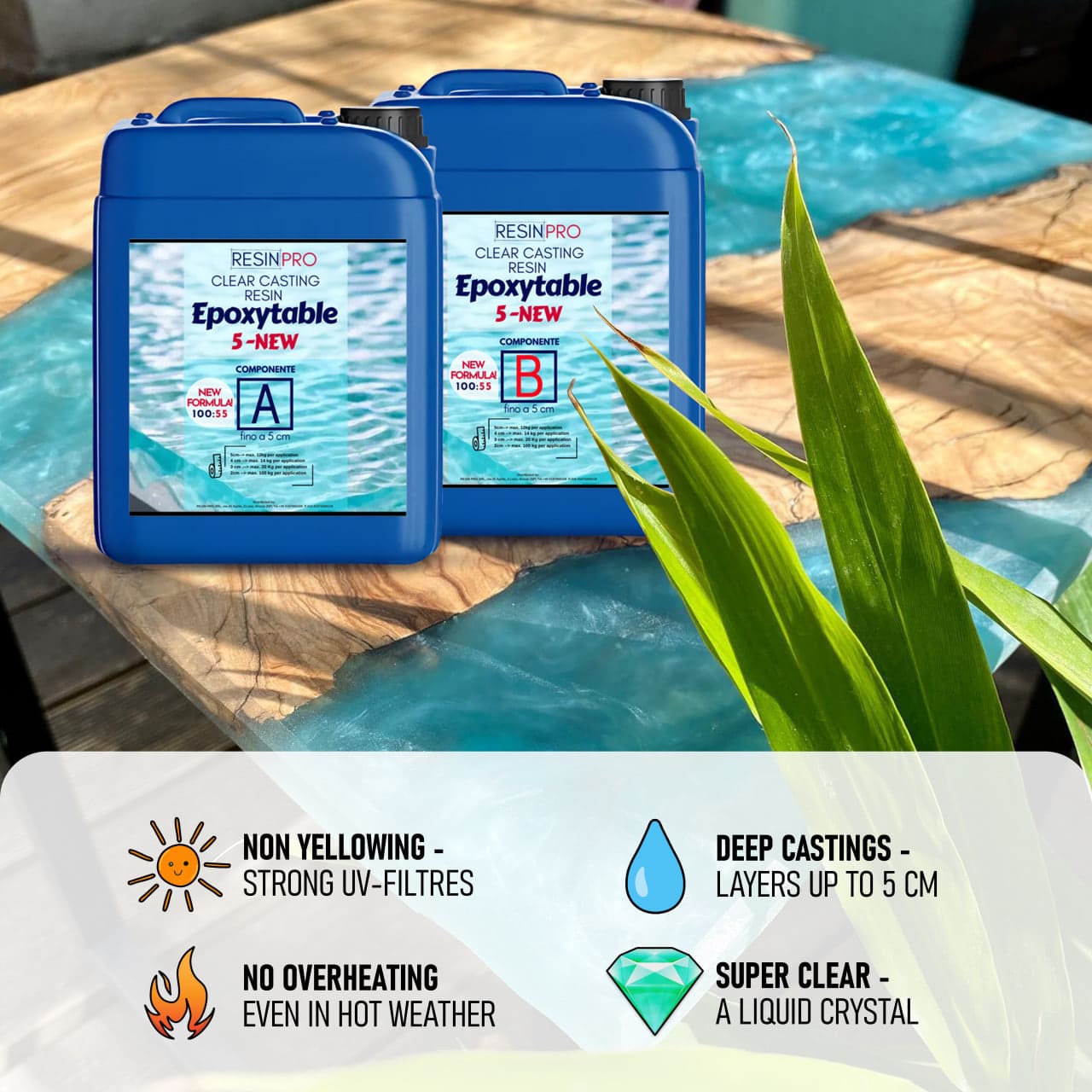
- "EpoxyTable 5-Five" – Deep Pour Epoxy Resin for Tables and Large Projects – Up to 5cmPrice range: £16.85 through £1,099.85"EpoxyTable 5-Five" is suitable for deep pour projects up to 5cm including tables, providing a bubble-free and scratch-resistant finish.
- “Epoxytable 10-Ten” – Deep Pour Epoxy Resin for Tables, Up to 10cm CastingPrice range: £33.85 through £334.85“Epoxytable 10-Ten” is designed for deep casting up to 10cm, suitable for building tables with epoxy resin.
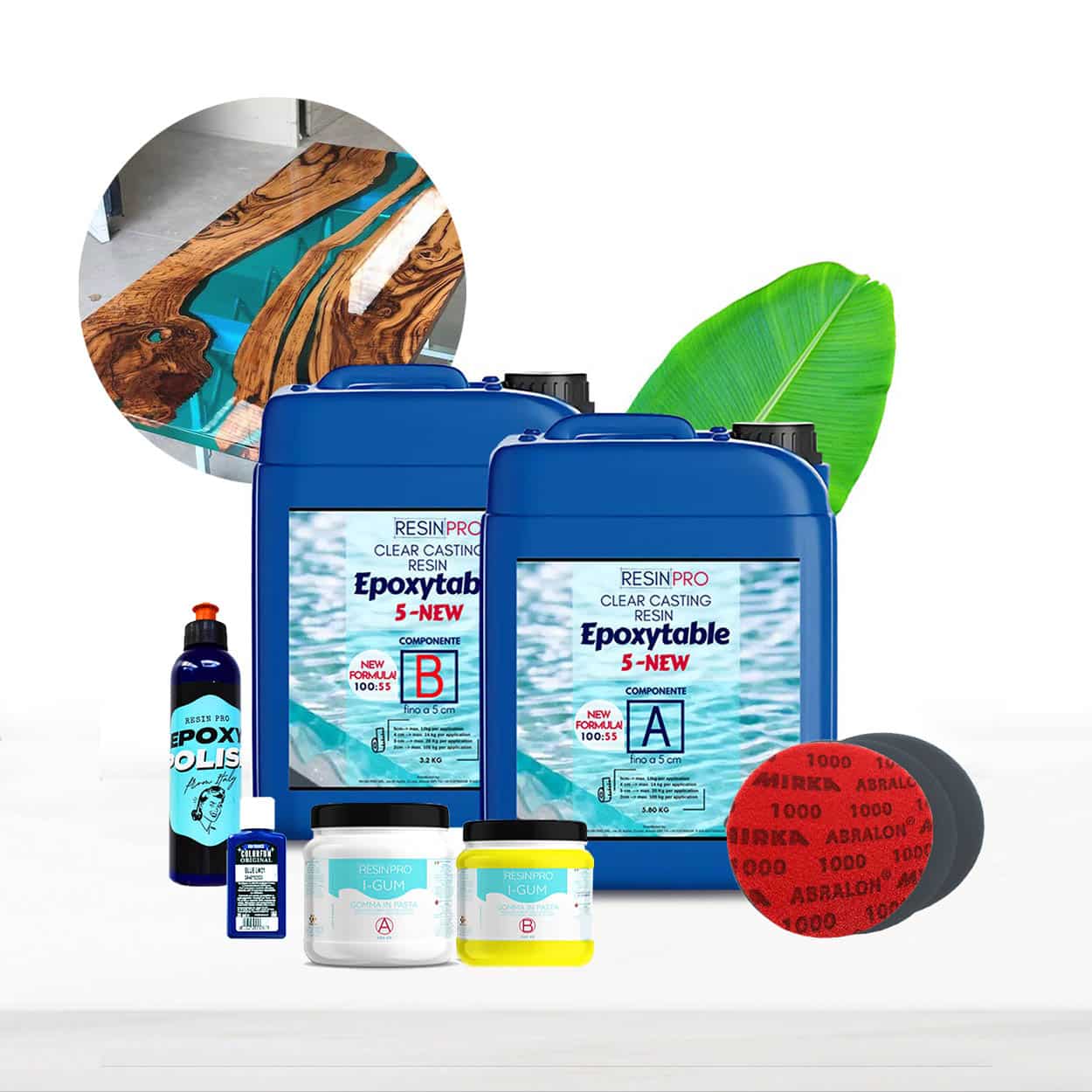 "River-Table" – Complete Kit for Creating Your First Epoxy Resin TablePrice range: £188.85 through £444.85This kit provides a complete set to create a wood and resin table with clear epoxy resin, pigments and detailed instructions.
 "Geode O" – Large Wooden Board Table Base for Epoxy Resin Projects – 90x60cm or 120x80cm"Geode O" is a durable wooden base suitable for epoxy resin projects, supporting various creative applications with optimal sizes.
Frequently Asked Questions
Which resin is best for deep table pours?
Use EpoxyTable 5-Five for pours up to 5cm, or Epoxytable 10-Ten for depths up to 10cm in a single stage.
Can beginners make epoxy resin tables?
Yes, with a complete kit and clear instructions, beginners can successfully create stunning epoxy resin tables.
How long should I leave an epoxy table to cure?
Epoxy resin tables typically require 48–72 hours to cure sufficiently for demoulding and further finishing.
How can I prevent bubbles in an epoxy table?
Mix resin slowly and use a heat gun to remove surface bubbles for a crystal-clear result.
What is the safest way to demould an epoxy table?
Use a proper release agent or tape in your mould to make demoulding easier and reduce risk of damage.
What size table can the beginner kit make?
The starter kit covers a table of around 0.5 square metres, ideal for first-time or medium-sized projects.