 Free shipping on orders over £29,85
  Shipping Tracking!


 Google
 Facebook
How to calculate resin quantity for table coating?
Achieving a smooth, flawless resin-coated table starts with knowing exactly how much epoxy resin your project needs. Underestimating can leave you short at a critical moment, while overestimating costs more than needed. This guide walks you through the essential calculations, techniques, and tips so you confidently prepare the right amount—no matter the table size or coating thickness.
Steps and formulas to ensure the perfect amount for your project
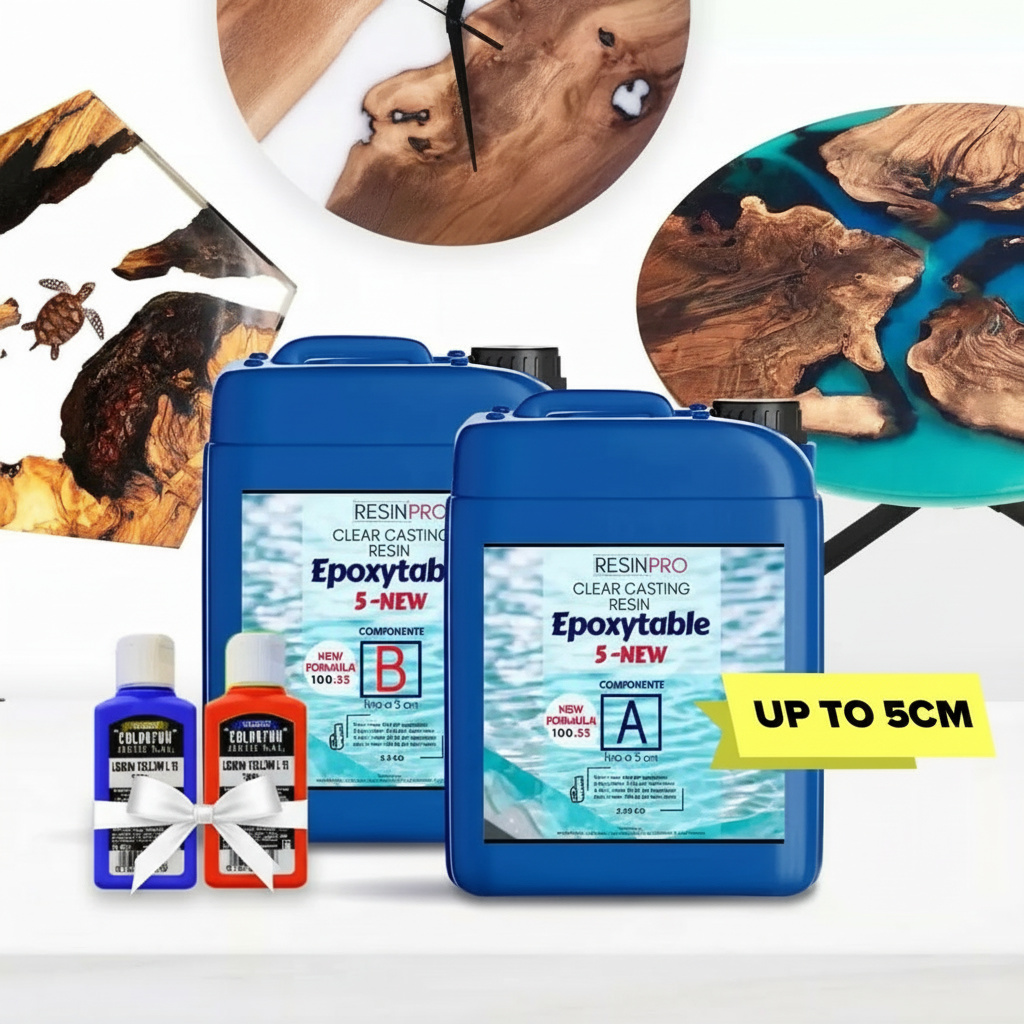

What You’ll Need
- “Trasparente” – Multipurpose Clear Epoxy Resin for Casting – Up to 2cm for thin layers and surface coatings
- “EpoxyTable 5-Five” – Deep Pour Epoxy Resin for Tables and Large Projects – Up to 5cm for deep river tables or thicker coats
- “Epoxytable 10-Ten” – Deep Pour Epoxy Resin for Tables, Up to 10cm Casting for thick, single pour artistic or large projects
- “River-Table” – Complete Kit for Creating Your First Epoxy Resin Table if you prefer a ready-to-use kit for entry-level projects
- Measuring tape or ruler
- Calculator (or online volume calculator)
- Mixing containers and stirring sticks
- Protective gloves and surface coverings

Visualising Resin Application
Using a measuring tape and sample containers can help you better estimate the real coverage needed for your specific table, allowing for easy calculation of complex or irregular shapes. Visual references speed up planning and reduce costly mistakes.

Step 1: Measure Your Table and Decide Pour Thickness
Before you can calculate how much resin to prepare, accurately measure your table’s length and width in centimetres (cm). Next, determine the intended coating thickness. For clear surface coatings, most projects only need 1–2mm, while river tables or embedded projects may require up to 2–10cm in depth.
Write down all measurements, and confirm whether your project is a single clear coat, a swirl design, or a deep pour (like a resin river table) as these impact both product choice and total volume needed.
Step 2: Calculate the Volume of Resin Required
The basic formula for volume (in cubic centimetres) is:
Volume = Length × Width × Thickness
For example, a table 120cm long, 60cm wide, with a 1cm resin pour: 120 × 60 × 1 = 7,200cm³. Epoxy resins typically state their coverage by weight, so divide the cubic centimetres by 1,000 to get litres (7,200cm³ = 7.2L), then multiply by the resin’s density (epoxy is usually about 1.1g/cm³). If the table includes wood or voids—for instance, a river table—subtract the volume displaced by the timber to clarify the actual resin needed.
Always round up to allow for spillage or surface absorption. For highly absorbent timber or complex forms, add an extra 10% to your total calculation.
Step 3: Select Your Resin According to Pour Thickness
The resin type should fit the calculated pour thickness. For layers up to 2cm, “Trasparente” – Multipurpose Clear Epoxy Resin for Casting – Up to 2cm is ideal due to its ultra-clear, self-levelling formula. For thicker pours (2–5cm), switch to “EpoxyTable 5-Five” – Deep Pour Epoxy Resin for Tables and Large Projects – Up to 5cm. If your design requires a dramatic or single large pour up to 10cm—such as large river tables or block castings—opt for “Epoxytable 10-Ten” – Deep Pour Epoxy Resin for Tables, Up to 10cm Casting. This ensures proper curing and avoids overheating.
Calculate each layer separately for multi-pour projects. Never exceed the recommended maximum pour thickness per layer; otherwise, you risk exothermic reactions and product failure.

Step 4: Mix Resin in Proportion for Each Pour
Double-check your measurements before mixing. Only prepare enough resin for the layer you are about to pour, especially for deep or complex projects. Mix only what you need for each pour, following the resin’s specific ratio and instructions for best clarity and curing. This also minimises waste and eases working time constraints.
If using a starter kit, such as the “River-Table” – Complete Kit for Creating Your First Epoxy Resin Table, refer to the included guidance for quantities based on sample table sizes, plus tips for beginners on estimating volume for wood and resin compositions.

Tips and Troubleshooting for Perfect Table Coatings
Precision is key: Measure carefully to avoid shortages or waste—overmixing leads to unnecessary expense, while undermixing risks an uneven coat. Always account for odd shapes or live edges by marking out areas and treating them as rectangles before subtracting wood mass for river tables. Ambient temperature may affect viscosity and cure time, so work in stable environments and follow each resin’s guidelines strictly. For complex pours, patience and layering are essential to a flawless finish.
Examples and Table Volume Calculations
Calculating for a typical table (e.g., 120cm × 60cm × 1.5cm) would require 10.8 litres of resin (120 × 60 × 1.5 = 10,800cm³ = 10.8L). For river tables, create a mock-up of the wood layout to subtract its volume from your total.
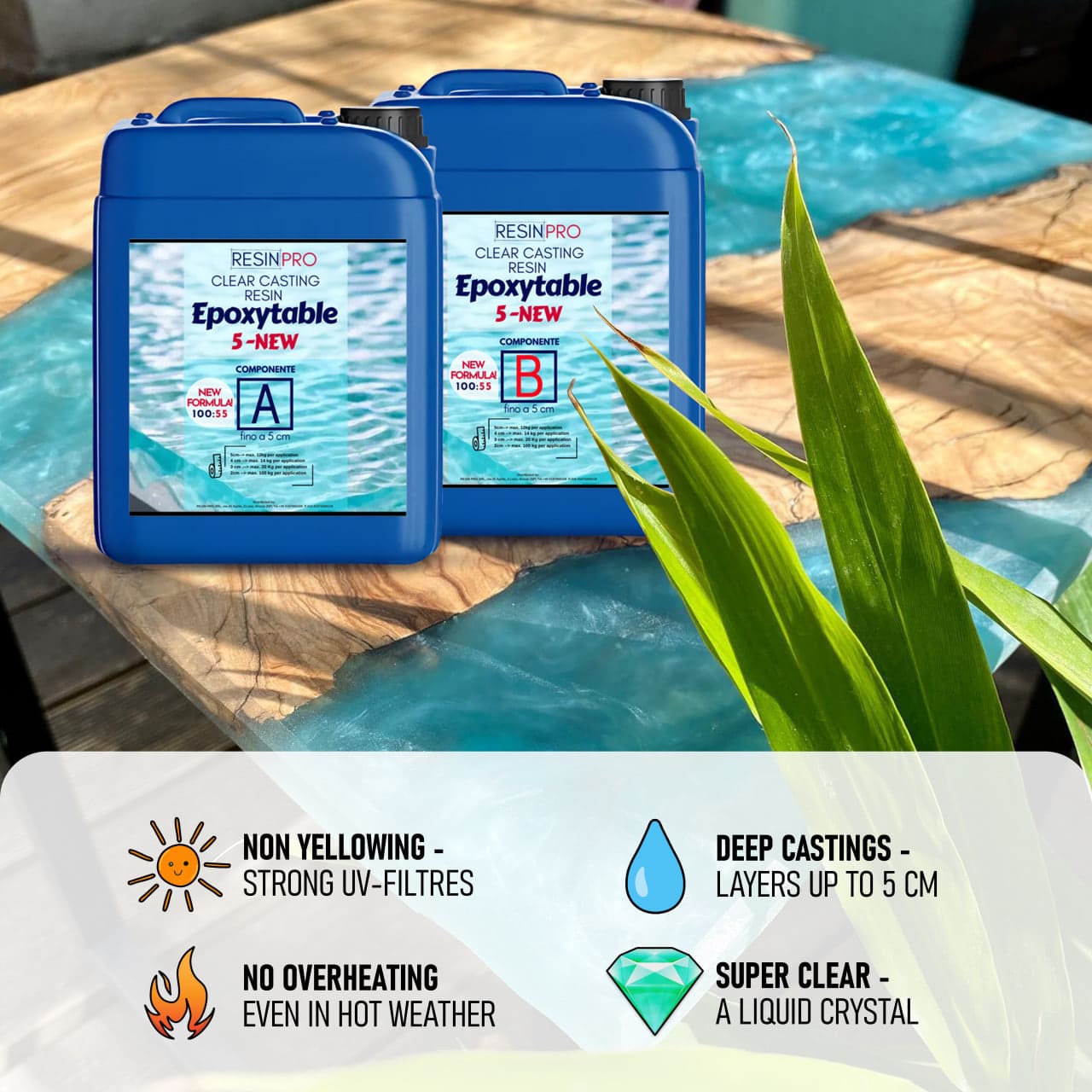
- "EpoxyTable 5-Five" – Deep Pour Epoxy Resin for Tables and Large Projects – Up to 5cmPrice range: £16.85 through £1,099.85"EpoxyTable 5-Five" offers a deep pour epoxy resin designed for tables and large projects, suitable for castings up to 5cm thick.
- “Epoxytable 10-Ten” – Deep Pour Epoxy Resin for Tables, Up to 10cm CastingPrice range: £33.85 through £334.85“Epoxytable 10-Ten” is designed for deep casting up to 10cm, suitable for large table and artistic projects with a clear finish.
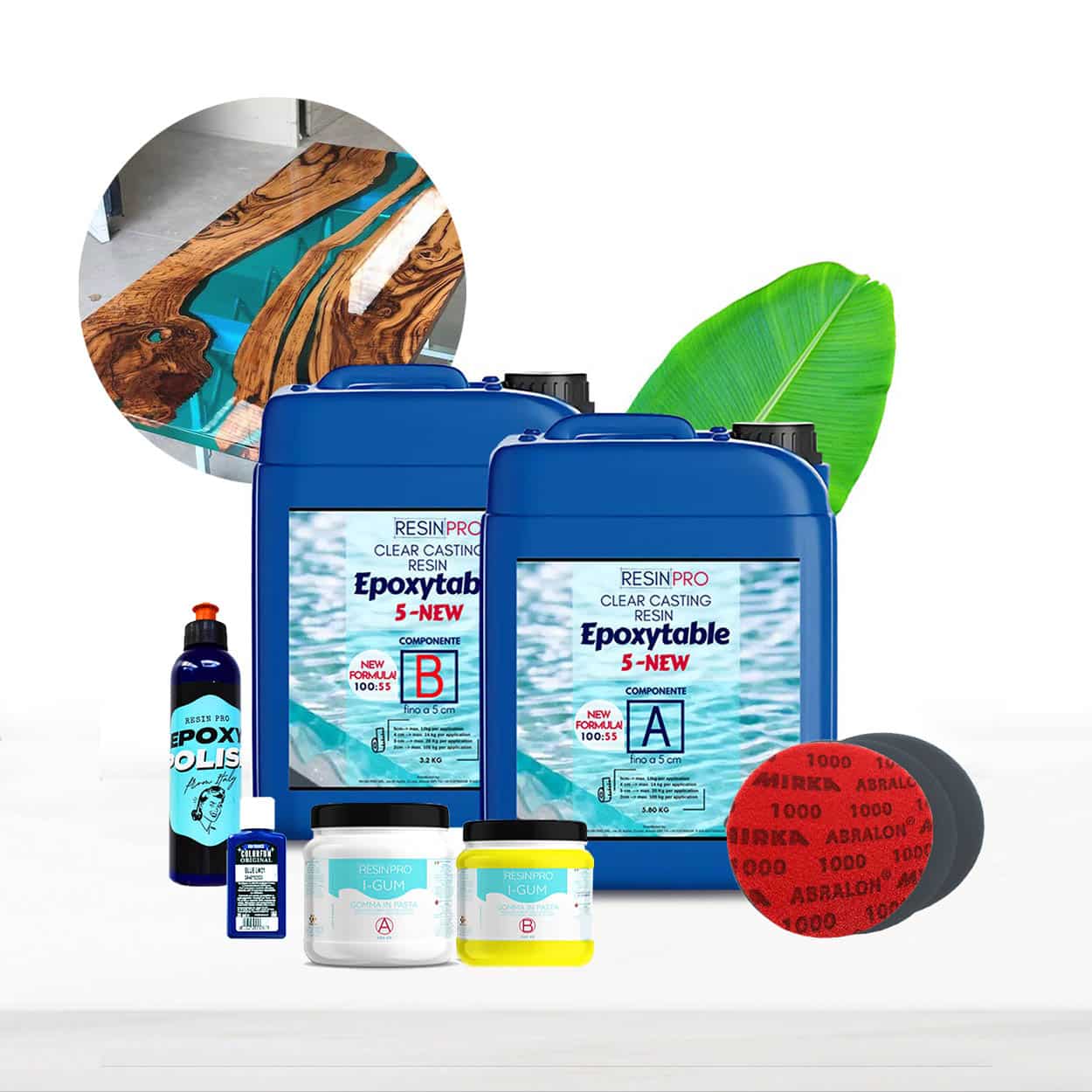 "River-Table" – Complete Kit for Creating Your First Epoxy Resin TablePrice range: £188.85 through £444.85"River-Table" kit includes resin, sealing paste, pigments and polishing kit for creating wood and resin tables, supporting creative now beginners.
 "Trasparente" – Multipurpose Clear Epoxy Resin for Casting – Up to 2cmPrice range: £8.45 through £948.85"Trasparente" is a clear epoxy resin suitable for layers up to 2cm, used commonly for detailed castings and table coatings in this context.
Frequently Asked Questions
How do I calculate resin quantity for a table?
Multiply the length, width, and intended thickness of the coating to get the volume in cubic centimetres, then convert to litres.
What if my table has a resin river?
Subtract the volume occupied by wood from the total to estimate actual resin needed for the river channel.
Which resin should I use for thick or thin coatings?
Use 'Trasparente' for layers up to 2cm, 'EpoxyTable 5-Five' for 2–5cm, and 'Epoxytable 10-Ten' for up to 10cm thick pours.
Should I mix all the resin at once for multi-layer projects?
No—prepare only what you need for each layer to ensure a proper cure and minimise waste.
Should I order extra resin for contingency?
Yes, ordering 10% extra covers minor miscalculations, spills, or absorption into timber.
What helps prevent overheating in thick pours?
Never exceed the recommended depth per pour and allow for proper cure time between layers.