 Free shipping on orders over £29,85
  Shipping Tracking!


 Google
 Facebook
how to make a wood and resin table on YouTube
Wood and resin tables are a standout feature in many trending YouTube tutorials, combining natural timber with crystal-clear or coloured resin for a truly unique result. In this guide, you’ll learn each step to create your own wood and resin table, focusing on the key workflows and tips that separate a professional finish from an amateur attempt. Whether you’re inspired by YouTube creators or simply want to bring a bespoke design into your home, this process will help you produce great results.
Step-by-step guide for stunning wood and resin tables

What You’ll Need
- “Epoxytable 10-Ten” – Deep Pour Epoxy Resin for Tables, Up to 10cm Casting: For deep pour applications and large, artistic tables.
- “River-Table” – Complete Kit for Creating Your First Epoxy Resin Table: An all-in-one solution with epoxy, tools, pigments, and instructions, ideal for beginners.
- “EpoxyTable 5-Five” – Deep Pour Epoxy Resin for Tables and Large Projects – Up to 5cm: Perfect for tables and countertops up to 5cm thick.
- “Geode O” – Large Wooden Board Table Base for Epoxy Resin Projects – 90x60cm or 120x80cm: A ready-made, premium wooden base suited to resin table projects.

Essential Materials for Your Resin Table Project
Choosing quality materials from the outset streamlines the process and ensures professional results. Select an epoxy resin designed for deep pour applications and a robust mould or table base for best performance. A reliable kit or fit-for-purpose product provides all the basics required to begin your first wood and resin table project.
Choose the Right Epoxy Resin
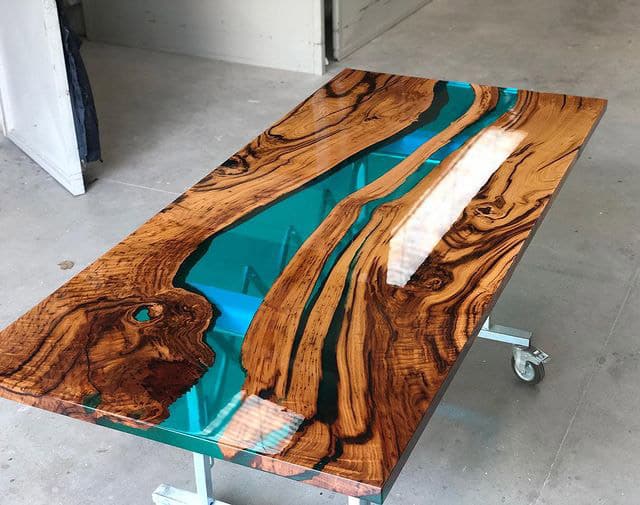
The resin you select will determine the clarity, strength, and reliability of your river table. For most deep-pour wood and resin tables as popularised on YouTube, a resin formulated for castings up to 5cm or even 10cm thickness is preferred for single-pour applications. Using a suitable deep pour product reduces the risk of overheating and excessive bubbles. Always check your intended maximum pour depth before mixing to choose the correct resin formulation for your project size.
If you are new to resin work, a complete kit such as the “River-Table” – Complete Kit for Creating Your First Epoxy Resin Table provides not only appropriate resin and hardener but also necessary tools, pigments, and a straightforward instruction booklet for first-time users.
Build a Sturdy Mould and Prepare the Wood
Before you begin pouring resin, take time to construct a solid, leak-proof mould. Use melamine, sealed plywood or specialist formwork, ensuring all joints are tightly sealed—silicone sealant or release tape are common for this job. The base should be perfectly level to prevent resin from pooling unevenly. Prepping the wood is equally important: sand your timber, remove all dust, and ensure it is completely dry. Arrange the wood pieces inside the mould securely.
For those looking for a reliable foundation, consider a dedicated table base such as “Geode O” – Large Wooden Board Table Base for Epoxy Resin Projects – 90x60cm or 120x80cm. These bases are crafted to support both resin and timber, providing a professional platform for your pours.
Pour the Resin in Stages
Mix your selected resin accurately, following the manufacturer’s recommended ratios and instructions. For deep pours, avoid exceeding the maximum thickness per layer, as specified by the product datasheet. If your table design requires a thickness of up to 10cm, working with a product like “Epoxytable 10-Ten” – Deep Pour Epoxy Resin for Tables, Up to 10cm Casting allows single deep pours, while other resins may require multiple layers.
Pour the resin slowly to let trapped air escape, and consider using a heat gun or torch between layers to help pop any remaining bubbles. Allow each layer to partially cure before adding the next if you must pour in stages. Cover the project to protect it from dust until the resin is fully cured.

Sanding and Finishing for a Professional Look
Once the resin has completely cured as per manufacturer guidelines, remove the table from the mould. Begin sanding with coarse grit and work up to at least 2000 grit to achieve a glass-like finish. Wet sanding can help avoid scratches and overheating. Carefully clean the surface between stages to prevent grit transfer.
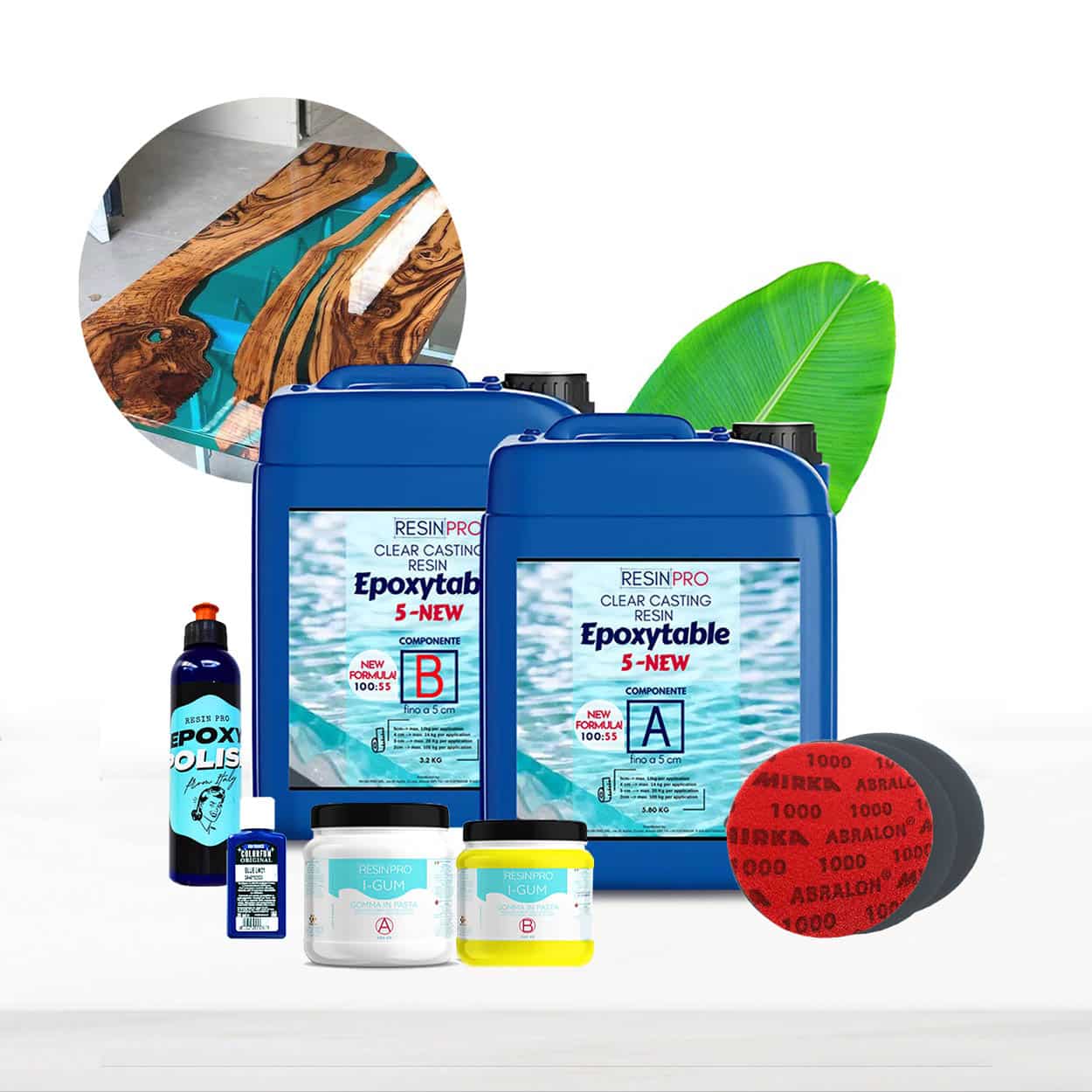
If you are using a kit such as the “River-Table” – Complete Kit, you’ll have polishing creams and pads included—use these for the final buffing stage. The result should be a smooth, gleaming surface that highlights both the natural wood and the resin’s clarity or colour.
Tips, Common Mistakes, and Troubleshooting
Work in a clean, temperature-controlled environment to minimise issues with dust and excessive bubbles. Always follow timing and mixing ratios strictly to avoid sticky or clouded pours. If the resin overheats during curing, it can crack or discolour—avoid pouring layers that exceed your product’s recommended thickness. When sanding, move progressively through the grits and never skip grades for best results.
Finishing Touches and Surface Perfection
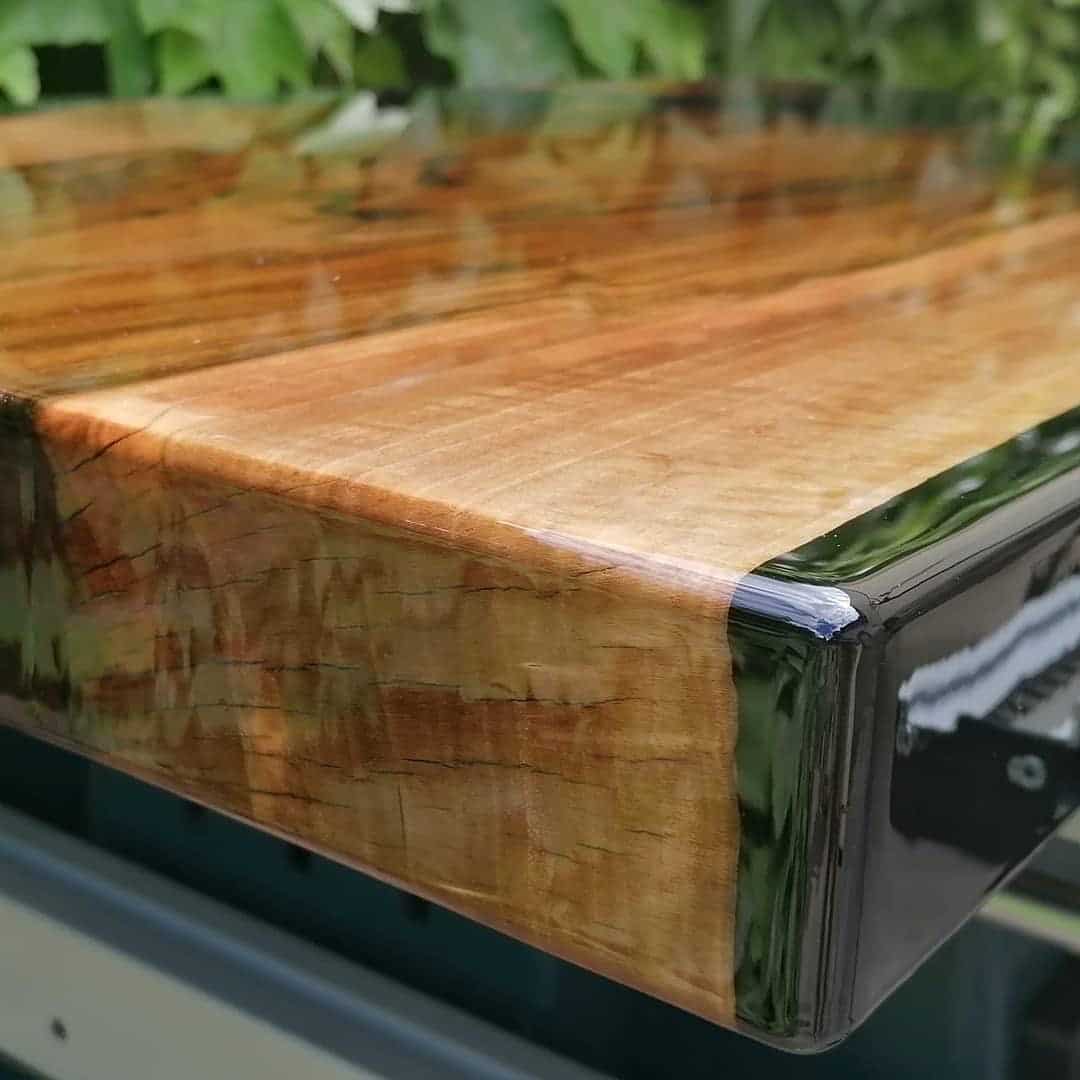
For that signature glossy look featured in popular videos, patience and technique are key. Take your time during sanding and polishing, and always use specialist creams and pads where available. Small details, like thorough cleaning and careful edge finishing, make your project stand out visually both in person and online.

- “Epoxytable 10-Ten” – Deep Pour Epoxy Resin for Tables, Up to 10cm CastingPrice range: £33.85 through £334.85Epoxy resin designed for deep pour castings up to 10cm, suitable for wood and resin tables in educational video themes.
- "River-Table" – Complete Kit for Creating Your First Epoxy Resin TablePrice range: £188.85 through £444.85"River-Table" kit provides essential materials and instructions for making a wood and resin table.
 "EpoxyTable 5-Five" – Deep Pour Epoxy Resin for Tables and Large Projects – Up to 5cmPrice range: £16.85 through £1,099.85EpoxyTable 5-Five is a deep pour epoxy resin suitable for tables and large projects up to 5cm thickness in wood and resin table making.
 "Geode O" – Large Wooden Board Table Base for Epoxy Resin Projects – 90x60cm or 120x80cmA versatile wooden table base designed to support epoxy resin projects, suitable for both beginners and experienced users.
Frequently Asked Questions
How deep can I pour epoxy resin for a wood and resin table?
Pour depth depends on your specific resin; follow product guidance for safe pouring, usually 5cm or 10cm per pour.
What are the most common mistakes in making a resin table?
Overpouring resin, incorrect mixing ratios, and sanding too early are typical errors to avoid for best results.
How should I prepare the mould and wood for resin pouring?
Ensure the mould is sealed and level, and the wood is dry, sanded, and free from dust or oil.
How can I avoid bubbles in the finished resin table?
Pour resin slowly, pre-seal wood if needed, and use a heat gun or torch to help remove surface bubbles.
How long should I wait before sanding and polishing the table?
Wait for full curing according to the resin instructions—often 48–72 hours—before sanding and polishing.
What is the best table base for resin and wood projects?
Use a stable, sealed wooden base designed for resin projects to achieve flatness and durability.