 Free shipping on orders over £29,85
  Shipping Tracking!


 Google
 Facebook
How to put resin on a table?
Step-by-step guide for flawless wood and resin finishing
Applying epoxy resin to a table transforms tired timber or plain surfaces into stunning, durable showpieces. Whether you’re enhancing an old tabletop or creating a bold new resin and wood design, knowing the practical steps ensures a smooth, glassy result and lasting quality. This guide walks you through planning, preparation, mixing, pouring, and finishing resin on any table, while highlighting key safety tips and the common pitfalls to avoid.
What You’ll Need
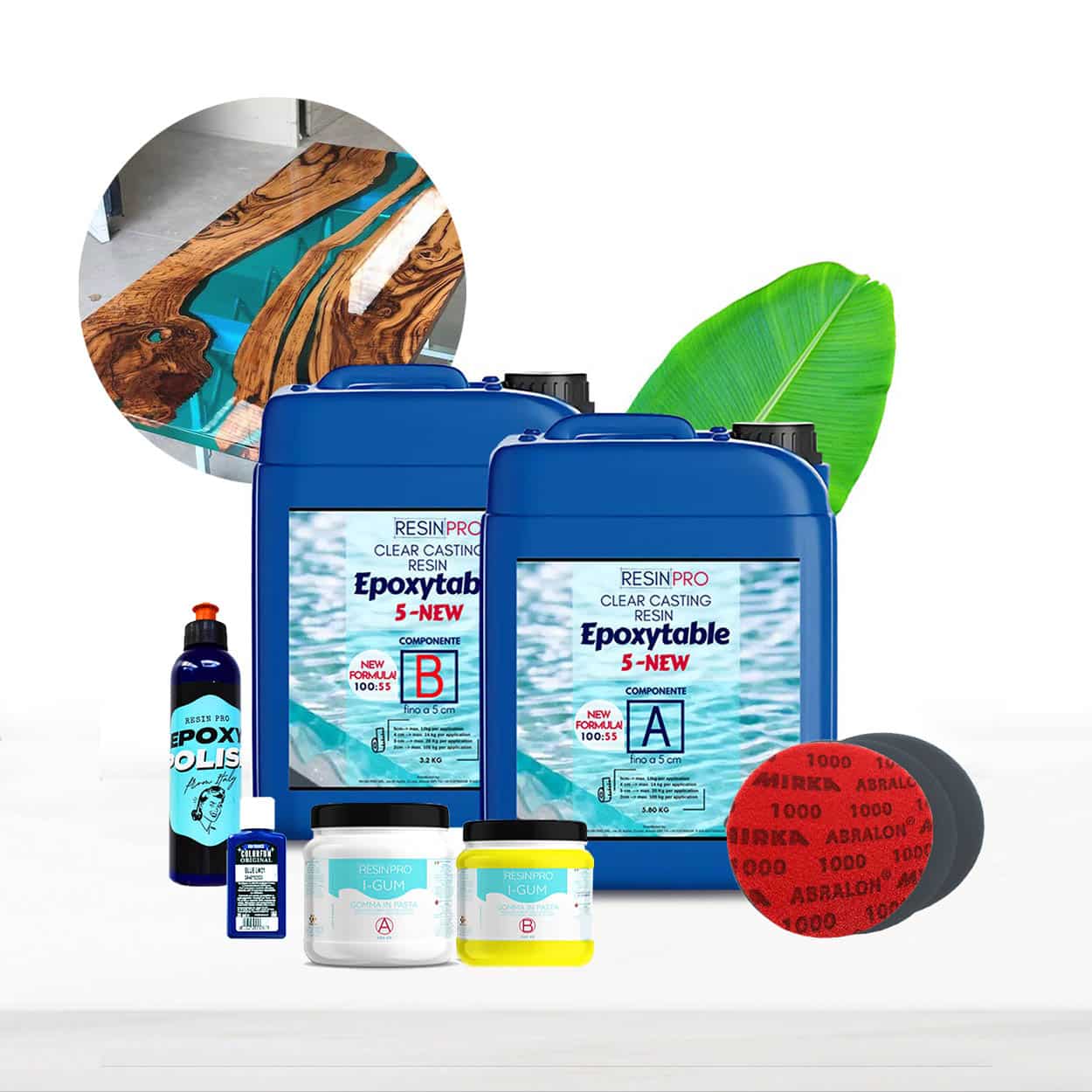
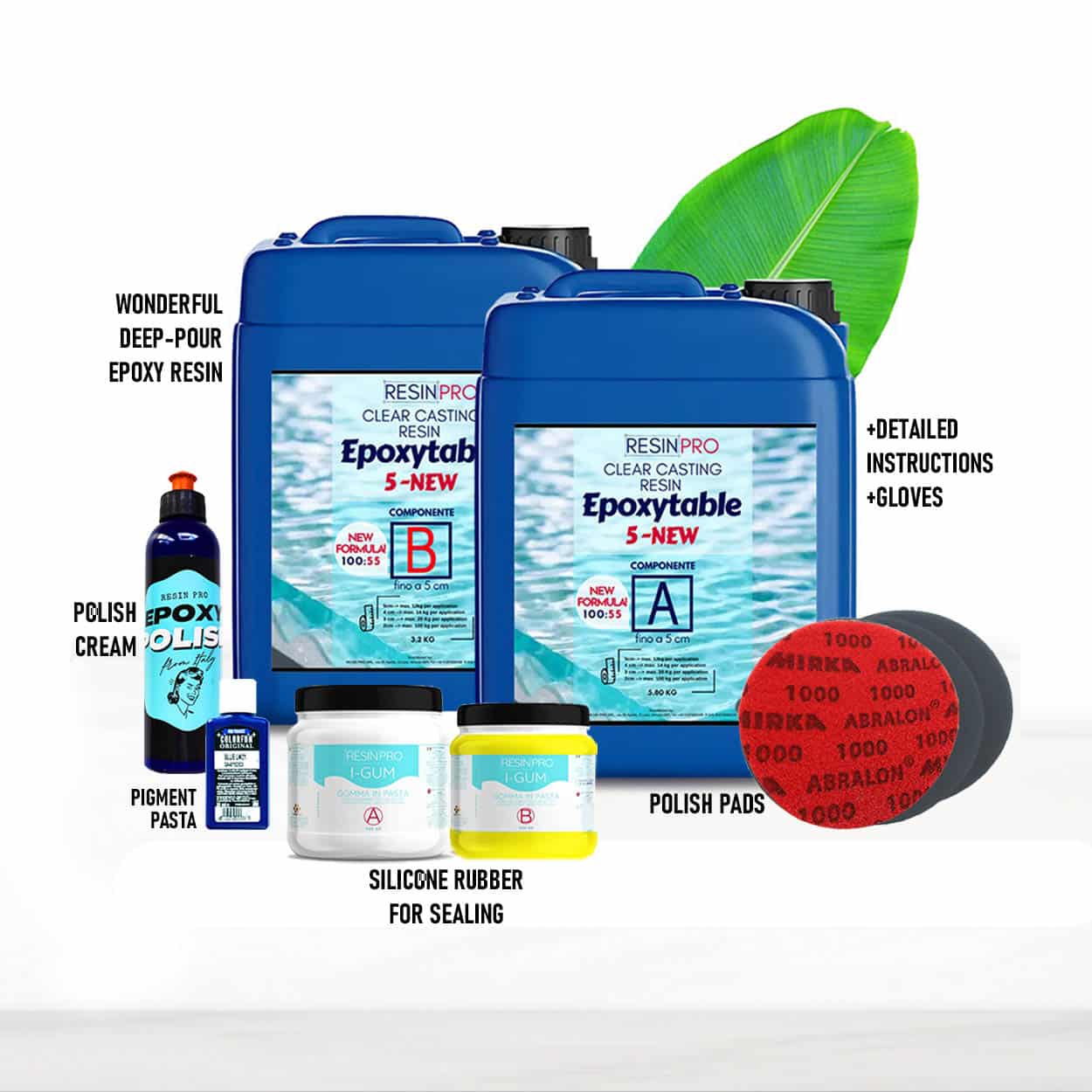
- “River-Table” – Complete Kit for Creating Your First Epoxy Resin Table: Complete kit with epoxy, sealing tools, pigments, and detailed instructions – ideal for first projects or comprehensive beginners’ needs.
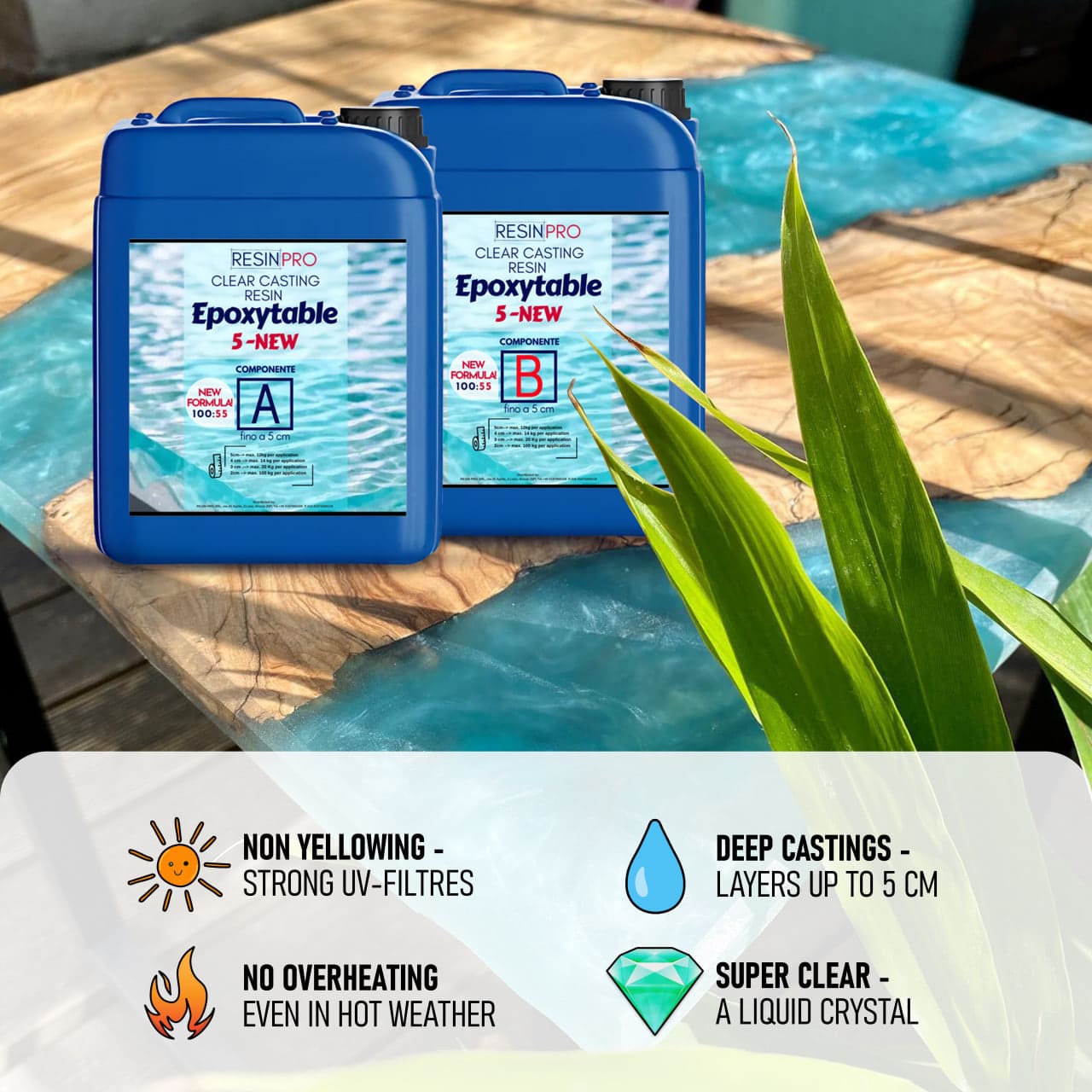
- “EpoxyTable 5-Five” – Deep Pour Epoxy Resin for Tables and Large Projects – Up to 5cm: Perfect for thicker pours on tables or casting dramatic river table centres.
- “Epoxytable 10-Ten” – Deep Pour Epoxy Resin for Tables, Up to 10cm Casting: Choose for extra-deep pours or large canvas pieces where thickness exceeds 5cm.
- “Trasparente” – Multipurpose Clear Epoxy Resin for Casting – Up to 2cm: Suitable for standard table coatings, lighter decorative effects, or art tables with up to 2cm depth per layer.
- Clean mixing sticks, disposable measuring containers, heat gun or torch, masking tape, protective gloves and eye protection.

Essential Preparation Tools for Perfect Results
Assembling the right tools — including mixing containers, protective wear, measuring devices, and high-quality resins — is key to a stress-free, professional resin application. Work on a covered surface, organise all supplies before starting, and minimise dust in the work area to achieve a flawless, glassy finish on your table.
Step 1: Prepare the Surface
Start by ensuring the table is completely clean and free from dust, oils, and any previous finishes. This may involve gentle sanding to roughen the surface and remove old coatings, followed by a thorough wipe-down with a lint-free cloth. Pay special attention to gaps or cracks — fill and sand these for a smooth foundation to prevent air bubbles and resin loss along the edges.
Use masking tape to protect table edges or any features you wish to exclude from resin coverage. Raise the table slightly on supports to allow any excess resin to drip and not pool under the edges.
Wear gloves and ensure good ventilation during this preparatory phase, as dust control and safety are crucial for clean results.
Step 2: Measure and Mix Resin
Carefully measure and mix the resin and hardener according to your chosen product’s instructions, as exact ratios are essential for a successful cure. Mix thoroughly for at least 3–5 minutes, scraping around the sides and base of your container to combine all components and avoid sticky or soft patches in the final surface.
If you are working with thicker river table projects, opt for “EpoxyTable 5-Five” (up to 5cm) or “Epoxytable 10-Ten” for up to 10cm pours. For standard table coatings or art project layers of up to 2cm, “Trasparente” is an excellent choice.
Be wary of introducing too much air—mix gently but thoroughly, and let the mixture rest for a couple of minutes if needed.
Step 3: Seal and Reinforce Edges
Before the main pour, it’s vital to seal the wood edges and underside, especially for porous timber. Brush a thin layer of mixed resin along the open ends, knots, or cracks to prevent bubbles and seepage. Allow this seal coat to turn tacky (usually after about 4–6 hours, depending on your resin) before proceeding to the main flood coat.
For complex river tables and integrated wood structures, using a purpose-made kit such as the “River-Table” – Complete Kit for Creating Your First Epoxy Resin Table ensures you have all sealing and formwork materials on hand — ideal for hassle-free preparation and professional results.
Seal edges and repair surface imperfections at this stage to mitigate later bubble formation.

Step 4: Pour and Spread the Resin
Pour the mixed resin evenly onto the centre of your tabletop, allowing it to flow naturally toward edges. Use a spatula or plastic trowel to spread it, maintaining consistent thickness — whether you are flooding over timber or casting a deep centre for a river table effect. If working in layers, let each previous coat become touch-dry before adding the next.
Be patient; allow the resin to self-level and settle. Always respect the product’s maximum pour thickness, e.g., 2cm for “Trasparente”, up to 5cm for “EpoxyTable 5-Five”, or 10cm for “Epoxytable 10-Ten”.
Immediately after pouring, use a heat gun or torch to remove bubbles from the surface. Sweep lightly over the resin with the torch 10–15cm above the surface to avoid overheating or burning.

Step 5: Finishing and Curing
Allow the table to cure in a dust-free, warm, and dry location. Avoid touching or moving the table during the initial 24 hours. Full cure generally occurs within 48–72 hours, but always check the specific resin’s guidance.
Once fully cured, you may further perfect the surface using fine abrasives or a polishing kit, especially if you wish for a glossy finish. Adding a polishing cream, as provided in detailed kits, can remove any micro-scratches and heighten clarity.
Reattach table legs or hardware only after full hardening to prevent dents or marks in the cured resin.
Tips, Common Mistakes, and Troubleshooting
Work in a stable environment, as excess humidity or cold may affect resin flow and curing. Never attempt pours thicker than the product’s specifications to avoid exothermic reactions or clouding. Always mix the correct ratio of resin to hardener — inaccurate mixing can lead to soft or sticky spots.
If you spot bubbles hours after pouring, carefully pass the torch again — but if the resin is already tacky or setting, avoid disturbing it or you may leave marks. When unsure, small test pours on offcuts can help refine your technique before embarking on a full-size table.
Patience during preparation, careful mixing, and attention during curing are keys to an outstanding resin tabletop.
Visual Showcase: Resin Table Transformations
Before and after examples, close-ups of finished resin pours, and creative river table designs illustrate how the right approach and materials can create breath-taking results in any interior.

- "River-Table" – Complete Kit for Creating Your First Epoxy Resin TablePrice range: £188.85 through £444.85"River-Table" kit provides materials and instructions for creating a resin and wood table, suitable for beginners on the 'How to put resin on a…
- "EpoxyTable 5-Five" – Deep Pour Epoxy Resin for Tables and Large Projects – Up to 5cmPrice range: £16.85 through £1,099.85"EpoxyTable 5-Five" is a deep pour epoxy resin designed for tables and large projects. It offers a low viscosity and long working time.
 “Epoxytable 10-Ten” – Deep Pour Epoxy Resin for Tables, Up to 10cm CastingPrice range: £33.85 through £334.85Epoxy resin designed for creating tables with casting depths up to 10cm, suitable for deep pours and large projects.
 "Trasparente" – Multipurpose Clear Epoxy Resin for Casting – Up to 2cmPrice range: £8.45 through £948.85"Trasparente" is a clear, multipurpose epoxy resin suitable for DIY and woodworking projects with up to 2cm layers, aligning with how to put resin on…
Frequently Asked Questions
Can I put resin straight on an old wooden table?
You should sand and clean the surface first and seal any porous areas to prevent bubbles or uneven curing.
How do I know which resin thickness is best for my tabletop?
Choose resin according to the maximum depth: 'Trasparente' for up to 2cm, 'EpoxyTable 5-Five' for up to 5cm, and 'Epoxytable 10-Ten' for up to 10cm.
Why do I get bubbles in my resin when applying to a table?
Bubbles are often caused by trapped air in porous wood or mixing. Seal surfaces and use a heat gun to release bubbles after pouring.
How long does it take for a resin tabletop to cure fully?
Most epoxy table surfaces will be touch-hard in 24 hours and achieve full hardness within 48–72 hours.
Is resin suitable for outdoor tables?
Many resins offer UV resistance, but for long-term outdoor use, shelter the table from prolonged direct sunlight and moisture.
What is the best way to polish a resin-coated table?
Wait until the resin is fully cured, then use fine abrasives and dedicated polishing creams for a high-gloss finish.
What can I do if my resin table surface is scratched?
Light scratches can be buffed out with fine abrasive pads and polishing cream provided in resin kits.