 Free shipping on orders over £29,85
  Shipping Tracking!


 Google
 Facebook
How to use epoxy resins?
Essential technique for flawless crafting and coated surfaces


Epoxy resins open up a world of creative, durable, and glass-clear finishes for everything from jewellery to home décor and countertops. Whether you are a first-time crafter or aiming to achieve professional results, this guide shows how to use epoxy resins safely and effectively for your chosen project. Follow each stage for the best clarity, strength, and surface results every time.
What You’ll Need
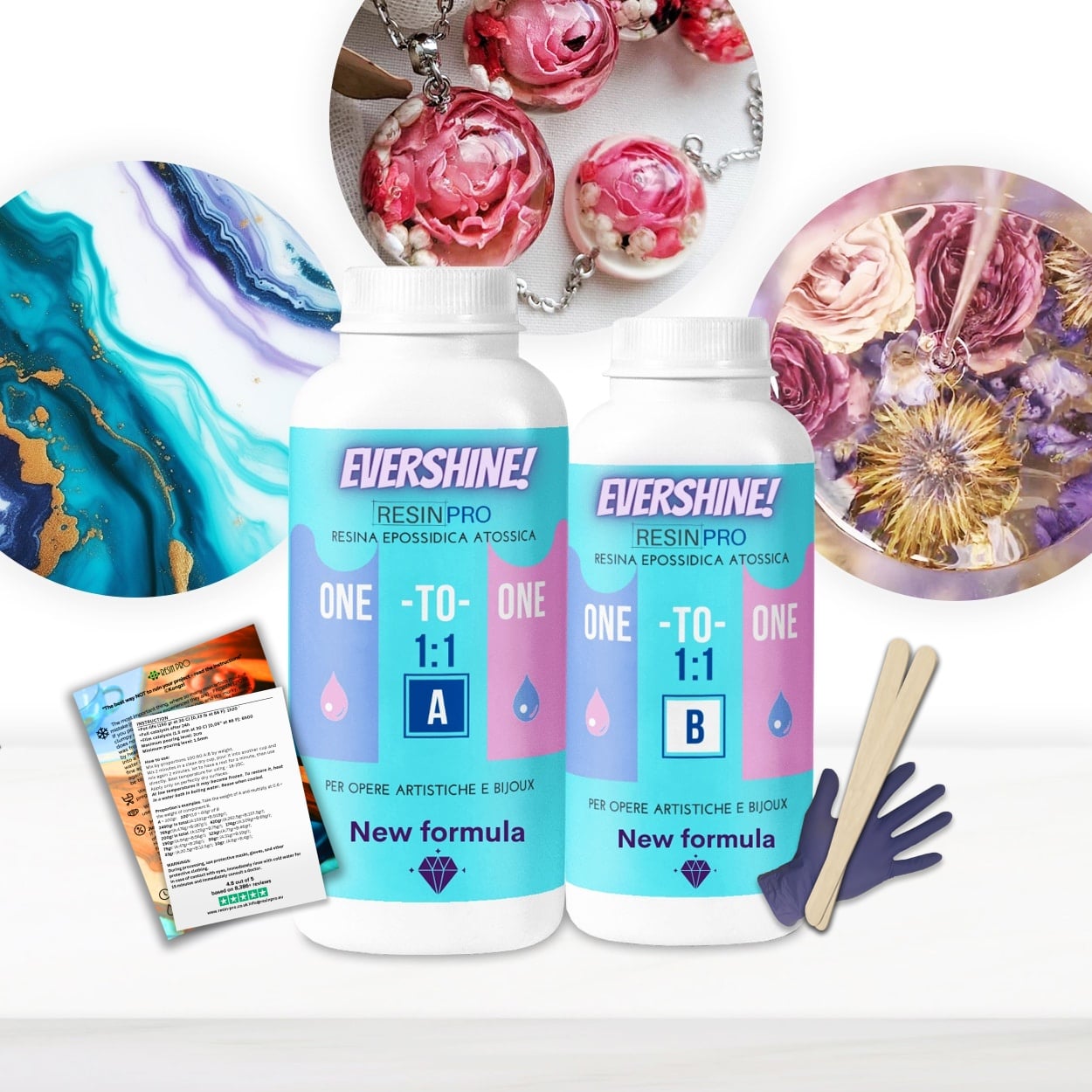
- “Evershine Collection” – Artisan Jewellery Epoxy Resin Kit with 100+ Accessories — ideal for those making personalised jewellery or small gifts due to its complete set for beginners.
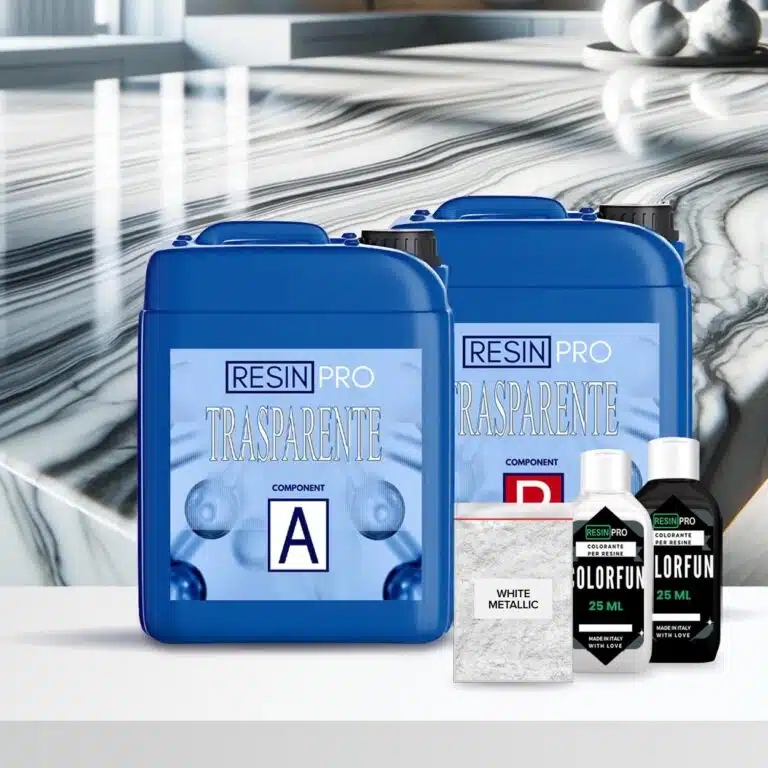
- “Stone Effect Collection” – Marble Epoxy Resin Countertop Kit — perfect if transforming kitchen worktops or creating marble-effect surfaces.
- “One-2-One” – Epoxy Resin for Handcraft, 1:1 Mixing Ratio — well-suited to straightforward mixing in handcrafts and decorative coatings.
- “Liquidissima” – Epoxy Resin For Creations & Jewellery — best for intricate moulds, detailed castings, and longer working times.
- Nitrile gloves, mixing containers, stirring sticks/spatulas, protective apron
- Protective mask (if working indoors)
- Heat gun or butane torch (optional, for air bubble removal)
- Lint-free cloth, cleaning alcohol (for surface prep)

Key Safety & Setup for Epoxy Resin Projects
Always wear gloves and a mask in ventilated spaces when working with epoxy resin mixtures. Set up your work area with protective sheets and keep all tools within reach to streamline application and avoid unwanted accidents.
Step 1: Prepare Your Workspace and Moulds
Before you begin, set up a clean, dust-free workspace. Lay down a protective covering and ensure good ventilation. Wear gloves and, if indoors, a mask to limit inhalation of fumes. Carefully choose silicon or plastic moulds, or mask off the area you intend to coat. Wipe the surfaces with a lint-free cloth and cleaning alcohol to prevent any dust, oil or contaminants from spoiling the resin’s finish.
Surface preparation avoids contamination so always double-check that all surfaces are fully dry before mixing your resin.
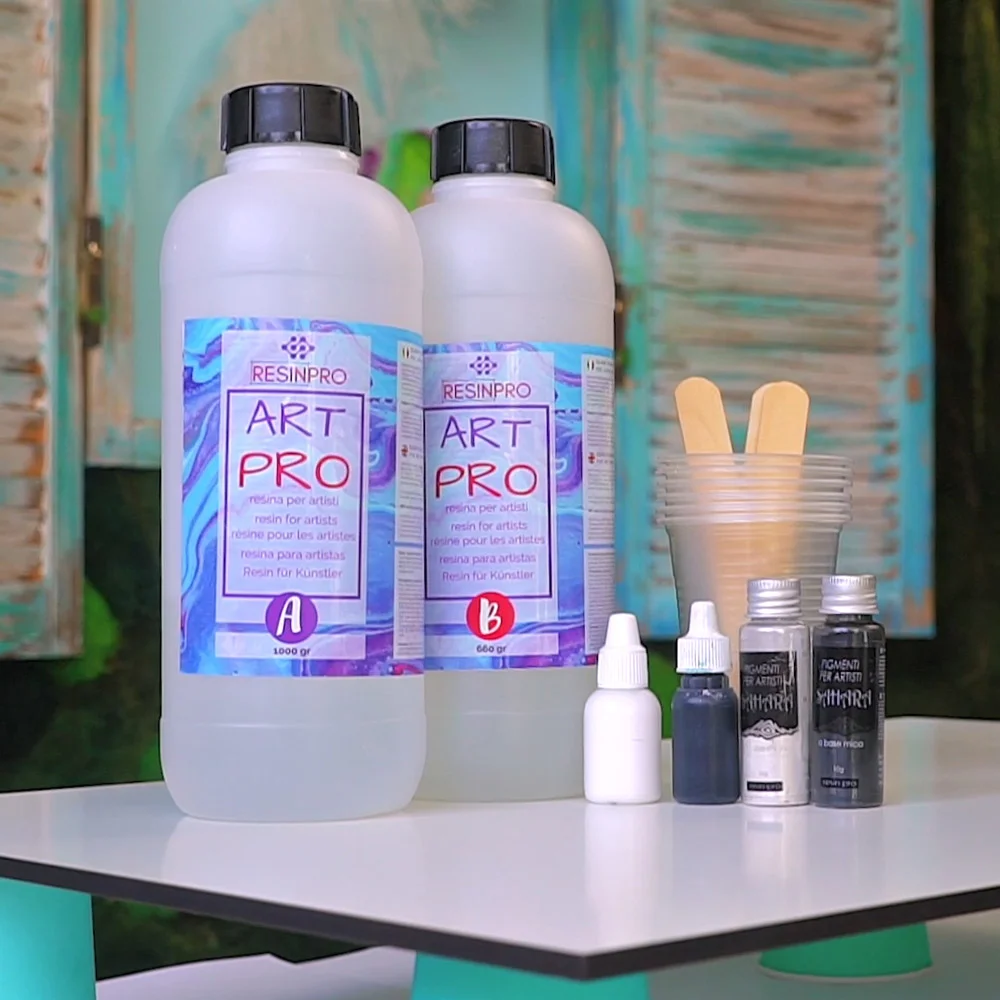
Step 2: Measure and Mix the Epoxy Resin
Each epoxy resin product has its own precise mixing ratio, typically either 1:1 by volume or another specified ratio. Read the instructions thoroughly before starting. Pour both the resin and hardener components into a mixing container, following the product’s ratio as accurately as possible. For absolute clarity and trouble-free results, use measuring cups instead of estimating by eye.
If you are working on crafts or jewellery, a kit such as the “Evershine Collection” – Artisan Jewellery Epoxy Resin Kit with 100+ Accessories is especially straightforward, thanks to its clear 1:1 mixing formula designed for beginners.
Mix slowly and deliberately, scraping around the container’s base and sides. Continue until the mixture is fully uniform and streak-free. If colouring or including other elements, add pigments or inclusions at this stage, mixing thoroughly.
Scraping container sides ensures accuracy and minimises the risk of soft or sticky patches in your cured resin.
Step 3: Pour and Spread the Resin
Once well mixed, promptly pour the resin into your mould or onto the prepared surface. For decorative pours or intricate castings, try a product like “Liquidissima” – Epoxy Resin For Creations & Jewellery, which offers a low viscosity ideal for filling detailed spaces and minimising air bubbles.
Pour slowly to control flow and thickness. Level the resin by gently tilting the mould or spreading with a spatula, working from the centre outwards. For surfaces, allow the self-levelling properties to work, and resist poking or prodding excessively. Act quickly but avoid rushing, as most resins have a limited working time of around 30–45 minutes depending on the product.
Immediately after pouring, scan for visible bubbles and gently pass a heat gun or torch just above the resin surface — the warmth pops trapped bubbles efficiently. For deeper layers, pour in multiple thinner layers if required, letting each fully cure between applications.
Air bubbles can ruin clarity, so act while your resin is fluid—don’t wait for signs of setting.
Step 4: Curing and Demoulding
Leave your project in a dust-free, level area to cure undisturbed. The cure time depends on ambient temperature and resin formulation, so check the product label for recommended times (often 12 to 48 hours). Avoid touching or moving your piece during this period.
If you are working on large surfaces, the “Stone Effect Collection” – Marble Epoxy Resin Countertop Kit includes detailed curing instructions and helps you estimate the right amount for seamless results on worktops.
Once the resin is fully hardened and not tacky, carefully remove your item from its mould, or remove masking from cured surfaces. Allow resin pieces to rest a further 24–48 hours for full hardness and durability if needed.
Temperature and humidity affect curing — complete projects in an environment between 18–25°C with low humidity for best results.

Tips, Common Mistakes, and Troubleshooting
Correct mixing and timing are vital: always double-check ratios and stir thoroughly, as incomplete blending can cause sticky finishes or soft spots. Never rush the process or demould too soon — this can warp edges and cloud the finish. If air bubbles form, pass a torch or heat gun swiftly, and pour resin as soon as it is fully mixed to maximise working time. Always store unused resin in a cool, airtight place to preserve shelf life.
Visual Inspiration for Epoxy Resin Uses
Explore creative outcomes—from colourful jewellery to stunning marble-effect countertops. Harness epoxy resins for personal and practical design projects and experiment confidently once you master the basics.
- "Evershine Collection" – Artisan Jewellery Epoxy Resin Kit with 100+ Accessories£21.95An all-in-one epoxy resin kit with 500g of crystal-clear resin and over 100 accessories designed for jewellery makers and craft enthusiasts.
- "Stone Effect Collection" – Marble Epoxy Resin Countertop KitPrice range: £57.95 through £272.95"Stone Effect Collection" kit provides materials for creating durable marble and stone epoxy resin surfaces for kitchens and bathrooms.
 "One-2-One" – Epoxy Resin for Handcraft, 1:1 Mixing RatioPrice range: £15.95 through £59.95This medium viscosity epoxy resin with a 1:1 mixing ratio is designed for straightforward preparation in jewellery and decorative handcrafts.
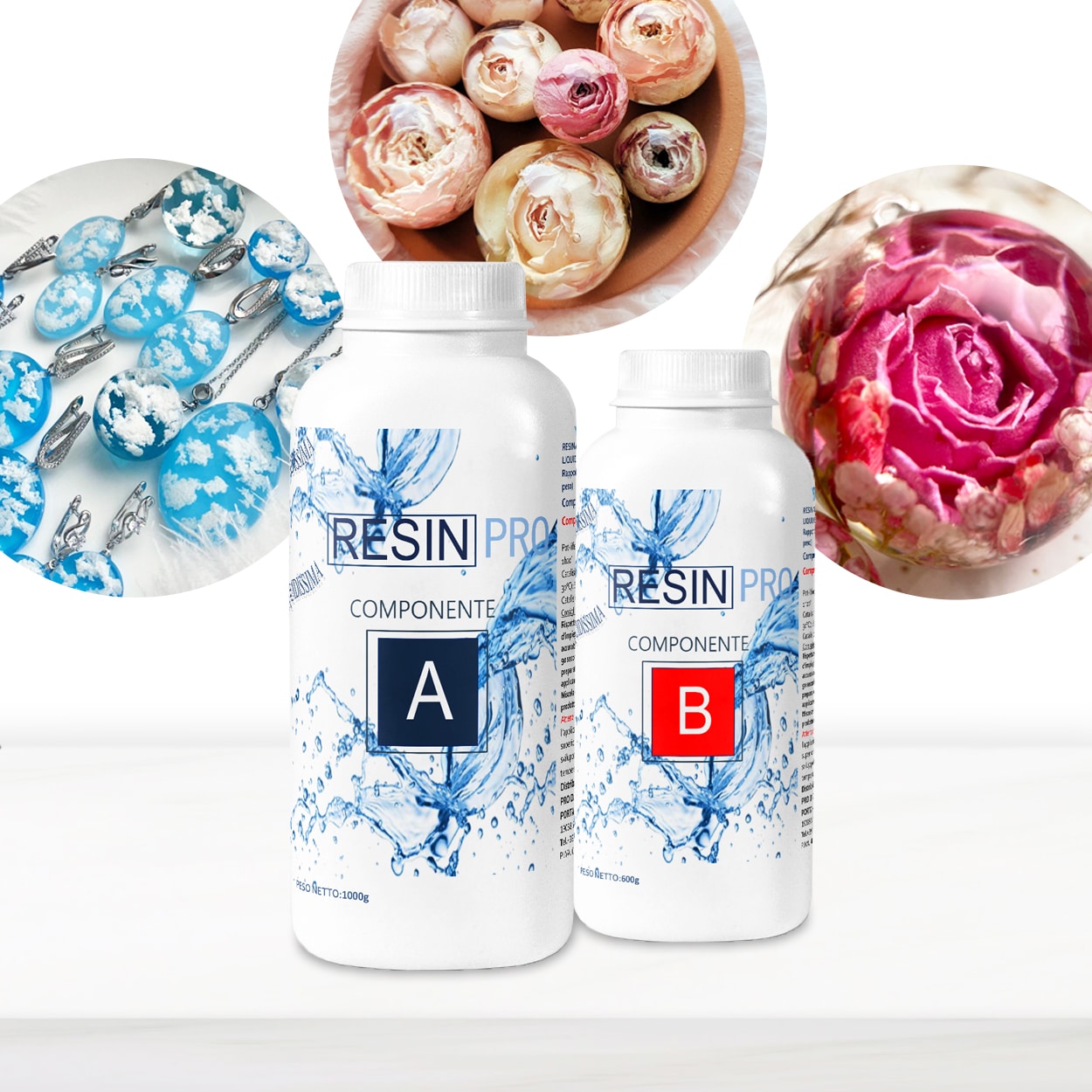 "Liquidissima" – Epoxy Resin For Creations & JewelleryPrice range: £12.85 through £31.85Liquidissima epoxy resin offers clear finish and long working time, suitable for intricate moulds in jewellery and creative uses.
Frequently Asked Questions
What are the most important steps when mixing epoxy resin?
Read the label for the correct ratio, mix slowly for several minutes, and scrape the container sides for full combination.
How do I avoid air bubbles in my epoxy resin?
Mix gently to minimise trapped air, and use a heat gun or torch right after pouring to remove surface bubbles.
Do I need to wear protection when using epoxy resin indoors?
Yes, use nitrile gloves and a protective mask, and ensure the area is well ventilated during handling and curing.
How long should I leave epoxy resin to cure?
Most projects need at least 12–48 hours to cure; warm, stable room temperatures speed up the process and ensure a solid finish.
Can I colour my epoxy resin projects?
Yes, add pigments or compatible dyes during mixing, but keep the ratio within product guidelines to maintain clarity and cure performance.