 Free shipping on orders over £29,85
  Shipping Tracking!


 Google
 Facebook
Can I add more hardener to epoxy resin to speed up the curing process?
Discover why epoxy resin ratios matter and safer ways to accelerate curing.


Among makers and professionals alike, a common question arises: Can I add more hardener to epoxy resin to speed up the curing process? Understanding the correct ratios for mixing epoxy resins and hardeners is vital to achieve desired results. At ResinPro, we believe knowledge and the right products ensure project success every time.
In this guide, we explain why strictly following manufacturer-specified mix ratios is essential, and provide alternative strategies for accelerating epoxy curing without compromising safety or finished quality.
Should You Adjust the Hardener Ratio in Epoxy Resin?
The speed at which epoxy resin cures is primarily determined by its chemical formulation. Each product—be it for deep pours, crafts, or repairs—requires a precise mix of resin and hardener to perform as intended. Adding more hardener than specified does not reliably speed up the curing process and may result in weakened, tacky, or even incomplete curing. Safety, clarity, and mechanical strength all depend on the correct ratio.
For example, the “Klebfix” – Two-Component Fast Epoxy Glue 2K, 25g Syringe features a convenient 1:1 ratio using its double-chamber syringe—adjusting this ratio is not recommended and can compromise performance. Similarly, “FixExpress” – Two-Component Epoxy Glue 500g relies on an exact 1:1 ratio for rapid repairs. For clear and decorative projects, products like “Icrystal” – Clear Epoxy Resin – Odourless Formula – Up to 1.5cm (2:1 mixing) and “One-2-One” – Epoxy Resin for Handcraft, 1:1 Mixing Ratio (by volume) demand careful adherence to their prescribed ratios.
Deep pour projects present unique challenges; both “EpoxyTable 5-Five” – Deep Pour Epoxy Resin for Tables and Large Projects and “Epoxytable 10-Ten” – Deep Pour Epoxy Resin for Tables, Up to 10cm Casting are designed for stable, controlled curing at their specified ratios, protecting large projects from overheating or other failures.
Epoxy Curing Explained: Why Ratio Matters
Epoxy resin kits, whether used in art, jewellery, woodworking, or repairs, are the result of precise standards developed for performance, clarity, and safety. The correct chemical reaction only occurs when amounts of resin and hardener are measured and mixed as instructed.
Altering the resin-to-hardener ratio:
- Can cause surface tackiness or cloudiness
- Weakens mechanical bonds and durability
- Risks incomplete or uneven curing—especially in deep or large casts
- Can reduce resistance to heat, moisture, or UV
- May trigger undesirable odours and loss of clarity
For example, deep casting products like “EpoxyTable 5-Five” and “Epoxytable 10-Ten” require careful layering and attention to application thickness—not higher hardener ratios—to avoid excess heat and curing flaws.
The same applies to fast-curing adhesives like “Klebfix” or “FixExpress”, whose rapid setting has been engineered at a perfect 1:1 ratio for reliability and strength.
Comparison Overview: Fast-Setting and Deep Pour Epoxy Products
Whether you’re bonding, casting, or crafting, ResinPro offers tailored products for every project requirement—each with its unique mixing ratio:
- Rapid repairs: “Klebfix” – Two-Component Fast Epoxy Glue 2K and “FixExpress” – Two-Component Epoxy Glue 500g both cure in under 5 minutes with precise 1:1 ratios, providing robust bonds on plastics, metals, wood, and more.
- Clear coatings & crafts: “Icrystal” – Clear Epoxy Resin combines stunning clarity and up to 1.5cm per layer with a 2:1 mix. “One-2-One” offers an easy 1:1 by volume mix for beginners and advanced users alike.
- Deep pours & large projects: “EpoxyTable 5-Five” (for up to 5cm layers) and “Epoxytable 10-Ten” (up to 10cm) are both engineered to prevent overheating and ensure clear, strong results.

Why You Shouldn’t Add More Hardener: Real-World Examples
Epoxy resins like “Klebfix” and “FixExpress” are engineered to cure rapidly at the correct ratio. Real-life projects show that exceeding recommended hardener amounts does not enhance speed—instead, it results in sticky surfaces or weak bonds. Deep-pour products, such as “EpoxyTable 5-Five” and “Epoxytable 10-Ten,” use controlled chemistry for stability and clarity with larger volumes. These examples underline the importance of mixing accuracy for all project sizes and resin types.
Safe and Effective Ways to Accelerate Epoxy Cure
Instead of increasing hardener—risking the quality, clarity, or safety of your resin—the following tips can hasten the curing process:
- Use the right-grade product: Choose naturally fast-setting options like “Klebfix” or “FixExpress” if quick results are vital.
- Maintain optimal temperature: Warmer ambient temperatures (within product recommendations) can help speed up curing—always check the safe range in the instructions.
- Increase air flow: Adequate ventilation in the working area will boost evaporation and hardening without disturbing the chemical reaction.
- Explore rapid-cure variants: For crafts and thin coatings, choose formulas designed for quick setting, such as “Icrystal” or “One-2-One” for smaller projects.
Never add more hardener in hopes of saving time—use products built for your project timeline instead.
Choosing the Right Epoxy Resin for Your Project
Matching your resin choice to the specific demands of your work—depth of pour, clarity, setting speed, and application surface—is the true key to great results. When you need:
- Ultra-fast repairs: Trust “Klebfix” – Two-Component Fast Epoxy Glue 2K, 25g Syringe or “FixExpress” – Two-Component Epoxy Glue 500g for high-strength bonds on demanding materials, mixed accurately every time.
- Crystal-clear artistry: “Icrystal” gives pristine finish and UV resistance ideal for tabletops, ornaments, or creative works. Its 2:1 mix ratio is non-negotiable.
- Deep resin tables & casting: For larger thicknesses, choose the purposeful “EpoxyTable 5-Five” (up to 5cm) or “Epoxytable 10-Ten” (up to 10cm). Following stepwise instructions protects clarity and integrity even in complex projects.
- Reliable DIY & crafts: Take advantage of the easy, equal-volume mix of “One-2-One” – Epoxy Resin for Handcraft for consistent, high-gloss results in jewellery, coatings, and decorative arts.
Explore our full range of Multipurpose Epoxy Resins, Resins for tables and surfaces finishes, Top Sellers, and resin for jewellery to find your perfect solution.
Layering and Temperature: Smarter Curing Acceleration
When time is of the essence, better alternatives than altering hardener ratio exist. For deep or large castings, pouring in layers (with recommended wait periods) avoids hotspots and incomplete curing. Slightly increasing room temperature (within instructions) assists products like “Icrystal” and “One-2-One” in setting more quickly, while maintaining strength and a flawless finish.

Mixing Epoxy: Best Practices for Superior Results
The ultimate takeaway? Stick to the product’s recommended resin-to-hardener ratios, mix slowly to avoid introducing bubbles, pour within advised temperature ranges, and always follow manufacturer guidance for curing conditions. These steps ensure your epoxy projects—no matter their size or complexity—achieve top-quality results, whether using “Icrystal” for transparent layers, “EpoxyTable 5-Five” for large pours, or the trusted “One-2-One” for handcrafting.
If you’re ever uncertain about a product’s working time or best application method, refer to its instructions or consult ResinPro’s comprehensive support resources for further help.
- "Klebfix" – Two-Component Fast Epoxy Glue 2K, 25g Syringe£22.85KLEBFIX 2K Fast Epoxy Glue is designed for demanding repairs requiring a fast set time and strong adhesion on multiple materials.
- "FixExpress" – Two-Component Epoxy Glue 500g£25.45"FixExpress" offers fast and durable bonding suitable for various materials, supporting the theme about epoxy curing.
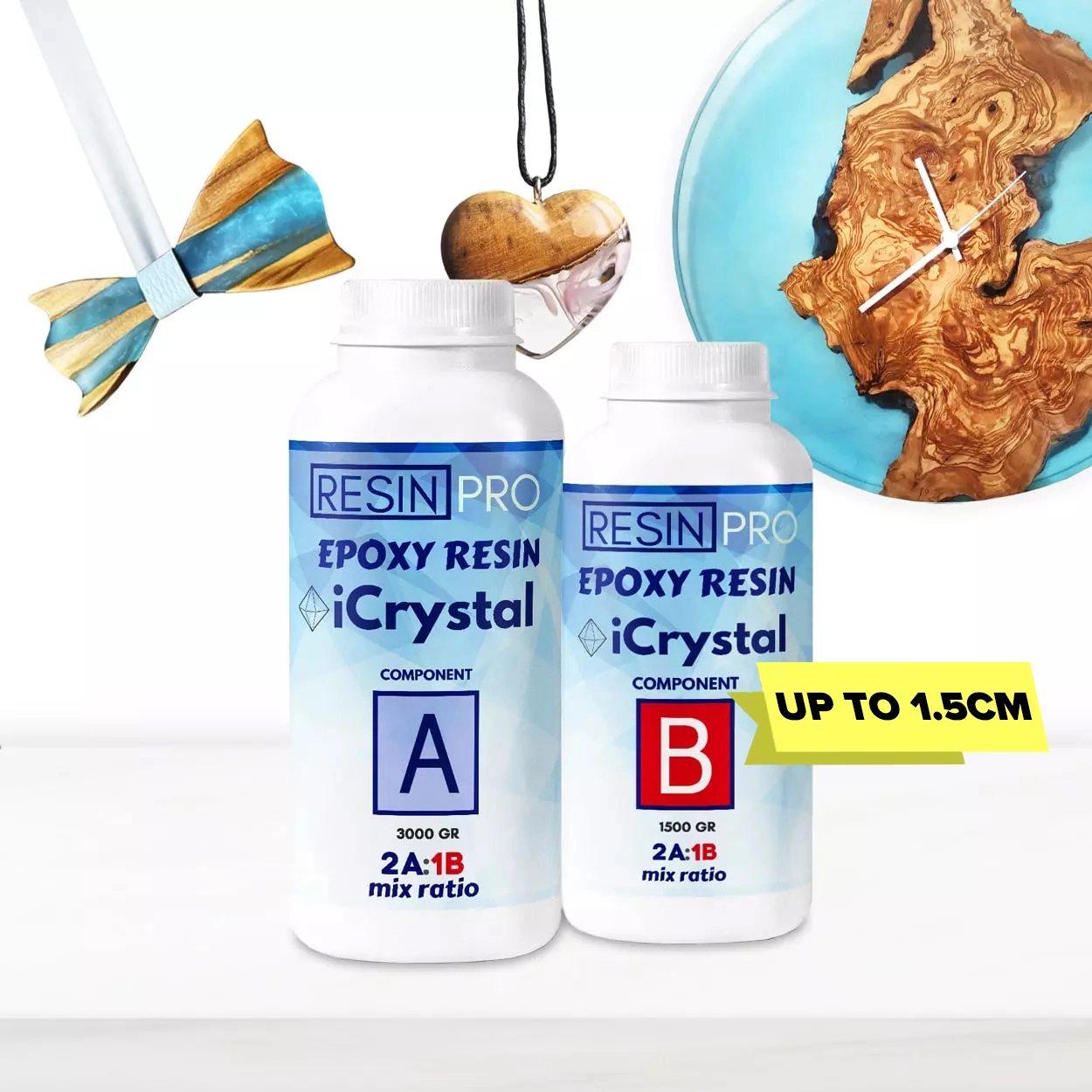 "Icrystal" – Clear Epoxy Resin – Odourless Formula – Up to 1.5cmPrice range: £11.65 through £954.85"Icrystal" epoxy resin provides high transparency and is odourless, suitable for clear coatings and artistic projects.
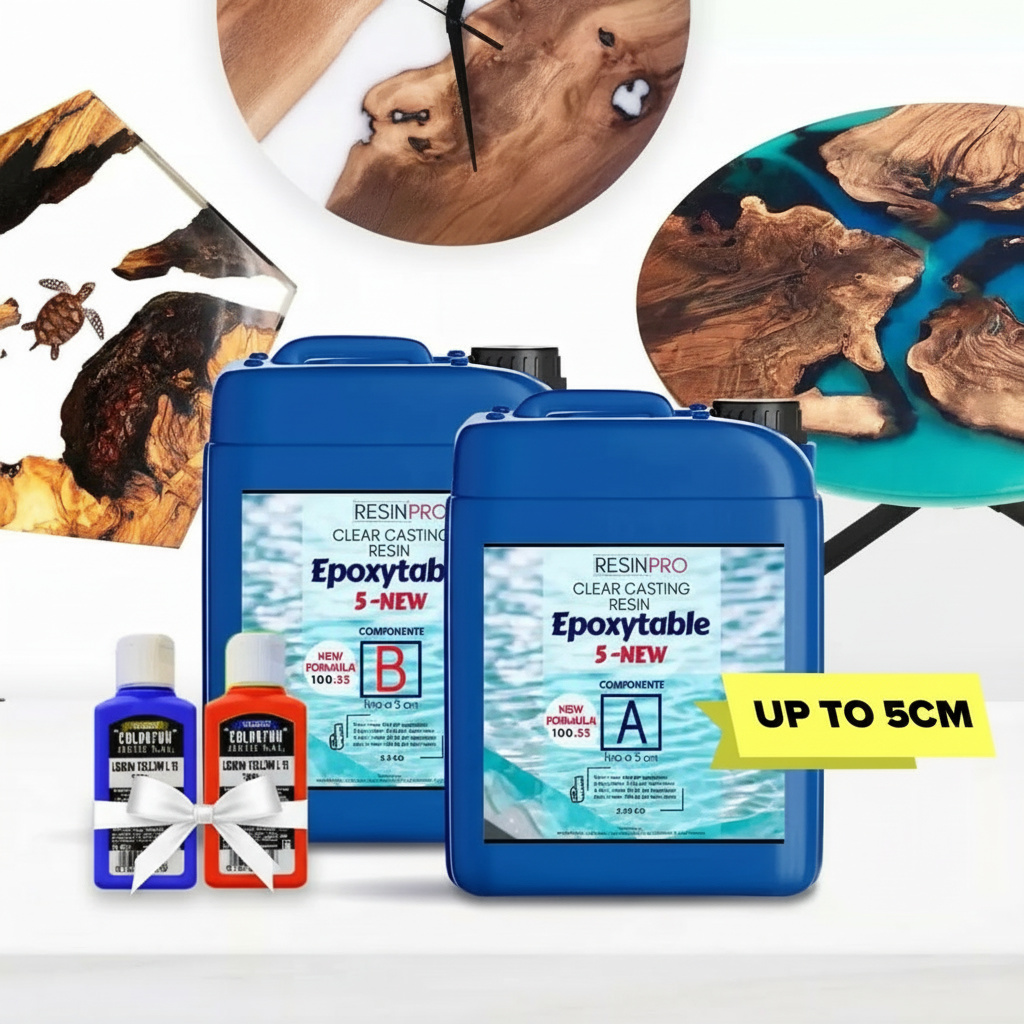 "EpoxyTable 5-Five" – Deep Pour Epoxy Resin for Tables and Large Projects – Up to 5cmPrice range: £16.85 through £1,099.85"EpoxyTable 5-Five" is suited for deep pour projects such as tables and large items, designed for use with thick layers and large castings.
 “Epoxytable 10-Ten” – Deep Pour Epoxy Resin for Tables, Up to 10cm CastingPrice range: £33.85 through £334.85“Epoxytable 10-Ten” is formulated for deep resin casting up to 10cm, suitable for tables and artistic projects under the given theme.
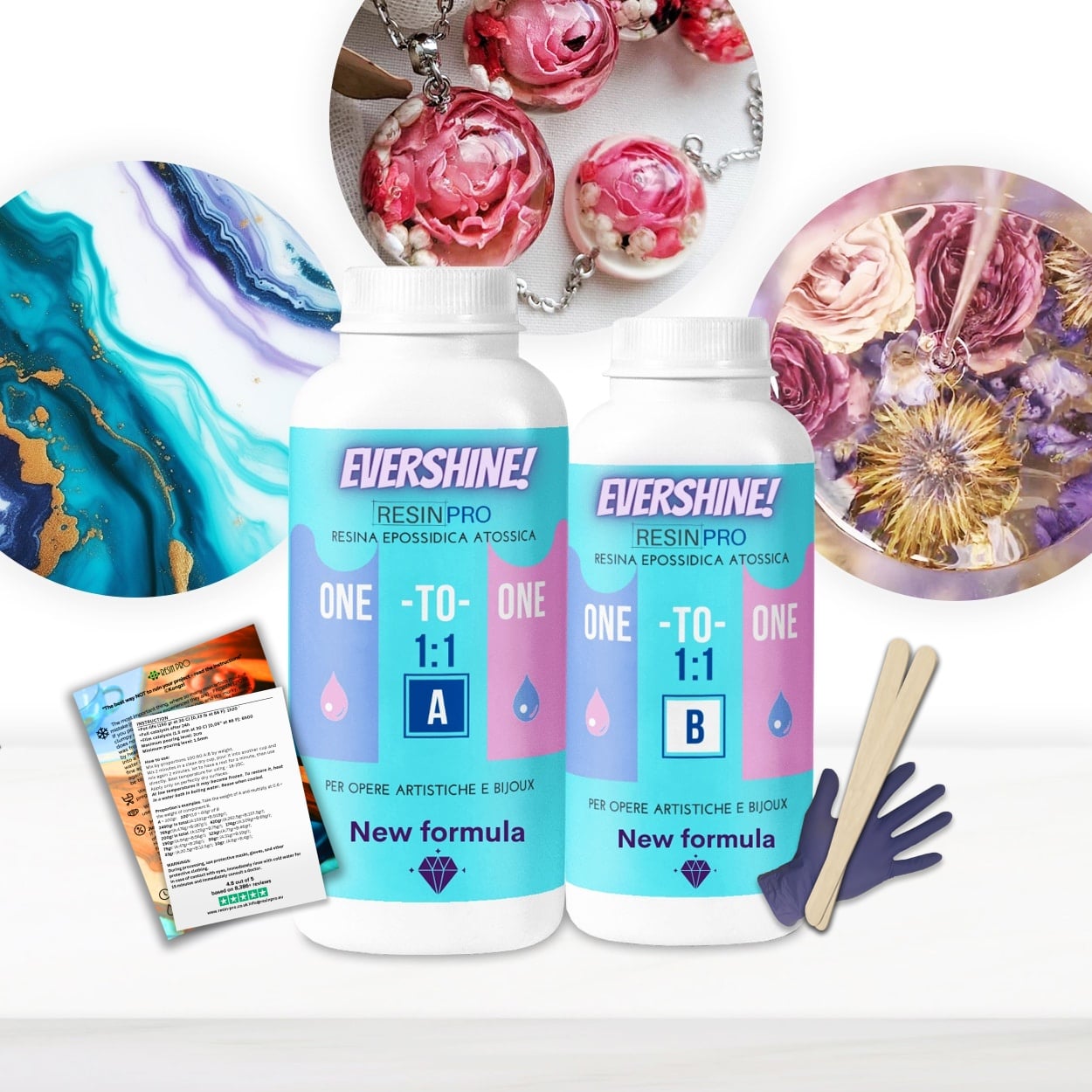 "One-2-One" – Epoxy Resin for Handcraft, 1:1 Mixing RatioPrice range: £14.85 through £56.85"One-2-One" epoxy resin has a medium viscosity and easy 1:1 mixing ratio, suitable for crafting and decorative projects.
Frequently Asked Questions
Can I speed up epoxy curing by adding more hardener?
No, increasing hardener content can lead to tackiness, poor strength, and incomplete curing. Always follow the specified ratio for your resin system. Choose naturally fast-setting products or optimise environment temperature for faster results.
What is the correct mixing ratio for my resin?
Mixing ratios vary: popular repair products and handcraft resins are often 1:1 by volume; some clear cast resins are 2:1. Always refer to your product’s instructions for correct measurements.
Why do some epoxies take longer to cure than others?
Formulation, intended application (thin layers, deep pours), and environmental conditions all affect curing speed. High-performance products like "FixExpress" and "Klebfix" are engineered for rapid setting as supplied.
Can I pour thick layers all at once with deep pour resins?
For layers thicker than the product’s maximum (e.g., 5cm for "EpoxyTable 5-Five"), stepwise pouring with waiting periods is essential to avoid overheating and guarantee a successful cure.
Is it safe to use epoxy resin indoors?
Most modern epoxy resins, like “Icrystal” and "One-2-One", are designed for low-odour, solvent-free indoor use. Ensure adequate ventilation and follow safety instructions.
What happens if I guess my measurements or mix by eye?
Incorrect measurements (too much or too little hardener) almost always cause sticky surfaces, reduced durability, cloudiness, or non-curing resin—especially in clear or deep-casting projects. Always use accurate scales or measuring cups.
How can I safely accelerate curing?
Choose a product formulated for speed, ensure correct temperature, and provide good air circulation. Never change the recommended mix ratio to accelerate curing.