 Free shipping on orders over £29,85
  Shipping Tracking!


 Google
 Facebook
How to make tables with epoxy resin
Transforming wood and resin into a beautiful table is a rewarding DIY project that allows you to create unique, durable surfaces for your home or workspace. This guide covers everything you need to know to make tables with epoxy resin, from planning your design to the final polish—perfect for beginners and anyone seeking professional results.
Step-by-step process for stylish and durable tables

What You’ll Need
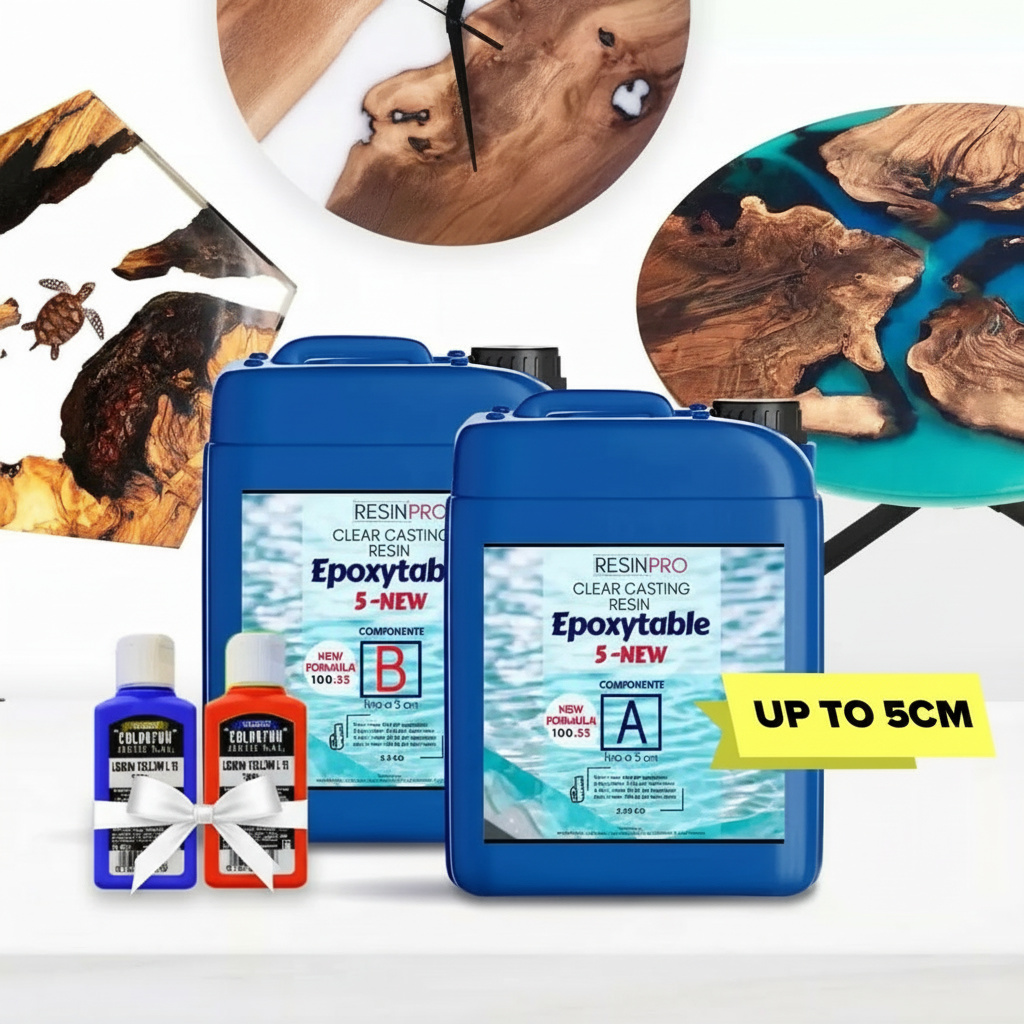
- “EpoxyTable 5-Five” – Deep Pour Epoxy Resin for Tables and Large Projects – Up to 5cm — For castings up to 5 cm thick
- “Epoxytable 10-Ten” – Deep Pour Epoxy Resin for Tables, Up to 10cm Casting — For deep-pour projects up to 10 cm
- “River-Table” – Complete Kit for Creating Your First Epoxy Resin Table — Complete starter set including formwork, sealant, pigments and instructions
- “Stone Effect Collection” – Marble Epoxy Resin Countertop Kit — For stone or marble look finishes
- Timber of your choice (well-seasoned and flat)
- Mixing containers, stir sticks, accurate scales
- Acetone or isopropyl alcohol (for cleaning)
- Clamps for the formwork
- Personal protective equipment (gloves, mask, goggles)
- Sandpaper in various grits, polishing compound (if finishing by hand)

See the Epoxy Table Process in Action
Watch stunning epoxy resin tables come to life and discover finished examples for creative inspiration. Each stage—formwork, pouring, and finishing—makes all the difference in the final look and feel of your unique table.

Step 1: Plan your design and workspace
Plan your design and workspace carefully from the outset. Choose your table dimensions, wood type, and overall appearance. Decide whether you want a clear, coloured, or stone-effect finish. Ensure your workspace is clean, dust-free, and well-ventilated to prevent contamination during pouring. Level the surface thoroughly, as resin seeks a flat plane.
Sketch the design, measure the timber and prepare a checklist of all necessary materials. Planning ahead helps avoid costly mistakes and ensures your project progresses smoothly from start to finish.
Step 2: Prepare the wood and form
Prepare the wood and form before working with resin. Dry, sand, and clean the timber to remove any dust, grease, or oils. To minimise air bubbles, seal any knots or cracks with a thin layer of epoxy resin; this also prevents excessive resin absorption. Build your formwork (often MDF or melamine) to your table’s exact dimensions and line it with a non-stick release material or use a specialist release film.
Seal all joints in your form using silicone to prevent leaks. For ease, consider a starter kit like the “River-Table” – Complete Kit for Creating Your First Epoxy Resin Table, which supplies silicone sealant, a release film, and full instructions for formwork and timber prep.
Step 3: Mix and pour your epoxy resin
With your form and timber set, it’s time to mix and pour your epoxy resin. Wear protective gloves and eyewear. Accurately weigh the resin and hardener (mix ratios differ—for example, “EpoxyTable 5-Five” uses a 100:55 by weight ratio). Mix slowly to avoid introducing air bubbles.
Pour in stages if your table requires more resin than one batch allows, especially for thick pours—using “Epoxytable 10-Ten” makes deep pours up to 10 cm possible. For a marbled look, use a specialised kit like “Stone Effect Collection” – Marble Epoxy Resin Countertop Kit, following the supplied pigment and dye instructions. After each pour, use a heat gun to release surface bubbles for a crystal-clear finish.

Step 4: Cure and demould the table
Allow the resin to fully cure according to the manufacturer’s recommendation, usually 24–72 hours depending on the resin depth and ambient conditions. Warmer temperatures generally speed up curing, but avoid direct sunlight while curing to prevent surface imperfections. Do not move or knock the table during this stage.
Once set, gently dismantle the formwork and release the table. Remove tacky residue with isopropyl alcohol if necessary. Inspect your piece for any sharp edges or resin overflows before moving on to surface finishing.
Step 5: Sand, finish, and polish your tabletop
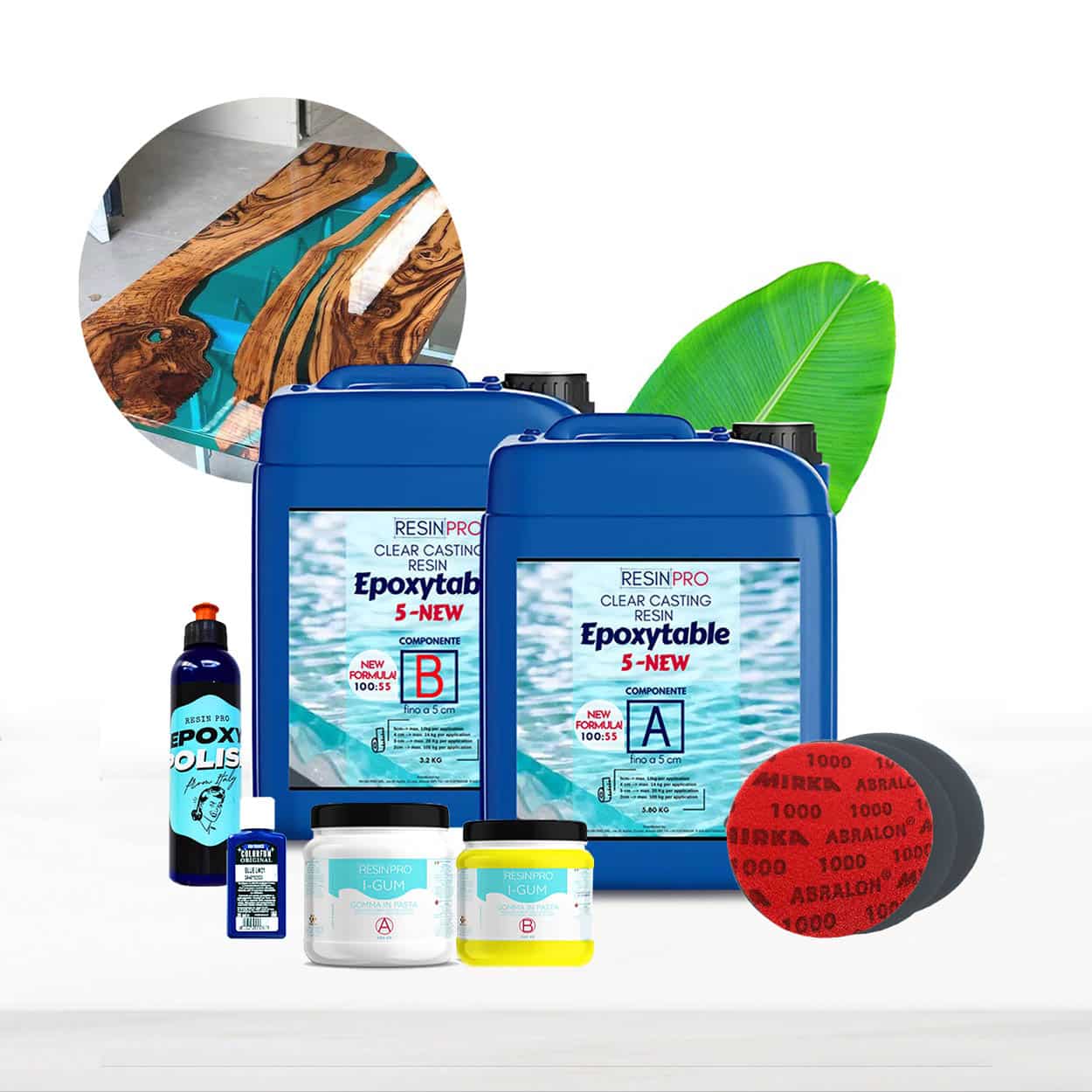
Sand, finish, and polish your tabletop for a smooth, professional look. Start with a coarse grit sandpaper to level uneven areas, then progressively use finer grits for clarity and shine. Wet sanding can minimise dust and heat build-up. For a mirror-like finish, use a polishing compound and buffing pads. Alternatively, a comprehensive kit such as the “River-Table” – Complete Kit provides polishing creams and pads geared for resin finishes.
Finish the edges, wipe free of residue, and your custom epoxy resin table is ready for use.
Tips and Common Mistakes When Making Epoxy Resin Tables
Always check your wood is fully dry to prevent moisture from causing bubbles or poor adhesion. Take extra care to avoid dust falling on uncured resin. Double check your mixing ratios—imprecise measurement is the most common cause of soft spots or cloudy results. For thick pours, allow layers to partially cure before adding more resin. Do not rush sanding or polishing—the best shine comes with patience. If in doubt, test on a small piece before tackling a full table.
Gallery of Finished Epoxy Resin Tables
Explore a curated selection of wood and resin tables, marble tops, and river table styles. Every project demonstrates how technique, material choice, and finishing bring out the best in your epoxy resin furniture.
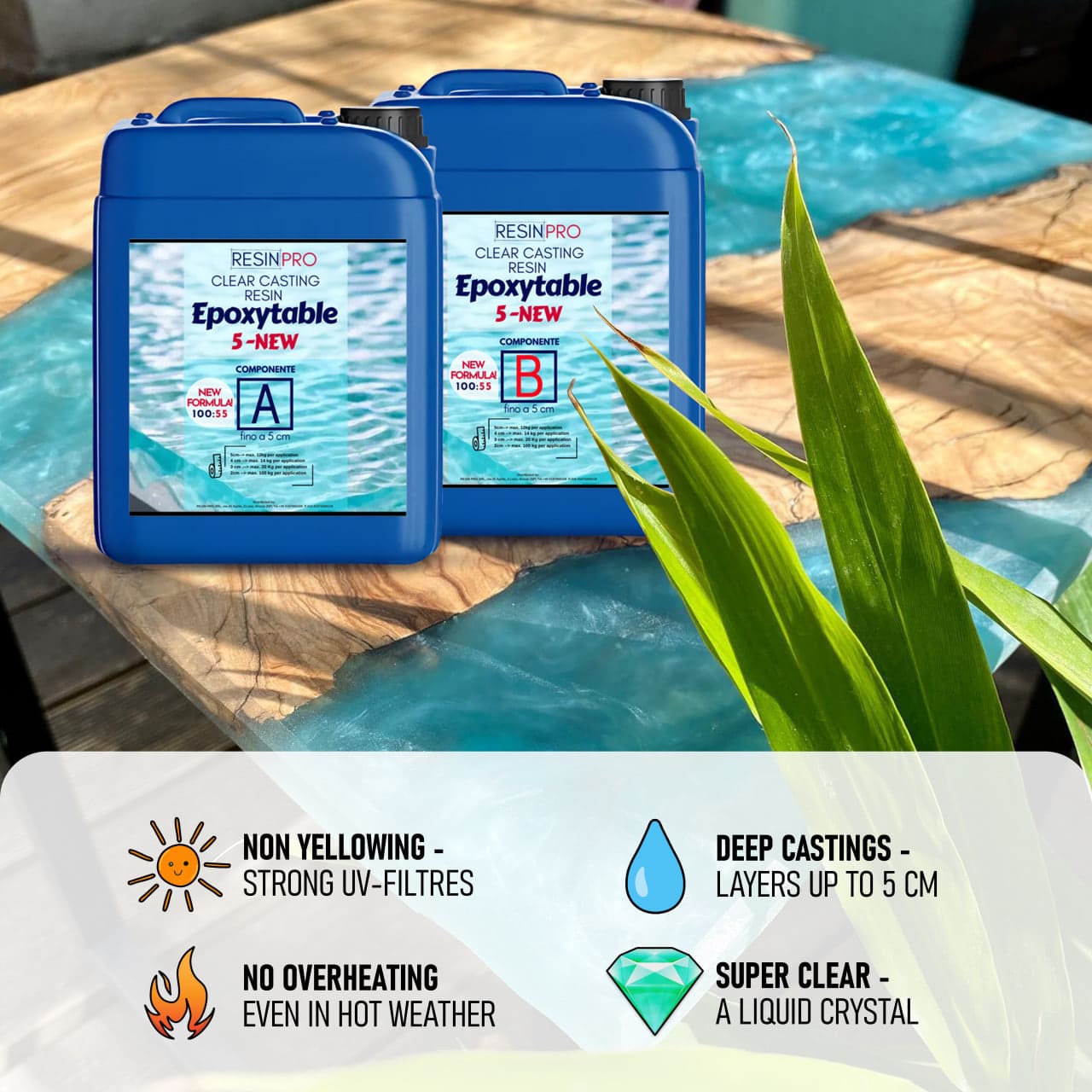
- "EpoxyTable 5-Five" – Deep Pour Epoxy Resin for Tables and Large Projects – Up to 5cmPrice range: £16.85 through £1,099.85EpoxyTable 5-Five is a deep pour epoxy resin suitable for tables and large projects up to 5cm thick, designed for clear and stable castings.
- "River-Table" – Complete Kit for Creating Your First Epoxy Resin TablePrice range: £188.85 through £444.85"River-Table" kit provides essentials and instructions to create a wood and resin table for those following the 'How to make tables with epoxy resin'…
 “Epoxytable 10-Ten” – Deep Pour Epoxy Resin for Tables, Up to 10cm CastingPrice range: £33.85 through £334.85Epoxy resin designed for deep pours up to 10cm, suitable for tables and large artistic projects. Includes gloves and detailed instructions.
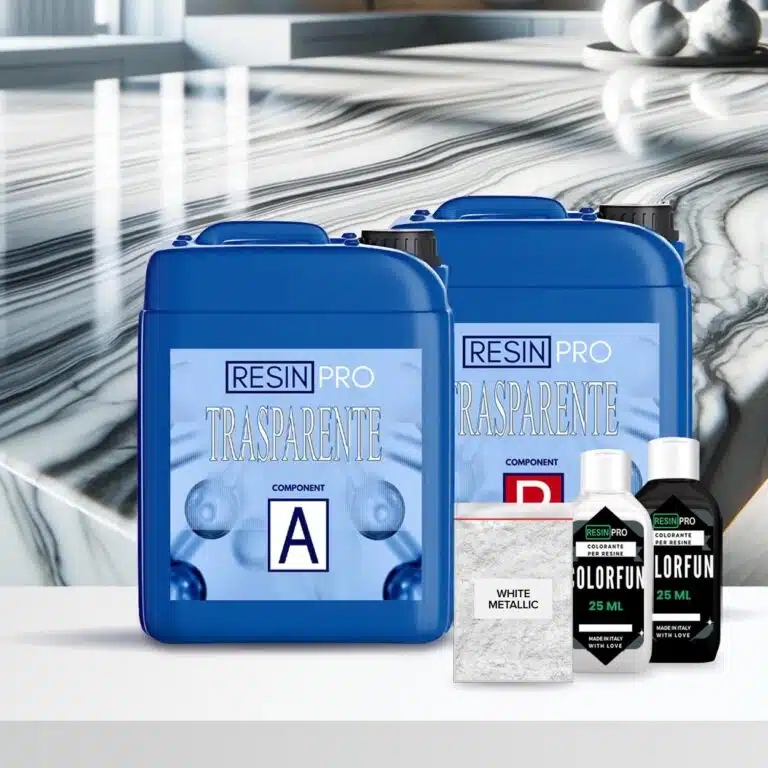 "Stone Effect Collection" – Marble Epoxy Resin Countertop KitPrice range: £54.85 through £394.85This epoxy resin countertop kit offers professional marble and stone effects with durable, scratch- and wear-resistant finishes suitable for kitchens…
Frequently Asked Questions
Which epoxy resin is best for deep table pours?
For tables requiring castings up to 10cm, 'Epoxytable 10-Ten' is designed for deep single pours and is ideal for large projects.
How do I stop leaks from my mould or formwork?
Seal all joints with silicone and use a release film or tape inside the mould to prevent resin escaping.
How can I get rid of bubbles after pouring resin?
Use a heat gun or torch after pouring to release trapped bubbles on the resin surface for a clearer result.
What is the maximum casting thickness for a table?
'EpoxyTable 5-Five' can be poured up to 5cm in one go; for up to 10cm, use 'Epoxytable 10-Ten'. Pour in layers for thicker projects.
How long should epoxy tables cure before use?
Cure time varies from 24–72 hours. Wait until full hardness is achieved and surface is no longer tacky before handling.
What is the best method for sanding and polishing an epoxy table?
Start with coarse sandpaper, progress to finer grits, and finish with a polishing paste using a soft pad or buffer.
Why did my epoxy resin not harden properly?
Incorrect mixing ratios, poor mixing, or low temperatures are common causes of incomplete curing. Always measure and mix precisely.