 Free shipping on orders over £29,85
  Shipping Tracking!


 Google
 Facebook
How much catalyst to add to resin in winter?
Get reliable curing guidance for cold-weather resin projects.
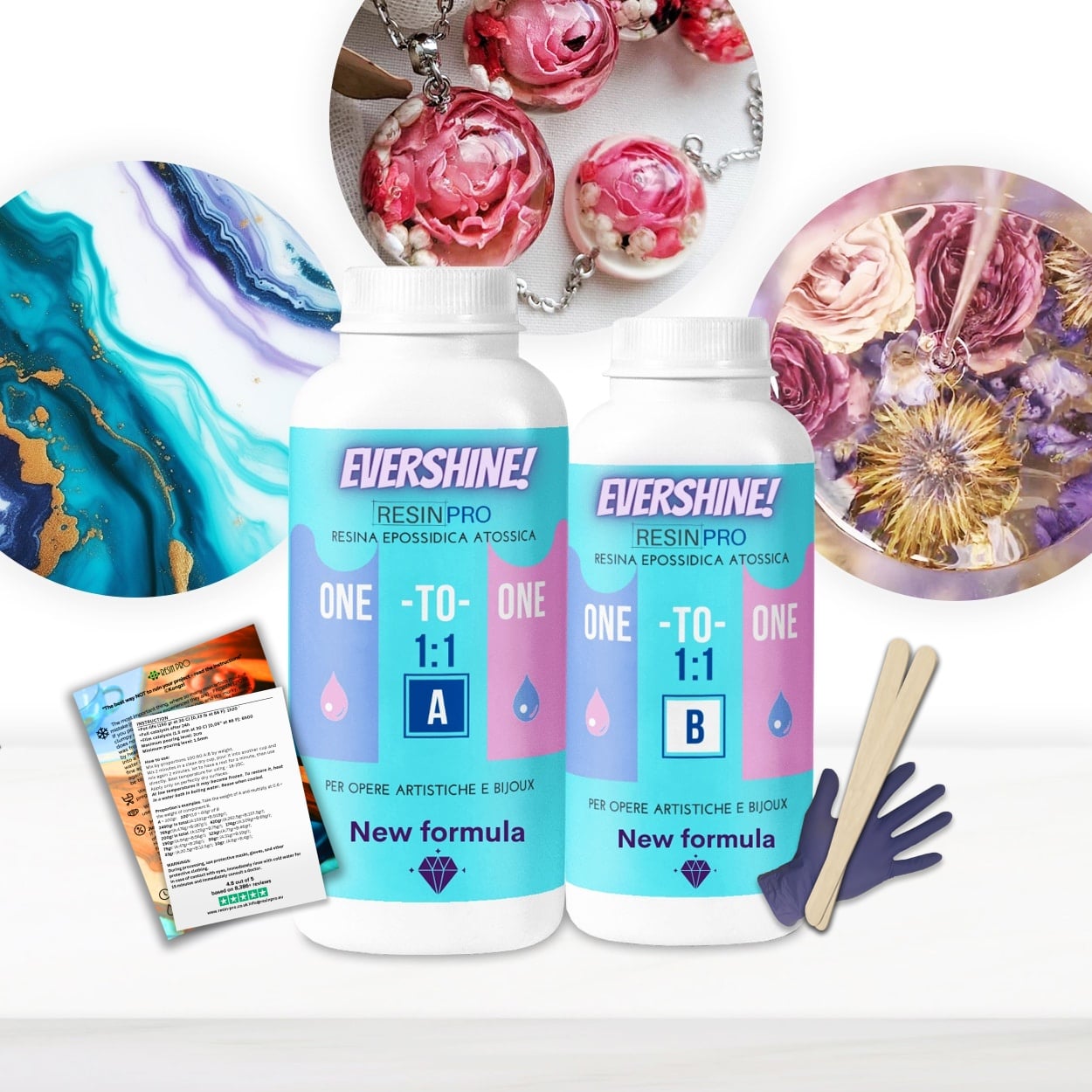

Understanding the correct amount of catalyst (hardener) to add to resin during winter is essential for anyone working with epoxy in cooler conditions. This guide is designed for crafters, artists, and makers who want reliable results when temperatures drop. We’ll compare mixing ratios for major resin products and provide essential considerations for winter curing, so you can avoid sticky results or failed projects in the cold season.
Comparing Catalyst Ratios and Winter Curing Tips
Every resin system depends on accurate catalyst addition—typically determined by a set mixing ratio between the resin and hardener. In winter, lower ambient temperatures slow the curing process, but it’s vital not to add extra hardener (catalyst) in hopes of accelerating the cure, as this can compromise results. Instead, always follow the manufacturer’s recommended ratio and adapt your working environment to support proper polymerisation.
Let’s compare the main mixing ratios for ResinPro’s most popular products:
- “One-2-One” – Epoxy Resin for Handcraft, 1:1 Mixing Ratio: Equal parts resin and hardener by volume.
- “Icrystal” – Clear Epoxy Resin – Odourless Formula – Up to 1.5cm: 2 parts resin to 1 part hardener by volume.
- “EpoxyTable 5-Five” – Deep Pour Epoxy Resin for Tables and Large Projects – Up to 5cm: 100 parts resin to 55 parts hardener by weight.
- “Carbon Resin” – Epoxy Resin for Carbon Fiber & Fiberglass Coating: 100 parts resin to 55 parts hardener by weight.
Key tip: In winter, never increase the hardener ratio. Instead, work in a room above 18°C if possible, and warm up resin kits to reduce viscosity and kick-start curing. If your resin is too thick, gently warm the containers in a water bath (with lids on).
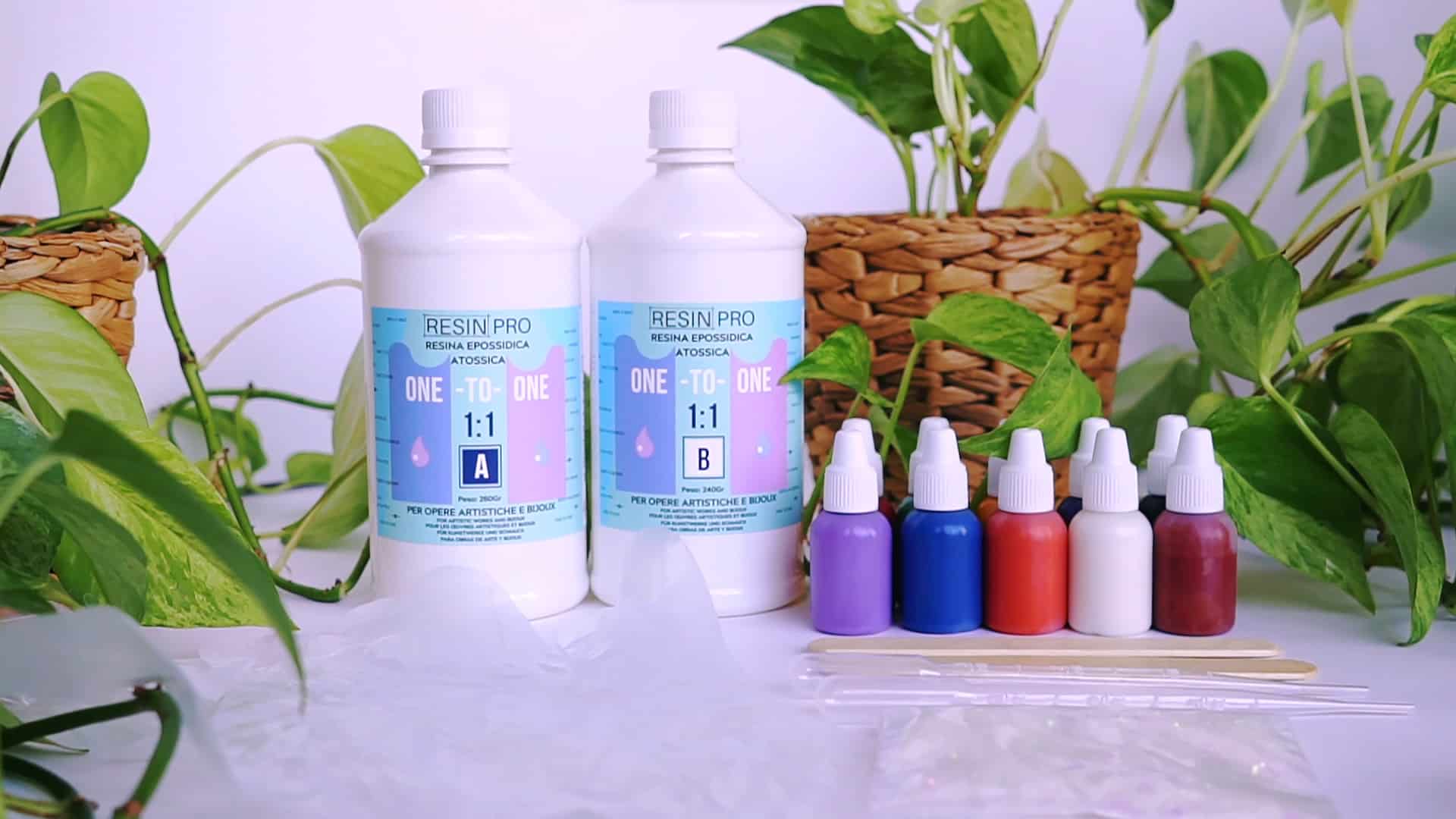
Visual Guide: Measuring and Mixing Resin in Winter
See step-by-step images of resin kits, accurate measuring with mixing cups, and warming resin bottles in a water bath. Observe the correct volume or weight ratios for each type of resin as highlighted above for cold-weather conditions.
“One-2-One” – Resin for Handcraft and Jewellery
“One-2-One” – Epoxy Resin for Handcraft, 1:1 Mixing Ratio simplifies winter work thanks to its easy equal-parts mixing (by volume). This makes it particularly forgiving for beginner and experienced crafters alike. The non-toxic formulation and medium viscosity make it ideal for smaller castings, jewellery, coatings, and decorative objects, even in colder months. Just remember: stick to the 1:1 (by volume) ratio for reliable curing—adjust the room temperature, not your mix proportions.
“Icrystal” – Crystal-Clear Resin for Surfaces
“Icrystal” – Clear Epoxy Resin – Odourless Formula – Up to 1.5cm uses a 2:1 ratio (resin:hardener by volume). This odourless, crystal-clear resin suits tables, artistic coatings, and up to 1.5cm pours at a time. For winter pours, do not add more catalyst; instead, allow for longer cure times and ensure your project stays at room temperature during initial cure. Its low odour and high transparency are especially beneficial if you need to work indoors during colder weather.
“EpoxyTable 5-Five” – Deep Pour Epoxy Resin
“EpoxyTable 5-Five” – Deep Pour Epoxy Resin for Tables and Large Projects – Up to 5cm is formulated for large pours and thick castings, with a precise 100:55 (by weight) resin to hardener mix. Winter conditions won’t need a ratio change—just maintain the recommended temperature range and allow extra time for curing. Its long working time and low exothermic reaction help prevent overheating, even if your workspace is slightly colder than usual.
“Carbon Resin” – Epoxy for Composites
If you are working with carbon fibre or fibreglass, “Carbon Resin” – Epoxy Resin for Carbon Fiber & Fiberglass Coating leverages the same 100:55 (by weight) ratio. This product’s advanced formulation is designed to maintain impregnation quality and toughness at room temperature—ideal for winter environments, provided your workspace is heated or insulated. Never add extra hardener in cold weather; let the resin cure slowly for optimal strength and clarity.
Top Tips for Reliable Winter Curing
- Always measure resin and hardener accurately by the specified ratio—do not adjust ratios to compensate for the cold.
- Pre-warm resin parts if possible to 20–25°C by immersing (sealed containers) in a warm water bath (not boiling).
- Keep your moulds or substrates at room temperature; cold surfaces can lead to slow or incomplete cures.
- If unsure, allow extra curing time—curing may take two to three times longer in lower temperatures.
- Work in a warm, well-ventilated indoor space whenever possible to avoid condensation or cloudiness in your finish.
Winter Epoxy Project Inspiration
Explore finished projects—tables, jewellery, and composite panels—created with precise winter mixing. Note the clarity and finish achievable when ratios are carefully respected and temperature guidelines are followed.
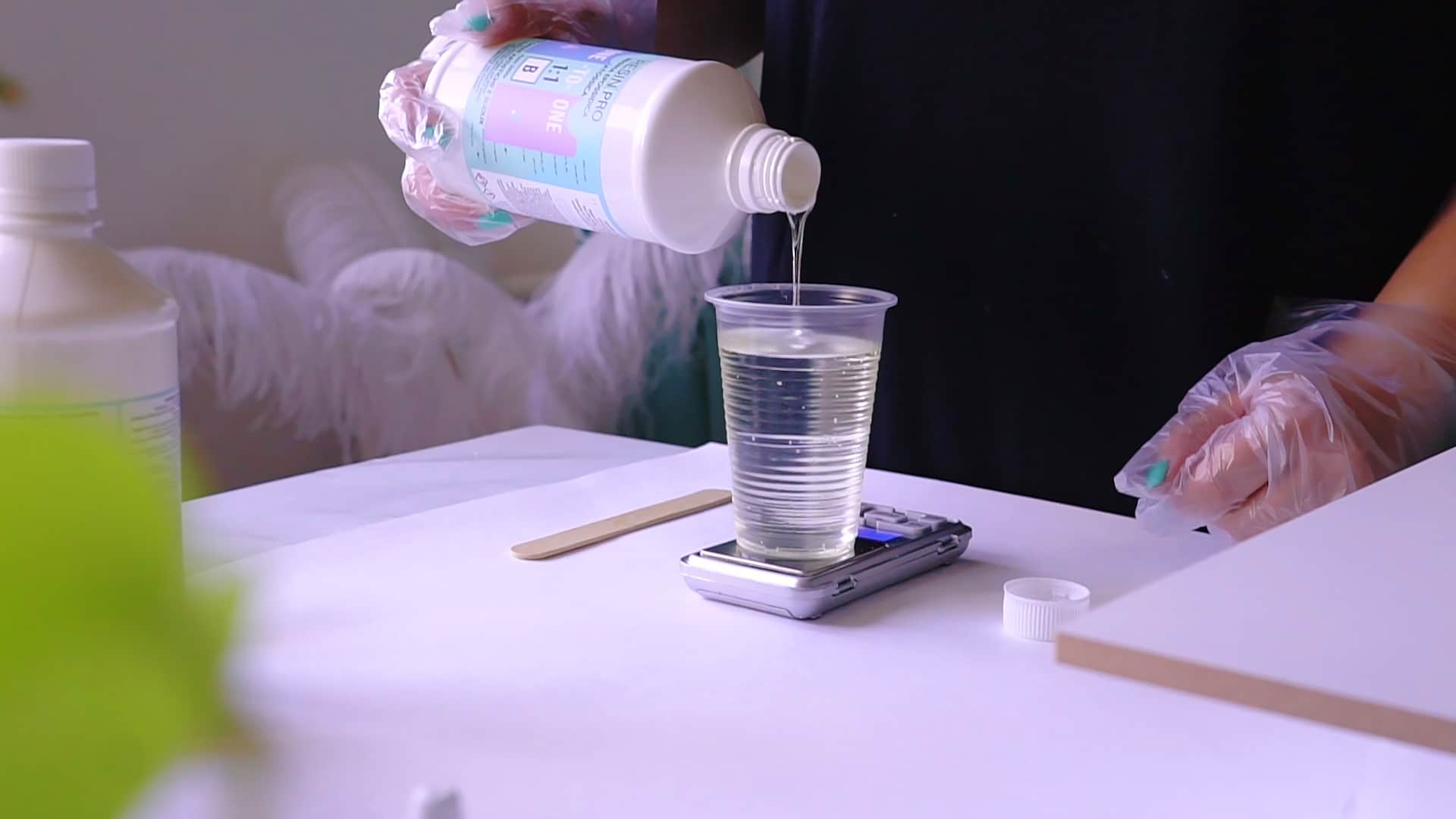
- "One-2-One" – Epoxy Resin for Handcraft, 1:1 Mixing RatioPrice range: £15.95 through £59.95"One-2-One" epoxy resin offers a medium viscosity and easy 1:1 mixing ratio, suitable for beginners and experienced crafters in safe handcraft…
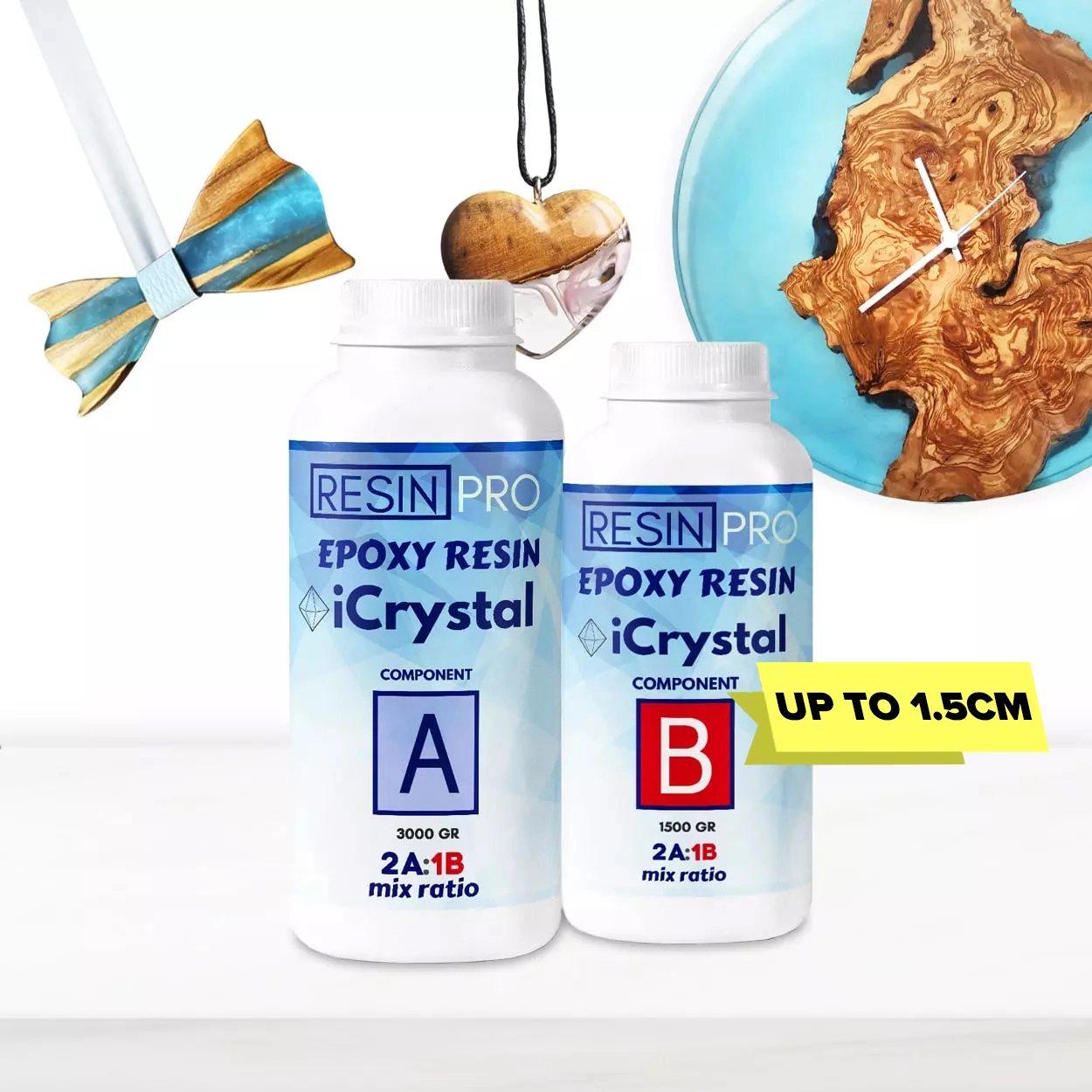 "Icrystal" – Clear Epoxy Resin – Odourless Formula – Up to 1.5cmPrice range: £12.45 through £341.45"Icrystal" clear epoxy resin offers a crystal-clear, odourless option commonly used for coatings and artistic projects.
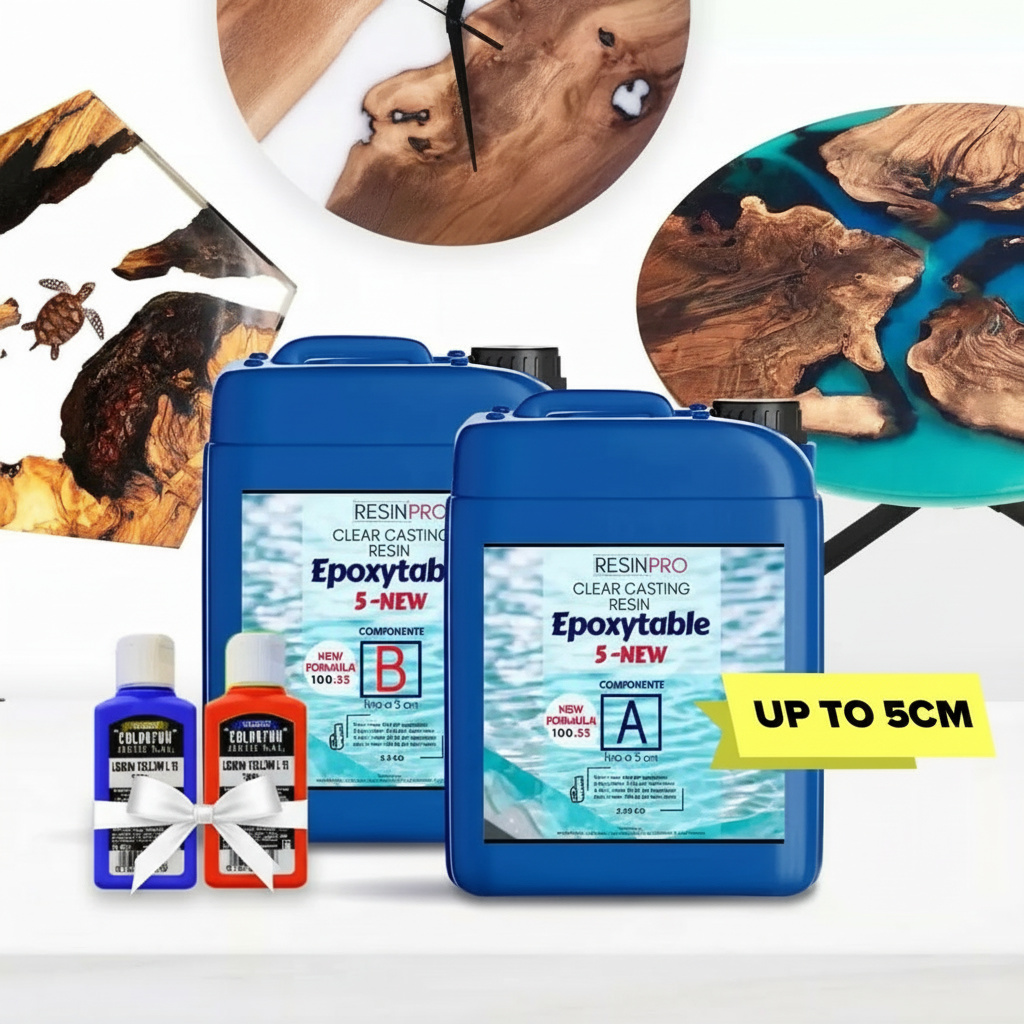 "EpoxyTable 5-Five" – Deep Pour Epoxy Resin for Tables and Large Projects – Up to 5cmPrice range: £17.95 through £1,154.95"EpoxyTable 5-Five" is a deep pour epoxy resin designed for tables and large projects up to 5cm thickness.
 "Carbon Resin" – Epoxy Resin for Carbon Fiber & Fiberglass CoatingPrice range: £19.95 through £37.95Epoxy resin for carbon fibre and fibreglass designed for composites and technical fabrics with durable, bubble-free impregnation and a glossy finish.
Frequently Asked Questions
Should I add more catalyst in winter to speed up epoxy resin cure?
No, never change the recommended catalyst (hardener) ratio. Instead, warm your workspace and allow extra curing time.
Why is it crucial to maintain the correct mixing ratio even when resin cures slowly in winter?
Incorrect ratios can prevent curing or weaken the final piece. Always follow the labelled resin-to-hardener ratio.
How can I warm my resin and hardener in winter before mixing?
Place sealed bottles in a warm (not hot) water bath for 10–20 minutes to reduce viscosity and ensure easier mixing.
How much longer does epoxy take to cure in winter?
Curing can take 2–3 times as long in colder conditions. Always allow extra time and check manufacturer guidance.
What is the best temperature for curing epoxy resin in winter?
Aim for 18–25°C if possible. Below 15°C can slow or inhibit curing and may affect finish quality.
Should epoxy resin be measured by weight or volume in winter?
Always use the method specified by the manufacturer. Some are measured by volume, others strictly by weight.
Why is my epoxy cloudy or sticky after winter curing?
Most often, it's due to cold temperatures or improper mixing. Ensure the correct ratio and a warm workspace.