 Free shipping on orders over £29,85
  Shipping Tracking!


 Google
 Facebook
How do you apply epoxy resin to furniture?
Step-by-step process for a flawless, professional resin finish

If you are looking to transform and protect your furniture with a durable, glossy finish, applying epoxy resin can deliver stunning results. This guide covers everything you need to know to successfully coat wooden tables, restore tired surfaces, and achieve a lasting, waterproof finish. Whether you are updating your own pieces or starting a creative furniture project, the following steps will help you do it right.
What You’ll Need
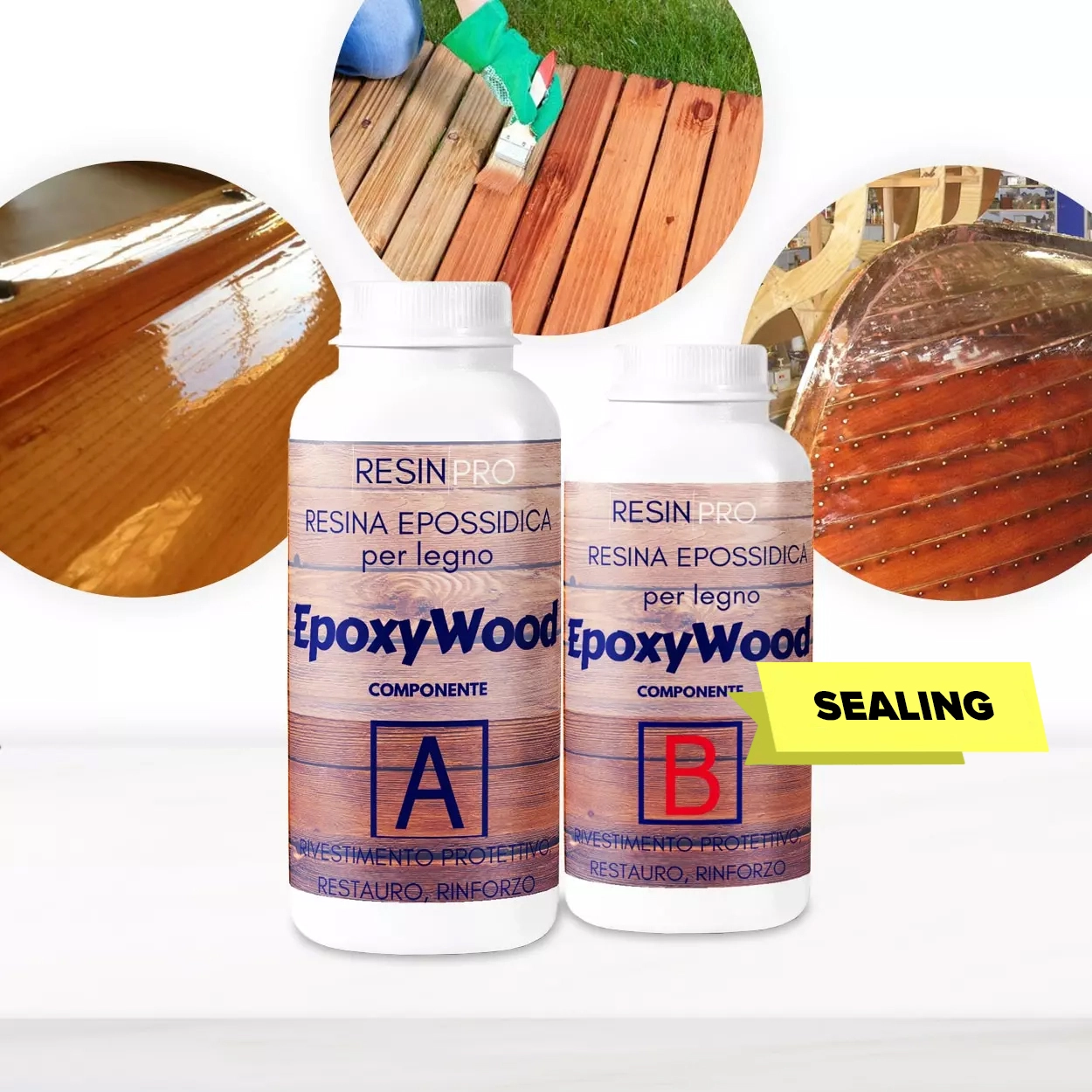
- “EpoxyWood” – Wood Restoration Epoxy Resin for Deep Penetration and Waterproofing – perfect for sealing and reinforcing wooden furniture surfaces
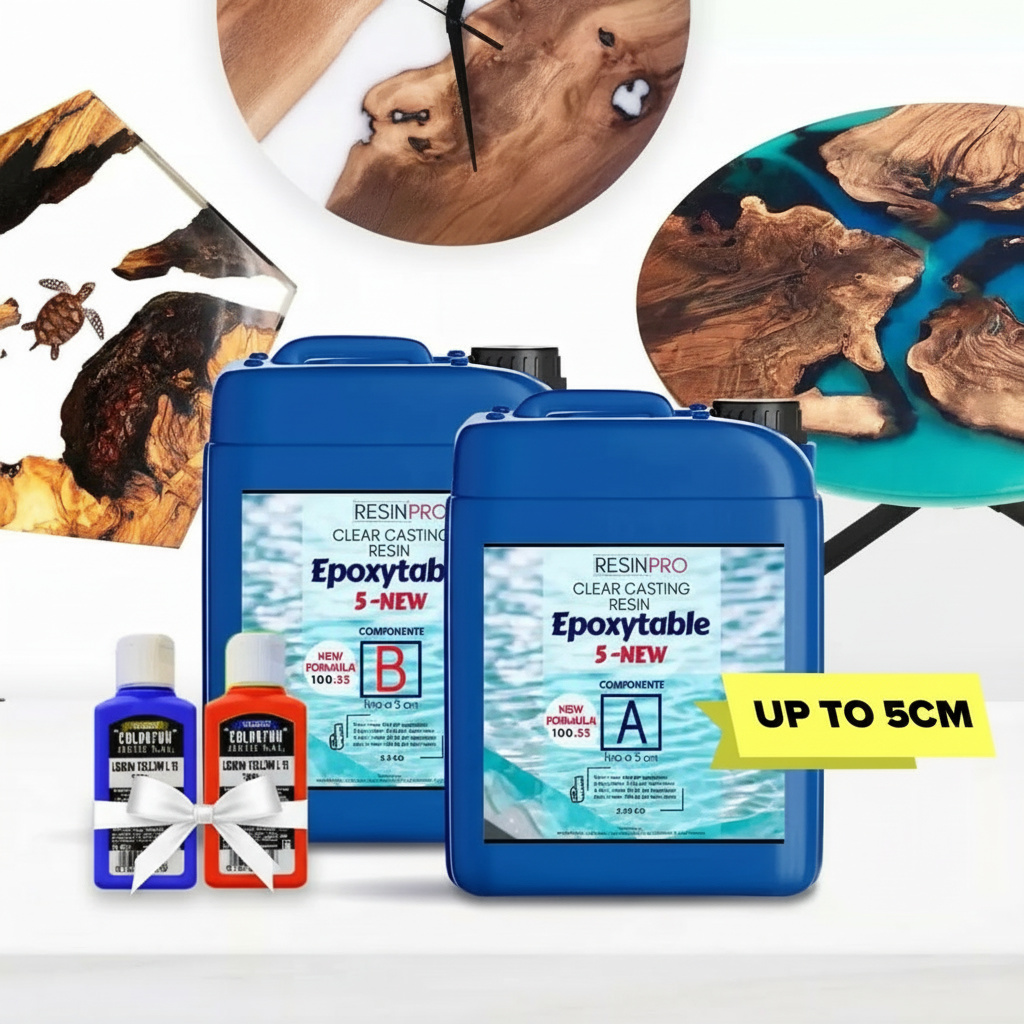
- “EpoxyTable 5-Five” – Deep Pour Epoxy Resin for Tables and Large Projects – Up to 5cm – ideal for clear, tough coatings and medium-depth pours
- “River-Table” – Complete Kit for Creating Your First Epoxy Resin Table – an all-in-one set for beginners, complete with sealant, pigments, and polishing tools
- “Epoxytable 10-Ten” – Deep Pour Epoxy Resin for Tables, Up to 10cm Casting – recommended for deeper projects or thick resin toppers
- Sandpaper (various grits)
- Mixing containers and sticks
- Protective gloves and mask
- Plastic drop cloth or protective covering for workspace
- Painters tape
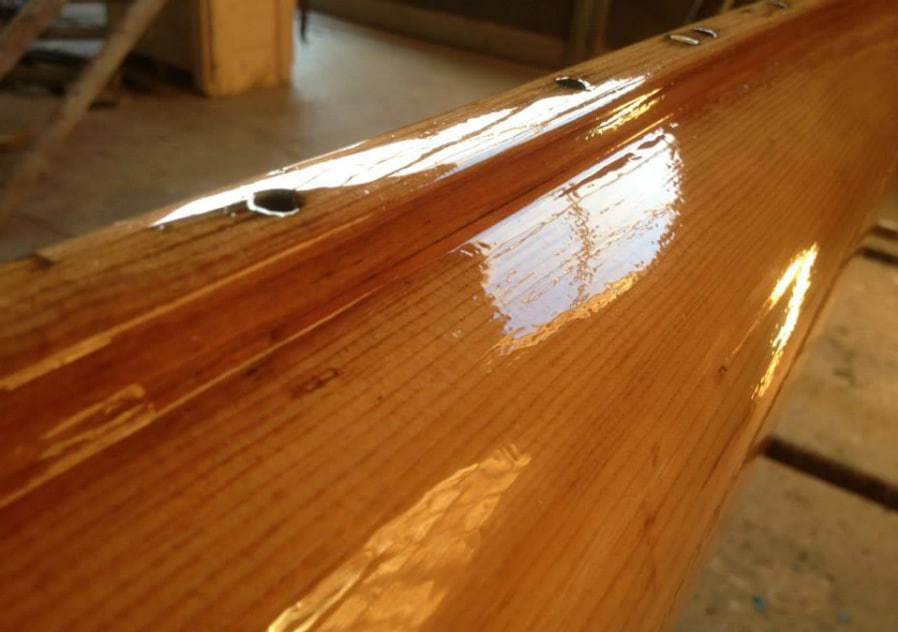
Examples of Furniture Epoxy Resin Applications
See close-ups and inspiring shots of wooden tables, restored chairs, and benches finished with high-quality epoxy resin. Notice the enhanced wood grain and mirror-like gloss achieved with the right technique and resin choice.

Step 1: Prepare the Surface
Proper preparation is essential for a successful epoxy resin application. Begin by cleaning your furniture thoroughly with a damp cloth to remove dust, oils, and any old finish. If necessary, use mild soap but ensure the surface is completely dry before proceeding. Sand the area carefully using medium then fine grit sandpaper to provide a smooth, keyable surface—the finer grit helps the resin bond securely.
Take care to wipe away all sanding residue and clean the workspace as well. Tape off any edges or areas you do not wish to coat with painters tape. Surface preparation determines success, so do not skip or rush this stage.
Step 2: Apply a Sealing Coat (Optional for Porous Woods)
For particularly porous or absorbent wood pieces, applying a thin sealing layer of resin can prevent bubbles and uneven absorption during your main pour. Mix a small amount of epoxy resin according to the manufacturer’s instructions, and brush or spread a light coat evenly over the surface.
If working on wood restoration or waterproofing, consider using “EpoxyWood” – Wood Restoration Epoxy Resin for Deep Penetration and Waterproofing, as it is specifically formulated for deep fibre penetration and a natural look. Allow the sealer to cure fully before continuing.
Step 3: Mix and Pour the Epoxy Resin
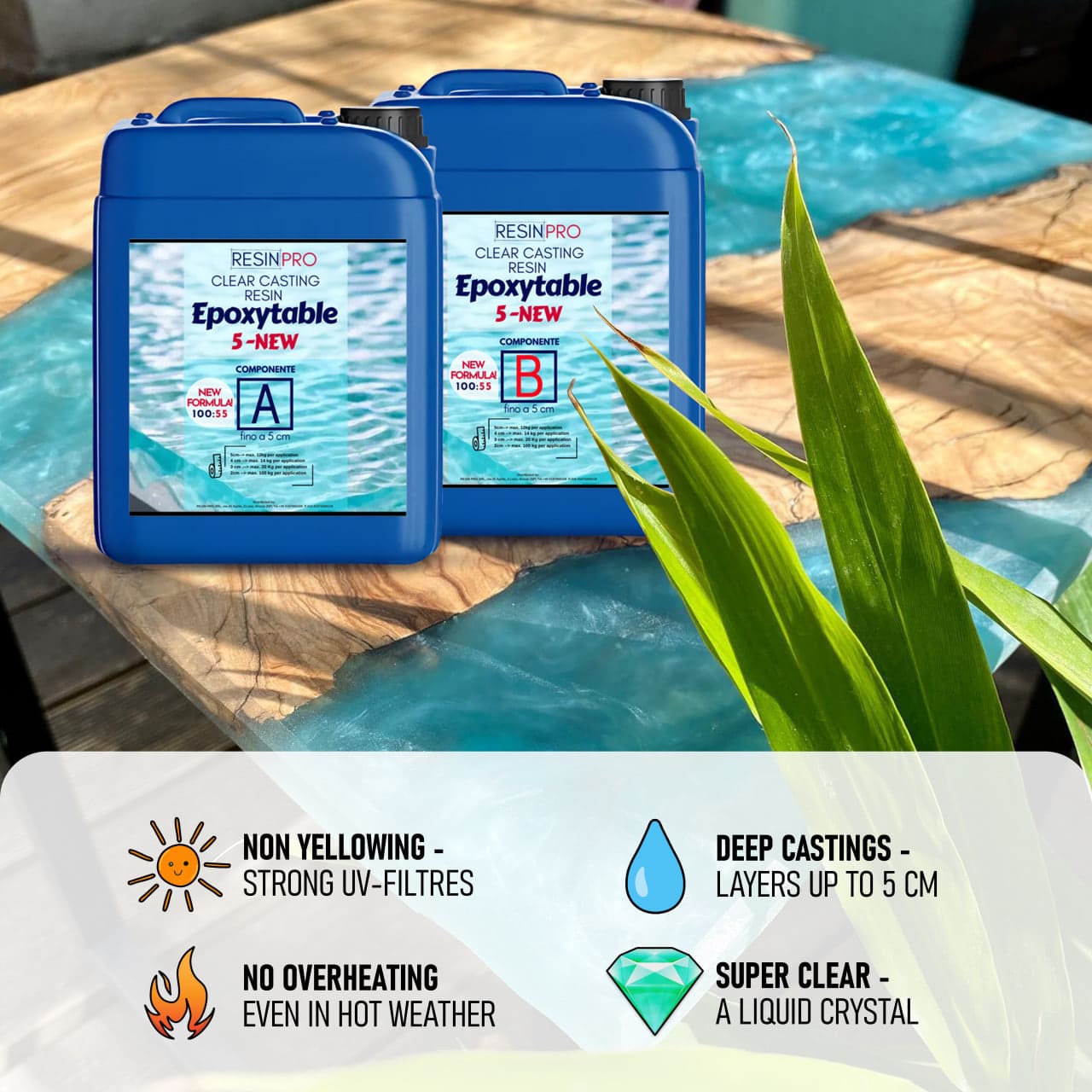
Next, prepare the main epoxy resin according to package instructions, typically by mixing the resin and hardener in a clean container for several minutes, taking care to scrape the sides and bottom. For most furniture work, a product like “EpoxyTable 5-Five” – Deep Pour Epoxy Resin for Tables and Large Projects – Up to 5cm is ideal for desktops, tables, and large surface coatings, offering a smooth, scratch-resistant finish.
Pour the mixture gently over your furniture, starting in the middle and working outwards. Use a spreader or brush to guide the resin and ensure even coverage. If needed, pop surface bubbles with a heat gun or blow torch, keeping the tool moving to avoid burns. For elaborate river-style tables or projects with edges, using a kit such as “River-Table” – Complete Kit for Creating Your First Epoxy Resin Table provides both materials and guidance.
Step 4: Curing and Finishing Touches
Allow the resin to cure in a dust-free, undisturbed space according to the product directions—usually between 24 and 72 hours. Some projects, particularly deep pours, may require multiple layers. For these, choose an appropriate resin such as “Epoxytable 10-Ten” – Deep Pour Epoxy Resin for Tables, Up to 10cm Casting.
Once fully hardened, remove any tape, and sand the surface again if a more matte or perfectly smooth finish is desired. Polish with a polishing kit or fine abrasive pads for a glass-like shine. Allow each coat to cure fully before further handling to prevent scratches and marks.

Tips and Common Pitfalls
Suitability and compatibility are key when choosing a resin for your project: Always select resin designed for the intended surface thickness and type. EpoxyWood works best for wood repair and waterproofing; EpoxyTable 5-Five for medium-depth tables; Epoxytable 10-Ten for deeper projects.
Always work in a well-ventilated space and wear protective gloves. Avoid over-mixing, which can introduce excessive air bubbles. Trapped debris and bubbles are top pitfalls to avoid, so cover curing pieces and never rush pouring. Small trial applications on scrap materials are highly recommended before tackling cherished furniture pieces.
Before and After Furniture Resin Projects
Explore transformations of furniture surfaces before and after epoxy resin application—highlighting improved durability, vibrant wood tones, and sleek, modern aesthetics. Let these real project images inspire your next renovation.
- "EpoxyWood" – Wood Restoration Epoxy Resin for Deep Penetration and WaterproofingOriginal price was: £64.00.£39.85Current price is: £39.85."EpoxyWood" is designed for wood restoration with a deep penetrating resin suitable for furniture within the theme of applying epoxy resin to…
- "EpoxyTable 5-Five" – Deep Pour Epoxy Resin for Tables and Large Projects – Up to 5cmPrice range: £16.85 through £1,099.85EpoxyTable 5-Five is suited for deep pours up to 5cm, ideal for furniture tabletops with a durable, scratch-resistant surface.
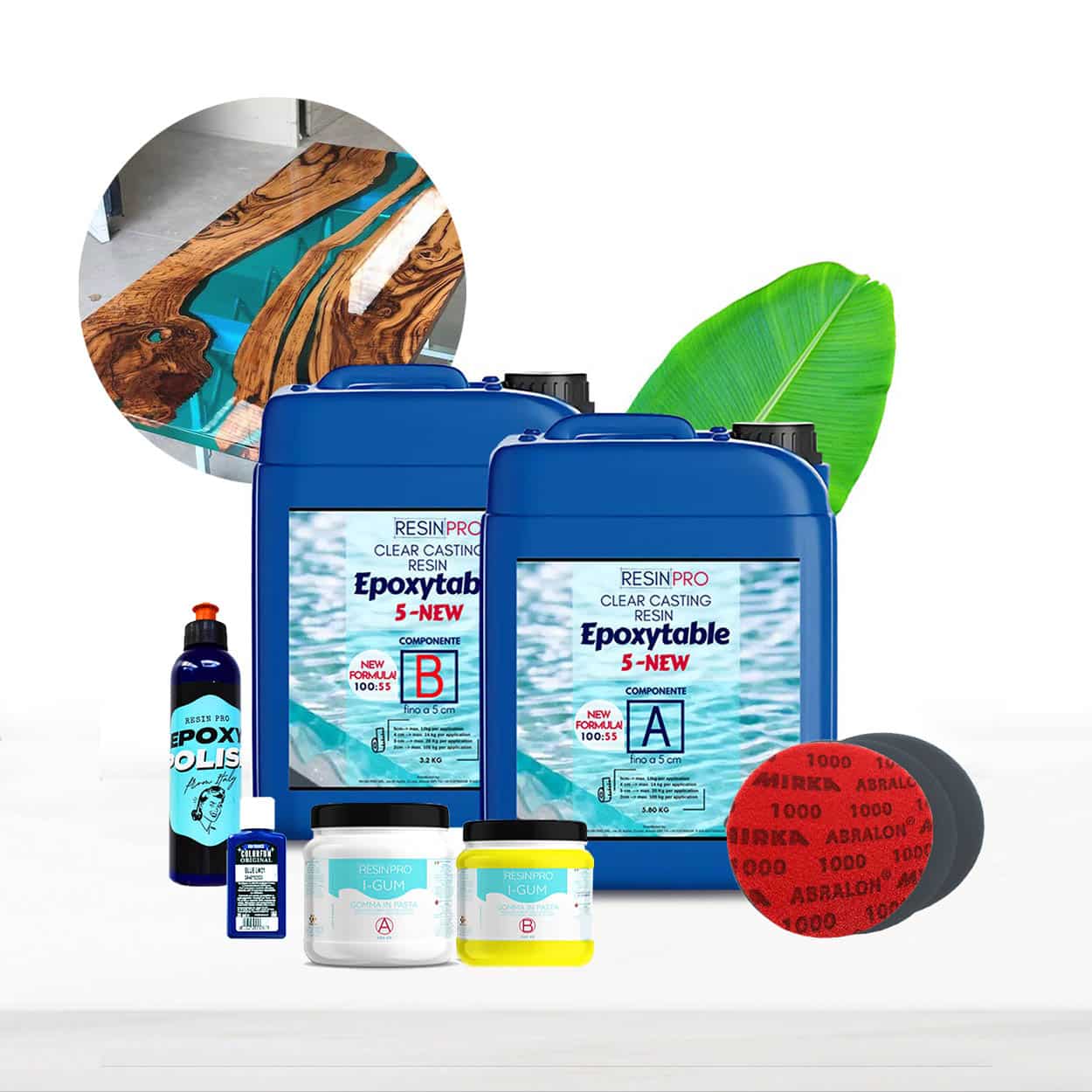 "River-Table" – Complete Kit for Creating Your First Epoxy Resin TablePrice range: £188.85 through £444.85"River-Table" kit includes resin, sealant, pigments, and polishing tools with instructions for creating resin-furniture projects.
 “Epoxytable 10-Ten” – Deep Pour Epoxy Resin for Tables, Up to 10cm CastingPrice range: £33.85 through £334.85“Epoxytable 10-Ten” is designed for deep casting up to 10cm with low viscosity and strong UV filters.
Frequently Asked Questions
Can you use epoxy resin on old wooden furniture?
Yes, but the furniture must be dry, clean, and free of old finish or oils for best adhesion and results.
How long does epoxy resin take to cure on furniture?
Most epoxy resins cure within 24-72 hours, depending on temperature, humidity, and layer thickness.
What if bubbles appear in the epoxy coating?
Use a heat gun or blow torch while the resin is still wet to carefully remove bubbles and achieve a clear finish.
Do I need to seal wood before applying epoxy resin?
Sealing is recommended for porous woods to prevent bubble formation and uneven absorption during resin application.
Can I apply a second coat of epoxy resin?
Yes, you can apply a second coat after the first has cured. Lightly sand the surface first for optimal bonding.
What is the best epoxy resin for furniture coating?
Choose a resin suitable for your desired finish and thickness—like EpoxyTable 5-Five for tabletops or EpoxyWood for restoration.