 Free shipping on orders over £29,85
  Shipping Tracking!


 Google
 Facebook
How do you install resin flooring?
A clear guide to creating durable, decorative resin floors

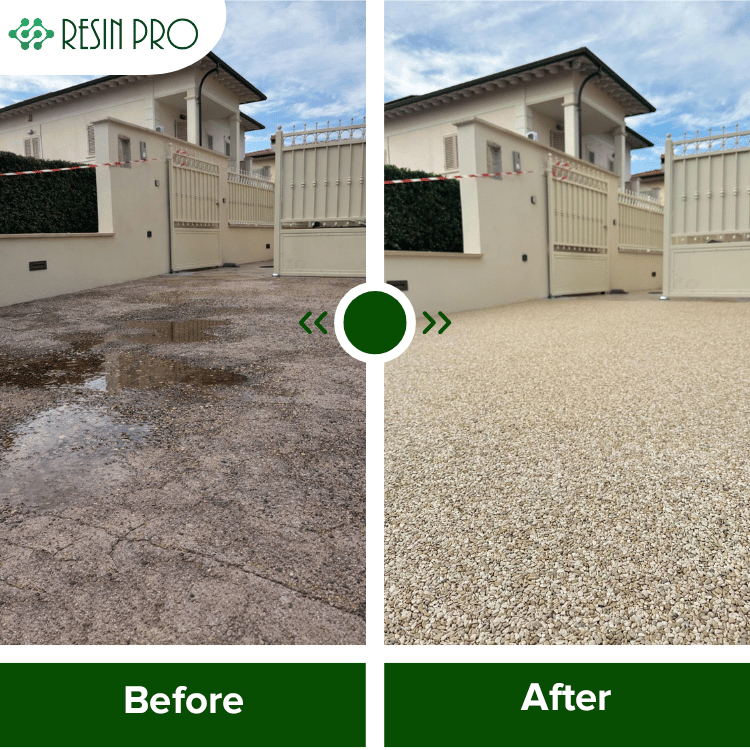
Installing resin flooring offers a resilient, attractive, and low-maintenance finish ideal for both outdoor and indoor areas. Whether you’re aiming to upgrade a driveway, patio, or footpath, this guide explains the essential steps for a professional-quality installation that stands up to the UK climate.
What You’ll Need
- “Epoxyprimer” – Universal Water-Based Two-Component Epoxy Floor Primer – for preparing concrete, tile, wood, or screed surfaces before applying resin.
- “Flowstone” – Complete Permeable Floor Kit with Pebbles and Resin – supplies the stone aggregate and appropriate binder for fully permeable outdoor floors.
- “Trasparente” – Epoxy Binder for Coloured Pebbles and Grits – use with warm or dark-coloured aggregates for decorative surfaces needing UV stability.
- “Polirock” – Polyurethane Binder for White Stones, 2kg Two-Component Kit – essential for outdoor white stone floors where a non-yellowing, clear finish is needed.
- Clean water and mild detergent for surface cleaning
- Protective gloves and mask
- Trowel or float for application
- Mixing container and spatula (cement mixer for larger surfaces)
- Masking tape for edge definition
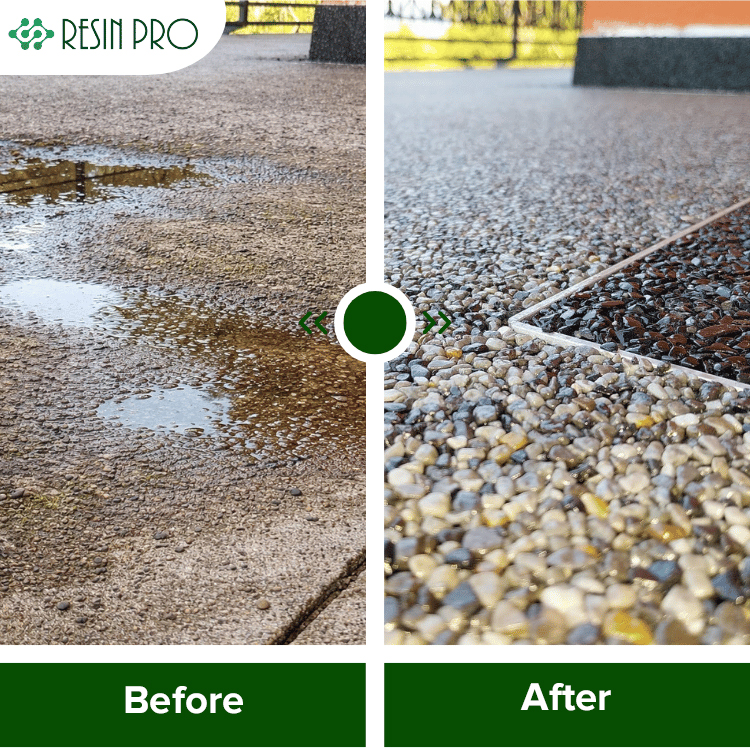
See Real Resin Flooring Installations
Browse project images to compare different resin floor finishes and aggregate types. Find inspiration for driveways, patios, and public spaces using our full kit solutions and binders.
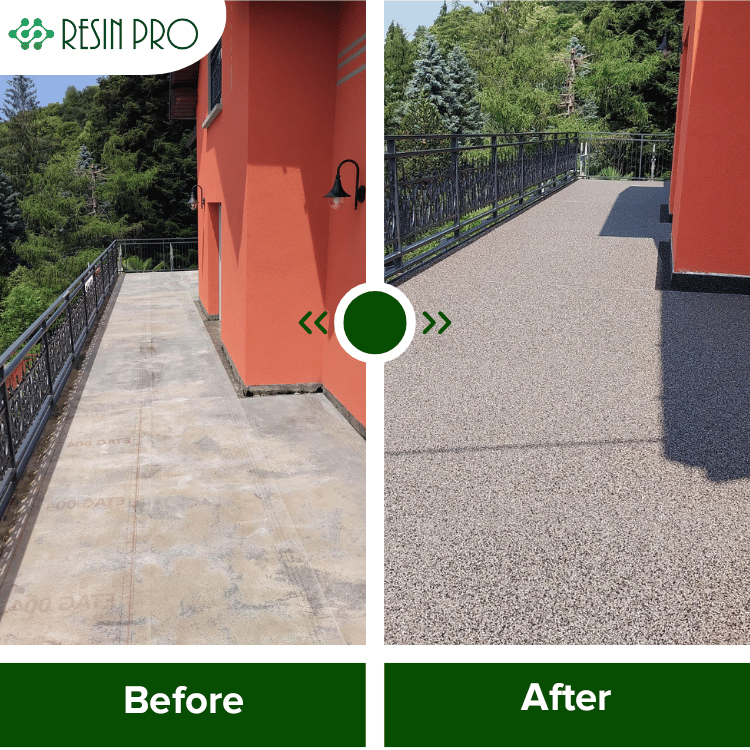
Step 1: Prepare the Substrate Thoroughly
Achieving a flawless resin finish starts with preparing the base. Remove dust, grease, moss, or any loose material from the area using a mild detergent and water, then allow it to dry completely. Rectify uneven patches or cracks with suitable filler, ensuring a level and stable surface throughout. For best results and reliable adhesion to concrete, screed, wood, or tiles, apply “Epoxyprimer” – Universal Water-Based Two-Component Epoxy Floor Primer according to the manufacturer’s instructions: roller, brush, or spatula can be used for even coverage. Give the primer 24–48 hours to fully cure before proceeding.
Step 2: Mask Surrounding Areas
Before resin application, use masking tape to protect adjacent surfaces such as walls, steps, or adjoining paving. Carefully define the intended floor shape and make sure there are clear boundaries, particularly for complex or irregular layouts. This step keeps your workspace tidy and your finished floor edges crisp.
Step 3: Mix Resin Binder with Aggregates
After the substrate is ready, combine your chosen aggregate (such as decorative pebbles or grits) with the appropriate resin binder in a clean container or cement mixer. Select your binder to match the colour of your stones for the best result. For coloured or dark aggregates, use “Trasparente” – Epoxy Binder for Coloured Pebbles and Grits. For white stones, select “Polirock” – Polyurethane Binder for White Stones, 2kg Two-Component Kit which ensures a non-yellowing, crystal-clear finish. Mix thoroughly until all stones are evenly coated and the mixture appears consistent and glossy, reducing air pockets and ensuring durability.

Step 4: Lay and Level the Resin Floor
Spread the resin-stone mixture evenly across the prepared and primed area using a trowel or float. Work methodically in sections to achieve a uniform layer thickness, generally around 2 cm for standard outdoor use. Press the mixture firmly, flattening the surface whilst maintaining the desired permeability for drainage. If you’re using the “Flowstone” – Complete Permeable Floor Kit with Pebbles and Resin, follow the kit instructions for proportions and working time, as its step-by-step guidance is designed to support both professionals and DIYers.
Once satisfied with the level and finish, remove masking tape before the resin cures to prevent tearing the clean edges. Allow the floor to cure as directed by the binder instructions – typically surfaces become walkable after 10 hours, with full curing after 24 hours.

Step 5: Curing and Initial Use
Avoid walking on or placing objects on the newly installed resin flooring until fully cured. Protect the surface from rain and excessive dust during this period if outdoors. Most systems are ready for light foot traffic after approximately 10 hours, but waiting a full day is recommended before heavier use. For areas subject to vehicle traffic, allow additional curing time according to the binder’s guidelines.
Tips and Common Mistakes When Installing Resin Flooring
Correct surface preparation ensures maximum adhesion and longevity. Skipping proper base cleaning or priming can lead to delamination or poor finish. Layer thickness and aggregate mixing make a difference. Consistency in mixing and spreading prevents weak spots and uneven surfaces. Always use appropriate primers to avoid delamination. Glazed, damp, or contaminated substrates can compromise the entire system. Choose the correct binder for your chosen aggregate type. Using the wrong binder may result in yellowing or a lack of durability, especially with white aggregates. Curing time impacts when your floor is walkable. Rushing to use the floor before complete curing can permanently damage the finish.
Video: Key Techniques for Durable Resin Floors
Watch expert demonstrations of surface preparation, resin mixing, and finishing for long-lasting decorative floors. See how correct binder and aggregate choices prevent common issues.
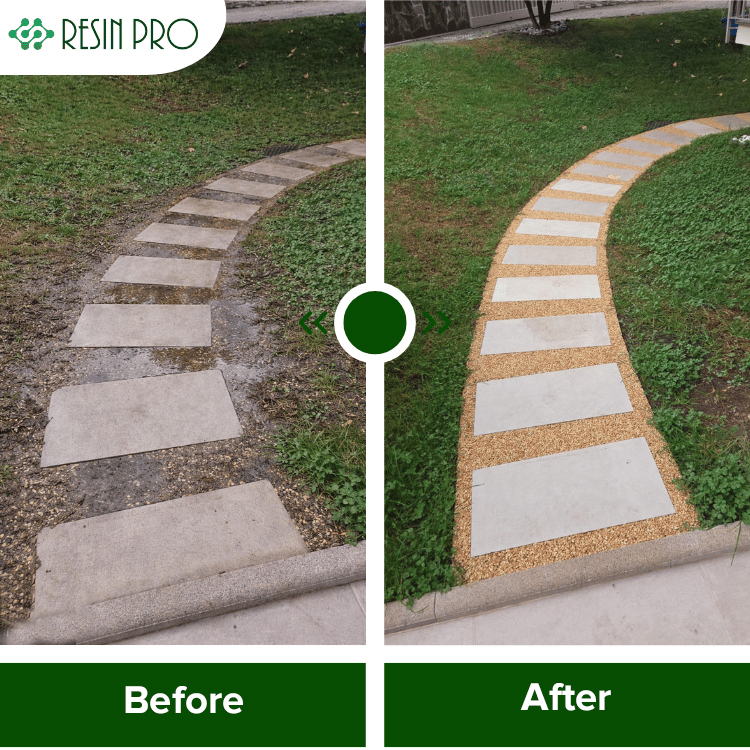
- "Flowstone" – Complete Permeable Floor Kit with Pebbles and ResinPrice range: £42.85 through £3,389.85Flowstone is a permeable pebble and resin kit designed for durable outdoor surfaces like driveways and patios with step-by-step guidance.
- "Epoxyprimer" – Universal Water-Based Two-Component Epoxy Floor PrimerPrice range: £148.84 through £272.45Epoxyprimer is a water-based epoxy floor primer designed for reliable adhesion and compatibility with various surfaces.
 "Trasparente" – Epoxy Binder for Coloured Pebbles and GritsPrice range: £31.85 through £948.85A transparent epoxy binder designed for coloured pebbles and grits, supporting clear, UV-stable resin flooring installations.
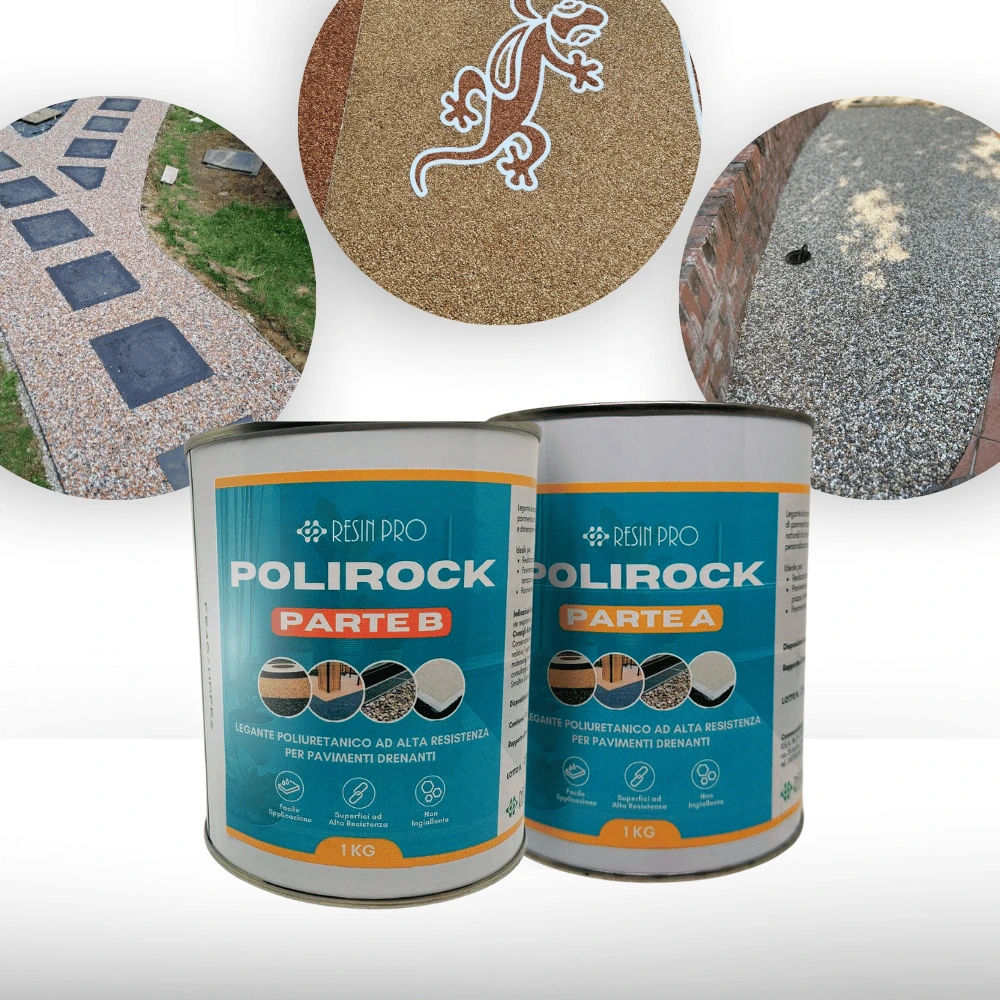 "Polirock" – Polyurethane Binder for White Stones, 2kg Two-Component Kit£58.85Polirock is a two-component polyurethane binder designed for durable and weather-resistant decorative outdoor stone surfaces.
Frequently Asked Questions
Can I install resin flooring myself outdoors?
Yes, many resin flooring kits are designed for DIY use with clear step-by-step instructions. Professional results are achievable if the substrate is properly prepared.
What is the best binder for white or coloured stone aggregates?
Use a polyurethane binder for white stones to ensure clarity and non-yellowing. Epoxy binder is suitable for coloured stones needing UV resistance.
How long does resin flooring need to cure?
Most resin flooring systems are walkable after around 10 hours and fully cured in 24 to 48 hours, but always follow the manufacturer's instructions for best results.
What surfaces can be covered with resin flooring?
Resin flooring can be installed on concrete, screed, tiles, and timber provided the surface is stable, clean, and primed with a suitable product.
Is resin flooring slip-resistant for outdoors?
When applied correctly with the right aggregate and binder, resin flooring offers a permeable, anti-slip surface suitable for pedestrian and vehicle traffic.
What weather conditions are best for applying resin floors?
Resin should be installed in mild, dry weather. Avoid very low or high temperatures and high humidity for optimal curing and adhesion.
Do I need to prime the surface before using a pebble resin system?
Yes, using a primer like a universal water-based epoxy improves bonding and prevents delamination, especially on porous or dusty surfaces.