 Free shipping on orders over £29,85
  Shipping Tracking!


 Google
 Facebook
How to make a table with resin
Making a table with resin opens up endless opportunities for creativity and bespoke design. Whether you are drawn to river tables or want a truly unique surface, this guide will walk you through the process. You will learn the essential steps, what to look out for, and how to get a flawless result suitable for both beginners and those looking to improve their technique.
Step-by-step guide for stunning wood and resin tables
What You’ll Need
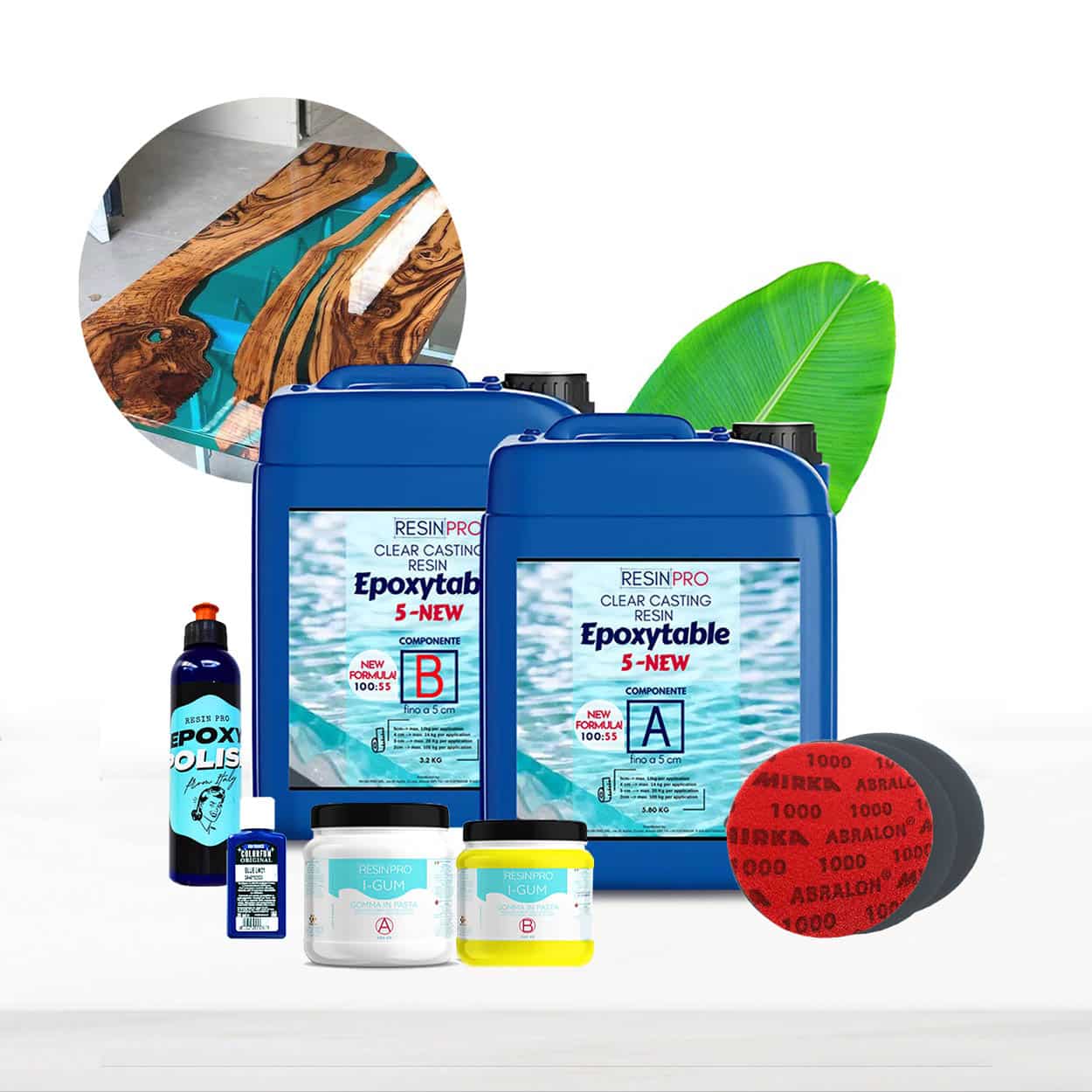
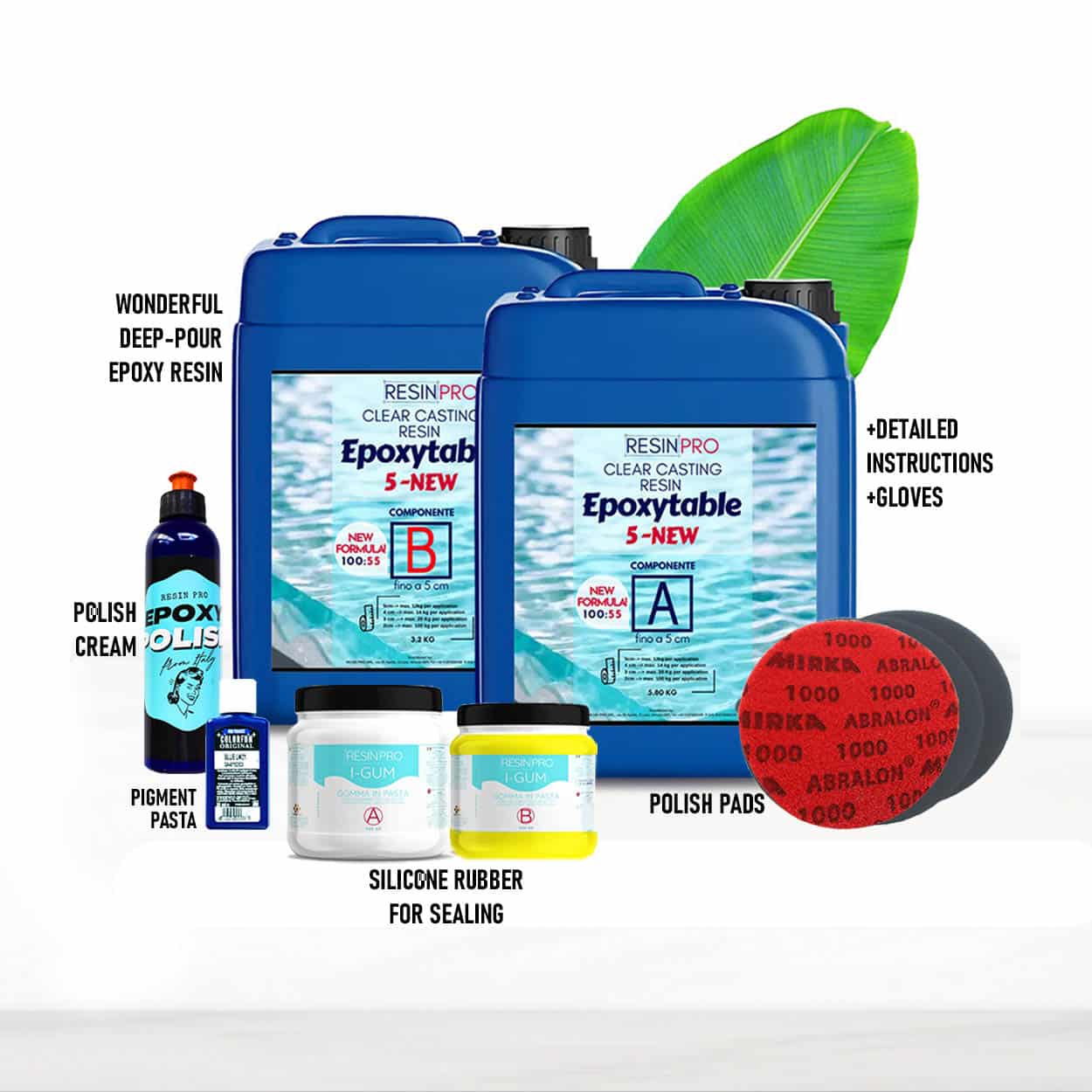
- “River-Table” – Complete Kit for Creating Your First Epoxy Resin Table: A comprehensive set for small to medium wood-resin tables
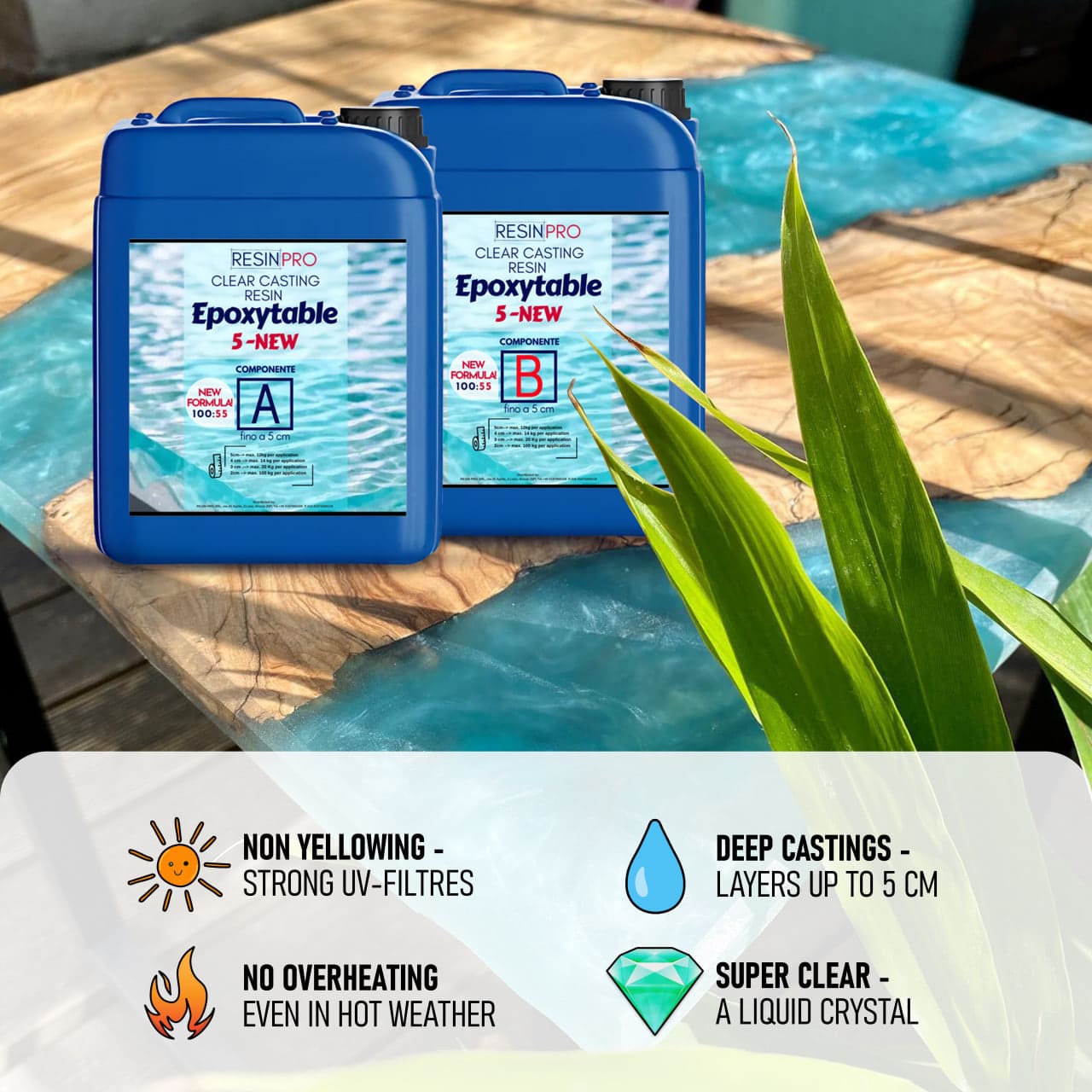
- “EpoxyTable 5-Five” – Deep Pour Epoxy Resin for Tables and Large Projects – Up to 5cm: For thicker pours or larger projects
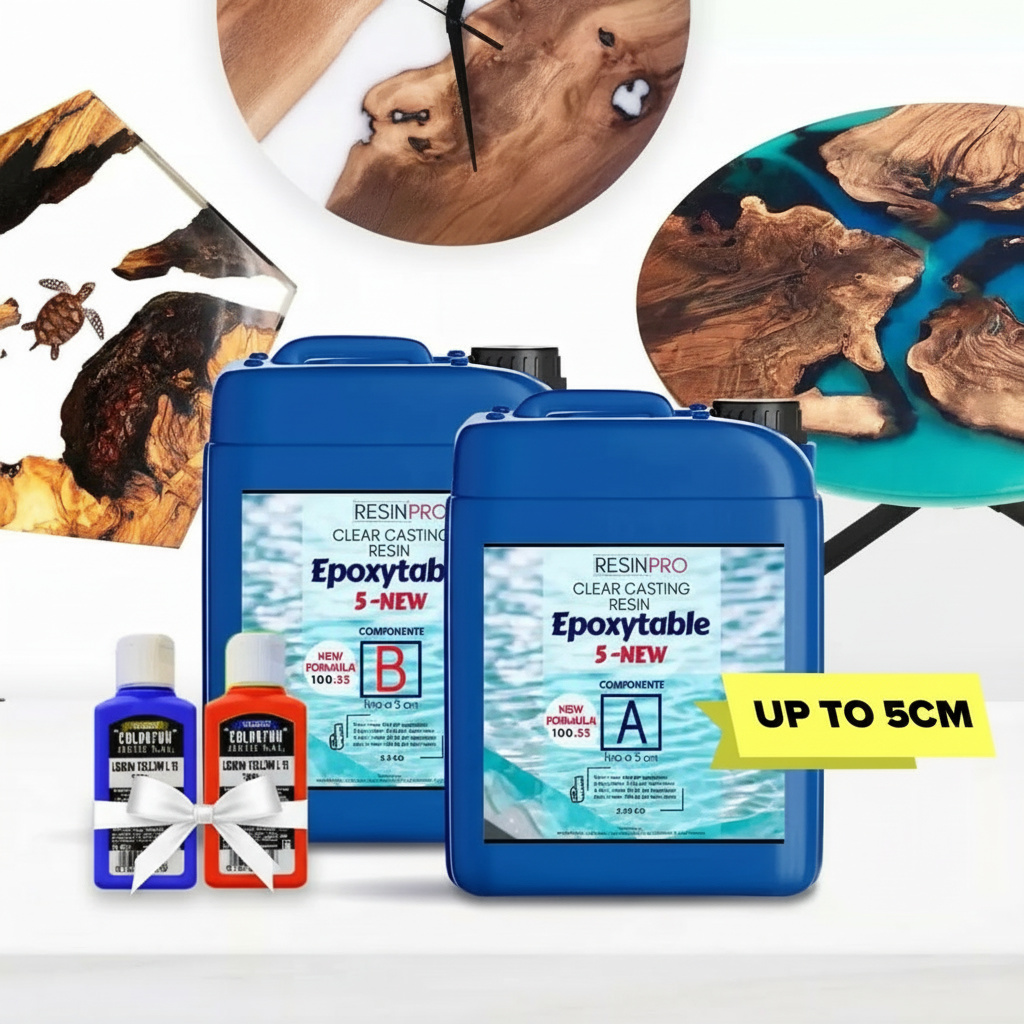
- “Epoxytable 10-Ten” – Deep Pour Epoxy Resin for Tables, Up to 10cm Casting: Ideal for deep pour tabletops and river tables
- MDF Board Base for Epoxy Resin Table and Art Projects: Stable base for your resin creations
- Wood slabs (well dried)
- Protective gloves, goggles, mask
- Mixing buckets, stirring sticks, silicone sealant (if not included in your kit)
- Release film or tape
- Polishing and sanding kit

Essential Preparation for Resin Table Projects
Taking the time to prepare your workspace and materials is key to achieving a professional resin finish. Lay out protective sheeting, ensure good lighting, and assemble all your tools before beginning. Dedicating care at this stage reduces the risk of mistakes later in your project.
Step 1: Prepare Your Workspace and Materials
Choose a well-ventilated, dust-free area and wear appropriate protective gear. Resin is best handled in clean, dry conditions to avoid any contamination or moisture trapped in the cast. Set up a sturdy worktable, and ensure you are using a flat, level surface to keep resin from pooling unevenly.
Measure your working materials and check that your wood slabs are fully dried. Moisture in the wood can cause clouding or improper curing. Gather all tools and lay out everything you need before mixing your resin.
For beginners, the “River-Table” – Complete Kit for Creating Your First Epoxy Resin Table provides all basics including resin, pigments, and sealants.
Step 2: Build the Mould or Prepare the Table Base
Accurately measure and prepare your MDF base or mould to match your design. Use a MDF Board Base for Epoxy Resin Table and Art Projects for a reliable, flat surface. Apply release film or specialist tape to prevent resin adhesion, and use silicone sealant to ensure your mould is leak-proof.
Position your wooden slabs within the mould, securing them so they do not shift when resin is poured. Consider clamping or weighting them if needed. Check all corners and edges for gaps and seal as required.
Step 3: Mix and Pour the Resin
Mix your resin components slowly to avoid air bubbles. Carefully follow the resin instructions for your chosen product—whether it is the “EpoxyTable 5-Five” for deep pours or “Epoxytable 10-Ten” for ultra-thick castings. Ensure you mix by volume or weight exactly as specified, scraping the sides and bottom as you stir. Improper mixing can lead to soft spots or incomplete cures.
If adding pigments, incorporate them fully before pouring. Pour the resin gently, starting from one end, and let it flow naturally around and into any gaps. For tables requiring multiple layers or deep pours, allow each layer to partially cure before adding the next to avoid excess heat buildup. Use a heat gun or torch lightly to remove surface bubbles as they rise.

Step 4: Curing and Demoulding
Leave the resin to cure in a temperature-stable environment, away from dust and vibration. Depending on product and thickness, curing might take 24–72 hours. Avoid moving the table during this period. Once cured, carefully remove the sides of your mould. Use a plastic wedge or soft mallet if needed to gently separate the table top from the base.
Allow each layer to fully cure before proceeding to sanding, finishing or demoulding. Premature demoulding could distort your table shape or damage the glossy surface.
Step 5: Sanding and Finishing the Resin Table
Sand sharp edges and any uneven areas starting with a coarse grit before moving to finer grades. Work carefully around the wood-resin junction to keep transitions smooth. For the final finish, polish using a specialist cream and buffing pads for a glossy or satin sheen, according to your preference.
Resin polishes bring out depth and clarity. Dust with a tack cloth between sandings for best results. Fit your finished top to table legs or a support frame and your custom resin table is ready for use.
Tips and Common Mistakes
Visualise your final piece and decide on wood position and resin colour before you start. Experiment with offcuts and pigments if you are unsure of the resin tone. Work steadily; rushing can introduce imperfections or affect curing.
Common mistakes include underestimating resin volume, unsealed moulds causing leaks, or cutting corners when mixing. Always follow each product’s timings, and remember that temperature and humidity can dramatically affect curing. If issues arise, you can sand out small blemishes and re-coat as needed.
Quick Troubleshooting Reference for Resin Tables
If your resin table displays cloudy spots, sticky areas, or trapped bubbles: Usually these are traced back to moisture, incomplete mixing, or excess heat during pouring. Sanding and polishing can often rescue a flawed surface. Always review instructions for curing times, and don’t hesitate to repeat finishing steps for the best result.

- "River-Table" – Complete Kit for Creating Your First Epoxy Resin TablePrice range: £188.85 through £444.85"River-Table" kit provides materials and instructions suitable for beginners making wood and resin tables.
- "EpoxyTable 5-Five" – Deep Pour Epoxy Resin for Tables and Large Projects – Up to 5cmPrice range: £16.85 through £1,099.85"EpoxyTable 5-Five" resin is a deep pour epoxy designed for tables and large projects, suitable for casting up to 5cm thickness.
 “Epoxytable 10-Ten” – Deep Pour Epoxy Resin for Tables, Up to 10cm CastingPrice range: £33.85 through £334.85“Epoxytable 10-Ten” is an epoxy resin designed for creating tables with castings up to 10cm, offering low viscosity and UV resistance.
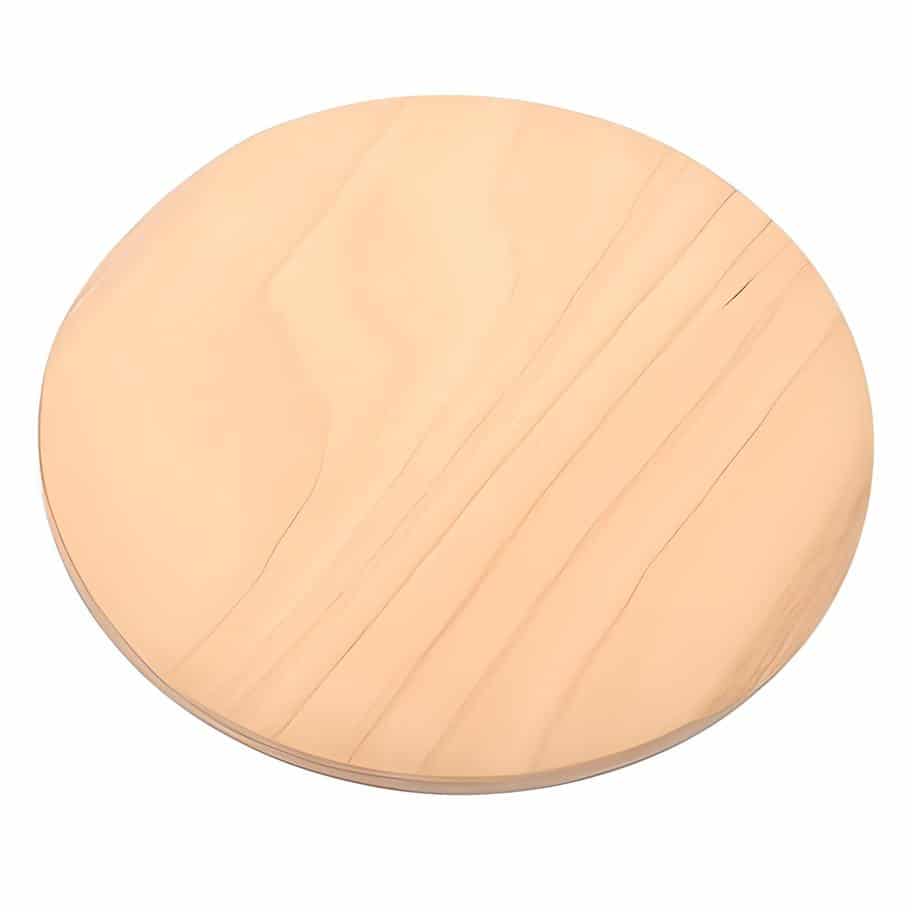 MDF Board Base for Epoxy Resin Table and Art ProjectsOriginal price was: £25.00.£17.85Current price is: £17.85.A sturdy MDF base designed for various resin techniques, suitable for artists and beginners working on resin tables and art.
Frequently Asked Questions
What is the best resin and pour thickness when making tables?
Choose a resin suited for your desired depth. For pours up to 5cm use EpoxyTable 5-Five, and for up to 10cm, select Epoxytable 10-Ten.
Do I need a special sealant for my table mould?
Yes, use a silicone sealant or release tape to ensure your mould is leak-proof and to ease demoulding after curing.
Can beginners make a resin river table successfully?
Absolutely. Using a complete kit with detailed instructions makes the process easier and boosts confidence for first-time makers.
How long does a resin table take to cure?
Curing time varies by resin and thickness, but expect 24–72 hours in typical conditions. Always consult the product’s instructions.
What are common mistakes with resin table projects?
Most mistakes come from poor measuring, improper mixing, or rushing the curing process. Pay attention to instructions and timing for best results.
Is it safe to use resin at home?
Yes, when used with correct personal protective equipment and good ventilation. Avoid ingestion or skin contact and work away from children and pets.