 Free shipping on orders over £29,85
  Shipping Tracking!


 Google
 Facebook
How to make tables with resin
Create stunning resin and wood tables with this step-by-step guide.
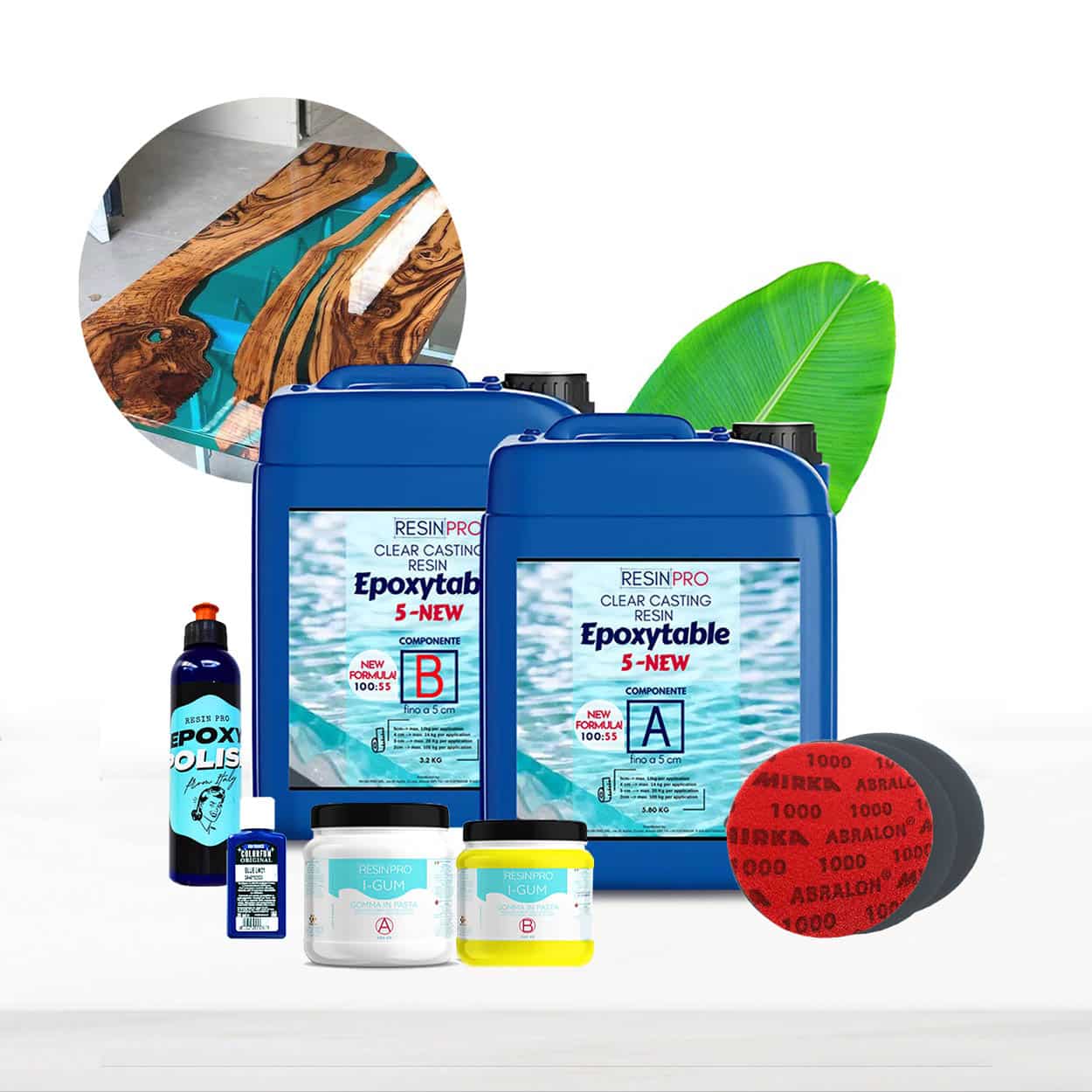
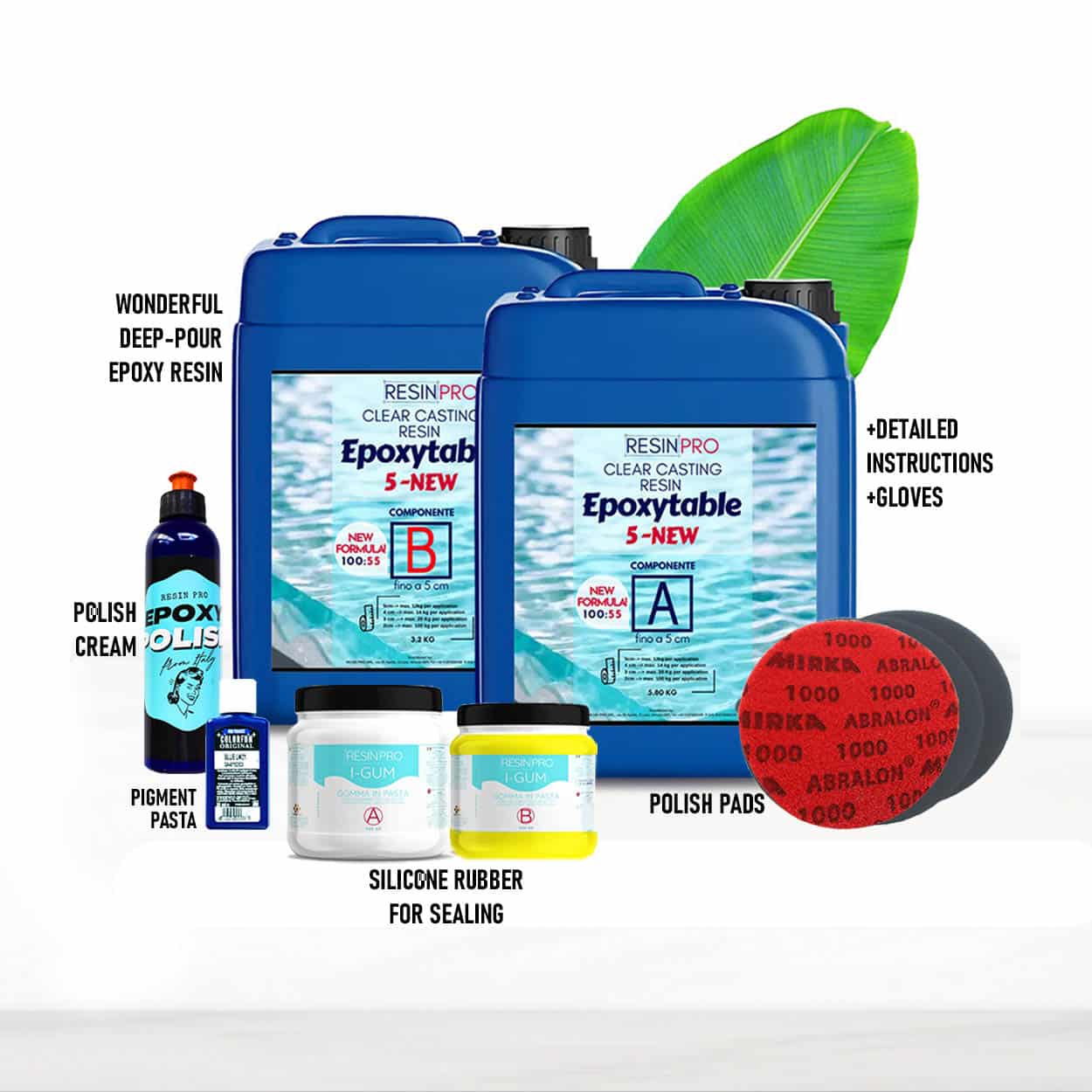
Making a table with resin is an exciting way to bring together beautiful wood and crystal-clear epoxy for a modern, unique centerpiece. Whether you want to craft a stylish river table or a bold custom piece, this recipe-style guide will walk you through each stage. You’ll learn the practical techniques needed for a flawless result—perfect for both hobbyists and beginners.
What You’ll Need
- “River-Table” – Complete Kit for Creating Your First Epoxy Resin Table: A complete starter set with resin, pigments, tools, and instructions for straightforward table projects.
- “EpoxyTable 5-Five” – Deep Pour Epoxy Resin for Tables and Large Projects – Up to 5cm: Ideal for pouring single layers of resin up to 5 cm thick, offering clarity and UV resistance.
- “Epoxytable 10-Ten” – Deep Pour Epoxy Resin for Tables, Up to 10cm Casting: For projects requiring heavier pours, perfect for deeper river tables or striking effects.
- “Geode O” – Large Wooden Board Table Base for Epoxy Resin Projects – 90x60cm or 120x80cm: A robust, ready-to-use wooden base for your work.
- Formwork materials (e.g., melamine boards, silicone sealant)
- Mixing containers and stirrers
- Protective gloves and safety eyewear
- Sanding and polishing materials

Essential Tools and Workspace for Resin Table Making
Ensure your workspace is clean, dust-free, and well-ventilated before starting your resin table project. Invest in a sturdy workbench, mixing tools, and quality protective gear to create a safe environment where you can focus on creativity without distractions.
Step 1: Plan Your Design and Choose Materials
Begin by sketching your intended table design. Decide on the size, shape, and style—such as a classic river table, incorporating wood and resin as the focal point. Carefully select a wooden base that matches your vision and fits the dimensions of your planned table. Sourcing stable, dried timber is vital to reduce any movement or warping during the resin process.
Consider the depth and complexity of your resin features. For projects up to 5 cm deep, opt for a suitable deep pour resin—if your table will be thicker, you may need an epoxy resin formulated for 10 cm casting. Think about pigment colours and special effects you want to include to make your table truly stand out.
Step 2: Prepare the Wooden Base Carefully
Thorough surface preparation yields a better bond and appearance. Start by sanding the wood to eliminate rough areas and debris. Clean off all dust with a tack cloth; a smooth, dust-free surface is essential for a bubble-free finish. Seal any cracks or knots in the wood using a resin-compatible sealer if needed, allowing the surface to dry thoroughly.
If you are working with a pre-cut or artistic base, like the “Geode O” – Large Wooden Board Table Base for Epoxy Resin Projects – 90x60cm or 120x80cm, ensure it is clean, level, and correctly supported prior to setting up the formwork.
Step 3: Construct and Seal Your Formwork
Build a leak-proof mould around your wooden base using melamine or a similar material. Secure all seams with strong adhesive tape and reinforce with silicone sealant to guard against resin leaks. The formwork must be fully level, as any unevenness will affect how your resin sets. Double-check all corners and joints, applying extra sealant where needed so that no resin escapes once the pour begins.
It’s worth using dedicated silicone sealant or release film, as included in the “River-Table” – Complete Kit for Creating Your First Epoxy Resin Table, to simplify demoulding and get clean project edges.

Step 4: Mix and Pour the Resin Accurately
Wear gloves and safety eyewear before starting. Precisely weigh the resin and hardener following the manufacturer’s instructions. Ensure your workspace is dust-free and at a stable temperature, ideally between 20-25°C for optimal curing. Mix slowly to minimise bubbles and add pigments if desired, stirring thoroughly for even colour.
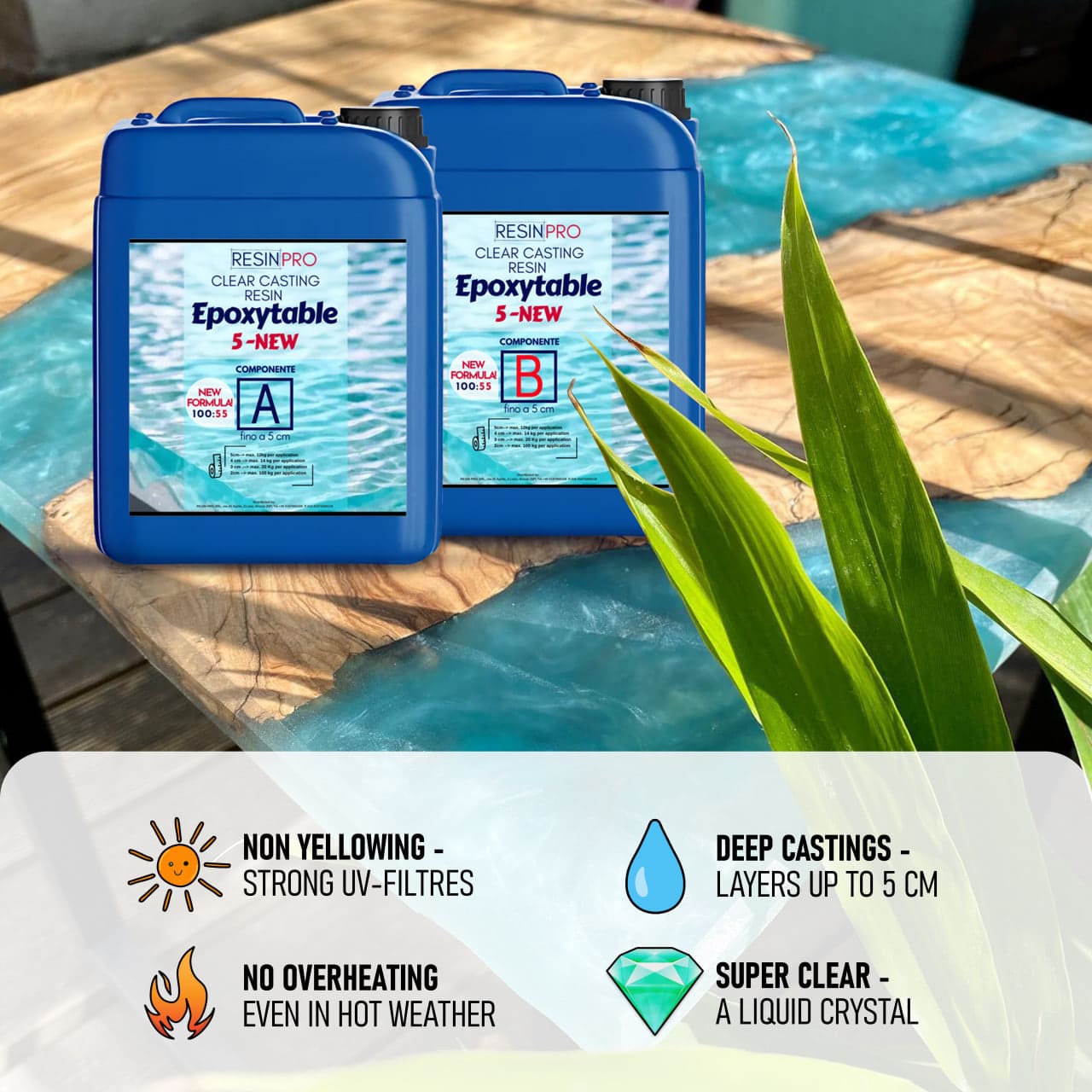
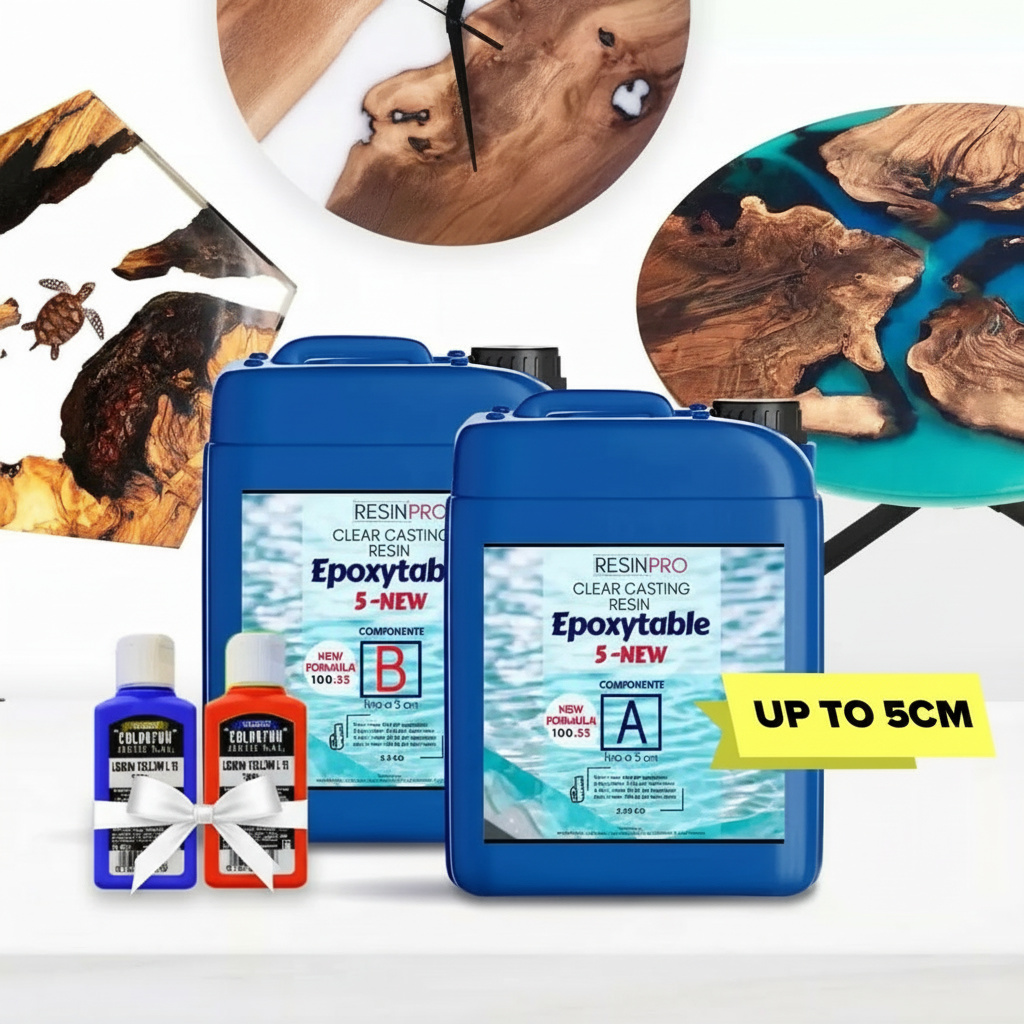
For tables up to 5 cm thick, “EpoxyTable 5-Five” – Deep Pour Epoxy Resin for Tables and Large Projects – Up to 5cm is engineered to resist yellowing and dissipate heat during thicker pours. If your project requires an even deeper cast, consider the “Epoxytable 10-Ten” – Deep Pour Epoxy Resin for Tables, Up to 10cm Casting. Pour the resin slowly, filling in layers if necessary to maintain clarity and control exothermic reaction. Use a heat gun or torch to remove surface bubbles shortly after pouring.
Step 5: Finish, Cure, and Polish for a Professional Result
Allow the resin to cure fully—this may take several days depending on the depth and type of epoxy. Avoid moving or touching the table during this time. Once cured, carefully demould and inspect the table. Sand any sharp edges, and proceed through finer grits for a smooth, even surface.
Polish the tabletop for a glass-like shine using suitable compounds and pads. Most kits, such as the “River-Table” – Complete Kit for Creating Your First Epoxy Resin Table, include everything you’ll need for the final finish, ensuring your creation stands out in any room.
Tips, Common Mistakes and Troubleshooting
Always measure resin and hardener by weight, not volume, to ensure proper curing. Avoid pouring too thick at once unless your resin is specially formulated for deep casts. Maintain a stable temperature throughout curing to prevent cloudy or tacky results. Mask the work area to minimise dust and drips, and plan your project timeline so you are not tempted to rush between layers or after pouring.
If bubbles persist or the resin remains sticky, allow for extra curing time or consider a thin final coat after sanding. Patience and careful preparation pay off in the finished result.
Finishing Touches: Getting the Perfect Tabletop Shine
Use progressively finer abrasives and a dedicated polishing compound for best results. A well-polished resin surface transforms your table from homemade to professional quality, ensuring a stunning centrepiece that lasts for years.

- "River-Table" – Complete Kit for Creating Your First Epoxy Resin TablePrice range: £188.85 through £444.85"River-Table" kit provides materials and instructions for creating wood and resin tables, supporting beginners in home crafting.
- "EpoxyTable 5-Five" – Deep Pour Epoxy Resin for Tables and Large Projects – Up to 5cmPrice range: £16.85 through £1,099.85EpoxyTable 5-Five is designed for deep pouring tables and large projects up to 5cm thickness, providing clear, bubble-free resin with UV resistance.
 “Epoxytable 10-Ten” – Deep Pour Epoxy Resin for Tables, Up to 10cm CastingPrice range: £33.85 through £334.85“Epoxytable 10-Ten” is designed for creating tables with resin, suitable for casting up to 10cm depth, matching the How to make tables with resin…
 "Geode O" – Large Wooden Board Table Base for Epoxy Resin Projects – 90x60cm or 120x80cmWooden table base designed for epoxy resin projects, suitable for various creative uses in resin table making.
Frequently Asked Questions
Which type of resin should I use for river tables or deep pours?
Use a deep pour epoxy resin designed for your required depth, such as a 5cm or 10cm product, for best clarity and safety.
How do I properly prepare my wood before pouring resin?
Sand the wood thoroughly and ensure it is completely clean and dry. Seal cracks or knots for optimal bonding.
How do I avoid or remove bubbles from the resin?
Mix slowly to reduce bubbles, pour in layers if needed, and use a heat gun or torch on the surface after pouring.
What’s the safest way to demould my resin table after curing?
Ensure the resin is fully cured before carefully removing from the formwork. Use release agents or films to prevent sticking.
How do I achieve a professional gloss finish on my resin table?
Sand through increasingly fine grades and use a polishing compound suitable for epoxy surfaces to achieve a glass-like shine.
What should I do if my resin is still sticky or soft after curing?
Allow additional curing time, check the mix ratio, and avoid disturbing the project during the initial hardening phase.