 Free shipping on orders over £29,85
  Shipping Tracking!


 Google
 Facebook
Where to buy silicone rubber moulds?
Explore options for detailed and durable silicone mould making.
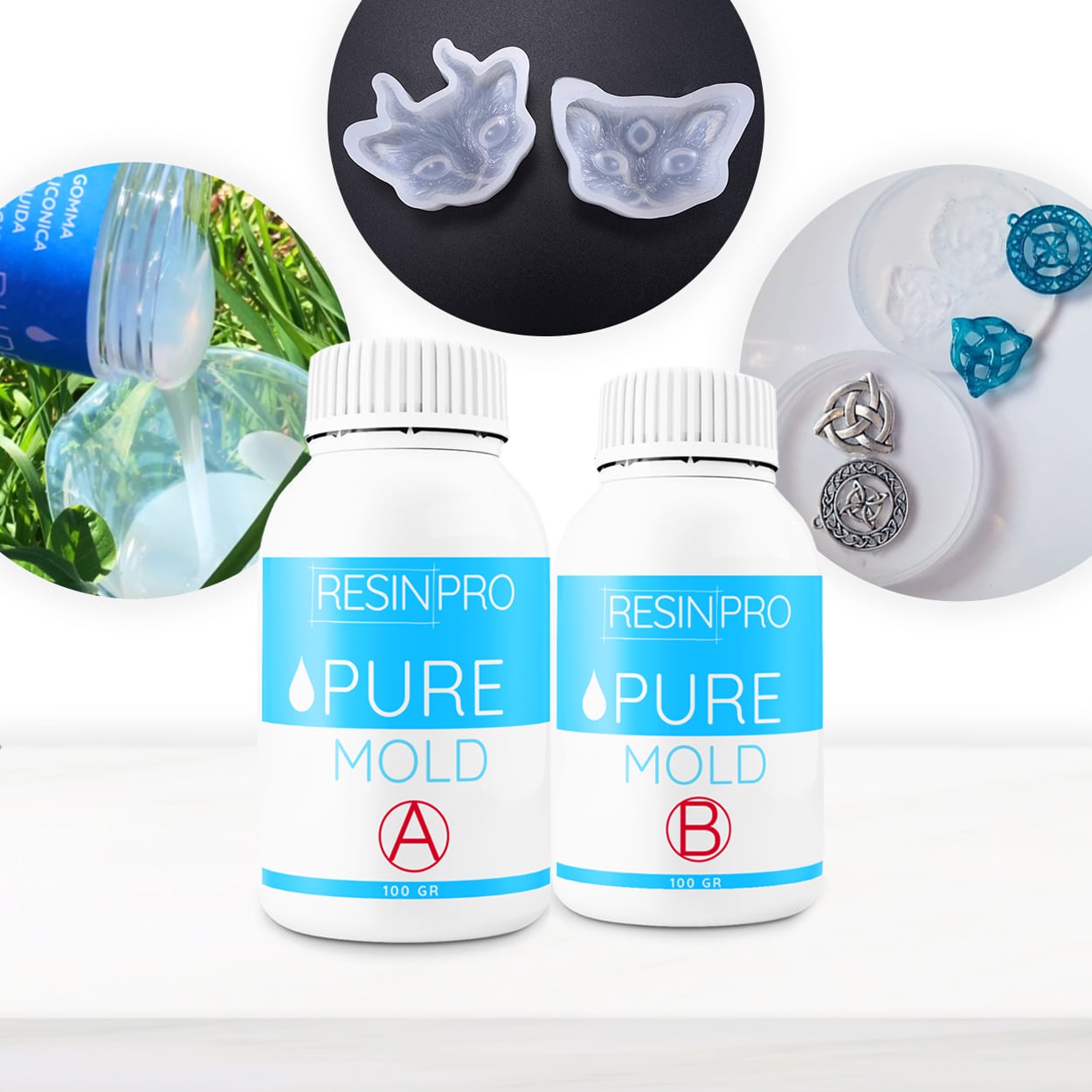

If you are searching for reliable places to buy silicone rubber moulds for your next resin, plaster, or wax project, this guide will help you choose the right option. Whether you are a professional crafter or just starting with mould making, understanding the different types of silicone rubber available and what sets them apart will ensure you achieve precise and long-lasting results for any creative or industrial use.
Silicone Rubber Moulds: Comparison and Key Features
Silicone rubber moulds are a cornerstone in crafts, prototyping, and industrial casting. The major factors to consider when choosing the right mould material include flexibility, detail reproduction, safety, curing time, and compatibility with your casting medium. You’ll find liquid silicones for complex, high-detail shapes, and silicone putties for quick, hand-moulded forms. Some options specialise in fast curing or toxin-free handling, while others excel at minimising shrinkage. Comparing features across the available range helps you pick the optimal match for your specific project or material needs.
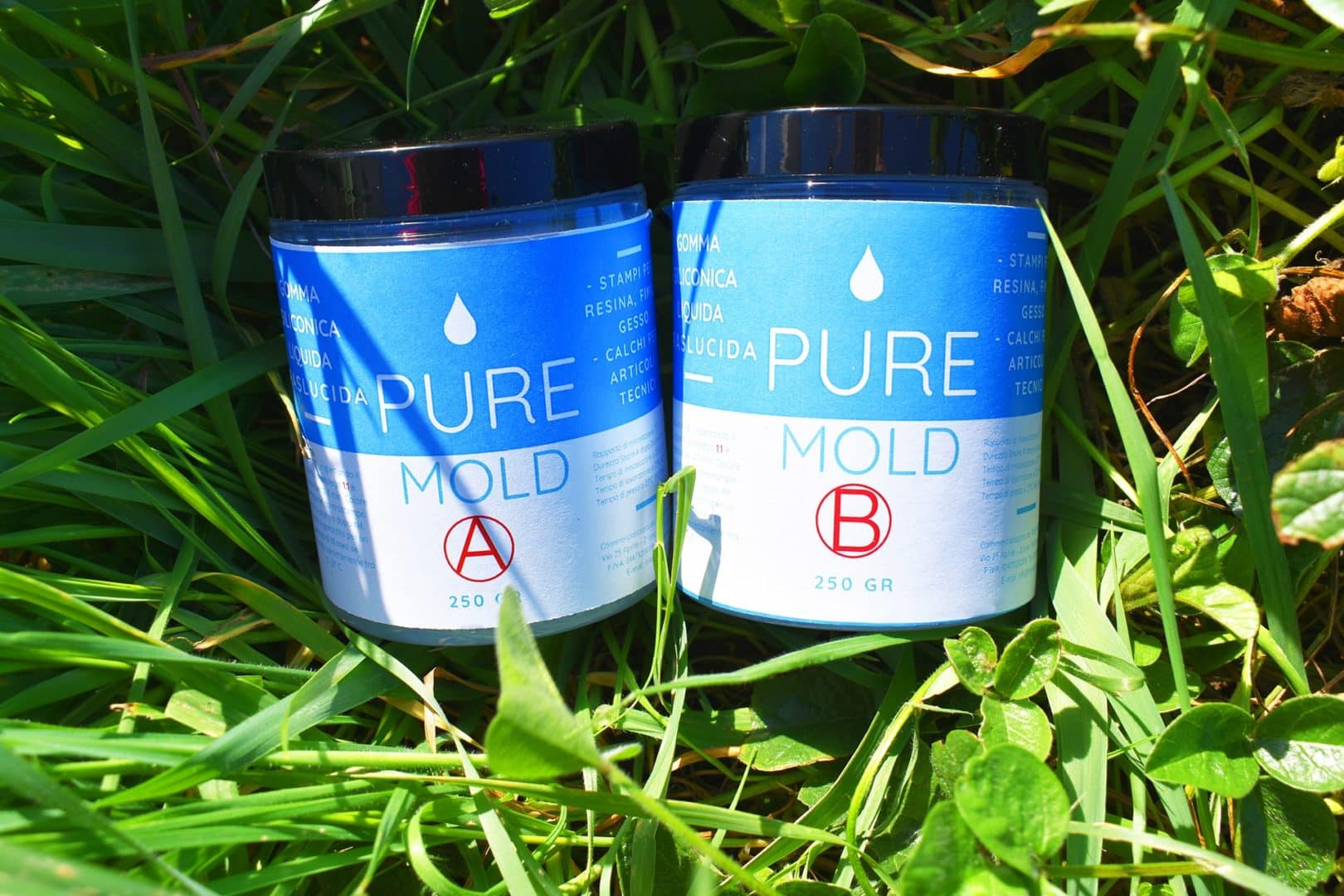
Visual Guide: Types of Silicone Rubbers
Compare visual properties of translucent, liquid and putty-type silicone rubbers to quickly assess which is most suited for your project. Notice the key differences in clarity, flexibility and workflow between “Pure Mould”, “I–Gum”, and “Liquid Mould” silicones.
“Pure Mould” – Translucent Liquid Silicone Rubber for Mould Making
“Pure Mould” – Translucent Liquid Silicone Rubber for Mould Making stands out for those needing a platinum-based, translucent and fast-curing silicone. Ideal for detailed casts in resin, plaster, cement and even candle wax, it offers a straightforward 1:1 mixing ratio with a swift curing time of 3–8 hours. Its clear quality allows you to monitor the curing process, while its durable mechanical structure enables repeated use and reduced shrinkage—perfect for both hobbyists and professionals alike. Non-toxic, solvent-free and made in Italy, it’s great for creating long-lasting, reusable moulds without safety concerns.
“I–Gum” – Non-Toxic Silicone Putty for Mould Making
If you prefer a putty for hand-shaped or emergency moulds, “I–Gum” – Non-Toxic Silicone Putty for Mould Making is a user-friendly and forgiving choice. You simply mix equal parts by hand, with no need for gloves, thanks to its non-toxic and odourless formulation. With a working time of about 20 minutes, it’s suitable for crafting smaller pieces, coasters, or frames in resin, wax, cement or polyurethanes. Its ease of use and safety make it a popular choice for beginners and educational environments.
“Liquid Mould” – Casting Liquid Silicone Rubber for Detailed Reproduction
For the most intricate details—think jewellery, artistic reproductions, or technical models—“Liquid Mould” – Casting Liquid Silicone Rubber, 5–40 Shores, Bi-Component A+B and its larger format, “Liquid Mould” – Casting Liquid Silicone Rubber, 15 Shores 20.8 kg, are professional-grade solutions. Both utilise a bi-component system, offering flexibility to capture extremely fine details, undercuts, and complex textures. Ideal for small objects or repetitive casting, these silicones can handle resin, soap, polymer pastes, wax and more, making them suitable for everything from garden ornaments to technical casting.
Choosing the Right Silicone Mould Material: Tips and Project Types
Select the silicone rubber that aligns with your mould size, desired detail, available working time and safety preferences. For candle or jewellery makers who need to monitor fill levels, a translucent silicone like “Pure Mould” is the go-to. Those doing quick hands-on shaping may favour “I–Gum” putty. For complex artistic or technical applications, “Liquid Mould” liquid silicones offer optimal flexibility and reproduction accuracy. Remember to factor in your casting material and frequency of use—durability, shrinkage, and handling safety are just as important as initial set-up ease and cost.
Project Gallery: Applications with ResinPro Silicone
See completed projects featuring silicone moulds in action—from intricate resin jewellery to sturdy decorative castings and smooth candle forms. Gain inspiration for your next creation with examples made using ResinPro silicone mould materials.
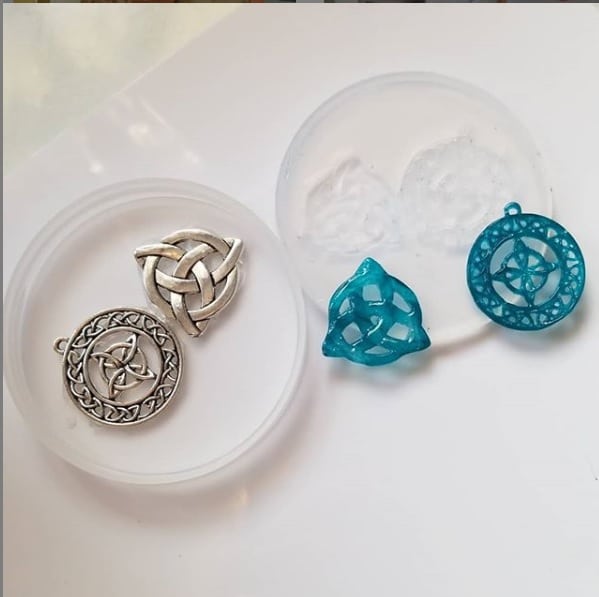
- "Pure Mould" – Translucent Liquid Silicone Rubber for Mould MakingPrice range: £23.95 through £166.95"Pure Mould" silicone rubber is suitable for mould making, compatible with resins, plaster and cement, featuring translucency and durability.
- "I–Gum" – Non-Toxic Silicone Putty for Mould MakingPrice range: £24.00 through £104.95"I–Gum" is a non-toxic silicone putty designed for mould making with a 1:1 mix ratio and a 20-minute working time.
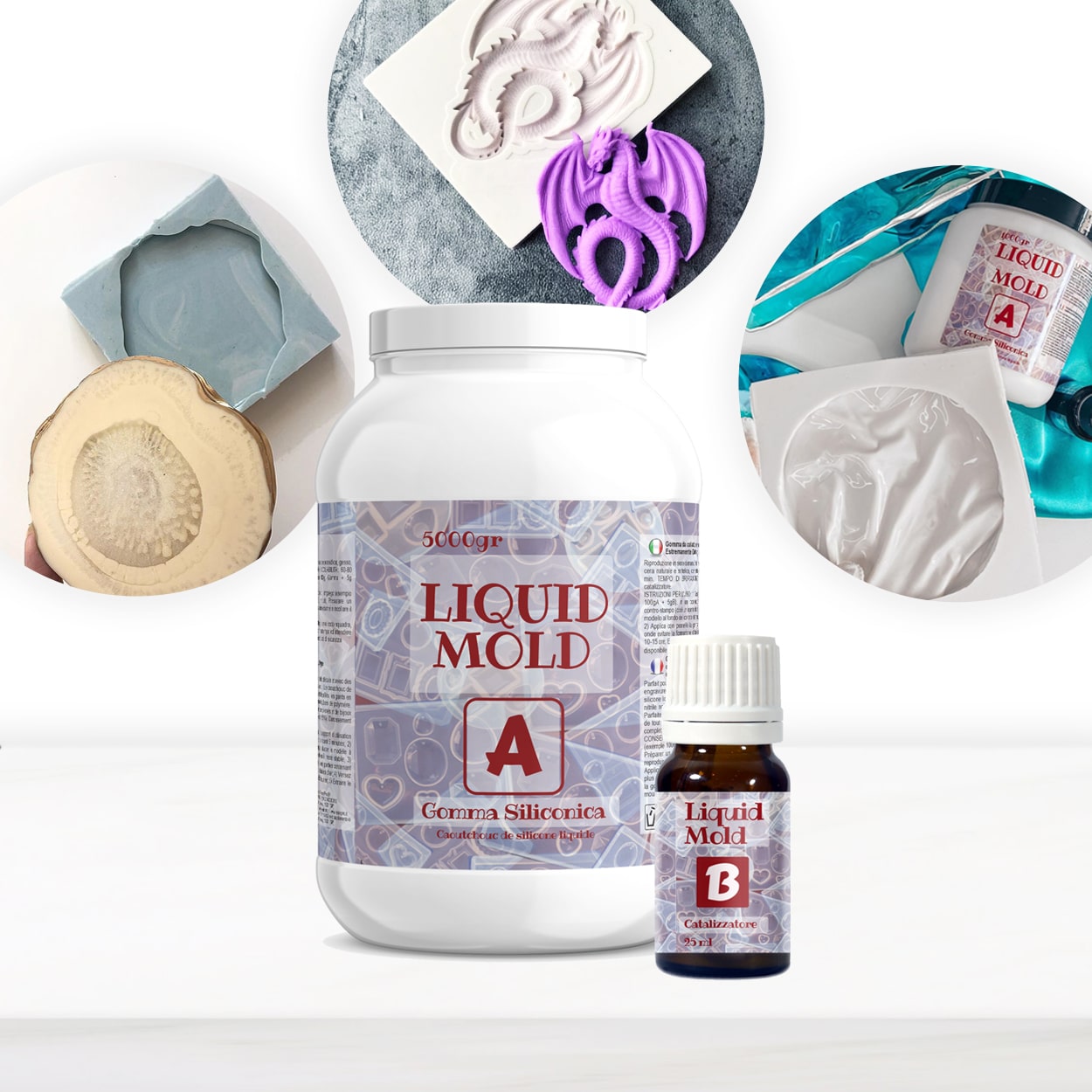 "Liquid Mould" – Casting Liquid Silicone Rubber, 5-40 Shores, Bi-Component A+BPrice range: £14.45 through £387.45"Liquid Mould" is a casting liquid silicone rubber designed for detailed moulds and suitable for small objects with fine details.
- "Liquid Mould" – Casting Liquid Silicone Rubber, 15 Shores 20.8 kg£348.85"Liquid Mould" is a casting liquid silicone rubber designed for creating highly detailed moulds of small objects with fine details.
Frequently Asked Questions
Is this liquid silicone rubber suitable for wax injection or moulding 3D liquid resin printed pieces?
Pure Mould with 20 shores hardness is suitable for wax and resin casts, typically showing only minimal shrinkage in most applications.
What is the recommended mixing ratio for silicone putty?
Silicone putty should be mixed in equal parts (1:1) with its catalyst paste for best results.
What is the advised method for creating silicone moulds?
Combine silicone and activator, position the object, pour the mix, and let cure for 10–12 hours, using a pressure pot if needed to reduce air bubbles.
What types of objects is casting liquid silicone rubber suitable for?
Casting liquid silicone is ideal for small objects, fine detail models, jewellery, and parts with significant undercuts.
Can this silicone rubber be used with resin and soap?
Yes, this silicone rubber works with resin, soap and polymer pastes for diverse casting applications.