 Free shipping on orders over £29,85
  Shipping Tracking!


 Google
 Facebook
How to make a table with wood and coloured resin?
Creating a table with wood and coloured resin opens up endless possibilities to personalise your furniture, delivering an eye-catching centrepiece to any room. Whether you’re drawn to the striking look of a ‘river table’ or want to experiment with vibrant pigment effects within natural timber, this guide provides all the steps, techniques, and tips needed to achieve a smooth, professional result.
A clear guide for crafting your unique, vibrant resin and wood table.
What You’ll Need
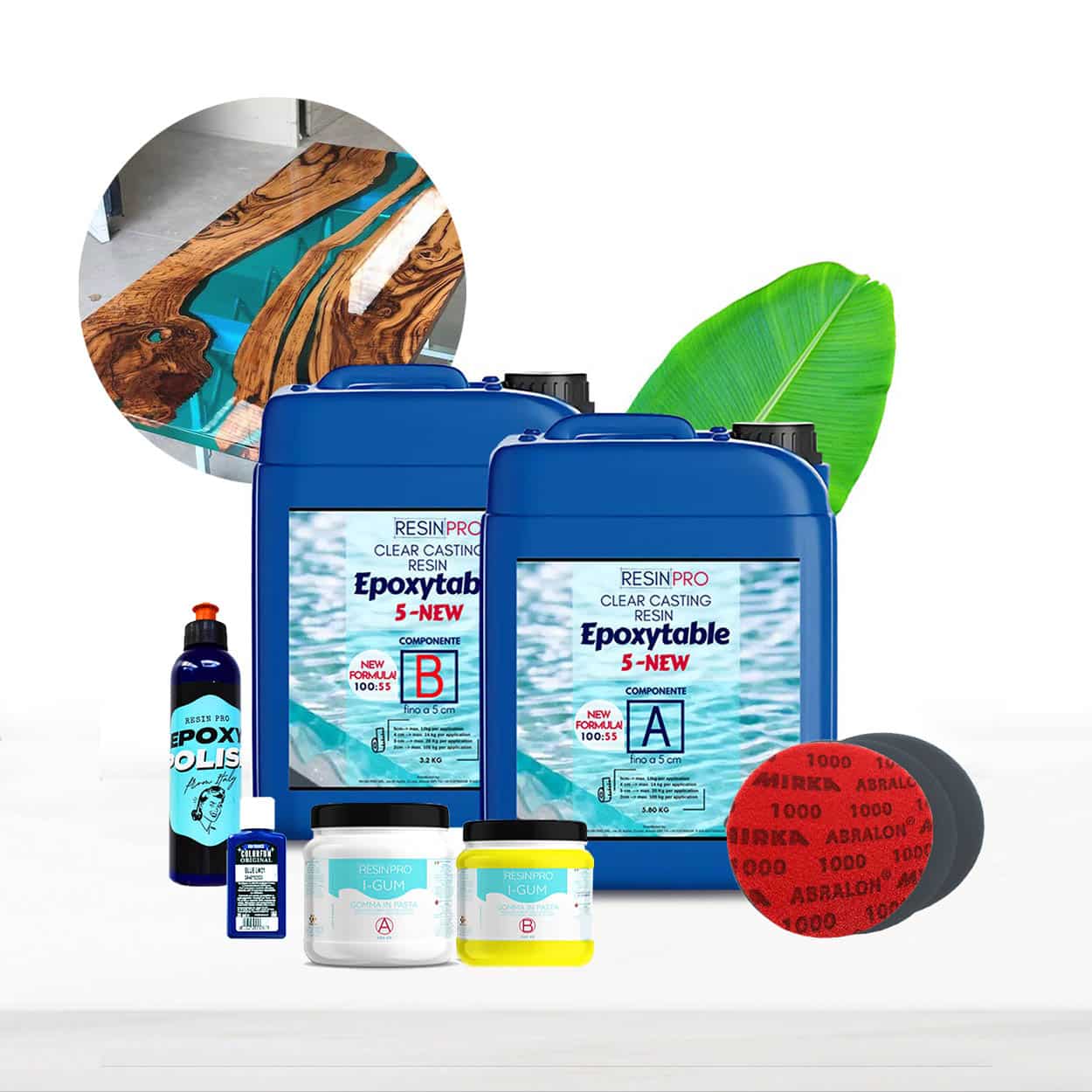
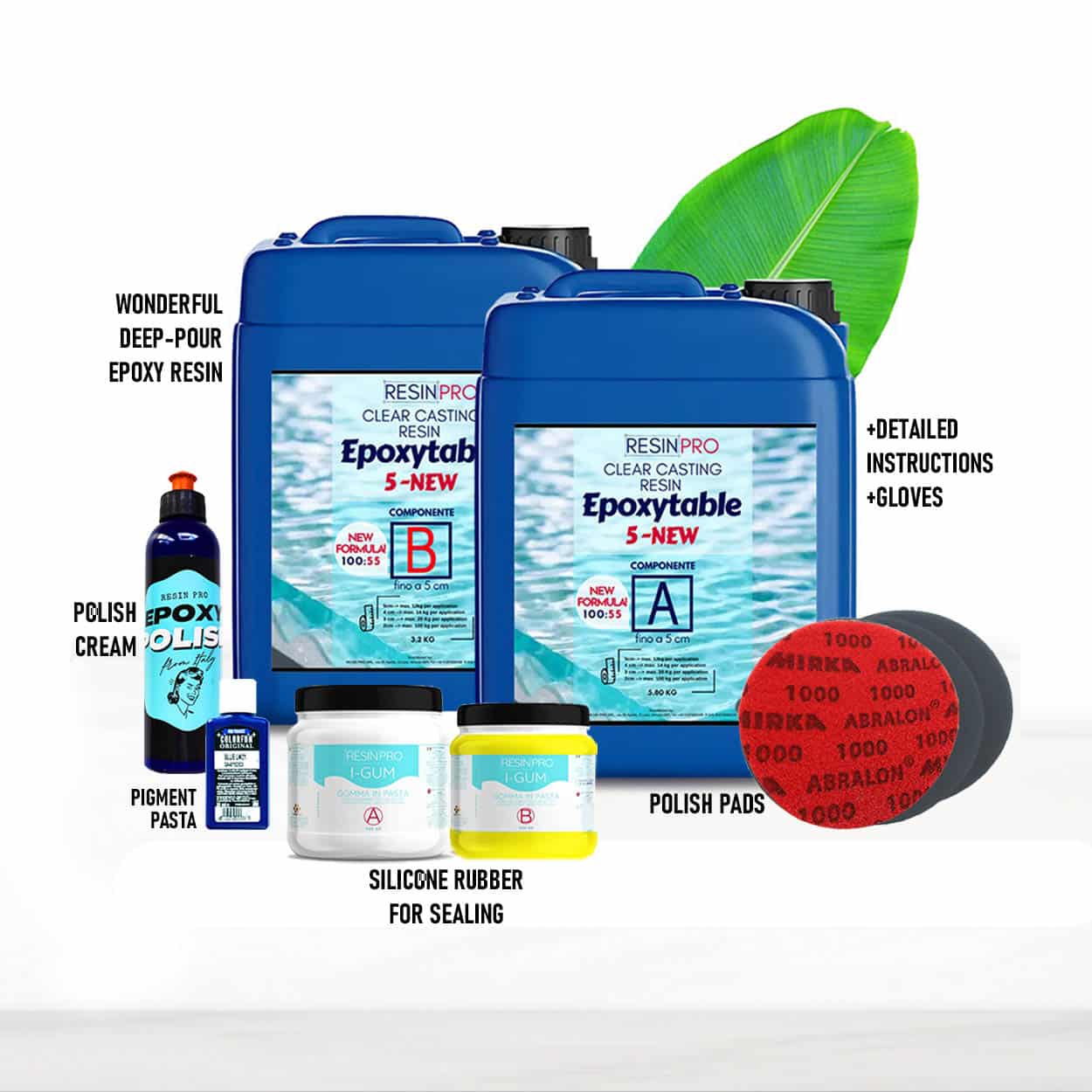
- “River-Table” – Complete Kit for Creating Your First Epoxy Resin Table: Complete package including epoxy resin, sealant, pigments, and polishing kit for beginners.
- “EpoxyTable 5-Five” – Deep Pour Epoxy Resin for Tables and Large Projects – Up to 5cm: Best for resin pours up to 5cm thick.
- “Epoxytable 10-Ten” – Deep Pour Epoxy Resin for Tables, Up to 10cm Casting: For projects requiring particularly deep resin pours.
- “Colourfun” – Liquid Epoxy Resin Colourant 25-100ml – High coverage: High-concentration pigments to customise your resin colour.
- Solid wood slab or plank, planed and dried
- Formwork (e.g., melamine boards or HDPE panels)
- Release agent or tape
- Sandpaper (various grits)
- Mixing tubs and stirring sticks
- Straight edge, clamps, and standard woodworking tools
- Protective gloves, mask, and eye protection

Essential Materials and Workspace Set-Up
Protect all working surfaces and ventilate the area during epoxy work. Use protective gloves, eyewear, and clothing. A clean, well-lit area is key to achieving a flawless finish, especially when dealing with pigmented resins and woodwork.
Step 1: Prepare the Wood and Work Area
Start by choosing a well-dried, stable wooden slab or planks for your table. Remove any bark and sand all surfaces smooth, paying particular attention to the edges where resin will be cast. Use a dust brush or vacuum to ensure the wood is free of loose debris. Protect all working surfaces and ventilate the area before beginning, as working with resin requires clean, dust-free conditions.
Carefully inspect your timber for cracks or knots. Seal any highly porous spots with a thin layer of clear epoxy resin to prevent air bubbles in the main casting stage.
Step 2: Build and Seal the Formwork
Create a sturdy mould (formwork) slightly larger than your intended tabletop using melamine or a non-stick board material. Ensure all panels meet at tight right angles, fixing them with screws or clamps for rigidity. Line the inside surfaces with a release agent or strong release tape to prevent the resin from sticking.
Seal the formwork thoroughly to prevent leaks. For a reliable seal around every joint and gap, a silicone sealant is recommended. Full kits like the “River-Table” – Complete Kit for Creating Your First Epoxy Resin Table provide suitable silicone and release materials for this stage.
Step 3: Mix and Colour the Epoxy Resin
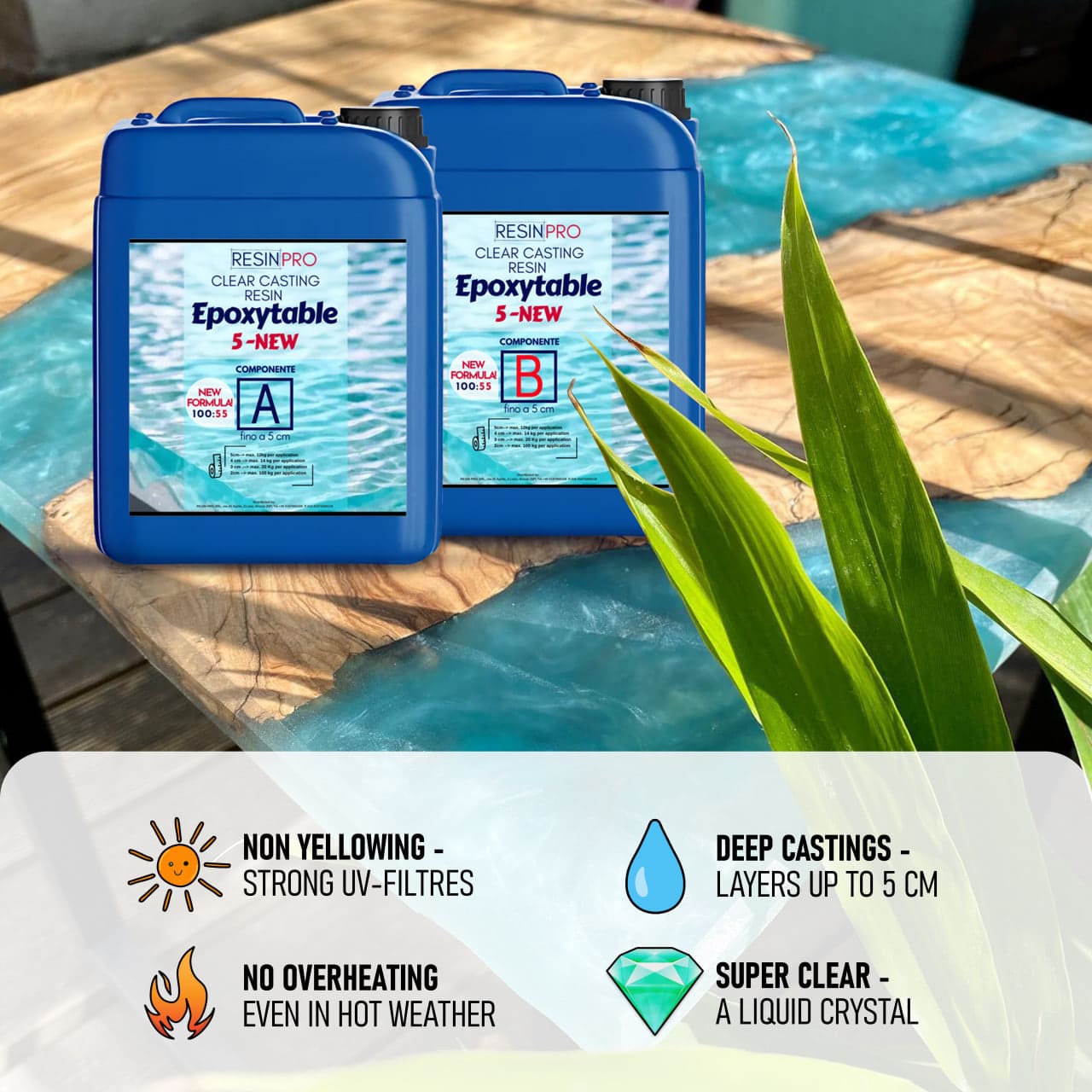
Consult your resin instructions to determine how much you’ll need for your planned pour depth and the wood’s dimensions. EpoxyTable 5-Five is best for up to 5cm thickness, while “Epoxytable 10-Ten” can handle depths up to 10cm for dramatic river effects.
Accurately measure and mix resin with hardener according to the manufacturer’s instructions—incorrect ratios may lead to curing problems. Mix slowly to minimise air bubbles.
To create custom resin colours, add a liquid pigment such as “Colourfun” – Liquid Epoxy Resin Colourant. Add pigment drop-wise, mixing thoroughly, to achieve your preferred opacity or translucent effect.

Step 4: Pour the Resin and Remove Bubbles
Slowly pour the mixed, coloured resin into the mould, guiding the flow to cover all gaps. For deeper pours (over 5cm), either use an appropriate deep pour resin or pour in layers, allowing initial gel and cool-down before adding the next layer. This approach also helps minimise exothermic reactions.
Pour in stages for thick casts and always monitor temperature. Use a heat gun or torch lightly over the resin surface to help pop air bubbles immediately after pouring, but avoid overheating any spots.

Step 5: Demould, Sand, and Finish the Tabletop
Once the resin has fully cured (this could be 24–72 hours, depending on the resin used and thickness), carefully remove the formwork. Some light prying may be needed if any resin has seeped past seals, but the release tape should make this easy.
Sand the tabletop methodically using increasingly fine grits for a smooth surface. If you used a kit like the “River-Table” – Complete Kit for Creating Your First Epoxy Resin Table, follow the provided polishing process for a glossy, scratch-resistant finish.
Allow full curing before sanding and finishing to avoid dull spots or clogging the sandpaper. Finally, attach legs or supports, and your bespoke wood and coloured resin table is ready to enjoy.
Tips, Common Mistakes, and Troubleshooting
- Always use the correct type of resin for your required pour depth—standard epoxies may overheat if cast too thick.
- Accurate measuring and thorough mixing are essential to avoid soft spots or sticky patches.
- Work in a dust-free, temperature-controlled environment to ensure a clear, bubble-free finish.
- Allow sufficient curing between layers and before demoulding for best results.
- Test pigment depth and resin-wood compatibility on a small scale before your main pour if you’re new to the process.
Finishing Touches for a Showpiece Table
Buff resin surfaces using the included polishing kit or increasing grades of abrasive pads for excellent clarity. Allow full curing before sanding and finishing to prevent cloudiness. Consider applying a UV-resistant sealant for added protection.

- "River-Table" – Complete Kit for Creating Your First Epoxy Resin TablePrice range: £188.85 through £444.85"River-Table" kit provides materials and instructions for crafting a wood and coloured resin table suitable for beginners.
- “Epoxytable 10-Ten” – Deep Pour Epoxy Resin for Tables, Up to 10cm CastingPrice range: £33.85 through £334.85“Epoxytable 10-Ten” is designed for creating tables with deep pours up to 10cm, suitable for projects requiring clarity and controlled curing.
 "EpoxyTable 5-Five" – Deep Pour Epoxy Resin for Tables and Large Projects – Up to 5cmPrice range: £16.85 through £1,099.85"EpoxyTable 5-Five" is designed for deep pour projects like tables and large furniture, suitable for creating stable, clear resin surfaces.
 "Colourfun" – Liquid Epoxy Resin Colourant 25-100ml – High coveragePrice range: £3.65 through £9.85Liquid epoxy resin colourant offering vibrant, highly concentrated pigments suitable for resin art and professional castings.
Frequently Asked Questions
Which epoxy resin is best for deep resin pours in a table?
For deep pours up to 10cm, use 'Epoxytable 10-Ten'. For up to 5cm, 'EpoxyTable 5-Five' provides great results while controlling exothermic reaction.
How do I add colour to resin for my wood table?
Use a high-coverage liquid colourant like 'Colourfun', adding it gradually to achieve the level of opacity or effect you want. Mix thoroughly for an even colour.
How can I avoid bubbles when casting my resin table?
Mix slowly, avoid whipping air in, and use a heat gun or torch after pouring. Seal wood surfaces to reduce trapped air before casting.
What are the best tips for sanding and polishing resin tables?
Always wait for full curing. Sand with progressively finer abrasives, and finish with polishing paste or a polishing kit for maximum shine.
Can beginners successfully make a resin and wood table?
Yes, complete kits and step-by-step instructions make it achievable, even for first-time resin users.
What is the curing time for large resin and wood tables?
Curing time varies by resin thickness and product, but allow 24–72 hours before demoulding. Deep pours need longer for full strength.
What is the safest way to remove a table from its formwork?
Wait until fully cured, then carefully release sides. Use release tape or agents in the mould for easy removal.