 Free shipping on orders over £29,85
  Shipping Tracking!


 Google
 Facebook
How do you calculate how much resin is needed for a table?
Step-by-step method for calculating resin volume for any table project
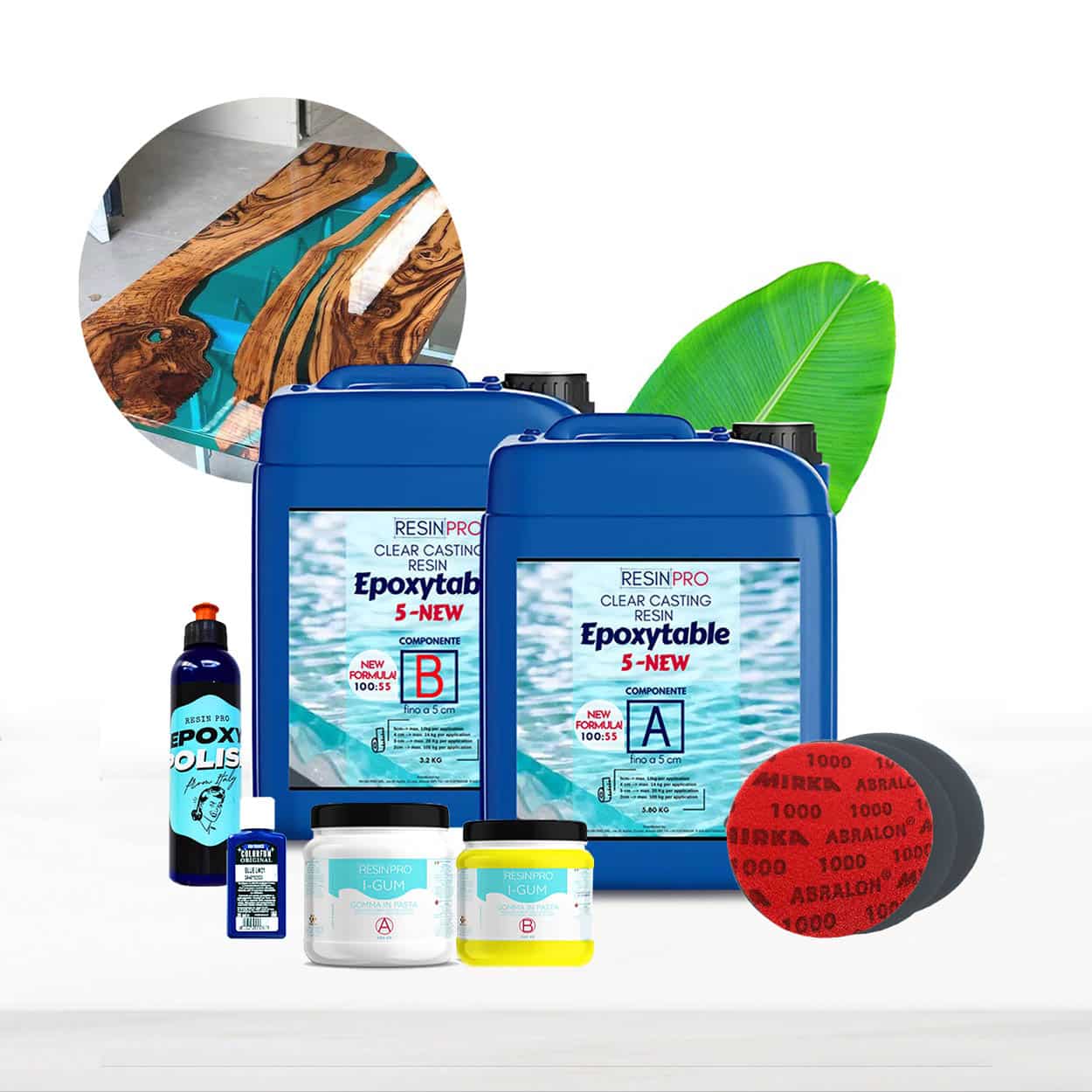
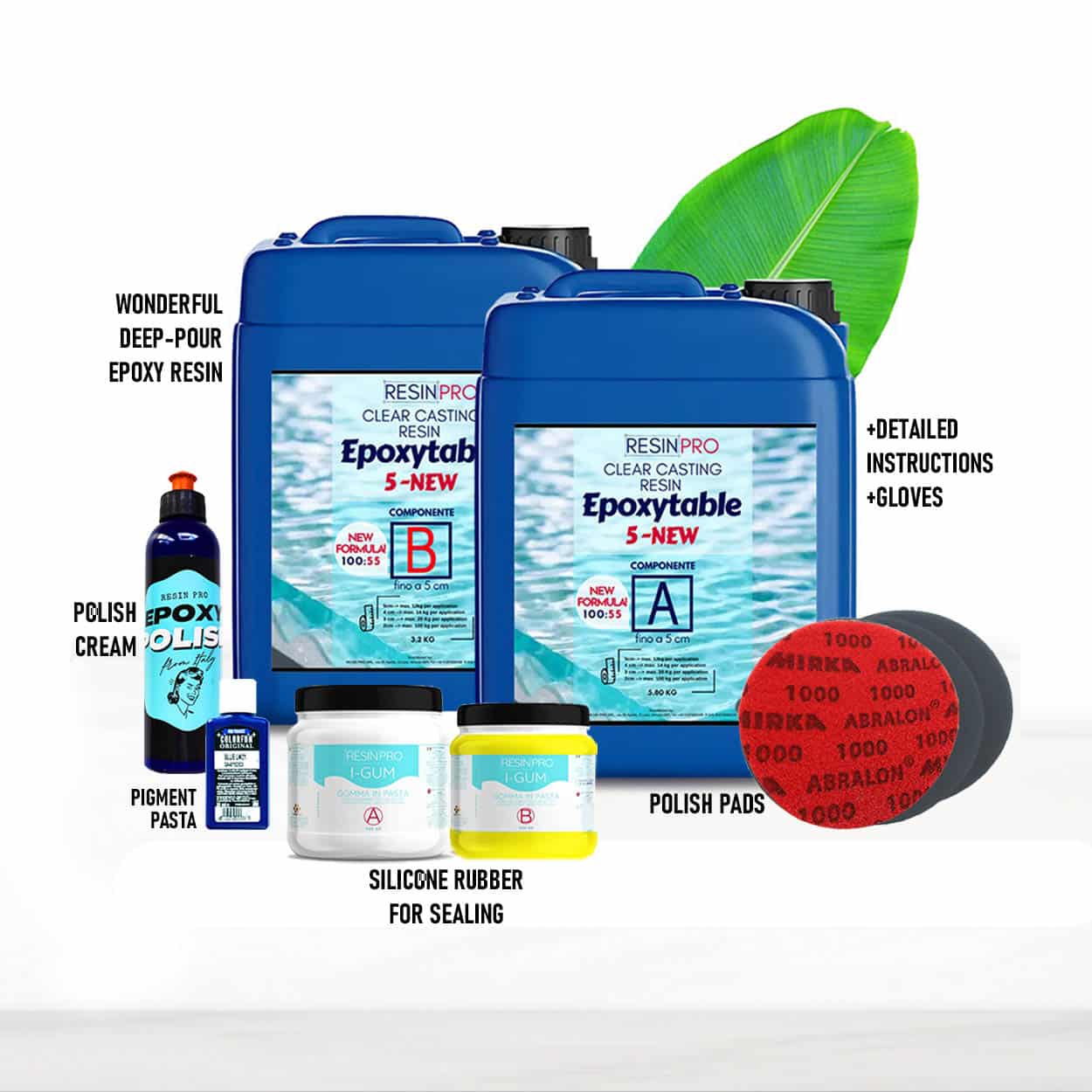
Accurately calculating how much epoxy resin you need is crucial to avoid wasted material, unexpected shortages or project delays when making a resin table. Whether you’re planning a solid resin table, a river table, or just want to fill the wood grain or natural edges, following a reliable calculation method ensures the perfect amount of resin for your vision and budget.
What You’ll Need
- “River-Table” – Complete Kit for Creating Your First Epoxy Resin Table — comprehensive solution with all essentials and beginner-friendly calculation instructions
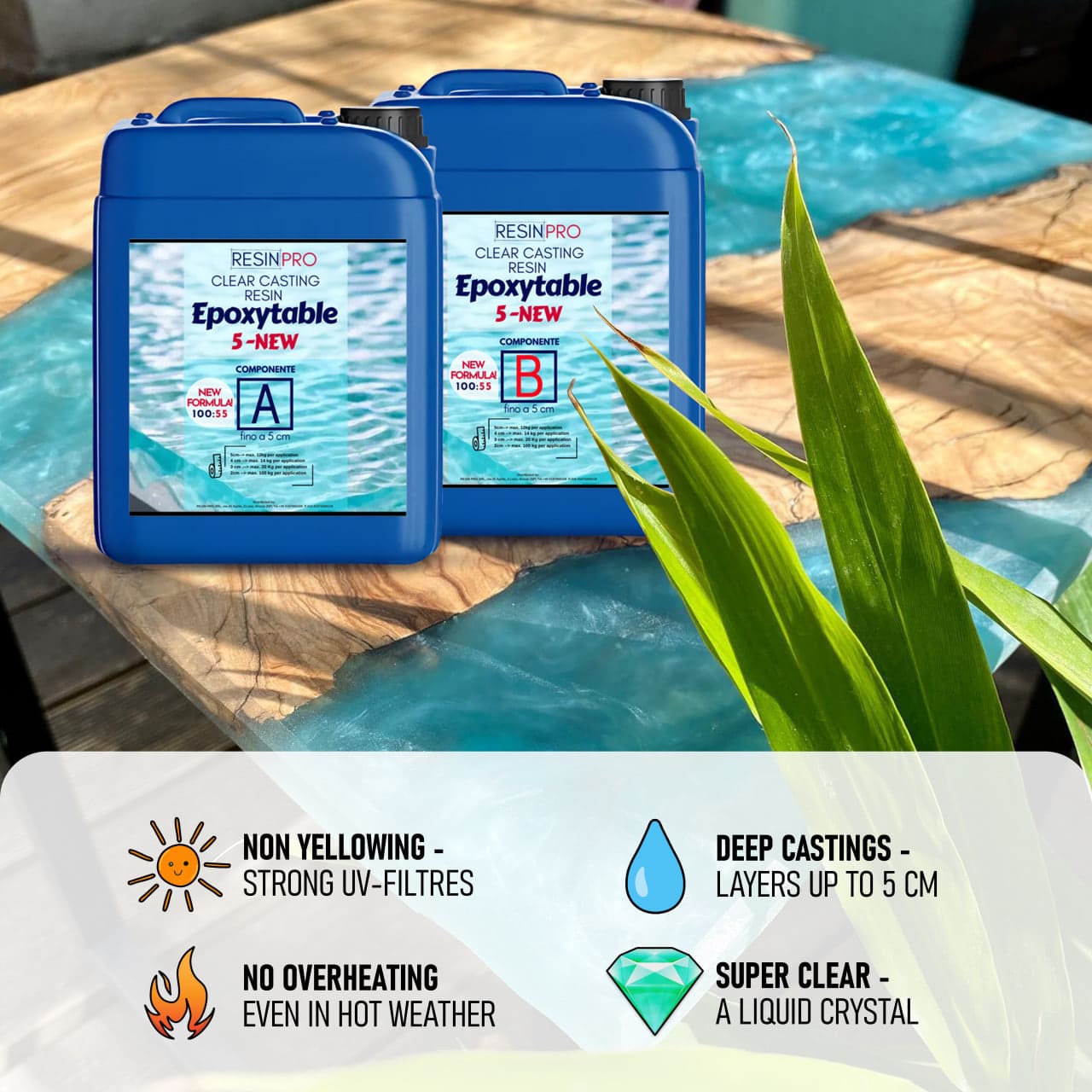
- “EpoxyTable 5-Five” – Deep Pour Epoxy Resin for Tables and Large Projects – Up to 5cm — best for deep pours and larger surfaces
- “Epoxytable 10-Ten” – Deep Pour Epoxy Resin for Tables, Up to 10cm Casting — optimal for projects requiring very thick layers
- “Trasparente” – Multipurpose Clear Epoxy Resin for Casting – Up to 2cm — ideal for thin coatings or smaller tabletops
- Calculator or measuring tape
- Notebook or device for calculation
- PPE (gloves, mask) and mixing tools, as needed

Visual Guide to Measuring Table Sections for Resin
Before mixing any epoxy, visually break down your table project. Sketch or mark out wood areas and planned resin fills, especially for river tables or void-filling. Clear boundaries at this stage will help you calculate resin volume more easily and avoid over-ordering. Using tape, string, or a digital drawing helps make calculations precise and repeatable.
Step 1: Measure the Table Area and Depth
Start by measuring the length, width, and intended depth of your resin section. For river tables, measure only the part that will be filled with resin, subtracting the dimensions of the wood slabs. For full-resin tables, use the entire table area. Always measure in centimetres for accuracy and make notes of each dimension.
If you’re using surface coats rather than full casting, pay careful attention to the layer thickness—products like “Trasparente” – Multipurpose Clear Epoxy Resin are most suitable for up to 2cm depth.
Step 2: Calculate the Volume Required
Multiply length × width × depth (all in cm) to find the volume in cubic centimetres (cm³). For river tables or spaces with irregular edges, estimate a rough rectangle or divide into smaller sections for each fill. The sum gives you the total resin fill area in cm³.
Convert this to litres by dividing by 1,000 (1,000 cm³ = 1 litre). Most deep pour epoxies, such as “EpoxyTable 5-Five”, are measured and sold in kilograms, which is almost equal to litres for most resins (1kg ≈ 1L for practical purposes). This volume tells you how much resin you’ll need in total for the fill.
Step 3: Consider Table Design and Layering
Check the maximum recommended pouring depth for your chosen resin product. For thicker pours above a product’s safe casting thickness (e.g. over 5cm for “EpoxyTable 5-Five” or up to 10cm for “Epoxytable 10-Ten”), plan to pour in several layers to prevent overheating and ensure a safe cure.
If your table design features significant wood sections—such as a “river” or voids—aim to calculate resin just for those spaces, not for the whole table. Many tutorials suggest a 2/3 wood to 1/3 resin ratio for river tables.

Step 4: Allow for Resin Loss and Safety Margin
Resin can seep into wood grain or leak from slightly imperfect formwork, so it is wise to add an additional 10% to your total calculated volume as a safety margin. This ensures you won’t run short mid-pour and lets you save offcuts for repairs.
Kits such as the “River-Table” – Complete Kit for Creating Your First Epoxy Resin Table include measuring guidance and instructions to help avoid material loss and calculate buffer volume, making them beginner-friendly choices.

Tips and Common Mistakes When Calculating Resin
- Accurate Volume Measurement Is Key — Always double-check your dimensions and be precise with depth and widths.
- Consider Table Design and Resin Filling Ratio — Only calculate resin for the areas to be filled, not the entire tabletop, unless doing a full cast.
- Calculate Resin Volume by Cubic Measurement — Use cubic centimetres and convert to litres/kilograms for ordering.
- Account for Layering and Project Depth — Exceeding max layer thickness can cause overheating; use the right resin for the pour depth and pour in intervals if needed.
- Allow for Resin Loss and Safety Margin — Add 10% to avoid running short due to absorption or small leaks.
Understanding Layering in Deep Pour Epoxy Tables
If your project requires pours above the recommended thickness, stagger the resin in multiple layers with curing time in between. Following the product’s advice on maximum single-pour depth reduces risk of overheating, cloudiness or bubbles. Layering is especially important for projects using “EpoxyTable 5-Five” or “Epoxytable 10-Ten” at or near their thickness limits.

- "River-Table" – Complete Kit for Creating Your First Epoxy Resin TablePrice range: £188.85 through £444.85Kit containing epoxy resin, sealing silicone, pigments, polishing kit and instructions for resin and wood tables.
- "EpoxyTable 5-Five" – Deep Pour Epoxy Resin for Tables and Large Projects – Up to 5cmPrice range: £16.85 through £1,099.85EpoxyTable 5-Five is designed for deep pours up to 5cm, suitable for tables and large projects, offering UV resistance and a scratchproof finish.
 “Epoxytable 10-Ten” – Deep Pour Epoxy Resin for Tables, Up to 10cm CastingPrice range: £33.85 through £334.85“Epoxytable 10-Ten” is designed for deep pour applications up to 10cm, suitable for creating tables with low viscosity and non-yellowing clarity.
 "Trasparente" – Multipurpose Clear Epoxy Resin for Casting – Up to 2cmPrice range: £8.45 through £948.85Multipurpose clear epoxy resin for casting up to 2 cm layers with an ultra-clear, glossy finish suitable for detailed DIY and woodworking projects.
Frequently Asked Questions
How do I measure my table to calculate resin volume?
Measure the section to be filled (length, width, and depth), multiply these dimensions, and convert cubic centimetres to litres for accurate resin calculation.
Which resin should I use for thick pours in a table?
Use a deep-pour product like “Epoxytable 10-Ten” for layers up to 10cm, or “EpoxyTable 5-Five” for up to 5cm single pours.
How do I calculate resin needed for a river table design?
Calculate only the resin-filling gap by measuring the void’s length, width, and depth, then factor in a safety margin for loss.
Why should I add extra resin beyond calculated volume?
A 10% safety margin compensates for resin lost via absorption, leaks, or minor miscalculations.
When is layering necessary for resin pours?
If your required depth exceeds the product’s safe pour thickness, pour in multiple layers to ensure proper curing.
How do I convert resin calculations from cm³ to kg or litres?
Divide the volume in cm³ by 1000 to get litres; for most epoxies, 1 litre roughly equals 1kg.