 Free shipping on orders over £29,85
  Shipping Tracking!


 Google
 Facebook
How to build a resin and wood table?
A detailed process for creating your unique resin wood table
Building a resin and wood table combines natural timber with crystal-clear or tinted resin to produce striking, functional art for your home. Whether aiming for a river table effect or simple resin highlights, following a structured process ensures professional results. This guide explains the key actions and important tips so both beginners and experienced makers can succeed.
What You’ll Need
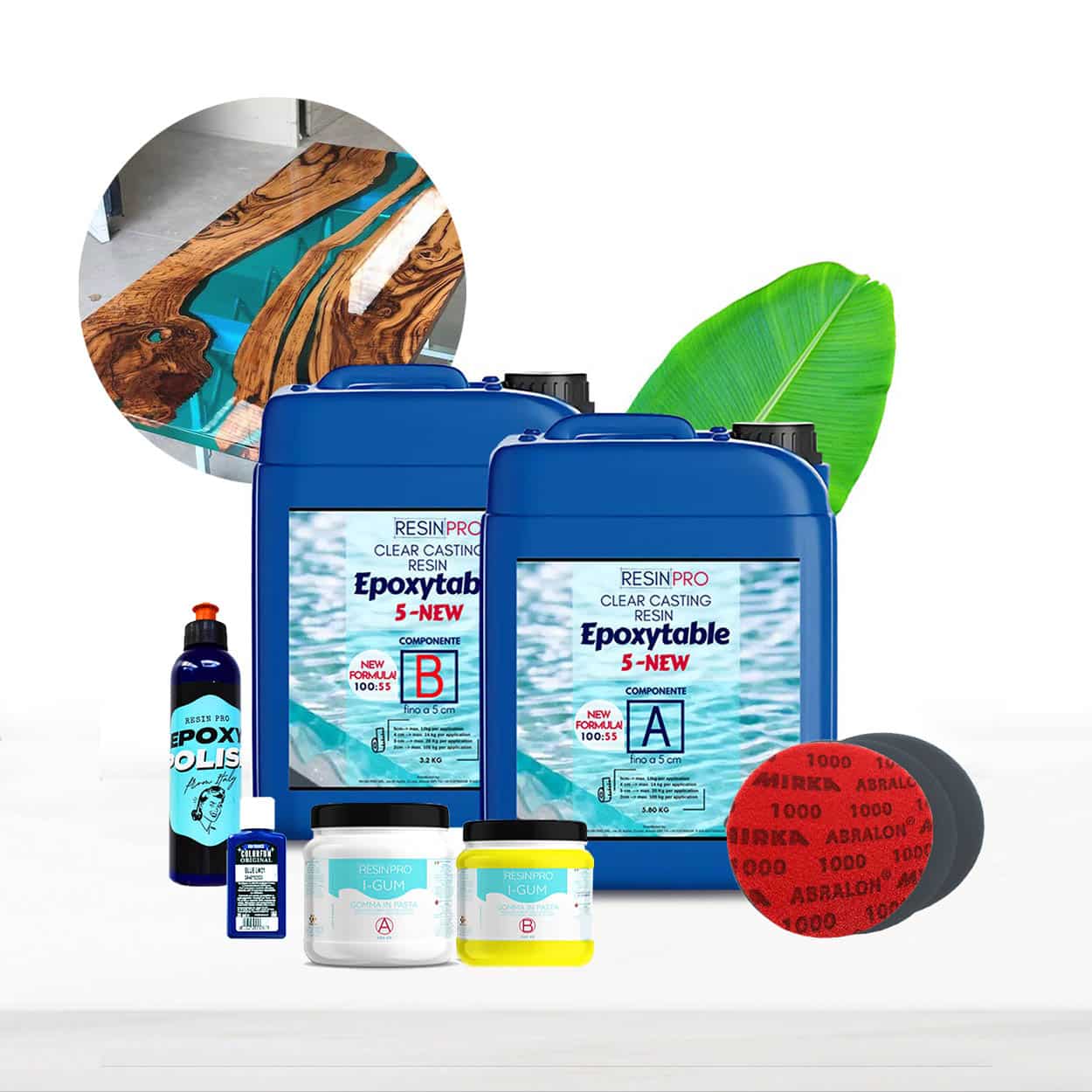
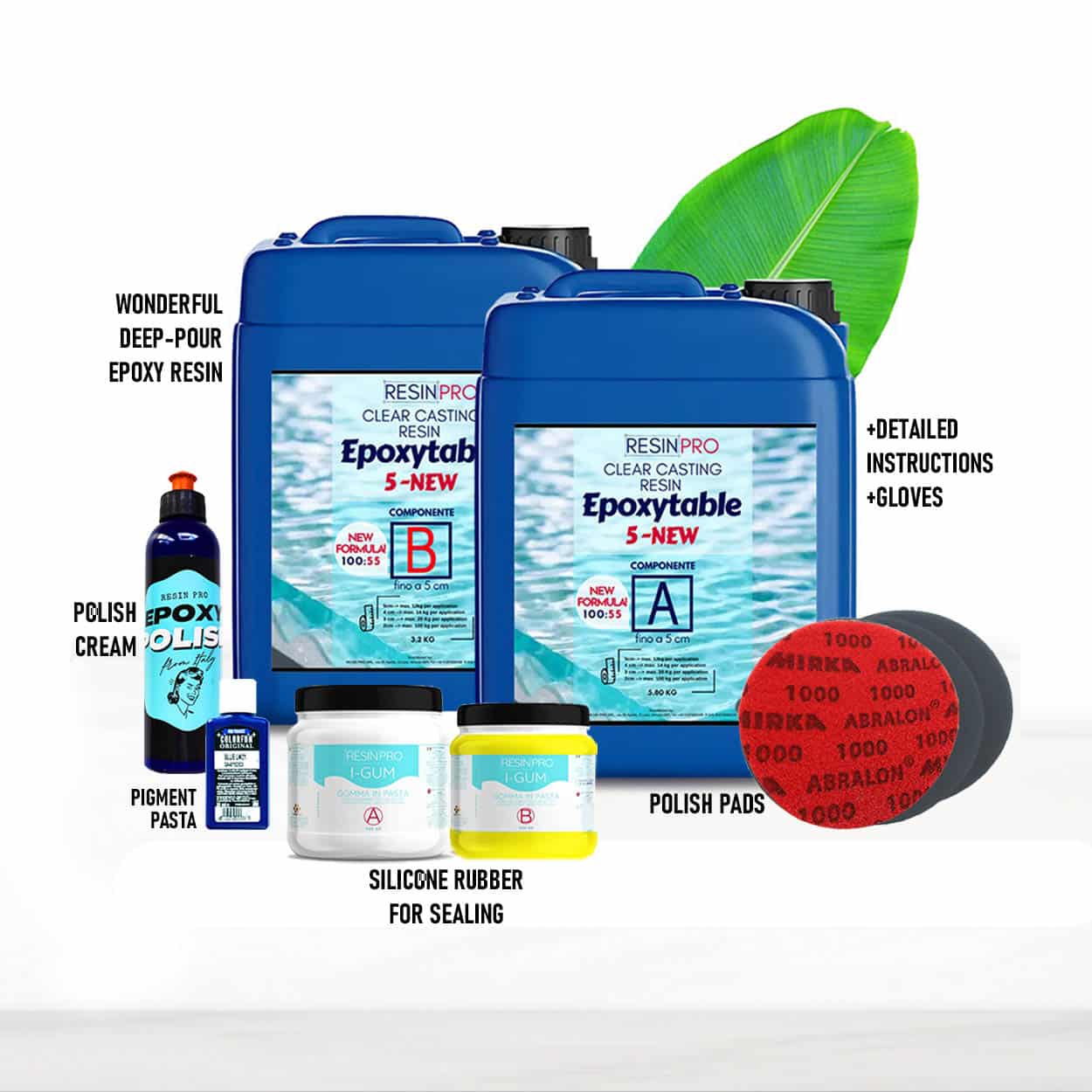
- “River-Table” – Complete Kit for Creating Your First Epoxy Resin Table: A complete starter kit with resin, hardener, pigments, silicone sealant, and finishing materials, ideal for first-time makers.
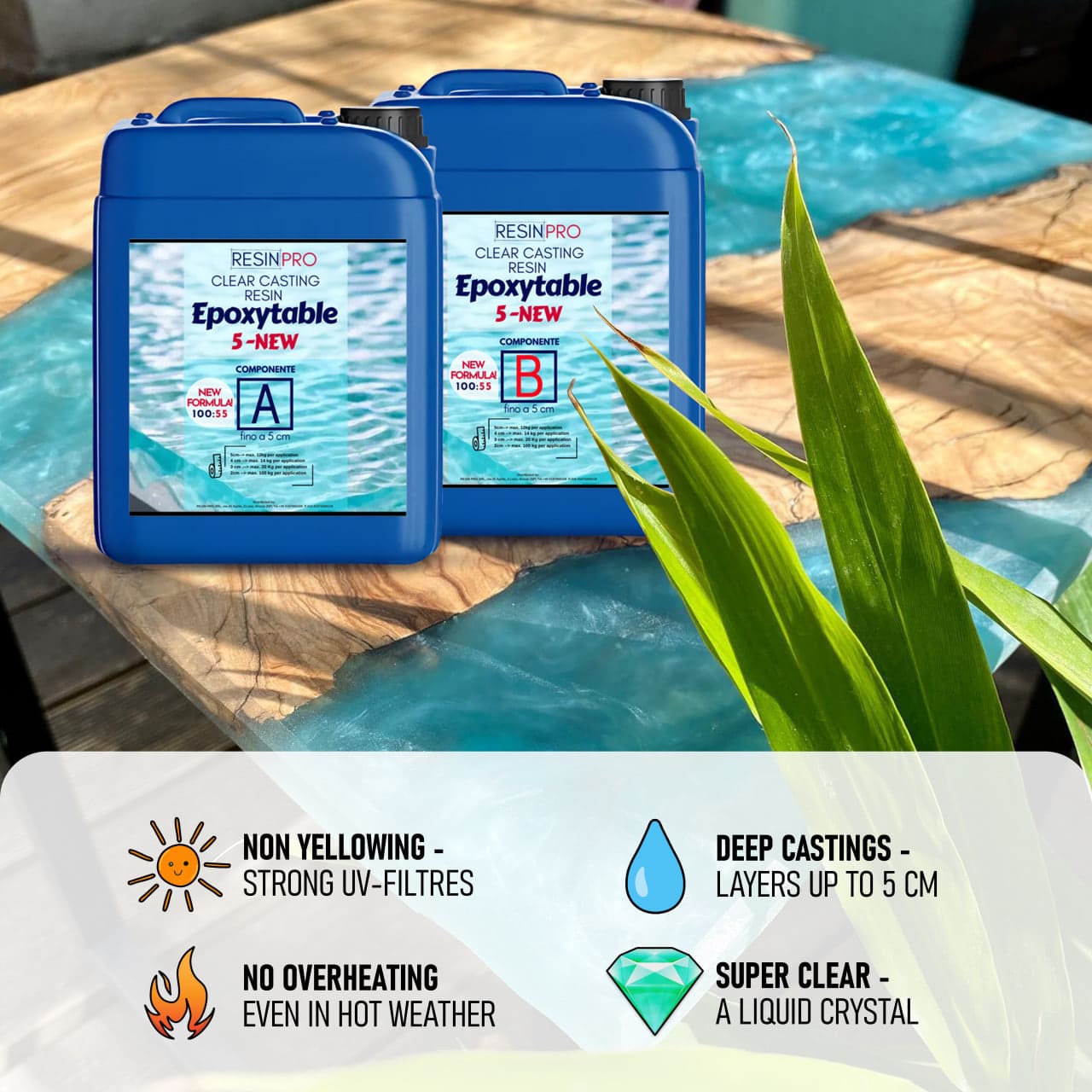
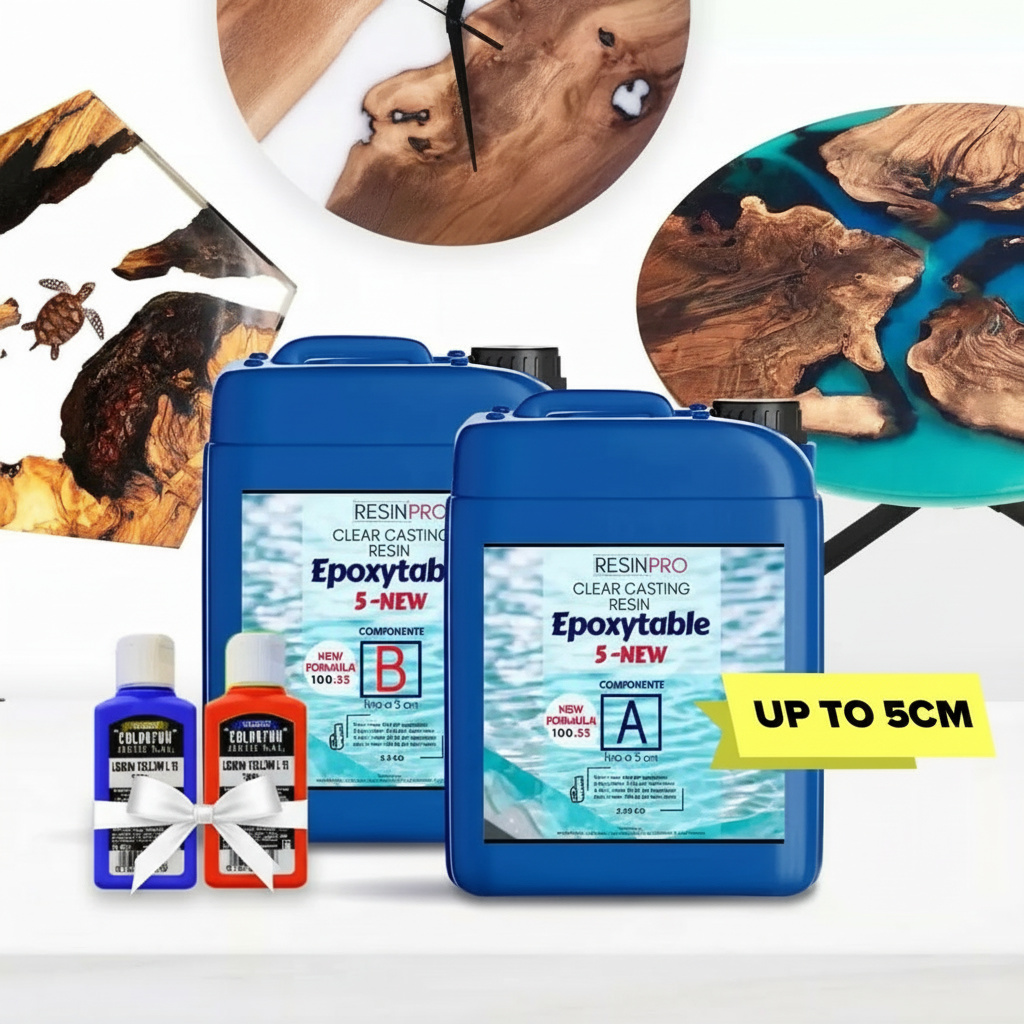
- “EpoxyTable 5-Five” – Deep Pour Epoxy Resin for Tables and Large Projects – Up to 5cm: A deep pour epoxy resin suitable for resin layers up to 5cm thick.
- “Epoxytable 10-Ten” – Deep Pour Epoxy Resin for Tables, Up to 10cm Casting: A specialist epoxy resin for casting thicker resin layers or especially large tables.
- “Geode O” – Large Wooden Board Table Base for Epoxy Resin Projects – 90x60cm or 120x80cm: A durable and versatile wooden base, ready for use with epoxy projects and custom tables.

Workspace Setup and Safety Essentials
Begin in a well-ventilated area, wearing nitrile gloves and protective eyewear throughout. Minimise dust and secure pets or children away from the workspace. Use plastic sheets to shield floors and furniture. Keep all components—wood, resin, hardener—at similar ambient temperature for predictable results.
Step 1: Prepare Your Workspace and Materials
Start by selecting a clean, dust-free workspace with excellent ventilation. Cover surfaces with protective sheeting and ensure your project is set on a level, stable table. All wood pieces should be dry and acclimatised to the room’s climate. Measure your project dimensions and pre-cut all materials. Protect your workspace thoroughly to avoid unwanted mess or resin spills during the process.
Before proceeding, use a moisture meter on the wood to prevent issues with trapped air or warping. Assemble your frame or formwork tightly to hold the table’s shape. Any gaps at this stage may lead to resin leaks later on.
Step 2: Create the Formwork and Position the Wood
The formwork acts as a mould for your table. Line it with a non-stick surface or release tape so unmoulding is simple once cured. Use a high-quality silicon sealant to close all edges and seams. Carefully lay out your wood pieces in the formwork, clamping gently if required to avoid movement while pouring the resin.
Use a level base to ensure the resin sits evenly across the whole surface. Any slant will affect the table’s thickness and edge definition.
Step 3: Mix and Pour the Epoxy Resin Safely
Mix your chosen epoxy resin thoroughly, following the manufacturer’s ratios. For deep layers up to 5cm, options like “EpoxyTable 5-Five” are designed for thick pours. If your table features especially deep sections, use “Epoxytable 10-Ten” for clear, bubble-free castings up to 10cm per layer.
Pour resin slowly into the form, directing flow into corners and around wood inclusions. Take time to pop surface bubbles using a heat gun or torch, moving steadily to avoid burning or over-warming the resin. Allow adequate curing time as recommended – rushing will undermine clarity and strength.

Step 4: Layer and Finish the Tabletop
For especially thick tables or projects exceeding the recommended single pour depth, pour several layers – letting each cure before adding the next. This builds strength and reduces overheating risk. Work in manageable layers of the suitable resin product for your table’s thickness and length.
Once fully set, unmould the piece and begin sanding with increasingly fine grits to achieve a smooth, level finish. Finish the surface using polishing creams or included pads from all-in-one kits such as “River-Table” – Complete Kit for Creating Your First Epoxy Resin Table. This final polish brings out the resin’s depth and clarity for the signature glossy effect.
Step 5: Assemble and Protect the Finished Table
After sanding and polishing, attach your tabletop to a solid base, such as the “Geode O” – Large Wooden Board Table Base, ensuring stability and a correct fit. Depending on your design, seal all exposed wood ends or edges with resin or a clear sealant for added protection. Seal wood edges appropriately to reduce moisture ingress and preserve the table’s look.
Clean the finished table with a soft, damp cloth. Avoid harsh chemicals or abrasive pads, which may dull the high-gloss surface.
Tips, Common Mistakes, and Troubleshooting
Always measure resin and hardener precisely to avoid tackiness and improper curing. Work in a dust-free environment and cover your piece immediately after pouring if possible. If bubbles persist, check your mixing speed – brisk stirring introduces more air. For best results, let resin acclimatise to room temperature, and do not pour thicker than specified for your chosen resin.
If you discover leaks in your formwork, pause pouring and reseal with additional silicon. Allow each layer to cure fully before adding the next to prevent heat build-up that can cause colour distortion or cracks.
Perfecting Your River Table Finish
Sand gradually from coarse to fine grit for a consistently smooth finish. If you use an all-in-one kit, follow the included instructions for each stage. Use a microfibre cloth to remove dust before polishing. For clarity and gloss, buff in circular motions with a suitable polishing cream or pad, taking care not to overheat the resin.

- "River-Table" – Complete Kit for Creating Your First Epoxy Resin TablePrice range: £188.85 through £444.85"River-Table" kit provides materials and instructions to create a wood and resin table, suitable for beginners following this theme.
- "EpoxyTable 5-Five" – Deep Pour Epoxy Resin for Tables and Large Projects – Up to 5cmPrice range: £16.85 through £1,099.85EpoxyTable 5-Five is suitable for deep pours up to 5cm, designed for resin and wood tables and large projects under the 'How to build a resin and…
 “Epoxytable 10-Ten” – Deep Pour Epoxy Resin for Tables, Up to 10cm CastingPrice range: £33.85 through £334.85“Epoxytable 10-Ten” is an epoxy resin designed for creating tables with casting depths up to 10cm, fitting the theme of resin and wood table building.
 "Geode O" – Large Wooden Board Table Base for Epoxy Resin Projects – 90x60cm or 120x80cmThe Geode O Big is a wooden table base designed for epoxy resin projects, suitable for resin and wood tables.
Frequently Asked Questions
How much epoxy resin do I need for my table?
Calculate based on your table's length, width, and thickness. Consult product instructions or online calculators for precise measurements.
Can I use any resin for a wood table?
No, use epoxy resins formulated for deep pours or furniture, which offer clarity, durability, and the right working times.
How do I prevent bubbles in the resin?
Mix resin slowly, use a heat gun after pouring, and apply resin at room temperature to minimise air entrapment.
Why does my resin table stay tacky?
Improper mixing or incorrect resin-to-hardener ratio often causes tackiness. Measure carefully and mix thoroughly.
How long does a resin and wood table take to cure?
Curing generally takes from 24 hours to several days, depending on resin type, pour thickness, temperature, and humidity.
Can I apply epoxy resin on damp wood?
No, wood must be completely dry to achieve strong adhesion and avoid cloudiness or resin delamination.
Is a release agent necessary for the mould?
Yes, using release tape or a suitable non-stick layer helps remove the cured table from the form without damage.
Can I add colour pigments to the resin?
Yes, most epoxy table resins can be tinted with pigments or mica powders for custom colours and artistic effects.