 Free shipping on orders over £29,85
  Shipping Tracking!


 Google
 Facebook
How to make a resin coffee table
Creating a resin coffee table allows you to combine wood and resin for a bespoke centrepiece that’s both practical and eye-catching. This guide will walk you through each stage of the process, from planning through to finishing, offering tips to help you achieve a professional result at home.
A practical guide for stunning, durable resin wood tables
What You’ll Need
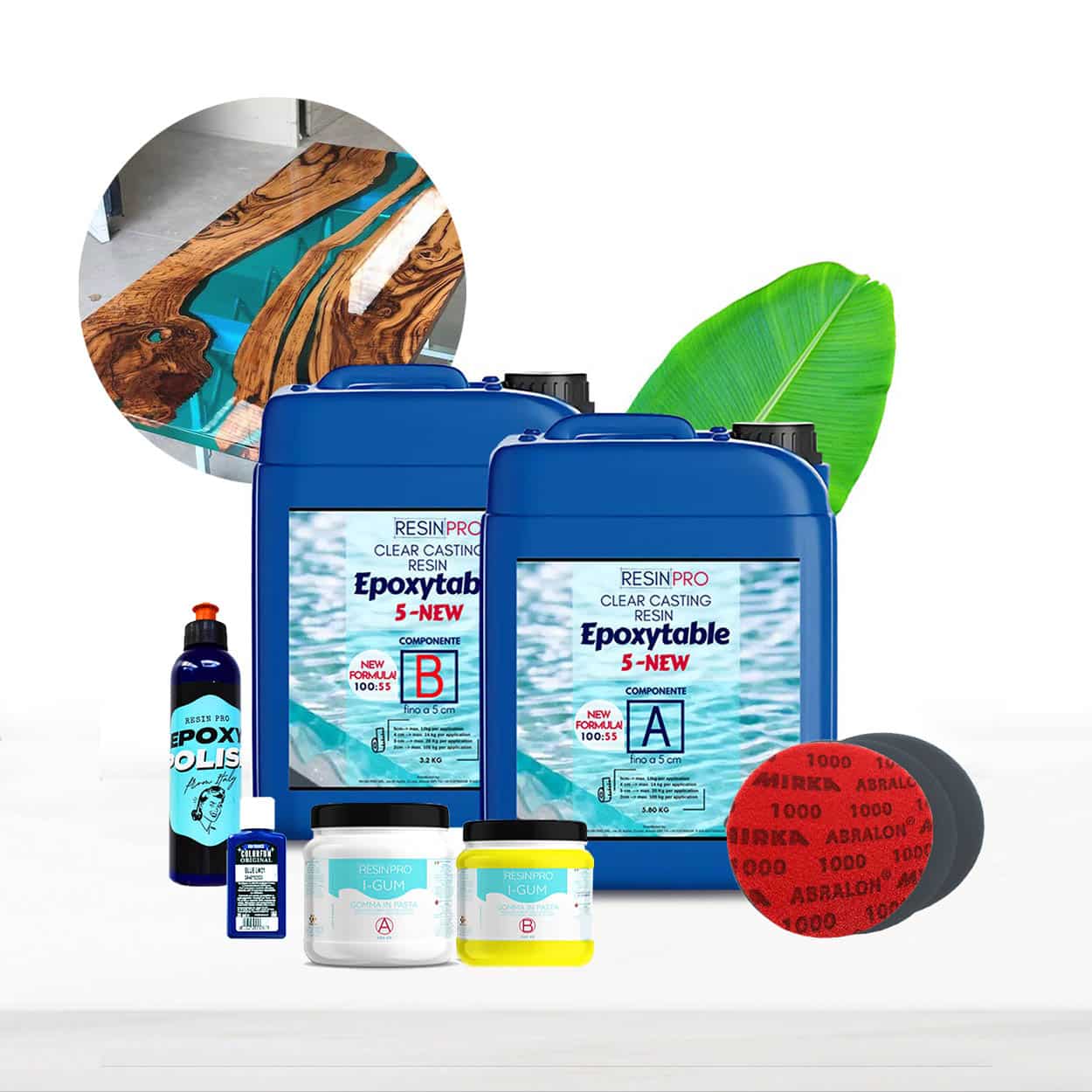
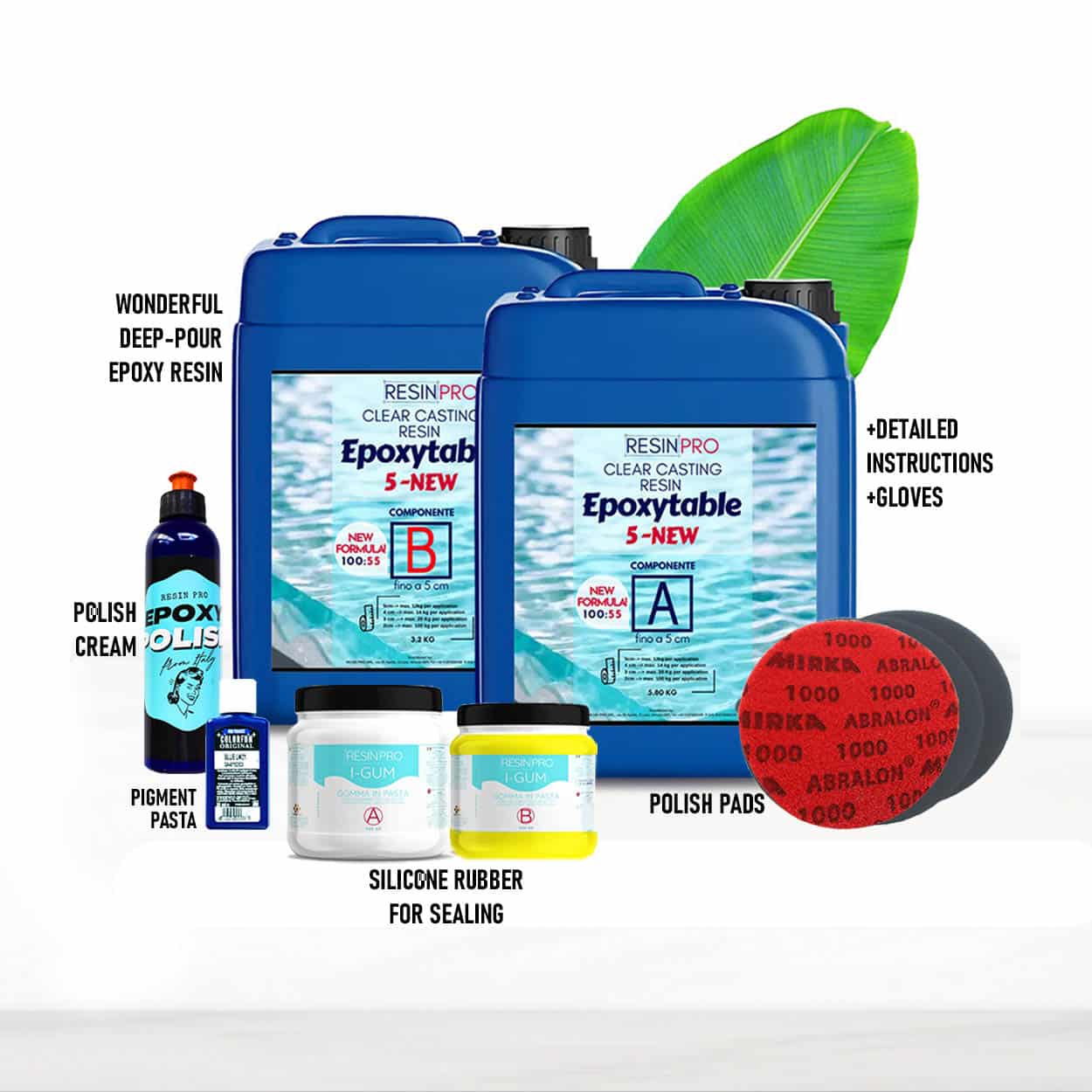
- “River-Table” – Complete Kit for Creating Your First Epoxy Resin Table: A comprehensive starter kit with resin, hardener, pigments, sealant, polishing materials, and instructions.
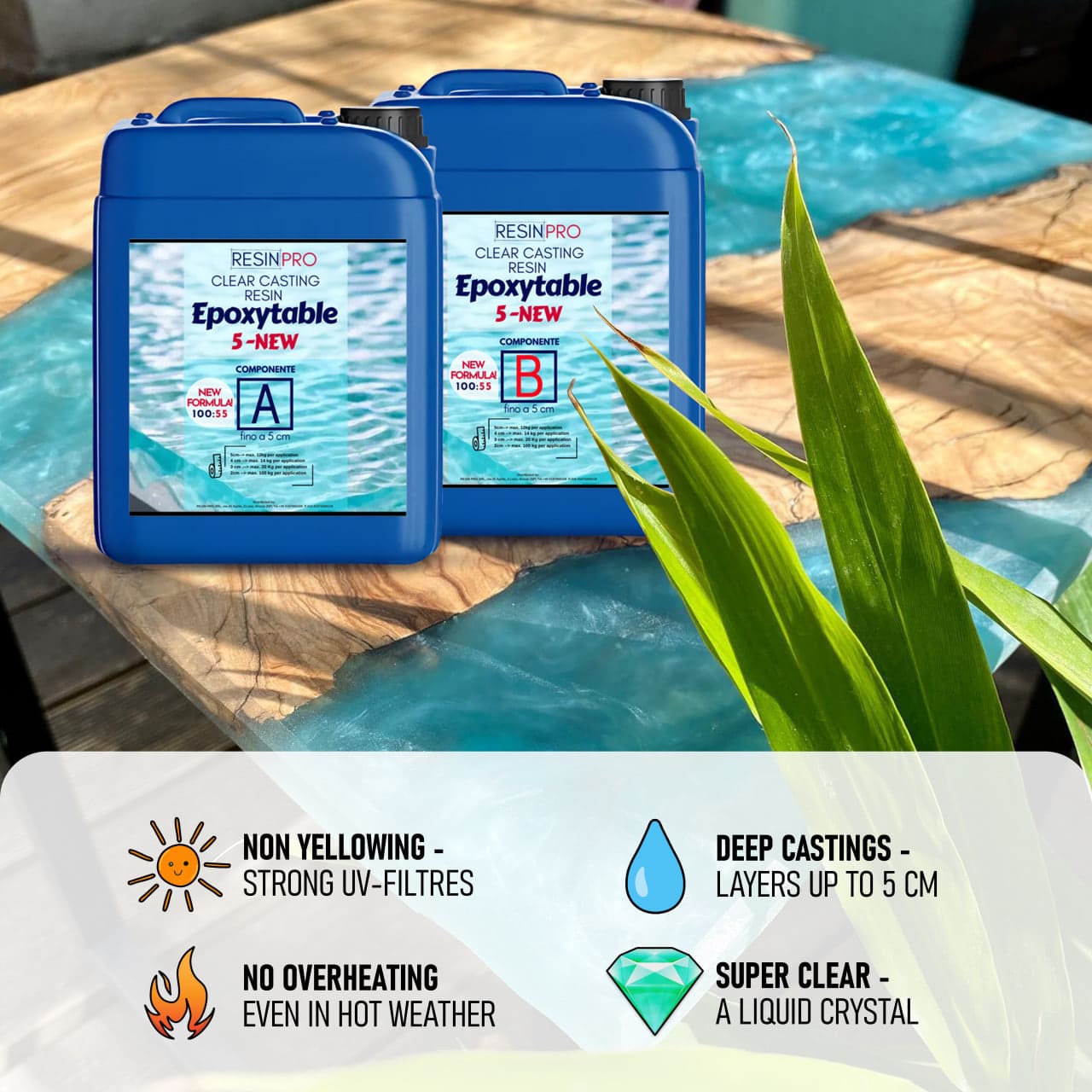
- “EpoxyTable 5-Five” – Deep Pour Epoxy Resin for Tables and Large Projects – Up to 5cm: Ideal for deep pours up to 5cm in thickness, offering clarity and durability for coffee tables.
- “Epoxytable 10-Ten” – Deep Pour Epoxy Resin for Tables, Up to 10cm Casting: Suitable for extra-deep designs up to 10cm thick.
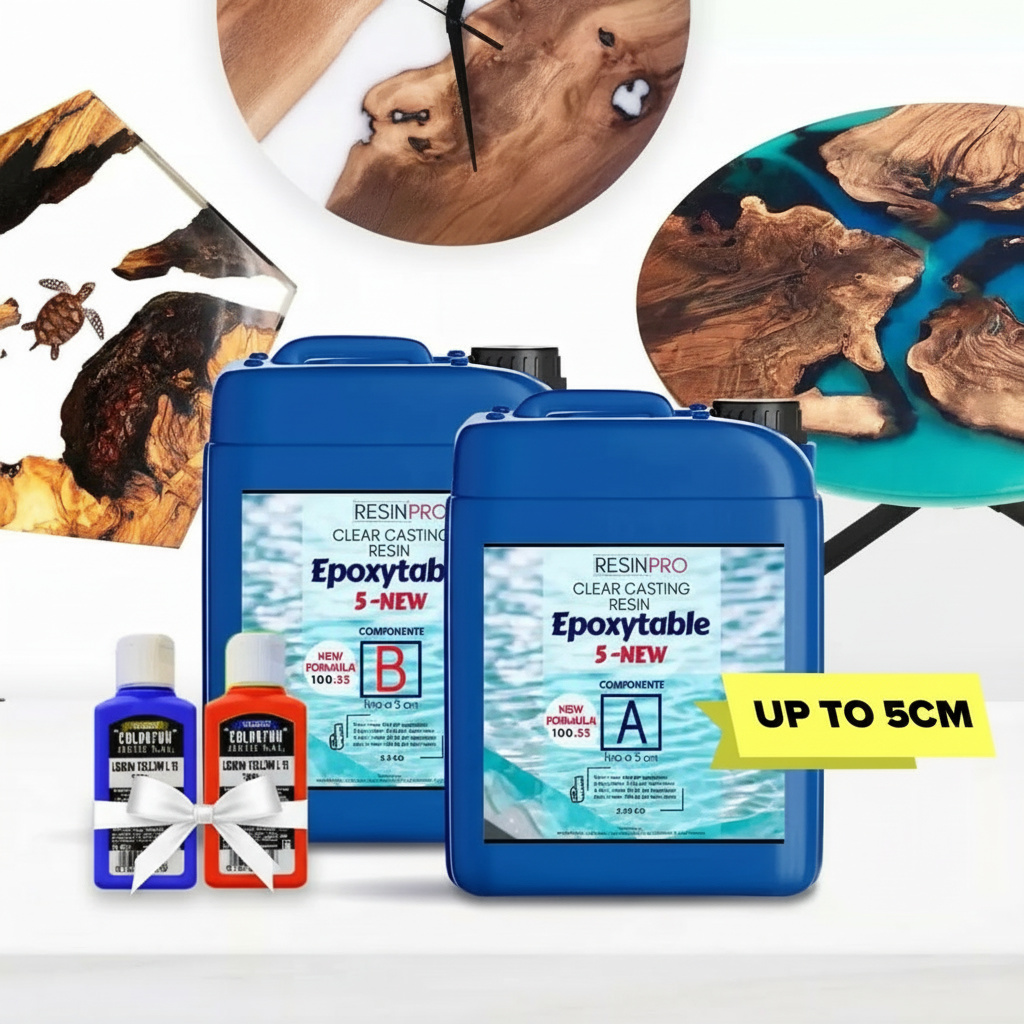
- “Art Pro” – Clear Epoxy Resin for Artists and Surface Coating: Perfect for final surface coatings to create a tough, high-gloss finish.
- Wood boards (live-edge or cut to size), sandpaper, mixing containers, stirrers, level, masking tape, mould materials (e.g., melamine boards), clamp strips.
- Protective gloves, mask, and eye protection.

Prepare Your Workspace and Materials
Set up your workspace on a level surface and gather all required tools and safety gear before starting your project. Lay down protective sheeting, wear gloves and a mask, and organise materials and mixing containers for a smoother workflow. This will help you focus on each step with confidence and avoid common mishaps.
Step 1: Design and Prepare Your Table Mould
Begin by deciding the final dimensions and look of your coffee table. Sketch your design, considering where the resin will flow between or around your wood pieces. Next, build a mould using melamine boards or similar non-stick material, sealing all joins with silicone to prevent leaks. Use a release agent or tape to prevent sticking to the mould. Securely clamp the wood, ensuring it stays level and stable to avoid resin seepage and uneven surfaces.
Precision at this stage makes all the difference, as it determines the clarity of your resin edges and the overall success of your project.
Step 2: Prepare and Seal the Wood
Thoroughly sand the wood, starting with a coarse grit and progressing to finer grades. Remove all dust, oils, or debris. Sealing the wood is essential: brush on a thin layer of epoxy resin or use a dedicated sealant to minimise air bubbles escaping during the main pour. Allow the sealing coat to cure as per product instructions, then lightly sand if needed.
Proper sealing also helps prevent resin absorption and unwanted colour shifts in the wood.
Step 3: Mix and Pour the Epoxy Resin
Choose your resin based on the desired pour thickness. For projects up to 5cm in depth, a deep pour resin like EpoxyTable 5-Five is recommended. For exceptionally thick pours, use Epoxytable 10-Ten. Refer to your chosen product’s mixing instructions—usually a precise resin-to-hardener ratio.
Mix thoroughly and pour slowly to prevent bubbles. If your design includes coloured resin, add pigments before pouring. Use a heat gun or torch lightly over the surface to remove trapped air bubbles. Pour in layers if exceeding recommended thickness, allowing each to partially cure before adding the next.

Step 4: Curing and Demoulding
Allow the resin to cure fully according to the manufacturer’s specified time and temperature recommendations—undisturbed and covered to prevent dust. Once fully hardened, carefully remove the clamps and disassemble the mould. Trim any excess or drips from the edges with a scraper or saw if needed.
Patience during curing leads to superior finishes and prolonged table durability.
Step 5: Sand, Polish, and Apply the Final Finish
Sand the table’s surfaces starting with 360-grit and progressing to 3000-grit or higher, ensuring a smooth edge and top. Use water when wet-sanding to keep dust at bay and prevent scratches. For a glass-like finish and enhanced surface protection, coat with Art Pro – Clear Epoxy Resin for Artists and Surface Coating. This adds gloss, heat resistance, and scratch protection.
Buff with polishing cream and pads as required to achieve the desired sheen. Proper finishing protects the table and highlights the artistry of your resin and wood work.
Tips and Troubleshooting for Resin Coffee Table Projects
- Always work in a well-ventilated area and wear gloves to protect your health.
- Measure all resin and hardener by weight, not volume, for accuracy.
- Use a release agent or tape to prevent sticking when building your mould.
- Let each layer cure fully before the next pour to avoid clouding or overheating.
- Mix thoroughly and pour slowly to prevent bubbles; remove bubbles with heat after pouring.
- Patience during curing leads to superior finishes; never rush the demoulding process.
- Store resin at a stable room temperature for optimal performance.
Finishing Touches for a Professional Result
Smooth sanding, careful polishing and the right topcoat make the difference between a good and a great resin coffee table. Take your time on the final steps for a lasting finish that keeps your table looking beautiful for years. Consider using Art Pro resin for extra gloss and durability.

- "River-Table" – Complete Kit for Creating Your First Epoxy Resin TablePrice range: £188.85 through £444.85Complete kit including resin, hardener, pigments and polishing materials designed for creating wood and resin tables.
- "EpoxyTable 5-Five" – Deep Pour Epoxy Resin for Tables and Large Projects – Up to 5cmPrice range: £16.85 through £1,099.85"EpoxyTable 5-Five" is a deep pour epoxy resin designed for tables and large projects, suitable for layers up to 5cm thick.
 “Epoxytable 10-Ten” – Deep Pour Epoxy Resin for Tables, Up to 10cm CastingPrice range: £33.85 through £334.85Epoxy resin designed for deep pouring up to 10cm, offering low viscosity and UV resistance suitable for resin coffee table projects.
 "Art Pro" – Clear Epoxy Resin for Artists and Surface CoatingPrice range: £31.15 through £388.85Art Pro epoxy resin delivers clear, durable finishes suitable for artistic surface coatings, aligning with 'How to make a resin coffee table'…
Frequently Asked Questions
What is the best resin for a thick coffee table pour?
For thick pours up to 5cm, a deep pour resin like EpoxyTable 5-Five is recommended. For up to 10cm thickness, use Epoxytable 10-Ten.
How do I prevent bubbles in my resin coffee table?
Seal the wood before pouring, mix thoroughly, pour slowly, and use a heat gun to help release trapped air bubbles during the pour.
Is it suitable for beginners to make a resin coffee table?
Yes, especially with a complete kit and clear instructions. Start with simple designs and follow the mixing and curing directions closely.
How long does it take for a resin coffee table to cure?
Curing takes 24 to 72 hours, depending on resin type and thickness. Full hardness and use may require up to a week.
How do I achieve a glossy finish on my resin coffee table?
Sand through successive grits and apply a clear topcoat resin such as Art Pro for a tough, high-gloss surface.
Can I repair scratches or imperfections in my resin table?
Lightly sand the area, then polish or recoat with a thin layer of epoxy resin to restore smoothness and shine.