 Free shipping on orders over £29,85
  Shipping Tracking!


 Google
 Facebook
How to make a table with epoxy resin?
Creating your own table with epoxy resin is a rewarding DIY project that results in a stunning, professional-quality centrepiece. Whether you’re aiming for a river table, embedded artwork, or a glossy finish on timber, this guide walks you through each stage—ensuring durability, clarity, and a beautiful result. No experience is necessary—just careful preparation and patience.
A step-by-step guide for creating unique epoxy resin tables.
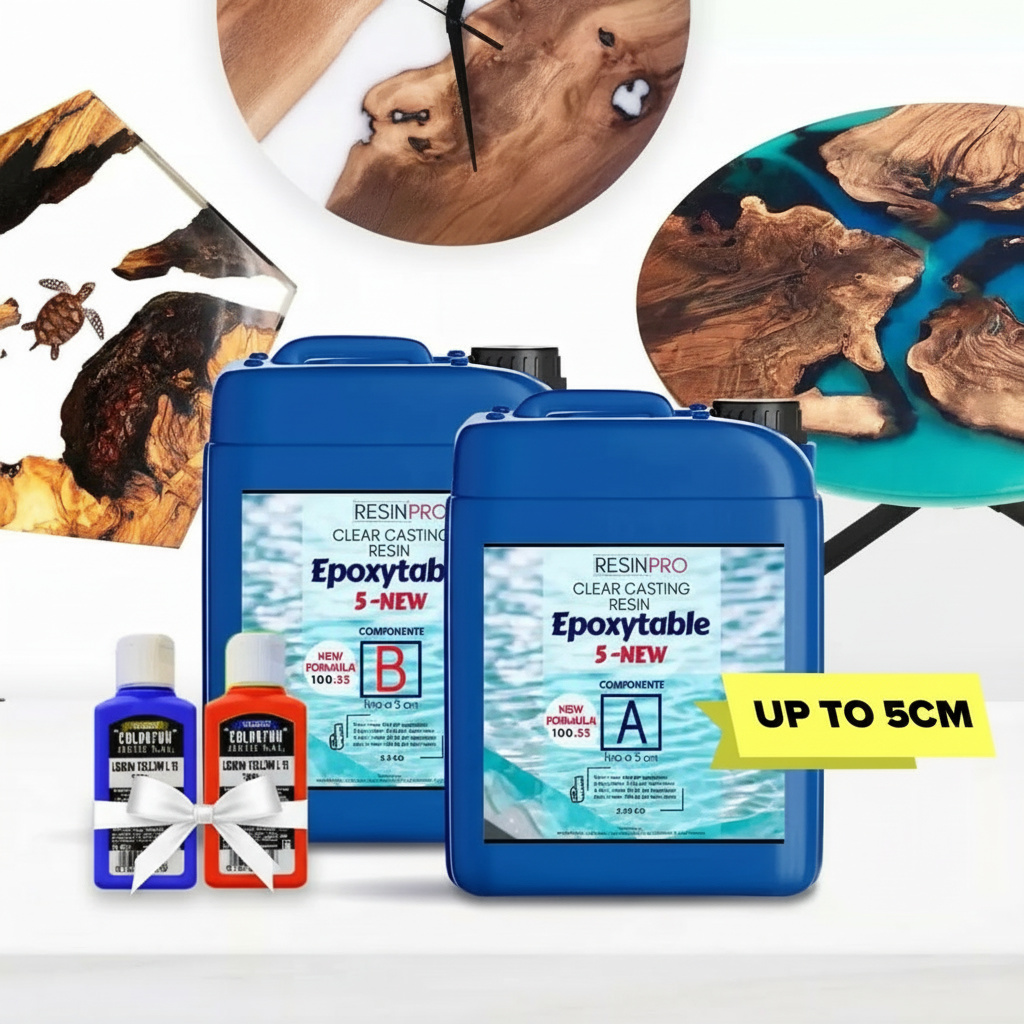

What You’ll Need
- “EpoxyTable 5-Five” – Deep Pour Epoxy Resin for Tables and Large Projects – Up to 5cm: Suitable for most deep pour resin table projects up to 5cm thickness.
- “Epoxytable 10-Ten” – Deep Pour Epoxy Resin for Tables, Up to 10cm Casting: Best for especially deep river tables or castings up to 10cm.
- “River-Table” – Complete Kit for Creating Your First Epoxy Resin Table: Ideal if you want an all-in-one starter set with everything included.
- MDF Board Base for Epoxy Resin Table and Art Projects: Provides a sturdy work surface for your table build.
- Timber sections for your table edges or insert
- Clamps, safety equipment, mixing containers, and formwork materials
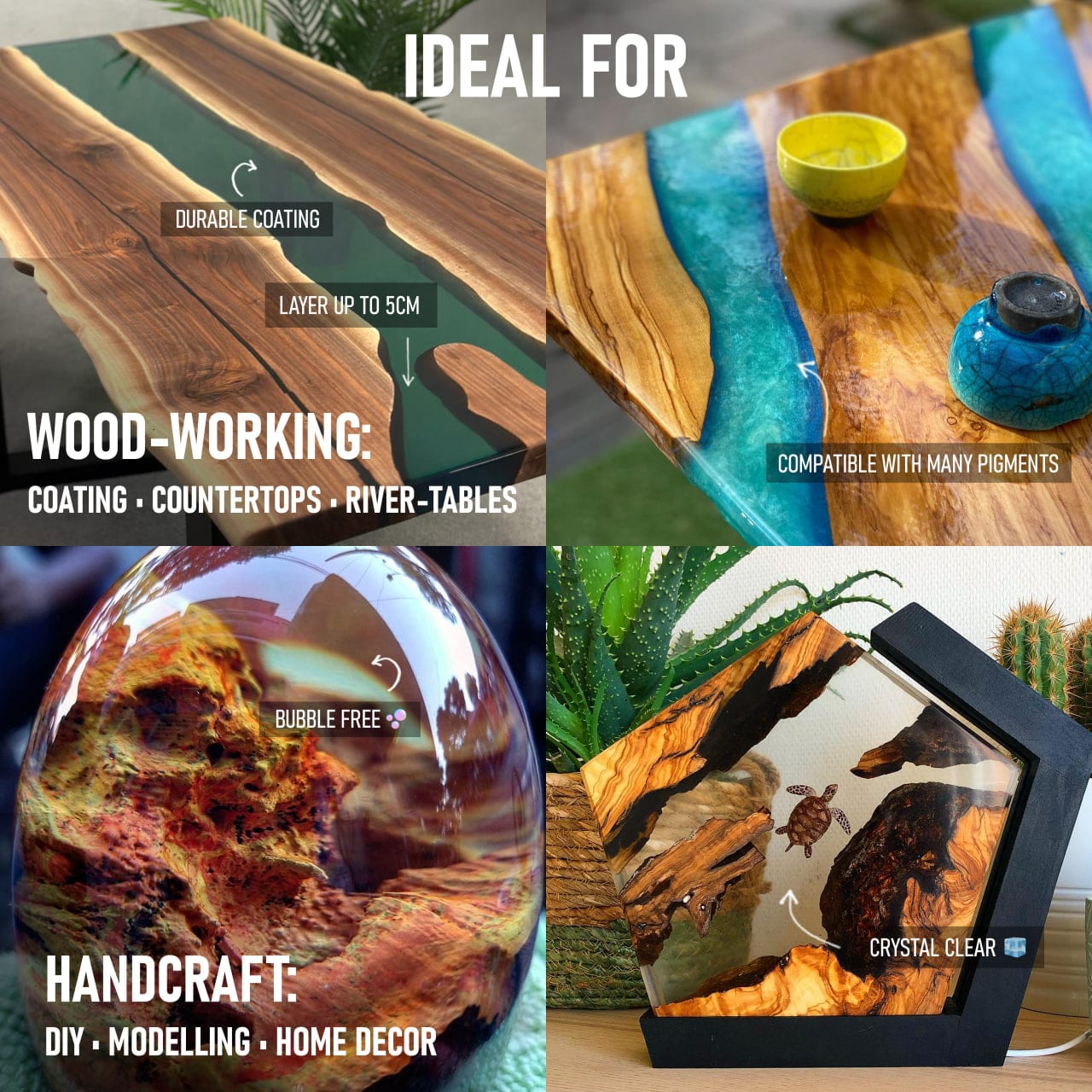
Inspiration: Stunning Epoxy Table Projects
Explore how resin transforms natural timber and embedded objects into exceptional tabletops. From crystal-clear river tables to dazzling tinted finishes, epoxy resin offers unlimited design options. Be inspired to create your own custom surface using these materials and techniques.

Step 1: Prepare Your Base and Formwork
Start by selecting a perfectly flat and stable base. An MDF board, such as the MDF Board Base for Epoxy Resin Table and Art Projects, ensures even results and robust support throughout the project. Place your timber pieces and seal the edges of your formwork to prevent resin leaks—silicone sealant or adhesive tape work well for this purpose. Double-check your structure for stability and check for any gaps that might allow resin to escape during the pour.
It’s crucial to level your entire setup accurately—use a spirit level to avoid an uneven finish. Secure all pieces in place with clamps and ensure your workspace is dust-free before proceeding.
Step 2: Mix and Tint the Epoxy Resin
Once your base and formwork are ready, it’s time to mix your chosen epoxy system. For most home projects, EpoxyTable 5-Five – Deep Pour Epoxy Resin is ideal for pours up to 5cm. For larger or thicker pours, consider Epoxytable 10-Ten – Deep Pour Epoxy Resin. Adhere strictly to the manufacturer’s ratio and mixing instructions to prevent curing problems. Stir gently for several minutes, scraping the sides and base of your mixing vessel to distribute hardener and resin evenly and avoid introducing bubbles.
If you wish to add pigments or dyes, incorporate them during this stage—ensuring they’re fully dispersed for even colouration or effects. Mix only what you can use within the allocated working time of your chosen resin.
Step 3: Casting the Resin
Pour the prepared resin slowly and evenly into your formwork. If building a classic river table, start with a thin ‘seal coat’ to minimise bubbles and avoid resin loss. For deep projects, pour in layers—each no more than the maximum depth recommended by your resin (e.g., 5cm for EpoxyTable 5-Five or 10cm for Epoxytable 10-Ten). Allow each layer to partially cure before adding the next for optimal clarity.
Work in a dust-free, ventilated area, and use a heat gun or blowtorch cautiously to remove surface bubbles after each pour. Cover the project to protect from airborne dust during the cure.

Step 4: Demoulding, Sanding, and Finishing
Allow the resin to fully cure as per the product’s instructions—it may take several days. Once cured, carefully remove the table from the formwork. Begin sanding with coarse paper, progressing to finer grades (wet sanding is best for clarity). Wipe clean between grades until the surface is smooth and matte.
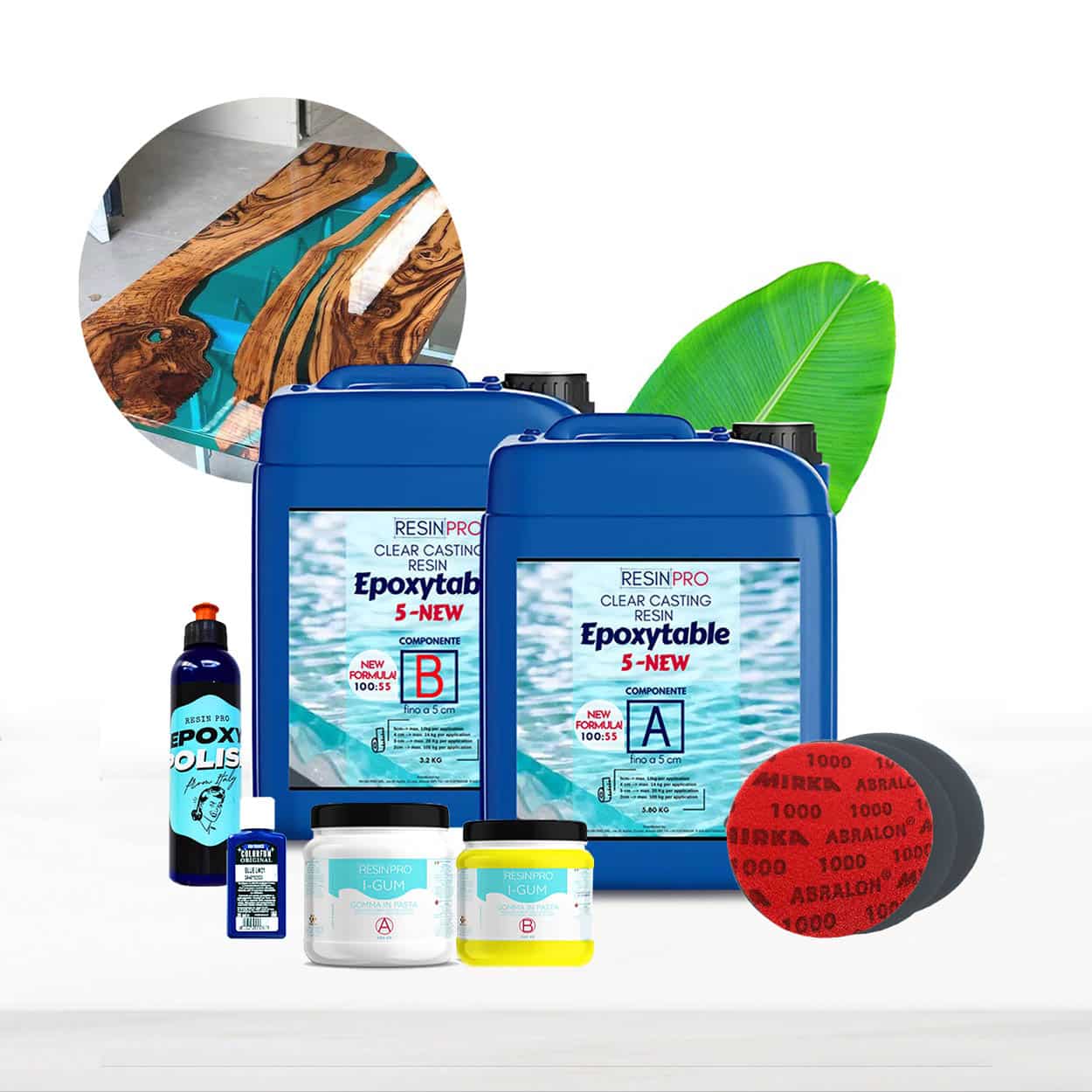
Polish with a dedicated kit—for example, the “River-Table” Kit includes pads and polishing cream—until you achieve a glossy, professional finish. Add table legs or your choice of hardware to complete your resin table masterpiece.
Tips, Common Mistakes, and Troubleshooting
Plan your pour depth and prep carefully—using the wrong resin for deep castings or missing a step in prep can cause curing issues, trapped air, or leaks.
Seal the formwork to prevent leaks—even a small gap can lead to major resin loss.
Mix epoxy resin thoroughly but gently to avoid unmixed spots and excess bubbles.
Pour in stages if needed for deep tables; patience ensures clarity and avoids overheating.
Sand and polish for a flawless finish—a little extra effort at this stage truly makes your table shine.
Showcase: Finished Resin Tables
See finished examples of epoxy resin tables made by makers at every skill level. Whether you follow a step-by-step project kit or customise your technique, enjoy the satisfaction of a unique, durable table that’s both art and furniture.
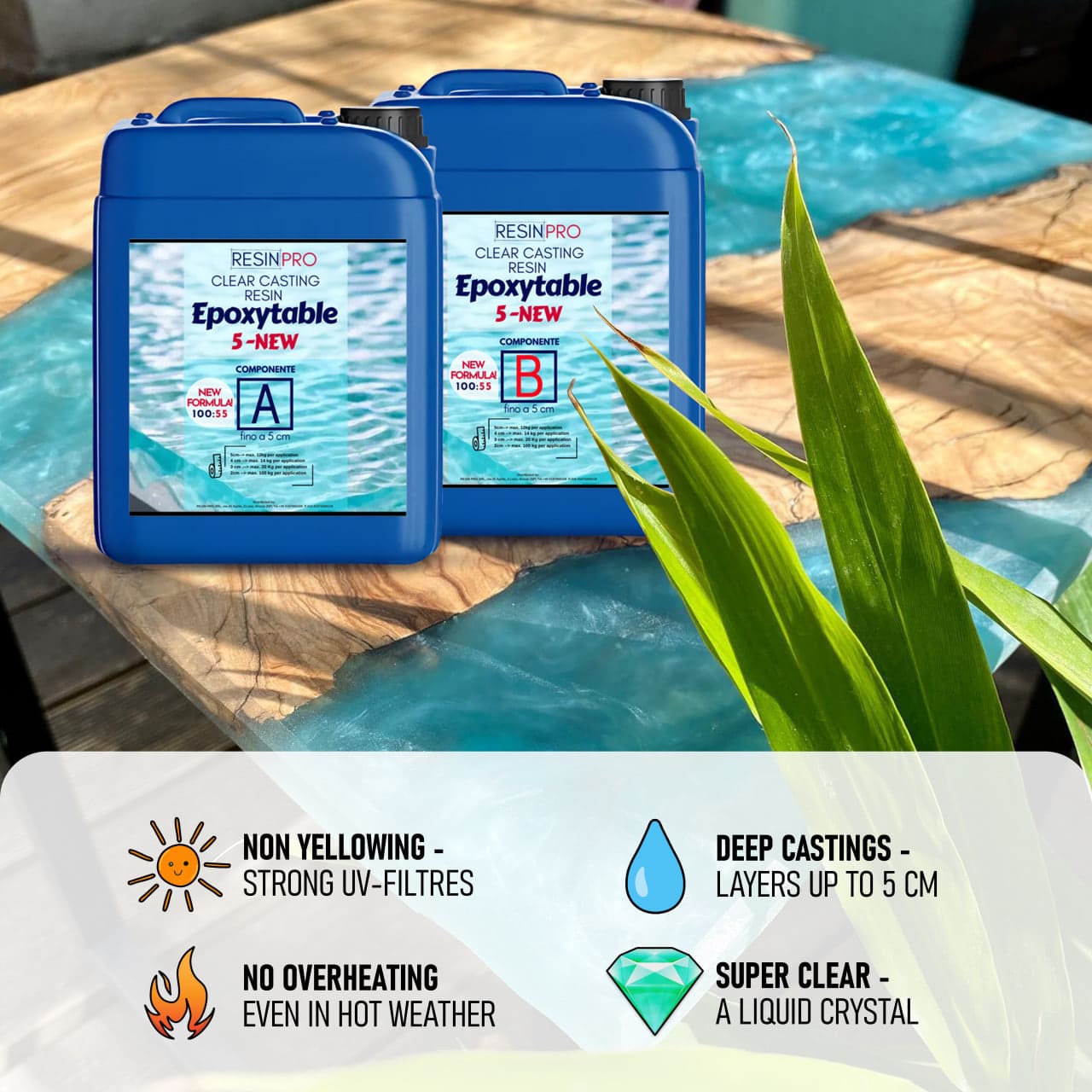
- "EpoxyTable 5-Five" – Deep Pour Epoxy Resin for Tables and Large Projects – Up to 5cmPrice range: £16.85 through £1,099.85EpoxyTable 5-Five is designed for deep pouring up to 5cm, suitable for tables and large projects with a clear, bubble-free finish.
- "River-Table" – Complete Kit for Creating Your First Epoxy Resin TablePrice range: £188.85 through £444.85Kit containing epoxy resin, sealant, polishing supplies and pigments for making a wood and resin table as part of resin table projects.
 “Epoxytable 10-Ten” – Deep Pour Epoxy Resin for Tables, Up to 10cm CastingPrice range: £33.85 through £334.85“Epoxytable 10-Ten” is designed for deep pour epoxy casting up to 10cm, suitable for tables and artistic projects with minimal yellowing.
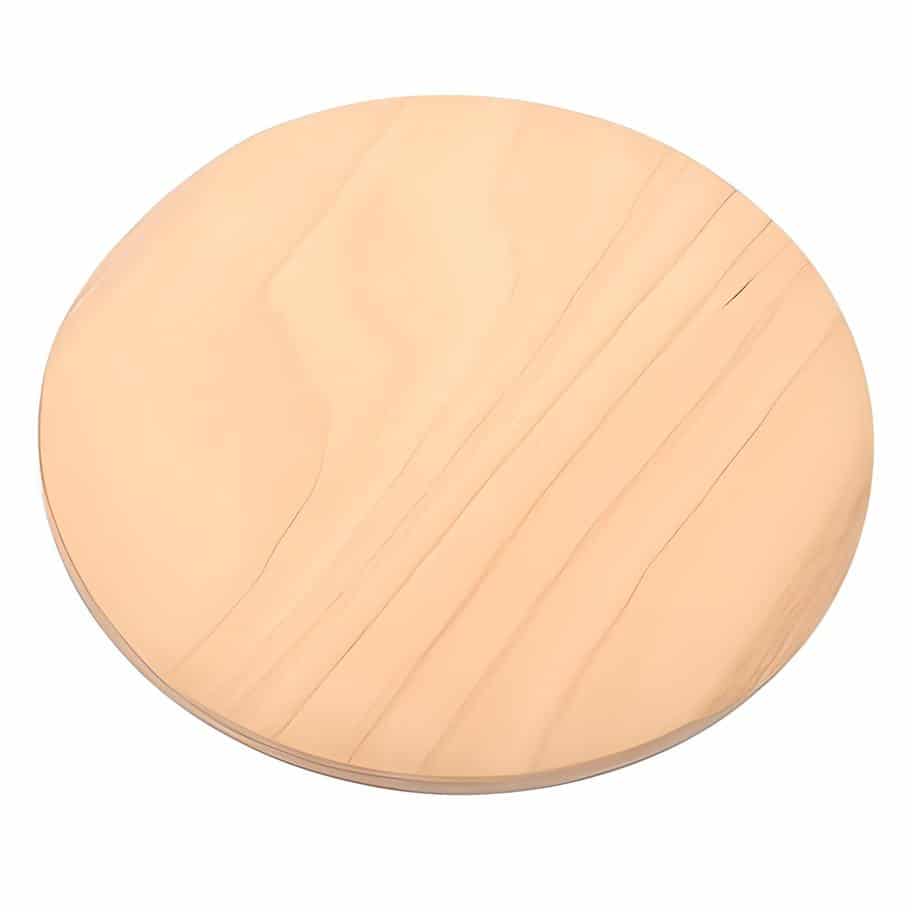 MDF Board Base for Epoxy Resin Table and Art ProjectsOriginal price was: £25.00.£17.85Current price is: £17.85.MDF board base designed for epoxy resin tables and art projects, suitable for artists and beginners.
Frequently Asked Questions
Can I pour the epoxy resin for my table in one single layer?
This depends on the resin's depth rating: up to 5cm for EpoxyTable 5-Five and 10cm for Epoxytable 10-Ten. For thicker tables, pour in stages.
What is the best base for an epoxy resin table?
A flat, sturdy MDF board like the dedicated table base provides ideal support for even resin application and curing.
How do I avoid bubbles in my resin table?
Mix gently and use a heat gun or blowtorch to remove bubbles after pouring layers. Always pour in a dust-free space.
Is it suitable for beginners to make epoxy resin tables?
Yes, especially with a starter kit containing all essentials and instructions designed for first-time makers.
Which resin should I use for thick or river tables?
Use EpoxyTable 5-Five for up to 5cm deep pours, or Epoxytable 10-Ten for projects up to 10cm thickness.
How do I finish and polish my resin table's surface?
Wet sand progressing to finer grits, then polish with dedicated cream and pads for a glossy finish.