 Free shipping on orders over £29,85
  Shipping Tracking!


 Google
 Facebook
How to make an outdoor cover using cement and resin?
Building an outdoor cover using cement and resin results in a hard-wearing surface that withstands the challenges of the UK weather. Whether you want a modern path, a robust patio, or a decorative driveway, combining cement with resin promises durability and visual appeal. This guide walks you through crucial preparation, mixing, and application steps for a finished product that lasts year-round.
A practical guide for durable, weather-resistant outdoor solutions

What You’ll Need
- Cement mix (for creating your base layer or slab)
- Aggregates (such as natural stone, pebbles, or grits)
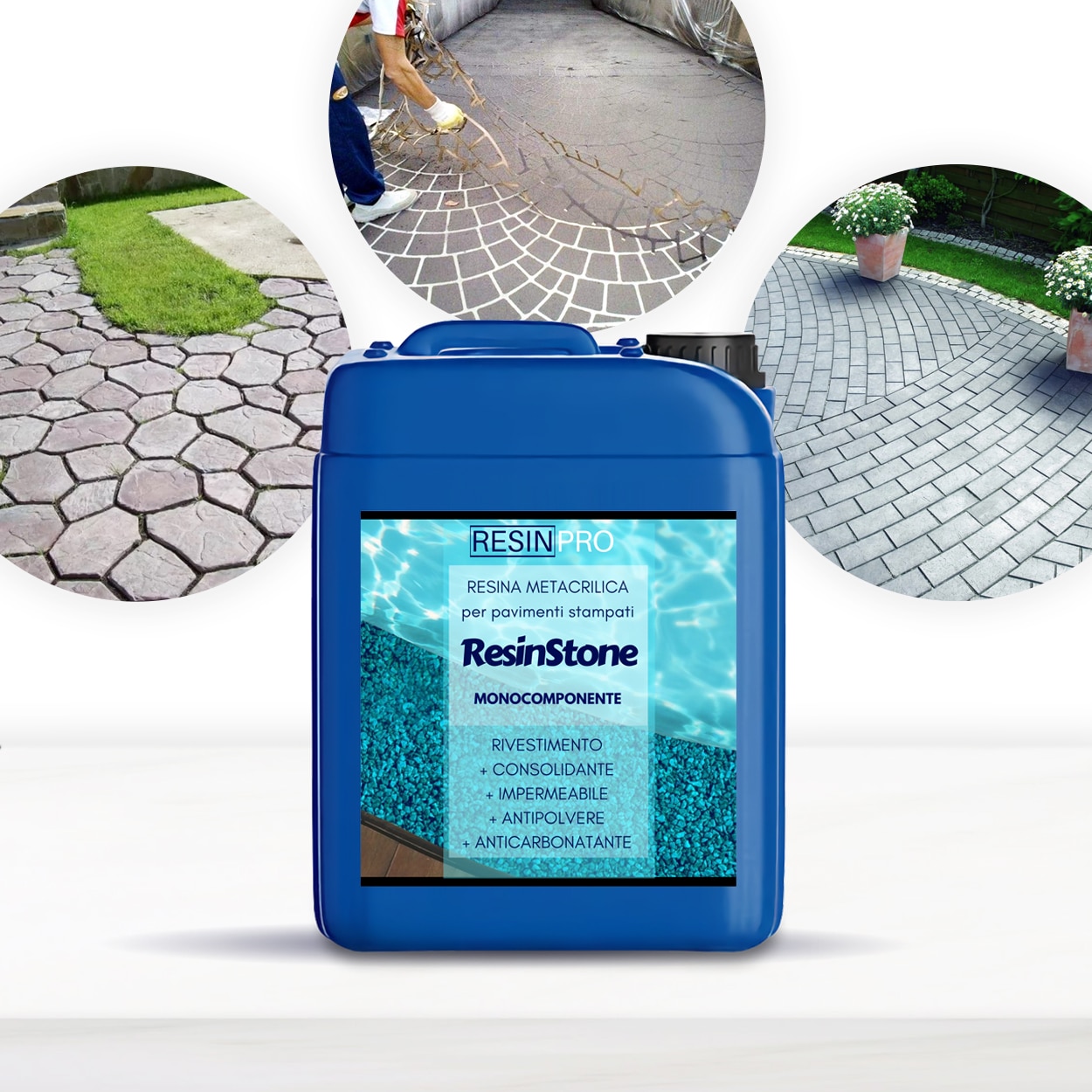
- “Resinstone” – One-Component Methacrylic Resin for Concrete Floors and Driveways – for robust waterproof sealing of concrete
- “Flowstone” – Complete Permeable Floor Kit with Pebbles and Resin – for a permeable, all-in-one outdoor surface
- “Polirock” – Polyurethane Binder for White Stones, 2kg Two-Component Kit – for clear, UV-stable binding on white or light stones
- “Trasparente” – Epoxy Binder for Coloured Pebbles and Grits – for vibrant, coloured finishes on decorative aggregates
- Protective gloves, eye protection, and mixing tools
- Level and finishing trowel
- Measuring containers

Visual Inspirations: Cement and Resin Outdoor Covers
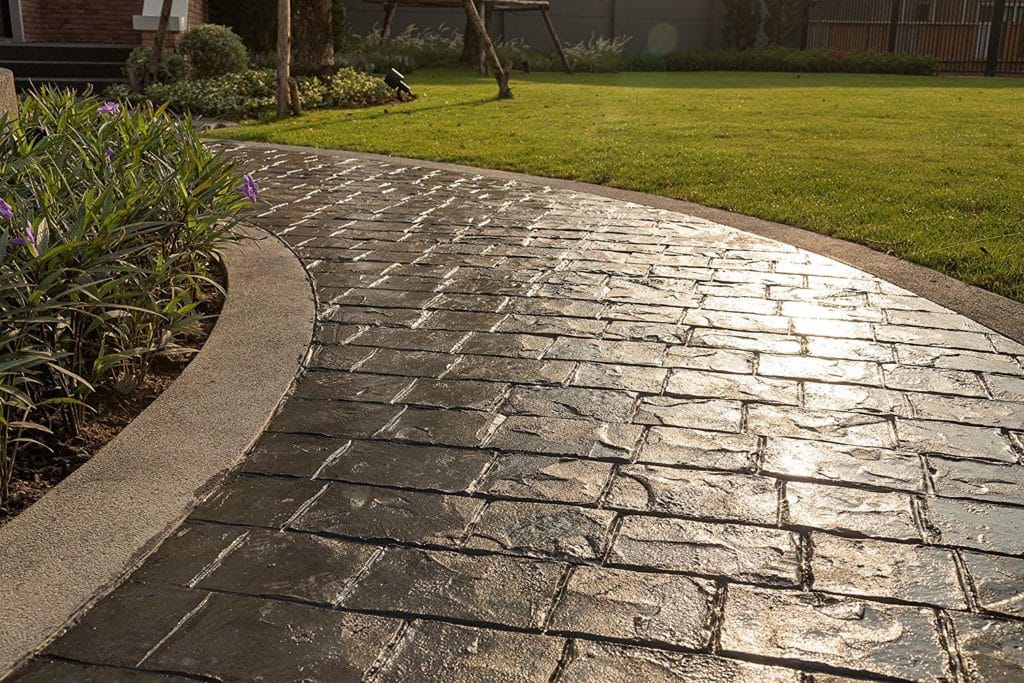
Explore finished outdoor projects showing various combinations of cement bases with resin-sealed pebbles or grits. See the diversity of finishes—from simple waterproofed driveways to vibrant decorative patios—that are possible when you combine aggregates and binders tailored for outdoor use.
Step 1: Prepare Your Base Surface
The quality of your finished cover relies hugely on base preparation. Start by clearing the area so it is level and free from debris, weeds, and loose material. Compacted sub-base or existing concrete forms the ideal foundation for applying cement and resin systems. If laying a new cement slab, allow it to fully cure as per manufacturer recommendations before proceeding with any resin application. Good drainage and a slight slope away from buildings help prevent future pooling of water.
Ensure a clean, solid, and level base before starting to maximise adhesion and longevity.
Step 2: Select and Mix the Resin System
Choose the combination best suited to your needs: seamless sealing, permeable surfacing, or decorative finish. For example, “Resinstone” – One-Component Methacrylic Resin for Concrete Floors and Driveways provides deep-penetrating, long-term protection for classic concrete slabs, while “Flowstone” – Complete Permeable Floor Kit with Pebbles and Resin offers a complete approach for laying resin-bonded aggregate finishes that allow water to drain through.
For decorative surfaces with colour requirements, select a suitable binder: polyurethane for white stones (“Polirock” – Polyurethane Binder for White Stones, 2kg Two-Component Kit), or transparent epoxy for coloured pebbles and grits (“Trasparente” – Epoxy Binder for Coloured Pebbles and Grits).
Accurately measure your resin and hardener components if using a two-part system. Mix according to directions until fully blended and homogeneous. Only prepare enough material to cover your targeted work area before curing begins.
Choose the right binder for your chosen aggregate and colour to ensure UV stability and lasting appearance outdoors.
Step 3: Apply the Cement, Aggregate, and Resin
For plain cement surfaces requiring sealing, apply your Resinstone methacrylic resin by roller or brush in thin, even coats. Allow to penetrate and dry before repeating if necessary.
To create a permeable or decorative stone finish, mix your chosen aggregate thoroughly with the appropriate resin binder until stones are fully coated. Pour the mixture onto your prepared surface and spread evenly with a trowel, maintaining consistent thickness across all areas. Press and compact gently to achieve an even texture and strong surface cohesion.
Work in manageable sections to avoid the resin curing before spreading is complete. Clean any excess material immediately from neighbouring surfaces to prevent staining.
Mix thoroughly and apply in workable sections for best finish and mechanical strength.
Step 4: Curing and Final Finishing
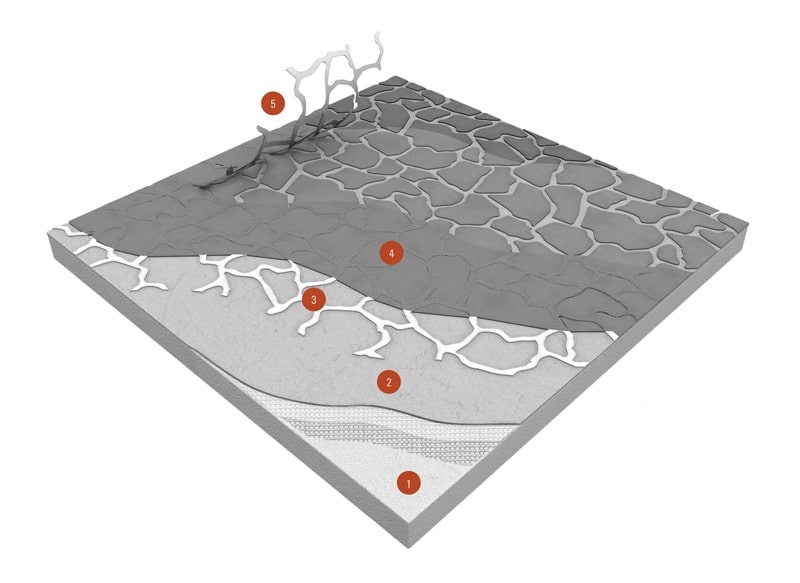
Protect the freshly laid surface from rain, direct sunlight, and traffic for at least the initial curing period (check the instructions of your selected product for specific times). Avoid walking or placing weight on the surface until the resin has fully hardened. Fast-curing systems are often walkable within 10–12 hours but require up to 24–48 hours for complete mechanical and chemical properties.
After curing, inspect for imperfections or uneven spots, and make minor touch-ups if needed. The result should be a robust, waterproof, and visually appealing outdoor cover ready to withstand the rigours of British weather.
Tips, Common Mistakes, and Troubleshooting
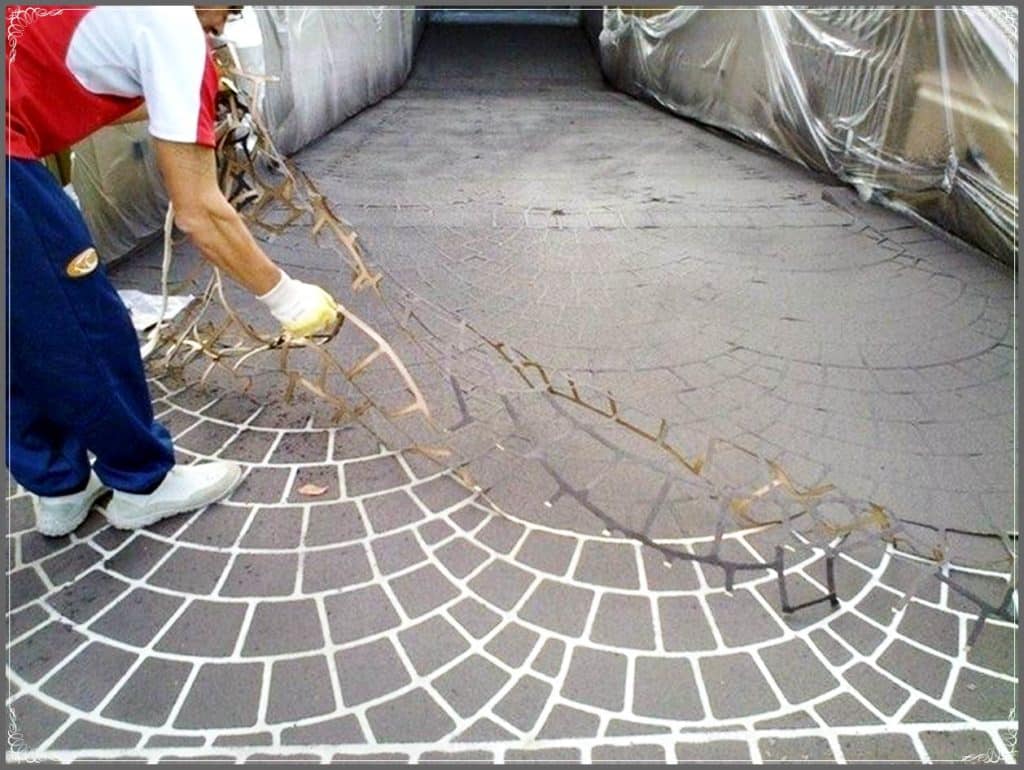
Avoid resin application in extreme weather or excessive humidity as this can undermine adhesion and curing. Always mix the correct ratios; errors may result in weak or sticky surfaces. Pay attention to aggregate compatibility—using the wrong binder on white or coloured stones can lead to discolouration. Clean tools quickly after use to prevent resin setting on equipment. If you encounter bubbling or surface blushing, check for moisture trapped in your base layer or environmental conditions during application.
Expert Insights: Finishing and Maintenance
Consistent care ensures your outdoor cover performs for years: Sweep regularly to prevent grime build-up, check for early signs of wear, and top up resin sealant or binder as recommended, especially in high-traffic areas. The right maintenance regime preserves weather resistance and vibrant appearance.
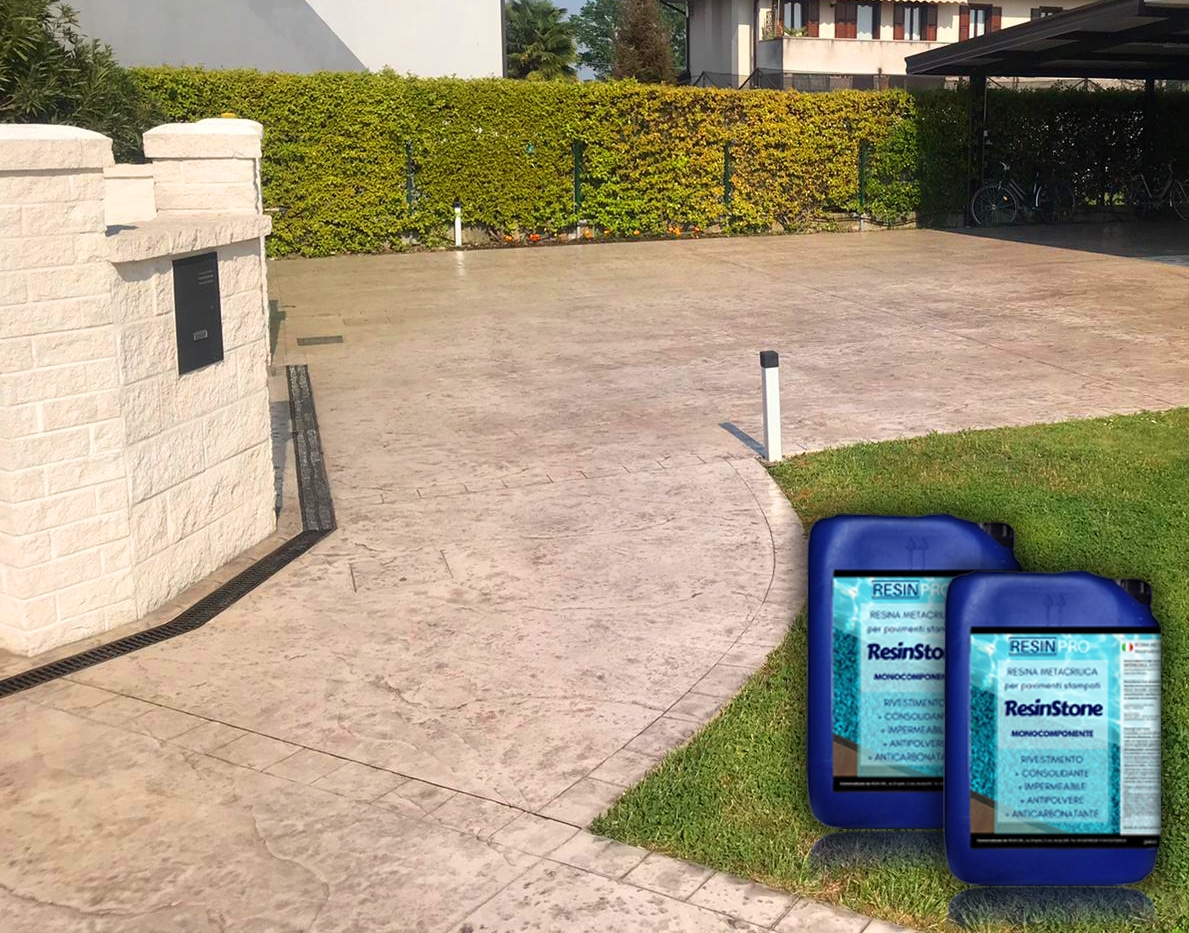
- "Resinstone" – One-Component Methacrylic Resin for Concrete Floors and DrivewaysPrice range: £29.85 through £59.85"Resinstone" is a methacrylic resin designed for sealing concrete floors and driveways, providing durable protection and deep penetration.
- "Flowstone" – Complete Permeable Floor Kit with Pebbles and ResinPrice range: £42.85 through £3,389.85Flowstone kit is a permeable pebble and resin flooring system for outdoor areas, offering durable and draining surfaces suited to UK conditions.
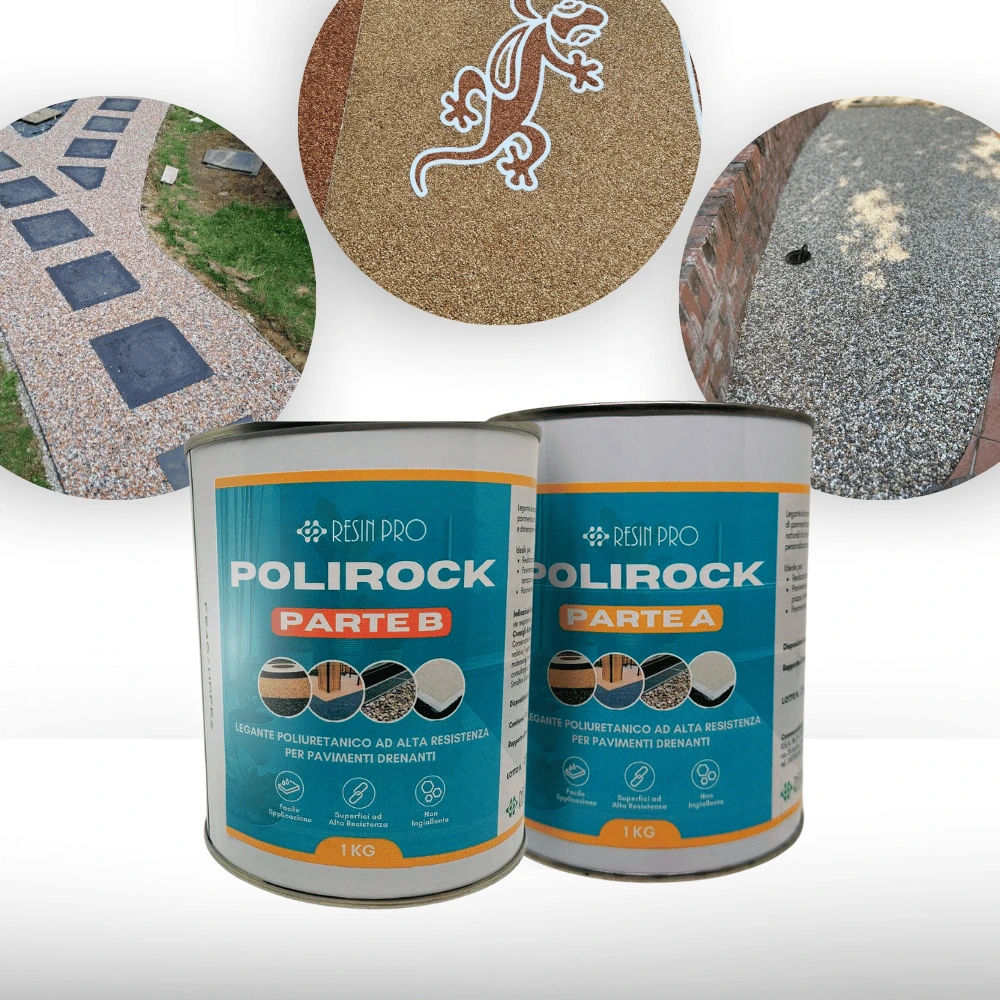 "Polirock" – Polyurethane Binder for White Stones, 2kg Two-Component Kit£58.85"Polirock" polyurethane binder provides a durable, weather-resistant finish for decorative and permeable outdoor stone surfaces.
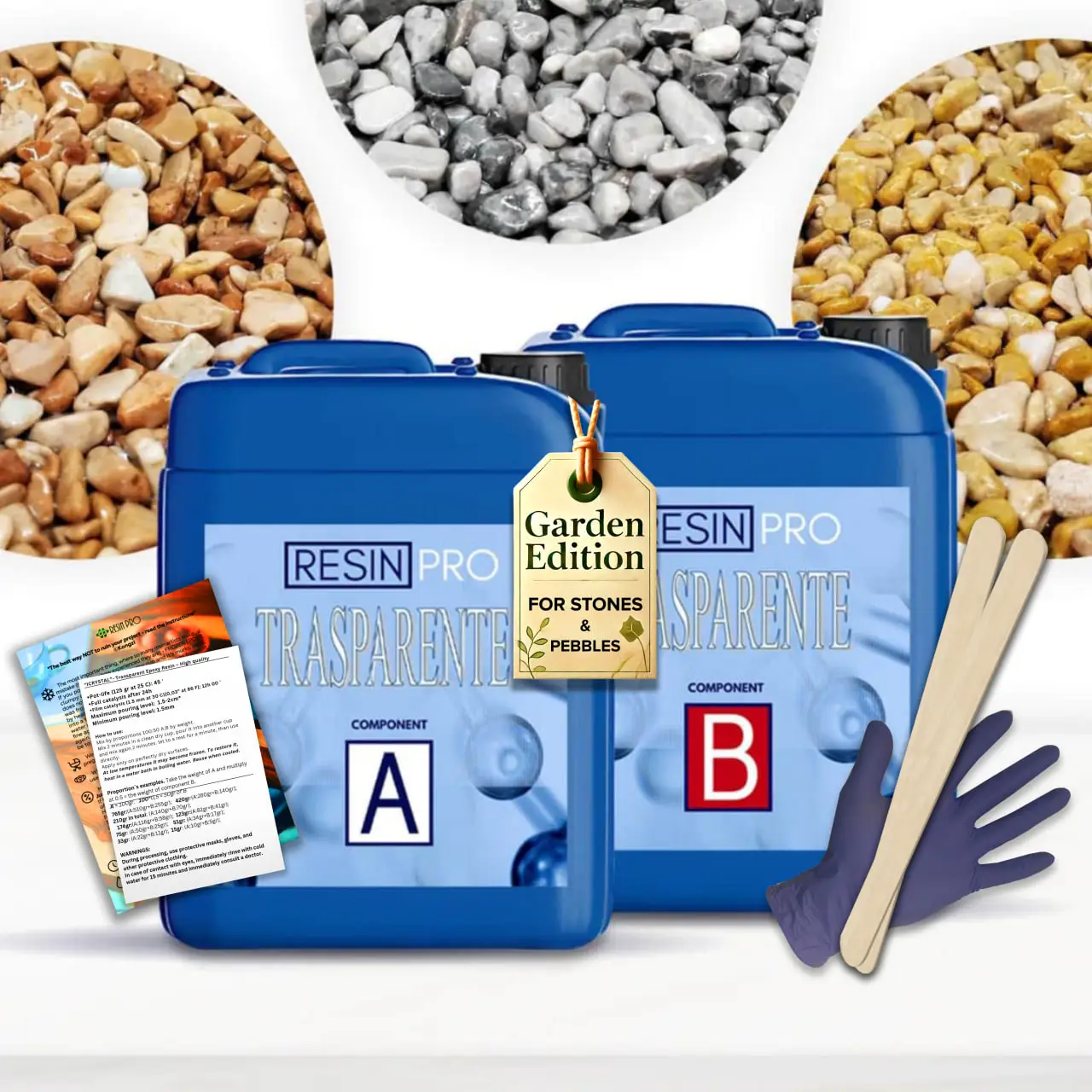 "Trasparente" – Epoxy Binder for Coloured Pebbles and GritsPrice range: £31.85 through £948.85"Trasparente" epoxy binder is a transparent, low-viscosity product designed for coloured pebbles, suitable for outdoor flooring projects using resin.
Frequently Asked Questions
Can I create a resin and gravel outdoor surface without professional help?
Yes, most resin-bound and sealed outdoor projects are suitable for DIY with the correct products and preparation. Follow product instructions closely for best results.
What weather conditions should I avoid when using resin for outdoor covers?
Avoid application during heavy rain, very cold or hot temperatures, and high humidity to ensure proper curing and strong adhesion.
Which resin binder should I use for a UV-stable, non-yellowing finish on white stones?
Use a polyurethane binder such as Polirock designed specifically for white stones to prevent yellowing and ensure long-term clarity.
Can I apply resin systems over old concrete or driveways?
Yes, as long as the surface is clean, dry, and sound, resin products can be applied to revitalise and protect old concrete covers.
How thick should cement and resin or resin-bound layers be for outdoor projects?
Thickness depends on purpose, but resin-bound aggregates are typically 12–18mm thick. Base cement layers should be solid and level, according to structural needs.
How soon can I walk or park on my new outdoor resin and cement cover?
Many surfaces are walkable after 10–12 hours, but full strength and chemical resistance are usually reached within 24–48 hours after application.
Are cement and resin binder products safe for DIY outdoor use?
Yes, if handled according to safety instructions. Use gloves and eye protection and work in well-ventilated areas to minimise risk.