 Free shipping on orders over £29,85
  Shipping Tracking!


 Google
 Facebook
How to get the correct proportions for epoxy resin?
A clear guide to accurate epoxy resin mixing ratios for your project


If you want crystal clear, flawless results from your epoxy resin projects—be it jewellery, deep pour tables, or creative art—accurate resin-to-hardener mixing is vital. This guide helps you understand the importance of correct proportions, explains how to choose between volume and weight measurements, and compares top ResinPro products so you can select the right resin for all your casting needs, regardless of skill level.
Epoxy Resin Proportion Basics: Overview and Comparison
The durability, clarity, and finish of your epoxy creations all depend on getting the proportions right. Some resins require a 1:1 (by volume) mix, while others need precise ratios by weight—such as 100:55. Choosing the right product not only streamlines preparation but also ensures repeatable, reliable results. Below, we compare the key features of ResinPro’s bestselling resins, highlighting differences in mixing ratios, best-use scenarios, and typical pitfalls to avoid.
Visual Guide: Mixing Ratios and Pour Depths
See how correct resin proportions impact clarity and strength. Our gallery highlights side-by-side results of projects with precisely measured versus inaccurately mixed resins—observe the difference in finish quality across jewellery, river tables, and deep pour artworks.
“One-2-One” – Epoxy Resin for Handcraft, 1:1 Mixing Ratio
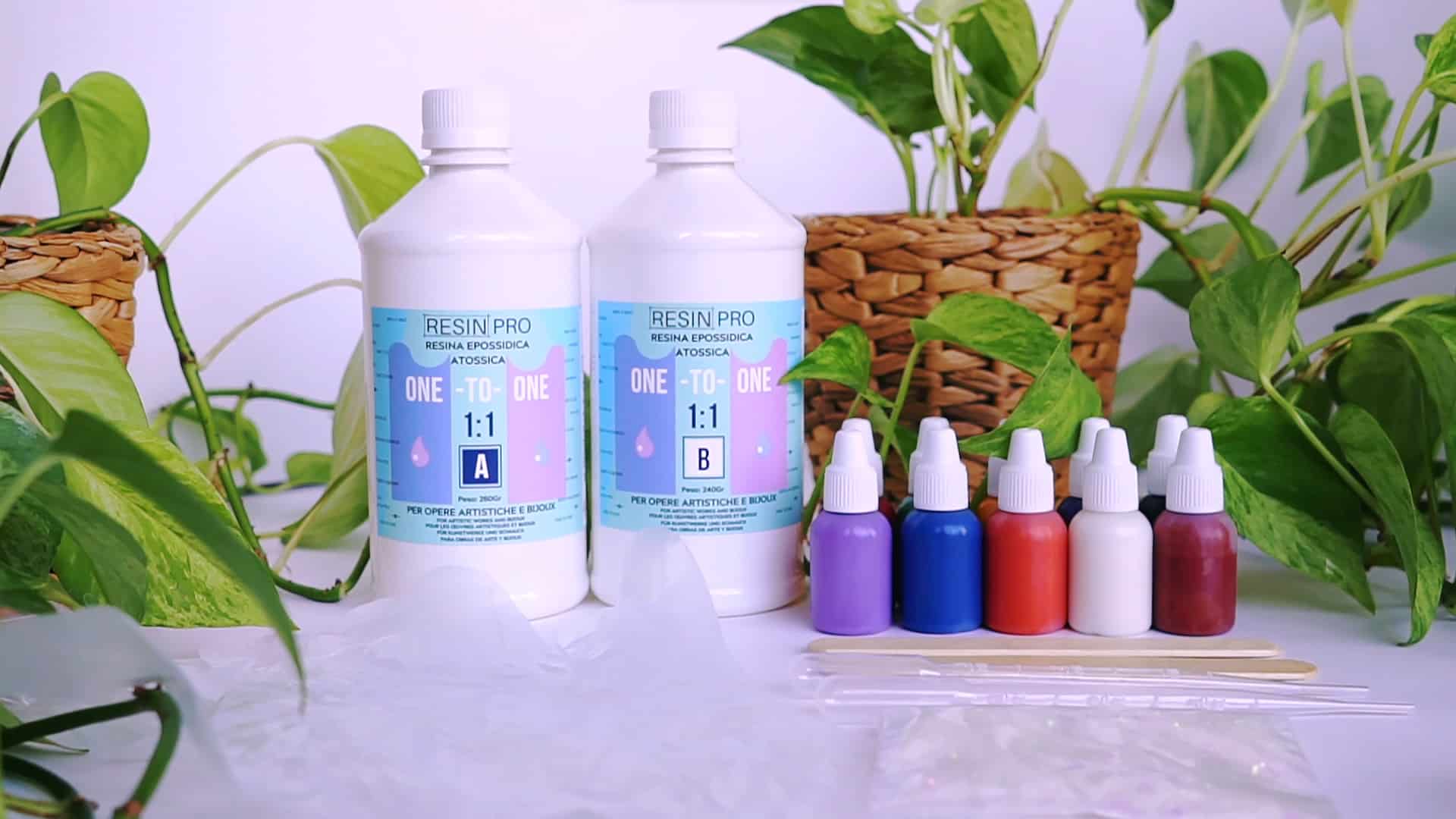
Perfect for jewellery, cabochons, and decorative items, “One-2-One” – Epoxy Resin for Handcraft, 1:1 Mixing Ratio requires no weighing—just mix equal parts of resin and hardener by volume. Easy 1:1 by volume mixing simplifies preparation for beginners and experienced crafters alike. It is non-toxic with a crystal clear, glossy finish, and built-in UV protection for a spectacular, long-lasting look. This resin is ideal if you want simple prep without sacrificing finish quality.
“Epoxytable 10-Ten” – Deep Pour Epoxy Resin for Tables, Up to 10cm Casting
For ambitious table projects or large artistic castings, “Epoxytable 10-Ten” – Deep Pour Epoxy Resin for Tables, Up to 10cm Casting delivers. This resin is specially formulated for deep pour applications up to 10cm thickness and features super low viscosity for a bubble-free finish. Its robust UV filter ensures clarity and colour stability for years. Proper mixing (100:44.5 by weight—refer to the packaging for exact ratios) is critical in deep pours to prevent overheating or cloudiness, so measure carefully.
“EpoxyTable 5-Five” – Deep Pour Epoxy Resin for Tables and Large Projects – Up to 5cm
If your tables or river casts are up to 5cm thick, “EpoxyTable 5-Five” – Deep Pour Epoxy Resin for Tables and Large Projects – Up to 5cm is engineered for stability and clarity in medium-depth projects. Its designed for deep pours up to 5cm thickness with low exothermic reaction makes it a popular choice for artists and furniture makers alike. Mixing accurately at 100:55 (by weight) prevents overheating and ensures a smooth, bubble-free cure. Work in manageable layer sizes if your project is exceptionally large.
“River-Table” – Complete Kit for Creating Your First Epoxy Resin Table
For beginners or those seeking an all-in-one solution, the “River-Table” – Complete Kit for Creating Your First Epoxy Resin Table provides everything you need: resin, hardener, silicone sealant, polishing kit, pigments, and step-by-step instructions. The kit walks you through classic ratios like 2/3 wood to 1/3 resin and includes guidance for choosing between 2cm or 5cm pour options. Includes epoxy resin, hardener, silicone sealant, pigments and polishing kit, plus detailed instructions on formwork creation and resin casting included, reducing guesswork for new creators.
Tips for Success When Mixing Epoxy Resin
Always follow the specific mixing instructions for your chosen resin—volume-based resins such as “One-2-One” do not require weighing, but deep pour resins nearly always do. Use clean containers and mix slowly to avoid trapping air. For deep projects, pour in layers and allow each to partially cure before adding the next. Choice of epoxy types for up to 2cm or 5cm pours per application means you can match resin type to your design, surface, or depth, further reducing the risk of curing issues.
Mixing Best Practices Illustrated
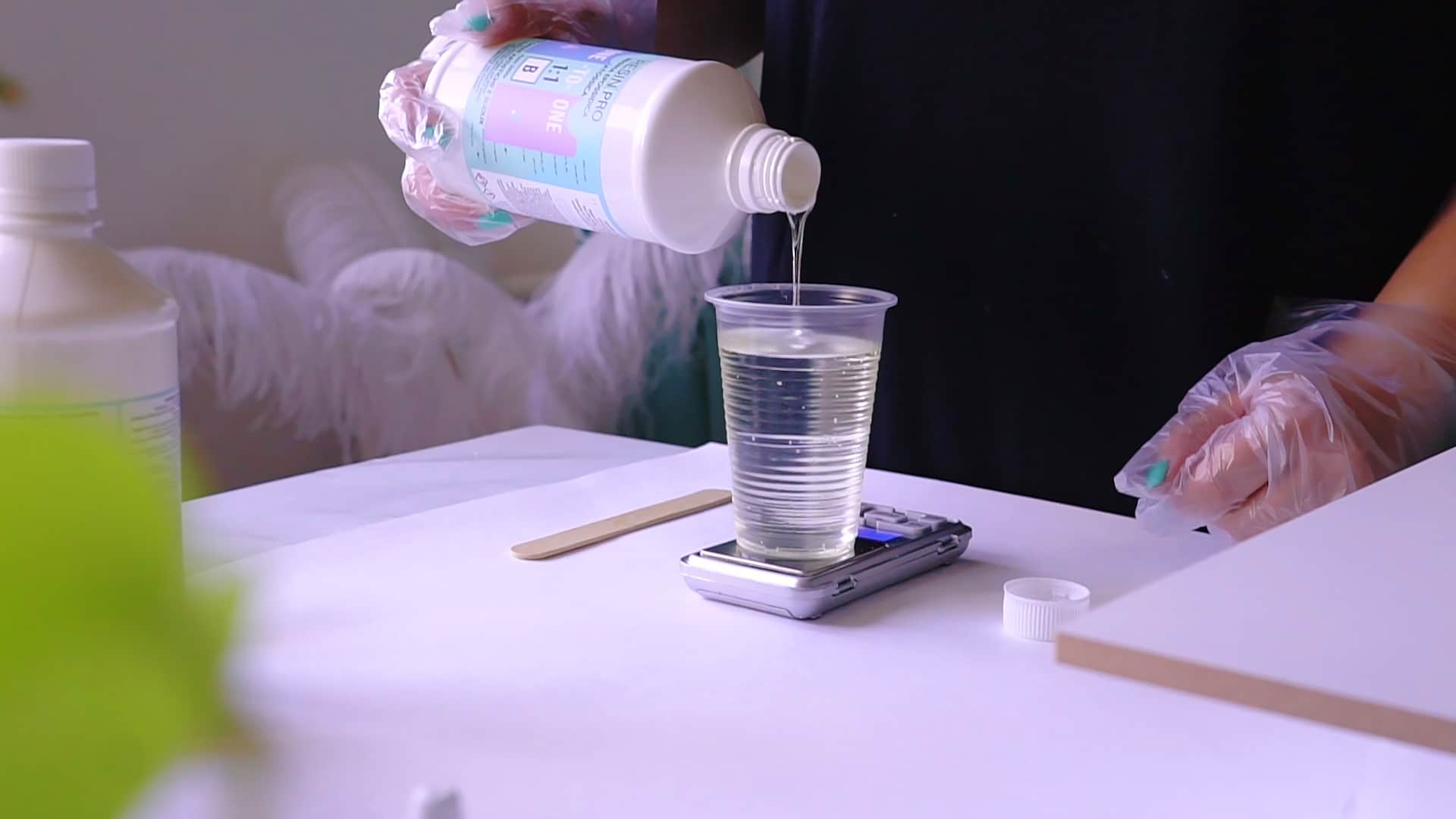
Step-by-step visuals of mixing and layering techniques. Explore the right way to gauge, blend, and pour resin, with practical demonstrations using “One-2-One”, “Epoxytable 10-Ten”, and the River-Table Kit, helping you avoid common proportion errors.
- "One-2-One" – Epoxy Resin for Handcraft, 1:1 Mixing RatioPrice range: £14.85 through £56.85ONE-2-ONE epoxy resin is a medium viscosity resin with an easy 1:1 volume mixing ratio, suitable for handcraft projects.
- “Epoxytable 10-Ten” – Deep Pour Epoxy Resin for Tables, Up to 10cm CastingPrice range: £33.85 through £334.85“Epoxytable 10-Ten” is designed for deep casting applications up to 10cm, suitable for tables and large artistic projects.
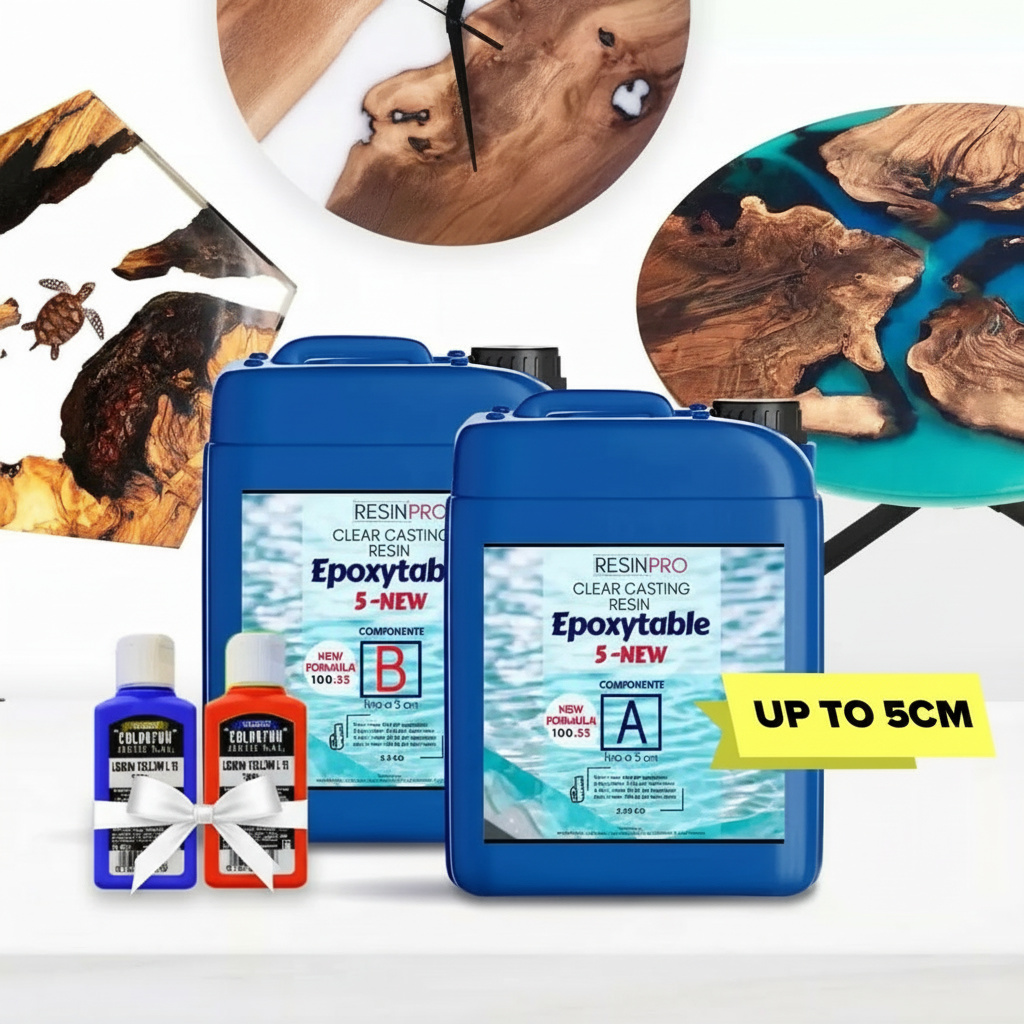 "EpoxyTable 5-Five" – Deep Pour Epoxy Resin for Tables and Large Projects – Up to 5cmPrice range: £16.85 through £1,099.85"EpoxyTable 5-Five" offers a clear, bubble-free epoxy resin designed for deep pour projects up to 5cm thickness, suited for tables and large creative…
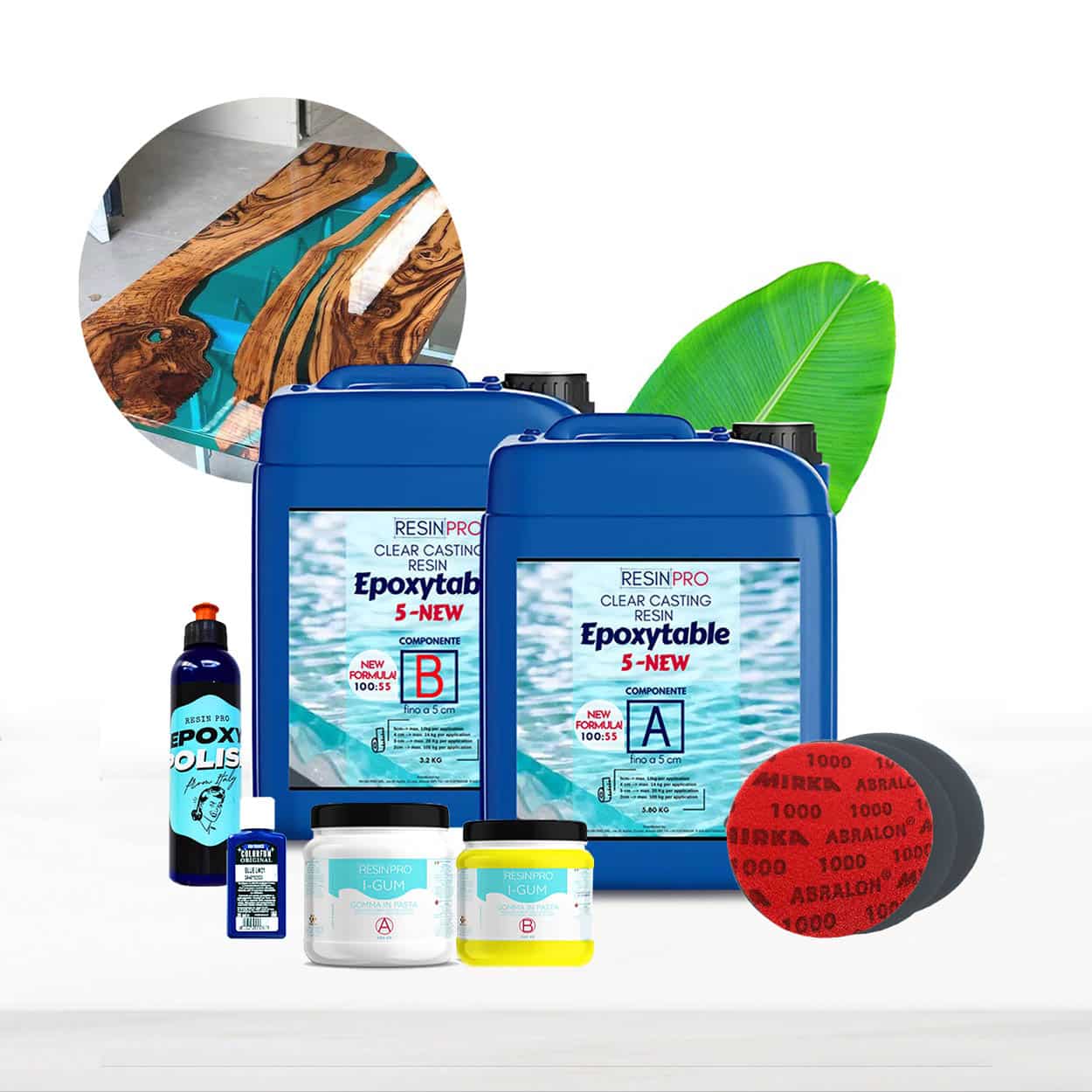 "River-Table" – Complete Kit for Creating Your First Epoxy Resin TablePrice range: £188.85 through £444.85"River-Table" starter kit includes resin, hardener, silicone sealant, pigments and polish with instructions for beginners and enthusiasts.
Frequently Asked Questions
Should I mix epoxy resin by weight or by volume?
This depends on the product. Always check the label: some resins require volume mixing (e.g., 1:1), while others must be mixed by weight (e.g., 100:55).
Which epoxy resin is easiest for beginners to mix accurately?
“One-2-One” is ideal for beginners because it uses a simple 1:1 volume ratio, removing the need for scales or complex calculations.
How can I avoid mistakes when mixing resin for deep pours?
Always measure by weight using the ratio specified on the packaging, mix thoroughly, and pour in layers to prevent overheating or imperfections.
What is the best temperature for mixing epoxy resin?
Mix at room temperature (around 20–25°C) for optimal results and efficient curing. Too cold or hot can impact outcome.
What happens if I get the proportions wrong?
Incorrect ratios may result in sticky, uncured or brittle resin. If possible, remove and start again for best finish.
Should large tables or thick castings be poured in several layers?
Yes, for thickness over 5cm or projects above 8kg, pour in layers with a 6–8 hour wait between pours for best curing.
Are there any safety precautions I should follow?
Wear gloves, work in a ventilated area, and avoid direct skin contact with resin or hardener during mixing and pouring.