 Free shipping on orders over £29,85
  Shipping Tracking!


 Google
 Facebook
How to apply additional layers to epoxy resin?
Professional steps for seamless, strong multi-layer epoxy finishes


Applying additional layers to epoxy resin opens up creative and practical possibilities, whether you’re building up a river table, achieving a perfectly glossy finish on art, or repairing imperfections. This guide covers safe, effective methods so your next layer bonds strongly and cures crystal-clear, whether for deep pours or precise surface coatings.
What You’ll Need
- “Art Pro Deluxe” – Ultra-High Viscosity Epoxy Resin for Artists – for detail and finish layers
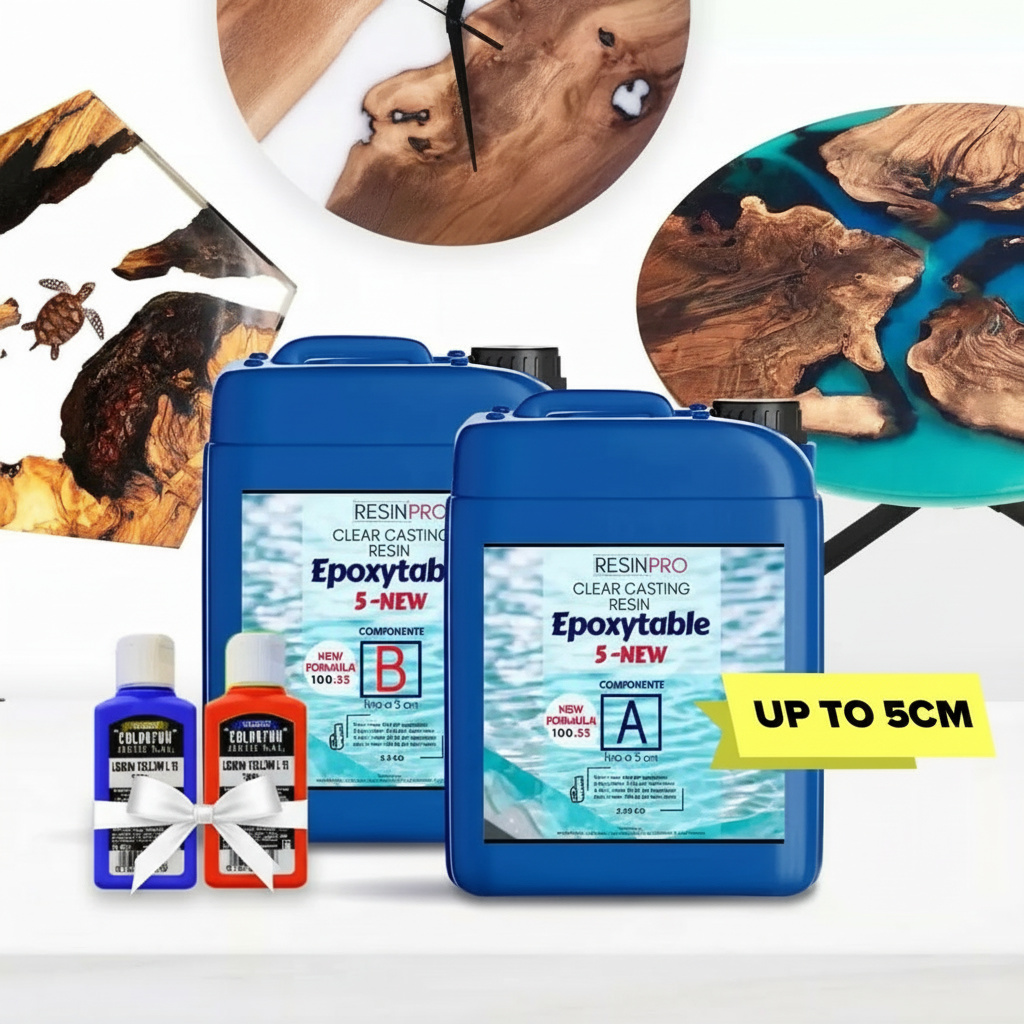
- “EpoxyTable 5-Five” – Deep Pour Epoxy Resin for Tables and Large Projects – Up to 5cm – for mid-thickness pours
- “Art Pro” – Clear Epoxy Resin for Artists and Surface Coating – for art and surface coats
- “Epoxytable 10-Ten” – Deep Pour Epoxy Resin for Tables, Up to 10cm Casting – for extra-deep layers
- Quality mixing tools and disposable containers
- Gloves, protective eyewear, and dust mask
- Fine-grit sandpaper (usually 220–320 grit)
- Clean, lint-free cloths

Visual Guide: Layering Epoxy Resin
Discover how each additional layer builds clarity, depth, and strength in your epoxy projects. Panels and time-lapse sequences show the transformation from a single coat to professional multi-layer finishes. Proper layering isn’t just cosmetic—it ensures structural integrity in art pieces and large tables alike.

Step 1: Assess and Prepare the Existing Epoxy Surface
Before adding a new layer, ensure the previous epoxy coat is fully cured unless otherwise recommended by the resin manufacturer. Thoroughly inspect the surface for dust, oils, or imperfections. An unclean or incomplete cure can lead to poor adhesion or cloudy results. Lightly wipe the surface with a lint-free cloth to remove loose debris and avoid introducing contaminants.
Step 2: Sand the Surface for Maximum Bonding
Lightly sand the cured surface for improved adhesion. Use fine-grit sandpaper—generally between 220 and 320 grit—to gently abrade the entire area that will receive a new epoxy layer. This avoids potential peeling or delamination, especially if the previous coat has cured for more than 24 hours. Wipe away sanding dust with a dry, lint-free cloth before proceeding.
Step 3: Mix the Next Epoxy Layer Accurately
Always measure resin and hardener by weight as instructed for your chosen system. Slight errors can cause improper curing. If you’re seeking crystal-clear finishing or controlled artistic effects, “Art Pro Deluxe” – Ultra-High Viscosity Epoxy Resin for Artists is ideal; for deep or large castings, select “EpoxyTable 5-Five” or “Epoxytable 10-Ten” as appropriate for thickness. Mix slowly and scrape the sides of your container to minimise air bubbles and guarantee a consistent blend.

Step 4: Pour and Spread the New Layer with Care
Pour the prepared resin gently over the surface, starting in the centre and working outward for even coverage. Tools such as spreaders or brushes can help achieve a uniform finish in art coatings; deep-pour projects benefit from a slow pour to minimise bubble entrapment. For artistic detail layers, the “Art Pro” – Clear Epoxy Resin for Artists and Surface Coating offers excellent self-levelling and clarity. Use a heat gun or bubble popper if needed to release trapped air, but avoid overheating the surface.
Step 5: Allow Proper Curing Between Layers
Allow each epoxy layer to partially cure before recoating. Most resins allow for a chemical bond if the new layer is poured within a certain timeframe—often called the “tacky stage.” If more than 24 hours have passed, ensure complete sanding and cleaning before adding the next pour. Deep pour systems like “Epoxytable 10-Ten” benefit from layering in stages, waiting 6–8 hours between pours for large projects, as advised in their guides.
Tips and Troubleshooting for Layered Epoxy Projects
Work in a dust-free area and maintain a stable temperature as per product recommendations to avoid surface flaws. Look out for amine blush (a waxy layer) on cured resin, which should be scrubbed away with water and a mild detergent before sanding and recoating. Common mistakes include pouring too early, skipping surface prep, or not matching resin types between layers; always double-check compatibility and curing instructions for each product to achieve professional, long-lasting results.
Demonstration: Avoiding Cloudiness and Bubbles
See expert tips for bubble avoidance and crystal-clear outcomes. Troubleshooting visuals reveal before-and-after surfaces, accompanied by easy checks for common issues like blushing, poor adhesion, and uncontrolled bubble formation.

- "Art Pro Deluxe" – Ultra-High Viscosity Epoxy Resin for ArtistsPrice range: £33.85 through £287.85Art Pro Deluxe ultra-high viscosity epoxy resin is suitable for artists requiring precise control and clear finish layers in resin art.
- "EpoxyTable 5-Five" – Deep Pour Epoxy Resin for Tables and Large Projects – Up to 5cmPrice range: £16.85 through £1,099.85"EpoxyTable 5-Five" is suitable for medium-thickness projects up to 5cm, offering low exothermic reaction and strong UV resistance.
 "Art Pro" – Clear Epoxy Resin for Artists and Surface CoatingPrice range: £31.15 through £388.85Art Pro clear epoxy resin is designed for artists and DIY enthusiasts to create glass-like, durable surface finishes with UV protection.
 “Epoxytable 10-Ten” – Deep Pour Epoxy Resin for Tables, Up to 10cm CastingPrice range: £33.85 through £334.85“Epoxytable 10-Ten” is suitable for creating tables and deep castings up to 10cm, designed for projects requiring layered application.
Frequently Asked Questions
Can you add more epoxy over a cured resin layer?
Yes, provided the cured surface is properly sanded and cleaned. This ensures strong bonding with the new layer.
How long should you wait between epoxy layers?
Wait until the layer is tack-free or as specified by your product. For deep pours, typically 6–8 hours are recommended between layers.
Is sanding required between epoxy coats?
If the previous layer has fully cured, light sanding is needed to promote adhesion before pouring more epoxy.
What happens if you pour a new epoxy layer too early?
Pouring too soon may cause layers to mix, leading to cloudiness or uneven curing. Always follow the manufacturer’s cure recommendations.
Can different epoxy resins be layered together?
Usually, yes if compatible, but it's best practice to use the same resin family or test a small area for adhesion first.
How do you avoid bubbles when layering epoxy?
Mix slowly, use a heat gun to pop bubbles, and pour in thin layers. Ensure the surface is dust-free.
Why does epoxy appear cloudy after a new layer?
Cloudiness is often due to surface contamination, bubbles, or mixing issues. Proper prep and mixing solve this problem.