 Free shipping on orders over £29,85
  Shipping Tracking!


 Google
 Facebook
how to apply cement resin outdoors
Transforming outdoor spaces with cement resin provides a weather-resistant, durable, and visually appealing surface. Whether you are upgrading your drive, patio, or pathway, applying cement resin outdoors delivers a modern, seamless finish that stands up to the UK climate. This guide leads you through the essential steps for a successful installation, highlighting preparation, best techniques, and key tips for consistent, long-term results.
What You’ll Need
- “Epoxyprimer” – Universal Water-Based Two-Component Epoxy Floor Primer – For priming concrete or alternative substrates, ensuring a robust bond.
- “Resinstone” – One-Component Methacrylic Resin for Concrete Floors and Driveways – Suitable for sealing and protecting external cement-based surfaces.
- Mixing tools – Paddle mixer, measuring buckets, trowel or spatula, roller, and protective gloves.
- Masking tape and ground cover for protecting surrounding areas.
- Optional (for decorative or permeable finishes): “Trasparente” – Epoxy Binder for Coloured Pebbles and Grits or “Flowstone” – Complete Permeable Floor Kit with Pebbles and Resin.
Expert guidance for long-lasting outdoor resin surfaces

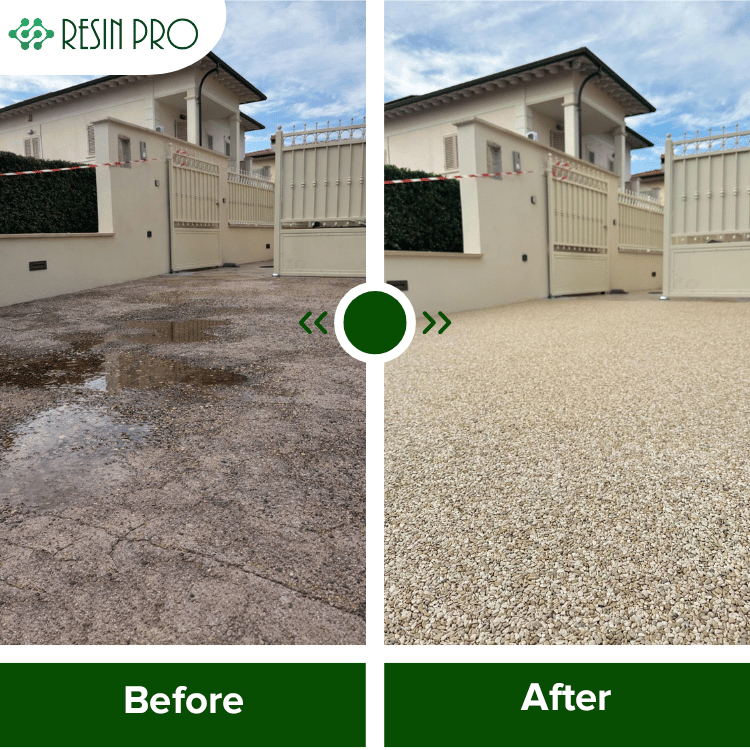
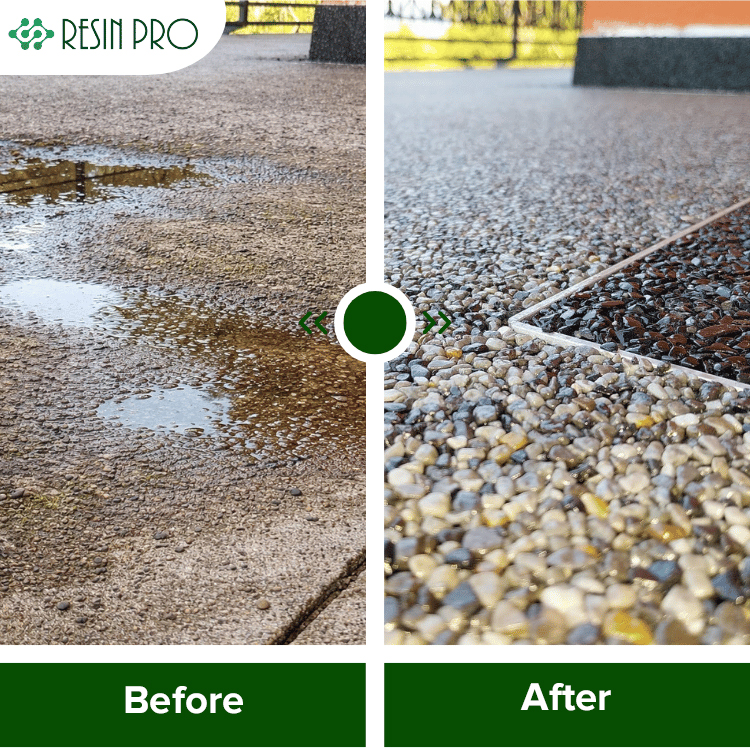
Why Quality Preparation Matters Outdoors
Outdoor surfaces are exposed to rain, temperature swings, and constant wear. Carefully preparing and priming your base ensures the resin system performs reliably for years, preventing peeling or water damage. Investing time in this critical step helps you achieve a resilient, attractive, and low-maintenance finish.
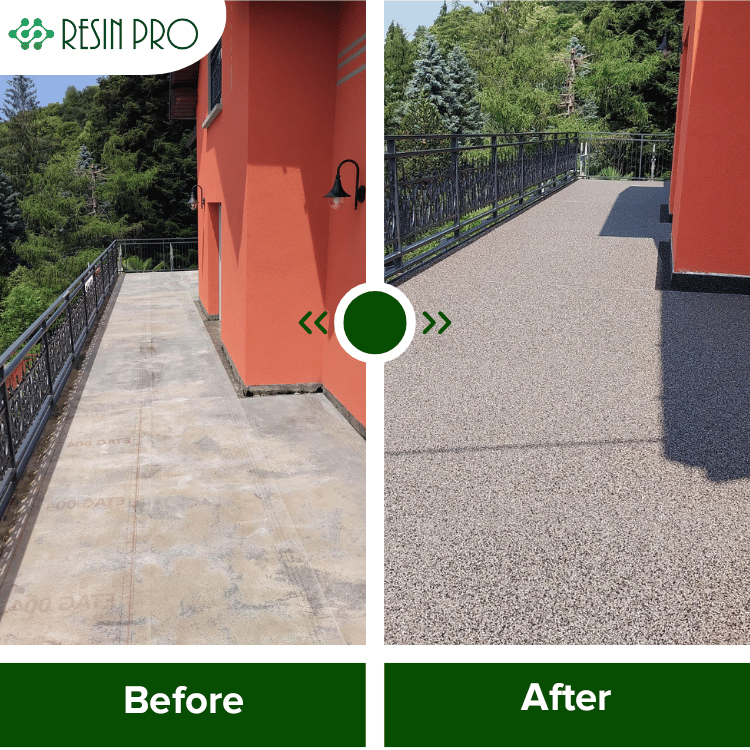
Step 1: Prepare the Surface
The foundation of any long-lasting outdoor resin installation is meticulous surface preparation. Begin by clearing the area of dirt, weeds, loose debris, oil, moss, or residues. Power washing is highly recommended, followed by allowing the surface to dry thoroughly—moisture can cause adhesion issues and lead to defects. If repairing cracks or levelling, complete these repairs in advance, and be sure the substrate is fully set and dry before application.
Clean and dry your surface before priming to maximise resin adhesion and prevent bubbling.
Step 2: Prime with Epoxy Resin Primer
Once your surface is cured and dust-free, apply a suitable primer to improve bonding and seal the substrate. For most outdoor cement-based applications, use a water-based epoxy primer such as “Epoxyprimer” – Universal Water-Based Two-Component Epoxy Floor Primer. Apply evenly by roller, brush, or spatula, ensuring full but thin coverage with attention to edges and corners.
Allow the primer to cure completely—typically 24–48 hours—before proceeding. This critical step prevents moisture ingress and supports an even, lasting finish.
Step 3: Mix and Apply the Cement Resin
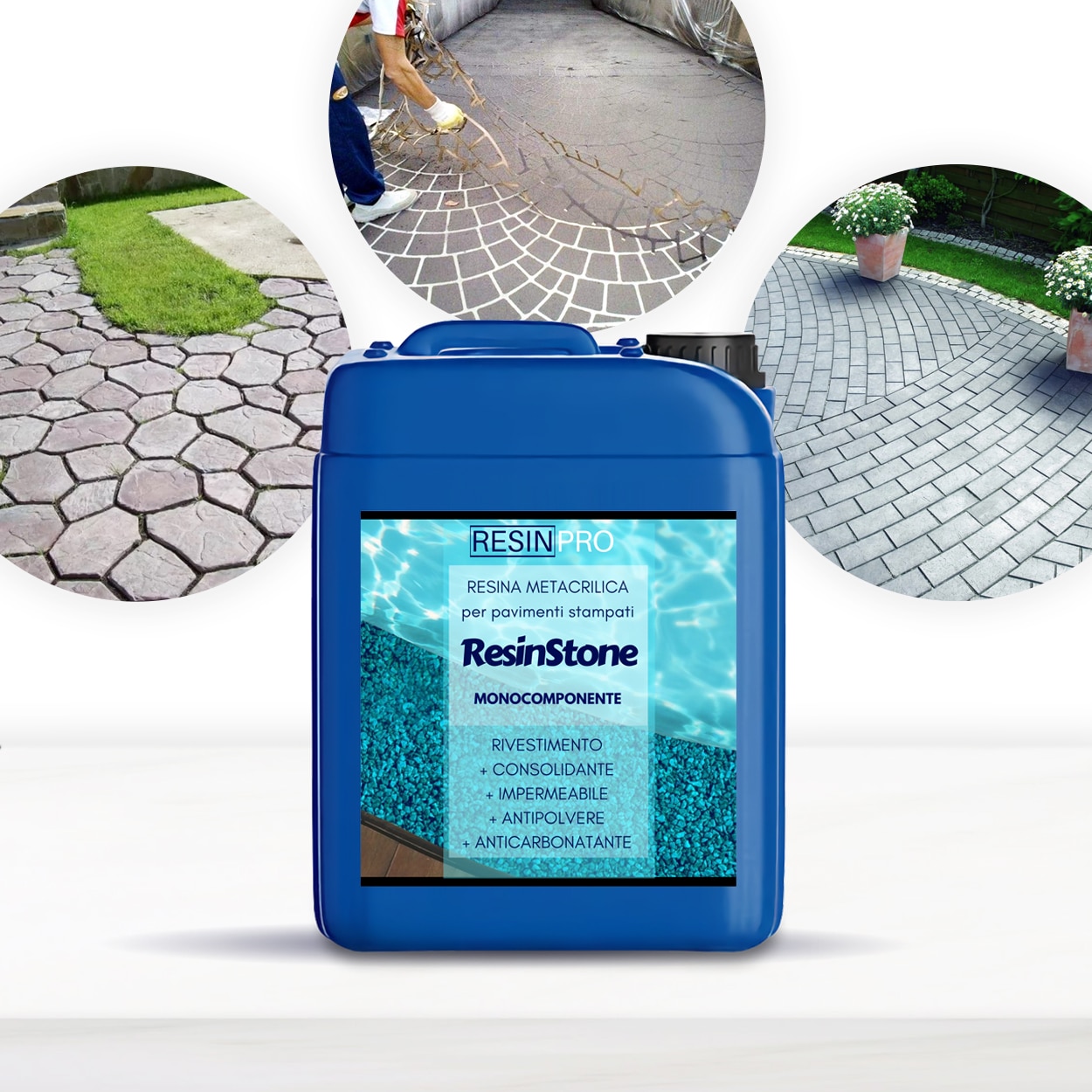
Careful mixing is essential for a flawless, uniform resin layer. Measure resin components precisely and mix according to instructions, ensuring thorough blending to activate the chemical hardening process. For protecting and sealing exposed concrete, opt for a weather-resistant resin such as “Resinstone” – One-Component Methacrylic Resin for Concrete Floors and Driveways.
Spread the mixed resin over the primed area using a trowel, roller, or spatula, maintaining a consistent thickness. For larger projects, work in manageable sections and overlap slightly to avoid visible lines.
Always follow exact resin mixing ratios and working times as specified on your product packaging.

Step 4: Decorative and Permeable Options
If your project calls for a decorative or permeable finish—such as resin-bound gravel or a pebble effect—combine your selected aggregates with a high-quality epoxy binder. For coloured aggregates, use “Trasparente” – Epoxy Binder for Coloured Pebbles and Grits. For a comprehensive, easy-to-follow solution, consider the “Flowstone” – Complete Permeable Floor Kit with Pebbles and Resin, which includes all necessary components and precise instructions.
Mix the required ratio of resin and stone in a mixer, then trowel onto the primed substrate, compacting well. Ensure edges are tidy and finish the surface smoothly. Follow the guidance provided for curing time—permeable floors often allow for early water drainage but must be protected from rain until fully set.
Step 5: Curing, Protection, and Finishing
After the resin is applied, allow it to cure undisturbed. Outdoor conditions are crucial—avoid application during rain, heavy dew, or temperature extremes. Use tarpaulins or shelters if sudden weather changes threaten.
Resins like those used for cement surfaces typically cure within 12–48 hours, but always consult your product’s detailed instructions for final setting times and walkability. Protect fresh resin from rain and condensation to avoid defects, and allow longer cure times before permitting vehicles or heavy equipment.
Allow full cure time before heavy traffic to ensure surface longevity and performance.
Tips and Common Mistakes
- Work within recommended temperature ranges to avoid rapid curing or surface problems.
- Do not rush surface preparation—contaminants can cause delamination or uneven finishes.
- Always mix the resin thoroughly, scraping the sides and base of your mixing bucket.
- Check weather forecasts—plan for at least 24 hours of dry conditions after application.
- For large areas, enlist help to ensure even application before the resin begins to cure.
Curing Success: Protect Your Work
Proper curing is the final key to a lasting outdoor resin finish. Shield your fresh installation from rain, debris, and foot traffic during the curing window. Patience ensures top performance and avoids common issues such as colour changes or soft spots.
- "Flowstone" – Complete Permeable Floor Kit with Pebbles and ResinPrice range: £42.85 through £3,389.85Flowstone kit provides detailed guidance for a draining, permeable pebble and resin surface suitable for driveways and patios in the UK.
- "Resinstone" – One-Component Methacrylic Resin for Concrete Floors and DrivewaysPrice range: £29.85 through £59.85"Resinstone" is a one-component methacrylic resin designed for sealing and protecting concrete floors and driveways. It suits projects related to…
 "Epoxyprimer" – Universal Water-Based Two-Component Epoxy Floor PrimerPrice range: £148.84 through £272.45Epoxyprimer is a water-based epoxy floor primer designed for stable adhesion on concrete, tiles and timber, suited to outdoor cement resin…
 "Trasparente" – Epoxy Binder for Coloured Pebbles and GritsPrice range: £31.85 through £948.85"Trasparente" is a transparent epoxy binder designed for coloured pebbles and grits, suitable for outdoor flooring projects requiring UV stability.
Frequently Asked Questions
What is the best primer for outdoor cement resin application?
Use a water-based epoxy primer like Epoxyprimer, which bonds well to cement surfaces and resists outdoor moisture.
When is the best weather to apply resin outdoors?
Resin should be applied in dry, mild conditions—avoid rain, high humidity or extreme temperatures for a proper cure.
Is priming necessary before resin application outdoors?
Yes. Priming seals the substrate and improves resin adhesion, ensuring a longer-lasting, defect-free finish.
How do I protect fresh resin from rain?
Use tarpaulins or temporary shelters to keep the surface dry until the resin fully cures, especially during unpredictable UK weather.
How long does outdoor cement resin take to cure?
Depending on the product and conditions, most outdoor cement resin systems cure within 12–48 hours.
Can epoxy resin be used on concrete patios?
Yes, with the proper primer and outdoor-grade resin, epoxy systems provide durable and decorative patio finishes.