 Free shipping on orders over £29,85
  Shipping Tracking!


 Google
 Facebook
How to Make a Wood and Epoxy Resin Table
A detailed guide for creating bespoke wood and resin tables
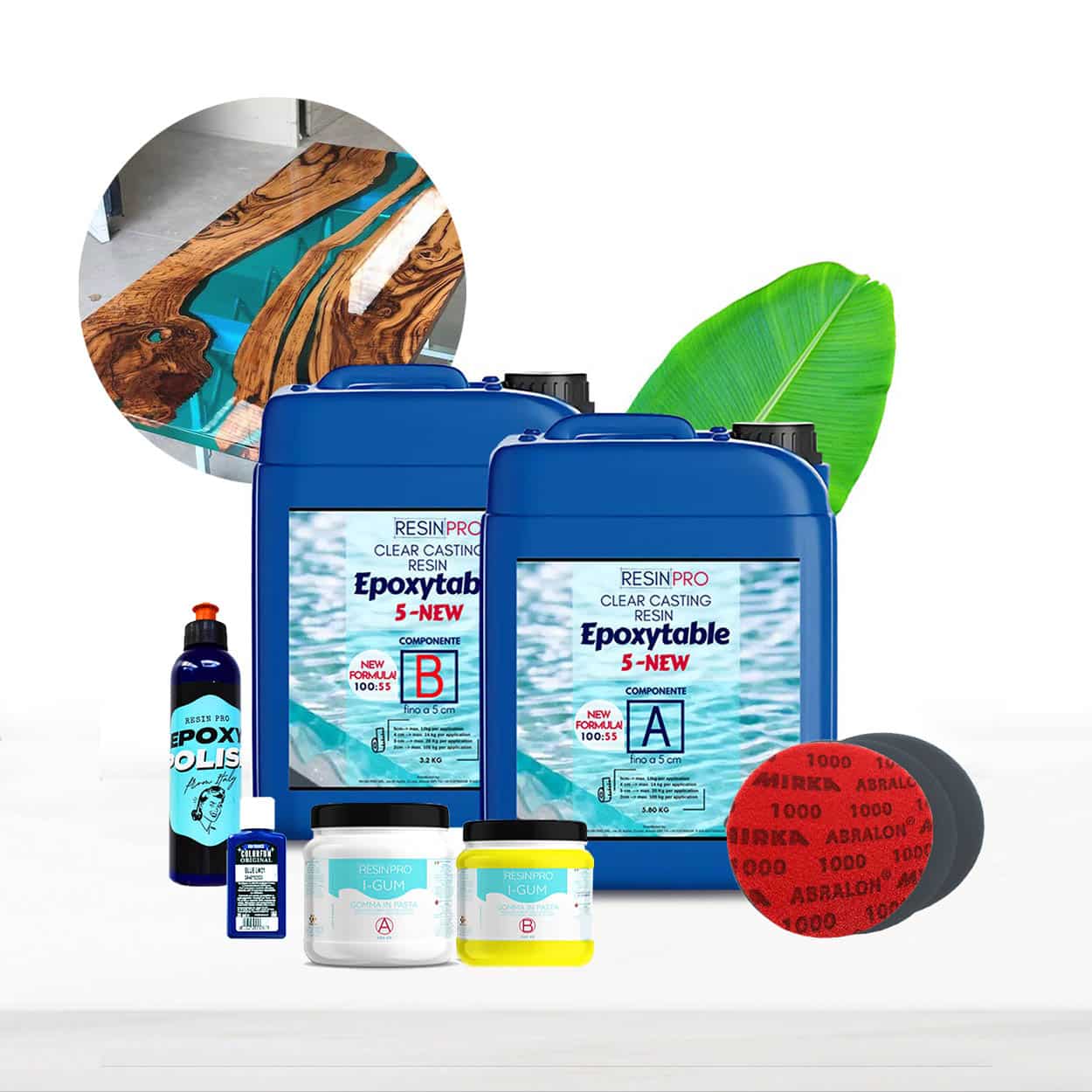
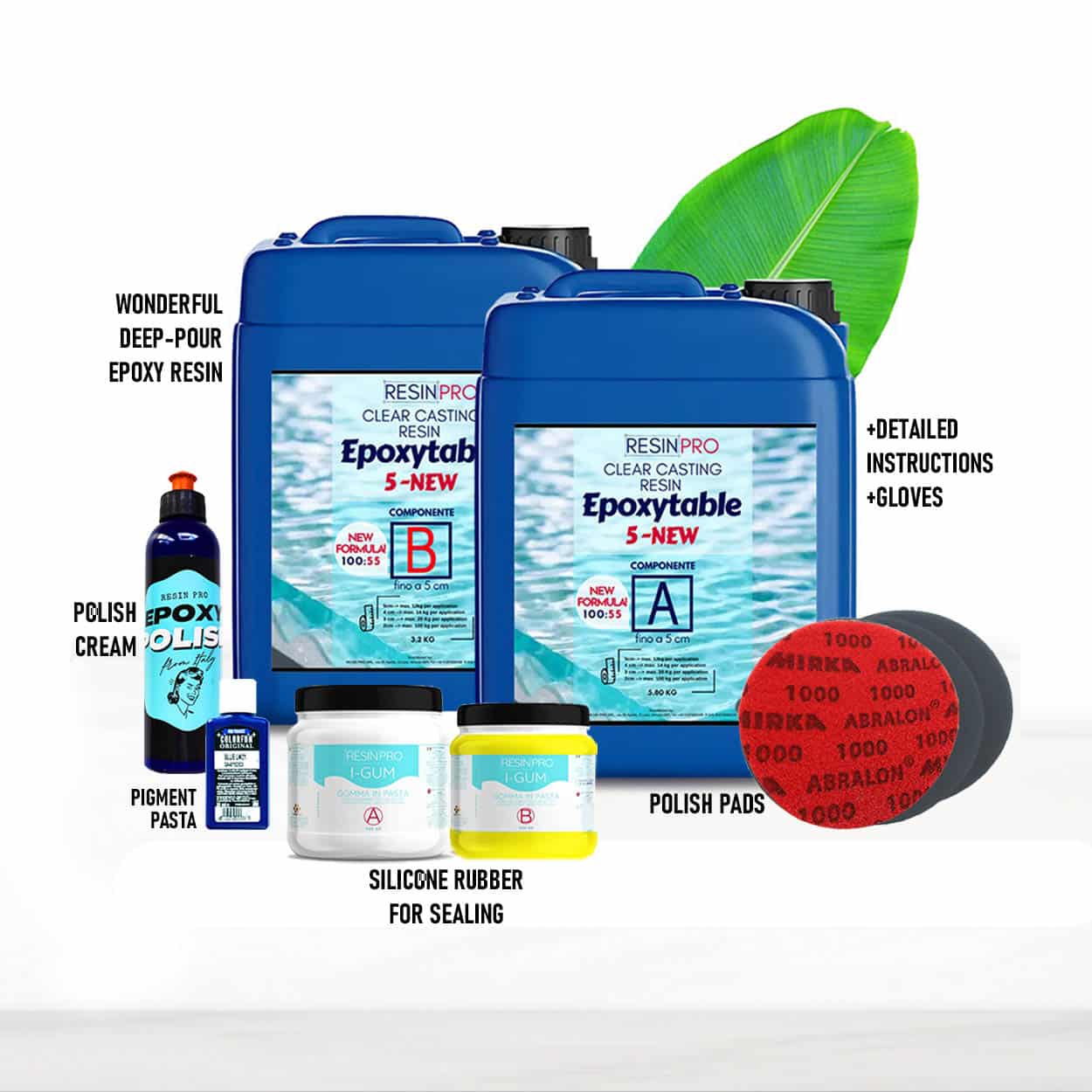
Creating a wood and epoxy resin table is a rewarding project that blends natural beauty with striking modern design. Whether you’re aiming for a river table effect or a simple timber-and-resin combination, this guide will lead you through the fundamental steps to achieve a professional and durable finish. Suitable for beginners and experienced makers alike, mastering this technique can transform your living space and give you a truly unique piece of furniture.
What You’ll Need
- “River-Table” – Complete Kit for Creating Your First Epoxy Resin Table: All-in-one kit with resin, hardener, sealant, pigments and instructions, ideal for first-time makers.
- “EpoxyTable 5-Five” – Deep Pour Epoxy Resin for Tables and Large Projects – Up to 5cm: Suitable for deep pours in larger tables and projects up to 5cm thick.
- “Epoxytable 10-Ten” – Deep Pour Epoxy Resin for Tables, Up to 10cm Casting: For extra-deep river table pours and large resin-cast projects.
- “Geode O” – Large Wooden Board Table Base for Epoxy Resin Projects – 90x60cm or 120x80cm: Purpose-built wood table base to create your foundation.

Inspiration for Wood and Resin Tables
Browse stunning table projects created with epoxy resin and wood, showcasing creative patterns and custom finishes. Notice the clarity and depth that resin brings to these bespoke pieces.
Step 1: Prepare and Seal the Wooden Surface
Start by selecting your desired wooden base. Ensure the wood is properly dried and free of dust or debris. Plane or sand the surface smoothly, removing all loose bark or irregularities. Cut and shape your wood sections to fit your table design—river tables often use two slabs with a gap for resin in the middle.
Wear gloves and protective clothing when working with sanding tools to avoid dust or splinters. Before moving to the next step, double-check the wood’s moisture content is low to prevent future warping.
Seal the wood surface thoroughly using a clear epoxy sealer or a thin initial layer of your chosen resin. This prevents air bubbles and moisture from leaching into the final cast, ensuring a smoother finish. Allow the sealer to cure as recommended before proceeding.
Step 2: Assemble and Seal the Mould
Create a mould or formwork that matches your table’s target dimensions. This typically involves using melamine-coated boards or treated wood, as resin will not adhere to these surfaces. Secure all edges with screws and ensure corners are tight.
If you have the “River-Table” – Complete Kit for Creating Your First Epoxy Resin Table, it provides silicone rubber paste and special release films to guarantee leak-proof results and easy demoulding. Apply a reliable sealant—like the silicone paste from the kit—along all internal seams, and let it set before pouring resin. A good seal is vital to prevent leaks and resin loss.
Step 3: Mix and Pour the Epoxy Resin
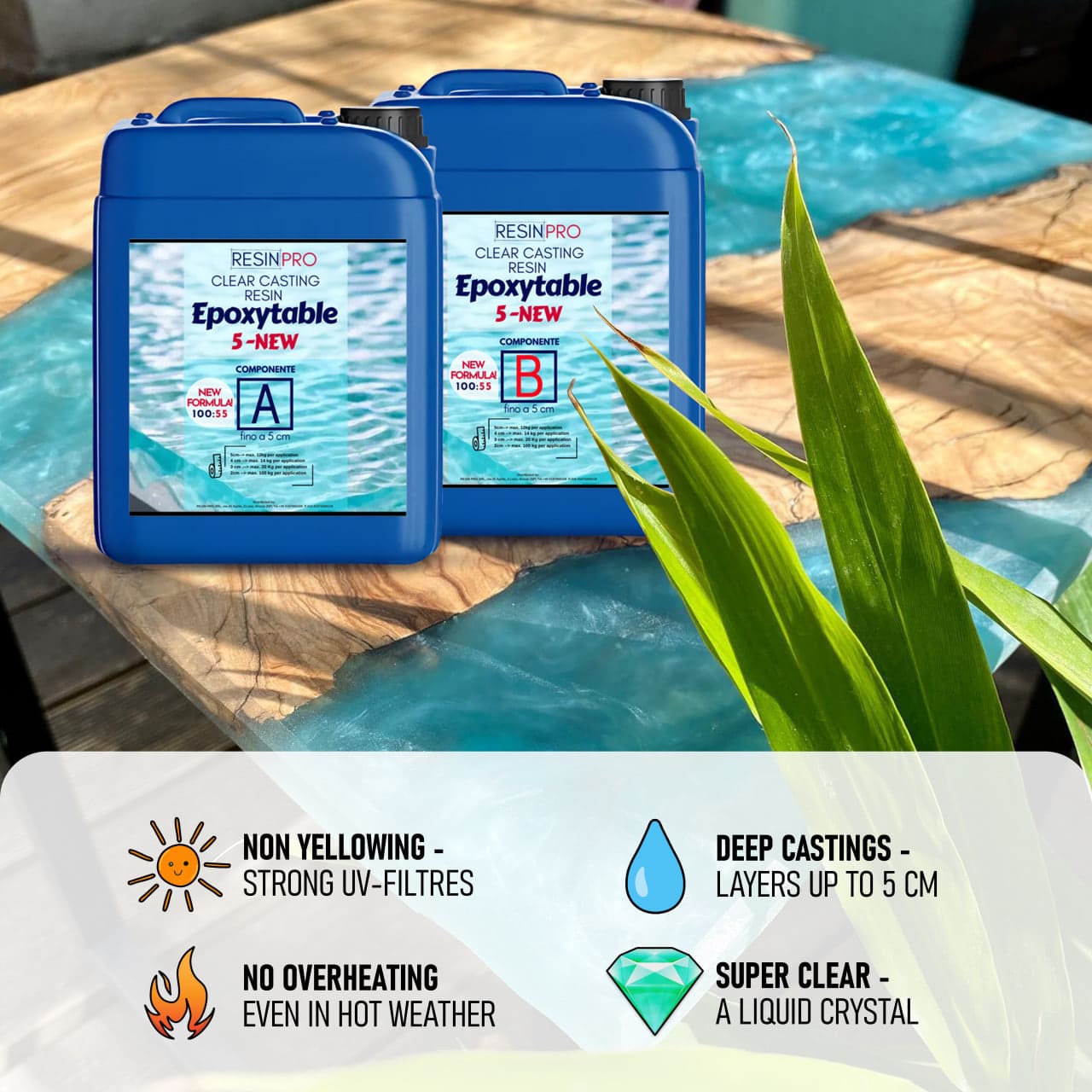
Carefully measure and mix your chosen resin and hardener. Always follow the specific product’s ratio—accuracy is essential for a strong and clear cure. For instance, “EpoxyTable 5-Five” – Deep Pour Epoxy Resin for Tables and Large Projects – Up to 5cm enables deeper, bubble-free pours for standard or large tables, while thicker pours up to 10cm can be achieved using “Epoxytable 10-Ten” – Deep Pour Epoxy Resin for Tables, Up to 10cm Casting.
Mix the resin and hardener accurately for optimal clarity and durability. Stir slowly to minimise bubbles, and if desired, add pigment for colour effects at this stage.
Pour the resin in manageable layers, especially if your design requires more than 5cm in total thickness. Allowing each layer to partially cure before adding the next prevents excessive heat build-up and ensures an even finish.
Step 4: Remove Bubbles and Let the Resin Cure
Immediately after pouring, inspect the surface for air bubbles.
Remove bubbles as you go by passing a heat gun or torch briefly over the resin’s surface—take care not to scorch the resin or the wood.
Let each poured layer cure according to product guidelines. Protect your project from dust during this stage. Depending on the thickness, temperature and product, curing can take several hours to several days.

Step 5: Demould, Sand and Finish Your Table
Once fully cured, carefully remove your resin and wood table from the mould. Start sanding with a coarse grit and progress to finer grades for a smooth finish. Wipe away dust between stages to keep the surface clean.
For a high-gloss appearance or professional finish, use a polishing kit if available. Many all-in-one kits provide polishing creams and pads designed for resin surfaces. Finally, attach your preferred legs or mounting hardware to the table base—if you’ve used the “Geode O” – Large Wooden Board Table Base for Epoxy Resin Projects – 90x60cm or 120x80cm, it offers both stability and ease of assembly for your completed piece.
Tips and Troubleshooting
Work in a dust-free, temperature-controlled environment to prevent imperfections while curing. Always double-check measurement ratios and allow each layer to cure fully before adding more resin. Take your time when sanding and polishing to achieve a flawless finish. Common mistakes include under-mixing, rushing the pour, or using wood with hidden moisture—all of which can cause curing issues or cloudy resin. If you experience uneven edges or leaks, reinforce your mould and reseal before pouring again.
Finishing Touches and Surface Perfection
See examples of polished resin tables and detailed woodwork. From glossy river tables to matt finishes, the right sanding and polishing transforms your project into a centrepiece.

- "River-Table" – Complete Kit for Creating Your First Epoxy Resin TablePrice range: £188.85 through £444.85"River-Table" kit includes resin, sealant, pigments and polishing items with detailed instructions for wood and resin tables.
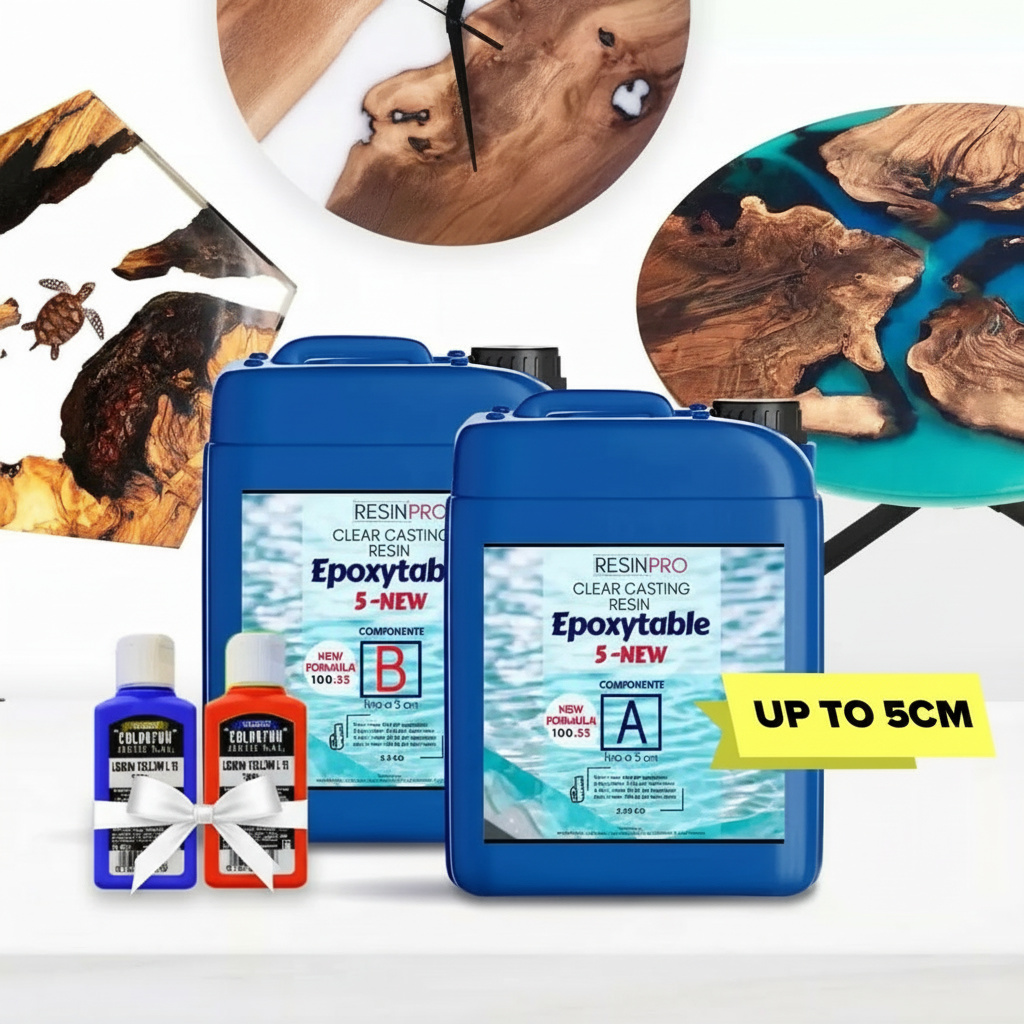 "EpoxyTable 5-Five" – Deep Pour Epoxy Resin for Tables and Large Projects – Up to 5cmPrice range: £16.85 through £1,099.85"EpoxyTable 5-Five" is suited for deep pour projects like tables, offering long working time and high mechanical resistance.
 “Epoxytable 10-Ten” – Deep Pour Epoxy Resin for Tables, Up to 10cm CastingPrice range: £33.85 through £334.85“Epoxytable 10-Ten” is an epoxy resin designed for creating tables with casting depths up to 10cm, suitable for deep pour projects.
 "Geode O" – Large Wooden Board Table Base for Epoxy Resin Projects – 90x60cm or 120x80cmA versatile wooden table base suitable for epoxy resin projects, available in two sizes for creative use.
Frequently Asked Questions
What epoxy thickness should I use for my table?
Select up to 5cm pours for standard depth. Use up to 10cm resin only for extra-thick or artistic designs.
How do I avoid bubbles in the resin?
Stir the resin slowly and thoroughly. Use a heat gun gently after pouring to release trapped bubbles.
Should I choose a table kit or separate resin?
Kits are ideal for first-time makers. Buy individual resin for larger or highly customised projects.
How do I prepare wood for an epoxy table?
Dry and sand thoroughly. Apply a sealing coat of resin to prevent bubbles and moisture issues.
How long does table epoxy take to cure?
Cure times vary by resin and thickness, but expect several hours to several days for full hardness.
What is the safest environment for resin work?
Work in a ventilated, dust-free space at stable room temperature. Use gloves and eye protection at all times.