 Free shipping on orders over £29,85
  Shipping Tracking!


 Google
 Facebook
How to Apply Resin to a Floor
Step-by-step guidance for flawless resin floor application

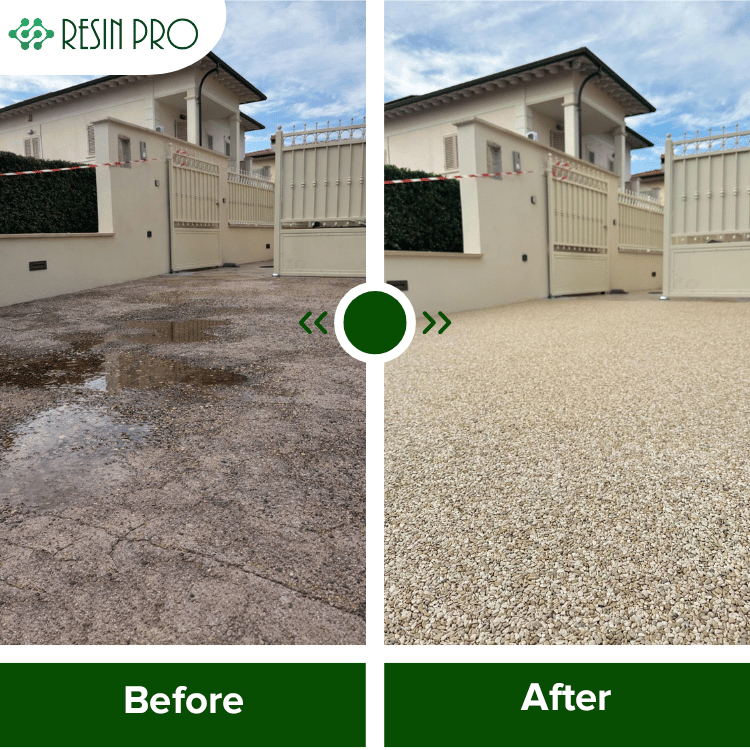
Transforming a floor with resin creates a robust, easy-to-maintain surface that is attractive and long-lasting. This guide covers each crucial step, from surface preparation and priming to mixing and applying the resin itself. Whether rejuvenating an old patio, driveway, or interior floor, it is important to follow best practices for safety and a professional finish.
What You’ll Need
- “Epoxyprimer” – Universal Water-Based Two-Component Epoxy Floor Primer: A dedicated primer for strong adhesion to a range of substrates.
- “Flowstone” – Complete Permeable Floor Kit with Pebbles and Resin: Suited for creating outdoor permeable pebble floors.
- “Trasparente” – Epoxy Binder for Coloured Pebbles and Grits: Best for vibrant or dark aggregate stone finishes.
- “Polirock” – Polyurethane Binder for White Stones, 2kg Two-Component Kit: Ideal for white or light-coloured decorative stone areas.
- Protective gloves, goggles, and a mask
- Roller and/or brush
- Mixing bucket and stirrer or cement mixer
- Level and trowel (if required)
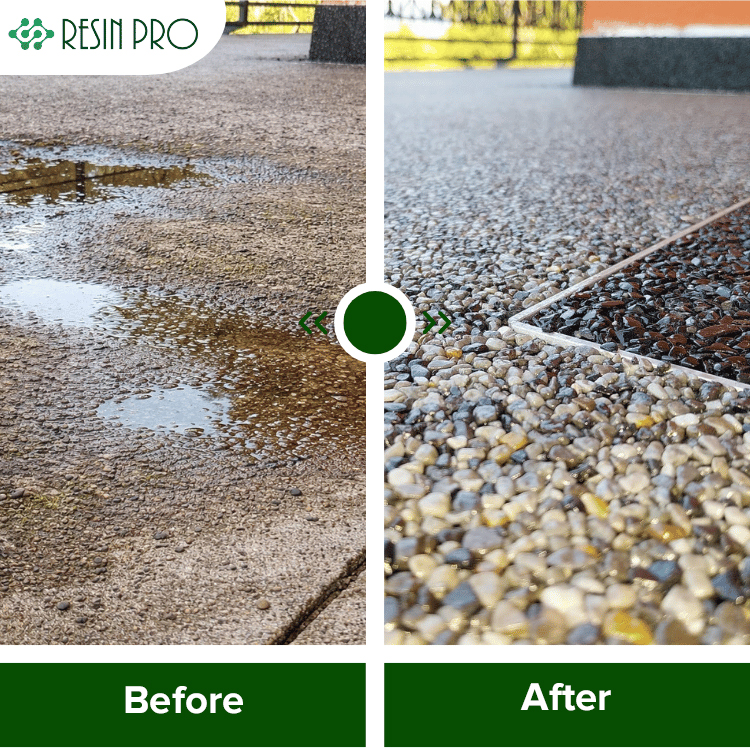
Essential Tools for Resin Flooring Success
Having the right tools ensures a smooth application and lasting finish. Always use clean buckets, accurate scales, and high-quality rollers or trowels suitable for resin products. Protective gear aids safe installation, while a mixing drill or cement mixer is vital for larger resin and aggregate mixtures.
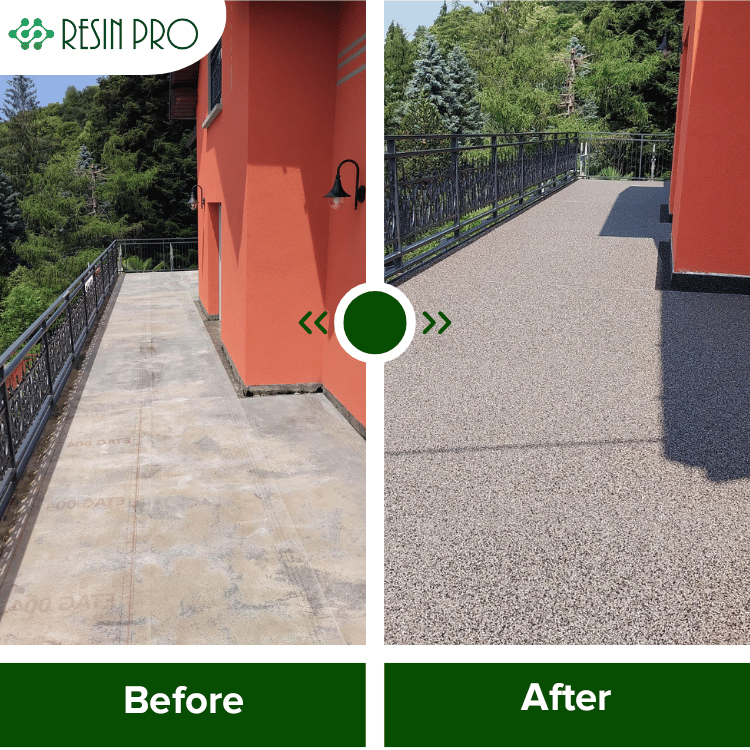
Step 1: Prepare the Surface
Ensure surface is clean, dry, and free from dust or grease. Remove old coatings, debris, oils, and repair any loose sections or cracks. A smooth, stable substrate such as concrete, ceramic, screed, or timber is ideal. Undulations and large cracks should be filled and allowed to cure fully before moving to the next stage. Inadequate preparation can cause future adhesion or durability problems.
Allow the substrate to acclimatise to the ambient temperature—avoid installation where there is excessive moisture or humidity, as this can interfere with resin curing.
Step 2: Prime the Floor
Priming enhances adhesion between your substrate and the resin system, preventing issues like delamination. For broad compatibility on concrete, tiles, or screeds, use “Epoxyprimer” – Universal Water-Based Two-Component Epoxy Floor Primer.
Apply the primer evenly with a roller or brush, ensuring full coverage. For particularly porous or uneven floors, a second coat is recommended. Allow the primer to cure as specified—typically 24–48 hours—before continuing.
Step 3: Mix and Prepare the Resin
Consult your resin product’s instructions for mixing ratios; accurate measurement and thorough mixing are essential for a uniform cure.
If using a kit such as “Flowstone” – Complete Permeable Floor Kit with Pebbles and Resin, add the resin to the aggregate and blend using a mixing bucket or, for larger batches, a cement mixer. For coloured or dark pebbles, “Trasparente” – Epoxy Binder for Coloured Pebbles and Grits provides a crystal-clear, non-yellowing finish. For white stones, “Polirock” – Polyurethane Binder for White Stones, 2kg Two-Component Kit is recommended to maintain clarity and resist yellowing under UV exposure.
Mix resin and hardener accurately according to the product instructions and blend until homogeneous. Do not delay application once mixed, as curing will begin immediately.

Step 4: Apply the Resin to the Floor
Immediately after mixing, pour or spread the resin-aggregate mixture onto the prepared, primed surface. Use a trowel, spreader, or squeegee to level the layer according to the specified thickness. For pebble systems, press evenly for uniform coverage and permeability.
Pour the resin mixture quickly to avoid air bubbles and work systematically across manageable sections. If working outdoors, ensure dry, temperate weather to support even curing.

Step 5: Allow to Cure and Finish
Protect the surface from dust, water, and traffic during curing. The time required depends on the resin and ambient temperature—typically walkable after 12–24 hours, with full strength for vehicles achieved in 36–48 hours.
Allow sufficient curing time before foot or vehicle traffic for optimal performance and resilience.
Tips and Common Mistakes
- Wear gloves, goggles, and a mask when handling resin products to protect skin, eyes, and breathing.
- Always mix products in the ratios provided—incorrect ratios can lead to soft, tacky surfaces or incomplete curing.
- Work in suitable temperatures (ideally 10–25°C) to ensure proper curing and to avoid issues like bubbling or poor adhesion.
- Avoid moisture contact at all stages, as resin systems are sensitive to water before curing.
Real-World Resin Floor Applications
Resin floors transform patios, paths, and driveways by delivering permeability, weather resistance, and a sleek, customisable appearance. Explore UK project inspirations and see how resin systems meet practical and decorative needs in private gardens, commercial public spaces, and home driveways.
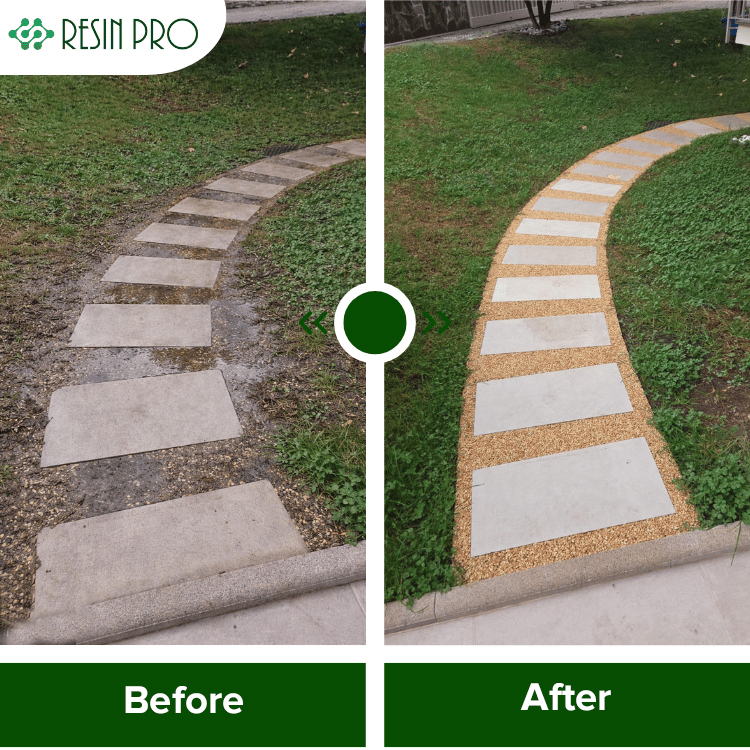
- "Flowstone" – Complete Permeable Floor Kit with Pebbles and ResinPrice range: £42.85 through £3,389.85Flowstone is a durable, permeable pebble and resin floor kit designed for easy application to outdoor spaces like patios and driveways.
- "Trasparente" – Epoxy Binder for Coloured Pebbles and GritsPrice range: £31.85 through £948.85"Trasparente" is a transparent epoxy binder designed for coloured pebbles and grits, providing a clear and UV-stable finish suitable for floor…
 "Epoxyprimer" – Universal Water-Based Two-Component Epoxy Floor PrimerPrice range: £148.84 through £272.45Epoxyprimer is a water-based two-component epoxy primer designed for reliable adhesion on various floor surfaces.
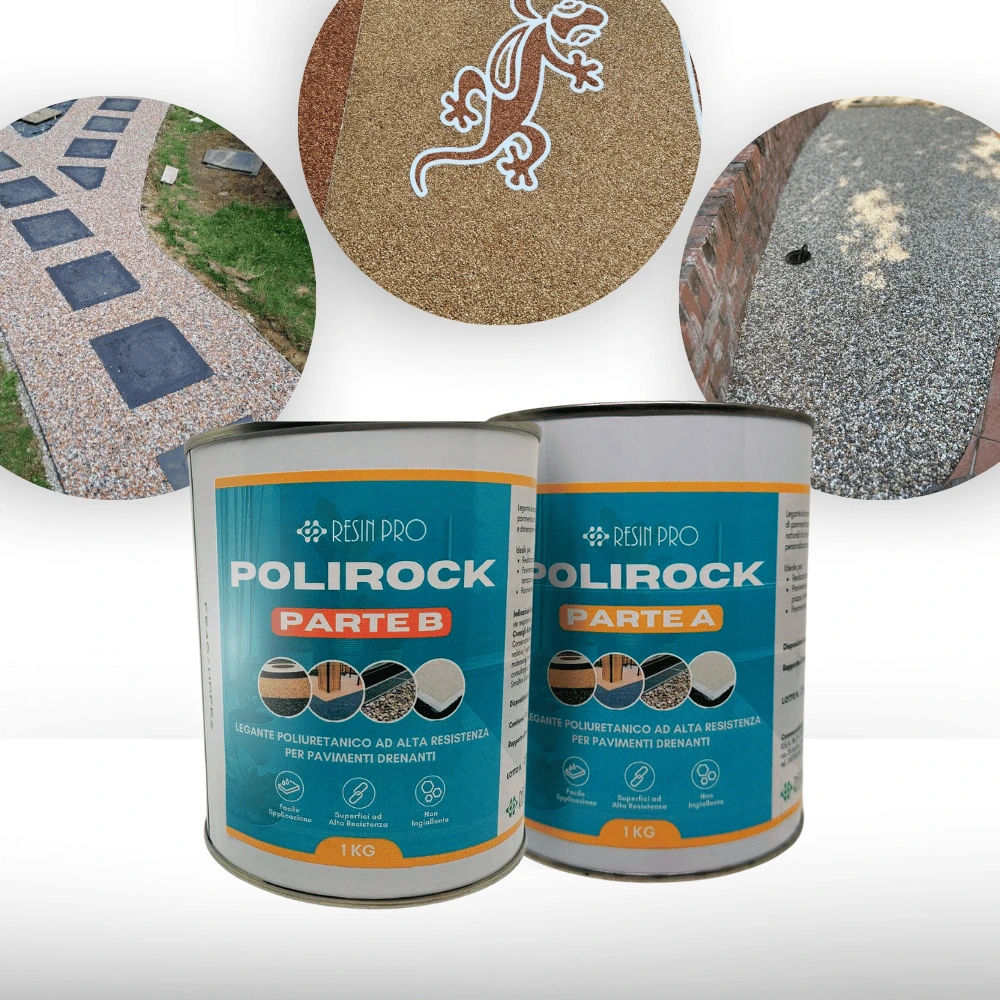 "Polirock" – Polyurethane Binder for White Stones, 2kg Two-Component Kit£58.85"Polirock" provides a two-component polyurethane binder kit suitable for clear, durable outdoor white stone surfaces.
Frequently Asked Questions
Is a primer always required before applying resin to a floor?
Priming your floor ensures optimal adhesion, especially on porous or variable surfaces. Skipping primer can result in peeling or poor long-term durability.
What surfaces can resin be applied to?
Resin works well on properly prepared concrete, screed, ceramic tiles, and timber substrates that are stable and clean.
How important is the mixing ratio for resin products?
Accurate mixing ratios are crucial. Incorrect amounts of resin or hardener can prevent the floor from curing correctly, affecting appearance and durability.
Should I use epoxy or polyurethane resin for pebble floors?
Use polyurethane for white stones to prevent yellowing, and epoxy for coloured or dark aggregates to ensure a clear, lasting finish.
How long does resin floor application take?
Most resin floors are walkable after 12–24 hours and ready for vehicle use in 36–48 hours, depending on product and temperature.
Can resin be applied outdoors in any weather?
Application should be avoided during rain, high humidity, or extreme temperatures to ensure proper curing and adhesion.
Is DIY resin floor application realistic for large areas?
DIY is possible with proper preparation, but larger surfaces may benefit from professional equipment like a cement mixer and prompt teamwork.