 Free shipping on orders over £29,85
  Shipping Tracking!


 Google
 Facebook
how to make a DIY resin floor
Transforming a patio, driveway or pathway with a DIY resin floor offers superior durability, water drainage, and a modern aesthetic. This guide is perfect for homeowners and enthusiasts looking to achieve a professional result without hiring installers. You’ll learn how to approach the project, avoid common mistakes, and create a robust resin surface built to last in the UK climate.
Step-by-step instructions for seamless, professional resin flooring

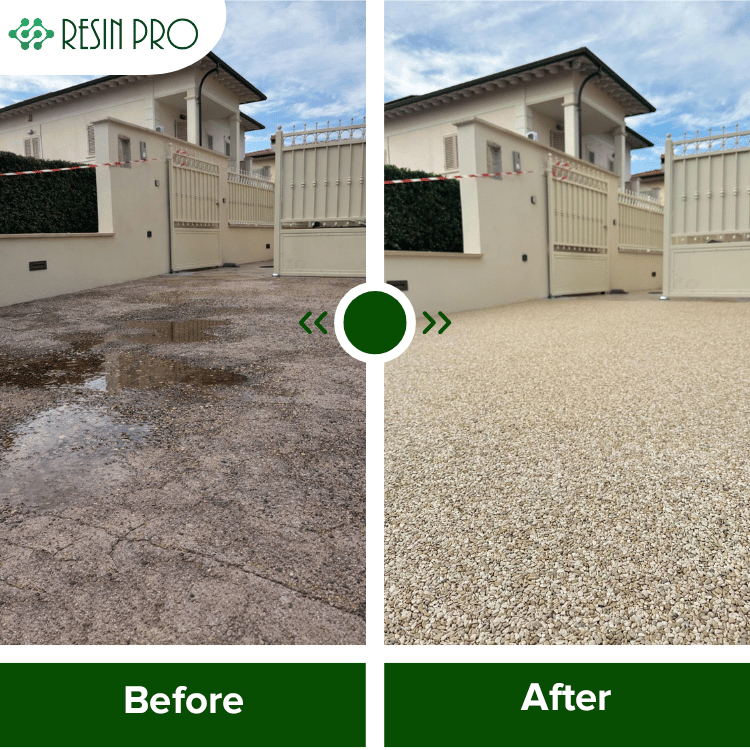
What You’ll Need
- “Epoxyprimer” – Universal Water-Based Two-Component Epoxy Floor Primer: A water-based epoxy primer designed for durable adhesion on various stable floor surfaces
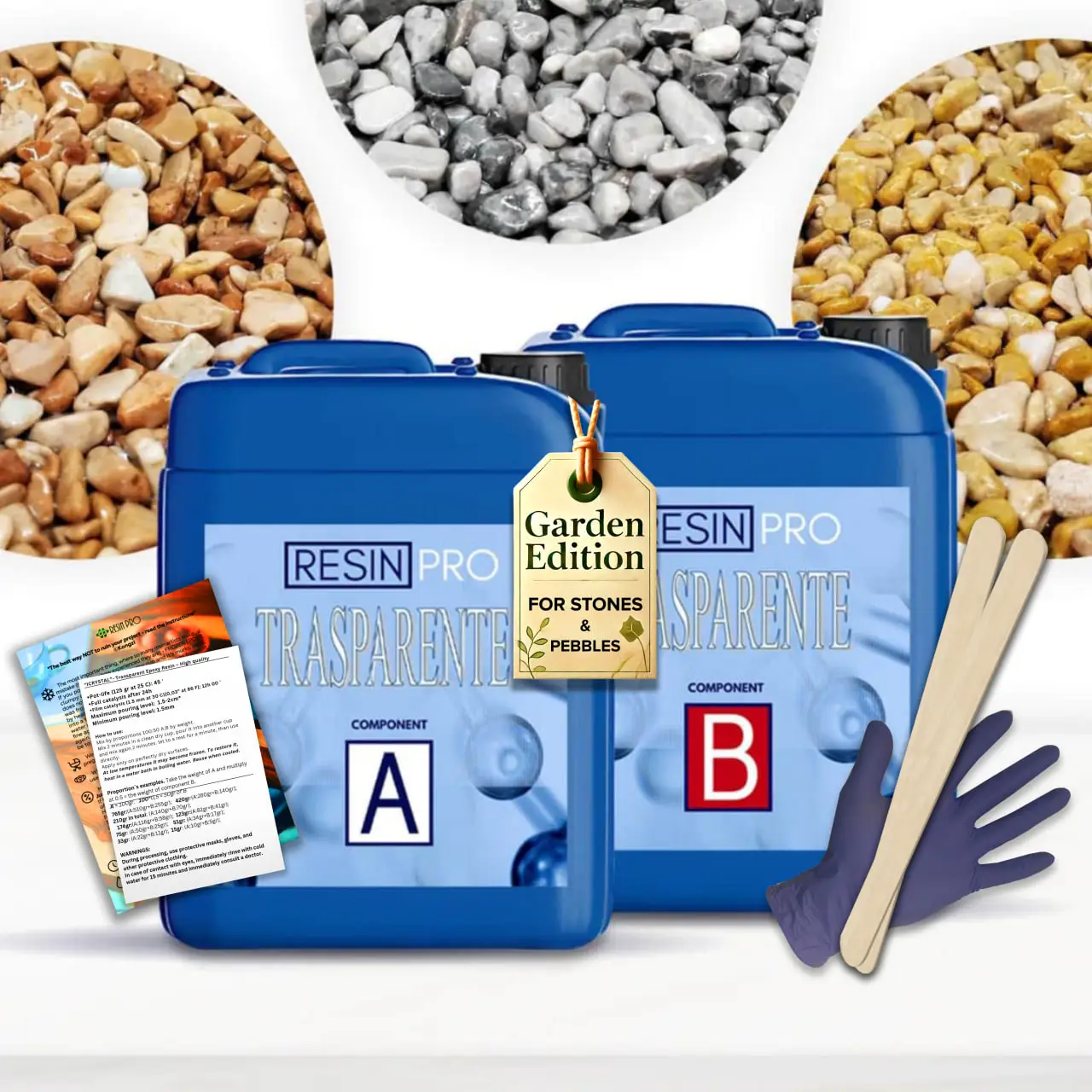
- “Trasparente” – Epoxy Binder for Coloured Pebbles and Grits: Transparent epoxy binder designed for decorative coloured pebbles and grits with UV resistance and low viscosity.
- Washed Pebbles for Permeable Floors 25kg – Outdoor Resin-Bound Surfaces: Natural washed pebbles designed for creating permeable, resin-bound outdoor floors.
- Mixing buckets, protective gloves and goggles, roller or brush, a trowel, and masking tape
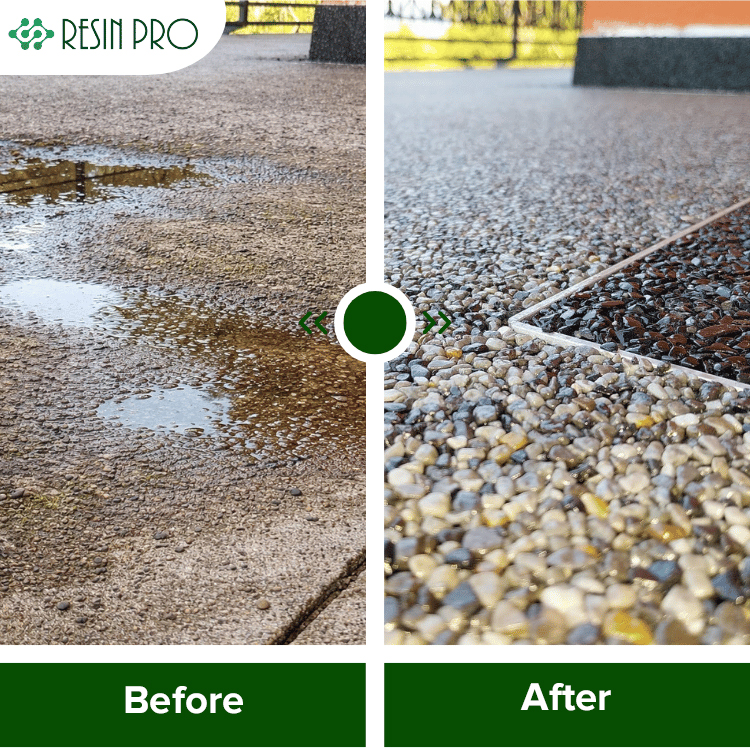
Inspiration for Your Resin Floor Project
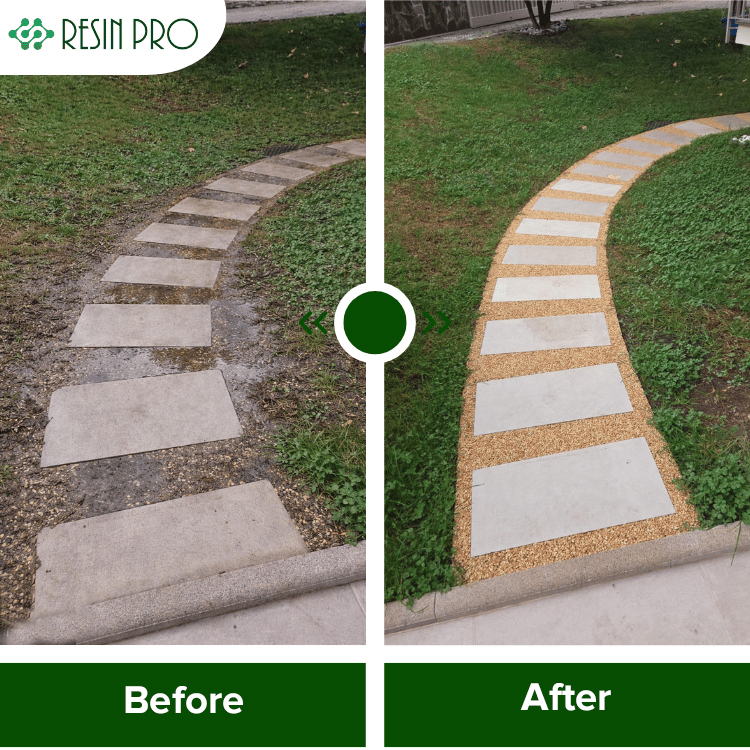
Browse real-life transformations to see how a DIY resin floor can enhance patios, driveways and pathways. From classic pebble blends to contemporary custom colours, a resin floor offers both visual appeal and functional performance in any outdoor setting.
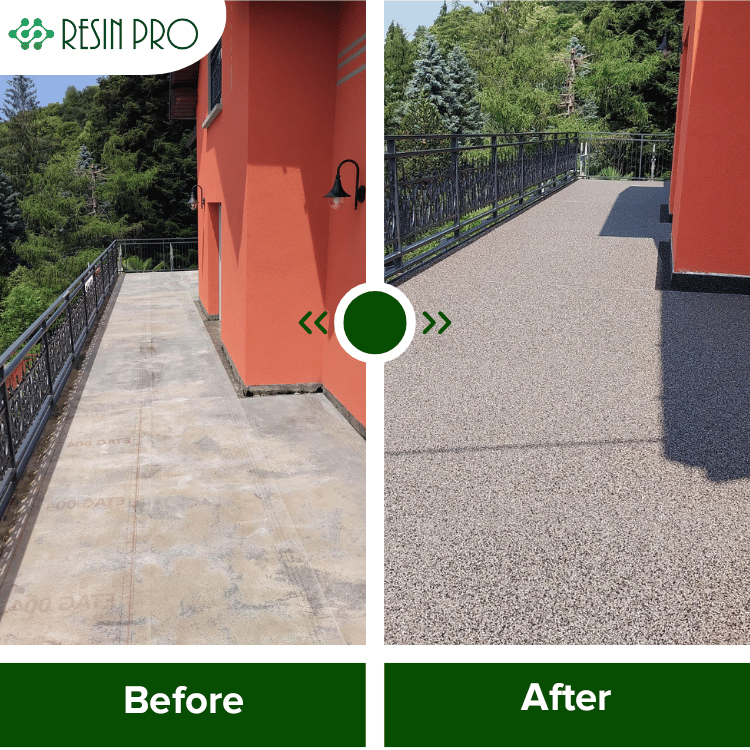
Step 1: Prepare the Surface
Clear the area of dust, moss, oils, and any debris which might interfere with resin adhesion. Fill cracks and repair any loose or uneven patches, as a stable and level substrate is crucial for the long-term success of your resin floor. If your base is porous, damp, or old, consider priming it to maximise grip and consistency.
“Epoxyprimer” – Universal Water-Based Two-Component Epoxy Floor Primer is an excellent choice for this step, ensuring strong adhesion to concrete, screeds, tiles or timber. Apply the primer with a roller or brush and allow it to fully cure for approximately 24–48 hours before proceeding.
Step 2: Mix the Resin and Pebbles
Measure out your Washed Pebbles for Permeable Floors 25kg – Outdoor Resin-Bound Surfaces and place them in a clean mixing vessel. Add the two components of your resin binder according to the product’s instructions, making sure to use the correct mixing ratio. Slowly pour the resin over the pebbles, stirring steadily until every stone is evenly coated.
For coloured or decorative aggregates, opt for the “Trasparente” – Epoxy Binder for Coloured Pebbles and Grits. Its low-viscosity formula expertly encapsulates each grain, promoting a seamless, bubble-free finish. Thorough mixing is vital—under-mixed batches may lead to bald spots or weak joins on your floor.
Step 3: Apply the Mixture Evenly
Pour the resin-bound pebble mix onto your primed substrate, starting at one end and working methodically towards the exit. Spread and flatten the mixture with a trowel, targeting your desired thickness—often 1.5–2 cm for pathways and up to 2 cm for driveways. Press firmly to eliminate any air gaps and ensure a dense, uniform layer.
Use masking tape to define sharp edges or decorative patterns if desired. Work steadily, as resin binders have a limited open time before they begin to cure. Clean your tools promptly with solvent or warm soapy water after use.

Step 4: Allow to Cure and Protect the Surface
Let the resin floor cure undisturbed for at least 24 hours before walking on it. Full vehicle use—if applicable—should wait up to 48 hours for maximum strength. Protect the area from rain, leaves, or debris during this period, using a canopy or sheeting if needed.
Avoid cleaning or moving heavy objects on the new surface until fully cured. Good curing conditions (dry, mild temperatures) will result in a resilient, weather-resistant finish that is easy to maintain for years to come.
Tips and Common Mistakes
- Surface preparation is key: Skipping repairs or cleaning will compromise adhesion—always begin with a stable substrate.
- Mix resin and pebbles thoroughly: Incomplete mixing can lead to weak spots and uneven appearance.
- Timing matters: Apply the mixture promptly to prevent premature curing in the bucket.
- Protect your new floor: Shield the surface from weather and traffic until the resin is fully cured.
If bubbles appear, prick them with a pin before the resin sets. For the best results on white or very light stones, refer to specific binder recommendations to avoid yellowing over time.
Expert Advice for a Showroom Finish
Keep precision in mind at every stage. Plan your workflow and make sure weather conditions are favourable before beginning. With the right products and techniques, your DIY resin floor will stand the test of time and the British climate.
- "Flowstone" – Complete Permeable Floor Kit with Pebbles and ResinPrice range: £42.85 through £3,389.85Flowstone is a durable and permeable pebble and resin floor kit designed for easy DIY application in UK outdoor spaces.
- "Trasparente" – Epoxy Binder for Coloured Pebbles and GritsPrice range: £31.85 through £948.85Clear epoxy binder designed for coloured pebbles and grits, offering UV stability and a bubble-free finish suitable for DIY resin floors.
 "Epoxyprimer" – Universal Water-Based Two-Component Epoxy Floor PrimerPrice range: £148.84 through £272.45Epoxyprimer is a water-based two-component epoxy floor primer suitable for preparing surfaces like concrete and timber for resin coatings.
- Washed Pebbles for Permeable Floors 25kg – Outdoor Resin-Bound Surfaces£26.85Pre-washed natural pebbles for use with resin binder, suitable for permeable outdoor surfaces in DIY resin floor projects.
Frequently Asked Questions
How should I prepare the substrate for a DIY resin floor?
Remove all dust, oil, and debris, then repair imperfections. Priming is highly recommended for strong adhesion.
Can resin flooring be applied on old concrete?
Yes, provided it is stable, clean, and primed. Old concrete may require extra repairs or primer for best results.
What is the difference between epoxy primer and binder?
Epoxy primer ensures surface adhesion, while resin binder holds the pebbles together and forms the visible floor layer.
How long does a DIY resin floor take to cure?
Most pebble resin floors are walkable after 24 hours and fully load-bearing after 48 hours, depending on temperature and humidity.
How do I avoid yellowing on light-coloured or white resin floors?
Use a non-yellowing polyurethane binder when working with white or light aggregates, as some epoxy resins may discolour over time.
What tools are needed for DIY resin floor application?
You need mixing buckets, a trowel, roller or brush for primer, protective gear, and masking tape for neat edges.