 Free shipping on orders over £29,85
  Shipping Tracking!


 Google
 Facebook
How to make a floor using aggregate and resin?
Achieve beautiful, durable and permeable resin-bound flooring outdoors.

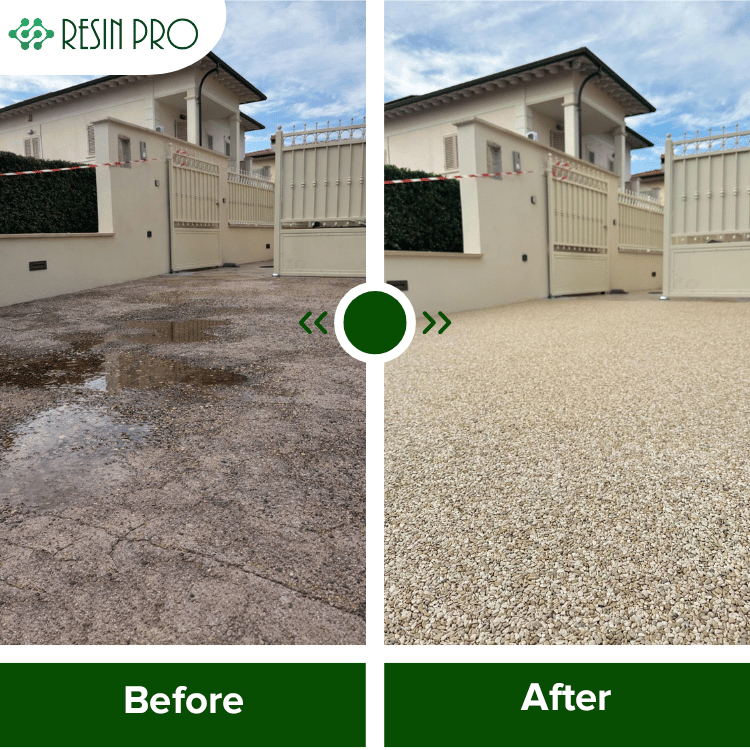
Resin-bound aggregate floors offer an attractive, hard-wearing and water-permeable solution perfect for patios, driveways, garden paths or other outdoor areas. This guide walks you through each stage, from preparing the base through to laying and ensuring a long-lasting finish. Whether you prefer a DIY project or want guidance for professionals, mastering this process will help you achieve a seamless, high-quality surface with long-term durability.
What You’ll Need
- “Flowstone” – Complete Permeable Floor Kit with Pebbles and Resin – A ready-to-use system for building permeable pebbled surfaces.
- “Trasparente” – Epoxy Binder for Coloured Pebbles and Grits – Ideal if you wish to use coloured aggregates for customised decorative finishes.
- Washed Pebbles for Permeable Floors 25kg – Outdoor Resin-Bound Surfaces – Clean, graded stones for drainage and appearance.
- “Polirock” – Polyurethane Binder for White Stones, 2kg Two-Component Kit – When working with white or light-coloured aggregates for a non-yellowing finish.
- Trowel, shovel, wheelbarrow, buckets and a clean rubber float
- Protective gloves, tape, and sheeting for masking off adjacent areas
- Firm, stable sub-base (concrete or compacted gravel recommended)
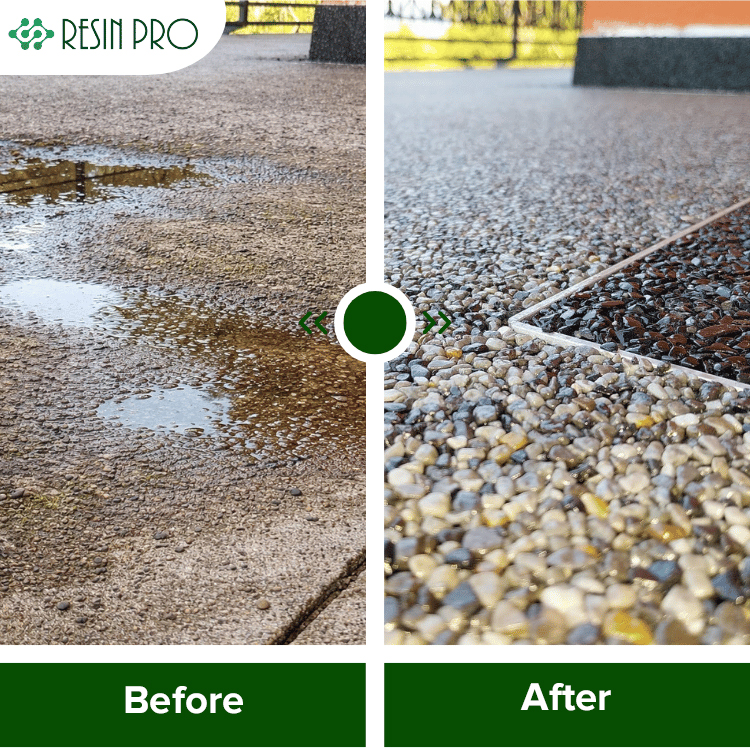
See Resin-Bound Pebble Floors in Action
Browse our gallery of resin-bound aggregate floors for inspiration on colour choices and surface finishes. See how outdoor spaces can be transformed with beautiful, practical, and water-permeable resin and stone combinations for patios, driveways, and footpaths.
Step 1: Prepare and Clean the Base
Begin by ensuring the subsurface is level, dry, and free from loose debris, mud, weeds and oil stains. If installing on soil, excavate enough to build up a stable base using compacted gravel followed by a layer of concrete or tarmac, ensuring adequate drainage. Allow any concrete to cure fully before proceeding.
Edge the area with fixed borders to contain the aggregate mix. Protect surrounding surfaces and wear suitable gloves. Carefully tape or sheet walls, steps and drains, especially in areas where neat edges or expansion joints are needed.
Step 2: Mix the Resin Binder and Aggregate
Choose the suitable resin system based on aggregate type: use “Polirock” – Polyurethane Binder for White Stones, 2kg Two-Component Kit for white or light stones to avoid yellowing, or “Trasparente” – Epoxy Binder for Coloured Pebbles and Grits for coloured aggregates needing a tough, clear finish. For a streamlined approach, the “Flowstone” – Complete Permeable Floor Kit with Pebbles and Resin simplifies the process with tailored resin and pebble packages.
In a clean vessel or mixer, add the aggregate first and pour the pre-measured resin binder over it. Mix thoroughly for even impregnation of the aggregate. Check that all stones appear evenly coated and there are no clumps or dry spots; this ensures solid adhesion and durability.
Step 3: Spread and Level the Aggregate-Resin Mix
Quickly transport the mixed batch to your installation area with a wheelbarrow. Deposit the mixture and use a shovel and trowel to spread it to your chosen thickness, usually about 15–18 mm for footpaths or up to 25 mm for driveways. Work in dry, mild weather to allow proper setting.
Compact gently and level the mix using a clean steel or rubber float, ensuring there are no voids or uneven sections. Work in manageable sections, maintaining a ‘wet edge’ to achieve a seamless, monolithic finish. Avoid excessive pressure to prevent resin surfacing.
Step 4: Compact and Finish the Surface
Trowel off the surface for a smooth, closed finish—be careful not to overwork as this can force resin to the uppermost layer or cause “trowel burn” marks. Compact well but avoid overworking the surface. Clean your tools with solvent after use and remove any protective masking while the resin is still just tacky.
Allow the surface to cure undisturbed for the recommended period, generally 24–48 hours depending on resin type and temperature. Keep traffic, moisture, leaves and debris away during this phase for a flawless result.

Step 5: Maintenance for Long-Term Performance
Once fully cured, sweep regularly to keep the floor free from debris and prolong drainage efficiency. Periodically hose down the surface and inspect for any loose edges or aggregate; those can be refilled using a small batch of resin-bound mix. With correct installation and care, resin-bound aggregate floors provide outstanding longevity and attractive aesthetics season after season.
Tips and Common Mistakes When Installing Aggregate and Resin Floors
- Select the right binder for your aggregate colour. Polyurethane for white/light stones, epoxy for darker tones.
- Do not install in heavy rain, high humidity, or when surface temperatures could drop below 10°C.
- Mix resin and aggregates only as much as you can install in 20–30 minutes to prevent premature curing.
- Ensure the base is solid, clean and non-porous to prevent movement and weak bonding.
- Always use pre-washed and dried aggregates such as Washed Pebbles for Permeable Floors 25kg – Outdoor Resin-Bound Surfaces.
Helpful Tools and Techniques for Resin Flooring
Use a suitable trowel and mixing vessel for best results. Applying masking tape and protecting edges ensures neat borders. Refer to our expert tips and Pebble Floors resource page for more advice on mixing, spreading, and maintaining your resin-bound floor.
- "Flowstone" – Complete Permeable Floor Kit with Pebbles and ResinPrice range: £42.85 through £3,389.85Flowstone is a draining floor kit featuring pebbles and resin, designed as a durable permeable solution for UK outdoor spaces.
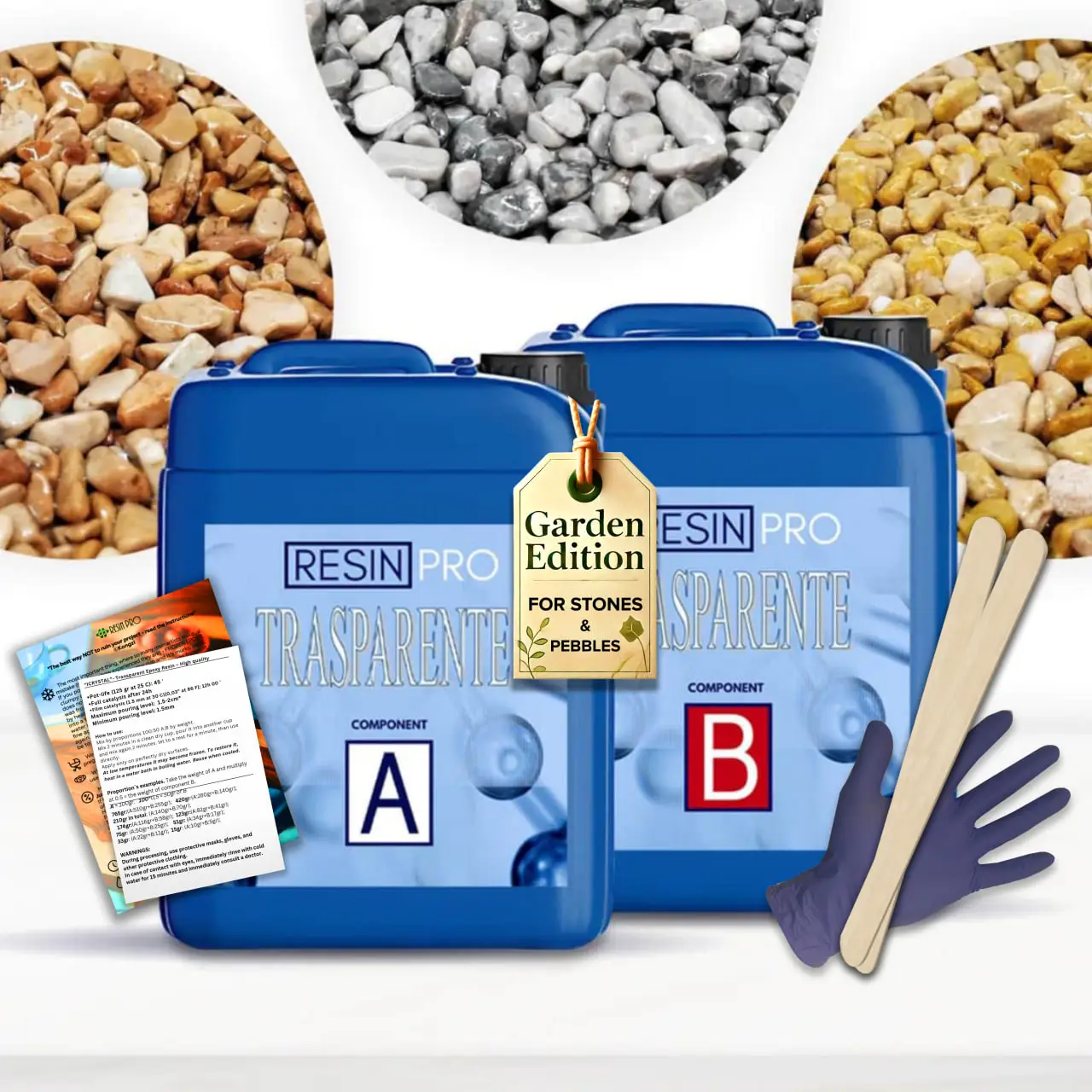 "Trasparente" – Epoxy Binder for Coloured Pebbles and GritsPrice range: £31.85 through £948.85"Trasparente" epoxy binder provides a clear, UV-resistant finish for coloured pebbles and grits, suitable for flooring projects.
- Washed Pebbles for Permeable Floors 25kg – Outdoor Resin-Bound Surfaces£26.85Washed Pebbles for Permeable Floors 25kg provide pre-washed aggregates for permeable outdoor surfaces, suitable for use with resin binders.
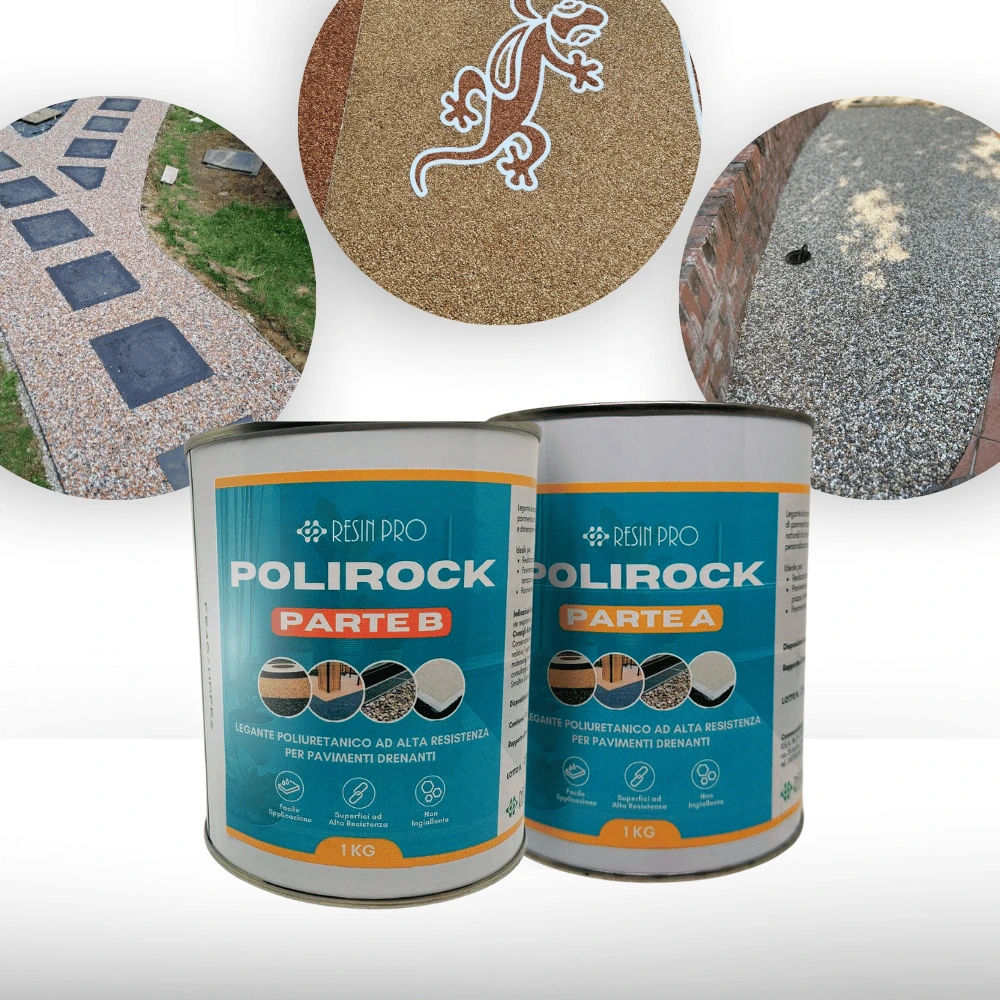 "Polirock" – Polyurethane Binder for White Stones, 2kg Two-Component Kit£58.85"Polirock" polyurethane binder is designed for decorative, permeable outdoor stone surfaces with lasting adhesion and durability.
Frequently Asked Questions
What is the right resin for aggregate floors?
Epoxy binders suit coloured stones, while polyurethane binders prevent yellowing on white or light aggregates.
How long does it take for resin-bound aggregate floors to cure?
Allow at least 24–48 hours for full curing, depending on temperature, humidity and resin system used.
Can I install an aggregate and resin floor myself?
Yes, with preparation and care, most DIY enthusiasts can lay small to medium sized resin-bound floors successfully.
How do I avoid yellowing on white stone aggregate?
Use a non-yellowing polyurethane binder such as POLIROCK designed for white or light aggregates.
What weather is best for laying resin-bound floors?
Choose dry, mild days—avoid installation in the rain, humidity, or temperatures below 10°C for best results.
Are resin-bound aggregate floors permeable?
Yes, resin-bound aggregate systems let rainwater drain through, helping prevent puddles and flooding.
How should I prepare the base for resin-bound aggregate?
Use a solid, clean sub-base like concrete or compacted gravel for long-lasting, stable results.
Can I mix different aggregate colours and sizes?
Yes, mixing aggregate colours and sizes offers decorative flexibility and can enhance permeability and appearance.