 Free shipping on orders over £29,85
  Shipping Tracking!


 Google
 Facebook
How to make moulds with resin?
Step-by-step guide for detailed, reusable resin moulds
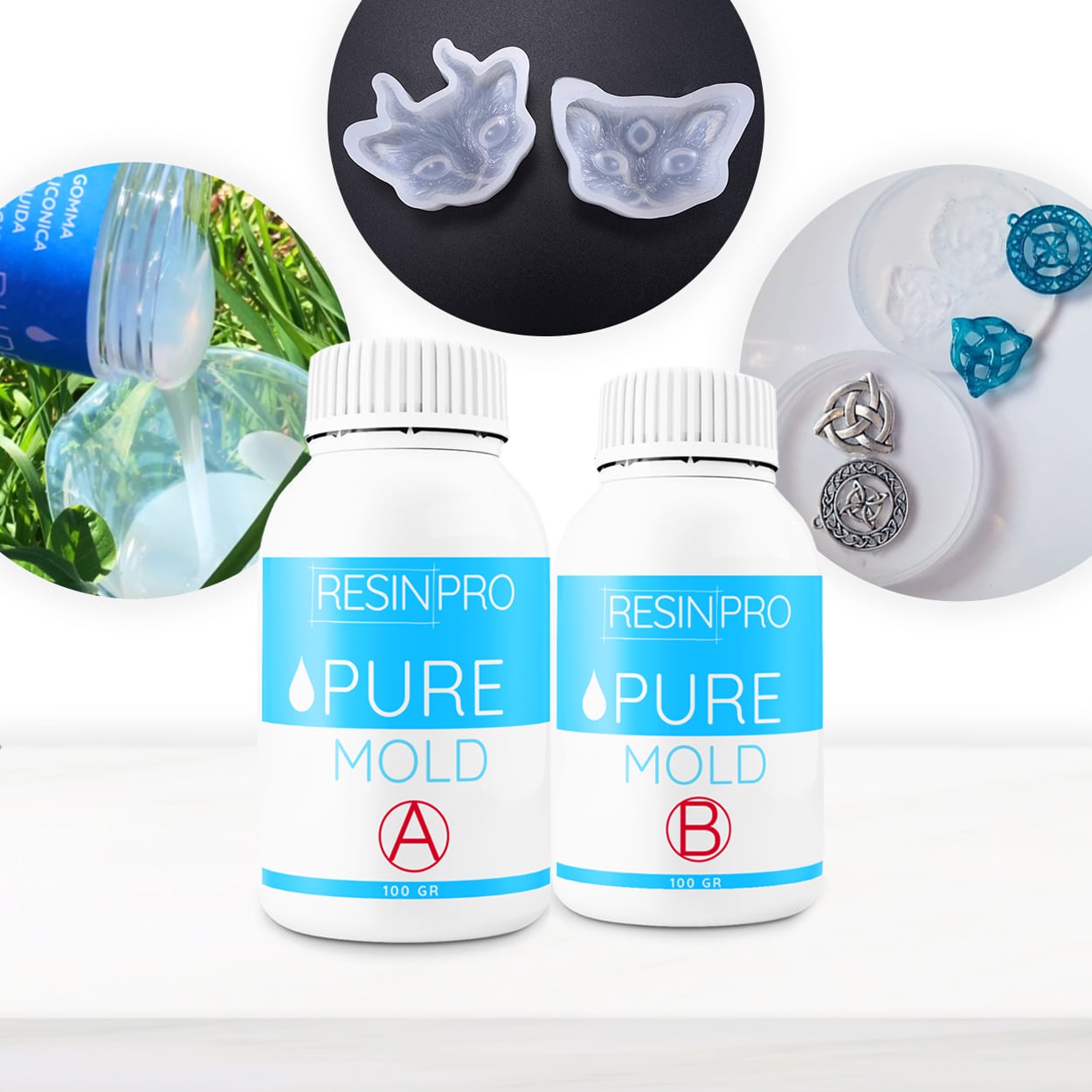
Creating custom moulds with resin allows you to cast everything from bespoke jewellery and miniatures to large-scale artworks and functional items. This guide covers the complete process for making high-quality, professional-grade moulds using the best techniques. Whether you are new to resin or looking to refine your existing skills, you’ll learn how to ensure clean releases, accurate impressions, and long-lasting reusable moulds.
What You’ll Need
- “Pure Mould” – Translucent Liquid Silicone Rubber for Mould Making – Platinum-based rubber for detailed and reusable moulds.
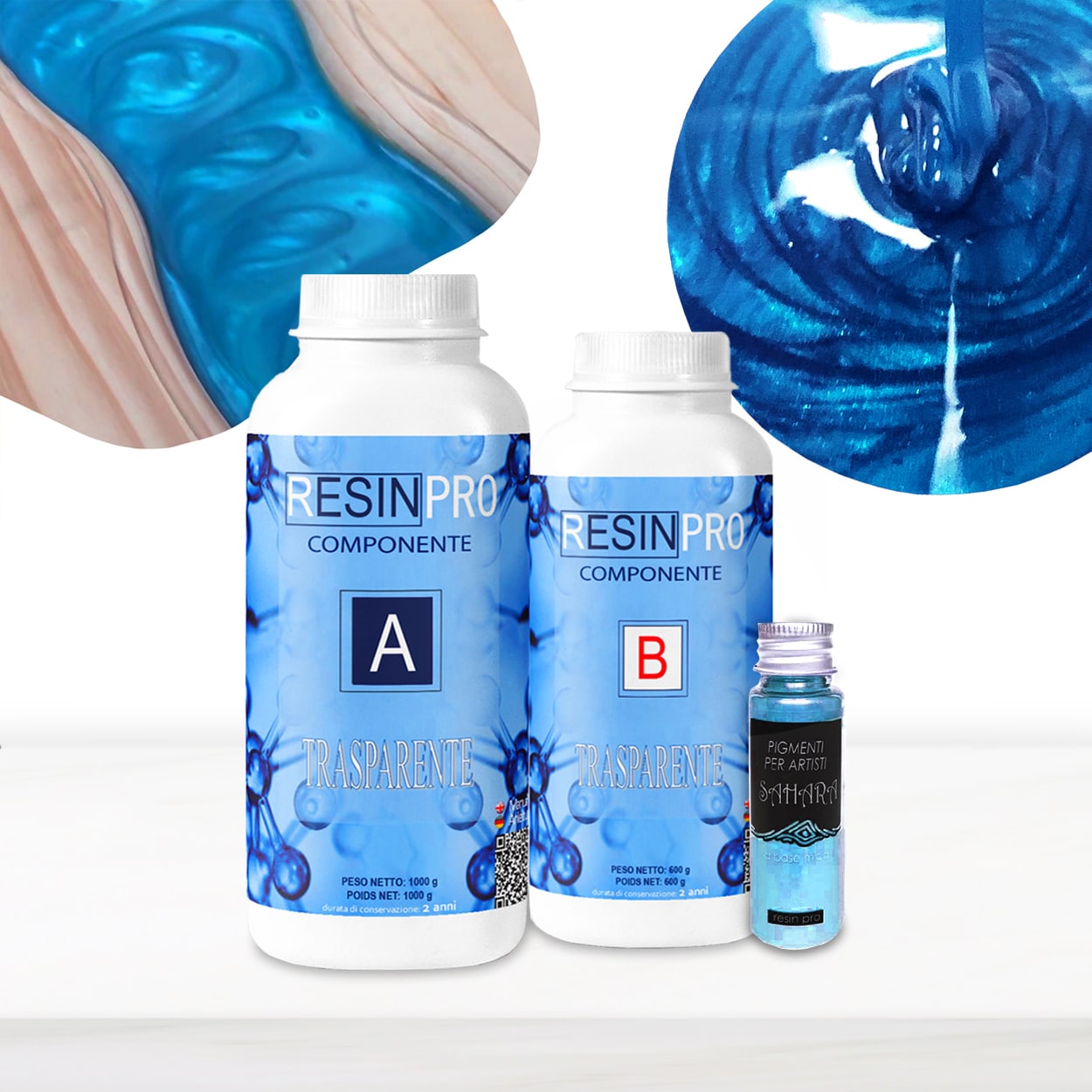
- “Trasparente” Epoxy Resin Kit 800g + Mica Powder 10g – 10 Colour Variations – For casting objects or enhancing mould design.
- “Icrystal” – Clear Epoxy Resin – Odourless Formula – Up to 1.5cm – Use for resin casting or to check mould transparency.
- “ICreation” – Fast Epoxy Resin, 6h Demoulding, Transparent Gloss Finish – Suitable for quick-turnaround resin projects.
- Disposable mixing cups and stirring sticks
- Digital scale for accurate mixing
- Protective gloves and apron
- A master or original piece to make the mould from
- Mould box or container for setting up the mould (plastic boxes, LEGO, foamboard, etc.)
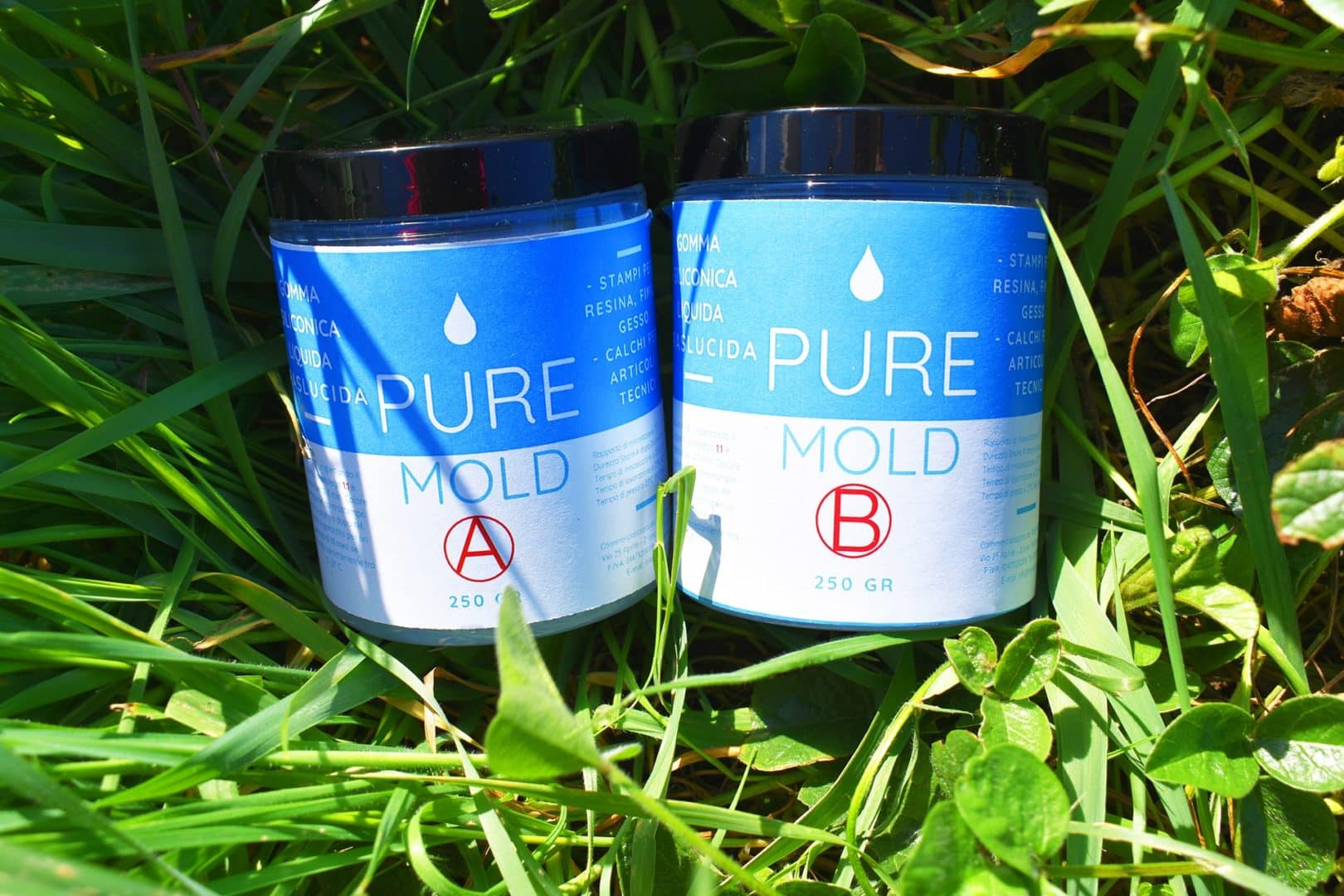
Visual Examples of Silicone and Resin Moulds
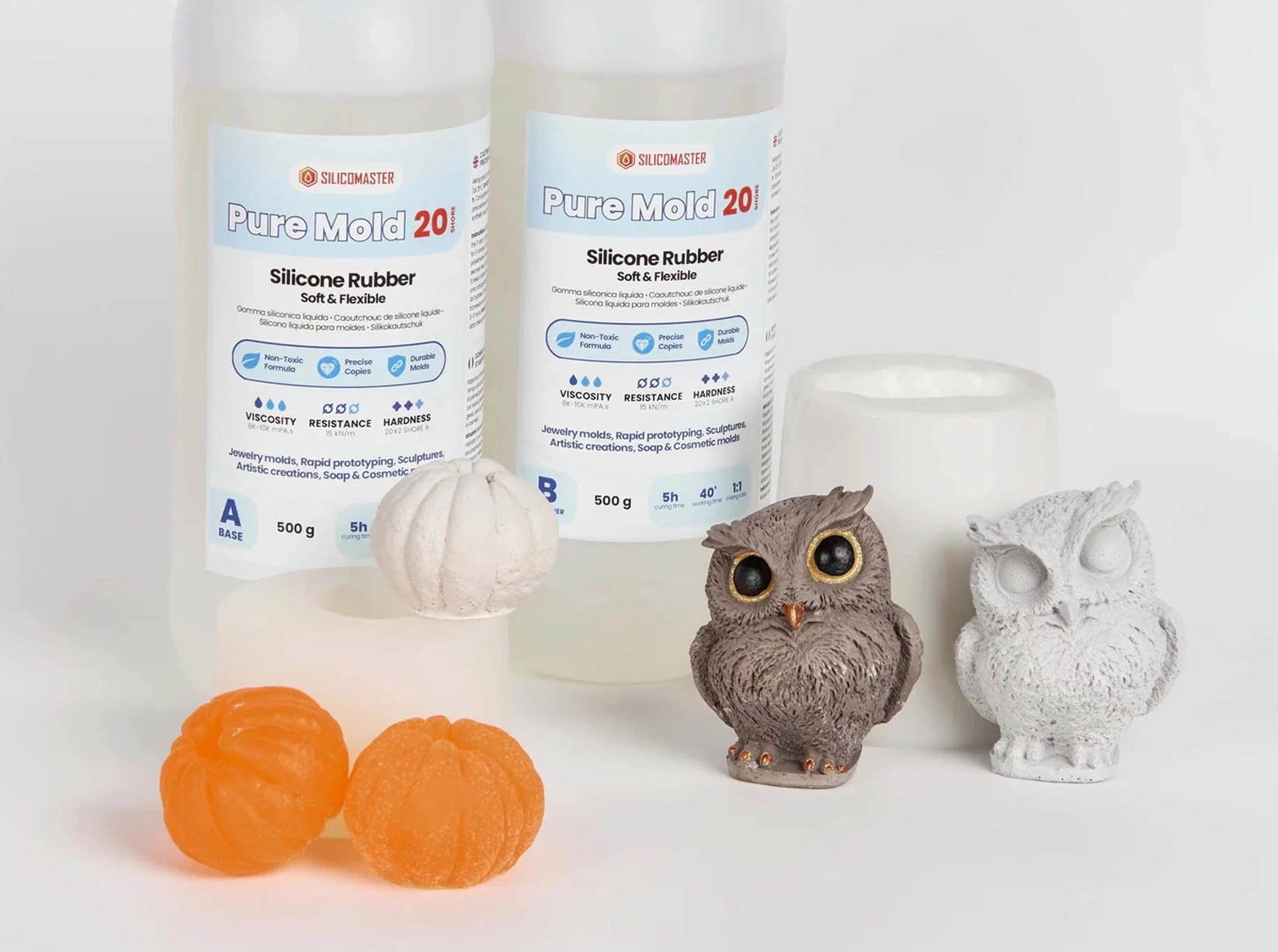
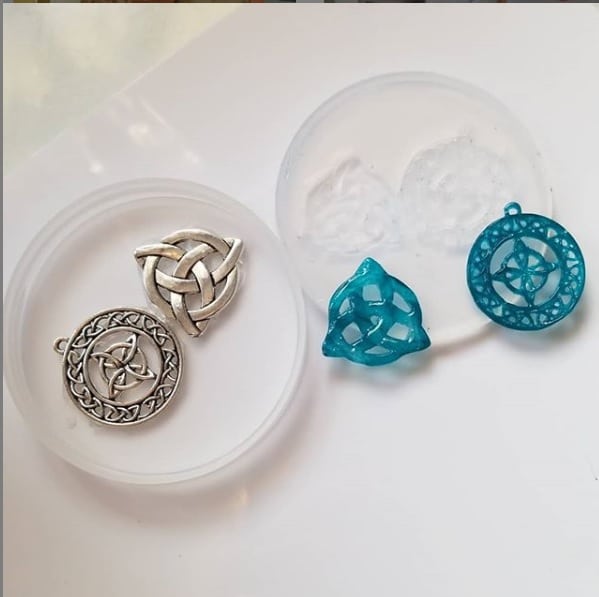
See how translucent silicone and clear epoxy resins are used to capture every intricate feature for decorative, artistic, or practical projects. Notice the fine detail possible with quality materials. Explore various mould shapes, from jewellery pieces to complex prototypes, all made using the described techniques.
Step 1: Prepare Your Workspace and Master Object
Prepare your workspace and materials carefully before beginning. Ensure your working area is dust-free and on a level surface, as uneven tables can result in slanted or uneven moulds. Lay out all required items in advance and use gloves and an apron to protect against spills. Select your master object—this could be a piece of jewellery, toy, or any item you wish to replicate. The surface of your master must be clean and thoroughly dry to prevent imperfections transferring to the mould.
Choose an appropriately sized container or build a box that leaves at least 1–2 cm space around your master. Secure the master to the base with a drop of hot glue or double-sided tape to prevent it floating once the silicone or resin is poured.
Step 2: Mix and Pour Your Mould Material
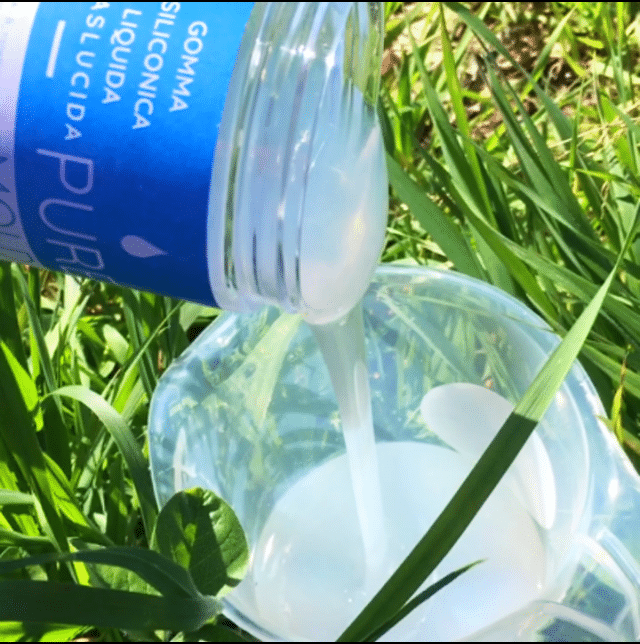
Mix and pour your mould material with precision for the best results. For most professional moulds, platinum-based silicone rubber is recommended for its flexibility, chemical resistance and lifespan. Using a digital scale, measure equal parts (1:1 ratio) of each component if using something like “Pure Mould” – Translucent Liquid Silicone Rubber for Mould Making. Mix slowly and thoroughly, scraping the sides and bottom of your container for full incorporation. Avoid whipping in air, as bubbles can reduce detail.
Slowly pour the mixture into one corner of your mould box, letting it rise and gently flow around your master, which helps reduce air pockets. Tap or vibrate the mould box gently to dislodge any trapped bubbles. Leave undisturbed for the cure time specified by your chosen product (generally 3–8 hours for “Pure Mould”).
Step 3: Demould and Inspect Carefully
Demould gently to preserve detail and finish. Once curing is complete, check for firmness by lightly pressing the surface. Remove the container sides or flip it over if using a flexible box. Peel the mould material away from the master object slowly—do not force or rush, as even flexible silicone can tear if strained sharply.
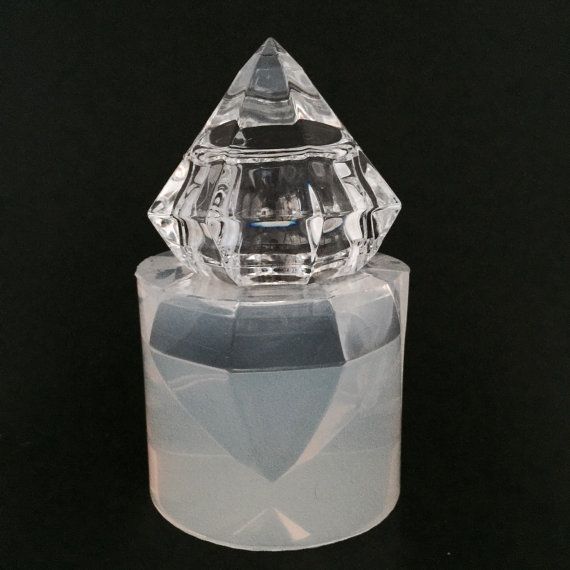
Inspect the cavity for surface defects, air bubbles, or thin spots. High-quality translucent silicone moulds make it easy to spot residual bubbles or flaws. If needed, cut a small slit to aid removal, but keep it minimal to maintain the mould’s integrity. Your finished mould should capture every detail of your original.
Step 4: Store and Reuse Moulds Properly
Store and reuse moulds with proper care to maximise their lifespan. After cleaning with mild soap and warm water, dry fully before storage. Keep moulds away from direct sunlight and extreme temperatures, as these can degrade silicone or resin surfaces. Dust lightly with cornflour if stacking to prevent sticking. Quality materials such as those in the “Pure Mould” – Translucent Liquid Silicone Rubber for Mould Making line are formulated for multiple uses with epoxy, polyester, and polyurethane resins, as well as plasters and concrete.
Use a dedicated shelf or box for storage and avoid folding or compressing flexible moulds, as this can lead to deformation over time.
Tips, Common Mistakes and Troubleshooting
Avoid most issues by preparing surfaces and mixes carefully. If you notice persistent bubbles in the silicone or resin, mix more slowly or allow the product to stand for a few minutes before pouring. Never use unclean or oily masters, as residue affects the mould finish. Overfilling mould boxes wastes material and makes demoulding harder. If your results lack detail, double-check your mixing proportions and curing times for accuracy.
For rapid project turnaround, choose faster-curing materials as recommended for your application. Always read your selected material’s instructions, as each resin or silicone may have specific needs.
Troubleshooting: Common Issues in Mould Making
Avoid the most frequent challenges by following preparation and mixing tips. Bubbles, surface defects, and sticky results can usually be prevented with slow mixing, a dust-free environment, and precise measurements. If your mould tears or is too flexible, review recommended thickness and curing times before reattempting. “Pure Mould” – Translucent Liquid Silicone Rubber for Mould Making offers a robust and reusable option for reliable outcomes.
- "Pure Mould" – Translucent Liquid Silicone Rubber for Mould MakingPrice range: £22.85 through £158.85"Pure Mould" is a platinum-based translucent silicone rubber designed for making detailed moulds with resins and other materials.
- "Trasparente" Epoxy Resin Kit 800g + Mica Powder 10g – 10 Colour Variations£19.85"Trasparente" is an ultra clear multipurpose epoxy resin kit with mica powder, suitable for crafting and woodworking projects related to mould making.
 "Icrystal" – Clear Epoxy Resin – Odourless Formula – Up to 1.5cmPrice range: £11.65 through £954.85"Icrystal" clear epoxy resin offers good quality with ease of use, suitable for making moulds and creative projects.
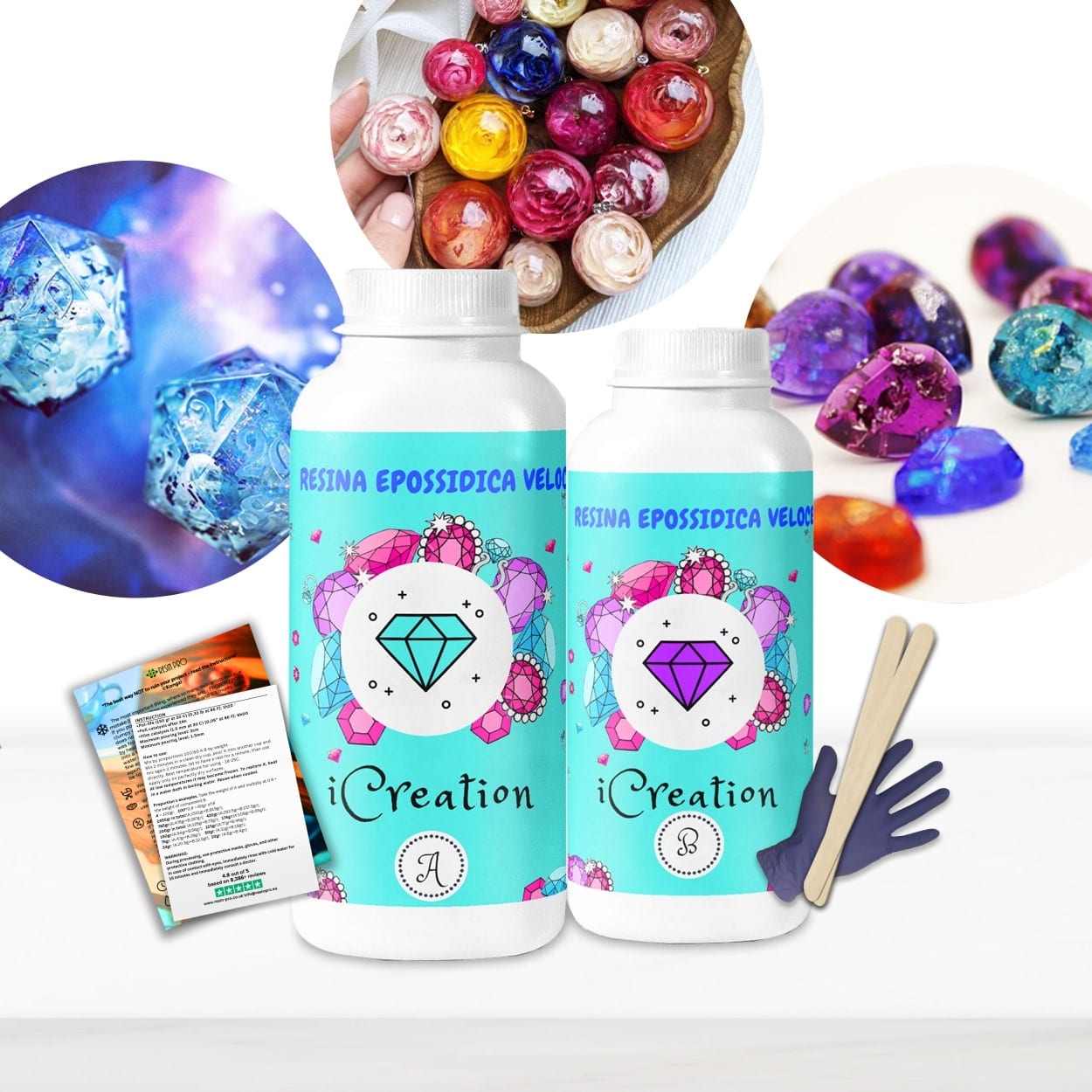 "ICreation" – Fast Epoxy Resin, 6h Demoulding, Transparent Gloss FinishPrice range: £19.40 through £52.85ICREATION fast epoxy resin provides a clear, glossy finish with a 6-hour demoulding time, suitable for mould making with resin.
Frequently Asked Questions
What silicone is best for capturing detail in resin moulds?
Translucent, platinum-based silicones offer excellent detail and flexibility for resin moulds.
How do I avoid bubbles in my resin or silicone mould?
Mix slowly, pour from one corner, and gently tap or vibrate the mould to release trapped air.
Why is my resin mould still sticky after curing?
Sticky surfaces often result from inaccurate mixing ratios or incomplete curing. Always follow manufacturer instructions.
Can I use plastic containers as a mould box?
Yes, plastic or silicone containers work well as mould boxes if they provide a tight seal and enough space around the object.
How do I clean and store my moulds for reuse?
Wash with mild soap and water, dry thoroughly, and store away from sunlight and heat to extend mould lifespan.
How many times can I reuse a silicone mould?
Quality silicone moulds can be reused dozens of times with care, especially when not overheated or overstressed.
Do I need a release agent for epoxy resin in silicone moulds?
Release agent is usually unnecessary for quality platinum silicone, but can help with complex or deep-cavity moulds.