 Free shipping on orders over £29,85
  Shipping Tracking!


 Google
 Facebook
How do you make closed moulds for model-making resin?
Step-by-step guide for consistent, detailed resin mould creation

Creating closed moulds is a crucial skill for model-makers who want to produce precise, repeatable resin casts with minimal flaws. This guide walks you through every step, from design to demoulding, ensuring your models can be reproduced with reliable detail and quality. Whether you’re making miniatures, artistic components, or functional prototypes, the principles outlined here will guide both beginners and experienced creators.
What You’ll Need
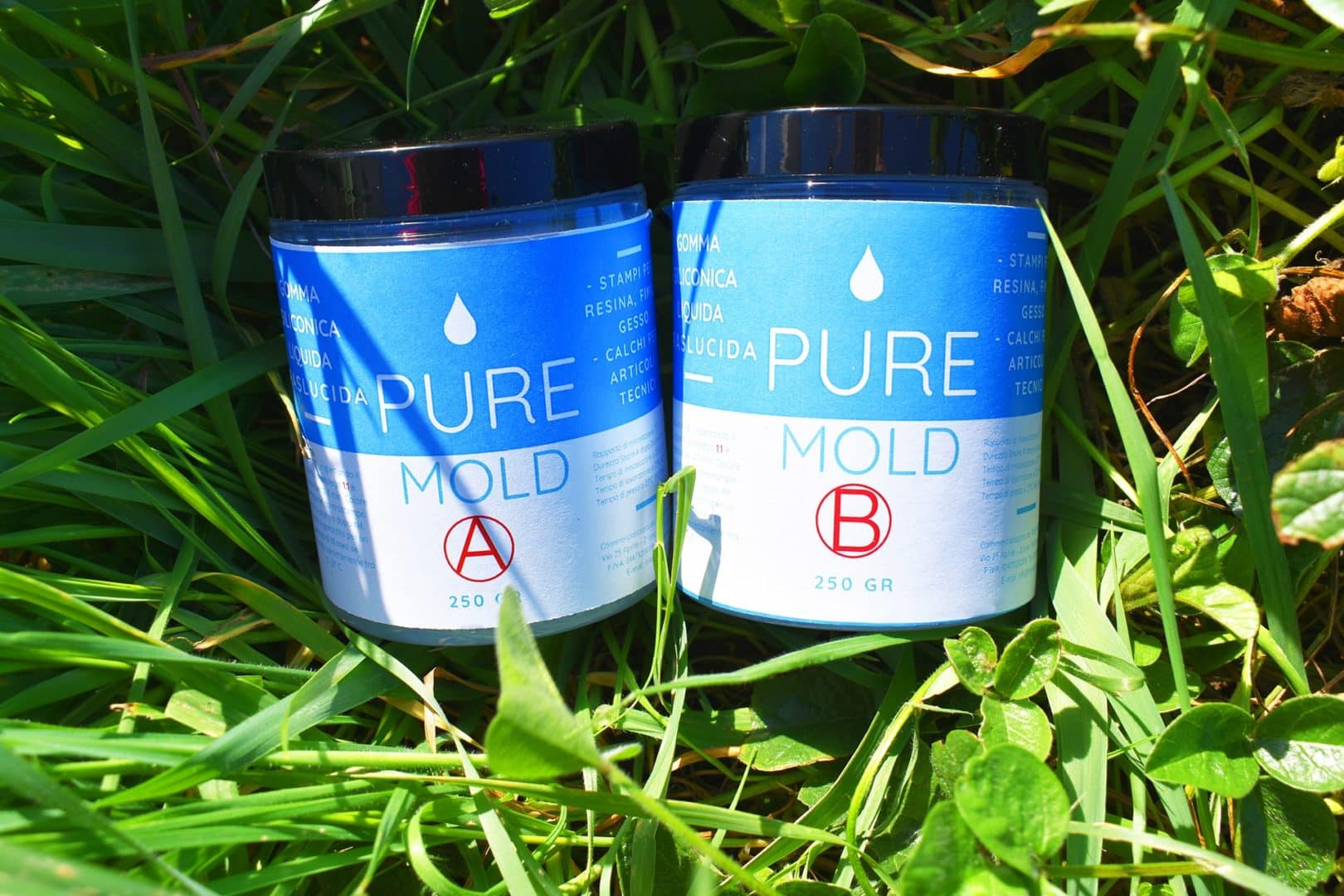
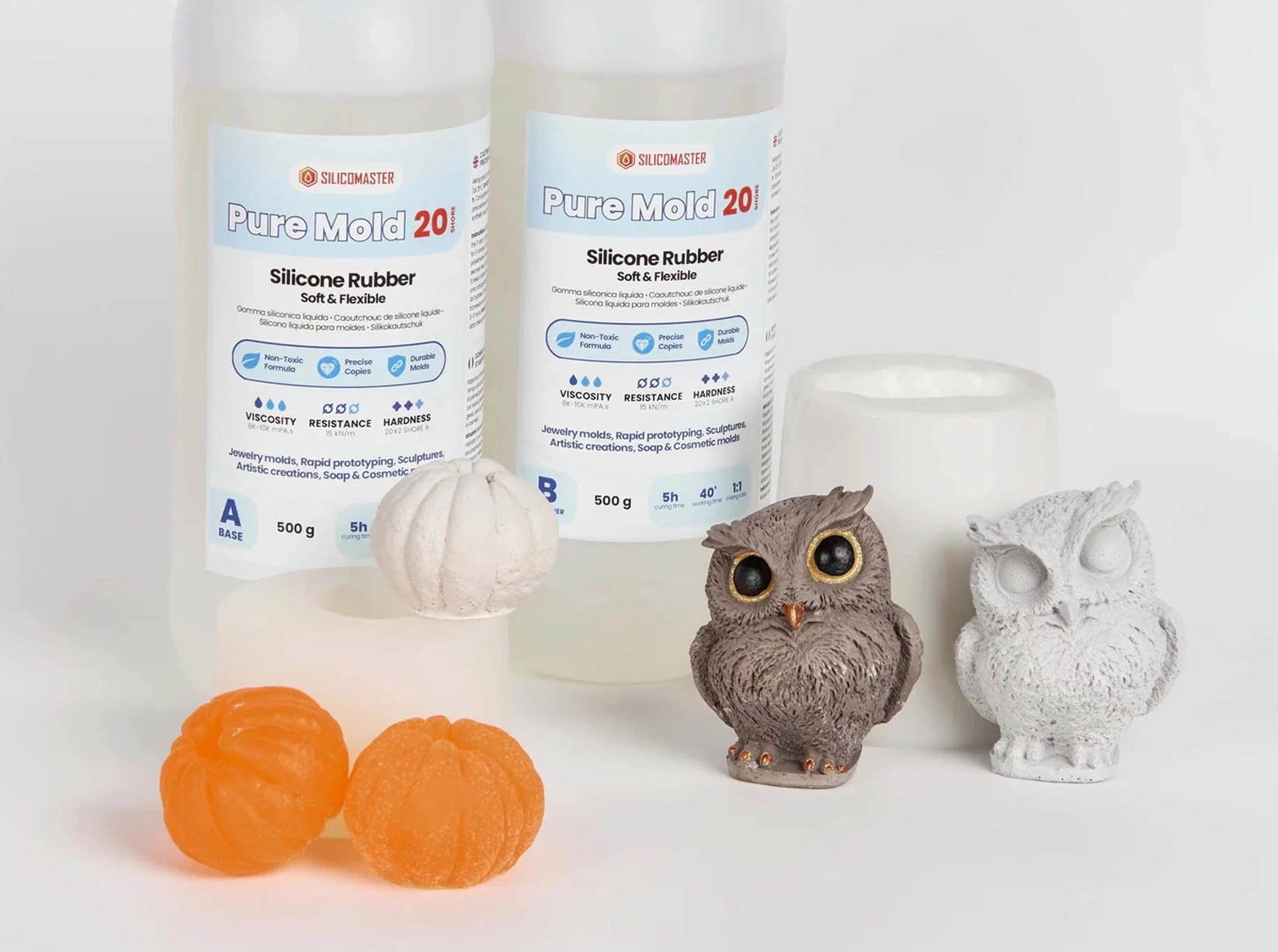
- “Pure Mould” – Translucent Liquid Silicone Rubber for Mould Making – Ideal for capturing intricate details and observing the casting process
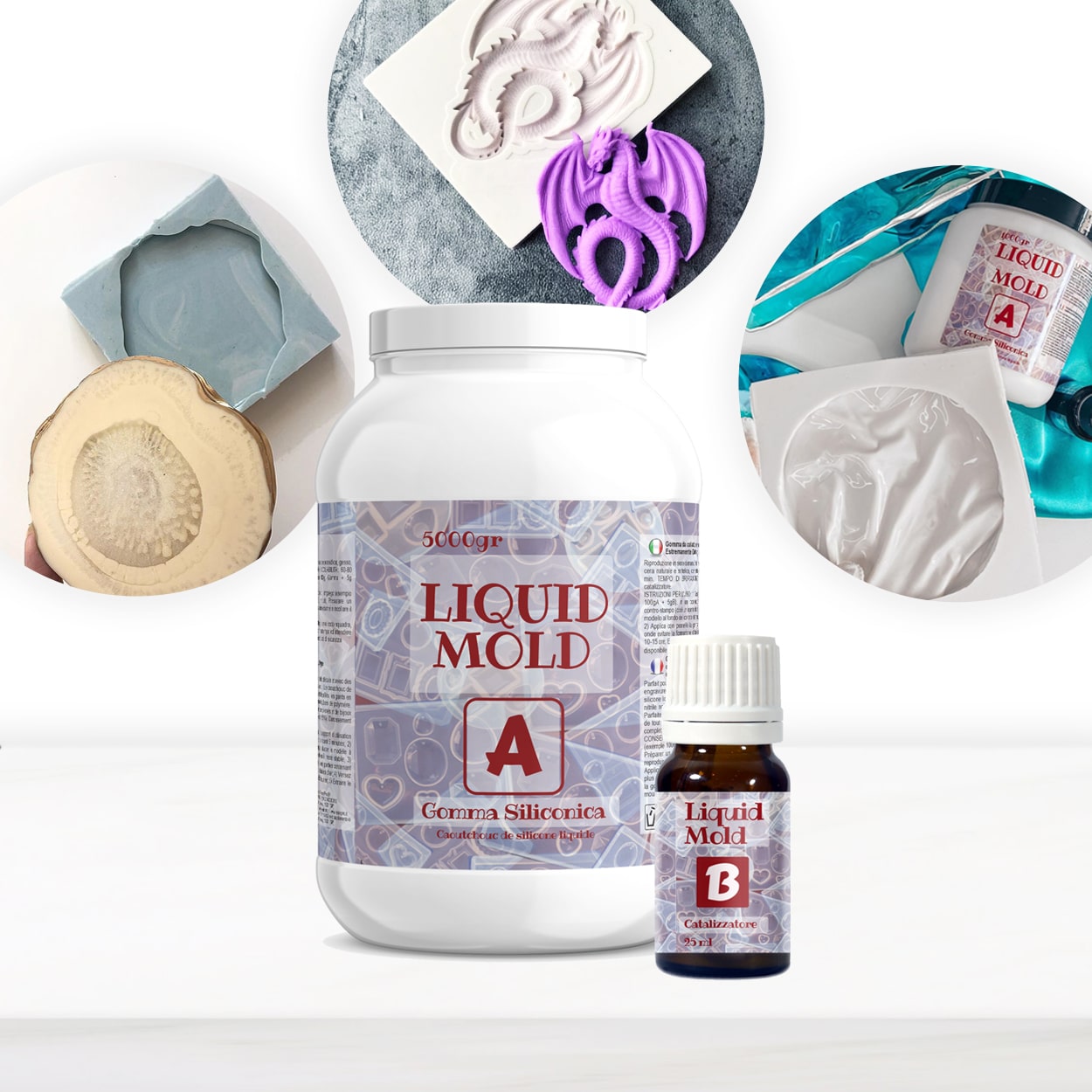
- “Liquid Mould” – Casting Liquid Silicone Rubber, 5-40 Shores, Bi-Component A+B – Suitable for highly detailed or undercut moulds
- “I–Gum” – Non-Toxic Silicone Putty for Mould Making – Use for quick, non-toxic hand-moulding around models
- “Trasparente” – Multipurpose Clear Epoxy Resin for Casting – Up to 2cm – For your model-making resin casts
- Mixing containers, spatulas, gloves
- Model to be moulded (master object)
- Formwork or container for building the mould
- Release agents (if required)
- Supporting materials (such as clay for seams/vents, if splitting the mould)
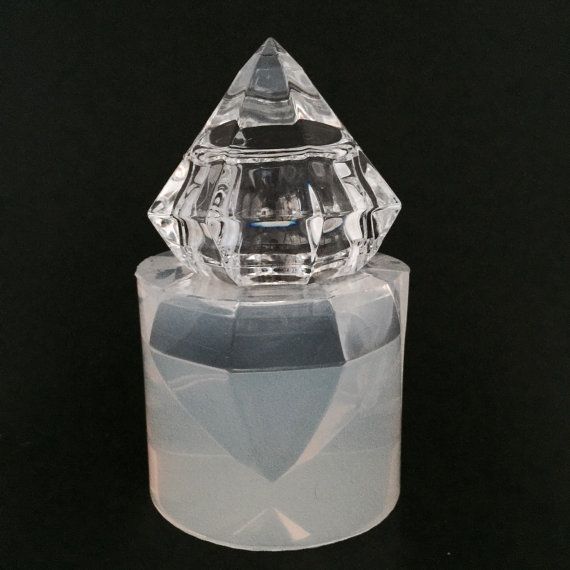
Silicone Closed Moulds: Detail and Versatility Visualised
Closed moulds made from silicone unlock unmatched detail and consistency for resin casting. Their flexibility allows for easy demoulding of complex shapes, while translucent varieties help you spot potential issues before casting. Each type of silicone—liquid or putty—offers unique benefits for various model-making needs.
Step 1: Choose the Right Silicone Material
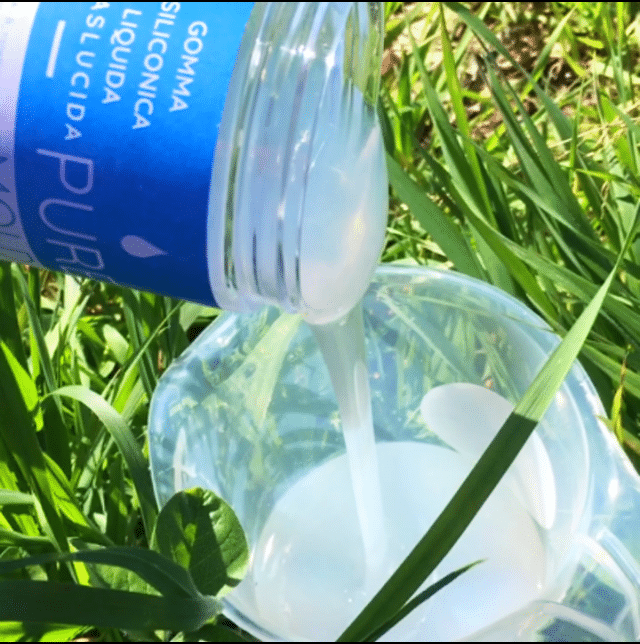
The selection of your silicone type is fundamental. Closed moulds for model-making resin demand a silicone that captures fine surface detail, accommodates possible undercuts, and resists degradation after repeated use. For highly detailed models, a flowable liquid silicone such as “Pure Mould” – Translucent Liquid Silicone Rubber for Mould Making is well suited thanks to its transparency and precision. For deeper undercuts or more complex forms, consider “Liquid Mould” – Casting Liquid Silicone Rubber, 5-40 Shores, Bi-Component A+B for its penetrating ability and variable hardness.
A non-toxic mould putty, such as “I–Gum” – Non-Toxic Silicone Putty for Mould Making, is a great choice for smaller or simple shapes that don’t require flow around deep details. Always check compatibility with your intended resin and ensure the working time matches your pace.
Step 2: Create a Secure Formwork
Build a container or box—commonly from plastic, acrylic, or even LEGO bricks—around your master model, leaving at least 1–1.5cm clearance on all sides. Ensure a tight fit to prevent leaks but do not compress soft models. Attach the master securely, using minimal contact points to limit visible marks. When working with a two-part (sandwich) closed mould, use supporting clay or spacers to define seam lines and positioning.
Seal any gaps in your formwork to contain the silicone. Apply a thin layer of release agent if your model or formwork is porous or could bond to the silicone. This is especially important for highly detailed or textured master objects.
Step 3: Mix and Apply Silicone with Care
Carefully follow the manufacturer’s instructions for your chosen silicone. For flowable silicones, combine parts A and B in the correct ratios—typically 1:1 for Pure Mould, or as specified for Liquid Mould. Mix until fully homogeneous, scraping the sides of your container to avoid unmixed pockets. For putty formats like I–Gum, knead the two components together until the colour is uniform.
Pour or press the silicone slowly, starting from one corner, allowing it to flow around and beneath the master to reduce air bubbles. Tapping the container gently helps trapped air escape. For very fine models, the use of a pressure chamber can assist in eliminating bubbles prior to curing.
Step 4: Cure and Demould with Patience
Let the silicone rubber cure fully according to the product’s guidelines. Room temperature curing is typical—some silicones cure in as little as 3–8 hours, while others may take up to 24 hours. Avoid moving or disturbing the setup during this phase, as vibrations might distort the mould.
Once cured, carefully dismantle the formwork. Make clean cuts along seam lines if working with a split or two-part closed mould. Gently flex and peel the silicone away from both the master and the supporting materials, taking care not to tear thin details or over-stress the mould’s edges.
Step 5: Test and Prepare for Casting
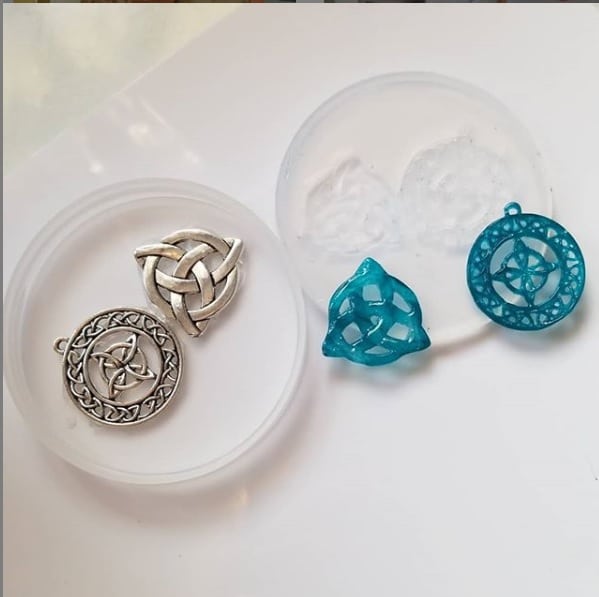
Before performing full production runs, test your new closed mould with a small quantity of your chosen resin. For clear, detailed models, “Trasparente” – Multipurpose Clear Epoxy Resin for Casting – Up to 2cm delivers reliable clarity and minimal shrinkage in thin layers. Check for leaks or seam issues, inspect for bubbles in fine details, and ensure the mould releases cleanly from the resin part.
Once satisfied, repeat the casting process as needed, always observing for wear or tears in the closed mould. Store the mould flat, away from sunlight and heat, to extend its working life.
Tips, Common Mistakes, and Troubleshooting
To prevent air bubbles, always mix and pour slowly. If you notice incomplete detail in your cast, it may be due to air trapped in tight areas—consider using a pressure pot or brushing a thin coating of silicone onto intricate sections before pouring the bulk. Remember: poor mixing can result in sticky or uncured spots. Never rush cure times, as early demoulding can deform both the mould and your model. Store silicone products in sealed containers to keep them free from dust and moisture.
With each project, you’ll improve your technique and develop solutions specific to your models and materials. Prioritise patience and methodical steps for best results every time.
Get Creative: Closed Mould Applications in Model-Making
Silicone closed moulds are ideal for producing miniatures, custom parts, replicas, or intricate hobby components. Try alternating materials or colours in multi-part casts, or experiment with embedding elements within the resin. The right silicone and careful technique elevate your hobby or small-batch production capabilities.
- "Pure Mould" – Translucent Liquid Silicone Rubber for Mould MakingPrice range: £22.85 through £158.85"Pure Mould" is a translucent liquid silicone rubber designed for mould making, compatible with many materials including resins, plaster and cement.
- "Liquid Mould" – Casting Liquid Silicone Rubber, 5-40 Shores, Bi-Component A+BPrice range: £13.45 through £368.85"Liquid Mould" is casting liquid silicone rubber suitable for making detailed moulds for small objects, used in model-making resin contexts.
 "I–Gum" – Non-Toxic Silicone Putty for Mould MakingPrice range: £22.85 through £99.85"I–Gum" is a two-component non-toxic silicone putty designed for mould making with a 1:1 mix ratio and extended working time.
 "Trasparente" – Multipurpose Clear Epoxy Resin for Casting – Up to 2cmPrice range: £8.45 through £948.85Clear casting epoxy resin for up to 2 cm layers, suitable for various detailed crafts and woodworking projects.
Frequently Asked Questions
Which silicone material is recommended for moulds capturing fine details in model-making?
Translucent liquid silicone rubber provides the best fine detail capture and is especially useful when visibility during casting is important.
What’s the best way to prevent air bubbles when making silicone closed moulds?
Pour silicone slowly from one corner and consider using a pressure chamber for highly detailed forms.
When should I use a flowable silicone versus a putty for model moulds?
Use liquid silicone for deep, detailed objects or fine undercuts. Use putty for flat, simple, small shapes.
What is the safest way to demould a resin cast from a silicone closed mould?
Allow the resin to cure fully and flex the mould gently to avoid tearing delicate areas.
How often can I reuse a silicone closed mould for resin casting?
With proper care, high-quality silicone moulds may be reused several dozen times before showing wear or losing detail.
What is the best way to store my silicone moulds between uses?
Store silicone moulds flat, protected from dust, sunlight, and heat, to maximise their lifespan.