 Free shipping on orders over £29,85
  Shipping Tracking!


 Google
 Facebook
How to apply resin flooring?
Step-by-step guide for durable, decorative resin-bound floors

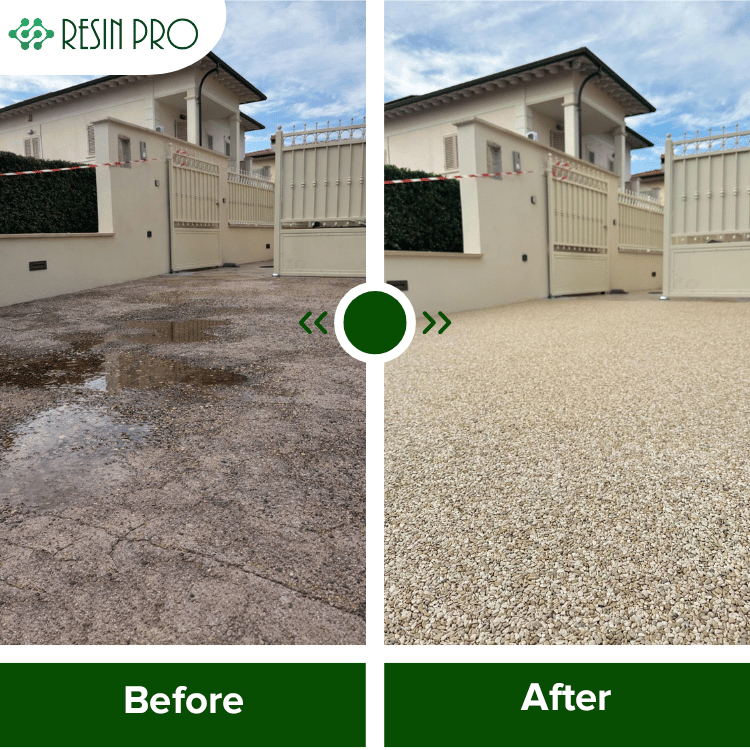
Resin flooring delivers a modern, durable and attractive finish suitable for everything from patios and driveways to interior surfaces. This guide details the key steps to achieve a professional resin floor result, from surface preparation and priming through to mixing and laying the resin-bound system. Whether for home, commercial or creative projects, careful attention to each phase ensures a long-lasting and visually impressive finish.
What You’ll Need
- “Epoxyprimer” – Universal Water-Based Two-Component Epoxy Floor Primer: Ideal for preparing concrete, timber, tiles, or screeds.
- “Trasparente” – Epoxy Binder for Coloured Pebbles and Grits: Best for vibrant, coloured stone floors.
- “Polirock” – Polyurethane Binder for White Stones, 2kg Two-Component Kit: Perfect for white or natural stone finishes requiring no yellowing.
- “Flowstone” – Complete Permeable Floor Kit with Pebbles and Resin: A ready-to-use system for draining, durable pebble floors in outdoor settings.
- Protective gloves, mask, and eye protection
- Clean mixing buckets and a slow-speed mixer or cement mixer (for large areas)
- Roller, brush, or spatula (for primer and detailing)
- Trowel or float for spreading the mixture
- Masking tape and plastic sheeting (to protect adjacent surfaces)
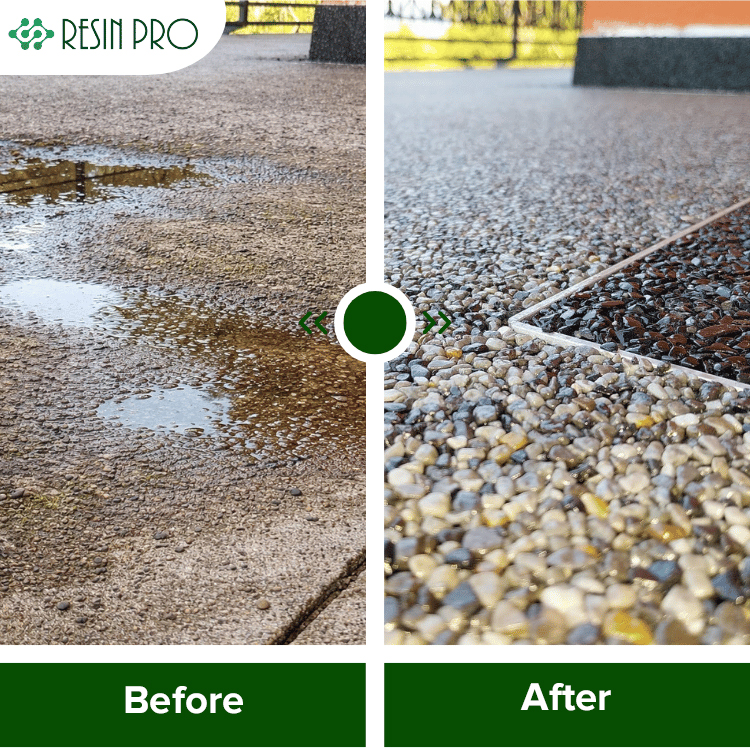
Essential preparation for flawless resin flooring
Proper surface preparation sets the foundation for a successful resin floor. Sweep, clean, and prime thoroughly to maximise adhesion and ensure a professional-grade result on any resin-bound surface.
Step 1: Prepare and Prime the Surface
Ensure the substrate is clean, dry, and stable. Begin by sweeping and vacuuming the area to remove dust, dirt, and debris. Repair any cracks or holes, and allow adequate drying time after washing if moisture is present. Stable surfaces are essential—avoid proceeding on loose or crumbling bases, and always remove oil or grease.
Priming is essential for optimal adhesion—apply a layer of “Epoxyprimer” – Universal Water-Based Two-Component Epoxy Floor Primer to the prepared surface using a roller or brush. Work the primer into every pore for uniform coverage on concrete, tiles or screed. Allow the primer to fully cure before continuing—this typically takes 24-48 hours.
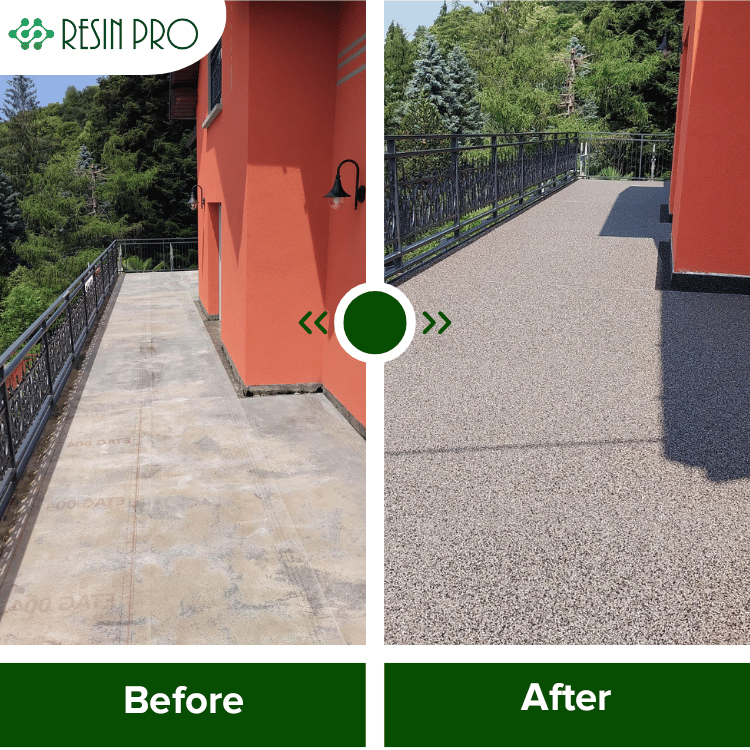
"Flowstone" – Complete Permeable Floor Kit with Pebbles and Resin
A complete kit designed for durable, draining outdoor pebble flooring with resin suitable for UK climate.
Step 2: Mix the Resin and Aggregates
Once the primer is fully dry, set up your mixing station in a dust-free area. Begin by weighing out the correct proportions of resin and aggregates according to your selected system. For coloured aggregate floors, use “Trasparente” – Epoxy Binder for Coloured Pebbles and Grits, ensuring you follow the recommended 3% resin-to-stone weight ratio.
Blend aggregates and resin thoroughly in a clean bucket or, for larger applications, in a cement mixer. Mix until every grain is coated, paying particular attention to distributing binding evenly and avoiding dry spots. If working with white or pale stones, use “Polirock” – Polyurethane Binder for White Stones to prevent yellowing and preserve clarity.
Step 3: Lay and Finish the Resin Flooring
After mixing, immediately pour the resin-stone mixture onto the primed surface in sections. Use a steel trowel or float to spread the mixture to your desired thickness, typically 10-20mm, ensuring a level and continuous finish. Consistent spreading is key for a smooth result; work swiftly before the resin begins to set.
For outdoor applications where drainage is important, consider a ready-to-use solution like the “Flowstone” – Complete Permeable Floor Kit with Pebbles and Resin. Its specific blend facilitates water drainage and prevents puddles—ideal for driveways and patios.
Remove any masking tape before the resin fully cures to keep edges clean. Allow the surface to cure undisturbed for the period specified by your resin system, usually 24-48 hours for light foot traffic, longer for vehicle use.
"Flowstone" – Complete Permeable Floor Kit with Pebbles and Resin
A complete kit designed for durable, draining outdoor pebble flooring with resin suitable for UK climate.

Tips and Common Mistakes to Avoid
Mind the manufacturer’s mixing ratios. Incorrect ratios of resin to aggregate may cause weak spots or poor curing. Always follow the product’s technical documentation.
Work in manageable sections to avoid the resin setting before spreading. Watch for bubbles and air pockets: use a spiked roller if bubbles start to form. Do not apply in very damp or extremely hot conditions, as this can interfere with curing and result in poor adhesion or yellowing.
Clean all tools promptly after use—set resin is difficult to remove.
Expert tips for beautiful, reliable resin floors
Follow best practices when mixing and spreading resin. Use the right binder for your chosen stone colour, and work in suitable weather conditions to avoid yellowing or poor curing.
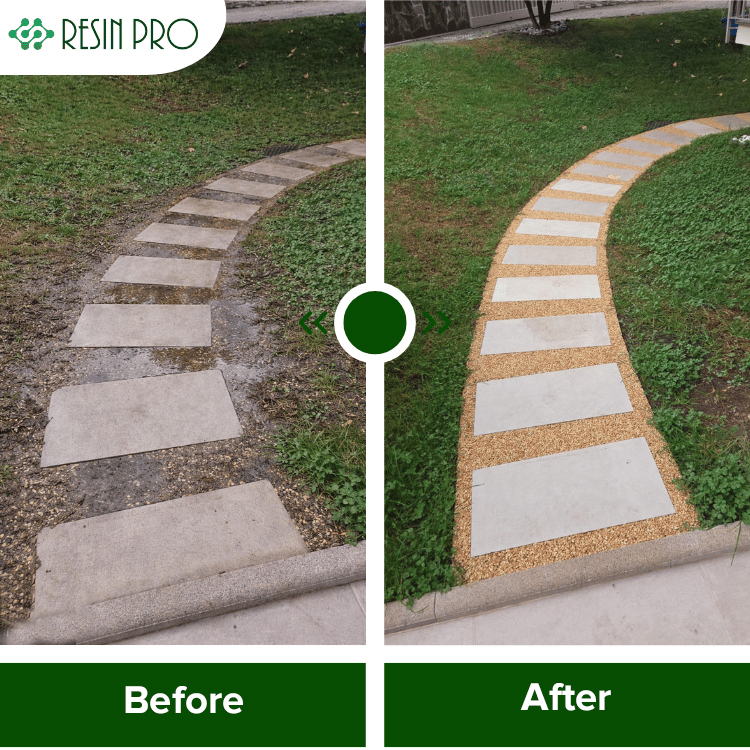
- "Flowstone" – Complete Permeable Floor Kit with Pebbles and ResinPrice range: £42.85 through £3,389.85The Flowstone draining floor kit provides a durable, permeable pebble and resin solution suitable for outdoor areas with guided application…
 "Epoxyprimer" – Universal Water-Based Two-Component Epoxy Floor PrimerPrice range: £148.84 through £272.45Epoxyprimer is a water-based two-component floor primer designed for reliable adhesion on various stable surfaces.
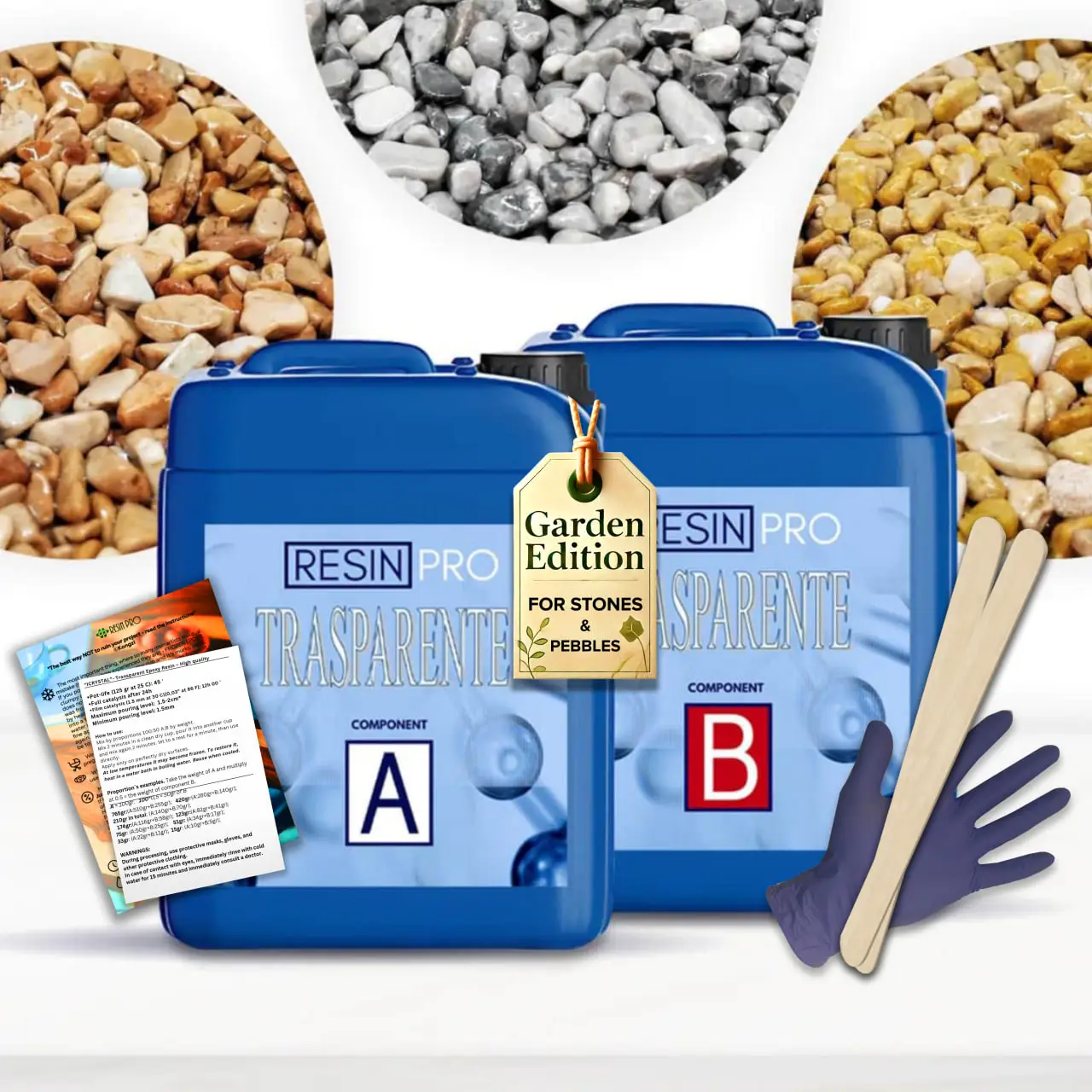 "Trasparente" – Epoxy Binder for Coloured Pebbles and GritsPrice range: £31.85 through £948.85"Trasparente" epoxy binder offers a clear, UV-stable finish suitable for coloured pebbles and aggregate flooring in line with resin flooring…
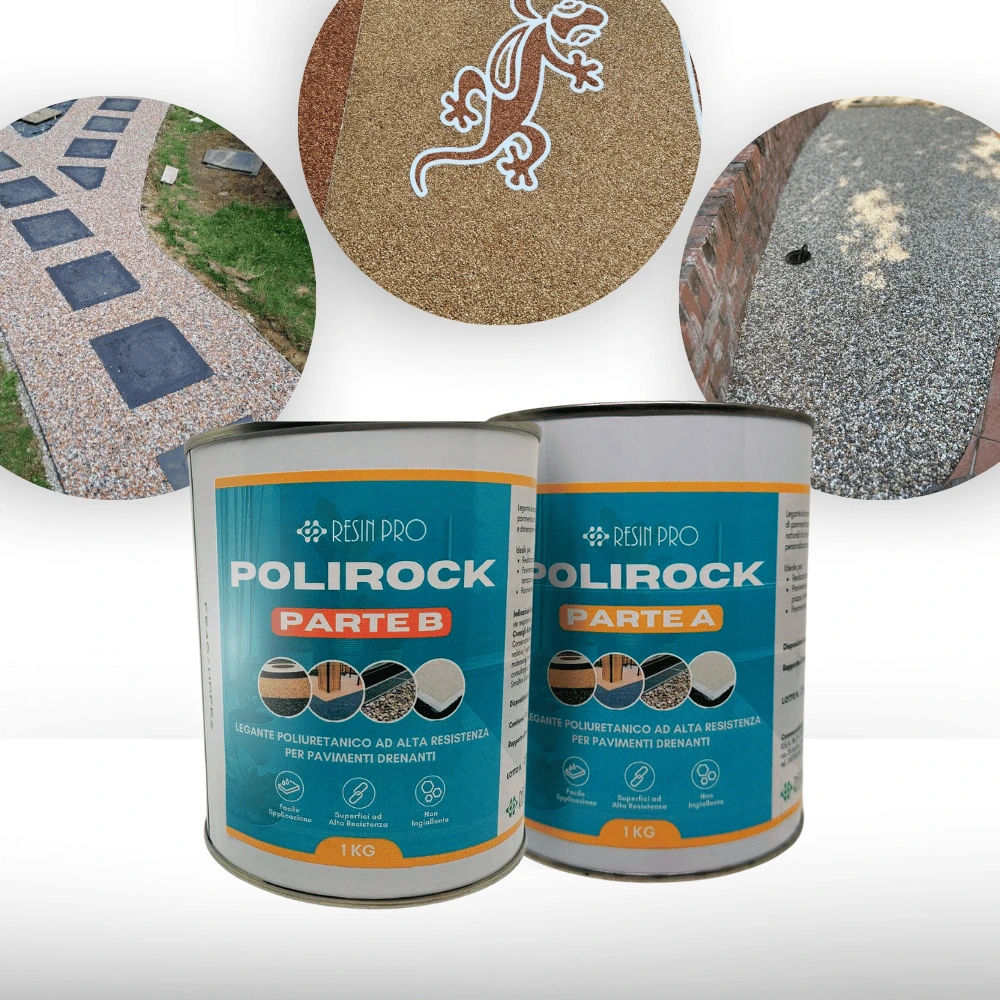 "Polirock" – Polyurethane Binder for White Stones, 2kg Two-Component Kit£58.85POLIROCK is a two-component polyurethane binder designed for creating clear, durable, weather-resistant outdoor stone surfaces.
Frequently Asked Questions
What is the best weather for applying resin flooring?
Resin floors should be applied in dry, mild conditions. Avoid very low or high temperatures and high humidity, as these can affect curing and adhesion. Ideally, choose a day with consistent temperatures between 10°C and 25°C.
How long should primer cure before laying resin flooring?
Allow "Epoxyprimer" to cure for at least 24–48 hours, or as specified on the product instructions. The surface must be dry to the touch and free of tackiness.
Can I apply resin flooring directly onto a tiled surface?
You can apply resin flooring onto stable, well-bonded tiles by first cleaning the tiles thoroughly and applying a compatible primer such as "Epoxyprimer". This improves adhesion and prevents lifting.
How do I avoid yellowing, especially on white stones?
Always use a specialist binder for white aggregates, such as "Polirock", which offers UV resistance and a crystal-clear cure. Epoxy binders are best for dark or coloured aggregates.
What tools are best for spreading resin-bound aggregates?
A steel trowel or float is recommended for even spreading and finishing. A spiked roller can help release any air trapped during mixing.
Is it possible to repair damaged resin flooring?
Minor chips or cracks can be filled with a compatible resin mixture. Large-scale repairs may require removing the damaged section and reapplying the full system for uniformity.
How do I maintain a resin-bound floor?
Sweep or vacuum regularly to clear debris. Wash with a mild detergent and soft brush. Avoid strong solvents, and address stains promptly for best results.
"Epoxyprimer" – Universal Water-Based Two-Component Epoxy Floor Primer
A water-based epoxy floor primer suitable for enhancing adhesion on concrete, timber, tiles, and screeds.