💥No. 1 Value Epoxy Resin in the UK💥
Free shipping on orders over £29.85

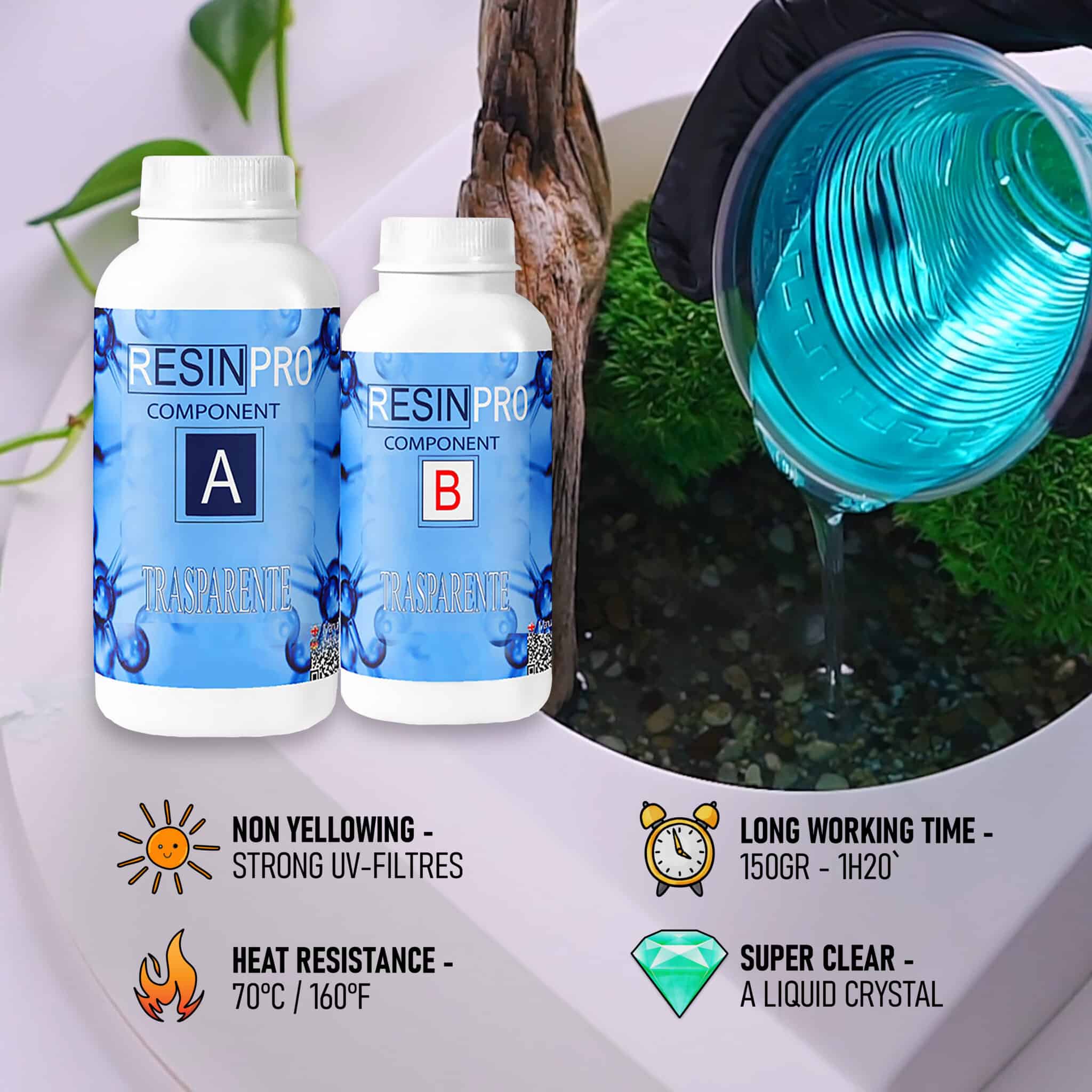
Epoxy Jewellery Creation with “TRASPARENTE” – Superior Multipurpose Casting Clear Epoxy Resin

Epoxy Jewellery Creation with “TRASPARENTE” – Superior Multipurpose Casting Clear Epoxy Resin

Creating beautiful jewellery with epoxy resin requires a product that offers clarity, durability, and ease of use. The “TRASPARENTE” Multipurpose Casting Clear Epoxy Resin from Resin Pro is designed to meet these needs, making it an excellent choice for both beginners and professionals in epoxy jewellery creation. This resin combines non-toxicity with exceptional performance, allowing artists to craft stunning pieces with confidence and safety.

Whether you are casting delicate pendants, rings, or embellishing larger decorative items, this transparent epoxy resin delivers sharp, glossy results without compromising on quality or safety. Its formulation is well suited to jewellery applications alongside other creative projects.

What “TRASPARENTE” Epoxy Resin Is and What It’s For

“TRASPARENTE” is an ultra-clear, multipurpose epoxy resin designed for casting projects up to 2cm thick. It is highly valued in epoxy jewellery creation for its crystal-clear transparency and self-levelling, glossy finish that accentuates embedded objects and colours perfectly. This resin is notable for its superior scratch resistance and UV filter which protects the cured surface against yellowing—backed by a 10-year warranty.

Ideal for use in jewellery making, “TRASPARENTE” also suits a wide range of other applications including woodworking coatings, small tables, lamps, and artistic creations, which may complement jewellery displays or creations. Its compatibility with silicone moulds, wood, fabric, glass, and paper further expands its utility in detailed and intricate jewellery pieces.

Importantly for creators concerned about health and environmental impact, “TRASPARENTE” is certified non-toxic, solvent-free, odourless, cruelty-free, and vegan friendly. This makes it particularly appropriate for indoor use and safe for artists who prioritise non-toxic materials in their studios.

How to Use “TRASPARENTE” Epoxy Resin for Jewellery Creation
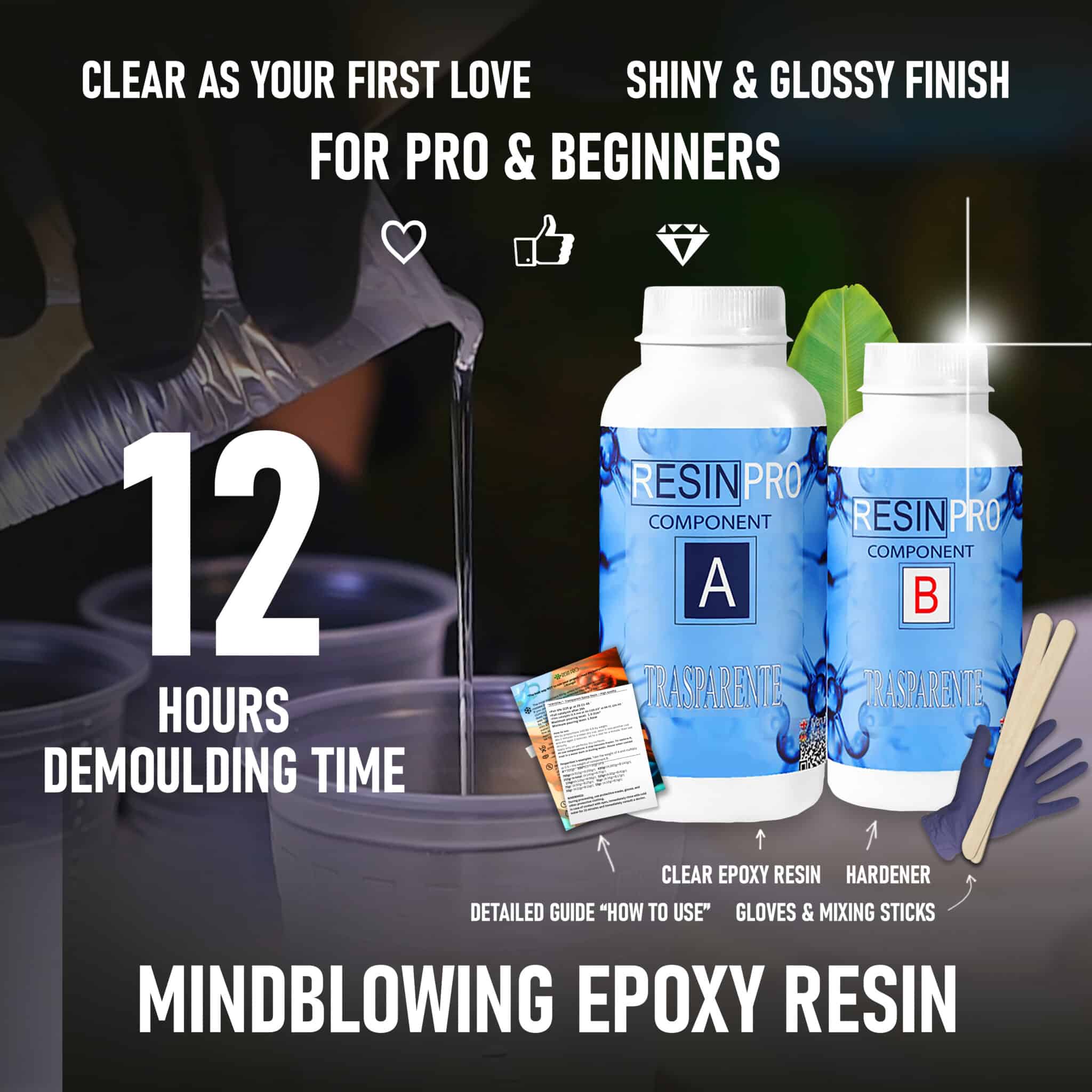

  1. Prepare your workspace: Ensure good ventilation or work in an open area. Lay down protective covering and gather gloves and mixing sticks, which are provided free with the product.
  2. Measure accurately: Mix the resin components at the given 100:60 ratio of RESIN A to HARDENER B. Accurate measuring is key to achieving a proper cure and the desired clarity.
  3. Mix thoroughly: Stir the two components together carefully to avoid bubbles but ensure a uniform blend. This step is crucial for a smooth and glossy finish.
  4. Add pigments or embed objects: If desired, mix in pigments or place items into your mould or jewellery frame before pouring the resin.
  5. Pour the resin: Carefully pour into your preparation, whether mould, bezel, or surface, up to 2cm thick for optimal results.
  6. Allow to cure undisturbed: Let the resin harden naturally at recommended room temperature without adding extra substances or excessive heat.
  7. Finish your piece: Once cured, your jewellery can be sanded, polished, or further decorated as needed to achieve the perfect final look.

Detailed instructions accompany each kit, ensuring users can work efficiently and safely, even on their first project.

Tips and Common Mistakes in Epoxy Jewellery Creation with “TRASPARENTE” Resin

  • Avoid excess heat or direct sunlight during curing to prevent yellowing or uneven surfaces, even though the resin has UV protection.
  • Maintain the recommended mixing ratio to ensure full curing and the optimal crystal clear effect of the resin.
  • Work in a dust-free environment to keep your cured resin surface clean and glossy.
  • Be patient during curing: avoid touching or moving the piece until it is fully hardened to prevent marks and dents.
  • Use gloves and masks, especially if you are sensitive, even though the resin is non-toxic and odourless, to maintain good practice and safety.
  • For embedding delicate elements, ensure they are fully dry and clean to avoid trapped moisture or impurities.

FAQ

  • Question: Which resin to use for cremation jewellery involving memorial ashes?
    Answer: For jewellery casting up to 2cm thickness, “TRASPARENTE” is recommended due to its clarity and safe formulation. For thicker pieces, other products like EpoxyTable-Five would be more suitable.
  • Question: What size projects is “TRASPARENTE” suitable for?
    Answer: It is ideal for casting layers up to 2cm thick. For projects larger than 100cm on any side or thicker layers, other Resin Pro products like EpoxyTable-Five or EpoxyTable-Ten should be considered. Visit the multipurpose epoxy resins category for options.
  • Question: Is “TRASPARENTE” suitable for beginners?
    Answer: Yes, the product is designed to be easy to use with a straightforward mixing ratio and comes with gloves, mixing sticks, and detailed instructions to support beginners and professionals alike.
  • Question: Can I colour “TRASPARENTE” resin for jewellery creation?
    Answer: Yes, it can be mixed with various pigments to achieve a range of colours for creative effects.
  • Question: Is the resin safe to use indoors?
    Answer: Yes, it is odourless, VOC-free, and certified non-toxic, making it safe for indoor use when adequate precautions like gloves and ventilation are observed.

For more detailed guidance or any complex project assistance, Resin Pro offers free professional support, ensuring you can achieve the best results every time.

Explore the “TRASPARENTE” Multipurpose Casting Clear Epoxy Resin for your next epoxy jewellery creation, and experience the trusted quality that thousands of artists worldwide rely on since 2015.

Examples



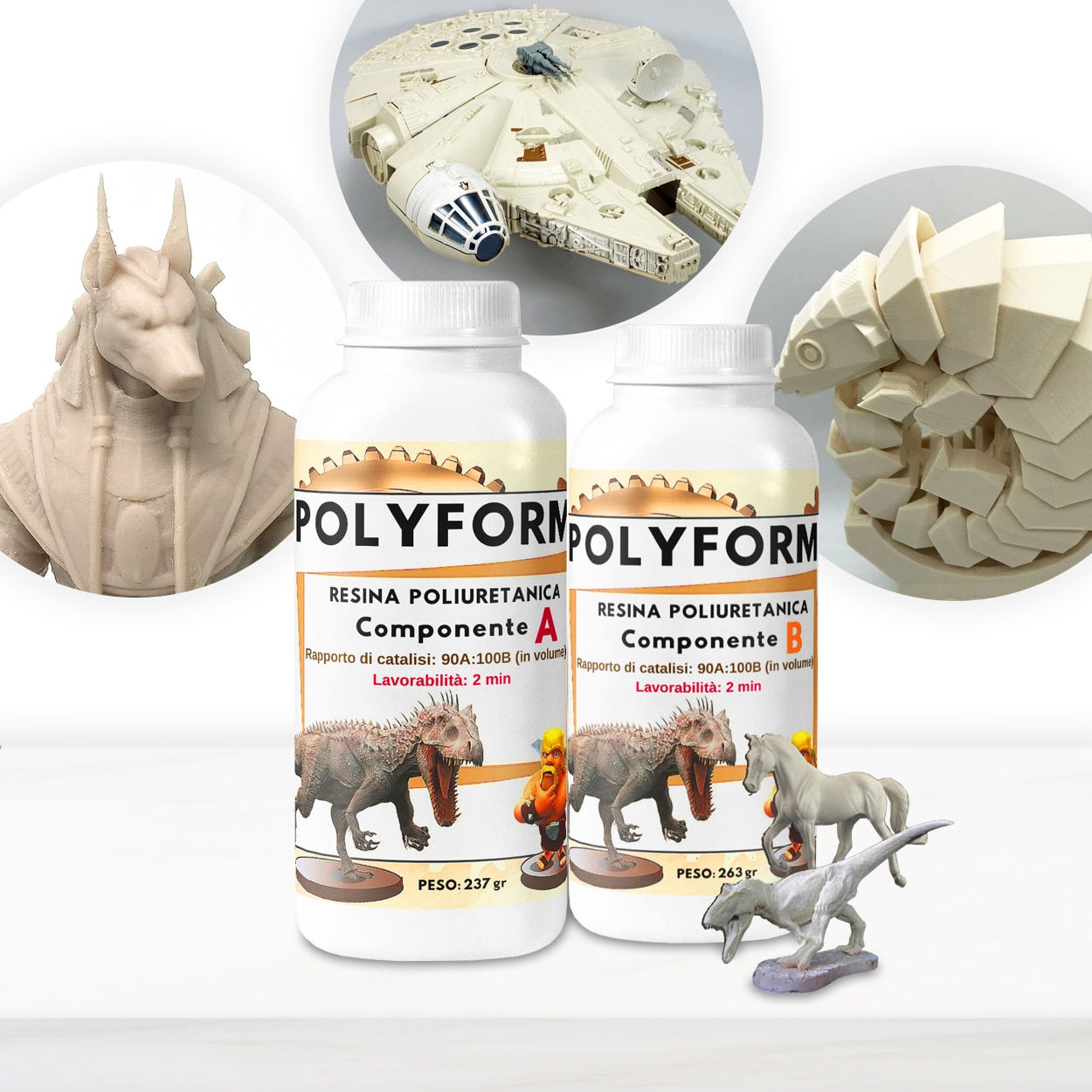
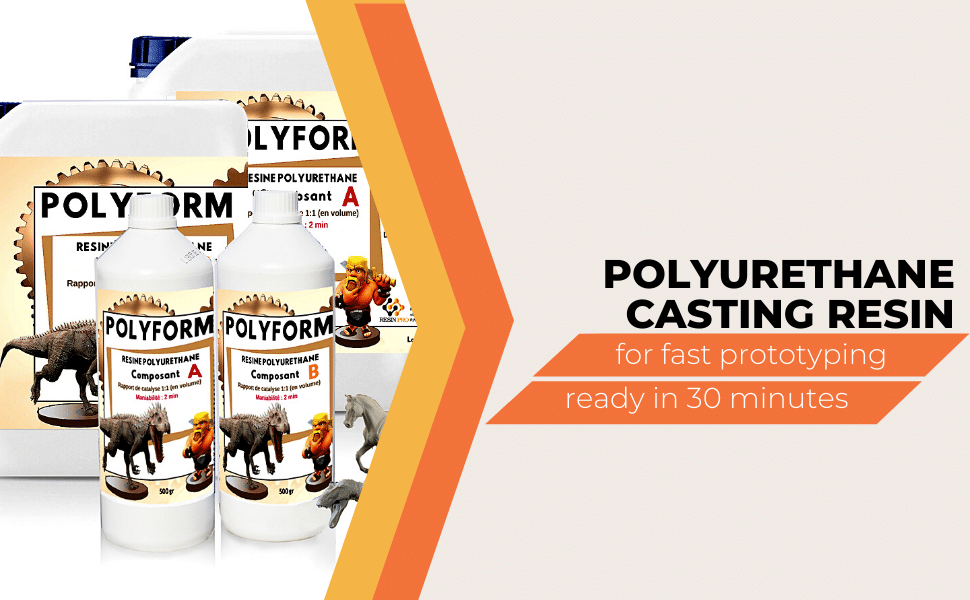
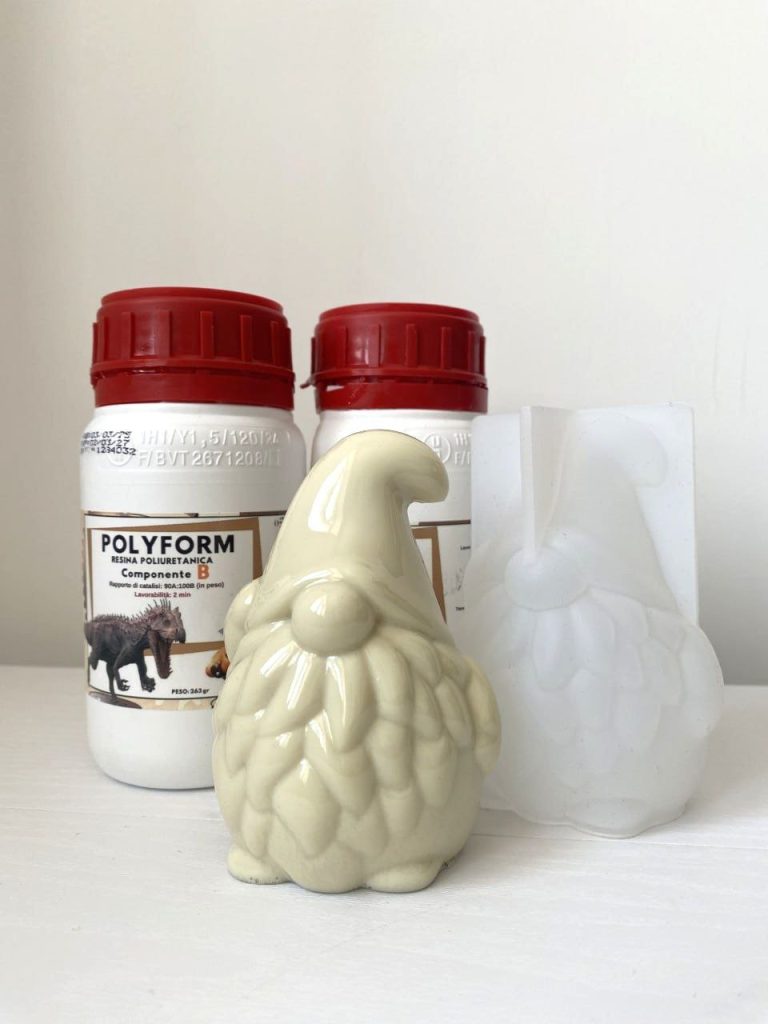
“Polyform” – Polyurethane Casting Resin: Precision and Speed for Prototyping and Small Batch Production

“Polyform” – Polyurethane Casting Resin: Precision and Speed for Prototyping and Small Batch Production

Polyform polyurethane casting resin is a trusted choice among professionals and hobbyists aiming for detailed, durable castings with a fast turnaround. Whether you are involved in rapid prototyping, model making, or small batch production, this beige resin is engineered to meet your requirements efficiently.

With its combination of ultra-fast curing, high fluidity, and reliable hardness, Polyform supports a streamlined workflow without compromising detail or strength. Read on to learn more about the product’s features, usage, and best practices.

What it is / What it’s for

Polyform Polyurethane Casting Resin is designed for professionals and makers who prioritise speed and precision in their casting projects. This resin performs particularly well in applications such as rapid prototyping, detailed 3D model manufacturing, and small batch product runs.

The formulation is beige and non-toxic once fully cured, ensuring safe handling for users. It delivers consistent, high-fidelity details in every pour, making it suitable for complex silicone moulds found in advanced prototype and model work.

Its Shore A 100 hardness rating means the resulting casts are robust and wear-resistant, ideal for components requiring durability alongside visual detail. The product is especially useful for:

  • Industrial designers and professional makers engaged in prototyping
  • Small batch manufacturers needing precise, quick results

For more options within this field, visit the products category for 3D models here.

How to use

  1. Prepare your workspace: Ensure the room temperature is above 8–10°C as Polyform performs best within this range.
  2. Wear safety gear: Use gloves and protective eyewear during mixing and pouring.
  3. Mixing components: Combine parts A and B of the resin at a weight ratio of 90 to 100. Accurate measurement is essential for optimal setting and final properties.
  4. Stir thoroughly: Mix gently yet thoroughly to avoid introducing bubbles while ensuring a homogeneous resin blend.
  5. Pouring: The resin’s viscosity is around 70 mPa·s, facilitating easy pouring. Pour the resin into your prepared silicone mould slowly to fill intricate details effectively.
  6. Curing time: Polyform cures quickly—set time is approximately 5 minutes, with demoulding possible after 30 minutes.
  7. Post-cure handling: Once fully cured, the product is non-toxic and safe to handle.

For straightforward procurement, the product is available at Polyform – Polyurethane Casting Resin – Beige.

Tips & common mistakes

  • Accurate ratio: Mixing the resin parts at an incorrect ratio is a common error that can lead to improper curing or subpar mechanical properties.
  • Temperature sensitivity: Using the resin below the recommended temperature range can slow or prevent proper curing. Always work in a suitably warm environment.
  • Avoid colouring attempts: Polyform’s natural beige colour is fixed; it is not suitable for colouring with dyes, which can interfere with the curing process.
  • Mould preparation: Ensure silicone moulds are clean and dry to avoid defects in casting detail or adhesion issues.
  • Pour slowly: High fluidity makes it easy to fill fine details, but pouring too quickly can cause bubbles or overflow.
  • Personal safety: Although non-toxic once cured, always use gloves and eyewear during handling, as recommended by the manufacturer.

FAQ

How long does Polyform take to cure?
It sets in about 5 minutes and can be demoulded after approximately 30 minutes.
Can I colour Polyform casting resin?
No, this beige resin is not suitable for colouring with dyes.
What safety precautions should I take?
Wear gloves and protective eyewear during mixing and pouring. Once cured, the resin is safe and non-toxic to handle.
What is the recommended mixing ratio?
The parts A and B should be mixed at 90/100 by weight for best results.
Can I use Polyform resin in cold environments?
The resin should not be used below 8–10°C as lower temperatures may affect curing performance.

Closing

Polyform polyurethane casting resin offers a reliable, fast-setting, and robust solution for rapid prototyping and small batch manufacturing. Its ease of use and precision detail replication make it a practical choice for professionals and hobbyists alike. To explore this product and related casting materials for models, visit Polyform product page and the 3D models product category.

Examples

Give Second Life to Your Broken Pot with the Kintsugi Kit

Give Second Life to Your Broken Pot with the Kintsugi Kit by Resin Pro

Broken ceramic or porcelain items can be difficult to part with, especially when they carry sentimental value. Instead of discarding fractured pots, plates, or vases, the traditional Japanese art of Kintsugi offers a beautiful way to restore and celebrate imperfections. Resin Pro’s Kintsugi Ceramic Repair Kit provides everything needed to bring broken ceramics back to life with elegant metallic finishes.

This comprehensive kit is specially designed for hobbyists and DIY enthusiasts wishing to repair and transform their damaged porcelain or ceramic pieces. By using premium materials and user-friendly instructions, the kit makes traditional kintsugi techniques accessible and achievable at home.

What It Is and What It’s For

The Kintsugi Ceramic Repair Kit by Resin Pro is a complete set tailored to the restoration of ceramic and porcelain items using the longstanding Japanese art form of “kintsugi,” which highlights cracks and breaks with metallic pigments rather than concealing them. This kit is ideal not only for repairing broken kitchenware like bowls, plates, and cups but also for decorative objects such as vases.

The kit comes with high-quality, slow-curing premium epoxy resin that ensures strong, clear, and bubble-free bonding, critical for durable repairs that also look attractive. It offers a choice of three exquisite metallic pigments — Gold, Silver, or Copper — allowing users to personalise the repair with a distinctive finish that emphasises the beauty of the mended cracks.

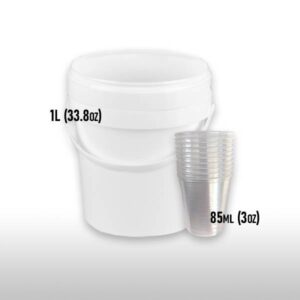
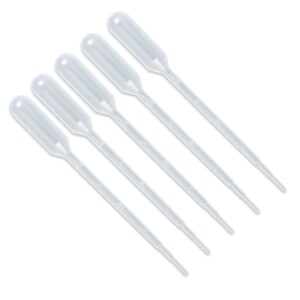
Included in the set is a complete toolbox that includes gloves, mixing cups, pipettes, and spatulas, ensuring all necessary tools are at your fingertips for precise and safe application. Additionally, the package provides a step-by-step guide, making it suitable for those new to kintsugi as well as experienced crafters.

For those interested in exploring more related repair and restoration kits, you may find the full selection in the complete kits category on Resin Pro’s website.

How to Use the Kintsugi Ceramic Repair Kit

The Kintsugi Kit is designed to be beginner-friendly, with detailed instructions included. While specific steps from the guide are provided with the kit, here is a general overview of the process:

  1. Prepare your workspace: Ensure a clean, dust-free area. Put on the supplied gloves to protect your hands from resin.
  2. Mix the epoxy resin: Use the provided mixing cup and spatula to combine the resin components carefully as per the instructions. Take care to avoid bubbles for a clear finish.
  3. Add metallic pigment: Choose from gold, silver, or copper pigments and blend with the resin for the desired colour effect.
  4. Apply the resin mixture: Using the pipettes and spatulas, carefully apply the resin along the cracks or broken edges of the ceramic piece, emphasising the repaired lines.
  5. Allow curing: Let the epoxy resin cure undisturbed as per the recommended timeline in the instructions to achieve a strong and lasting bond.
  6. Finishing touches: Inspect the repair and gently remove any excess resin if required to refine the look.

For visual guidance and inspiration, Resin Pro provides helpful images demonstrating repair applications, such as the elegant finishing on a vase, plate, or glass, visible on their product page.

Tips & Common Mistakes

  • Work in a well-ventilated area: Although the resin is user-friendly, good airflow helps with comfort during application.
  • Mix thoroughly but gently: Incomplete mixing can lead to soft or tacky repairs; vigorous mixing can introduce bubbles.
  • Apply resin sparingly: Too much resin can overflow and obscure the metallic pigments or create uneven surfaces.
  • Use the provided tools: The gloves, pipettes, and spatulas are designed for precision and to avoid mess and skin contact.
  • Follow curing times: Avoid moving or handling the repaired item prematurely, to prevent weakening the bond.
  • Don’t rush pigment choice: Consider how gold, silver, or copper tones will complement your ceramic piece and personal style.

Frequently Asked Questions

What types of ceramics can I repair with this kit?

The kit is suitable for porcelain and ceramic items such as bowls, plates, vases, and cups. It is designed specifically for decorative restoration rather than heavy-duty structural repairs.

Is the resin safe and eco-friendly?

The components included in the kit are cruelty-free and vegan-friendly, reflecting an eco-conscious approach.

Do I need previous experience with kintsugi to use this kit?

No. The kit includes straightforward, step-by-step instructions to guide beginners and experienced makers alike to successful results.

Can I choose the colour of the metallic finish?

Yes. The kit offers a choice of three metallic pigments — gold, silver, or copper — allowing you to customise the look of your repair.

Where can I find more kits like this?

Resin Pro offers a variety of related products and complete kits in their complete kits category, which may interest hobbyists looking for similar resin-based solutions.

Closing Thoughts

The Kintsugi Ceramic Repair Kit by Resin Pro empowers you to embrace imperfections and creatively breathe new life into your broken ceramic treasures. With premium materials, elegant metallic pigments, and a complete toolbox, this kit honours the beauty of traditional kintsugi while making it accessible to anyone interested in ceramic restoration. Whether for sentimental keepsakes or decorative pieces, transforming cracks into shimmering features is a gratifying and eco-friendly craft.

Explore the full range of resin repair kits and tools in Resin Pro’s complete kits collection and start your restoration journey today.

Examples

“Flowstone” – Complete Permeable Floor Kit – Pebbles & Resin: A Practical Guide

“Flowstone” – Complete Permeable Floor Kit – Pebbles & Resin

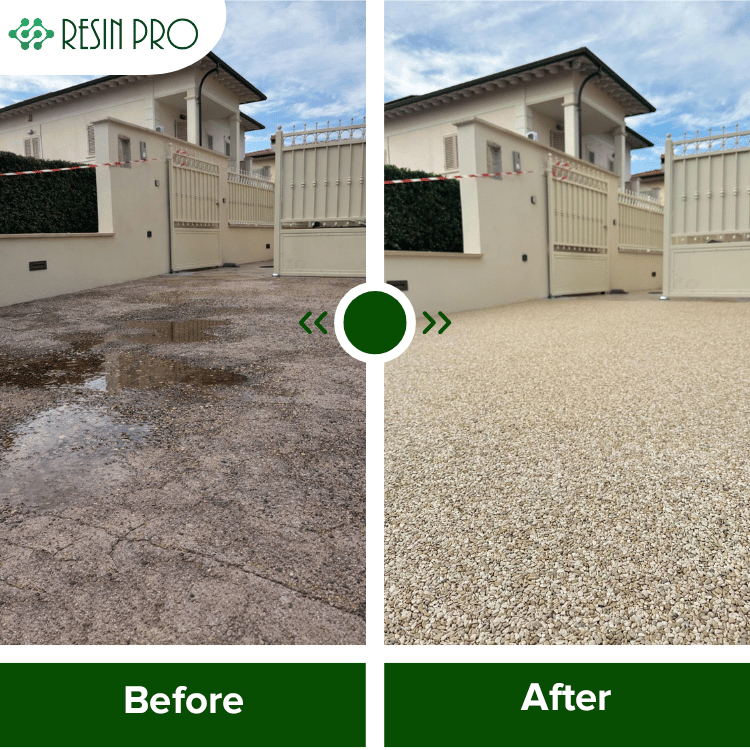
Upgrading outdoor spaces with a durable, permeable floor system is made simple with the “Flowstone” Complete Permeable Floor Kit. Designed specifically for the UK climate, this kit uses a combination of pebbles and resin to create decorative, draining surfaces suited for driveways, footpaths, and patios. For more options within the same category, you can explore other solutions in Pebble Floors.

The kit is tailored by surface area, offering step-by-step guidance for easy application and ensuring lasting colour integrity by using appropriate resin types depending on the aggregate colour.


What it is / What it’s for

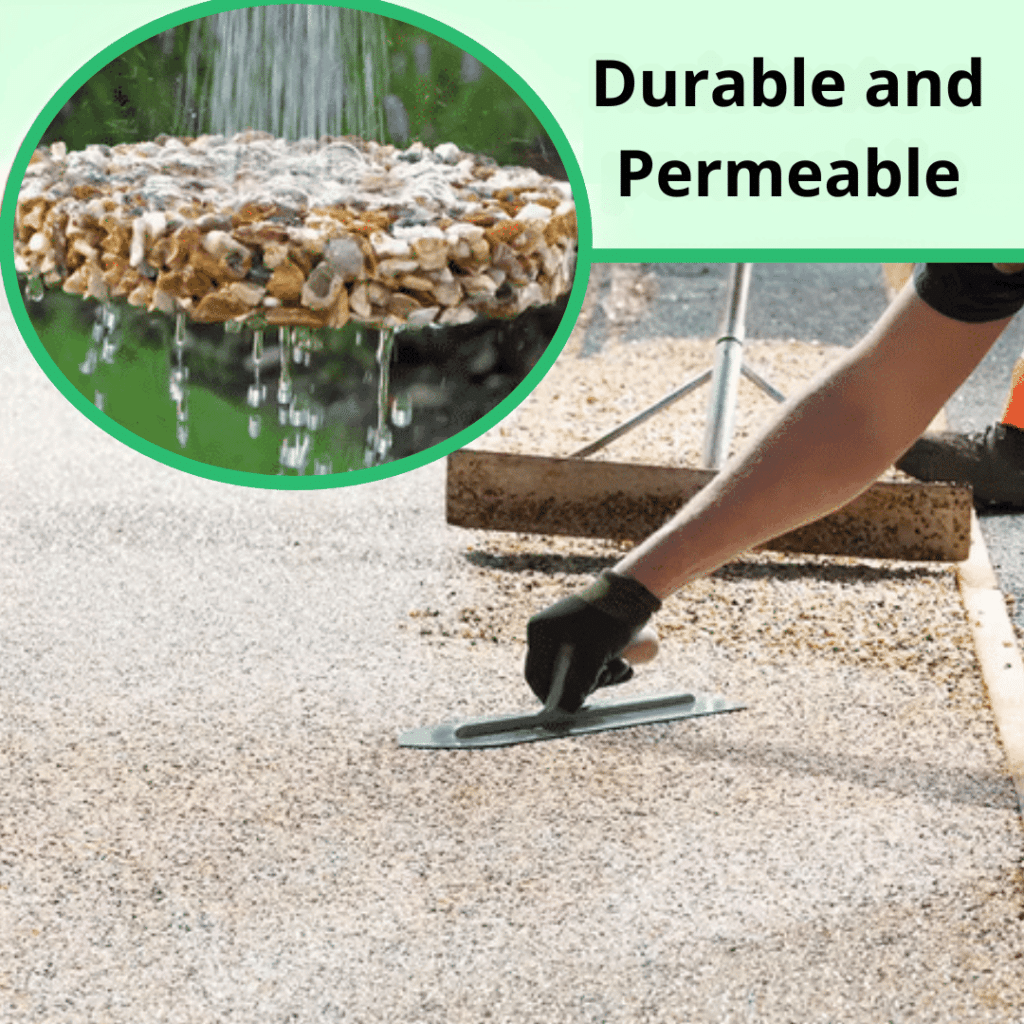
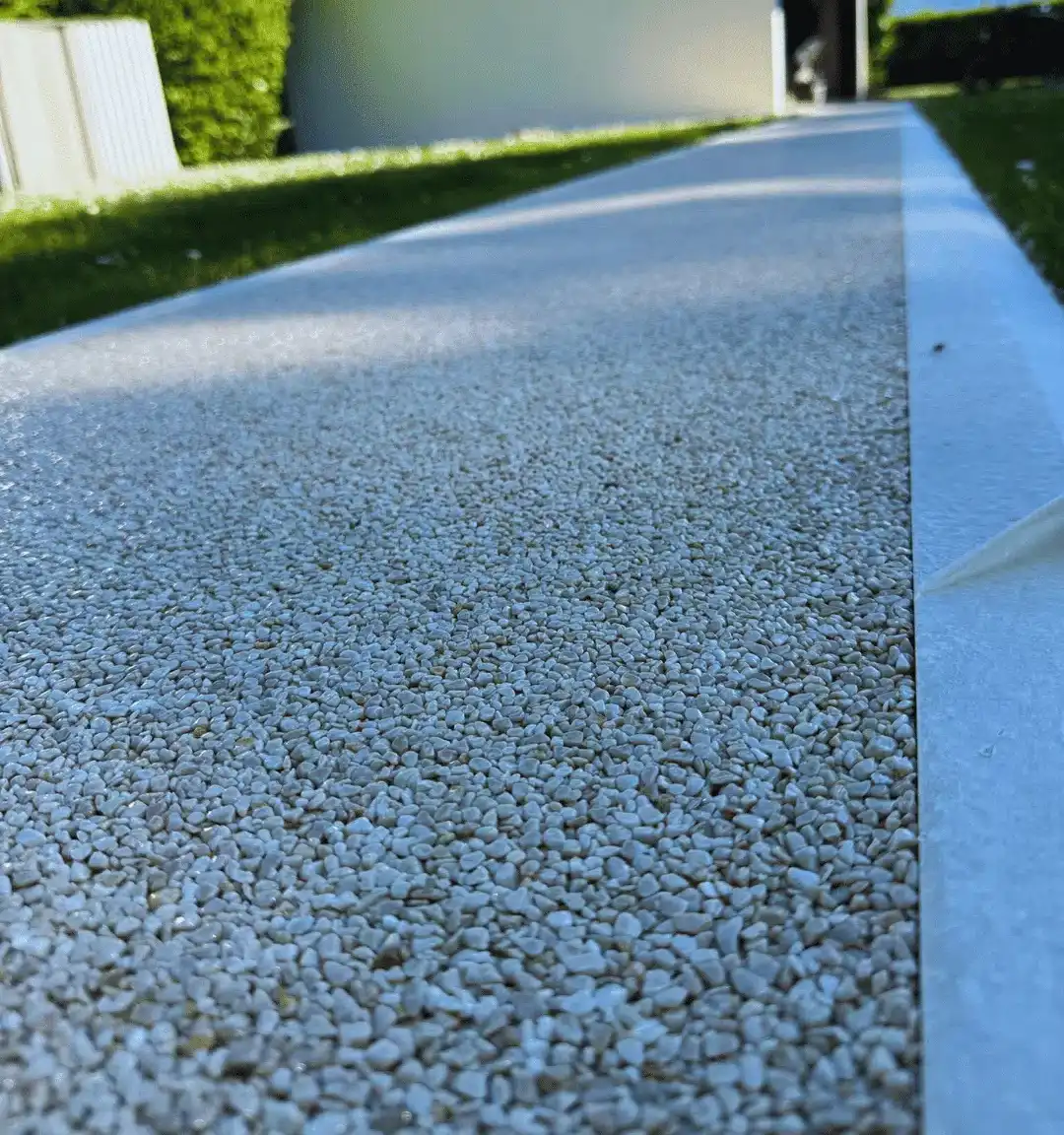
The “Flowstone” kit is a complete solution for creating permeable pebble flooring using resin binders. This system results in continuous, decorative, draining, non-slip, and drivable surfaces made from marble pebbles and fine gravel. Its permeability allows water to pass through, reducing puddling and associated surface water problems.

It is suitable for various urban environments, including pool edges, bike paths, walkways, small roads, squares, balconies, terraces, condominium common areas, courtyards, parking lots, shopping centres, and other public spaces. The kit provides an economical and customisable finish, allowing users to select from multiple colours and granule sizes to best suit their surroundings.

How to use

  1. Choose Your Colouring: Select the preferred pebble colouring from the available range. For ideal coverage, approximately 20-25 kg per square metre is recommended. ResinPro’s ready-to-use kits include all materials needed.
  2. Gravel Preparation: Use washed and dried gravel (granule size 4-8 mm, considered the most universal). Gravel is ready to use directly from the kit.
  3. Substrate Preparation:
    • Ensure the substrate is clean, level, and free of impurities.
    • Optional: Apply a coat of Transparent Epoxy Resin as a primer using a roller (about 200 g/m²). Dust with quartz powder immediately after applying the resin. Once cured, remove excess quartz.
    • If primer is applied, wait at least 8 hours before proceeding, allowing for environmental factors such as temperature.
    • If no primer is needed, proceed to the next step.
  4. Create Your Mix:
    • Carefully weigh the chosen binder to add to the gravel.
    • For coloured gravel with epoxy resin (4-8 mm diameter): add 750 g of transparent epoxy resin per 25 kg of gravel.
    • For white or clear gravel with polyurethane resin (4-8 mm diameter): add 820 g of polyurethane resin per 25 kg of gravel.
    • Note: For polyurethane, precise mixing is important to avoid swelling and foaming. Use just enough binder to wet the gravel surface without dripping.
  5. Mix Thoroughly: Blend the resin and gravel until the mixture appears “wet” and uniform.
  6. Application: Spread the mixture evenly over the prepared surface using a straightedge, rake, or recommended tool to ensure full coverage.
  7. Compaction: Compact the applied layer with a trowel or dedicated compactor to level and stabilise the surface.
  8. Surface Reinforcement (Optional): For enhanced surface strength, once walkable, apply a thin coat of binder (100-150 g/m²) with a short-pile roller.

Tips & common mistakes

  • Binder Selection: Choose the correct binder to match the pebble colour: use polyurethane for white aggregates to prevent yellowing and epoxy resin for coloured stones to maintain colour integrity. Avoid using epoxy binder with white Carrara gravel.
  • Accurate Mixing: Measure and mix binder quantities precisely. Excess binder, especially polyurethane, can cause swelling and foaming, which affects the finish and durability.
  • Surface Preparation: Inadequate substrate cleaning or neglecting primers can reduce adhesion and lead to premature failure of the surface.
  • Environmental Conditions: Apply the kit at temperatures above 10°C. Lower temperatures may compromise curing and final results.
  • Even Application: Ensure the resin-gravel mix is spread and compacted evenly to prevent weak spots and ensure a smooth, stable finish.
  • Waiting Times: Allow sufficient curing time after primer application and before putting the surface into use to achieve optimal durability.

FAQ

Q: What type of binders are included in the kit?

A: The kit offers two binders: Epoxy Binder for coloured or natural-tone stones (not suitable for white Carrara gravel) and Polyurethane Binder “Polirock” for white or clear gravel, suitable for outdoor applications and temperature variations.

Q: How much material do I need for a given area?

A: As an example, for about 1.44 m² at 20 mm thickness, roughly 432 kg of stones and about 13 kg of resin binder (approximately 3% binder to stone ratio) are required. Kits are sized by surface area for convenience.

Q: What is the best temperature for application?

A: The minimum recommended laying temperature is 10°C. Lower temperatures might adversely affect the curing process and the result.

Q: How durable is the finished surface?

A: The system creates durable, permeable flooring suitable for driveways and footpaths that can withstand heavy loads and intense traffic, especially when epoxy binder is used.

Q: Can the surface be customised?

A: Yes, the kit allows choosing from a wide selection of colours and granule sizes to tailor the appearance to your specific requirements.

If further assistance is needed, ResinPro provides technical support to guide users during product selection and application. More information and contact options can be found at ResinPro Contacts.

Closing

The “Flowstone” Complete Permeable Floor Kit offers a practical, cost-effective way to renew and upgrade outdoor areas with aesthetically pleasing, draining pebble surfaces. With detailed instructions and expert support, it suits a range of applications from domestic patios to urban public spaces, making durable, attractive flooring accessible to all skill levels.

How to Use Silicone Putty for Resin Moulds: A Practical UK Guide

Introduction to Silicone Putty for Resin Mould Making

Silicone putty is a popular choice for making detailed resin moulds due to its ease of use and flexibility. In the UK, hobbyists and small workshop creators appreciate silicone putty for quick turnaround projects with minimal mess and fuss. This guide covers everything you need to know about using silicone putty for moulds, from basic application to choosing the right formula for your needs.

If you are new to mould making or looking to try alternatives to liquid silicone, this post will help you understand the practical differences and guide you towards suitable products, including the non-toxic “I–GUM” silicone putty range available in the UK.

Silicone Putty vs Liquid Silicone

The choice between silicone putty and liquid silicone depends on your project requirements and preferences. Below is a comparison table highlighting the main differences to consider:

FeatureSilicone PuttyLiquid Silicone
FormTwo-part putty, hand mixableTwo-part liquid, needs measuring and stirring
Ease of UseSimple 1:1 mix, no tools neededRequires precise measuring and mixing tools
Working TimeTypically 5 to 20 minutes (varies with type)Varies; often longer working times available
Detail CaptureGood for small detailed moulds and shapesExcellent detail capture for complex moulds
ApplicationPressed or modelled around the objectPoured over objects or into mould boxes
Mess & CleanupLess messy; no washing of tools neededRequires cleaning of tools after use
Odour & ToxicityOften low odour, some non-toxic variantsMay contain stronger odours; some safe formulations exist
Cure TimeFast options available (10 minutes to 2 hours)Varies widely from fast to slow curing
Flexibility & StrengthFlexible, suitable for many materialsUsually very flexible and durable

For users looking for simple small moulds with rapid turnaround, silicone putty is a practical option. Liquid silicone excels in complex or large mould projects but requires more care in handling.

Fast vs Slow Curing Silicone Putty — How to Choose

Within silicone putty options, cure time is a key factor affecting workflow. Here’s how to decide between fast and slow curing putty:

  • Fast Curing Silicone Putty: With working times around 2-5 minutes and full cure within 30 minutes, fast putty suits quick small-batch runs or urgent projects. It requires swift mixing and application but reduces waiting time significantly.
  • Slow Curing Silicone Putty: Offering longer working times up to 20 minutes and full cure times up to 2 hours, slow putty is more forgiving and easier to shape delicately. It’s ideal for intricate moulds or beginners who want more time to perfect shape and detail.

For UK hobbyists and home workshops, consider your project size and available working time. If you plan multiple small moulds in a session, fast curing silicone putty, like our “I-GUM Fast”, is perfect. For more detailed or carefully controlled projects, slow curing putty such as “I-GUM Yellow” offers the extra working time you need.

Which Silicone Putty is Best for Resin Moulds?

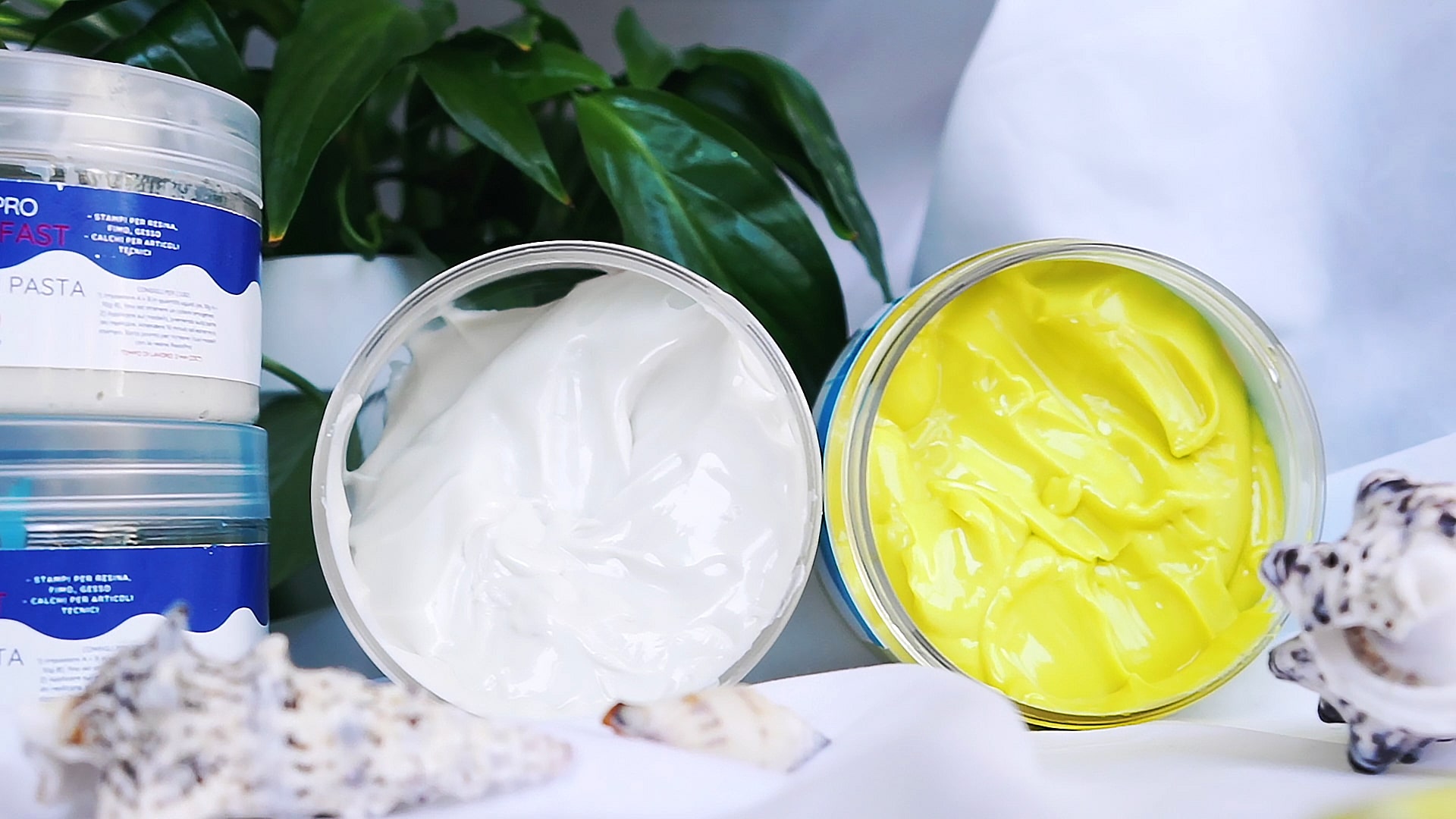
The “I–GUM” range is a non-toxic, low odour silicone putty set designed specifically for mould making with epoxy resin and other casting materials. Here’s why it’s an excellent choice for UK users:

  • Mix ratio 1:1 by volume for practical and straightforward use
  • Non-toxic formula allowing work without gloves in well-ventilated indoor spaces
  • Long working time (up to 20 minutes for slow) and minimal odour, ideal for home workshops
  • No need for additional release agents or washing of tools due to non-stick properties
  • Two types available: Slow (I-GUM Yellow) and Fast (I-GUM Fast), with varying weights from 0.5kg to 4kg
  • Suitable for making moulds of coasters, trays, decorations, and other resin art shapes with a smooth surface finish on plexiglass or base films

You can explore the full silicone rubbers category for alternatives, but the “I-GUM” brand strikes a balance of quality and practicality for UK craftspeople.

Common Mistakes When Using Silicone Putty

  • Incorrect mixing ratio: Always mix components A and B in equal parts (1:1) by volume to ensure proper curing.
  • Poor mixing: Inadequate mixing can cause uncured spots or brittleness. Mix until the putty is uniform in colour and texture.
  • Applying too late: For fast curing types, apply quickly after mixing to avoid hardening before moulding.
  • Too thin mould walls: Silicone moulds should have sufficient thickness (minimum 5mm recommended) to maintain strength and flexibility.
  • Inadequate ventilation: Though “I-GUM” is low odour, ensure good room ventilation to avoid discomfort.

Safety & Handling Tips for Silicone Putty Use

  • Work in a well-ventilated indoor area, especially if using fast curing putty with shorter working time.
  • Although “I-GUM” is non-toxic, consider wearing gloves if you have sensitive skin or allergies.
  • Store components in a cool, dry place away from direct sunlight.
  • Dispose of mixed silicone waste responsibly; uncured putty can be disposed with general waste once cured.
  • Keep mould-making area clean and tools ready before mixing to avoid rushed mistakes.

Practical Working Tips for UK Home Workshops

Many UK artists and hobbyists appreciate silicone putty for its low odour and suitability for indoor use in home workshops. The “I-GUM” range, being non-toxic and cruelty free, fits this need perfectly.

Thanks to its 1:1 mix ratio and hands-on application, you can create small batches quickly, without needing complex equipment or cleanup routines. Fast turnaround is possible with the fast curing variant, allowing multiple moulds in a session.

If you want to see the full resin casting process including mould making, check our detailed guide on how to make your own silicone mould in 5 steps.

Choosing the right silicone putty and resin combination ensures your projects come out smooth and detailed every time. Visit the silicone rubber category and resin categories to find the perfect supplies.

Examples
ResinPro Q&A — Live Answers from Support

Q&A Topics

Ordering & Shipping

What are the customs and tax arrangements for shipping to Ireland?
ResinPro products are typically shipped to Ireland without any additional import taxes or duties being charged. In many cases, deliveries by courier proceed without customs fees being applied.However, in the event that Irish customs or the courier company applies a customs tax or import duty:
  • Please retain the official payment receipt or invoice provided by customs or the courier.
  • Email us the document at in**@******ro.eu.
  • We will cover the cost by refunding the taxed amount to you.
This process ensures a smooth purchase experience for our Irish customers, with no unexpected costs.If you have any concerns prior to ordering, feel free to contact us for clarification.
What are the pricing and delivery details for the 100m² Flowstone resin kit, and are there any considerations regarding temperature or colour availability?

We offer complete Flowstone resin kits for an area of 100 m² in two thickness options:

  • 2 cm thickness (suitable for driveways): £2,448
  • 1.5 cm thickness: £1,898

Both kit prices are inclusive of VAT and UK delivery.

Stock and Colour Availability:

  • Most colours are kept in stock and ready for immediate dispatch.
  • On occasion, specific colours may require an additional 3–5 working days for sourcing from our supplier and transport to the UK.

Application Guidance – Temperature Considerations:

  • Application should only be carried out when the ambient temperature is at least 10 °C.
  • If the temperature is below 10 °C, the curing process may be significantly delayed, potentially affecting the finish and long-term performance of the installation.

You can view the full product details and contents of the kit on our product page: Complete Flowstone Kit.

Please contact us if you would like to place an order or if you require further technical support.

Payments & Invoices

Product Advice (Choosing resin)

Which epoxy resin should I choose based on my project’s size and thickness?
Choosing the correct resin depends on both the size (length/width) and the thickness of your casting or coating project. Please refer to the guidelines below:
  • For projects with any side over 100 cm and thickness over 5 cm:
    Use EpoxyTable-Ten — suitable for deep castings (up to 10 cm), such as river tables and large volume pours.
  • For thickness between 2 cm and 5 cm:
    Use EpoxyTable-Five — ideal for medium-sized castings and tabletops.
  • For thickness between 0.5 cm and 2 cm:
    • If the surface length or width is over 100 cm:
      Use EpoxyTable-Five — suitable for large surface coatings.
    • If both dimensions are under 100 cm:
      Use Trasparente — a non-toxic, clear epoxy resin ideal for smaller castings and coatings.
  • For thin layers under 0.5 cm (not lower than 1.5 mm):
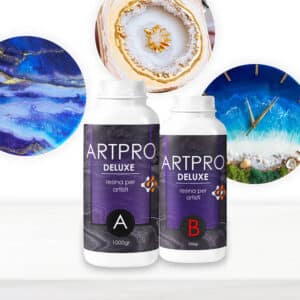
    Use Art Pro — designed for thin applications such as artistic coatings, illustrations, and resin art. Do not apply below a minimum thickness of 1.5 mm.
Ensure all casting is done in a controlled environment, respecting recommended temperature and humidity levels, and always follow product-specific instructions for best results.
What type of resin should I use for thin casting at 1 mm thickness?

We do not recommend casting layers thinner than 1.5 mm, as this may cause surface tension issues, formation of gaps, or improper curing due to insufficient heat generation. Epoxy resins require a certain volume to cure correctly, and at 1 mm thickness, the exothermic reaction may not be adequate.

If you still wish to proceed with ultra-thin layers (approximately 1 mm), we recommend using a high-quality resin specifically formulated for thin, detailed casting applications. Suitable options include:

  • Art Pro – Transparent resin designed for artists, ideal for fine coatings and shallow pours.
  • ICrystal – Crystal-clear epoxy resin with a low viscosity, formulated for high precision and thin coatings.

When working with such thin layers:

  • Ensure the working environment is dust-free and temperature-controlled (ideally 20–25 °C).
  • Use a level, sealed surface to prevent uneven spreading and absorption.
  • Apply the resin in a single pour rather than multiple coats to reduce the risk of delamination.

Note that some users may prefer to apply a primer or seal layer first, especially when working on porous or absorbent substrates—this can help prevent pinholes and air bubbles.

Always consult the technical data sheet (TDS) for the resin in use, to verify suitability for your project thickness and curing times.

What resin should I use to restore and seal dry external wood?
EpoxyWood is an ideal epoxy resin product for restoring, sealing, and reinforcing dry external wood. It is specially formulated for structural repairs and long-term protection against moisture, fungal attack, and other environmental damage.Key features of EpoxyWood:
  • Deep Penetration: Designed to soak into porous or damaged wood fibres, consolidating the structure from within.
  • External Use: Suitable for outdoor applications due to its excellent resistance to water and fluctuating weather conditions.
  • Durable Protection: Strengthens deteriorated timber, creating a solid base that can be overcoated or painted once cured.
  • Restoration Formula: Ideal for use on window frames, garden furniture, fences, and other external wooden structures showing signs of wear or rot.
Application tips:
  • Ensure the wood is dry, clean, and free of dust or old coatings before application.
  • Sand the surface to open the grain for better resin penetration.
  • Apply in dry conditions, ideally above 10 °C, for optimal curing performance.
For best results, follow all product-specific safety instructions and usage guidelines provided on the EpoxyWood product page.
Swappable shoe logo using vinyl and ferromagnetic sheet: Which clear resin system is UV-resistant, flexible, waterproof and suitable for outdoor use?
For a swappable shoe logo application using vinyl combined with a ferromagnetic sheet, the ideal clear resin system must meet several performance criteria:
  • Flexibility: Able to withstand light bending without cracking or delaminating during daily use.
  • UV resistance: Must resist yellowing and degradation for at least 5 years in outdoor conditions.
  • Waterproofing and durability: Should offer a sealed coating that endures rain and repeated wear.
We recommend using Be Flex polyurethane resin, which is specially designed for demanding applications such as decals, labels, and flexible coatings. Its key benefits include:
  • Scratch resistance and doming capability (ideal for surface finishing).
  • Excellent UV resistance — prevents yellowing and cracking over time.
  • Semi-rigid yet flexible when cured, suitable for light bending and flex movement on footwear.
  • Durable and waterproof, making it suitable for outdoor use and inclement weather.
Small-scale prototyping:
The smallest kit size available is 200 grams, priced at £19.85 — ideal for testing and prototyping on a limited number of logo units.Bulk pricing and scaling for production:
To receive a volume-based price quote for larger batches, please provide your estimated volume consumption per production run or per number of units. This will allow us to generate pricing and packaging options suitable for scaling your application to commercial quantities.
How much resin is needed for a 50 × 70 cm tabletop, 5 cm thick, with embedded seashells and stones? Should I pour a thin layer first or place objects and pour all at once?
To calculate the resin required for a tabletop sized 50 × 70 cm with a thickness of 5 cm:
  • Volume = 50 cm × 70 cm × 5 cm = 17,500 cm³
  • Converted to litres: 17,500 cm³ = 17.5 litres
  • Approximate weight: 17.5 litres × ~1.12 kg/litre (average epoxy density) ≈ 19.5 kg
We recommend using a deep-casting epoxy resin specifically designed for thick layers, such as our Epoxytable 5.Pouring method recommendation:It is best to pour in two stages to avoid air entrapment:
  1. Pour a thin base layer (1–2 mm thick) first. This seals the surface of the backing board and helps reduce the risk of bubbles rising later from porous inclusions like seashells or small stones.
  2. Allow the base layer to cure for 20–24 hours until tack-free but still chemically reactive (not fully hardened).
  3. Precoat your decorative items (seashells, stones) in a small amount of mixed resin to seal any internal air and stabilise them before embedding. Let them sit briefly to allow air to escape.
  4. Place the precoated decorations into position after the base layer has cured.
  5. Pour the remaining quantity over the embedded elements in one or more layers, depending on the product’s maximum pouring depth per layer (check product specifications).
Additional tips:
  • Ensure the ambient temperature is stable (ideally 20–25 °C) and avoid humid conditions over 70% relative humidity.
  • Use a heat gun or alcohol spray to remove surface bubbles carefully after each pour.
  • Work in a dust-free environment to prevent contamination during curing.
Solution for binding small white stones in garden area to support furniture and prevent dirt penetration
To create a clean, strong, and weather-resistant surface with small white stones in your prepped garden area, a clear resin binder is recommended. This binding solution will help stabilise the stones, prevent dirt ingress, and hold furniture securely.Recommended binder and application ratio:
  • For coloured or cream stones, use a clear, UV-stable epoxy such as Trasparente for optimal brightness and long-term stability.
  • For white stones, use our polyurethane binder Polirock, which prevents yellowing and maintains the clean white appearance even outdoors.
  • Mix at approximately 3% resin by weight of the total stone mass.
  • Stone size and type:
    • Recommended aggregate size is 4–8 mm for optimal bonding and surface quality.
    • White decorative gravel or quartz will retain a cleaner aesthetic with less visible staining.
    Calculating materials:
    • Use the formula: Stone required (kg) = 15 × Area (m²) × Thickness (cm).
    • Example: For 10 m² at 2 cm depth: 15 × 10 × 2 = 300 kg of stone.
    • Resin required = 3% of 300 kg = 9 kg of resin.
    Surface preparation and installation:
    • Ensure sub-base (Type 1 MOT and granite dust) is well compacted and level.
    • Dry mix the stones and resin thoroughly for uniform coating.
    • Spread evenly over the prepared area at desired depth, then compact lightly but firmly.
    • Allow to cure in dry conditions, ideally above 10 °C, for 24–48 hours depending on temperature and humidity.
    Performance benefits:
    • Holds loose stones in place to resist displacement from furniture or foot traffic.
    • Minimises dirt and organic material infiltration between the stones, keeping white stones cleaner over time.
    • Creates a water-resistant, low-maintenance outdoor surface.
    This resin-bound approach ensures both strength and cleanliness for your garden area, while also being visually appealing and weather-tolerant.
Resin casted shifter knob for my car. Need high heat resistant clear casting resin available
For casting a gear shifter knob in clear resin, especially if the part has a thickness greater than 2 centimetres, we recommend using EpoxyTable Five.This resin is ideal for solid, medium-to-thick castings due to its low exothermic reaction and high transparency. Key properties:
  • Heat resistance: Withstands temperatures up to 70 °C, making it suitable for most automotive interior environments, including summer heat inside a vehicle cabin.
  • Clarity: High transparency ensures an excellent clear finish, ideal for aesthetic applications like custom gear knobs.
  • Depth capacity: Formulated for castings over 2 cm thick, preventing overheating or yellowing during curing.
For optimal results:
  • Ensure ambient temperature during curing remains between 18–25 °C.
  • Avoid exposure to direct sunlight during curing to prevent surface discolouration.
  • Full mechanical and thermal resistance is achieved after 7–10 days of curing (post-cure period).
You can find the product here: EpoxyTable Five – Epoxy Resin for Tables.
Can I use Trasparente or EpoxyTable for a 2×3 inch solid block? (e.g. 2x2x3 in = 250 g; 2x3x3 in = 300 g)
For casting a solid epoxy resin block measuring 2×3 inches (or similar), we recommend using EpoxyTable Five or EpoxyTable Ten.These systems are specifically designed for deep pours and are more suitable than the standard Trasparente resin for thick castings.Key recommendations:
  • EpoxyTable Five: Suitable for casting depths of up to 5 cm in a single pour. Use this for volumes where your cross-section does not exceed that depth.
  • EpoxyTable Ten: Better suited for deeper castings up to 10 cm in a single pour. Ideal for blocks with substantial volume or thickness, such as 2×3×3 inches (approx. 7.6 cm depth).
The quantities you provided (250 g for 2×2×3 in and 300 g for 2×3×3 in) are within the working range of these resins. Ensure proper curing conditions for best clarity and structural performance:
  • Ambient temperature: 20–25 °C
  • Dust-free workstation with minimal vibration
  • Avoid pouring in high humidity environments
If you require ultra-high clarity and minimal shrinkage in thick castings, EpoxyTable Ten is preferred due to its slower exothermic reaction and deeper pour capability. Trasparente is recommended for thinner applications or layered projects.
EpoxyTable Five: Convert 9 kg to litres and confirm the correct mixing ratio
  • Volume conversion: 9 kg of EpoxyTable Five is approximately equal to 8.2 litres. This is based on the product’s specific density.
  • Density: Epoxy resins vary in density, but for EpoxyTable Five, the average density is used for conversion. Always refer to the individual product datasheet for precise density values if exact volume is critical.

Mixing ratio:

  • The recommended mixing ratio for EpoxyTable Five is 100:55 by weight (i.e. 100 parts resin to 55 parts hardener).
  • This is neither a 1:1 (50/50) nor a 2:1 (100% resin to 50% hardener) ratio. For best results, always weigh components accurately using a digital scale.
  • Mixing by weight ensures a proper chemical reaction and optimal curing performance.

For full technical specifications and application guidelines, refer to the EpoxyTable Five product page.

I bought the wrong resin – Polyform. I’m making a round tabletop and need a top coat to protect against scratches, heat, and UV. What should I do?
If you originally used a resin such as Polyform, which may not offer sufficient protection for high-wear surfaces, it can still be salvaged for your round tabletop project by applying a more durable top coat.For optimal performance in terms of clarity, UV protection, scratch resistance, and heat resistance, we recommend the following layering:
  • Art Pro — This resin is ideal for its superior transparency and UV resistance, making it suitable as a clear coating layer. Allow it to fully cure before applying any additional products. While initial hardness develops within 24–48 hours, Art Pro continues to catalyse internally for 3–5 days, during which time it becomes stronger and more stable.
  • Heat Pro — Once the Art Pro layer is fully cured (ideally after 3–5 days), apply Heat Pro as a final top coat. This product provides enhanced resistance to high temperatures (up to 90–100 °C), scratches, and impacts, making it suitable for daily use with hot dishes and utensils.
This combination will significantly increase the durability, clarity, and long-term performance of your tabletop.
Want to try products. Any samples for testing purposes? Try before big order. Available options and any costs involved?
Yes, we offer several small-sized kits and trial packs that are ideal for product testing before committing to larger volumes.Available testing kits include:
  • Trasparente — 160 g kit of transparent, non-toxic epoxy resin. Suitable for general-purpose resin casting and coating. Free shipping included.
  • Epoxytable 5 — 700 g kit designed specifically for casting tables and deep resin pour applications. Offers high transparency and UV resistance.
  • Art-Pro — 830 g kit of ultra-clear epoxy resin formulated for artists. Optimised for vivid colour rendering and brush-free finishes.
  • Silicone rubber trial sizes — available in 250 g and 500 g packs. Suitable for mould-making and casting applications. Options may vary between soft and rigid silicones.
Please note the following:
  • These kits are sold at a discounted rate for testing purposes but are not free samples.
  • Shipping costs may vary by product and delivery location — some items include free shipping.
  • To view current prices and availability, please follow the product links above.
These trial packs are recommended for artists, hobbyists, and manufacturers who want to evaluate resin performance before placing larger orders.
What is Be Flex used for, how do I apply it, and does it have UV resistance?
Be Flex is a polyurethane-based transparent resin specifically designed to protect items such as stickers, medals, and labels. It provides a glossy, flexible, and scratch-resistant finish suitable for both indoor and outdoor applications.Key features:
  • Excellent scratch and abrasion resistance
  • 100% UV resistant — ideal for outdoor use
  • Protects from moisture and environmental factors
  • Glossy and flexible finish once cured
Mixing and application:
  • Mix 97 g of component A with 100 g of component B
  • Stir thoroughly and allow the mixture to rest for 1 minute
  • Pour onto the surface to a thickness of 2 millimetres
  • Allow to cure for 6 hours

For best results, use the Be Flex resin system as directed.

What is the best resin for making a hard-wearing walking stick handle combining resin and wood?
For a walking stick handle combining resin and wood, with a casting thickness of over 2 centimetres, we recommend using a high-strength, deep-casting epoxy resin that offers excellent durability and clarity. One of the best options for this application is EpoxyTable Five.This product is formulated for deep casting applications and provides the following benefits for walking stick handles:
  • Hard-wearing surface: Once cured, EpoxyTable Five forms a tough, impact-resistant, and durable finish ideal for daily use items like walking stick handles.
  • Thick casting capability: Allows casting up to 5 centimetres in a single pour, making it suitable for handle designs with complex shapes or embedded objects.
  • Excellent wood adhesion: Bonds well with wooden elements if both are properly prepared and dried before pouring.
  • Crystal-clear finish: Enhances the natural beauty of the wood while allowing for creative design choices such as coloured pigments or inclusions.
  • UV resistance: Offers basic UV resistance for better long-term clarity (though for prolonged outdoor exposure, an additional UV-protective coating may be advisable).
Usage tips:
  • Ensure proper surface prep: the wood should be completely dry and free of oils or contaminants.
  • Mix thoroughly by weight to maintain correct resin-to-hardener ratio (typically 100:45 by weight for EpoxyTable).
  • Avoid moisture or excess heat during curing to minimise bubbles or yellowing.
Safety note: Always wear gloves, eye protection, and work in a well-ventilated area while working with epoxy resins.For more details and to purchase, visit the product page: EpoxyTable Five.
9.7 cm high, 4 cm wide – which epoxy resin should I use?
For a casting that is 9.7 centimetres high and 4 centimetres wide, the thickness determines the resin choice. Since the thickness (or narrowest point) is less than 5 centimetres, the following options are suitable:
  • EpoxyTable Five – specifically designed for castings up to 5 centimetres thick. This is the ideal choice for a single pour of your dimensions.
  • EpoxyTable Ten – suitable for castings up to 10 centimetres thick. This can also be used, though to optimise curing and reduce overheating risk, we recommend casting in two stages for narrow and tall moulds like this.
Always pour in a controlled environment (18–25 °C), and allow enough curing time between layers if doing a multi-stage pour.
Is Heat Pro suitable for the top coat of a resin table? I heard it’s not hard — does it seal the project properly, or is it unsuitable as a protective coat?
The Heat Pro resin is specifically designed as a top coat with several key advantages for resin tables and other surfaces:
  • Heat resistance: Heat Pro resists high surface temperatures, making it ideal for table tops or surfaces exposed to hot cups and dishes.
  • Anti-scratch and self-healing: Its soft-flexible surface helps minimise superficial scratches. Minor marks often self-level or can be removed with light polishing, maintaining a glossy finish over time.
  • Glossy finish: The product creates a clear, high-gloss coat that enhances colours and patterns below, ideal for decorative and functional surfaces.
  • Protective sealing: Although it is slightly softer than structural epoxy coatings, Heat Pro forms a durable sealing layer, protecting against wear, stains and physical contact.
While Heat Pro is slightly more flexible than hard casting resins, this is intentional — the flexibility allows it to absorb minor impacts and heat exposure without cracking or delaminating. For best results:
  • Apply over a fully cured base layer of epoxy or artwork.
  • Ensure surface is clean and lightly sanded to promote adhesion.
  • Allow full curing time as indicated in the product data sheet before subjecting to heat or use.
In summary, Heat Pro is an excellent choice as a final top coat for resin tables. Its combination of heat resistance, anti-scratch properties, and glossy finish makes it suitable for sealing and protecting surfaces in daily use.
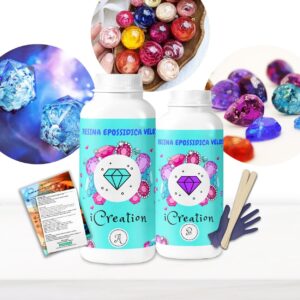
What is included in the ICreation resin kit?
The ICreation epoxy resin kit includes everything needed for safe and effective use. Each kit contains:
  • Epoxy resin
  • Hardener (for mixing in the correct ratio)
  • Nitrile gloves (to ensure skin protection)
  • Mixing sticks (for thorough and homogeneous blending)
  • Full instructions (detailing safety, preparation, mixing, and application)
Always follow the included instructions carefully to ensure correct mixing ratios and curing times. Use the gloves provided to protect your skin, and work in a well-ventilated area.
Can I use Resinstone to seal and protect 24 m² of resin gravel applied with Trasparente?
Resinstone is designed primarily as a polyurethane resin for use on absorbing surfaces such as concrete or porous stone and is not the most suitable product for sealing and protecting resin-bound gravel surfaces already laid with Trasparente.To seal and protect 24 m² of resin gravel, we recommend the following options:
  • Polirock – a two-component polyurethane binder specifically formulated for gravel-bound surfaces. It provides a durable, transparent protective layer:
    • Mix components A and B at a 1:1 ratio by weight.
    • Apply using a roller to distribute evenly across the resin gravel surface.
    • Suitable for external substrates with medium foot traffic.
  • Trasparente – if cost-effectiveness is a priority and further application using the same epoxy system is preferred, an additional layer of Trasparente epoxy resin can be applied to enhance the surface protection. Ensure the existing layer is fully cured and clean before overcoating.
Both products offer transparent protection, but selection should be based on the surface’s porosity and traffic expectations. For resin-bound gravel, Polirock generally offers superior long-term resistance and flexibility.Always ensure ambient temperatures are within product-specified application ranges (typically between 15 °C and 25 °C), and follow safety guidelines including use of gloves and ventilation when handling resins.
How long should I wait before applying another layer of resin?
For optimal adhesion between resin layers, we recommend waiting 6 to 8 hours before applying the next coating.This 6–8 hour window is ideal because:
  • The main catalysis of the previous layer will have occurred.
  • The surface will be slightly tacky, allowing excellent chemical bonding with the new layer.
  • This reduces the risk of visible transitions or air layer formation between coats.
Applying resin during this semi-cured stage helps ensure a seamless, professional finish—especially when working with casting and decorative epoxies such as:
  • EpoxyTable Five – ideal for resin tables and deep casting projects.
  • Art Pro – suitable for creative artwork and coatings.
Do not wait more than 24 hours between coats, as full curing will begin to occur, and this may reduce interlayer bonding. If more than 24 hours have passed, sand the surface lightly with fine-grit paper and wipe clean before re-coating to ensure proper adhesion.
Can I cast flowers in resin? What type of resin should I use?
Yes, you can cast flowers in resin, but only if they are fully dried. Fresh or partially dried flowers will release moisture and gases during the curing process, which can cause bubbles, discolouration, or decay inside the resin.To ensure the best results, follow these steps:
  • Use fully dried flowers only. Use methods such as air-drying, pressing, or silica gel desiccation before starting. Ensure there is absolutely no moisture remaining.
  • If flowers are flat (for example, pressed flowers), use a crystal-clear resin such as Trasparente.
  • If flowers are not flat and you want to embed them in deeper or larger castings (e.g. round moulds, blocks, coasters), use Epoxytable, which is specifically formulated for deep pours.
  • Stabilise the flowers first by sealing them with a spray fixative or light coat of resin to reduce air release.
  • Wait 12–24 hours after stabilising before casting. This allows any trapped air to escape and any sealing product to fully cure.
By properly preparing and stabilising the flowers first, and choosing the appropriate resin for your project, you can achieve clean, bubble-free flower castings.
Need resin for acrylic coasters that can handle a hot cup. Heat Pro sounds ideal but says not compatible with acrylic — what can I use?
Heat Pro is a high-performance heat-resistant coating, but it may react adversely with certain types of acrylic, potentially causing warping or surface damage. However, you can successfully coat acrylic items, such as coasters, using a layered approach:
  • First, apply a base layer (2–3 mm) of standard epoxy resin to create a barrier between the acrylic surface and the Heat Pro.
  • We recommend using our basic transparent epoxy resin for this step. Allow this base layer to cure completely for at least 36 hours at room temperature (approximately 20–25 °C).
  • After full curing, you can apply a top layer of Heat Pro. This provides enhanced resistance to temperature (brief contact up to approx. 120 °C), surface scratching, and wear — ideal for coasters that may come into contact with hot cups.
This two-layer method ensures compatibility with acrylic substrates while providing the heat resistance and finish required for functional coaster use.Always carry out small-scale testing when using epoxy products on unfamiliar materials.
Resin for worktops: What is the best thick resin and how should it be applied?
For durable and high-gloss worktop finishes, we recommend using a thick-pour epoxy resin such as the Art Pro resin.Key application guidelines:
  • Art Pro is ideal for artistic and functional resin applications due to its high transparency and self-levelling properties.
  • Always install temporary borders or edge dams around the perimeter of the surface to contain the resin during pouring.
  • Pour depth should exceed 1.5 millimetres per layer to ensure optimal curing and even surface coverage. However, do not exceed the manufacturer’s maximum recommended depth per layer to avoid overheating.
For complete solutions including measuring tools and mixing accessories, view our countertop kits here: http://resin-pro.co.uk/product/stone-effect-collection-epoxy-resin-kits-for-countertops.
What is the best resin for a final glossy touch, and are there options for polishing or small surfaces?
For a high-quality final glossy finish, we recommend the following options based on your project size and desired result:
  • Large surface, thick glossy finish (minimum 1.5 mm): Use Art Pro. This resin is ideal for artistic applications and provides a thick, even, high-gloss surface.
  • If polishing is required after curing: Use the resin polishing kit to achieve a professional-grade mirror finish after the resin has fully hardened.
  • Small surface or touch-up areas: Apply Heat Pro, which is a flexible, heat-resistant, anti-scratch top coat. This product is suitable for smaller applications and delivers a glossy protective finish.
Ensure the resin is applied in a dust-free environment and always allow complete curing time before handling or polishing.
Which resin should I use to coat kitchen pine worktops? Is Heat Pro suitable, and will it be food-safe?
For coating kitchen pine worktops, the most suitable resin depends on the intended use, heat resistance, surface area, and required food safety compliance.
  • Best overall resin for worktops: We recommend Art Pro. It offers excellent transparency, durability, and a smooth self-levelling finish. It is also suitable for larger surfaces such as worktops.
  • Food-safe option: If food contact is expected, use EpoxyFood, which is certified for direct food contact according to EU regulations. This is ideal for kitchen areas.
  • Heat resistance: While Heat Pro resin offers higher temperature resistance (up to 200°C peak for short durations), it is not recommended for use on large horizontal surfaces like kitchen worktops due to increased risk of uneven curing and surface imperfections.
We also offer ready-made countertop kits that are tailored for this type of project, ensuring correct thickness, strength, and food compliance.
Thin sealing layer – can I apply less than 1 mm?
For sealing purposes only, applying a very thin epoxy resin layer (less than 1 mm) is acceptable. However, if you are using the resin as a self-levelling coating, a minimum thickness of 1.5 mm is required to ensure proper levelling, curing, and durability.
  • Sealing applications:
    A thin sealing layer under 1 mm is suitable. We recommend using Trasparente, which performs well in minimal thicknesses for surface sealing.
  • Self-levelling coatings:
    For applications where a smooth, self-levelling surface is needed (such as tabletops or artworks), the resin layer should be at least 1.5 mm thick. In these cases, use Art Pro Deluxe to ensure consistent coverage and levelling performance.
Always follow the product’s specific technical data sheet for mixing ratios, working temperatures, and curing times.
Matt water-based paint on walls and ceiling; high-temperature lacquer on worktop—can I apply Heat Pro over these surfaces?
A: Heat Pro is designed as a heat-resistant, anti-scratch glossy coating. However, it may react with some water-based paints or lacquers during application or curing.To ensure compatibility and surface integrity, we recommend the following:
  • Matt water-based paint (walls/ceiling): Water-based paints can vary in formulation. Apply a small test patch of Heat Pro in an inconspicuous area to check for any adverse reactions such as bubbling, discolouration, or poor adhesion.
  • High-temperature lacquer (worktop): Even if labelled as heat-resistant, lacquer coatings may contain solvents or additives that interfere with Heat Pro’s bonding. A small-scale compatibility test is also strongly advised here.
Allow 24–48 hours after applying a test patch to assess curing and adhesion fully before proceeding to coat the entire area.Proper surface preparation (dry, clean, and degreased) is essential in all cases. If any issues occur during the test, consider applying a suitable primer or barrier coat before using Heat Pro.For further guidance, feel free to contact our technical support team with product details and surface specifications.
What is the fastest epoxy resin available for demoulding and curing?
The fastest epoxy resin in our range is ICreation, specifically designed for rapid processing and reduced curing times.Key features:
  • Demoulding time: 5–6 hours (depending on ambient temperature and humidity)
  • Full curing time: 12–24 hours
This makes ICreation ideal for users who need to produce multiple casts or prototypes in a short timeframe. The formulation ensures fast polymerisation while still maintaining good transparency and low bubble formation when mixed and poured correctly.Please follow the recommended mixing ratios and application instructions to achieve optimal results.
How can I use resin to cover a barrel?
To cover a barrel with epoxy resin, we recommend using Art Pro, our transparent resin formulated for artistic applications and coating irregular surfaces.Application instructions:
  • Apply the resin using a brush or a spatula, directly onto the surface of the barrel.
  • Several thin layers are recommended for best results. There is no minimum thickness required per layer.
  • Allow each layer to cure for at least 8–10 hours before applying the next one.
Tip: Ensure the surface is clean, dry, and free of dust or oils before starting. Light sanding may help improve adhesion on smooth or coated wood surfaces.Always wear appropriate protective equipment when handling epoxy resins, and ensure proper ventilation during application and curing.
How can I make 2-inch deep resin plaques with a grey metallic finish?
For resin plaques that are 2 inches (approximately 5 centimetres) deep and have a grey metallic finish, we recommend the following:
  • Use Epoxytable 5, a deep-pour epoxy resin specifically designed for castings up to 5 centimetres thick in a single pour.
  • If your plaque depth exceeds 5 centimetres, conduct two pours:
    • Allow the first pour to partially cure until it reaches the gel stage (typically 6–8 hours at 20 °C), then apply the second layer.
    • This ensures strong bonding between layers and prevents overheating or resin distortion.
  • For a grey metallic finish, add a mica pigment such as Sahara to the resin mixture. Adjust the amount based on desired opacity and shimmer.
Always mix resin and hardener thoroughly in the correct ratio, and pour in a dust-free, temperature-controlled environment (ideally 20–25 °C) to ensure a clear, bubble-free finish. Use appropriate personal protective equipment and observe safety precautions.
Need resin to fill holes in a table
The appropriate epoxy resin for filling holes in a table depends on the depth of the cavities. Please choose based on the following guidelines:
  • For holes less than 2 cm deep: Use Trasparente. This is a high-quality transparent epoxy resin suitable for shallow casting applications. It offers excellent clarity and self-levelling properties.
  • For holes deeper than 2 cm: Use Epoxytable-5. This casting product is formulated for deeper pours, making it ideal for large fills in wooden tables and other furniture projects.
Always ensure that you follow the resin’s specific instructions regarding mixing ratio, working temperature, and curing time. Use the appropriate safety equipment and work in a well-ventilated area.
What binder and mixing ratio should I use for stone, pebble, grit, or gravel resin surfaces?
  • For creamy or coloured finishes, use our Epoxy Binder at a mix ratio of 100:60 (resin:hardener). More information and purchase link: https://is.gd/66y5Dj.
  • For white or light-coloured stones, we recommend using Polirock, a two-component polyurethane binder. Mixing ratio is 1:1 by weight.
  • General resin-to-stone ratio is 3% resin by weight of stones. For example, for 100 kg of stones, use 3 kg of resin binder.
  • To calculate how much stone you need:
    Stone quantity (kg) = 15 × Area (m²) × Thickness (cm)
  • Recommended aggregate size (grit): 4–8 mm
Can I use your resin on air-dry clay to make a food-safe fruit bowl? Is it safe and compatible?
Yes, you can use epoxy resin to coat air-dry clay and make it suitable for holding food, such as cold snacks or dry, non-alcoholic items. However, the resin must be a certified food-safe product and it must be applied correctly.We recommend using our EpoxyFood, which is specifically formulated and certified for food contact when applied under the correct conditions.
  • Recommended product: EpoxyFood
  • Food safety: Certified food-safe when mixed correctly and used without any pigments or additives
  • Mixing ratio: 100 parts resin to 55 parts hardener by weight (100:55)
Important application notes:
  • Ensure the air-dry clay is completely dry and moisture-free before applying the resin. Any retained moisture may affect resin adhesion or cause surface defects.
  • The resin is suitable for contact with cold or room-temperature food. It is not tested or rated for hot items or high-temperature use.
Always allow the resin to cure fully according to the product instructions before allowing any food contact.
How to get a matte resin surface?
To achieve a matte finish on cured epoxy resin, follow these steps:
  • Allow the resin to cure fully, as per the product’s specified curing time.
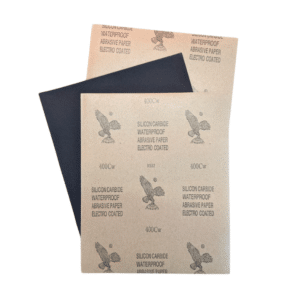
  • Once cured, begin sanding the surface using a fine-grit sandpaper. Start with 800 grit and progress up to 2000 grit as needed.
  • Sanding diffuses the glossy surface, creating a smooth, elegant matte effect.
  • Sand with water (wet sanding) to reduce dust and achieve an even finer result.
For best results in art projects, we recommend using an epoxy resin designed for smooth finishes, such as:These resins cure to a high-quality surface that is easier to sand to a consistent matte texture.
Which resin is best for embedding painted pebbles in an outdoor school path, and is a concrete base necessary?
For securely embedding painted pebbles in an outdoor pathway at a junior school, we recommend using our Epoxy Binder. This transparent epoxy resin is ideal for outdoor decorative applications involving coloured aggregates or decorative pebbles.To ensure proper installation and long-term durability, please consider the following base preparation and application guidelines:
  • Base preparation:
    • If the existing ground is natural soil – minimum 2 centimetres thickness of well-compacted decorative stones or gravel is required.
    • For best results and to increase stability, we recommend constructing a concrete base first. This will provide a level, non-flexing surface, ensuring the epoxy resin cures uniformly and lasts longer under foot traffic.
  • Resin selection:
    The Epoxy Binder is UV-resistant, clear, and specially formulated to bind coloured grits and pebbles without discolouration or degradation in outdoor environments.
  • Need help estimating materials?
    If you can provide the total dimensions of the path (length, width, and depth), we can calculate the exact quantity of pebbles and resin required for your project. Please get in touch with us for a tailored estimate.
This solution ensures your embedded pebble design will be securely fixed, weather-resistant, and visually striking for long-term outdoor use.
Q: What’s the difference between the Small Kit and Mega Kit for sanding and polishing a memorial flower tabletop?
For sanding down proud edges and polishing your memorial flower tabletop, our Polishing Kit is the ideal solution. It is available in two sizes—Small Kit and Mega Kit—depending on the scale of your project and the finish you wish to achieve.Here is what each kit contains:
  • Small Kit:
    • Polishing Cream – 250 ml
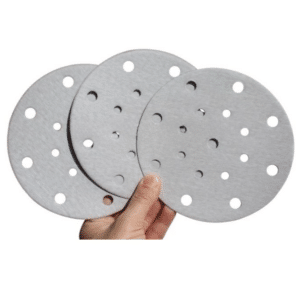
    • Sanding pads – 150 mm diameter, one pad per grit from 360 to 4000 grit
    • Protective gloves
    • Instructions for use
  • Mega Kit:
    • Polishing Cream – 500 ml
    • Sanding pads – 150 mm diameter, one pad per grit from 360 to 4000 grit
    • 2× 150 mm Polishing Sponges
    • Protective gloves
    • Instructions for use
Additional Guidance:You do not require additional resin unless you are planning to recoat the surface. If you are reapplying epoxy resin for a flawless, glossy finish, we recommend using Art Pro with a mixing ratio of 100:66. This resin is ideal for tabletops thanks to its clarity and durability. For levelling, apply a minimum thickness of 1.5 mm.Best Results for Sanding and Polishing:
  • Begin sanding with mid-range grits (P600 to P1500) to remove surface imperfections and proud edges.
  • Use the polishing sponge or pad with the polishing cream—avoid using only cloths for this step.
  • Work in gradual sections to ensure even coverage and finish.
  • Complete the process with a final polish using one of the included polishing sponges.
Additional Recommendations:For optimal results, use an orbital polishing machine. If you are polishing by hand, consider adding a manual pad holder to your toolkit for improved control and efficiency.
Can epoxy resin be applied using a spray gun?
Yes, both ICrystal and Trasparente epoxy resins can be applied using a spray gun with proper preparation.To adapt the resin for spray application:
  • Mix the resin and hardener according to the standard ratio specified for the product.
  • Add 5–10% epoxy-compatible thinner to reduce viscosity and allow for smooth spraying.
  • Mix thoroughly to ensure even consistency.
Please note:
  • Spray application may result in faster curing due to increased air contact—this can affect working time.
  • Always conduct a preliminary test on a small surface to confirm compatibility with your spray equipment and desired finish.
  • Work in a well-ventilated area and wear appropriate personal protective equipment (PPE), including a respirator rated for solvent vapours.
Using a proper HVLP (High Volume Low Pressure) spray gun is recommended for even distribution and control.
How much resin do I need to cover an irregular-shaped surface using fibreglass?
We recommend using our thick resin, Art-Pro, which is ideal for sealing and coating irregular surfaces, especially when working in combination with fibreglass.

Project area calculation:

  • Assuming the surface is roughly cylindrical, use the following formula:
  • Total surface area = lateral surface area + base
  • = π × diameter × height + π × (radius²)
  • = π × 2 × 1 + π × (1²)
  • = 6.28 + 3.14 ≈ 9.42 m²

Recommended resin thickness:

  • For sealing with fibreglass: approximately 2 millimetres

Resin quantity calculation:

  • Formula: surface area × depth × density ÷ 1000
  • Density of Art-Pro resin is approximately 1.1 g/cm³
  • 9.42 m² × 2 mm × 1.1 ÷ 1000 = 20.7 kg of resin required

Please ensure full surface preparation and proper mixing ratios according to the product datasheet when working with fibreglass and epoxy resins.

Does Epoxywood yellow over time, and how does its UV resistance compare with Trasparente resin?
Q: I wanted to use the Epoxywood restoring resin to harden a 30 cm × 30 cm × 5 cm piece of spongy/porous timber. I tested it and it worked very well and penetrated the timber and made it solid again. But does it yellow over time? What is the UV resistance of this product? Would I be better off using the Trasparente resin as it has a UV guarantee for 10 years? Does the Trasparente have a similar low viscosity to the Epoxywood restoring resin?A:Both Epoxywood and Trasparente resins contain strong UV inhibitors, but there are key differences in appearance and performance:
  • Yellowing over time: Epoxywood already has a slight yellow tint compared to basic transparent resins. This is generally not noticeable on timber, especially darker woods. However, with prolonged UV exposure, some additional yellowing may occur over time.
  • UV resistance: While Epoxywood includes strong UV stabilisers, Trasparente resin offers higher UV protection and is covered by a 10-year UV resistance guarantee. This makes Trasparente more suitable for applications with constant or direct sunlight exposure, such as outdoor or light-exposed projects.
  • Viscosity and penetration: Epoxywood is formulated with a lower viscosity than Trasparente and is specifically designed to penetrate porous, spongy or damaged timber. Its fluidity makes it ideal for restoration and structural reinforcement work. Trasparente has a higher viscosity and is more suitable for casting or coating clear finishes, rather than deep penetration into wood fibres.
Recommendation: If the project is indoor and you require deep wood consolidation, Epoxywood is the better choice due to its superior penetration. If the project is outdoor or requires maximum UV stability and visual clarity, Trasparente is preferred, but note its more limited penetration into porous wood due to higher viscosity.
What resin should I use for a 10.75-inch (0.273 m) tall cylindrical mould requiring 3.73 kg of resin?
For a deep casting project using a cylindrical mould approximately 273 mm tall and 118 mm in diameter (3.73 kg of resin required), we recommend the following options:Recommended Resin: EpoxyTable Ten (mix ratio 100:25 by weight)
Link: https://is.gd/35pkpwBecause the total casting height exceeds 200 mm, this resin is ideal for deep pours due to its advanced formulation. Follow the staged pouring method below to ensure a successful result:
  • Pour the first layer up to 100 mm (10 cm) in height.
  • Allow this layer to cure for 6–8 hours.
  • Then pour the second 100 mm (10 cm) layer on top.
  • This staged approach prevents overheating and avoids visible layer lines.
EpoxyTable Ten is engineered for crystal-clear, non-yellowing deep pours. It cures bubble-free when poured slowly and carefully under proper temperature conditions.Alternative, Cost-Effective Option: EpoxyTable Five (mix ratio 100:55 by weight)
Link: https://is.gd/eQDDwWIf budget is a priority and you are comfortable casting in multiple stages:
  • Use EpoxyTable Five in four separate pours, each 50 mm (5 cm) deep.
  • Wait 6–8 hours between each pour to prevent overheating and ensure proper curing.
Please ensure that ambient temperature and resin temperature are within the recommended range (around 20–25 °C) throughout the process. Adequate curing time, proper mixing, and a staged application will help prevent distortion, shrinkage, or trapped bubbles.
Is “LIQUID MOULD” silicone rubber suitable for wax injection and moulding 3D resin printed pieces? Which Shore hardness is best for detailed rings? What is the shrinkage, and is there a translucent version?
Yes, our “LIQUID MOULD” casting silicone rubber range (available in Shore A hardness levels from 5 to 40) is suitable for both:
  • Wax injection: Medium Shore hardness silicones, such as Shore A 20–25, are generally ideal, providing the flexibility needed for demoulding while maintaining shape integrity under pressure or heat.
  • Moulding 3D liquid resin printed pieces: The silicone is compatible with common 3D printed resins and capable of capturing fine details, including those from SLA or DLP printed models.
Recommended Shore hardness for moulding small detailed items (e.g. rings):
For precise reproduction of small jewellery pieces such as rings with fine detail, we recommend a Shore hardness of around 20A. This offers an optimal balance between flexibility and stability, allowing easy demoulding without distortion and accurate capture of details.Shrinkage:
Typical linear shrinkage for our silicone rubber is minimal, generally < 0.1% after full curing, ensuring excellent dimensional stability for precision casting.Translucent version available:
Yes, we recommend our Pure Mould 20sh silicone rubber which is translucent and ideally suited for this type of application. It is also fast-curing and ideal for both jewellery moulds and prototype casting.
Do you have a resin that can be used to make candle containers? That is, it is relatively heat-resistant and does not emit harmful substances in proximity to candle flames
Standard epoxy resin is not suitable for candle containers that come into direct contact with an open flame. Epoxy materials are not formulated to withstand continuous or high-temperature exposure, and heating them beyond their thermal resistance can cause them to soften, degrade, or emit fumes.For safety and best performance, consider the following:
  • Primary container materials: When making candle holders with real flames, use a heat-safe primary container such as glass, ceramic, or metal.
  • Decorative resin holders: You may use epoxy resin to create a decorative outer holder, but ensure that the actual candle is placed inside a heat-resistant glass insert within the resin structure.
  • Heat-tolerant resin options: If you require resin that provides better heat resistance (e.g., for decorative applications around the candle), a more suitable choice would be a heat-resistant epoxy like Heat Pro.
Even with heat-resistant resins, it is important to avoid direct flame contact or prolonged exposure to temperatures that exceed the resin’s thermal limits. Always follow safety guidelines when working with flammable materials.
What factors affect the working time (pot life) of epoxy resin?

The working time (or pot life) of epoxy resin is influenced by several key factors, including the volume of the mixed resin, ambient temperature, and the specific type of resin used. Here is a breakdown of each factor:

  • Volume: Larger volumes generate more heat due to the exothermic chemical reaction, leading to a shorter working time. For small castings, the ideal mix volume is up to 150 grams to ensure optimal pot life.
  • Ambient Temperature: Higher temperatures accelerate the curing process, reducing the working time. An ideal working temperature range is 20–22°C for predictable handling time. Warmer environments will cause the resin to cure faster, while cooler conditions will slow the reaction.
  • Type of Resin: Different epoxy formulations have different curing speeds:
    • Thin-casting resins are engineered to set more quickly, making them less suitable for deep pours or large volumes.
    • Thick-casting resins cure more slowly, allowing for deeper pours and extended working time. Examples include:
Typical working times under ideal conditions (20–22°C):

  • Small castings using standard resins: 20–30 minutes
  • Thick-casting resins (e.g. Art Pro, EpoxyTable Five): 30–40 minutes

To maintain full control over the working time, always adhere to recommended mixing ratios, volume limits, and ambient temperature guidelines.

Where can I find a resin calculator or mixing tool to calculate the amount of resin needed for my project?
You can find our resin calculator online or via mobile apps to accurately determine the amount of resin required for your project based on dimensions and application type.These tools allow you to input the specific measurements of your mould or artwork (length, width, depth) and will output the estimated quantity of resin needed, helping to minimise waste and ensure accurate mixing ratios.If you are working with resin artwork or casting projects, we recommend the following products:Both options are designed for accurate weight-based mixing, ensuring reliable results and strong, clear cures.
I have some difficulties in calculating resin ratio by weight.
If you are unsure how to calculate the correct resin-to-hardener ratio by weight, we offer easy-to-use tools to help you get accurate results for any project.You can use our online resin calculator to quickly determine the correct quantities based on your specific volume and project needs.We also have mobile applications for both Android and iOS:These tools calculate the exact amount of resin and hardener required based on:
  • The type of project (e.g. coating, casting, or artwork)
  • Desired total volume
  • Mixing ratio (by weight or volume) of the specific resin system
For artistic applications, we recommend: Both products are designed for precision and clarity in creative projects.Always refer to the technical data sheet of your chosen resin system for exact mixing ratios and follow all safety instructions.
Main difference between Art Pro and One-2-One
Both Art Pro and One-2-One are transparent epoxy resins with medium viscosity, suitable for artistic and coating applications. However, they differ in several key technical aspects:
  • Mixing Ratio:
    • Art Pro – 3:2 by weight (e.g., 30 g of resin to 20 g of hardener).
    • One-2-One – 1:1 by volume (equal volumes of resin and hardener).
  • Viscosity:
    • Art Pro – Higher (more viscous), allowing better edge control and reduced dripping.
    • One-2-One – Lower (less viscous), making it easier to self-level over surfaces and ideal for flood coating.
  • Finish After Curing:
    • Art Pro – Provides a harder cured surface, suitable for protective top layers or detailed artwork finishes.
    • One-2-One – Results in a glossier finish, making it ideal for projects where shine is a priority.
Choose the resin depending on your application needs:
  • Use Art Pro when you require hardness, durability, or a final protective coat with enhanced depth.
  • Use One-2-One for quicker projects or for creating smooth, glossy coatings over larger areas.
How much resin do I need for 1.2 m² of stone surface at 30 mm depth?
To calculate the correct amount of resin for binding stones over a 1.2 m² area at an average depth of 30 mm, follow the steps below:

1. Calculate the stone volume:

  • Area = 1.2 m²
  • Depth = 30 mm = 0.03 m
  • Stone density = approximately 1500 kg/m³
Stone volume = 1.2 m² × 0.03 m × 1500 kg/m³ = 54 kg of stones

2. Estimate resin quantity:

Use 3% of the total stone weight as the required resin quantity:

Resin required = 54 kg × 0.03 = 1.62 kg of resin

3. Recommended resin binders:

We offer two high-performance options for stone binding:

  • Polirock 1:1 — Best suited for light or white stones. This polyurethane binder prevents yellowing and maintains aesthetic clarity.
  • Epoxy Binder 100:60 — Ideal for coloured or natural-tone stones. Offers strong adhesion and excellent transparency.

4. Ready-to-use kits:

For convenience, we also provide pre-measured resin and aggregate kits suitable for projects of this type. Explore our complete kits here:

Can epoxy binder be mixed and poured directly onto an existing gravel surface?
No, epoxy binder should not be poured directly over an existing loose gravel surface.For proper bonding, structural stability, and full encapsulation of the aggregate, the binder must be thoroughly mixed with clean, dry gravel before application. Pouring binder directly onto laid gravel does not achieve the required mechanical interlock and may result in a weak or unstable surface.To install a bonded gravel surface correctly:
  • Use clean, dry gravel or coloured grit suitable for resin-bound applications.
  • Thoroughly mix the gravel with the binder in a forced action mixer, ensuring full and even coverage of each particle.
  • Apply the mixture onto a prepared and stable substrate surface (such as compacted MOT Type 1 or concrete base).
  • Spread and level the mix using a trowel to your required depth (usually 15–18 mm for foot traffic).
For optimal results, use purpose-designed products such as:These systems are specifically formulated for gravel binding, offering high mechanical strength and long-term durability once cured.
Gravel was laid, how to reinforce that
If gravel has been previously laid and is loose, you can reinforce it using a resin binder to create a stable, long-lasting surface. Follow these steps:
  • Lift the top layer: Carefully remove the loose top layer of gravel to allow proper mixing with the resin binder.
  • Mix with resin binder: Combine the gravel with an appropriate transparent resin binder. For coloured gravel, we recommend using our epoxy binder designed specifically for use with coloured grits.
  • Re-lay and compact: Re-lay the resin-bound mixture onto the prepared base and compact it evenly for a solid finish.
This process ensures adequate bonding between the gravel particles, resulting in improved surface stability and long-term durability. Always follow safety and mixing guidelines provided with the resin product.
Can “RESINSTONE – Resin For Floors and Driveways” be used as a gravel binder on an existing gravel surface?
RESINSTONE is specifically designed for use on absorbent substrates such as concrete. It is not suitable as a binder for loose, existing gravel surfaces.If your goal is to stabilise and bind gravel – for example on paths, driveways, or patios – you should use a specialist gravel-binding product. Using RESINSTONE on loose gravel will not achieve proper adhesion or structural integrity.For optimal results on gravel, we recommend the following alternative products:Please ensure that any gravel used is clean, dry, and adequately prepared prior to application of binding resins. Always refer to individual product technical datasheets for precise mixing instructions, curing times, and surface preparation guidelines.
I am making a memorial stone on sandstone and need advice: which resin is best, how to embed a printed message, UV stability, and casting layers?
A: For a memorial stone project involving sandstone, variable resin depths (5–25 mm), and an embedded printed message, epoxy resin is the most suitable choice.
  • Recommended resin: Transparent epoxy resin such as Trasparente.
  • Why epoxy? Epoxy offers superior transparency, higher surface hardness, and excellent adhesion to mineral substrates like stone. Compared to polyurethane, epoxy is clearer and more stable, while polyurethane is softer and less optically pure.
Application steps:
  1. Sealing layer: Start with a thin pour (1.5–5 mm) to seal the stone and embed any flat objects such as your printed message.
  2. Embed printed message: Use photo paper printed with pigment-based ink. Before embedding, seal the paper with 2–3 coats of clear acrylic lacquer to prevent ink bleeding or darkening due to resin saturation.
  3. Second layer: After 12 hours (when the sealing layer is still chemically reactive), pour the remaining resin in a second, thicker layer (up to 25 mm as needed). You can also add an additional 5 mm pour over the completed flat surface.
UV resistance and long-term clarity:
  • While Trasparente epoxy includes UV stabilisers, it is important to avoid prolonged exposure to direct sunlight to maintain crystal clarity over time.
  • For enhanced UV protection, consider applying a clear, UV-resistant topcoat or lacquer after curing is complete.
Ensure that your working environment is dust-free and that all materials are fully dry to avoid cloudiness and moisture reactions.

Colouring & Pigments

Can I use the Colourfun Deluxe range to achieve dark colours in UV resin?
Yes, you can use the Colourfun colorants to achieve dark colours in UV resin.The Colourfun range is a concentrated pigment paste compatible with both epoxy resin and UV resin. Due to their high pigment density, these pastes are ideal for creating rich and vibrant colours, including darker shades.To achieve dark colours effectively:
  • Start with a small amount of pigment and gradually increase until you achieve the desired opacity and shade.
  • Mix thoroughly to ensure even colour distribution in the resin.
  • Do not exceed the recommended pigment-to-resin ratio (typically 5% by weight) to maintain proper curing properties.
Always test on a small amount first if you are working on a new project, especially when using with UV resin, to check curing performance and finished appearance.
Painting hull of Mirror dinghy. Correct ratio of pigment to resin to achieve solid opaque True Red (Colourfun)?
To achieve a solid, opaque finish in True Red using Colourfun pigment for painting the hull of a Mirror dinghy, it is important to maintain the correct pigment-to-resin ratio to ensure proper curing and optimal colour saturation.
  • Use Colourfun high-density colour pastes, which are highly concentrated and specifically formulated for epoxy resin applications.
  • The recommended dosage is no more than 5% of pigment relative to the total weight of the resin and hardener combined. For example, for 100 grams of mixed resin, add a maximum of 5 grams of pigment.
  • A few drops (approximately 1–3% by weight) are often sufficient to achieve a solid, opaque result, especially with strong colours like True Red.
Ensure the pigment is thoroughly mixed into the resin before adding the hardener (if using a two-component system), or mix well after combining components to fully disperse the pigment.Exceeding the 5% pigment-to-resin ratio may interfere with curing or reduce the mechanical and adhesion properties of the epoxy.For best results:
  • Test a small batch before committing to large areas.
  • Apply on a clean, abraded surface for maximum adhesion on marine applications.
  • Ensure temperature conditions are within the resin’s optimal working range (usually 18–25 °C) for even curing and colour development.
What does the Iridron Rose Gold pigment contain?
The Iridron Rose Gold pigment contains a carefully balanced blend of metallic components designed to create a shimmering, pearlescent rose gold effect in epoxy resin applications. Specifically, it includes:
  • Gold pigment
  • Silver pigment
  • Copper (rame) pigment
  • Pearlescent additives
This pigment is supplied in a 25 ml container and is ideal for achieving a metallic, reflective finish in resin pours, coatings, and artistic projects.For other colours and metallic finishes, you can explore the full Iridrion pigments collection.
Cremation jewellery – which resin, pigment and tools for using ashes in silver jewellery?
For creating cremation or memorial jewellery with ashes and silver mountings, resin selection depends on the casting thickness. Here are the guidelines:
  • If the casting is under 2 cm thick: we recommend using Trasparente. This epoxy resin offers optimal clarity and low viscosity, ideal for fine jewellery work with ashes embedded in bezels, pendants, or rings.
  • If the casting exceeds 2 cm thickness: use Epoxytable. This product is suitable for thicker pours due to its lower exothermic reaction and slower curing time, reducing shrinkage and avoiding overheating.
Recommended Resin Colourants: To tint the resin without affecting clarity or curing:
  • Use ResinPro’s compatible transparent or opaque pigments. Choose transparent dyes for a glass-like effect or pearlescent powders for a shimmering finish.
  • Avoid water-based or incompatible dyes, as these can affect resin curing and clarity.
Tools Needed:
  • Silicone mixing cups and spatulas for accurate mixing
  • Precision scales for correct resin-to-hardener ratio
  • Disposable pipettes or toothpicks for placing ashes delicately into the resin

  • Micro torch or heat gun to remove surface bubbles
  • Latex or nitrile gloves and protective mask for safe handling
Always follow manufacturer safety guidelines, work in a ventilated area, and allow full curing before polishing or assembling the final piece.
What is the best type of colourant for tinted resin?
For tinting epoxy resin, two highly recommended options are:
  • Pinata alcohol inks – These are vibrant, fast-drying inks ideal for highly pigmented and transparent effects. They disperse well in resin and are especially useful for creating abstract or explosion effects.
  • Magic Crystal Colours – Specifically formulated for epoxy resin, these colourants provide both transparent and semi-opaque finishes depending on the dosage. They offer a highly stable pigment dispersion and can be used in casting, coating, or creative artwork applications.
Both of these products are compatible with ResinPro’s epoxy resins and offer long-lasting colour stability. Ensure thorough mixing and always test on a small batch for compatibility before large-scale application.
Can I use a marine pigment set with UV resin to create a sea scene?
Yes, you can use pigments from a marine pigment set to colour UV resin. However, when it comes to creating a sea scene with realistic depth and layering, UV resin is generally not suitable due to its limited application thickness.To effectively recreate the depth and wave effects characteristic of marine scenes, you will need to use an epoxy resin with a higher maximum pour depth. Epoxy resin cures more slowly, allowing you to work in thicker layers without cracking or overheating.For best results in resin art projects that involve marine scenes, we recommend the following products:
  • Art Pro – A transparent epoxy resin ideal for resin art, with excellent clarity and self-levelling properties.
  • Art Pro Deluxe – A high-performance version of Art Pro, offering enhanced UV resistance and a more durable finish.
These epoxy resins allow for the required thickness and extended working time to create layered sea effects, waves, and depth typical of ocean-themed art.
How can I achieve a grey colour using either Sahara powder or Colourfun white/black dyes?
To create a grey shade in epoxy resin, you can use either of the following options:For solid, opaque colour:
  • Use approximately 8.5 millilitres or grams of pigment per 1 kilogram of mixed resin (resin and hardener combined).
  • This loading provides a strong, even colour without affecting curing or mechanical properties.
Always mix pigments thoroughly into the resin to ensure uniform dispersion. For the mica powder, mixing slowly with a stirring stick or low-speed paddle avoids introducing air bubbles. When blending black and white dyes, pre-mix them to your chosen shade before adding to the resin.Wear gloves and protect surfaces when working with resin and colourants. Ensure good ventilation and follow all safety data sheet recommendations for each product.

Moulds & Tools

Need any equipment for pads polish?
For best polishing results when using our pads, you will need a compatible backing tool. We recommend the following options:
  • Rotary Polisher: This is the ideal tool for achieving a professional finish when polishing large or advanced epoxy resin surfaces.
  • Hand Polishing Pad Holder: Suitable for use with our 150 mm polishing pads. This is a great option for manual or small-area polishing tasks.
  • Polishing Kit: Includes all necessary components for resin surface polishing, offering a complete solution for both beginners and advanced users.
Using the correct tool ensures consistent surface contact and maximises the effectiveness of the polishing compound and pads.
What types of silicone moulding rubber do you offer, and how are they used?
We offer a wide range of silicone moulding rubbers suitable for creating custom-made moulds tailored to your specific needs. Below are the two main types available, along with instructions and recommended products:
  • 1. Liquid Silicone Rubber
    This is an easy-to-use, pourable silicone ideal for detailed moulds.
    • First, prepare a base formwork and place the object to be moulded inside it.
    • Mix the silicone with the supplied activator according to the manufacturer’s instructions.
    • Pour the mixture over the object within the formwork, ensuring full coverage.
    • Allow it to cure for approximately 10–12 hours before removing the mould from the formwork.

    Recommended product – Liquid Silicone Rubber
    For a step-by-step guide, see: How to mould and make your own resin handles.
  • 2. Silicone Putty
    A fast-curing, hand-mouldable silicone ideal for small or simple objects.
    • Mix the two supplied components thoroughly in a 1:1 weight ratio.
    • Apply the putty directly over the item you wish to mould.
    • The mould will set in approximately 20–40 minutes, depending on ambient temperature.

    Recommended product – Silicone Putty (I-Gum)
    Detailed instructions are available here: How to make your own mould in 5 steps.
Note: For professional-quality results when working with liquid silicone rubber, we strongly recommend the use of a pressure pot. During the casting process, small air bubbles can become trapped in the silicone; a pressure pot helps eliminate these imperfections by compressing or collapsing the bubbles.If you plan to cast using resin, we offer the following options:
  • ICrystal – best for high clarity and transparency.
  • Art Pro Deluxe – excellent for capturing artistic detail and fine features.

Troubleshooting & Defects

Heat Pro issues – bubbles appearing on the top surface
Bubbles on the surface of Heat Pro may be caused by improper layering or using incompatible materials.To prevent and address this issue:
  • Surface preparation: Always apply a clear epoxy resin layer underneath the Heat Pro layer. This helps to seal the surface and prevent trapped air or bubbles from rising into the Heat Pro layer.
  • Maximum application size: Heat Pro is designed for small projects, up to 0.25 m². Applying it over a larger area can lead to uneven curing and increase the risk of surface defects, including bubbles.
  • Material compatibility: Do not use Heat Pro over acrylic surfaces. Acrylics are not compatible and can cause adhesion or curing problems that result in bubbling.
If you’re still experiencing issues, please email pictures of the affected surface to our support team. This will help us assess your application and provide specific guidance.
Worktop yellowed. Gets minimal sunlight. Have guarantee yellowing?
Our resins, such as the UV-stabilised non-toxic transparent epoxy resin, are formulated to resist yellowing and are suitable for interior applications.However, yellowing can still occur over time due to:
  • Indirect ultraviolet (UV) exposure, including artificial lighting (e.g. fluorescent or LED lights that emit UV wavelengths).
  • Chemical exposure or cleaning products not compatible with epoxy surfaces.
  • Heat build-up or poor ventilation around the application area.
While minimal sunlight reduces UV-related degradation, no epoxy is completely immune to all forms of yellowing over time.Regarding warranty:
  • Yellowing caused by UV exposure or ageing is typically not covered under guarantee, as it is a known limitation of polymer-based materials.
  • Guarantees apply only to manufacturing defects under appropriate use conditions.
To minimise further yellowing:
  • Use UV-filtering window films or blinds to limit UV exposure indoors.
  • Avoid harsh chemical cleaners—use only resin-safe, pH-neutral cleaning agents.
  • Maintain ambient conditions within manufacturer guidelines (typically 18–25 °C, low humidity).
Why does high humidity cause a matt film on my resin, and how can I prevent it?
High humidity can interfere with the curing process of epoxy resin, leading to a matt or cloudy surface finish. This is especially common when working with products such as Art Pro resin.To prevent this issue, follow the recommended “pre-catalysis” technique:
  • Wait for a dry day with low humidity. Excess moisture in the air can affect surface finish.
  • Thoroughly mix Parts A and B, ensuring you scrape the sides and bottom of the mixing container during stirring.
  • Allow the mixed resin to sit in the mixing cup undisturbed for 5–10 minutes. Monitor the temperature of the cup: it should become warm to the touch (not boiling hot). This indicates that polymerisation has begun and the resin is pre-catalysed.
  • Apply the resin immediately after this point.
This method helps to reduce the risk of moisture interacting with the uncured resin, improving clarity and surface gloss.
Why are my resin coasters cloudy after using Epoxy Polish?
Cloudiness after polishing resin coasters typically indicates that the Epoxy Polish was not fully worked into the surface or was not buffed properly. Merely using clean cloths often does not generate the necessary friction or apply even pressure to achieve a high-gloss finish.To correct this issue and restore clarity:
  • Use a rotary polisher or a compatible polishing pad for more effective results. These tools help to evenly spread and activate the polish by creating the required heat and pressure.
  • Alternatively, use the Hand Polishing Pad Holder designed for manual application. It allows better control and pressure compared to a cloth.
  • Apply the Epoxy Polish in circular motions using light, consistent pressure until the surface begins to shine and the cloudiness disappears.
  • For optimal gloss and surface finish, consider using the Polishing Kit, which includes the appropriate compounds and accessories for polished epoxy resin projects.
Repeating the polishing process using the correct method and tools should restore the clarity of your resin coasters and enhance their shine.
Tried to use your Polish cream with cloth – no success. Am I doing something wrong? Do I initially put on with a cloth or use the pad, is there a length of time the polisher should sit before buffing up?
For best results with our Polish Cream, it is recommended to use a polishing pad holder rather than applying it directly with a cloth. Using the pad allows for even distribution and better effectiveness of the polish.Here are the recommended steps:
  • Start with a coarser grit pad and progressively move to finer polishing grades to achieve a smooth and flawless surface.
  • Do not let the polish sit before buffing. It is best to begin working it into the surface immediately after application.
  • For the final polishing stage, use a microfibre or polishing sponge to enhance surface clarity and remove any remaining haze.
If you’ve already tried applying the polish with a cloth and found no improvement, we strongly recommend reapplying using this method for optimal results.
Trasparente, poured 160 g into the cup, after 15 minutes it’s overheated. Why?
This issue can occur due to the mass and reaction characteristics of the Trasparente epoxy resin.Trasparente is formulated for casting layers or pours of up to approximately 20 mm in depth. Pouring 160 g into a single container may exceed this safe limit, especially if left sitting in the cup for more than a few minutes.Key reasons for overheating include:
  • Mass effect: Epoxy resins generate heat as they cure. When a large volume (such as 160 g) remains concentrated in one place, the heat cannot dissipate easily, leading to rapid temperature rise and potential overheating.
  • Time delay: Leaving the mixed resin in the cup for 10–15 minutes before pouring or working can significantly accelerate the curing reaction and increase the risk of overheating.
  • Ambient conditions: A warm working environment or direct exposure to heat sources (such as sunlight, space heaters, or heated surfaces) can also contribute to faster curing and heat buildup.
  • Tools used: Using a heat gun or hot water bath to remove bubbles can inadvertently raise the resin’s temperature and speed up the curing process.
Recommendations for future use:
  • For longer working time, divide the mixed epoxy into several smaller cups immediately after mixing. This helps reduce the localised mass and slows down the exothermic reaction.
  • Keep the working area cool and shaded to avoid accelerating the cure time.
  • Avoid long idle times between mixing and pouring, especially with medium to large quantities.
Learn more about the product specifications and usage by visiting the product page: Trasparente.
I encountered crystallisation in Part A of ICrystal resin after storage indoors — what caused this and how can I fix it?
A: Crystallisation in epoxy resins like ICrystal Part A can occur due to temperature exposure during shipping or storage, even if the resin is later kept at room temperature indoors. Here are the likely causes and how to restore the resin:
  • Crystallisation Trigger: If the resin is exposed to temperatures below approximately 15–18 °C at any point (e.g. during delivery or warehouse storage), the crystallisation process can begin.
  • Room Temperature Insufficient: Simply returning the resin to a room temperature environment will not reverse crystallisation once it has begun. The resin may appear thick, grainy, or semi-solid.
  • Restoration Method: To return Part A to its usable clear liquid state, follow these steps:
    • Ensure the lid is tightly sealed to prevent contamination.
    • Place the container in a heat-resistant bucket or basin.
    • Pour in several kettles of freshly boiled water to surround and submerge the container as much as possible (do not allow water inside the container).
    • Let it sit in the hot water bath for approximately 20 minutes.
    • The resin should return to a clear and fluid state. Allow it to cool back to room temperature before use.
Proper storage of epoxy resins in a consistent temperature environment (above 18 °C) is recommended to prevent future crystallisation.For more information, see the ICrystal product page.

Safety & Compliance

What is food-safe certification for epoxy resin?
Epoxy resin is considered food-safe only if it has been independently tested and certified compliant with European food contact standards.Key points regarding food-safe certification:
  • The resin must be correctly mixed and fully cured to be compliant.
  • No dyes, additives, or other modifications may be added to the resin.
  • The certification applies only to applications involving contact with cold snacks and non-alcoholic beverages—hot foods, alcoholic drinks, and acidic items may compromise the surface or transfer substances.
For applications that require certified food safety, we recommend using Epoxyfood, our epoxy resin specifically designed for food contact. When used correctly, it meets the required standards for limited food contact uses.Always follow the product guidelines for mixing ratios, curing times, and conditions to ensure compliance with safety requirements.
I just wanted to know if your kintsugi repair kit is food safe?
A: Our Kintsugi repair kit is not currently certified as food safe. The epoxy resin included in the kit does not have a food contact certificate and should not be used on surfaces intended for direct contact with food.If you are looking for a food-safe resin, we recommend our certified product: EpoxyFood. This epoxy resin is tested and approved for contact with food when:
  • Mixed and cured exactly according to the instructions
  • Used without any non-food-safe additives (e.g. pigments or dyes not certified for food contact)
  • Fully cured before any use (minimum 72 hours at room temperature, longer curing times may be required depending on ambient temperature and layer thickness)
When correctly mixed and cured, EpoxyFood is suitable for use in serving cold food and snacks. However, it is not recommended for high-temperature applications (e.g. ovenware).Please note that food safety compliance requires not only the resin itself but also any colourants or powders used to be certified for food contact.

Policies & Returns

How do I return an unopened product?
To return an unopened product, please follow the instructions below:
  • The product must be returned in its original, sealed packaging and in unchanged condition.
  • Returns are accepted within 14 days of delivery.
  • Customers are responsible for return shipping costs unless the return is due to an error on our part (e.g. incorrect or damaged item).
Please send the package to the following return address:Resin Pro LTD
3J Lake Enterprise Park
Doncaster
DN3 1QR
United KingdomTo initiate a return or for any related enquiries, please contact us at:Email: in**@******ro.eu
Phone: 07596 850968We recommend using a tracked delivery service to ensure safe return of the product. Refunds will be processed once the returned item has been received and inspected.

General

Do you have any discounts?
Yes, we offer several types of discounts and incentives:
  • Loyalty Programme: Earn 1 resin-coin for every £1 spent. Once you collect 500 resin-coins, you receive a £5.00 discount voucher. These coins can be redeemed on a wide range of products.
  • Welcome Discount: New customers can enjoy 5% off their first order by using the code First at checkout.
  • Seasonal Sales: We regularly run promotions and seasonal sales—keep an eye on our website or subscribe to our newsletter for updates.
These discounts can be applied to many of our popular products, including:

How to Polish Resin: The Ultimate Step-by-Step Guide for a Glossy Finish

Polishing epoxy resin is a crucial step in achieving that high-gloss, crystal-clear finish that makes your resin art, river tables, jewelry, and DIY projects truly stand out. In this guide, we’ll explain how to polish resin properly, which tools and materials to use, and give professional tips to help you avoid common mistakes.

Whether you’re a beginner or an experienced crafter, mastering resin polishing will significantly improve the final result of your work.

What You Need to Polish Epoxy Resin

Before diving into the steps, make sure you have the following resin polishing tools and products, all available in our Polishing Products & Formwork Release Agents category:

✅ Essentials:

  • Epoxy Polish Cream – Designed to remove micro-scratches and dullness from resin surfaces.
  • Mirka Abralon® Sanding Pads – High-quality, flexible pads ideal for wet or dry sanding.
  • Polishing Sponge Discs – Soft discs for use with polishers, drills, or rotary tools.
  • Microfiber Cloth – To wipe down your polished surface.

🛠️ You can polish and sand by hand or using machinery (like a rotary polisher or orbital sander). Manual work gives you more control, especially on small or detailed items, but using equipment will save time and energy, especially for large surfaces.

Step 1: Let the Resin Cure Fully

Before you even think about sanding or polishing, ensure your epoxy resin has cured completely. This typically takes 72 hours, depending on the brand and room conditions. Working with uncured resin can result in smearing or damage.

Step 2: Sanding Resin – Smooth Before You Shine

Sanding is the foundation of resin polishing. It removes surface imperfections, dust nibs, uneven edges, and prepares the resin for polishing.

How to Sand Resin:

  1. Start with a coarse grit like 180 or 240 if the surface is uneven.
  2. Use Mirka Abralon® Pads or sanding discs, applying light, circular pressure.
  3. Gradually move to higher grits: 400 → 800 → 1200 → 2000 → up to 4000.
  4. Always clean the surface between grits to avoid scratching with leftover particles.
  5. Wet sanding is best – it’s recommended to regularly add water to the surface or dampen the sanding pad — this helps prevent overheating, reduces dust, and improves overall sanding efficiency.

🖐️ Manual sanding is suitable for small resin crafts, jewelry, or delicate pieces.
⚙️ Orbital sanders or rotary machines help make sanding faster and more consistent on large surfaces like resin tables, trays, or panels.

💡 Pro Tip: If you notice white swirls or foggy areas, you may have skipped a grit. Go back one step and re-sand gently.

Step 3: How to Polish Epoxy Resin to a Mirror-Like Finish

Once your surface is smooth and matte from sanding, it’s time to polish the resin to bring out the shine.

How to Apply Epoxy Polish Cream:

  1. Add a small amount of Resin Pro Epoxy Polish Cream directly onto the surface or polishing disc.
  2. Use Polishing Sponge Discs with a rotary polisher or a hand drill.
  3. Work in small sections, using overlapping circular motions.
  4. Start with medium-firm sponge discs, then switch to ultra-soft for the final pass.
  5. Keep your tool at low to medium speed to avoid overheating the resin.

🖐️ You can polish by hand using a microfiber cloth or a sponge pad, but for best results, especially on larger items, we recommend using a low-speed polishing machine or drill attachment. This reduces effort and gives a more uniform shine.

Optional Final Step:

For that ultra-gloss finish, use a fine-grade anti-hologram polish as a second round, especially if you’re polishing tabletops or large flat surfaces.

Step 4: Clean and Inspect

After polishing:

  • Wipe off all residue with a clean microfiber cloth.
  • Check under a strong light for swirls or haze.
  • If necessary, repeat polishing with a finer disc and less product.

⚠️ Avoid over-polishing in one spot. Heat buildup can soften the resin and ruin the finish.

Step 5: Finishing Wood Elements

If your resin project includes wood components — such as in river tables, coasters, or trays — consider applying a protective oil or lacquer to enrich the grain and enhance contrast between the resin and the wood.

Using high-quality finishes like Osmo oils, natural waxes, or polyurethane lacquers will:

  • Deepen the wood’s natural color
  • Add a subtle sheen or rich matte look
  • Provide protection from moisture, UV, and wear

Explore our selection of lacquers and oils to give your wooden surfaces a premium, long-lasting finish.

💡 Apply oils or finishes only after sanding and polishing the entire surface. Let them cure according to the product instructions for best results.

ProductUse
Epoxy Polish CreamRemoves fine scratches, adds shine
Mirka Abralon PadsProfessional-grade sanding up to 4000 grit
Polishing Sponge DiscsAttach to rotary or drill, used for buffing
Sanding DiscsGreat for dry or wet sanding with tools

Bonus Tips for Beginners

  • Use protective gloves and a mask when sanding resin to avoid inhaling fine particles.
  • Test polishing on a scrap piece to get comfortable with your tools.
  • Avoid using car polish or abrasive compounds not designed for epoxy — they may damage the surface.

Finish with the Best: Resin Pro Epoxy

Polishing is the final step — but the quality of your resin from the beginning makes a big difference. At Resin Pro, we offer a full range of high-performance resins for casting, coating, molds, and resin art.

✅ Crystal-clear
✅ Bubble-free
✅ Trusted by professionals worldwide

👉 Browse our full collection of resins here: Resin Pro UK – All Resins

What’s the Difference Between Casting Resin and Art Resin?

Epoxy resin is widely used for a range of creative and functional applications, from stunning resin table tops to intricate jewellery pieces. However, not all resins are the same. When working with resin, it is crucial to choose the right type for your project. The two primary categories are casting resin and art resin, each with unique properties designed for different applications. In this article, we will explore their differences and highlight our high-quality products that ensure professional results.

Casting Resins: Deep Pours and Crystal Clarity

Casting resins are formulated to allow deep pours without overheating or cracking. They have a low viscosity, ensuring bubble-free castings, and provide a crystal-clear, high-gloss finish. These resins are perfect for projects requiring deep layers, such as furniture, lamps, and jewellery. Additionally, they have high mechanical resistance, strong yellowing resistance, and no odour, making them ideal for long-lasting and durable creations.

Our Casting Resin Range:

  • Icrystal & Trasparente – Ideal for layers up to 2 cm thickness, perfect for jewellery, coasters, and decorative trays. These resins offer bubble-free curing and a flawless glossy surface.
  • Epoxytable 5 – Suitable for up to 5 cm thick layers, making it excellent for medium-depth castings like furniture, tables, and larger decorative items.
  • Epoxytable 10 – Designed for deep pours up to 10 cm thickness, making it the best choice for large furniture pieces, river tables, and unique lighting projects like lamps.

All these resins offer crystal transparency, excellent mechanical resistance, and are easy to work with, ensuring your creations remain durable and beautiful over time.

Art Resins: Control and Colour Effects

Art resins are specially designed to provide a higher viscosity, allowing better control during the creative process. They are excellent for artistic applications such as Ocean Art, Geode Art, and marble effects, where the movement of resin is a key aspect of the design. Like casting resins, our art resins have strong yellowing resistance, no odour, and a flawless glossy finish.

Our Art Resin Range:

  • One-to-One – A medium viscosity resin with a simple 1:1 mixing ratio, making it perfect for art coatings, trays, and decorative items.
  • Art Pro – Slightly higher viscosity, ideal for art panels, coasters, and trays with colour effects, ensuring precise control of pigment dispersion.
  • Art Pro Deluxe – A super viscous resin designed for Ocean Art, Geode Art, space, and marble effects. This resin provides enhanced colour control and texture.
  • Vertical Glass – An ultra-viscous resin that allows relief art coatings, even on vertical and inclined surfaces, making it perfect for 3D effects and textured designs.
  • NatuResin – A white mineral resin that creates a ceramic-like finish, perfect for mould castings such as dishes, ashtrays, vases, and trays.

Choosing the Right Resin for Your Project

When deciding between casting resin and art resin, consider the requirements of your project:

  • If you need deep pours, bubble-free results, and maximum transparency, choose a casting resin like Icrystal, Trasparente, or Epoxytable 5 and 10.
  • If you need high viscosity for controlled artistic effects and colour mixing, go for an art resin such as Art Pro, Art Pro Deluxe, or Vertical Glass.

Whether you are creating a resin table top, an epoxy resin worktop, or an intricate resin artwork, selecting the right type of resin is essential to achieving the best results. Our high-quality resins provide the durability, clarity, and user-friendliness needed to bring your vision to life with ease.

Explore our range of premium resins today and take your creativity to the next level!

Essential Things You Need to Start Creating with Epoxy Resin

Diving into the world of epoxy resin crafting is both exciting and rewarding. Whether you’re aiming to create stunning art pieces, jewellery, or unique home décor, having the right materials and tools is crucial. Here’s a friendly guide to help you get started on your epoxy resin journey.

1. Epoxy Resin

First and foremost, you’ll need high-quality epoxy resin. It’s a two-part liquid that, when mixed, hardens into a durable, glossy finish. Depending on your project—be it art, jewellery, or furniture—select a resin that suits your specific needs. For instance, ResinPro offers a variety of resins tailored for different applications.

2. Colourants: Dyes and Pigments

Adding colour to your resin brings your creations to life. You can choose from a range of options like liquid dyes for transparent hues or mica powders for a shimmering effect. ResinPro’s “COLOURFUN” liquid colourants and “SAHARA” metallic pigments are popular choices among crafters.

3. Silicone Moulds

Silicone moulds are perfect for shaping your resin into desired forms, whether you’re making coasters, jewellery, or decorative items. They’re flexible, reusable, and come in various shapes and sizes. ResinPro offers a wide selection of silicone moulds suitable for different projects.

4. Mixing Tools

Achieving the right consistency and bubble-free resin requires proper mixing. Here’s what you’ll need:

  • Mixing Cups: Clear, graduated cups help you measure and mix accurately.
  • Stirring Sticks: Opt for silicone or wooden sticks to stir your resin and hardener thoroughly.
  • Electronic Scale: Ensures precise measurement of resin and hardener ratios.

These tools are essential for a smooth crafting experience.

5. Heat Gun or Gas Torch

To eliminate air bubbles that may form during mixing, a heat gun or small gas torch is handy. Gently applying heat helps bubbles rise to the surface and pop, ensuring a clear finish. ResinPro’s “SUCHAGOOD” gas heat gun is a reliable option for this purpose.

6. Protective Gear

Safety first! Working with epoxy resin requires:

Gloves: Protect your skin from direct contact with resin.
Apron or Old Clothing: To shield your clothes from spills.
Respirator Mask: Especially important in areas with limited ventilation to avoid inhaling fumes.

ResinPro provides protective gloves with their resin sets, but it’s wise to have extras on hand.

7. Workspace Preparation

Setting up a suitable workspace enhances your crafting experience and helps you achieve the best results. Here’s what to keep in mind:

  • Coverings: Use plastic sheets or disposable tablecloths to protect surfaces from spills and drips.
  • Levelling: Ensure your workspace is level to prevent resin from pooling unevenly.
  • Ventilation: A well-ventilated area helps dissipate fumes and speeds up curing.
  • Temperature Control: Keeping the room temperature between 20-22°C is crucial for proper curing. If it’s too cold, the resin may not cure properly, and if it’s too warm, it might set too quickly.
  • Humidity Control: High humidity can cause cloudiness, sticky surfaces, or even prevent proper curing. Maintaining low humidity ensures a clear and strong final product.

💡 Pro Tip: The Rhino Heater is a great tool to keep your workspace at the optimal temperature while also reducing excess moisture in the air. This helps avoid curing issues and guarantees a smooth, glossy finish for your resin projects.

8. Additional Accessories

Depending on your project, consider the following:

  • Measuring Pipettes: For adding precise amounts of colourants.
  • Tweezers: To place or adjust small inclusions like dried flowers or glitter.
  • Sandpaper: For smoothing edges or surfaces once the resin has cured.

Embarking on epoxy resin crafting is a delightful adventure. With these essentials in hand, you’re well-equipped to create beautiful, personalised pieces. Remember, practice makes perfect, so don’t hesitate to experiment and find your unique style. Happy crafting!

Creating Petri Art with Epoxy Resin: A Step-by-Step Guide

Petri art, also known as resin petri or ink drop art, is a fascinating form of art that creates amazing designs using epoxy resin and alcohol inks. The unique patterns formed resemble the organic shapes seen in petri dishes under a microscope, hence the name. This guide will take you through the process of creating your own petri art with epoxy resin.

If you are new to working with epoxy resin, we recommend that you first read these articles:

Materials Needed

Before you start, gather the following materials:

  • Epoxy resin: Choose a medium viscosity resin for the best results. Medium viscosity allows for better control over the ink flow and helps achieve the desired effect. Art Pro epoxy resin by Resin Pro is the perfect choice for Petri Art:
  • Alcohol inks: A variety of colours including white. White ink is crucial for creating the petri effect. We also have Petri colour ink sets for your convenience.
  • Mixing tools: Cups, stirring sticks, and scales for measuring and mixing resin and hardener, as well as disposable pipettes for applying the ink drops. Additionally, you can purchase a gas heat gun – this tool is used to remove air bubbles from the surface of the mixed epoxy resin.
  • Silicone moulds: To pour the resin into and create your petri art piece.

Step-by-Step Instructions

Step 1: Prepare Your Workspace

Ensure your workspace is clean, dust-free, and well-ventilated. Cover your work surface with a disposable plastic sheet or silicone mat to protect it from spills.

Step 2: Mix the Resin

Follow the instructions to mix the epoxy resin and hardener. If you are using Art Pro resin by Resin Pro, its components A and B must be mixed in ratio of 100 to 66 (3 to 2):

  • Each component is measured strictly by weight in grams
  • Measured components are poured into one container (clean and dry) and mixed for 5-7 minutes (alternating clockwise and counterclockwise mixing, while scraping the material from the walls and bottom of the container). We recommend mixing more slowly (but no less thoroughly) to avoid creating a large number of air bubbles.
  • After mixing, it is recommended to pour the mixture into another clean and dry container and leave for 5-7 minutes
  • After that, the mixture can be poured into a silicone mould.
  • If you have a gas heat gun, wait a couple of minutes until all the air bubbles float to the surface of the resin and remove them with short flashes of flame, avoiding the sides of the silicone mould.
petri art guide

Step 3: Wait for the right viscosity

To get a great petri art effect, you need a more viscous consistency of the resin: this can be achieved by waiting until the resin in the mould begins to thicken due to the curing reaction. The waiting time varies depending on the type of resin you purchased and the ambient temperature. If you are using Art Pro resin by Resin Pro, the waiting time after mixing the components before applying the ink is about 20-30 minutes. After this time, the resin should begin to warm up a little and become more viscous.

petri art guide

Step 4: Apply the Colour Inks

Using disposable pipettes or droppers, apply drops of coloured alcohol inks onto the surface of the resin. You can use a single colour or multiple colours, depending on the design you want to achieve.

petri art guide

Step 5: Create the Petri Effect

After applying the coloured inks, immediately add drops of white alcohol ink directly on top of each coloured ink drops. The white ink is heavier and will sink through the resin, creating the distinctive petri effect as it pushes the coloured ink outwards and forms amazing coral-like patterns.

petri art guide

Step 6: Observe and Adjust

Watch as the inks interact and create patterns. You can add more drops of coloured or white ink as needed to enhance the design. Be mindful not to overdo it, as too much ink can muddy the colours and patterns.

Step 7: Let It Cure

Allow the resin to cure undisturbed for the time specified by the manufacturer (for Art Pro resin it’s 24 hours). Ensure the curing area is dust-free and protected from any disturbances.

Step 8: Demould and Finish

Once the resin is fully cured, carefully demould your artwork. If needed, you can sand the edges or apply a clear topcoat of the same resin for a glossy finish.

petri art guide

Tips for Success

  • Temperature and Humidity: Ensure the working environment is within the recommended temperature and humidity range for the resin. Extreme conditions can affect the curing process. The recommended temperature for working with resin is 22-27 °C and the recommended humidity is not higher than 30-40%.
  • Experiment: Try different colour combinations and patterns. The beauty of petri art lies in its unpredictability and uniqueness.
  • Practice: If you are new to resin art, practice on small pieces before moving to larger projects.
  • Safety: Always wear protective gear and work in a well-ventilated area.

Creating petri art with epoxy resin is a rewarding and creative process. The unique patterns formed by the interaction of coloured and white inks with the resin result in stunning, one-of-a-kind pieces. With a little practice and experimentation, you can master this art form and create beautiful resin artworks. Enjoy the process and let your creativity flow!

Home
Account
0
£0.00
Favorites
Assistance