💥No. 1 Value Epoxy Resin in the UK💥
Free shipping on orders over £29,85
On sale

“Art Pro Deluxe” – Ultra-High Viscosity Epoxy Resin for Artists

Available, ready for shipping
Order now to receive your product between Tuesday 11 August and Wednesday 12 August.
Shipping from £1.97 - Free for orders over £29.85
Price range: £35.95 through £302.45Earn up to 302 resin-coins.
Quantity
Sat, 8. Aug
Ordered
Sat, 8. Aug - Mon, 10. Aug
Order Shipped
Mon, 10. Aug - Tue, 11. Aug
Estimated delivery

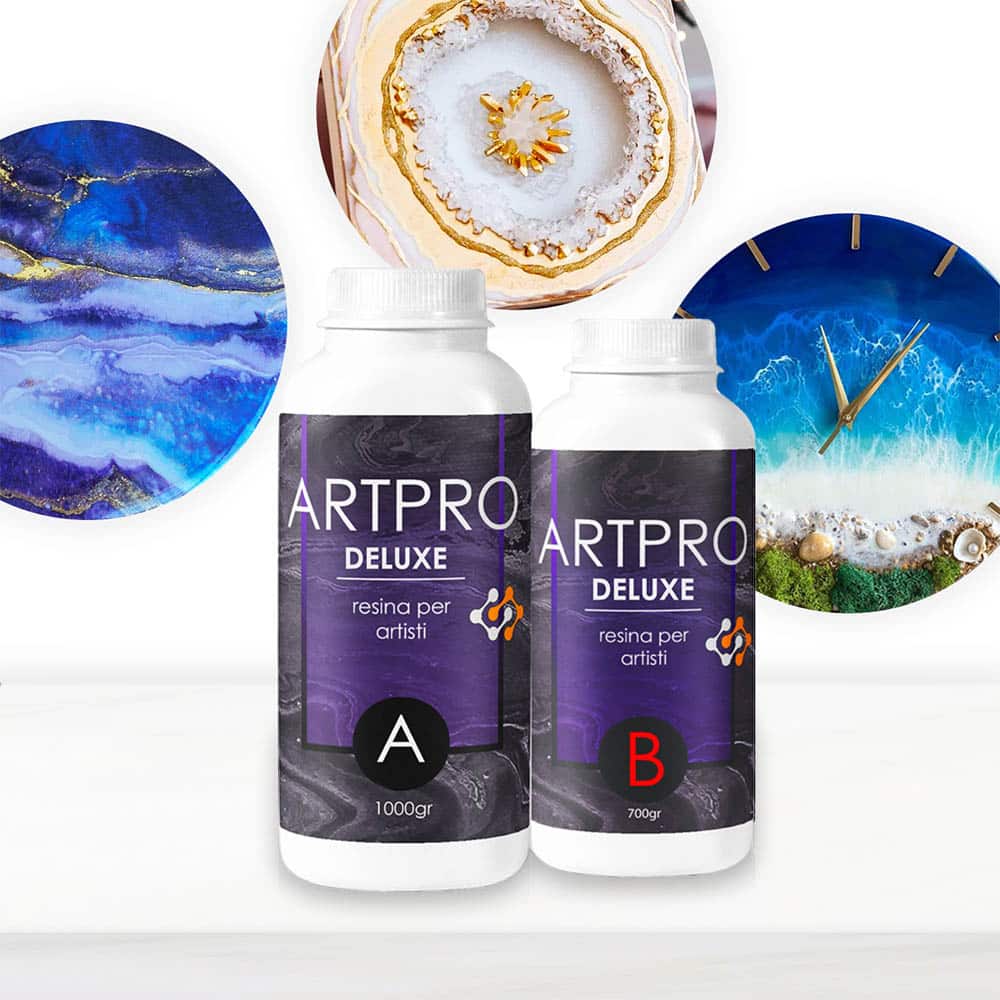
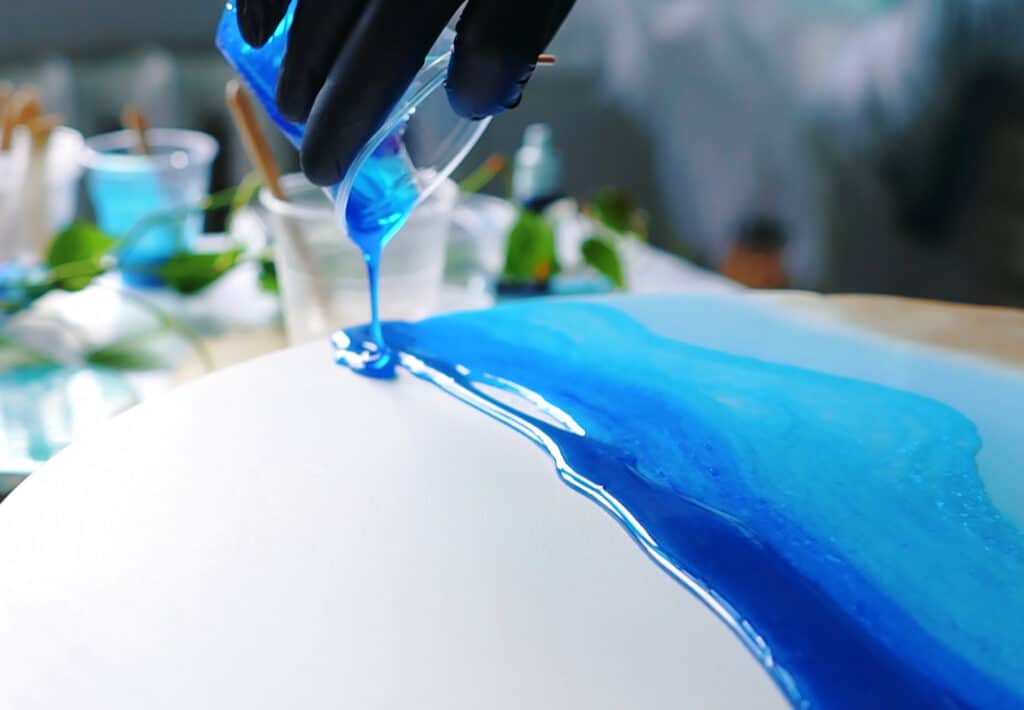
Art Pro Deluxe ultra-high viscosity epoxy resin is the ideal choice for artists seeking precise control in resin art, geode designs, and ocean wave effects. Its extremely high viscosity prevents unwanted colour mixing, allowing for perfect line definition. Perfect for coasters, trays, and glossy finish layers, it offers a crystal-clear, self-levelling surface with high scratch resistance.

  • 🌊 Ultra-high viscosity for precise line control and creative freedom
  • 💎 Glossy, self-levelling surface with high scratch resistance—ideal for finish layers
  • 🛡️ Powerful UV filters provide 10-year warranty against yellowing
  • ⏱️ Fast curing with first stage in 10–12 hours for quicker project completion
  • Safe and certified—non-toxic, solvent-free, vegan-friendly, and cruelty free

Bring your artistic vision to life with crystal-clear precision—order Art Pro Deluxe for gallery-quality results!

Description

Description

💥 About

Art Pro Deluxe is a specialist ultra-high viscosity epoxy resin crafted for artists who demand absolute control and clarity in their resin art projects. Thanks to its dense structure, it does not leak out from the working surface, slowly reaching the corners, allowing you to preserve your original design without distortion. Perfect for geode art, ocean pieces, coasters, trays, and fluid artworks, this professional-grade resin stays where you place it—ensuring sharp lines and vibrant design fidelity.

💡 Key Benefits

  • Extremely high viscosity – Ideal for detailed resin art, geode, and ocean techniques. 🌊
  • Crystal clear & UV-resistant – Maintains perfect clarity for years; includes 10-year anti-yellowing warranty. 💎
  • Self-levelling & scratch-resistant – Makes stunning finish layers for coasters or trays. 🛡️
  • Non-toxic & solvent-free – Safe for use in studios, vegan-friendly, cruelty free. 🌱
  • Fast curing – Ready for unmoulding after 10–12 hours; full cure in 24–48 hours. ⏱️
  • Suitable for vertical applications – Can be applied by brush or roller, perfect for furniture and 3D panel coatings.

☝🏽 Useful Information

  • Mix ratio: 100:70 by weight (Resin A : Hardener B)
  • Compatible with: epoxy-safe dyes/pigments (max 5%), silicone, wood, fabric, glass, paper
  • Layering: For castings over 1 cm, apply in multiple layers using a heat gun to prevent bubbles
  • Not for water-based dyes: Avoid using on moist surfaces or with acrylic paints
  • Short working time: Approximately 15–20 minutes; plan your design accordingly

🎯 Who It’s For

  • – Resin artists and crafters
  • – Hobbyists and DIY enthusiasts
  • – Professional makers of art, coasters, trays, and furniture finishes

Trusted by artists globally since 2015, Art Pro Deluxe epoxy resin is your go-to choice for precision crafting and lasting artistic brilliance.

Bring your artistic vision to life with gallery-quality precision—order Art Pro Deluxe now!


Useful articles

Resin Storage Solutions
100 articles ▸

See all articles →


Resin Painting Techniques
47 articles ▸

See all articles →


Resin Sticker Creation
17 articles ▸


Resin Floor Maintenance
90 articles ▸

See all articles →


Applying Epoxy Resin Methods
100 articles ▸

See all articles →


Resin Types and Uses
70 articles ▸

See all articles →


Curing and Hardening Issues
34 articles ▸

See all articles →


Uses of Epoxy Resin
39 articles ▸

See all articles →


Epoxy Resin Casting
11 articles ▸


Resin Extraction Techniques
100 articles ▸

See all articles →

Show 359 more topics ▸

Build Resin Table
75 articles ▸

See all articles →

Resin for Various Surfaces
100 articles ▸

See all articles →

Painting Techniques for Resin
34 articles ▸

See all articles →

Resin Substitutes Overview
47 articles ▸

See all articles →

Resin Thickening and Lightening
16 articles ▸

Creating with Resin
90 articles ▸

See all articles →

Creative Uses for Epoxy Resin
34 articles ▸

See all articles →

Resin Application Techniques
43 articles ▸

See all articles →

Epoxy Resin Hardening
55 articles ▸

See all articles →

Concrete Resin Methods
58 articles ▸

See all articles →

Resin Preparation Techniques
100 articles ▸

See all articles →

Resin Application Techniques
49 articles ▸

See all articles →

Techniques for Epoxy Effects
60 articles ▸

See all articles →

3D Resin Application Methods
12 articles ▸

Polishing Resin Creations
48 articles ▸

See all articles →

Making Resin Objects
27 articles ▸

See all articles →

Catalysis of Synthetic Resin
13 articles ▸

Working with Crystal Resins
20 articles ▸

Epoxy Resin Types
63 articles ▸

See all articles →

Resin Painting Techniques
10 articles ▸

Resin Work Essentials
8 articles ▸

Transparent Resin Methods
8 articles ▸

Repairing Epoxy Resin Surfaces
10 articles ▸

Painting with Resin
62 articles ▸

See all articles →

Creating Effects with Epoxy
51 articles ▸

See all articles →

Resin Usage in Crafts
100 articles ▸

See all articles →

Selecting the Right Epoxy
76 articles ▸

See all articles →

Hardening and Thickening Resin
53 articles ▸

See all articles →

Finishing and Printing in Resin
43 articles ▸

See all articles →

Choosing Decorative Resin Options
44 articles ▸

See all articles →

Curing and Drying Challenges
61 articles ▸

See all articles →

Pouring and Thinning Epoxy
23 articles ▸

See all articles →

Achieving Glossy Resin Finishes
52 articles ▸

See all articles →

Basic Resin Usage Guide
54 articles ▸

See all articles →

Resin for Concrete Surfaces
34 articles ▸

See all articles →

Preventing Resin Issues
87 articles ▸

See all articles →

Utilizing Transparent Epoxy
57 articles ▸

See all articles →

Pouring and Spreading Resin
33 articles ▸

See all articles →

Specialized Resin Applications
36 articles ▸

See all articles →

Resin Application Techniques
68 articles ▸

See all articles →

Mixing Two-Component Resins
38 articles ▸

See all articles →

Applying Epoxy Resin Methods
44 articles ▸

See all articles →

Innovative Resin Creations
76 articles ▸

See all articles →

Transparent Resin Applications
37 articles ▸

See all articles →

Creative Epoxy Applications
36 articles ▸

See all articles →

Making Resin Objects
38 articles ▸

See all articles →

Resin Art Panel Creation
8 articles ▸

Hand Polishing Techniques
27 articles ▸

See all articles →

Utilizing UV and Liquid Resins
27 articles ▸

See all articles →

Casting with Epoxy Resin
11 articles ▸

Resin Bathroom Projects
16 articles ▸

Homemade Resin Recipes
25 articles ▸

Protecting Resin Finishes
78 articles ▸

See all articles →

Homemade Resin Recipes
77 articles ▸

See all articles →

Applications of Resin Coatings
20 articles ▸

See all articles →

Even Coloring Techniques
41 articles ▸

See all articles →

Selecting the Right Epoxy
100 articles ▸

See all articles →

3D Resin Application
46 articles ▸

See all articles →

Creative Applications of Epoxy
45 articles ▸

See all articles →

Safeguarding Resin Surfaces
66 articles ▸

See all articles →

Curing Epoxy Techniques
26 articles ▸

See all articles →

Translucent Resin Effects
43 articles ▸

See all articles →

Best Resins for Modelling Projects
25 articles ▸

See all articles →

Mixing and Measuring Epoxy
43 articles ▸

See all articles →

Storing Epoxy Safely
44 articles ▸

See all articles →

Techniques for Polishing Resin
54 articles ▸

See all articles →

Glitter Embedding Methods
39 articles ▸

See all articles →

Resin Application Techniques
52 articles ▸

See all articles →

Achieving Glossy Resin Finishes
51 articles ▸

See all articles →

Resin for Crafts and Hobbies
37 articles ▸

See all articles →

Understanding Epoxy Composition
40 articles ▸

See all articles →

Creative Uses for Epoxy
53 articles ▸

See all articles →

Resin Art Techniques
61 articles ▸

See all articles →

Epoxy Resin Applications
30 articles ▸

See all articles →

Resin Product Recommendations
42 articles ▸

See all articles →

Applying Transparent Resin Techniques
41 articles ▸

See all articles →

Step-by-Step Resin Usage
73 articles ▸

See all articles →

Creative Resin Applications
30 articles ▸

See all articles →

Resin Use on Furniture
35 articles ▸

See all articles →

Transparent Resin Creations
24 articles ▸

See all articles →

Creating Resin Coatings
42 articles ▸

See all articles →

Painting Techniques with Resin
46 articles ▸

See all articles →

Lady Giorgia’s Resin Tips
7 articles ▸

Resin for Vertical Surfaces
46 articles ▸

See all articles →

Durability and Materials of Resin
37 articles ▸

See all articles →

Resin Countertop Designs
15 articles ▸

Hand Polishing Epoxy Techniques
16 articles ▸

Resin Types and Costs
26 articles ▸

See all articles →

Crafting with Epoxy Resin
100 articles ▸

See all articles →

Decorative Resin Applications
100 articles ▸

See all articles →

Creative Resin Transformations
100 articles ▸

See all articles →

Artistic Resin Creations
100 articles ▸

See all articles →

Curing and Hardening Issues
29 articles ▸

See all articles →

Homemade Resin Techniques
37 articles ▸

See all articles →

Epoxy Resin Furniture
71 articles ▸

See all articles →

Casting Techniques with Epoxy
14 articles ▸

Mixing Techniques for Epoxy
47 articles ▸

See all articles →

Resin for Outdoor Applications
29 articles ▸

See all articles →

Working with Liquid Resin
15 articles ▸

Finishing Resin Creations
6 articles ▸

Bodywork Resin Usage
30 articles ▸

See all articles →

Creative Applications of Epoxy
39 articles ▸

See all articles →

Creating Epoxy Resin Objects
34 articles ▸

See all articles →

Choosing the Right Epoxy
70 articles ▸

See all articles →

Epoxy Resin Effects
20 articles ▸

See all articles →

Creating Glossy Resin
47 articles ▸

See all articles →

Surface Preparation for Epoxy
30 articles ▸

See all articles →

Crafting Epoxy Resin Moulds
23 articles ▸

Embedding and Applying Techniques
45 articles ▸

See all articles →

Painting and Finishing Epoxy
28 articles ▸

See all articles →

Epoxy Storage Techniques
30 articles ▸

See all articles →

Hand Polishing Epoxy Resin
18 articles ▸

Epoxy Resin Characteristics
36 articles ▸

See all articles →

Safe Colouring Methods
58 articles ▸

See all articles →

Wood Epoxy Applications
29 articles ▸

See all articles →

Understanding Epoxy Properties
38 articles ▸

See all articles →

Pouring Epoxy Resin Tips
27 articles ▸

See all articles →

Resin Thickness Adjustment
37 articles ▸

See all articles →

Plastic Material Applications
12 articles ▸

Choosing Colors for Epoxy
36 articles ▸

See all articles →

Creating Epoxy Moulds
17 articles ▸

Epoxy Resin Formwork
25 articles ▸

Creative Epoxy Uses
44 articles ▸

See all articles →

Epoxy Processing Techniques
46 articles ▸

See all articles →

Cost Analysis of Epoxy
13 articles ▸

Creative Resin Ideas
42 articles ▸

See all articles →

Outdoor Resin Applications
37 articles ▸

See all articles →

Essential Tools for Epoxy
30 articles ▸

See all articles →

DIY Epoxy Projects
36 articles ▸

DIY Resin Techniques
48 articles ▸

See all articles →

Types of Hard Resins
51 articles ▸

See all articles →

DIY Transparent Resin Kits
41 articles ▸

See all articles →

Two-Part Epoxy Solutions
29 articles ▸

Casting Techniques with Epoxy
16 articles ▸

Curing and Treatment Methods
35 articles ▸

See all articles →

Transparent Flooring Solutions
42 articles ▸

See all articles →

Epoxy Resin Enhancements
13 articles ▸

Finishing Techniques with Epoxy
52 articles ▸

See all articles →

Choosing the Right Epoxy
30 articles ▸

See all articles →

Using Various Resins
43 articles ▸

See all articles →

Industrial Epoxy Solutions
18 articles ▸

Composite Material Use
12 articles ▸

Repair Applications of Epoxy
24 articles ▸

Creating Translucent Effects
43 articles ▸

See all articles →

Using Resin Techniques
32 articles ▸

See all articles →

Resin Application on Stairs
31 articles ▸

See all articles →

Making Resin Castings
78 articles ▸

See all articles →

Crafting Resin Objects
21 articles ▸

Top Finishes for Resin Projects
45 articles ▸

See all articles →

Glossy Resin Finishing Techniques
35 articles ▸

See all articles →

Alternatives to Resin Products
27 articles ▸

See all articles →

Choosing Quality Permeable Resin
13 articles ▸

Resin for Outdoor Applications
8 articles ▸

Top Finishes for Resin Projects
44 articles ▸

See all articles →

Resin Art Basics
44 articles ▸

See all articles →

DIY Resin Characteristics and Brands
20 articles ▸

See all articles →

Creating 3D Effects with Resin
38 articles ▸

See all articles →

Preparing Resin for Projects
76 articles ▸

See all articles →

Embedding Text in Resin
17 articles ▸

Creative Uses for Resin
10 articles ▸

DIY Wood Epoxy Projects
45 articles ▸

See all articles →

Painting with Epoxy Resin
7 articles ▸

Online Epoxy Resin Suppliers
37 articles ▸

See all articles →

Moulding with Epoxy
31 articles ▸

See all articles →

Resin for Stairs
45 articles ▸

See all articles →

Resin on Concrete
33 articles ▸

See all articles →

Types of Epoxy Flooring
34 articles ▸

See all articles →

Best Floor Resins
16 articles ▸

Epoxy Resin Polishing Techniques
20 articles ▸

Methods for Polishing Resin Creations
39 articles ▸

See all articles →

Moulding and Laminating
39 articles ▸

See all articles →

Industrial Manufacturing Uses
25 articles ▸

Finishing Touches for Decor
30 articles ▸

See all articles →

Architectural and Outdoor Applications
30 articles ▸

See all articles →

Surface Decoration and Protection
16 articles ▸

Restoration and Repair Techniques
19 articles ▸

Automotive and Metal Applications
20 articles ▸

Casting Thickness Techniques
2 articles ▸

Finishing and Coating Options
20 articles ▸

Surface Compatibility Tests
15 articles ▸

Processing Techniques Overview
27 articles ▸

Cost and Dosage Calculations
19 articles ▸

Moulding and Casting Methods
10 articles ▸

Product Variants and Types
41 articles ▸

See all articles →

Glossy Epoxy Techniques
23 articles ▸

See all articles →

Enhancing Resin Glossiness
35 articles ▸

See all articles →

Creating Epoxy Resin Moulds
16 articles ▸

Special Effects with Epoxy
27 articles ▸

See all articles →

Epoxy Resin Art Techniques
23 articles ▸

See all articles →

Creating Textures and Effects
38 articles ▸

See all articles →

Applying Resin Techniques
27 articles ▸

See all articles →

Outdoor Epoxy Applications
23 articles ▸

Homemade Epoxy Recipes
7 articles ▸

Choosing the Right Epoxy
19 articles ▸

See all articles →

Epoxy Resin Weights
10 articles ▸

Transparent Epoxy Options
22 articles ▸

Epoxy Release Agents
11 articles ▸

Painting Techniques for Epoxy
24 articles ▸

See all articles →

Buying Epoxy Resin
78 articles ▸

See all articles →

Building with Epoxy Resin
38 articles ▸

See all articles →

DIY Epoxy Techniques
34 articles ▸

See all articles →

Techniques for Coloring Resin
40 articles ▸

See all articles →

Creating Translucent Effects
44 articles ▸

See all articles →

Choosing Transparent Resin
15 articles ▸

See all articles →

Best Resin Storage Practices
47 articles ▸

See all articles →

Resin Art Techniques
17 articles ▸

Creating Decorative Resin Pieces
44 articles ▸

See all articles →

Crafting Resin Castings
36 articles ▸

See all articles →

Homemade Resin Production
35 articles ▸

See all articles →

Bees and Resin Collection
39 articles ▸

See all articles →

Crafting with Epoxy
35 articles ▸

See all articles →

DIY Gift Ideas
42 articles ▸

See all articles →

Customisation Techniques
15 articles ▸

Decorative Object Projects
20 articles ▸

Artistic Resin Techniques
33 articles ▸

See all articles →

Outdoor Resin Protection
38 articles ▸

See all articles →

Scratch and Impact Defense
41 articles ▸

See all articles →

Finishing Techniques for Resin
30 articles ▸

See all articles →

Making Resin Scratch Resistant
42 articles ▸

See all articles →

Surface Preparation Tips
16 articles ▸

See all articles →

Epoxy Project Planning
29 articles ▸

See all articles →

Painting on Epoxy Resin
14 articles ▸

Transparent Epoxy Applications
29 articles ▸

See all articles →

Making Epoxy Resin
43 articles ▸

See all articles →

Curing Techniques Overview
41 articles ▸

See all articles →

Spreading and Thinning Resin
17 articles ▸

Preparing Sticky Resins
27 articles ▸

Engraving and Printing Resin
18 articles ▸

Hardening and Thickening Resin
18 articles ▸

Preventing Resin Issues
42 articles ▸

See all articles →

Step-by-Step Resin Use
75 articles ▸

See all articles →

Glossy Resin Techniques
33 articles ▸

See all articles →

Epoxy Finish Methods
20 articles ▸

See all articles →

Painting Resin Boats
12 articles ▸

Applying Resin on Concrete
13 articles ▸

Creating Resin Furniture Coatings
37 articles ▸

See all articles →

Painting Techniques with Resin
38 articles ▸

See all articles →

DIY Tool Epoxy Projects
12 articles ▸

Waterproofing with Epoxy
16 articles ▸

Homemade Epoxy Techniques
29 articles ▸

Boat Repair Epoxy Tips
75 articles ▸

See all articles →

Interior Wall Epoxy Ideas
12 articles ▸

Bathtub Epoxy Restoration
9 articles ▸

Buying Quality Epoxy Resin
15 articles ▸

DIY Epoxy Table Projects
37 articles ▸

See all articles →

Epoxy Table Finishing Techniques
38 articles ▸

See all articles →

Weatherproofing Resin Creations
28 articles ▸

See all articles →

Scratch and Impact Protection
33 articles ▸

See all articles →

Finishing Techniques for Resin
31 articles ▸

See all articles →

Preserving Photos in Resin
20 articles ▸

See all articles →

Surface Protection During Resin Work
21 articles ▸

See all articles →

Epoxy Paint Techniques
32 articles ▸

See all articles →

Applying Epoxy Resin Methods
28 articles ▸

See all articles →

Applying Resin Techniques
42 articles ▸

See all articles →

Clear Epoxy Casting Resin
23 articles ▸

Hobby Resin Applications
25 articles ▸

See all articles →

Best Practices for Resin
21 articles ▸

See all articles →

Choosing Wood-Compatible Colours
40 articles ▸

See all articles →

Choosing Floor Resin Types
45 articles ▸

See all articles →

Decorative Resin Techniques
25 articles ▸

See all articles →

Special Effects in Resin
24 articles ▸

See all articles →

Resin Application Techniques
42 articles ▸

See all articles →

Resin for Recreational Areas
8 articles ▸

Matte Finish with Epoxy
26 articles ▸

See all articles →

Resin Casting Techniques
44 articles ▸

See all articles →

Crafting with Resin Objects
45 articles ▸

See all articles →

Resin Painting Techniques
12 articles ▸

Creating Resin Art Panels
43 articles ▸

See all articles →

Polishing Epoxy Resin
38 articles ▸

See all articles →

Where to Buy Epoxy
41 articles ▸

See all articles →

Epoxy Resin for Moulds
34 articles ▸

See all articles →

Epoxy Resin Basics
31 articles ▸

See all articles →

Creative Applications of Epoxy
32 articles ▸

See all articles →

Unique Custom Decorative Items
30 articles ▸

See all articles →

Transparent Resin Benefits
13 articles ▸

DIY Epoxy Floor Techniques
45 articles ▸

See all articles →

Applications of Resin
33 articles ▸

See all articles →

Best Resins for Modeling
33 articles ▸

See all articles →

Finishing Techniques for Resin
7 articles ▸

Durability of Resin Products
9 articles ▸

Encapsulation Options Without Resin
15 articles ▸

Alternatives to Resin
40 articles ▸

See all articles →

Wood Finishing Techniques
17 articles ▸

Glossy and Matte Finishes
6 articles ▸

Creative Resin Art Ideas
31 articles ▸

See all articles →

Special Effects with Epoxy
21 articles ▸

See all articles →

DIY Projects with Epoxy Resin
39 articles ▸

See all articles →

Resin Gift Ideas
42 articles ▸

See all articles →

Crafting with Epoxy
41 articles ▸

See all articles →

Avoiding Common Mistakes
7 articles ▸

Essential Epoxy Tools
44 articles ▸

See all articles →

Polishing Various Resin Types
44 articles ▸

See all articles →

Pouring Techniques for Resin
15 articles ▸

Harden and Maintain Resin
31 articles ▸

See all articles →

Storing Epoxy Resin Safely
31 articles ▸

See all articles →

Choosing the Right Epoxy
17 articles ▸

Comparative Resin Pricing
6 articles ▸

Resin vs. Traditional Paving
17 articles ▸

Long-Term Cost Benefits
53 articles ▸

See all articles →

Resin Material Cost Breakdown
26 articles ▸

DIY Resin Cost Analysis
6 articles ▸

Resin Repair Costs
15 articles ▸

Resin Lifespan and Value
15 articles ▸

Cost of Resin Accessories
12 articles ▸

Environmental Impact Costs
9 articles ▸

Cost-Effective Resin Solutions
20 articles ▸

Regional Price Variations
13 articles ▸

Resin vs. Concrete Pricing
58 articles ▸

See all articles →

Types of epoxy resins
44 articles ▸

See all articles →

DIY epoxy repair projects
8 articles ▸

Tools for epoxy application
8 articles ▸

Two-component epoxy options
13 articles ▸

Buying epoxy resin online
4 articles ▸

Marble epoxy applications
45 articles ▸

See all articles →

UV resistant epoxy options
13 articles ▸

Transparent epoxy resin uses
11 articles ▸

Translucent Epoxy Methods
37 articles ▸

See all articles →

Stone and 3D Effects
29 articles ▸

See all articles →

Epoxy resin for silicone moulds
40 articles ▸

See all articles →

DIY Epoxy Applications
42 articles ▸

See all articles →

DIY Wood Epoxy Projects
31 articles ▸

See all articles →

Wood Repair with Epoxy
30 articles ▸

See all articles →

Transparent epoxy resin jewellery
45 articles ▸

See all articles →

Resin Craft Tutorials
40 articles ▸

See all articles →

Selecting the right epoxy
25 articles ▸

See all articles →

River table designs
26 articles ▸

Epoxy Pricing Guide
24 articles ▸

Pouring Techniques for Epoxy
31 articles ▸

See all articles →

Epoxy Resin Colouring Techniques
30 articles ▸

See all articles →

Epoxy Art Techniques
26 articles ▸

See all articles →

Epoxy Resin Tools
41 articles ▸

See all articles →

Avoiding epoxy applications
28 articles ▸

See all articles →

Understanding epoxy resin
21 articles ▸

Creative epoxy uses
37 articles ▸

See all articles →

Creative epoxy resin projects
40 articles ▸

See all articles →

Gift ideas with epoxy resin
17 articles ▸

See all articles →

DIY epoxy resin creations
37 articles ▸

See all articles →

Handmade epoxy resin items
39 articles ▸

See all articles →

Custom epoxy resin designs
16 articles ▸

Unique epoxy resin gifts
26 articles ▸

See all articles →

Regional Epoxy Resin Suppliers
32 articles ▸

Resin types for modeling
30 articles ▸

See all articles →

Best adhesives for resin
13 articles ▸

Resin for slip resistance
20 articles ▸

See all articles →

Choosing the right resin
39 articles ▸

See all articles →

Finishing techniques for clear resin
12 articles ▸

Manufacturing epoxy applications
30 articles ▸

See all articles →

Restoration epoxy techniques
28 articles ▸

Self-build project epoxy
16 articles ▸

Decorative epoxy painting
13 articles ▸

Comparing resin types
15 articles ▸

Epoxy processing methods
38 articles ▸

Bonding materials with epoxy
12 articles ▸

Finishing touches with epoxy
26 articles ▸

See all articles →

Metal and epoxy compatibility
15 articles ▸

Concrete epoxy innovations
15 articles ▸

Practical Uses for Resin
43 articles ▸

See all articles →

Epoxy Resin Retailers
41 articles ▸

See all articles →

Resin preparation steps
56 articles ▸

See all articles →

Technical data

Technical data

TECHNICAL DATA

“ART PRO DELUXE” – Ultra-High Viscosity Epoxy Resin For Artists:

  • Mix ratio: 100:70 by weight
  • Working time: (150 gr at 30 C) [0,33 lb at 86 F]: 30 minutes
  • Viscosity: Resin – 14000 mPas; Hardener – 1000
  • Full catalysis: 24h
  • Film catalysis (1.5 mm at 30 C) [0,05” at 86 F]: 3 hours
  • Maximum pouring level: 1.5cm*
  • Minimum pouring level: 1.5mm
  • Coverage 1kg: 100*60*0.15cm
  • 1sqm consumption (1.5mm thickness): 5kg

* – may vary from the pouring`s conditions (please, read below).

if you have not enough experience, we insistly suggest to make a small test before working with large project.

Download SDS (Part A)
Download SDS (Part B)

Instruction

Instruction

💥 HOW TO USE. MIX RATIO BASED ON WEIGHT – 100:70

💪🏽 LET`S START! 💪🏽
We would like to pay your attention – We don`t recommend working at temperatures below of 20 ° C and over 28 ° C, avoiding humid environments (or surfaces) application (if you are not sure on the humidity, let the resin warm up the components before pouring).
If epoxy resin was storage at temperatures below of 20 ° C and became murky, please, warm your epoxy up before using to full transparency. More detailed, please, read below.

Due to its exceptionally high viscosity, our Deluxe epoxy resin is ideally suited for delicate casting projects, including ocean art, pour-art, and other creations that demand a resin with superior viscosity. When undertaking basic castings of 1-1.5cm, special care is needed to address bubble formation. We recommend a multi-layer approach for such castings, employing a heat gun after each application. For these projects, we suggest considering our lower viscosity resins – “Transparente” and “Art-Pro” – as the optimal solutions.
👉🏽 LET`S MIX! 👈🏽
THE PROPORTIONS ARE PRINTED ON THE BOTTLES/TANKS, PLEASE CHECK IT BEFORE USING.
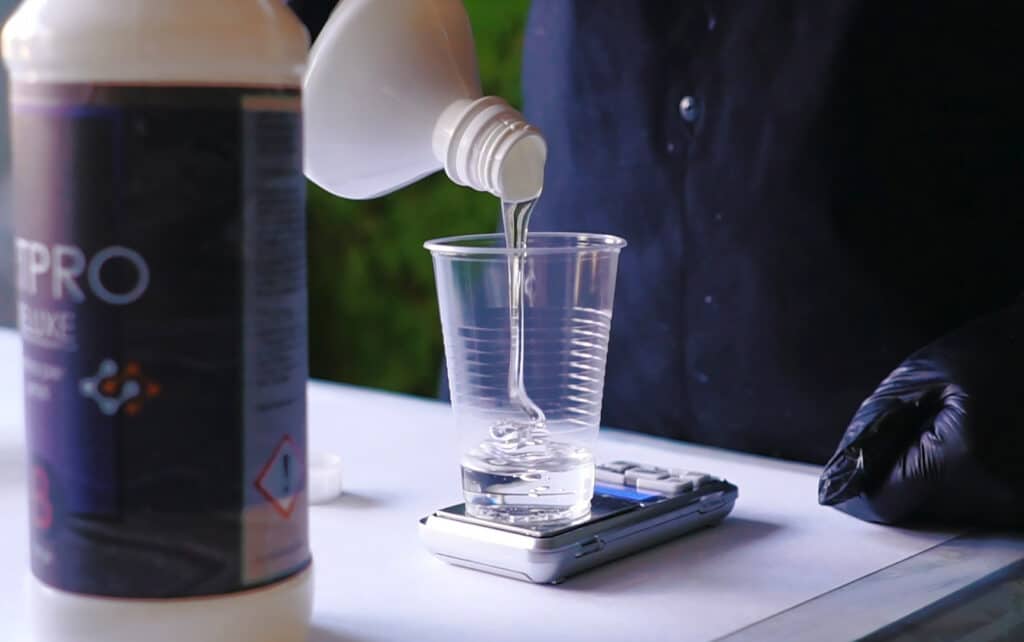
Being a two-component resin, you have 2 bottles at your disposal, one containing resin “A” and the other containing hardener “B”. You will need some electronic scales to weigh grams and a mixing container where you can combine the liquids.
How to calculate, how much hardener do you need? Take your proportions –JUST AN EXAMPLE – 100:70. Then take the weight of component A and multiply on B, (if 100:70 – A*0.70; if 100:66 – A*0.66; if 100:87 – A*0.87).
So! If you have component A 5kg, and proportions 100:70, your calculation –
5*0.7=3.5kg of component B.
Please, use some electronic scales and weigh in grams to get the best results.
After an accurate dosage, the resin must be mixed irregularly (meaning, always in the same direction) for at least 5-8 minutes. This part is very important, because if it is mixed only for a few seconds, it will not be homogeneous at the molecular level, therefore will remain soft / opaque in some parts.

Mix evenly on the edges and bottom of the container. (Do not mix very quickly or forcefully because that would cause a lot of bubbles). We do not recommend using a mixer (of course, you can, but, please, not at high speeds!), as this leads to the formation of microbubbles, which will be difficult to remove. The carefully you mix – the less bubbles.
Remember, the quality of the future casting depends on a good mixing of the two components!

Important! Try to make the mix carefully, so that the smallest fractions of air are not formed in the resin, because visible bubbles will easily disappear from the surface naturally, and micro fractions of air are often practically invisible, but during the curing and heating of the epoxy mixture, the air in them expands and after complete curing, bubbles can be visible in the casting. This can and should be avoided if you do the kneading correctly.

How to remove the bubbles?

Although degassing (vacuum) is necessary to eliminate 100% of the bubbles, there are some tricks that can help you minimize the presence of bubbles during the creations.
1) Mix the resin longer but in a more delicate and uniform way.
2) Before mixing, heat component A (in the sun or using a radiator), so that it becomes more liquid and the bubbles rise more easily.
3) Leave it to rest for a few minutes to release the air bubbles.
4) Once launched, use a heat source (thermal pistol or fire) to burst the bubbles on the surface.
👋🏼 LET`S COLOUR! 👋🏼
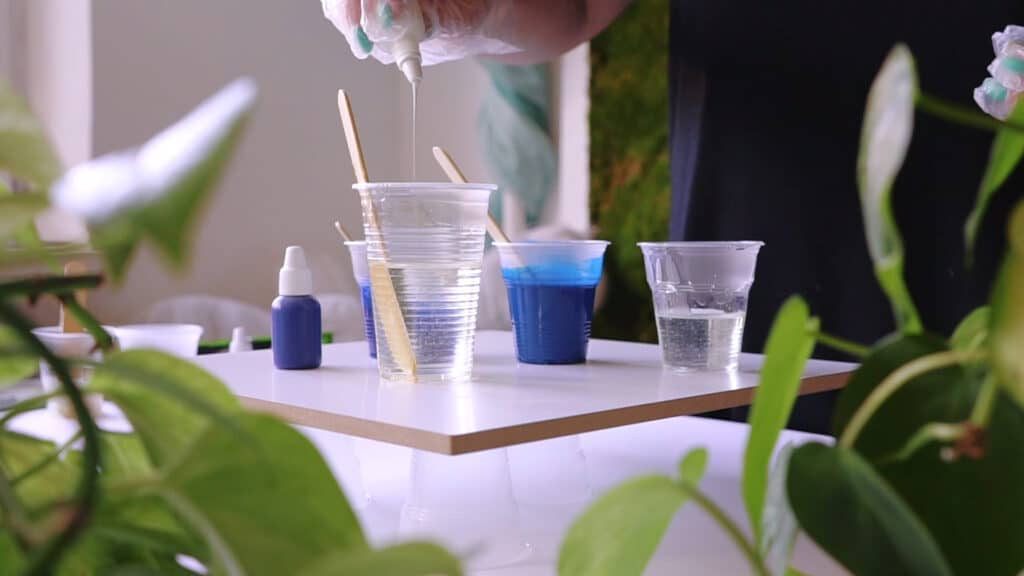
Practically everything, including powder and metallic pigments. As long as the dyes are “dry” (for example, dust or sands) there are no problems (as long as they are perfectly dry), when, instead, you want to add pastel or liquid colours, make sure they are compatible with epoxy resins. If they are not compatible (for example enamels, tempera, acrylics) only a few drops can be added, since an excessive dosage could compromise the mechanics of the resin and its brightness (for example making it soft or sticky). There is also a “gold rule” – when using colourants, do not exceed 5% of the combined weight of Component A (resin) and Component B (hardener), calculated before adding the colourant.Mix with Component A” refers only to the order of mixing. The colourant percentage must still be calculated from the combined weight of Components A and B.

Remember, it`s important to avoid contact of epoxy resin with water! From the ingress of water into the resin, it may become cloudy or not solidify! And if the hardener has been stored for a long time with a loosely twisted lid, then it can absorb moisture and it condenses in the form of microbubbles in the thickness of the casting during the curing process.

👍🏽 WHAT`S NEXT? 👍🏽
After pouring epoxy into your formwork be ensured in the “sterility” of the room so that dust and dirt will not get into the epoxy.
Important! We don`t recommend covering the filling with plywood or something dense, because this will disrupt the heat sink during the solidification of the resin!)

Remove micro-bubbles stuck in the surface layer using a hair dryer or a heat gun. We also recommend that you do not overheat the epoxy filling with a burner or a hair dryer, because this can cause overheating and boiling of the resin.

The full curing time of ART PRO DELUXE EPOXY resin is from 18 to 26 hours (depending on the temperature and humidity in the workshop. The lower the temperature and the higher the humidity, the longer the curing time of the resin.
FROZEN EPOXY
Epoxy can become frozen under 20C.
PLEASE! DON`T USE FROZEN EPOXY. This may affect the result.

There is no excuse that you hold your epoxy inside a warm room, the epoxy could be frozen much before, and only proper defrosting will return the lost transparency and liquidity.

How to understand why your epoxy was frozen? The component A is murky or solid, like frozen water. Don`t worry, there is no need to dispose of your epoxy and run to leave a bad review. It`s okay. You need to do only one thing – to defrost it, warming component A to 50-70 ° C. We usually put the closed tank inside the sink with very hot water and leave it for 20-30 minutes. The problem is next – the more epoxy inside the tank, the more difficult to warm it properly, so just repeat the procedure. If it doesn`t help, just try again, because we sold thousands of tons of the epoxy resin and every time the problem was sorted out by waiting a little bit longer in hot water (of course with the closed lid). Yes, we totally understand that it causes excessive movements, but it`s natural and it could happen with any other epoxy.

Of course, after defrosting you need to cool the component A to room temperature before using.

🔥 HOW TO AVOID OVERHEATING? 🔥
Maximum pouring level: 1.5cm. It may vary from the full weight of poured epoxy, sizes of project and temperature when you pour. Not following instructions may cause overheating.
If you need to make a larger layer, just pour in several steps, waiting 8-10h the first time; 10-12h in the second time and 12+h the third time).

When creating a coating with epoxy resin, do not fill the mixture with a thickness of less than 1.5-2 mm, otherwise, after curing, there is a chance of shrinkage with the formation of “craters” – small depressions on all surfaces of the fill.

If one side of casting is more than 100cm long, please, create your project in layers (each layer being 1-2cm thinner than recommended) with a time interval like above –  (waiting 8-10h the first time; 10-12h the second time and 12+h in the third time).

If you do a Round casting, and the required weight A+B exceeds 3kg, create your project in the same way as above (less thickness per application + longer waiting between layers).

Be especially careful when working with resins for large castings, when mixing a large amount of resin, do not leave the mixture for a long time in one container – pour it immediately into other smaller containers to avoid the “mass” effect: the resin begins to heat up quickly and hardens instantly with defects without the chances to change it in any way.

IF YOU MEET MORE THAN ONE EXCEPTION IN YOUR PROJECT, REDUCE THE SIZE OF YOUR APPLICATION AGAIN.

🌊 HOW DO I ELIMINATE SURFACE OPACITIES OR SMALL WAVES FORMED AS THEY SOLIDIFY? 🌊
These surface opacities are the result of the interaction with environmental humidity, which creates a patina on the surface of the cast. At first it is not obvious, but as soon as it starts to solidify, in some places you can notice opaque halos and even “wrinkles”.

There are different strategies to avoid this:
1. Work in low humidity (dehumidified) conditions or in a heated environment.
2. Heat the 2 components before mixing (for example, holding them over a radiator).
3. Mix the resin with the hardener and apply it only when it starts to heat up (so that the reaction begins while it is still in the container). This operation is essential but requires minimal attention. It should be checked every 5-6 minutes and as soon as it reaches 40 ° C (when it’s warmer than our hand) it can be applied. Otherwise, it could start solidifying in the container!
4. It is advisable not to apply during the night or when it is raining (since the humidity increases).
5. Do not apply on surfaces that still contain humidity, like on fresh cement or on non-dried wood.

– If due to humidity, the resin is not glossy, no problem: just pour a new layer over (following the instructions above) and it will become perfectly transparent and regular.

Additional tips:
1) For easier removing from the formwork, we recommend to cover the formwork by our special film “shiny shield“, before pouring.
2) We do not recommend using a mixer (especially at high speeds), as this leads to the formation of microbubbles, which will be difficult to remove. The carefully you mix – the less bubbles.

DEAR ARTISTS! This type of epoxy has higher viscosity than you may expect! Please, read this note –
1. If you have not a lot of experience or you prefer to work with more liquid resin, please, check this Resin 👉🏽 ART PRO
2. If you prefer to do art-works in more viscosity resin, please, choose ART PRO DELUXE.
But if it`s your first experience, we suggest to design your project before pouring, because, in this case you have short working-time (15-20 min).
For fighting with bubbles, please, use our Gas Heat Gun

WARNINGS:
During processing, use protective masks, gloves, and other protective clothing.
In case of contact with eyes, immediately rinse with cold water for 15 minutes and immediately consult a doctor.

FAQs

FAQs

 FAQs
“ART PRO DELUXE” – ULTRA-HIGH VISCOSITY epoxy resin for artists:

Q. What`s the proportions and how to calculate that?
A. The proportions of Transparent Epoxy resin is 100:70 – A:B by weight. You can always check that taking a look at the labels of the bottles – they are always printed there:)
For calculations we suggest using our app – GooglePlay & AppStore.
How to calculate, how much hardener do you need? Take your proportions –JUST AN EXAMPLE – 100:70. Then take the weight of component A and multiply on B, (if 100:60 – A*0.60; if 100:70 – A*0.70; if 100:87 – A*0.87).
So! If you have component A 5kg, and proportions 100:60, your calculation –
5*0.7=3.5kg of component B.

Q. What`s the deepest level I can do?
A. We`d not suggest to cast over 1.5cm per one time, If you need to make a deeper level – just wait 6-10h between castings.

Q. Why epoxy is murky or solid?
A. Epoxy just become frozen during storage/delivery, etc. Please, don`t use that before you de-frost it fully, it may affect the result. Just put the component A into very hot water for 10-15 minutes. Repeat if needed.

Q. What`s the coverage of 1kg?
A. 1kg of mix epoxy+hardener covers area 50*45*0.4сm.
You can use our resin calculator here – 🔮LINK🔮
Or our app – GooglePlay & AppStore.

Q. What`s the volume 1kg resin+hardener?
A. 1kg epoxy resin ~ 0.9l
Just take the weight and divide at 1.1, you`ll get the volume in litres.

Q. Can I use epoxy at home?
A. Yeap, we recommend working in well ventilated area and use protective cloves and masks.

Q. What to use for colouring?
A. Of course we recommend using our tested pigments and colourants.
With other brands we suggest to make a small test before making large project.
The rules not so many – it has to be NOT water based and without high level of solvents. Please, be sure that the amount of colourants doesn`t exceed 5% from full mix.

Q. Do you have resin with lower viscosity?
A. Sure!
We have the next grade of resins by viscosity:
Super low viscosity (low type of resin) – “Epoxytable-5”;
Low viscosity – “Transparente”;
Medium viscosity – “Art Pro”;
High viscosity –  “Art Pro Deluxe” ;

Q. What would you recommend for polishing my art-work?
A. We have a special kit for such tasks, take a look here –

“Epoxy Polish” – Epoxy Resin Polishing System

Videos
Reviews

Reviews

COD:
artprodeluxe
Home
Account
0
£0.00
Favorites
Assistance