 Free shipping on orders over £29,85
  Shipping Tracking!


 Google
 Facebook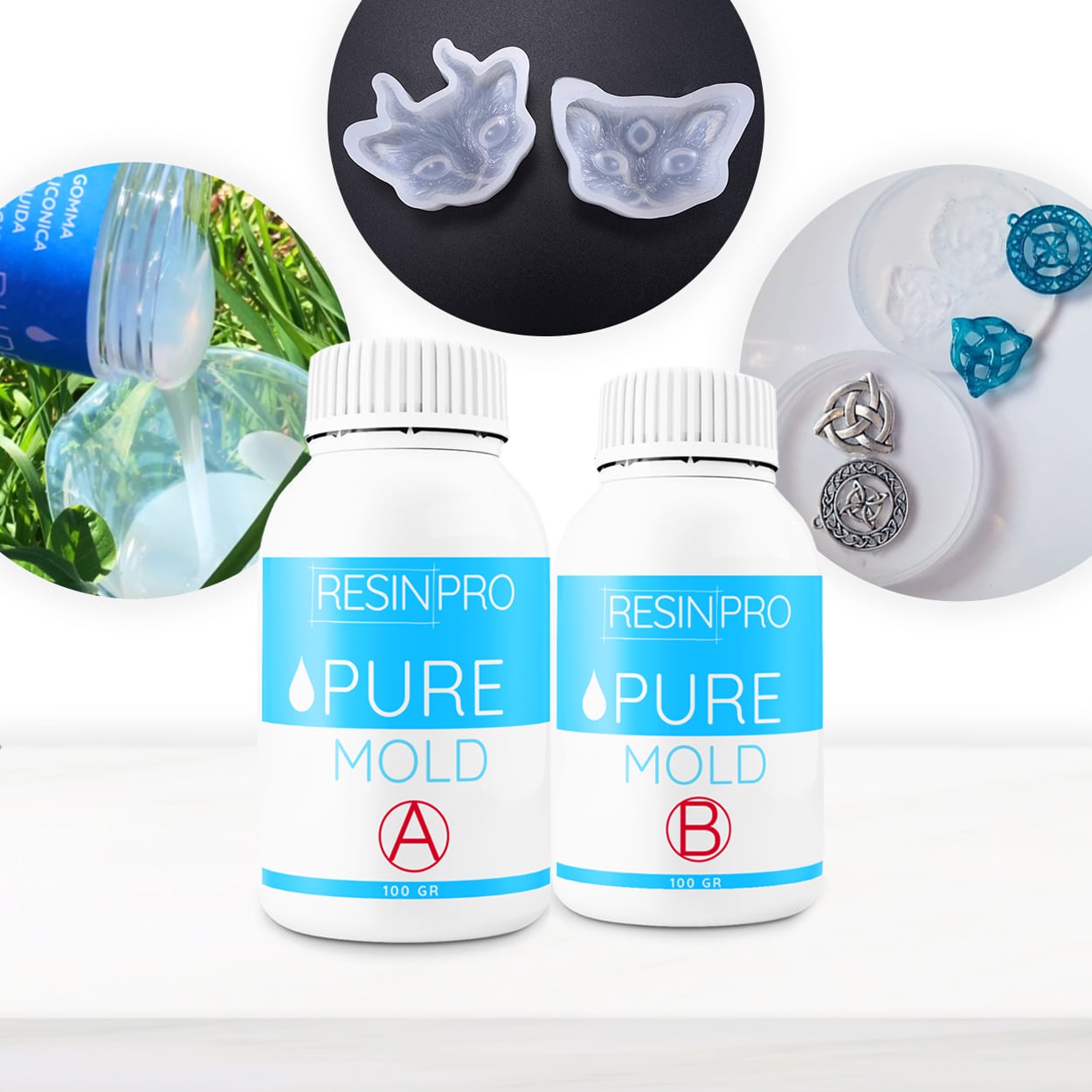
On sale
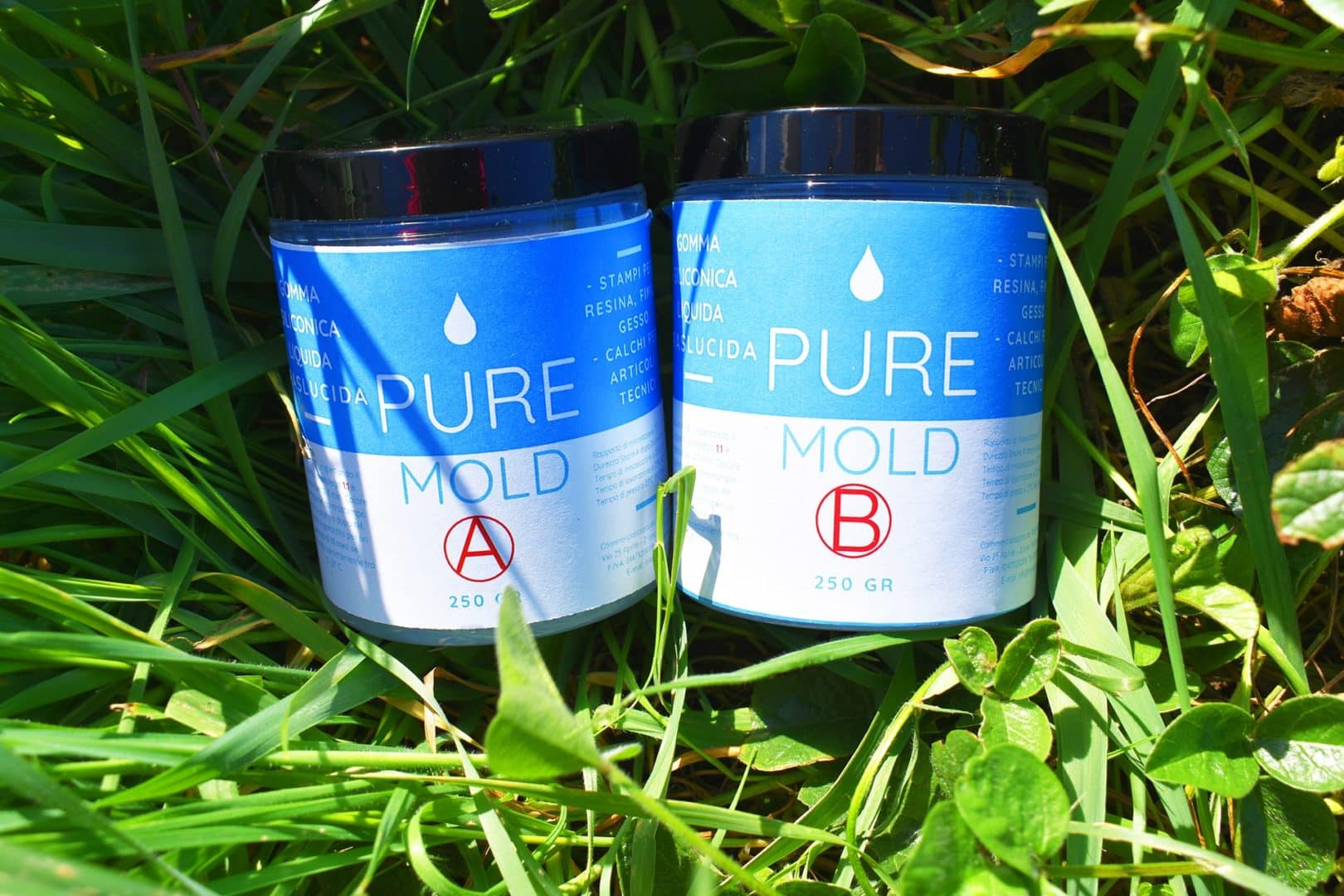
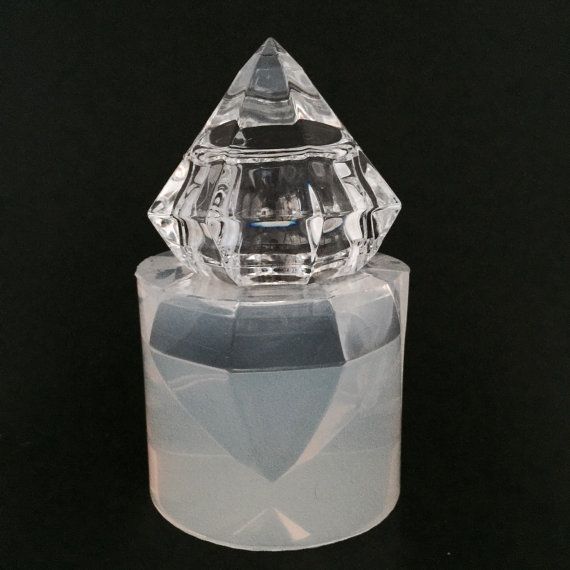
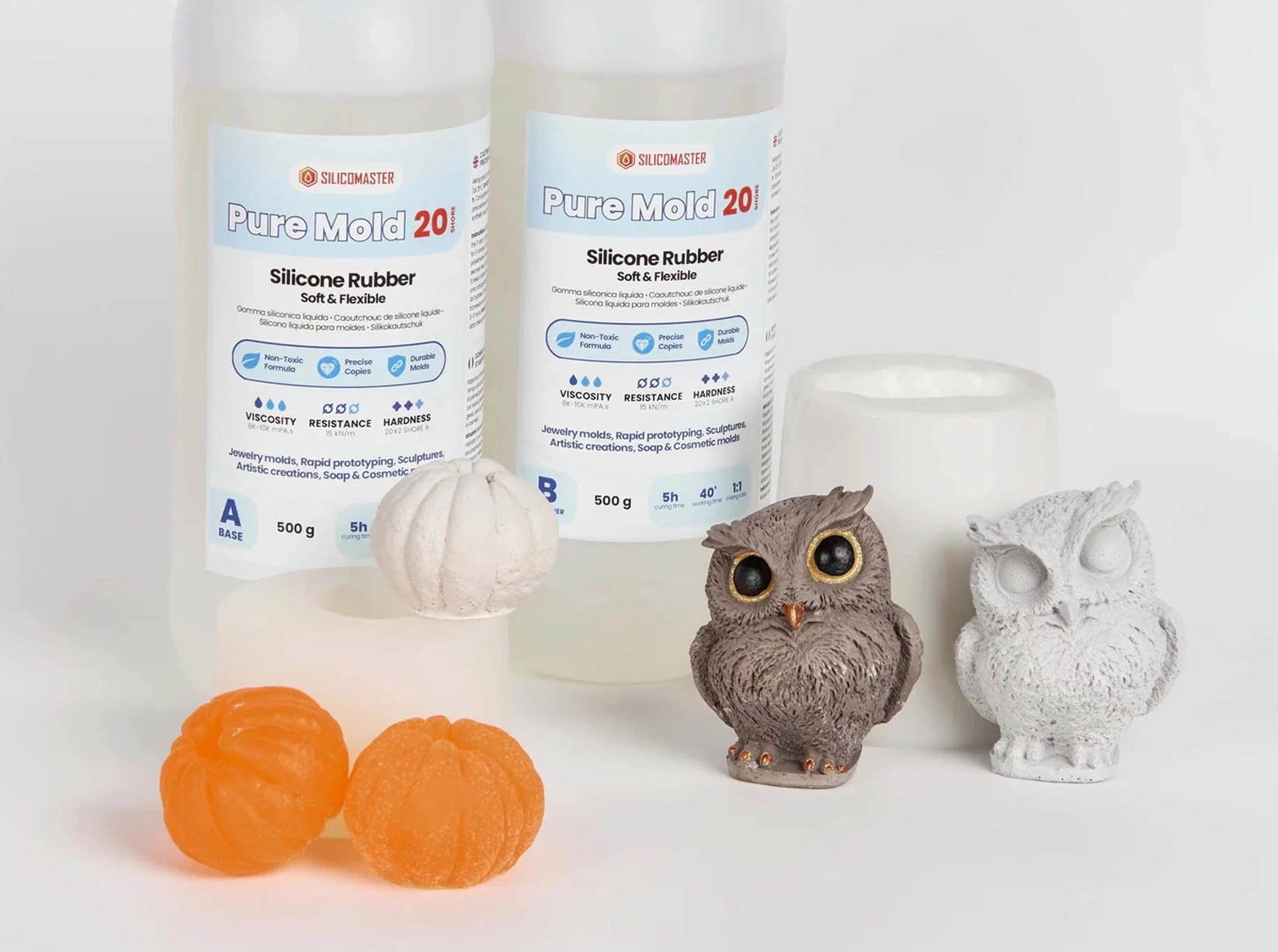
“Pure Mould” – Translucent Liquid Silicone Rubber for Mould Making
 Available, ready for shipping
 Order now to receive your product between Tuesday 23 June and Wednesday 24 June.
 Shipping from £1.97 - Free for orders over £29.85
 Price range: £23.95 through £166.95
Sat, 20. Jun
Ordered
Sat, 20. Jun - Mon, 22. Jun
Order Shipped
Mon, 22. Jun - Tue, 23. Jun
Estimated delivery
PLATINUM BASED TRANSLUCENT AND FAST CASTING LIQUID SILICONE RUBBER FOR MOULDS
Excellent for hot waxes used in candle making.
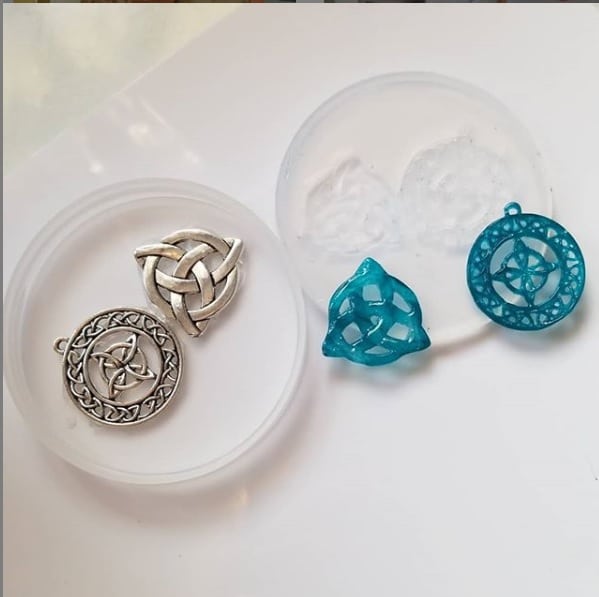
🧪【INNOVATIVE FORMULA】Create your moulds using PURE MOLD silicone rubber! Compatible with many materials including resins, plaster and cement. Its transparency will allow you to observe through the mould and its high mechanical characteristics make it a product suitable for both professional and hobby use.
💎【IMPECCABLE QUALITY】Guarantees the creation of resistant and detailed moulds that will last over time and will be reusable several times!
🌿【SAFE AND CERTIFIED】 100% Made in Italy, guaranteed by a Certificate of Non-toxicity and solvent-free and odorless, this rubber is configured as a safe and easy to use product!
⚙️【EASY TO USE】 Mixing ratio 1: 1; Catalysis in about 3-8 hours. The poly additive formula makes it more resistant than other silicones, allowing the creation of higher quality molds.
+ Easy mixing ratio 1:1
+ Less mould shrinkage over time
+ 30% longer service life
+ Fast (3-8H) + Translucent
+ Resistant Good for:
- epoxy resins,
- polyester,
- polyurethanes and acrylics,
- cements and plasters.+ Liquid
- 🌿Cruelty Free, Vegan Friendly🐹
Description
Description
“PURE MOLD”: PLATINUM BASED TRANSLUCENT AND FAST LIQUID SILICONE RUBBER FOR THE CREATION OF MOULDS COMPATIBLE WITH RESIN.
Excellent for hot waxes used in candle making.
Very easy to use silicone for creating detailed moulds of any size!
Description. Liquid medium-hard condensation pourable silicone rubber . PURE MOLD is a two-component addition silicone rubber that vulcanizes at room temperature.
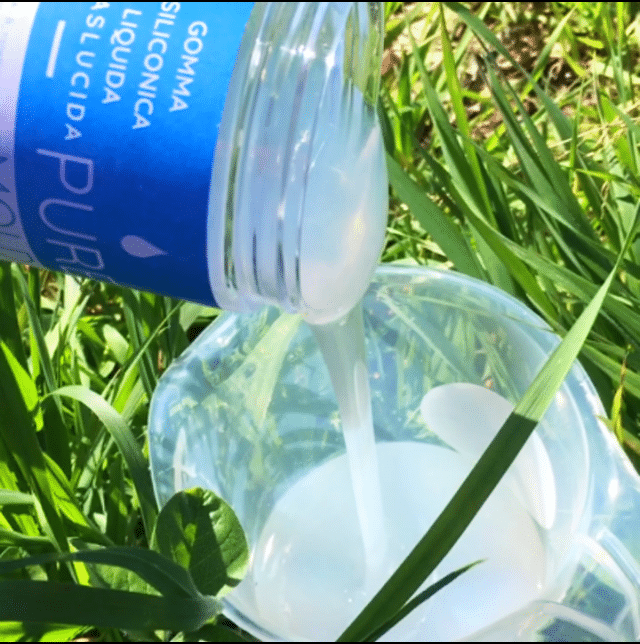
Due to its remarkable fluidity, it is ideal even for the duplication of models with undercut areas.
The main qualities of the product make it particularly suitable for the use of:
- epoxy resins,
- polyester,
- polyurethanes and acrylics,
- cements and plasters.
- + Liquid
- + Fast (3-8H)
- + Translucent
- + Resistant.
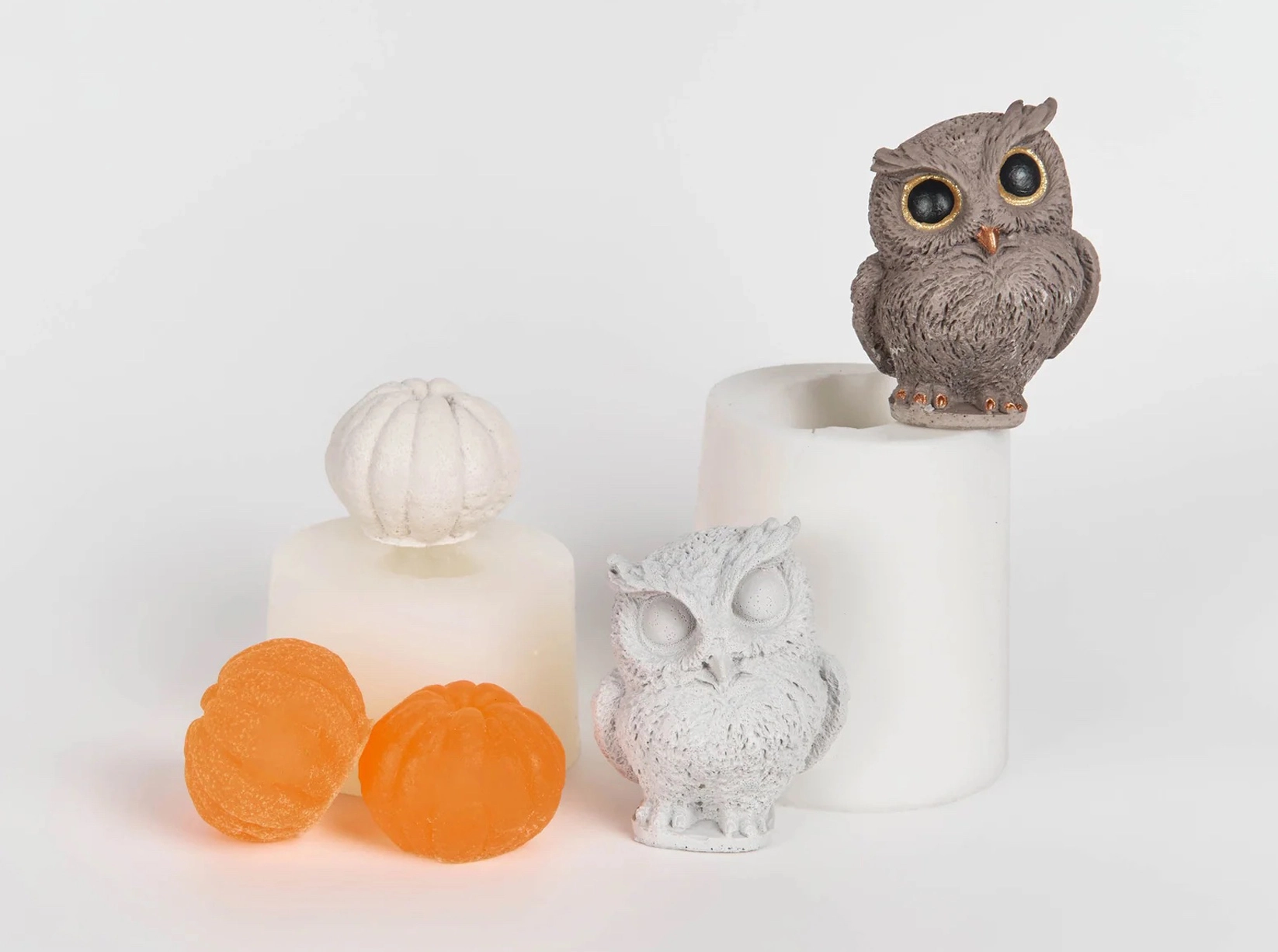
It possesses high mechanical characteristics, and it is suited for the preparation of casts with considerable undercuts: reproduction of bronze statues (artistic foundries), serial reproduction of complex objects in resin (polyester, polyurethane and epoxy), in plaster, natural and synthetic wax, concrete (e.g. statues, decorative garden items, decorative candles, prototypes, decorative ceramics, rosettes, frames, faux wood decorations, etc.). Casts for technical products.
AREAS OF APPLICATION
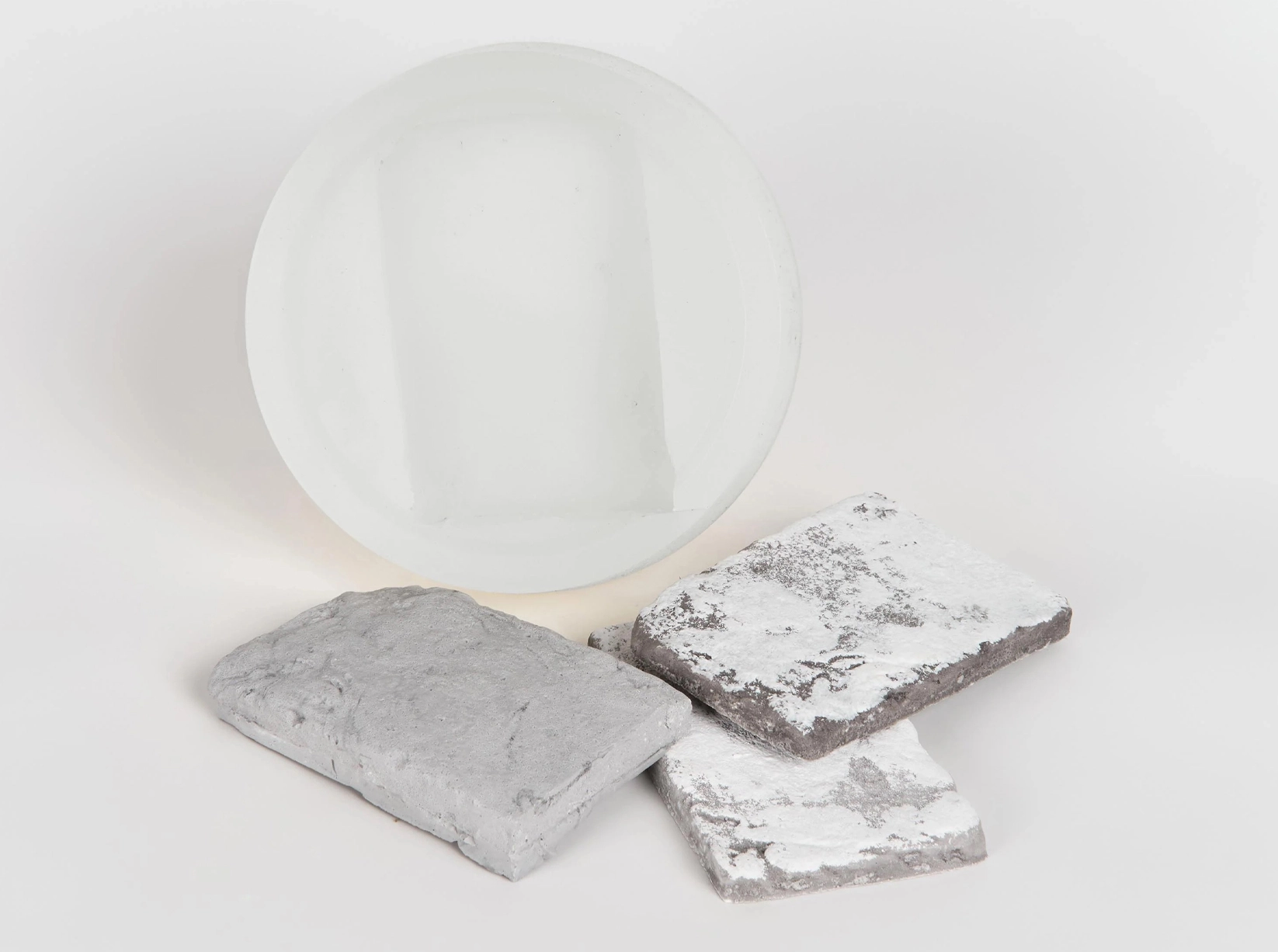
Thanks to its considerable accuracy in reproduction, its high dimensional stability and its mechanical resistance, PURE MOLD silicone rubber is especially good for model and mould making. Its great fluidity and its high dimensional stability make it ideal for decorative pottery, ceramic and jewellery serigraphy and concrete moulding. Silicone rubber is compatible with the majority of Epoxy, Polyurethane and Acrylic resins, and with plaster and cement.
WARNINGS:
During processing, use protective masks, gloves, and other protective clothing.
In case of contact with eyes, immediately rinse with cold water for 15 minutes and immediately consult a doctor.
Download Non toxicity Certificate
Useful articles Make Resin Moulds 52 articles ▸
- How to make moulds with resin?
- What resin should be used for moulds?
- How to make a silicone mould for resin?
- How to make silicone moulds for resin castings?
- How to differentiate mould resin?
- How can I remove uncured resin residue from moulds?
- How do you remove resin from a silicone mould if it gets stuck?
- How to make resin moulds?
- How to make moulds for epoxy resin?
- How to make moulds for resin?
- How to create a mould for resin?
- How to build a mould for resin?
- How do you make resin mould release?
- How do you make a mould for epoxy resin?
- How do you make resin moulds in modelling?
- how to create a resin mould for polyurethane
- How do you pour epoxy resin into a mould?
- how do you make a resin wheel mould?
- How to make silicone moulds for epoxy resin?
- How do you remove resin from the mould?
- How to make a silicone and resin mould?
- How do you remove resin from moulds?
- How to make silicone moulds for resin?
- how to make a mould for a resin bracelet
- How do you make closed moulds for model-making resin?
- how to make molds for high-temperature resin casting
- How to make two-part moulds for modelling resin?
- Why does the resin stick to my silicone mould and how can I prevent it?
- How do you make a sphere mould with resin?
- How to make a resin mould?
- How do you make a resin mould?
- how to make a resin fillet mould?
- How to create a mold for pouring epoxy resin?
- How to get soft resin to mold?
- How to make resin moulds for model making?
- How to Make Epoxy Resin Moulds at Home
- Which types of moulds are best for pouring epoxy resin and how can I prepare them for the pouring process?
- How do you make a spherical resin mould?
- How to make a resin mould that doesn’t exist?
- How to make a mould for a large resin cube?
- How do you make moulds for resin?
- How to make resin objects using a silicone mould?
- How do you make silicone moulds for making resin tables?
- How are molds for resin made?
- How to Create a Resin Mould?
- How do you make a mould for resin?
- how to make a mould for resin
- how to make a mould in epoxy resin
- how to make a counter mould in resin?
- how to make fishing sinker moulds with resin
- Can molds be made with resin?
- Can molds also be made with resin?
Useful articles Create Silicone Rubber 35 articles ▸
- How to Make DIY Silicone Rubber
- How to make rubber using silicone glue?
- How to Make a Mold Using Silicone Rubber?
- silicone putty for mould making
- silicone putty for mould making
- silicone putty for mould making
- How to Make Erasers Using Silicone?
- How to make a silicone-free eraser?
- What type of silicone rubber is used?
- What is silicone rubber used for?
- How to make pourable silicone rubber for moulds?
- How to make silicone rubber
- How do you make a mould with phase silicone rubbers?
- How do you make moulds with silicone rubber?
- How do you make a mould with silicone rubber?
- silicone putty for mould making
- silicone putty for mould making
- How to make a dildo with silicone rubber?
- How to make an eraser using silicone?
- With one kg of GLS-50 silicone rubber, how many liters can I make?
- How is silicone rubber made?
- What is meant by silicone rubber?
- How to Make a Silicone Rubber Mold Video?
- How to make a mould of an object using silicone rubber?
- How to make a silicone rubber mould?
- How to Make a Silicone Rubber and Plaster Mould?
- How to create liquid silicone rubber?
- how to make silicone rubber for jewellery
- How do you colour silicone rubber?
- how to make erasers without silicone
- How to make a mould with silicone rubbers?
- How to make a mould with silicone rubber and flour?
- How to glue silicone rubber
- how to make a silicone rubber mould video
- How many liters can I make with one kg of silicone rubber?
Videos
Videos
Here is a new video from Steve who made some tests of our silicones –
How to mould and make your own resin handles –
Посмотреть эту публикацию в Instagram
Technical data
Technical data
TECHNICAL DATA
“PURE MOULD” – 13 Shores
- Demould time: 4H
- Colour Part A: Translucent
- Colour Part B: Translucent
- Mix ratio: 1:1
- Pre-catalyst mixing viscosity: 4500 +/- 500 cP
- Mixing time at 23°C (73°F): 1 ‘
- Working time at 23°C (73°F): 40 ‘- 50’
- Demould time at 23°C (73°F): 180 ‘
- Shore A hardness after 24 hours: 13 +/- 2 ShA
- Hardness: 13 shore A (Shores – Higher values indicate higher hardness, lower – softer mould you get.)
- Ultimate tensile strength: 3.0 +/- 0.2 N/mm²
- Elongation at break: 450 +/- 20%
- Tear resistance (Die B): 14 +/- N/mm
- Tear resistance (Die C): 9 +/- N/1mm
- Platinum based
Note: Do not use above 30°C [86 F]. For more safety information, please carefully read the Safety Data Sheet of all ingredients.
“PURE MOULD” – 20 Shores
Translucent Colour: Monitor every detail while pouring.
Shore A Hardness 20±2:Ideal for sculptures, artistic castings, and dimensionally accurate models.
Balanced Elasticity: Easy demolding, even with complex geometries, without compromising the model’s integrity.
High Dimensional Stability:Minimizes shrinkage (<0.05%) for consistently precise and professional results.
Easy to Use: 1:1 mixing ratio, with 30–40 minutes of working time and full cure in just 3–5 hours.
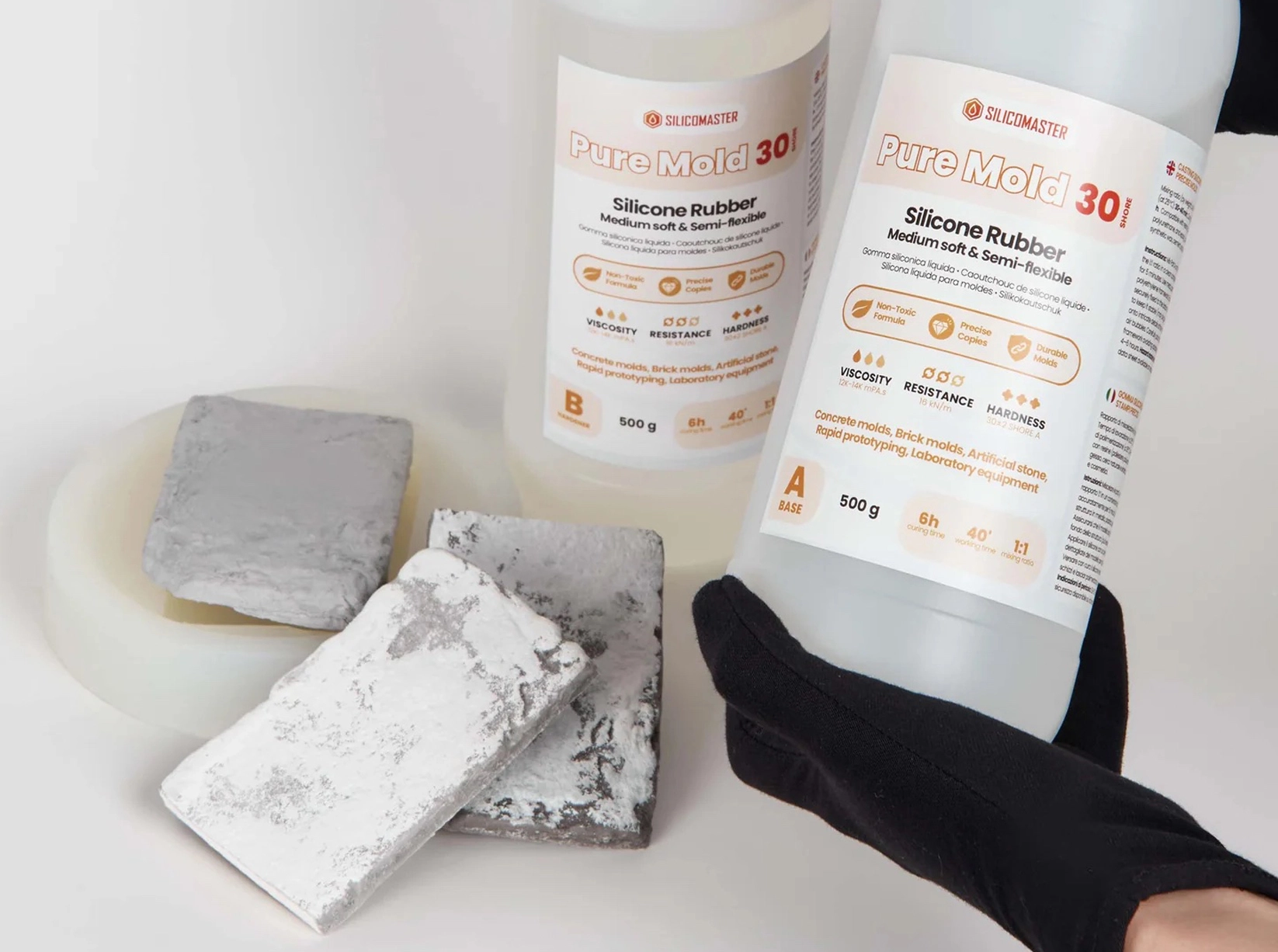
PURE MOULD” – 30 Shores
Translucent Colour: Optimal visibility for precise casting.
Shore A Hardness 30±2: Ideal for heavy materials like concrete and plaster.
Enhanced Rigidity:Provides stability and durability for complex designs.
Chemical Resistance:Suitable for resins, solvents, and industrial environments.
Ease of Use:1:1 mixing ratio, 30–40 minutes working time, and full curing in 4 to 6 hours.
Reviews
Reviews
COD:
Z0-822Y-CORV2