 Free shipping on orders over £29,85
  Shipping Tracking!


 Google
 Facebook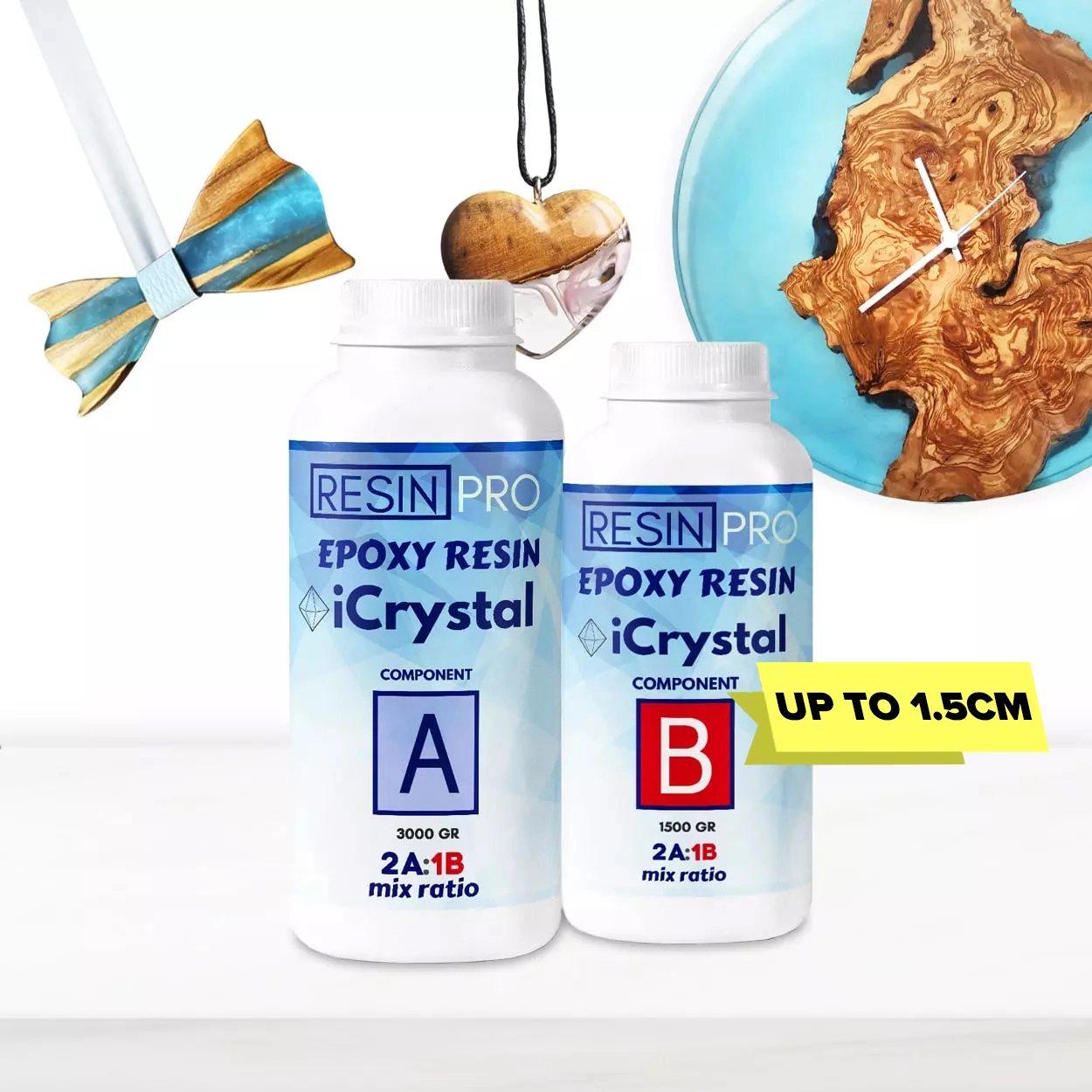







On sale
“Icrystal” – Clear Epoxy Resin – Odourless Formula – Up to 1.5cm
 Available, ready for shipping
 Order now to receive your product between Tuesday 23 June and Wednesday 24 June.
 Shipping from £1.97 - Free for orders over £29.85
 Price range: £12.45 through £1,002.95
Sat, 20. Jun
Ordered
Sat, 20. Jun - Mon, 22. Jun
Order Shipped
Mon, 22. Jun - Tue, 23. Jun
Estimated delivery
"ICrystal" - Transparent Epoxy Resin. High quality by good price + gloves & detailed instruction for FREE.
The most convenient offer for the product you are interested in:
✔️ Perfect transparency -> A true liquid crystal
✔️ High scratch resistance -> Ideal for tables!
✔️ UV filter for protection against yellowing -> 10 years warranty.
✔️ Heat Resistance (Up to 70°C)
✔️ Easy to use -> 2:1 mixing ratio
✔️ Odourless
✔️ 1,5сm layer per application
🌿 Cruelty Free, Vegan Friendly🐹
Description
Description
💥 Bestseller for:
–Wood-working: Coating, Countertops and Tables, Works of art;
–Restoration or surface coating: Wood, Concrete, Ceramics, Canvas, Glass fiber);
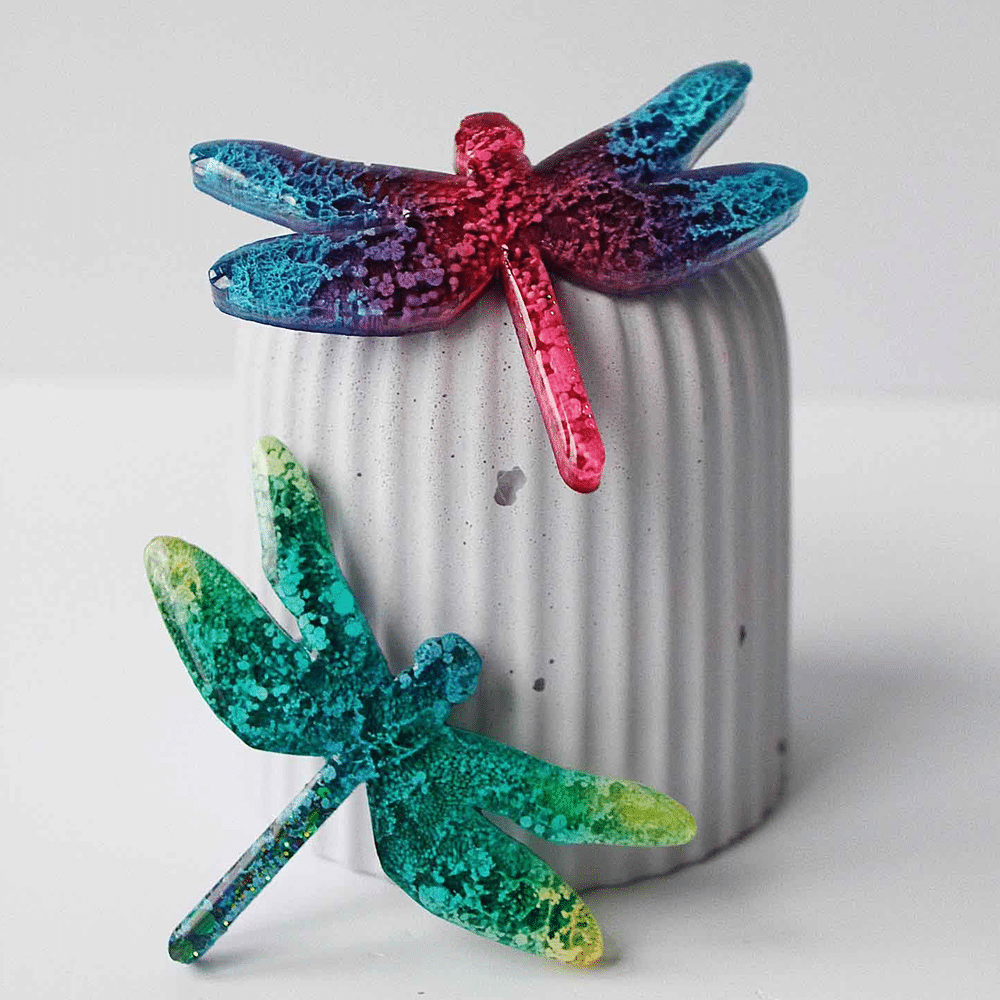
–DIY: Jewellery making, and Dynamic modelling.
💥About “iCrystal ” – Transparent Epoxy Resin:
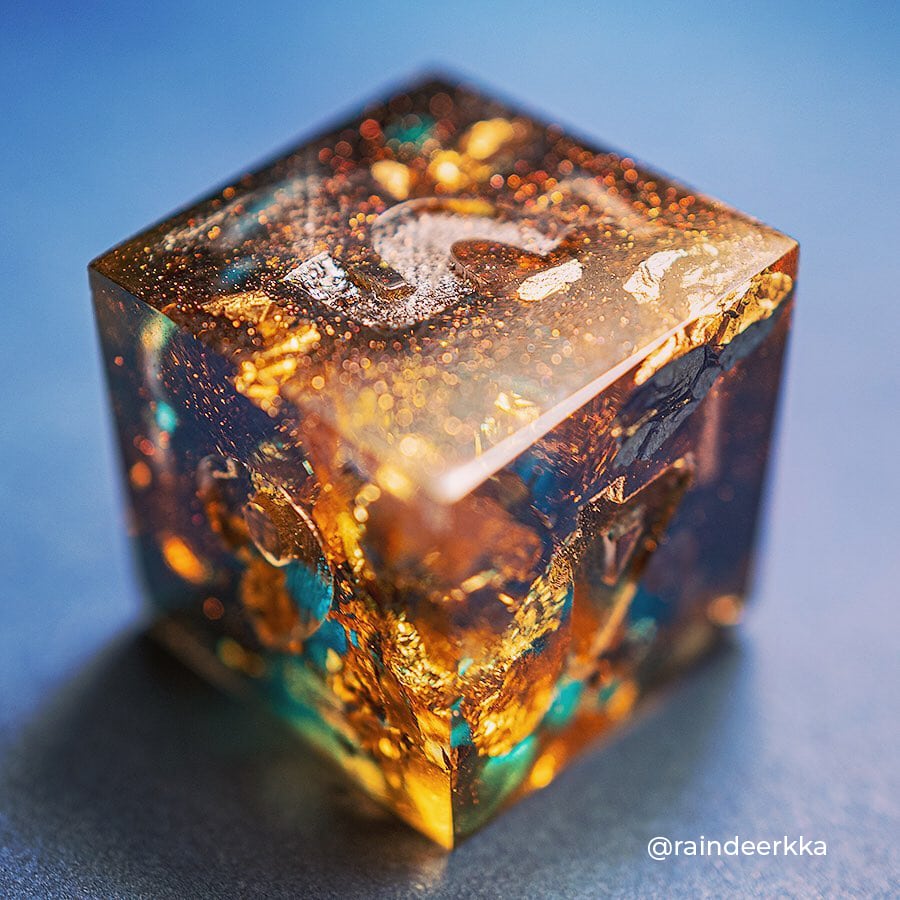
Our iCrystal Transparent Epoxy Resin is a premium quality, multipurpose resin that is a popular choice for customers looking to create stunning art pieces, jewellery, countertops, and DIY projects. The new formula is specifically designed to provide maximum transparency, allowing you to create unique and beautiful pieces that will last for a long time. It is easy to use and can be mixed with a variety of pigments to create an endless range of works.
iCrystal Transparent Epoxy Resin is safe and non-toxic, making it a great option for artists who are environmentally conscious. It is odourless, VOC-free, making it comfortable to use indoors. Although our epoxy resin is safe to use, we recommend taking proper safety precautions when working with any type of resin. It is important to wear gloves and masks and work in a well-ventilated area to avoid any potential irritation or allergic reactions.
This Epoxy Resin is self-levelling and has a high-gloss finish, providing a smooth and professional look to your creations. It is also extremely durable, providing a super solid and shiny surface after full curing time. iCrystal epoxy resin can be used on a variety of surfaces, including wood, stone, ceramics, and more. It is perfect for creating unique and stunning pieces that are sure to impress. Plus, with its long shelf life, you can store it for future projects.
Choose iCrystal Transparent Epoxy Resin for a safe, high-quality, and versatile option for all your creative needs.
💥Key features:
⚙️ CRYSTAL CLEAR EPOXY RESIN:
-The clear epoxy resin is suitable for both beginners and professionals. Start making jewellery, paintings, and any professional creation that involves the use of resin.
🧪 HIGH QUALITY:
-Crystal clear, No bubbles, Odourless – because of unique formula for DIY, craft and artistic creations. Ideal for casting and embedding objects too. Compatible with silicone, wood, fabric, glass, paper or photographs. Fast completed curing time – 24 h, Demould time is only 10 hours.
💧 EASY TO USE:
-The 100:50 mixing ratio makes this product very easy to use. Being a two-component resin, simply mix RESIN A + HARDENER B in the ratio indicated above the package and let it harden without the need for further additives. Can be coloured as desired.
🌿 SAFE AND CERTIFIED:
-All our resins are Certified Non-Toxic, Solvent-free, non-flammable, and totally safe.
📞 FREE PROFESSIONAL ASSISTANCE SERVICE:
-Since we are directly a manufacturer, we have access to a professional laboratory that will happily help you with any complex project.
🇬🇧 UK BASED TRUSTED COMPANY:
-RESIN-PRO team fulfils your order as fast as possible. We produce and realise epoxy resins since 2015. Just check our social media, where you will find thousands of projects made with our products around the world.
💥Suitable for:
-DIY, Wood-working & Model making;
-Coatings of furniture and surfaces;
-Artistic creations (paintings, liquid art, petri dish); Jewellery and fashion;
-Outdoor Protective Coatings;
-Boat construction;
-Impregnation of technical fabrics (glass fiber, carbon fiber, etc);
Check and tag our social media for inspiration! We are always happy to publish your art-work –
Get inspired by creative works
Useful articles
Epoxy Resin Casting
11 articles ▸
- Epoxy resin for thick casting & river tables
- Epoxy resin for thin casting
- Epoxy resin. Single or multiple pours?
- Epoxy resin for thin casting and final touch
- Epoxy resin for final touch
- epoxy resin, apply additional layers?
- Epoxy resin: tips for thick pours of two inches and beyond?
- Epoxy resin for thick casting
- Epoxy resin for thick casting
- Epoxy resin for final touch and thin casting
- What plaster should be applied on thixotropic epoxy resin?
Useful articles
Resin Storage Solutions
100 articles ▸
- How to create with resin?
- How do you make resin concrete?
- How do you make resin?
- how to do resin work
- How do you make a resin casting?
- How to make a resin shower?
- How do you use bodywork resin?
- how to create a resin coating
- how to make a resin countertop
- How to make a resin panel?
- How do you make resin objects?
- How to make homemade resin
- What can be done with resin?
- How to Make Clear Resin
- How to Make a Multi-Purpose Resin Court?
- How do you engrave resin?
- How do you polish resin creations?
- How do you make a resin ball?
- How do you work crystal resin?
- How to make resin statues?
- How to make scuff resin?
- How to Make Cement Resin
- How to Put Phrases in Resin?
- How do you resin a camper?
- How to create a decorative resin panel?
- How to make resin figurines?
- How to embed writing in resin?
- How do you make a resin bust?
- How to glue resin pieces together
- how to work with resin sheet video
- How to Make Clear Resin Vases
- How to make shaker resin
- How to join plastic with resin?
- How to make resin hash
- How to work with synthetic resins
- How to make a small box with resin?
- How to make a resin sphere?
- how to create the cell effect in resins
- How to Get Perfect Spheres with Resin?
- How to create with Erika resin book?
- How do you use anchoring resin on the bars?
- how to glue two resin objects together
- how to make resin creations by Lady Giorgia
- how to do it with resin
- How to work with resin?
- How do you work with resin?
- What to do with resin?
- how to make resin
- How to make resin for filling cracks?
- How do you put things under resin?
- how to make repairs with resin
- How do you make objects with resin?
- How do you pour resin?
- How to make resin creations?
- How do you make resin cement?
- How to make a resin sculpture?
- How do you make a resin sink?
- How do you start working with resin?
- How to make artificial resin
- How to drill resin?
- How to use liquid resin?
- How to make transparent resin?
- How to build a resin landscape?
- How do you make crafts with resin?
- How to store resin?
- How do you make a resin staircase?
- How do you make a DIY resin pour?
- How to make resin objects
- How to make a resin shower tray?
- how to make resin sculptures
- How to make a resin handle
- how to make resin stone
- How to make resin at home?
- How to create the wave effect with resin?
- how to make writing in resin
- How do you make resin to use with wood?
- How to create a sculpture with resin?
- How to make spray resin
- How do you work with resin for a sink countertop?
- What Do You Need to Work With Resin?
- how do you work with liquid resin?
- How to make gede with resin?
- How to make a frame for resin
- How to Make Stones Using Resin
- How do you make resin at home?
- How do you make a resin log?
- How to embed objects in clear resin?
- What do you need to make resin creations?
- How do you make a hole in resin?
- How do you build a resin sand pool?
- how to make boat resin
- How do you glue resin pieces together?
- How do you glue a resin model?
- How do you pour resin into wood?
- How to Make Resin Pots
- How to Make a Resin Bath
- How to get transparent red resin?
- How to Make a Surfboard with Resin?
- How do you install a resin cage?
- How to make resin bookends?
Useful articles
Applying Epoxy Resin Methods
94 articles ▸
- How do you apply epoxy resin?
- How do I create a marbled effect using epoxy resin for my DIY projects?
- how to use epoxy resin
- How do you pour epoxy resin?
- What to Do with Epoxy Resin?
- How to apply epoxy resin with a trowel?
- How do I repair or prepare the surface for a new epoxy resin pour?
- How is epoxy resin applied?
- how to make objects with epoxy resin
- How to apply marine epoxy resin?
- How to create a sea wave effect with epoxy resin?
- What are the best techniques for applying epoxy resin to small or intricate surfaces, such as jewellery or figurines?
- How to achieve a Petri Dish effect with epoxy resin?
- how to make an epoxy resin lamp
- How do you make self-leveling epoxy resin?
- How to apply epoxy resin on a helmet?
- How to anchor rebar with epoxy resins?
- How do you fiberglass a boat?
- How to prepare for epoxy resin?
- How to build with epoxy resin?
- How do you make epoxy resin?
- How to drill epoxy resin?
- How to encapsulate writing with epoxy resin?
- How do you glue epoxy resin?
- How to create crystals with epoxy resin?
- How to use epoxy?
- How to apply epoxy resin on fibreglass?
- How to get a marble effect with epoxy resin?
- How do you pour epoxy resin over a flower?
- How to apply additional layers to epoxy resin?
- how to shape epoxy resin
- How do you apply epoxy resin to furniture?
- how to drill dry epoxy resin
- How to apply epoxy resin on glass?
- How do you apply epoxy resin to wood?
- How to Make Epoxy Resin at Home
- How do you pour self-leveling epoxy resin?
- How do you glue two epoxy resin pieces together?
- how to glue two epoxy resin pieces together
- How do you make epoxy adhesive?
- How do you apply epoxy resin on iron?
- How to create sea foam effects with epoxy resin?
- How to apply epoxy resin on iron?
- how to make an epoxy gelcoat
- How to epoxy coat wood?
- How do you apply epoxy resin to a speargun?
- How do you finish the floor with two-component epoxy putty?
- How to grout the floor with epoxy putty?
- How do you use epoxy putty?
- How to apply primer for epoxy paint?
- How to make DIY epoxy resin?
- How do you prepare epoxy resin?
- how to decorate with epoxy resin
- How to Work with Epoxy Resin
- How to make an epoxy resin kitchen countertop?
- What are the best practices for using epoxy resin on wood or concrete floors?
- how to glue epoxy resin
- How to apply epoxy resin to a windscreen?
- How to apply epoxy resin on wood?
- How do you anchor rebar with epoxy resins?
- How to Make Epoxy Glue for Automotive Glass?
- How do you apply epoxy putty?
- How do you apply self-leveling epoxy?
- How do you make an epoxy resin pour?
- How to apply epoxy resin?
- How to Make Epoxy Resin
- How do you crumble epoxy resin?
- How to apply epoxy resin with a brush?
- How do you join two pieces of epoxy resin?
- how to glue wood to cured epoxy resin?
- How do you glue epoxy polyester powder coating?
- How to Use Filling Epoxy Resin Tutorial?
- how to make epoxy resin shapes
- How do you apply epoxy resin to polystyrene?
- How do you repair a sink with epoxy resin?
- How to glue polyester epoxy powder coating
- How to apply Caldart epoxy primer?
- How do you mix epoxy resin?
- How to paint a armored door panel with epoxy paints?
- How to apply epoxy resin on concrete?
- How to spray epoxy resin?
- How do you paint epoxy resin?
- How do you apply an epoxy vapor barrier?
- How do you apply epoxy primer?
- How are epoxies prepared?
- How do you spread epoxy paint?
- How to use epoxy glue gun?
- How Do You Spread Epoxy Resin?
- What to buy to create with epoxy resin?
- How do you apply two-component epoxy resin?
- How do you use fiberglass and epoxy glue?
- How to apply epoxy putty?
- How to prepare two-component epoxy putty?
- How to prepare epoxy resin on a speargun?
Useful articles
Build Resin Table
72 articles ▸
- how to make resin tables
- How do you make a table with resin?
- How to build a table with resin?
- How to decorate a table with resin
- how to make an epoxy resin table
- How to build a resin shower tray?
- Which resin is best suited for a river table?
- How to build a wood and resin table?
- How to build a resin and wood table?
- How to build a wooden and resin table?
- How do I install a resin shower tray?
- How to make a table with wood and coloured resin?
- How to maintain resin furniture exposed to the elements?
- How to build a table with wood and epoxy resin?
- How to build a nightstand with decoration and epoxy resin?
- Must wooden boards be treated before embedding them in resin?
- How to put resin on a table?
- How to build a resin table?
- How to use resin to create a table?
- What to do to a table with resin?
- How to make a table with resin
- How to Make a Resin Table
- How to build a resin planter?
- How to make tables with resin
- How to make wooden resin tables?
- How do you make a resin kitchen worktop?
- How to build a resin coffee table?
- How to make a table with epoxy resin?
- How to build resin stage sets?
- How to make tables with epoxy resin
- How to make wood and resin tables?
- How to build a table with epoxy resin?
- What do you need to paint a table with resin?
- How to make a resin coffee table for the living room?
- How do you recover a resin table?
- How to build a wood and epoxy resin table?
- how to create a mould for a wood and resin table
- How to make an outdoor cover using cement and resin?
- How to make a table with wood and resin?
- How to Make a Wood and Epoxy Resin Table
- how to make a mosaic table with a resin base
- What do you need to make a wood and resin table?
- How to Make a Resin and Wood Table
- How to furnish a terrace with resin cabinets?
- What cleaners can I use to clean the table once it is completed?
- How to build a waterproof outdoor resin wardrobe?
- How do you put amber resin on a wooden table?
- How to maintain resin furniture exposed to the weather?
- how to make a wood and resin table on YouTube
- Should I worry that a resin table might yellow?
- How do you cover a table with resin?
- How to cover a coffee table with resin?
- How do you polish a resin table?
- How to build a fibreglass boat T-top?
- How to make a resin coffee table
- How do you build a resin coffee table?
- How do you polish a transparent resin table?
- How do you make wood and resin tables?
- How do you cover a sink if it is made of resin?
- How to waterproof a resin shower tray
- How to Make a Wood and Resin Table
- How do you install a resin shower tray?
- how to make a wooden table with epoxy resin
- How do you make a small table with phosphorescent resin?
- how to make a coffee table with wood and resin
- How to build a small resin storage shed?
- How to repair a resin table?
- How do you make a wood and resin table?
- Should I put a support structure under the table?
- Why do river tables sometimes warp?
- How to cover a resin sink?
- How to restore a resin table?
Useful articles
Curing and Hardening Issues
33 articles ▸
- how to harden epoxy resin
- How to make transparent epoxy resin cure?
- how to dilute epoxy resin
- How can I prevent epoxy resin from being sticky after curing?
- What can I do when epoxy resin does not fully cure?
- Epoxy resin hardening problem: what to do?
- How to store epoxy resins A and B?
- How can I prevent epoxy resin from overheating during the curing process?
- How long do I have to wait before sanding epoxy resin?
- How does epoxy glue dry?
- Can I add more hardener to epoxy resin to speed up the curing process?
- How do you dry epoxy resin?
- How can I achieve a matte finish on my epoxy resin project?
- How do I solve the problem of epoxy resin hardening?
- How to dry epoxy resin quickly?
- How to catalyse epoxy resin?
- How to make epoxy resin dry faster?
- How do you thin RC epoxy resin?
- How to get low-cost epoxy resin?
- What to Do If Epoxy Resin Doesn’t Dry?
- How do you catalyse Veneziani epoxy resin?
- At what temperature should epoxy resin be dried?
- How do you keep epoxy resin from sticking to the mold?
- How to keep epoxy resin from sticking?
- How do you dilute epoxy resin?
- How to thicken epoxy resin?
- How to Harden Epoxy Adhesive
- What should I do if epoxy resin gels unexpectedly?
- How do you make epoxy resin shiny again after sanding?
- How do you dilute food-grade epoxy paint?
- How to dry epoxy resin?
- How do you thin epoxy paint?
- How to avoid defects in epoxy resins?
Useful articles
Resin Extraction Techniques
100 articles ▸
- How to prepare the resin?
- How to thicken resin?
- How to stop resin from sticking
- How to prevent resin from dripping from?
- How to repair a panel with resin?
- How to achieve the same effect as two-component resin?
- How do you polish sanded resin?
- How to achieve glossy and compact resin?
- How do you bleach resin?
- how to make resin dry faster
- How to prevent resin from leaking from the cut?
- How do you achieve a perfect mix between resin and hardener?
- How to use PU31 resin?
- Can I pour resin when it is very hot in the workshop?
- How do I mix resins from different suppliers?
- How to regenerate a resin sink?
- How do you catalyse cast synthetic resin?
- How can I speed up resin curing?
- How much hardener should be used with penetrating resin?
- With 100 g of UV resin?
- What do I do with 3 kg of Cores resin?
- Can I remove bubbles if the resin has already hardened?
- How to copy a hood for resin?
- At what temperature does resin dry?
- Why is the resin not catalyzing?
- How do I prepare exterior concrete for resin?
- At what temperature does resin catalyse?
- How to polish resin
- How do you harden resin?
- How to resin the tubs?
- How to keep resin from hardening?
- How to polish two-component resin
- How to catalyse resin?
- How do you thin resin?
- How to polish resin without abrasive paste
- How to paint polyester resin
- How to lighten resin?
- How to remove resin from molds?
- How do you polish crystal resin?
- How do you polish camper resin?
- How to polish ELLD resin?
- How to polish a resin bathtub?
- how to avoid bubbles in resin
- how to dose resin
- How to strengthen a resin boat?
- How to set resin percentages on domes
- How do you dry UV resin?
- How can you make water-based resin dry faster?
- How to combine resin and catalyst percentages?
- How to Avoid Bubbles in Brush-On Resin
- How to use resin and silicone oil?
- What variables affect catalyst curing time?
- How to mix resin and calcium carbonate?
- How Does Two-Component Resin Work?
- How do you stop a resin bag from leaking?
- How to repair a PVC resin object?
- How to use catalyst for polyester resin?
- How do you wash resin out of clothes?
- How to finish resin?
- How to prevent Resin B60 from clogging the syringe?
- How to copy an engine hood for resin on YouTube?
- How to resin carbon fiber?
- How do you wash resin?
- How to compact resin?
- How do you polish clear resin?
- How to electrically insulate using resin?
- how to level dry resin
- How to dry resin?
- how to polish UV resin
- How to keep resin from bubbling?
- How to reinforce a balcony with resin?
- How to dry resin quickly?
- How do you work with polyester resin?
- How to fix resin that has darkened the surface?
- How to get resin out of molds?
- How do you dry resin?
- How do you polish Formlabs resin?
- How do you mix marble powder and resin?
- How to stretch resin to save money?
- How do you become a resonator?
- How to wash a car so resin doesn’t stick?
- How do you clean the gun of resin?
- What are the best techniques for mixing large volumes of resin with minimal bubbles?
- How to Repair a Plastic Resin Tank?
- How to catalyse polyester resin?
- How do you dilute polyester resin?
- How do I remove resin from trousers?
- how to dose polyester resin catalyst
- How to Dispose of Resin Fiber or Eternit for Free?
- How do you remove resin from clothes?
- How to Avoid Resin Nests in Infusions?
- How do you mix resin and calcium carbonate for spotlights?
- How to burn incense resins?
- How do you dispose of ion exchange resin?
- How to extract resin from cistus
- How do you disinfect water softener resins?
- How to prevent resin from oozing out of wood
- How do you remove resin from car bodywork?
- How do I filter resin out of water?
- How to make fir resin dye
Useful articles
Resin Types and Uses
66 articles ▸
- What can I put instead of resin?
- Who installs resin?
- How good is Resin Pro resin?
- What can I encapsulate in resin?
- What is resin used for?
- What is made with resin?
- How is transparent resin used?
- Who sells transparent resin?
- What type of resin is used to make crafts?
- What do I get from resin?
- Can I use resin for vertical applications?
- What are resins used for?
- Who sells water-effect resin?
- What kind of material is resin?
- Differences Between Resins: Choose the Right Resin!
- What is the catalyst in resin used for?
- Which resin is most suitable for jewellery?
- What is resin?
- What is obtained from resin?
- Which resin model is best for creating seascapes?
- What is the resin base coat used for?
- What are resins?
- What materials does resin not adhere to?
- What is resin used for in welding?
- What resin can be used on polystyrene?
- Which resin should be used in junction boxes?
- How to buy from Nord Resine?
- What does polyester resin look like?
- Which resin should be used for photovoltaic modules?
- Does the resin release toxic fumes?
- What printer is needed for resin stickers?
- What is vinyl resin made of?
- What resin is used to terminate fibre optics?
- Who produces two-component resin in China?
- Who makes resin castings in Macerata?
- Which resin is suitable for AUO pockets?
- How is resin used?
- How do you get wood resins?
- What material is resin?
- What resin should be used for jewellery?
- What type of resin is suitable for a kitchen?
- How are resin pellets made?
- What type of resin is used for artistic compositions?
- What drill hole should be made when using resins?
- What kind of material is resin for statues?
- What causes resin?
- What resin should be injected for delaminated boards?
- Which resins should be used to cover a canvas painted with acrylic paint?
- What resin does Games Workshop use?
- How is the resin frame of mirrors made?
- Which is more durable, plastic or resin?
- How do you recognize a resin watch?
- Who sells resin?
- Which resin is used for a shower tray?
- What glue should be used for resin models?
- What resin should be used for wood?
- What does resin mean?
- What glue should be used for resin?
- What surfaces does resin not stick to?
- What kind of resin is used for carbon?
- What is resin thickener used for?
- What resin is used for fibre optics?
- Which paints can be used to paint resin?
- How is resin made?
- What was the resin used by?
- What does the resin contain?
Useful articles
Uses of Epoxy Resin
36 articles ▸
- What can I do with epoxy resin?
- How to choose epoxy resin?
- What can you do with epoxy resin?
- What types of prints should be used for epoxy resin?
- Who sells epoxy resin?
- Can I apply epoxy resin to a painted surface?
- What is transparent epoxy resin used for?
- What brand is the epoxy resin?
- Can epoxy resin be used for outdoor applications, and if so, what precautions should be taken?
- What do you put on an epoxy paint?
- What is epoxy resin used for?
- Can epoxy resin be used to repair a damaged fibreglass surface?
- How to distinguish polyester resin from epoxy resin?
- Epoxy resin’s resistance to temperature and abrasion?
- What are the differences between epoxy and polyurethane resin?
- What is epoxy paint used for?
- What maximum temperature does epoxy resin reach?
- Who sold epoxy resin in Avellino?
- What is epoxy primer used for?
- What medications are taken for those allergic to epoxy resin?
- What is epoxy putty used for?
- Who produces epoxy adhesives?
- What is an epoxy thinner?
- What does epoxy mean?
- Does epoxy resin adhere to silicone?
- What to take for epoxy and polyurethane resin allergy?
- How Do Epoxy Adhesives Work?
- What is epoxy glue used for?
- What is the temperature resistance of epoxy resin?
- What are epoxy adhesives?
- What doesn’t epoxy resin stick to?
- What is used as a release agent for epoxy resin?
- With anticorrosive epoxy resin primer minimum thickness 5 microns?
- What torch should be used for epoxy resin?
- What is epoxy putty for iron used for?
- What is epoxy filler used for?
Technical data
Technical data
Technical data – “ICRYSTAL” Transparent Epoxy Resin:
- Mix ratio: 100:50 by weight
- Demould time: (1.5 mm at 30°C) [0,03” at 86 F]: 12h 00 ′
- Full catalysis: after 24h
- Pot-life: (125 gr at 25°C): 45 ′
- Shore hardness: 80Sh
- Heat resistance: up to 70°C
- Viscosity of part A: 400MPa
- Viscosity of part B: 125MPa
- Mix: 175MPa
- Maximum pouring level: 1.5-2cm*
- Minimum pouring level: 1.5 mm
- Coverage 1kg: 100*60*0.15cm
- 1sqm consumption (1.5mm thickness): 5kg
* – may vary from the pouring`s conditions. 2cm per application works with small amounts of epoxy. If your mix is more than 1kg, the maximum layer is 1.5cm. For creating 2cm layer with large amount of resin, please, use this type of epoxy 👉🏽 “Transparent“.
If you have not enough experience, we insistly suggest to make a small test before working with large project.
Main features:
High transparency / Easy mix ratio / Anti-yellowing filtres / Long working time.
Applications:
DIY / Coating up to 2 cm / Jewellery settings / Modelling / Artistic creations / Lamination / Adhesive / General coating system / Manual laying / Vacuum forming.
Instruction
Instruction
How to use. Mix ratio based on weight – 100:50.
💪🏽 LET`S START! 💪🏽
We would like to pay your attention – We don`t recommend working at temperatures below of 20 ° C and over 28 ° C, avoiding humid environments (or surfaces) application (if you are not sure on the humidity, let the resin warm up the components before pouring).
If epoxy resin was storage at temperatures below of 20 ° C and became murky, please, warm your epoxy up before using to full transparency. More detailed, please, read below.
👉🏽 LET`S MIX! 👈🏽
THE PROPORTIONS ARE PRINTED ON THE BOTTLES/TANKS, PLEASE CHECK IT BEFORE USING.
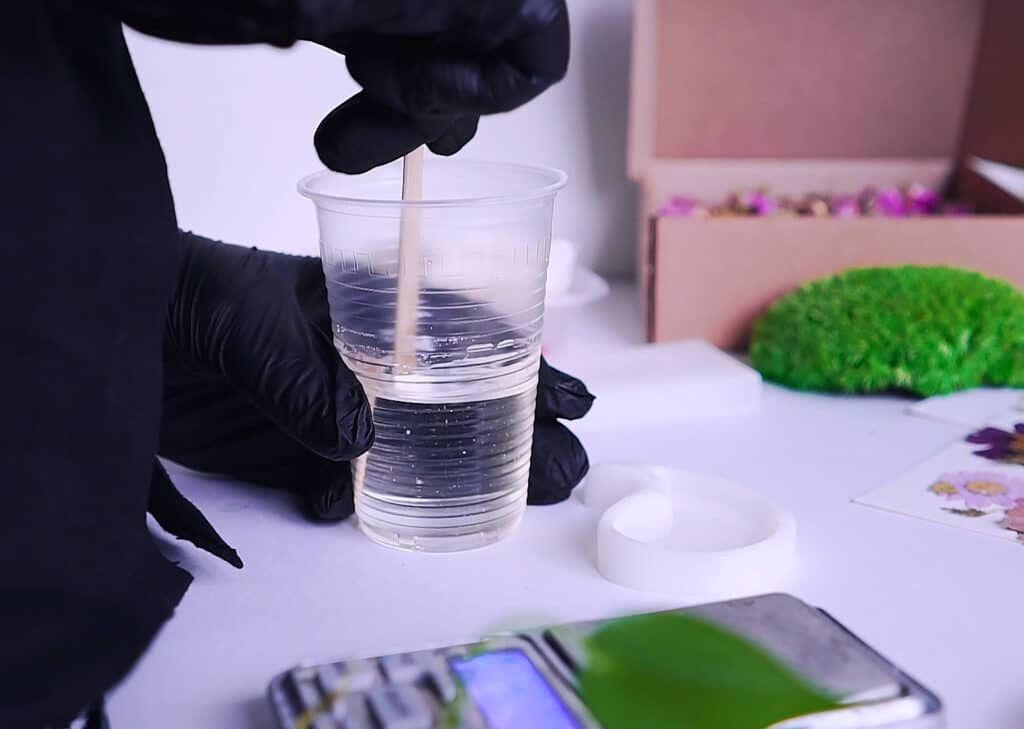
Being a two-component resin, you have 2 bottles at your disposal, one containing resin “A” and the other containing hardener “B”. You will need some electronic scales to weigh grams and a mixing container where you can combine the liquids.
How to calculate, how much hardener do you need? Take your proportions –JUST AN EXAMPLE – 100:50. Then take the weight of component A and multiply on B, (if 100:60 – A*0.60; if 100:70 – A*0.70; if 100:87 – A*0.87).
So! If you have component A 5kg, and proportions 100:50, your calculation –
5*0.5=2.5kg of component B.
Please, use some electronic scales and weigh in grams to get the best results.
After an accurate dosage, the resin must be mixed irregularly (meaning, always in the same direction) for at least 5-8 minutes. This part is very important, because if it is mixed only for a few seconds, it will not be homogeneous at the molecular level, therefore will remain soft / opaque in some parts.
Mix evenly on the edges and bottom of the container. (Do not mix very quickly or forcefully because that would cause a lot of bubbles). We do not recommend using a mixer (of course, you can, but, please, not at high speeds!), as this leads to the formation of microbubbles, which will be difficult to remove. The carefully you mix – the less bubbles.
Remember, the quality of the future casting depends on a good mixing of the two components!
Important! Try to make the mix carefully, so that the smallest fractions of air are not formed in the resin, because visible bubbles will easily disappear from the surface naturally, and micro fractions of air are often practically invisible, but during the curing and heating of the epoxy mixture, the air in them expands and after complete curing, bubbles can be visible in the casting. This can and should be avoided if you do the kneading correctly.
How to remove the bubbles?
Although degassing (vacuum) is necessary to eliminate 100% of the bubbles, there are some tricks that can help you minimize the presence of bubbles during the creations.
1) Mix the resin longer but in a more delicate and uniform way.
2) Before mixing, heat component A (in the sun or using a radiator), so that it becomes more liquid and the bubbles rise more easily.
3) Leave it to rest for a few minutes to release the air bubbles.
4) Once launched, use a heat source (thermal pistol or fire) to burst the bubbles on the surface.
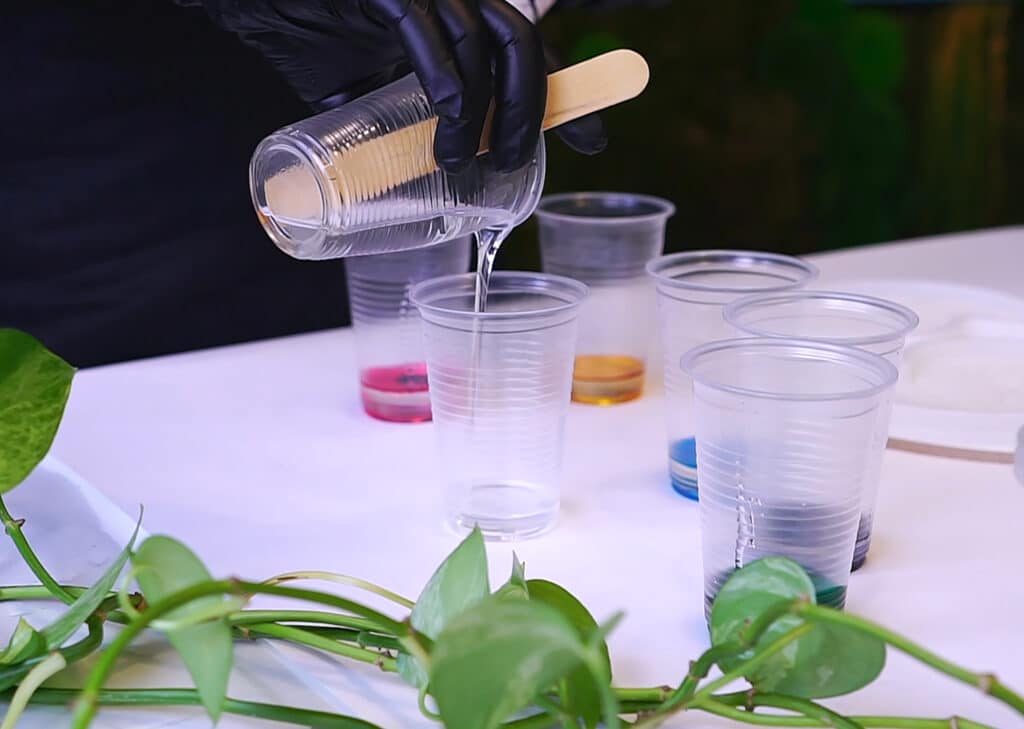
👋🏼 LET`S COLOUR! 👋🏼
Practically everything, including powder and metallic pigments. As long as the dyes are “dry” (for example, dust or sands) there are no problems (as long as they are perfectly dry), when, instead, you want to add pastel or liquid colours, make sure they are compatible with epoxy resins. If they are not compatible (for example enamels, tempera, acrylics) only a few drops can be added, since an excessive dosage could compromise the mechanics of the resin and its brightness (for example making it soft or sticky). There is also a “gold rule” – no more than 5% from mix weight.
Remember, it`s important to avoid contact of epoxy resin with water! From the ingress of water into the resin, it may become cloudy or not solidify! And if the hardener has been stored for a long time with a loosely twisted lid, then it can absorb moisture and it condenses in the form of microbubbles in the thickness of the casting during the curing process.
👍🏽 WHAT`S NEXT? 👍🏽
After pouring epoxy into your formwork be ensured in the “sterility” of the room so that dust and dirt will not get into the epoxy.
Important! We don`t recommend covering the filling with plywood or something dense, because this will disrupt the heat sink during the solidification of the resin!)
Remove micro-bubbles stuck in the surface layer using a hair dryer or a manual gas burner. We also recommend that you do not overheat the epoxy filling with a burner or a hair dryer, because this can cause overheating and boiling of the resin.
The full curing time of I-CRYSTAL EPOXY resin is from 18 to 26 hours (depending on the temperature and humidity in the workshop. The lower the temperature and the higher the humidity, the longer the curing time of the resin.
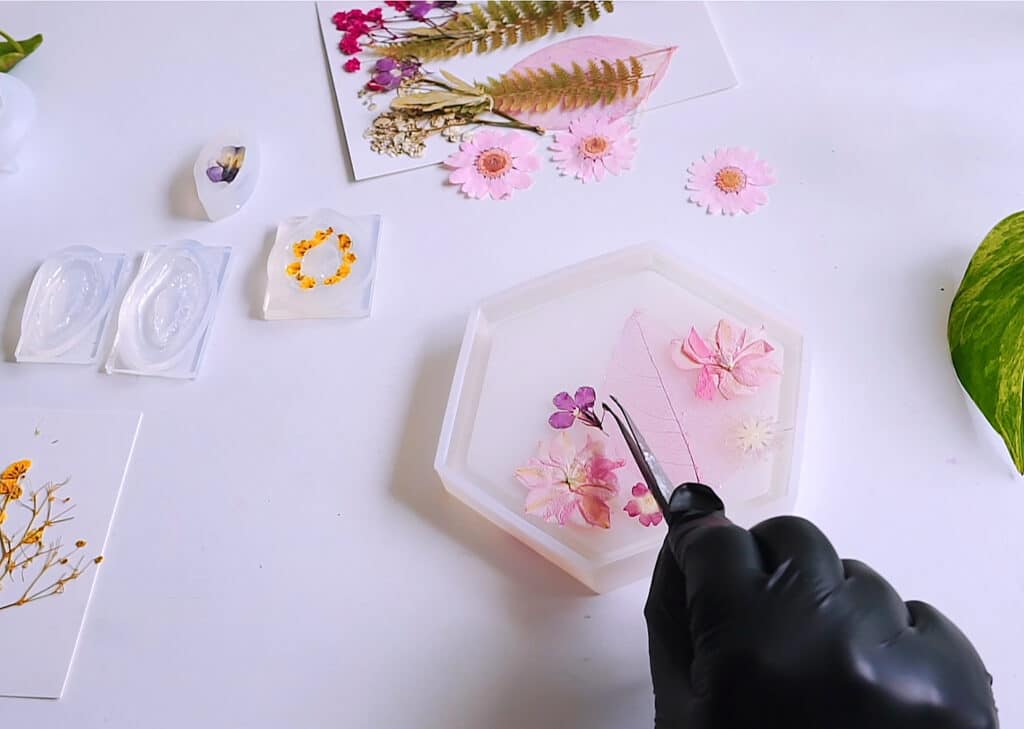
❄️ FROZEN EPOXY ❄️
Epoxy can become frozen under 20C. PLEASE! DON`T USE FROZEN EPOXY. This may affect the result.
There is no excuse that you hold your epoxy inside a warm room, the epoxy could be frozen much before, and only proper defrosting will return the lost transparency and liquidity.
How to understand why your epoxy was frozen? The component A is murky or solid, like frozen water. Don`t worry, there is no need to dispose of your epoxy and run to leave a bad review. It`s okay. You need to do only one thing – to defrost it, warming component A to 50-70 ° C. We usually put the closed tank inside the sink with very hot water and leave it for 20-30 minutes. The problem is next – the more epoxy inside the tank, the more difficult to warm it properly, so just repeat the procedure. If it doesn`t help, just try again, because we sold thousands of tons of the epoxy resin and every time the problem was sorted out by waiting a little bit longer in hot water (of course with the closed lid). Yes, we totally understand that it causes excessive movements, but it`s natural and it could happen with any other epoxy.
Of course, after defrosting you need to cool the component A to room temperature before using.
🔥 HOW TO AVOID OVERHEATING? 🔥
Maximum pouring level: 1.5-2cm. It may vary from the full weight of poured epoxy, sizes of project and temperature when you pour. Not following instructions may cause overheating.
If you need to make a larger layer, just pour in several steps, waiting 8-10h the first time; 10-12h in the second time and 12+h the third time).
When creating a coating with epoxy resin, do not fill the mixture with a thickness of less than 1.5-2 mm, otherwise, after curing, there is a chance of shrinkage with the formation of “craters” – small depressions on all surfaces of the fill.
If one side of casting is more than 100cm long, please, create your project in layers (each layer being 1-2cm thinner than recommended) with a time interval like above – (waiting 8-10h the first time; 10-12h the second time and 12+h in the third time).
If you do a Round casting, and the required weight A+B exceeds 3kg, create your project in the same way as above (less thickness per application + longer waiting between layers).
Be especially careful when working with resins for large castings, when mixing a large amount of resin, do not leave the mixture for a long time in one container – pour it immediately into other smaller containers to avoid the “mass” effect: the resin begins to heat up quickly and hardens instantly with defects without the chances to change it in any way.
IF YOU MEET MORE THAN ONE EXCEPTION IN YOUR PROJECT, REDUCE THE SIZE OF YOUR APPLICATION AGAIN.
🌊 HOW DO I ELIMINATE SURFACE OPACITIES OR SMALL WAVES FORMED AS THEY SOLIDIFY? 🌊
These surface opacities are the result of the interaction with environmental humidity, which creates a patina on the surface of the cast. At first it is not obvious, but as soon as it starts to solidify, in some places you can notice opaque halos and even “wrinkles”.
There are different strategies to avoid this:
1. Work in low humidity (dehumidified) conditions or in a heated environment.
2. Heat the 2 components before mixing (for example, holding them over a radiator).
3. Mix the resin with the hardener and apply it only when it starts to heat up (so that the reaction begins while it is still in the container). This operation is essential, but requires minimal attention. It should be checked every 5-6 minutes and as soon as it reaches 40 ° C (when it’s warmer than our hand) it can be applied. Otherwise, it could start solidifying in the container!
4. It is advisable not to apply during the night or when it is raining (since the humidity increases).
5. Do not apply on surfaces that still contain humidity, like on fresh cement or on non-dried wood.
– If due to humidity, the resin is not glossy, no problem: just pour a new layer over (following the instructions above) and it will become perfectly transparent and regular.
Additional tips:
1) For easier removing from the formwork, we recommend to cover the formwork by our special film “shiny shield“, before pouring.
2) We do not recommend using a mixer (especially at high speeds), as this leads to the formation of microbubbles, which will be difficult to remove. The carefully you mix – the less bubbles.
3) If you`re going to embed something in your project while curing, do not leave it overnight, because it always becomes solid much faster than you could expect (curing times vary depending on temperature, mixing time, volume and etc). We always advise pouring in the morning then swirling through the day.
WARNINGS:
During processing, use protective masks, gloves, and other protective clothing.
In case of contact with eyes, immediately rinse with cold water for 15 minutes and immediately consult a doctor.
Epoxy resin is a complicated technical product, but if you follow the basic rules, you will get wonderful results! If you need any assistance, just call us – 07596 850968 or email us – [email protected]
With best regards, RESIN PRO TEAM😊
Check and tag our social media for inspiration! We are always happy to publish your art-work –
FAQs
FAQs
FAQs
“ICrystal” – Transparent Epoxy Resin:
Q. What`s the proportions and how to calculate that?
A. The proportions of Transparent Epoxy resin is 100:50 – A:B by weight. You can always check that taking a look at the labels of the bottles – they are always printed there:)
For calculations we suggest using our app – GooglePlay & AppStore.
How to calculate, how much hardener do you need? Take your proportions –JUST AN EXAMPLE – 100:50. Then take the weight of component A and multiply on B, (if 100:50 – A*0.50; if 100:70 – A*0.70; if 100:87 – A*0.87).
So! If you have component A 5kg, and proportions 100:50, your calculation –
5*0.5=2.5kg of component B.
Q. Can I do 10cm per one casting?
A. Unfortunately:(
The maximum layer`s level is 1.5cm. If you need to cast more, do it steadily –
Do 1.5cm, then wait 6-10h and add next 1.5cm. Repeat, if needed, waiting 6-10h between layers.
Q. Why epoxy is murky?
A. Epoxy just become frozen during storage/delivery, etc. Please, don`t use that before you de-frost it fully, it may affect the result. Just put the component A into very hot water for 10-15 minutes. Repeat if needed.
Q. What`s the coverage of 1kg?
A. 1kg of mix epoxy+hardener covers area 50*45*0.4сm.
You can use our resin calculator here – 🔮LINK🔮
Or our app – GooglePlay & AppStore.
Q. What`s the volume 1kg resin+hardener?
A. 1kg epoxy resin ~ 0.9l
Just take the weight and divide at 1.1, you`ll get the volume in litres.
Q. Can I use epoxy at home?
A. Yeap, we recommend working in well ventilated area and use protective cloves and masks.
Q. What to use for colouring?
A. Of course we recommend using our tested pigments and colourants.
With other brands we suggest to make a small test before making large project.
The rules not so many – it has to be NOT water based and without high level of solvents. Please, be sure that the amount of colourants doesn`t exceed 5% from full mix.
Q. Do you have resin with higher viscosity?
A. Sure!
We have the next grade of resins by viscosity:
Super low viscosity (low type of resin) – “Epoxytable-5”;
Low viscosity – “Transparente”;
Medium viscosity – “Art Pro”;
High viscosity – “Art Pro Deluxe” ;
Q. What would you recommend for polishing my art-work?
A. We have a special kit for such tasks, take a look here –
https://resin-pro.co.uk/product/resin-polishing-kit-2/
Videos
Videos
Cloudy / Frozen epoxy. How to restore transparency to resin?
How to DOSE and MIX epoxy resin? How to understand mixing RATIO?
Reviews
Reviews
COD:
asdasa2219042021